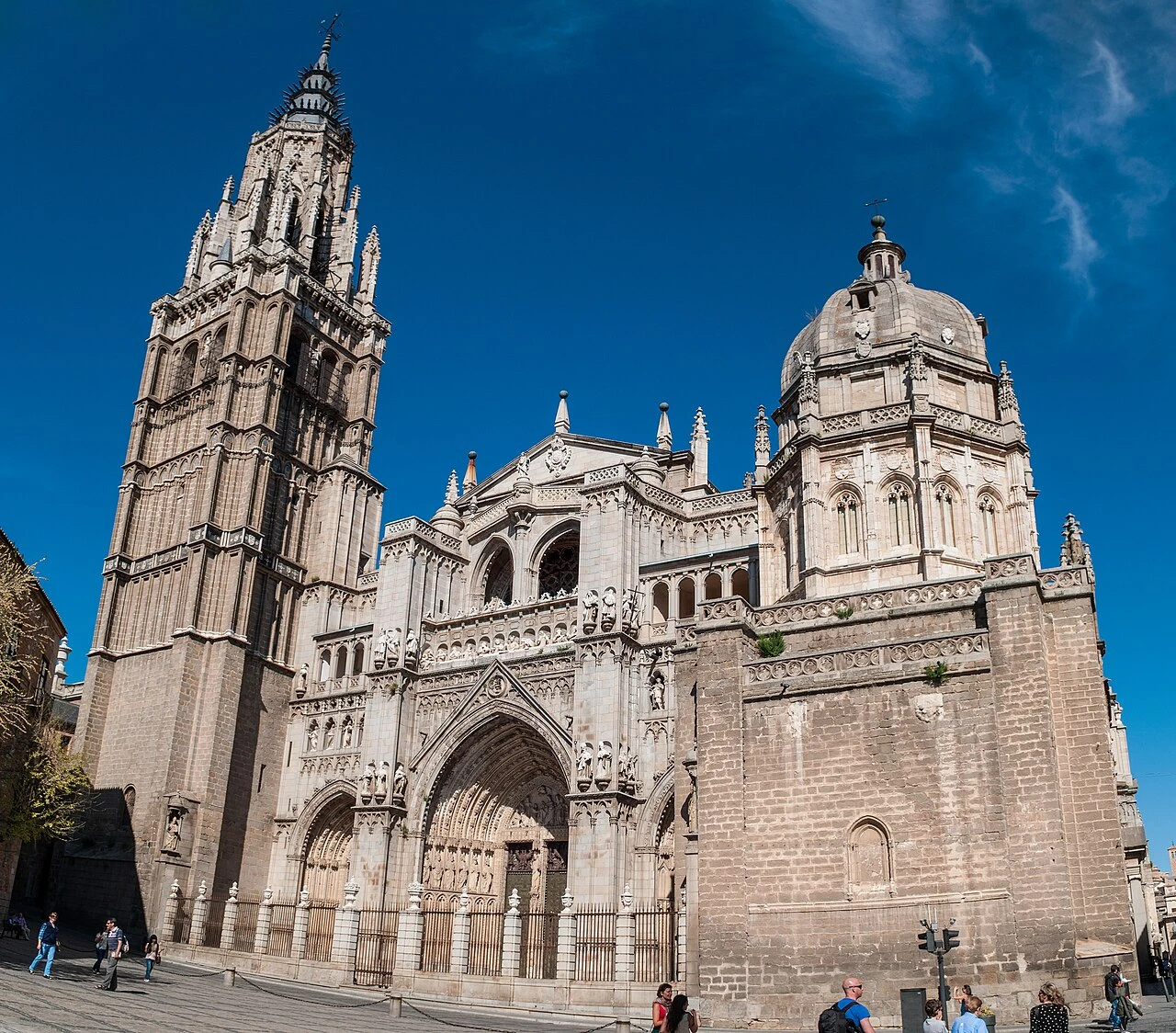
Stanza · Audio guide
Catedral de ToledoAudio guide
A place to remember. A story to take with you.
The Toledo Cathedral is a Roman Catholic cathedral in Toledo, Spain. It serves as the primatial cathedral of Spain and is known for its Gothic architecture.
Download Stanza, then search for “Catedral de Toledo”.
About the tour
One guide. Your kind of visit.
The Toledo Cathedral is a Roman Catholic cathedral in Toledo, Spain. It serves as the primatial cathedral of Spain and is known for its Gothic architecture.
Ready when you are.
- 01Get the free Stanza app.
iOS & Android
- 02Find your guide.
“Catedral de Toledo”
- 03Download before you go.
Works offline
Audio guide / 18 narrated stops
Inside the guide
Get to know a few of the stories before you go. Open a stop to read more.
01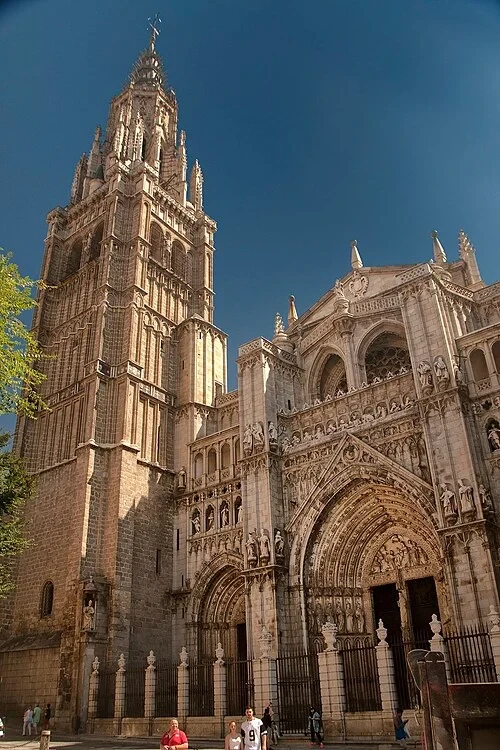 The Main Facade and the Great TowerMain Entrance Facade
The grand facade before you represents the seat of the Primate of Spain, a title granted to this see by Pope Urban II in 1088. This prestigious designation underscores the cathedral's historical and spiritual authority over the entire Iberian Peninsula. Before the soaring stone walls were erected, this very site was occupied by the Great Mosque of Toledo. The transition from Islamic to Christian worship was a defining moment for the city’s identity. Actual construction on the Gothic edifice we see today began in 1226 under the patronage of King Ferdinand III. It was a massive undertaking, reflecting the burgeoning power of both the Spanish monarchy and the Church during the Middle Ages. As you look at the intricate stonework of the portals, consider how the architects sought to replace the former structure with something even more imposing. This facade serves as the gateway to centuries of religious evolution and artistic achievement. It remains the spiritual heart of the city, a place where history is literally layered upon stone. Each sculpted detail invites visitors into a space that has defined the religious landscape of Spain for over eight hundred years.
Francisco de Asís Alfaro Fernández · CC BY-SA 4.0
02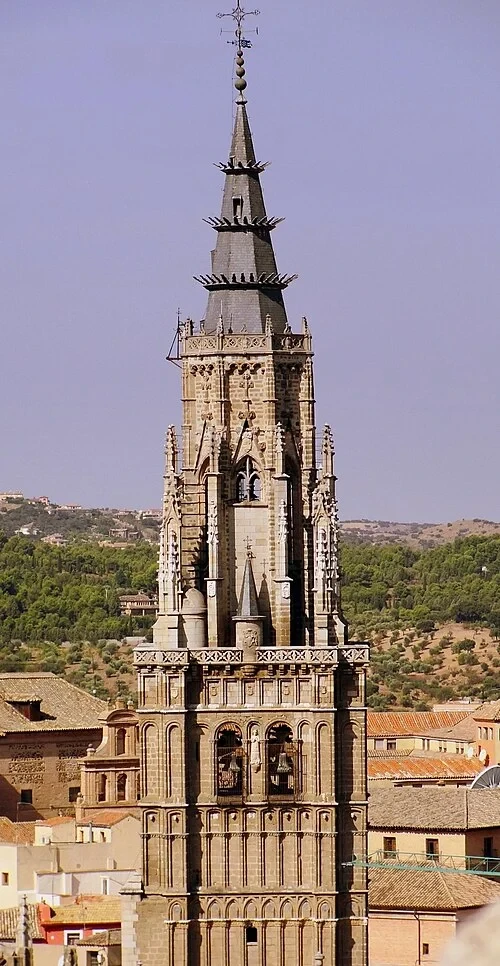 The Main Facade and the Great TowerThe North Tower
While the cathedral’s design originally called for two symmetrical towers, only this northern one was ever completed. It stands as a landmark for the entire region, topped with intricate Gothic spires that pierce the sky. Deep within this structure hangs 'La Campana Gorda,' or the Fat Bell. Cast in 1755, this 18-ton behemoth was intended to be the pride of the city. However, a casting defect proved fatal to its sound. When the bell was rung for the first time, a deep crack formed instantly, rendering its voice imperfect. Despite this flaw, it remains an impressive piece of engineering for its era. The tower itself demonstrates the shift from the solid, lower sections to the lighter, more ornate upper levels characteristic of the late Gothic style. From this height, the bells could signal to the entire valley, marking the passage of time and the cycles of religious life. The spires at the top are particularly noteworthy for their fine, lace-like stonework, which contrasts with the robust base of the tower. This singular vertical element defines the cathedral’s external silhouette and remains a symbol of Toledo's skyline.
Francisco Javier Martín Fernández · CC BY 2.0
03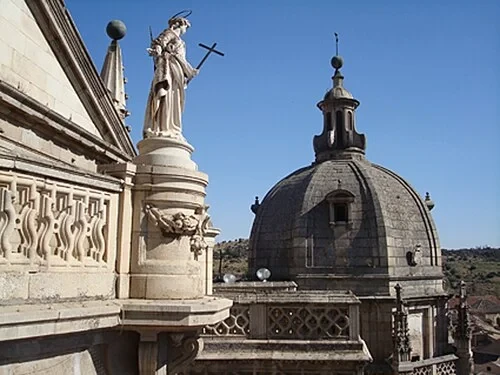 The Mozarabic Chapel DomeMozarabic Chapel Dome
The octagonal dome you see here covers one of the most culturally significant spaces in the cathedral: the Mozarabic Chapel. This area is dedicated to preserving the Hispano-Mozarabic Rite, a unique form of Catholic liturgy that dates back to the Visigothic period. Long before the Roman influence became standardized across Spain, this was the local way of worship. It survived through the centuries of Islamic rule, maintained by the 'Mozarabs'—Christians living under Muslim governance. Even today, this ancient rite is celebrated daily within these walls, making Toledo one of the very few places in the world where this living history continues. The exterior of the dome, with its distinct geometric shape, hints at the specialized function of the space beneath. Its architecture reflects the blend of influences that define the city's character. While much of the cathedral speaks to the universal traditions of the Western Church, this chapel is a testament to the local persistence of faith and tradition. It provides a rare link to the early centuries of Iberian Christianity, kept alive through generations of dedicated practice. The dome serves as a quiet marker of this enduring and ancient liturgical tradition.
Listen in the appPhoto: Pepin42 · CC BY-SA 4.0
04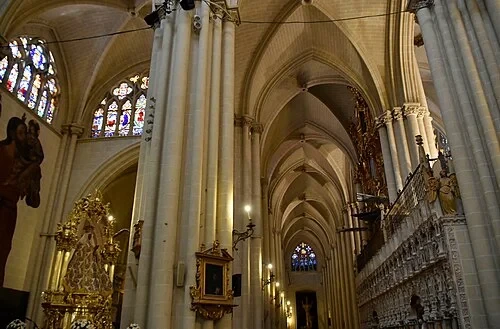 The Grand Nave and Islamic RootsThe Central Nave
The sheer scale of the cathedral’s interior is difficult to grasp at first glance. Measuring 120 meters long and 59 meters wide, it is among the largest Gothic structures in Europe. This massive space was not built overnight; rather, it was a work in progress for 267 years. Construction began in the 13th century, but the final Gothic vaults weren't completed until 1493. This long timeline allowed for a slight evolution in style, though the overall design remained remarkably cohesive. The floor plan features five naves, an arrangement that distributes the weight of the massive stone ceiling and creates a wide, open atmosphere. As you walk through, notice how the rows of columns stretch toward the altar, guiding your eyes through the rhythmic sequence of arches. This five-nave design was relatively rare in Spanish Gothic architecture, making Toledo stand out among its peers. The space was designed to accommodate massive crowds of pilgrims and worshippers, providing a grand stage for the religious ceremonies that have defined the cathedral's life for over half a millennium. The height of the central nave draws the gaze upward, emphasizing the intended connection between the earthly and the divine.
Listen in the appRichard Mortel from Riyadh, Saudi Arabia · CC BY 2.0
05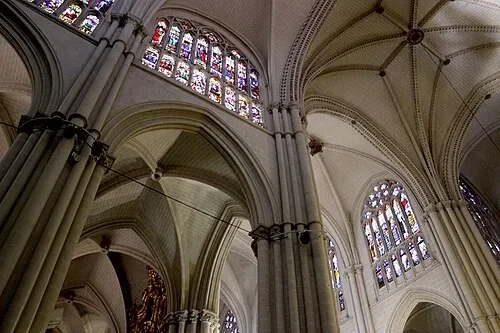 The Grand Nave and Islamic RootsThe Gothic Vaults
High above the floor, the triforium arches display a fascinating architectural detail: they are intertwined in a way that recalls the aesthetics of the site's Islamic past. These arches serve as a subtle nod to the mosque that once stood here before the cathedral was built. History and legend intertwine in these stones, specifically through the story of Abu Walid. He was a Muslim negotiator who played a crucial role in maintaining peace during the conversion of the mosque into a Christian church. While the transition was often fraught with tension, figures like Abu Walid represent the complex co-existence that defined medieval Toledo. The vaults themselves are masterpieces of engineering, holding up the weight of the roof through a system of ribbed supports. These ribs channel the pressure down into the massive pillars, allowing for the walls to be opened up with windows. The design of the triforium is particularly distinctive to the Toledo style, blending standard Gothic forms with local sensibilities. It is a visual reminder that even in a building dedicated to Christian worship, the city’s pluralistic history remains etched into the very framework of the structure.
Listen in the appMiguel Hermoso Cuesta · CC BY-SA 3.0 es
06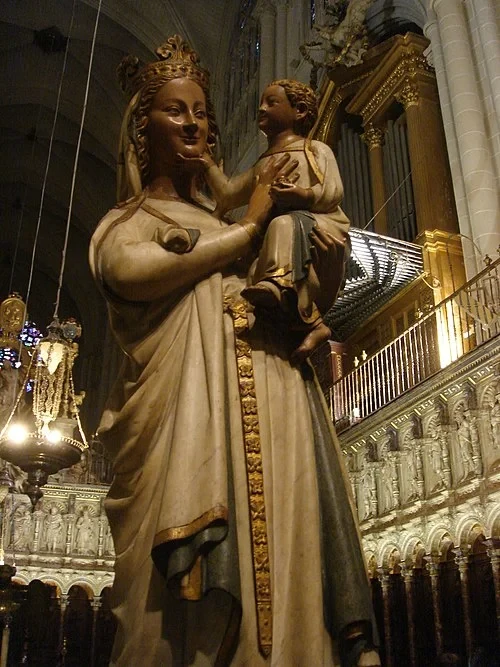 The Choir and the White VirginWhite Virgin
Standing in the choir, the White Virgin is one of the cathedral’s most beloved treasures. Crafted in the 14th century from marble, this figure represents a significant departure from the stiff, somber Romanesque statues of earlier centuries. Notice the gentle, humanizing smile on the Virgin's face as she looks at the Christ child. This tender interaction is a hallmark of the Gothic style, which sought to make divine figures more relatable to the common person. The sculpture shows a clear influence from French artistic traditions, which were spreading across Europe at the time and significantly impacted the artisans working in Toledo. The fluid drapery of her robes and the elegant curve of her stance—often called the 'Gothic sway'—give the figure a sense of grace and movement. It is a work of great delicacy, where the hard stone seems to soften into fabric and skin. By focusing on the emotional bond between mother and child, the artist created a piece that feels both sacred and deeply human. This masterpiece has watched over the choir for hundreds of years, a serene presence amidst the elaborate wood carvings that surround it.
Listen in the appTostie14 · CC BY 2.0
07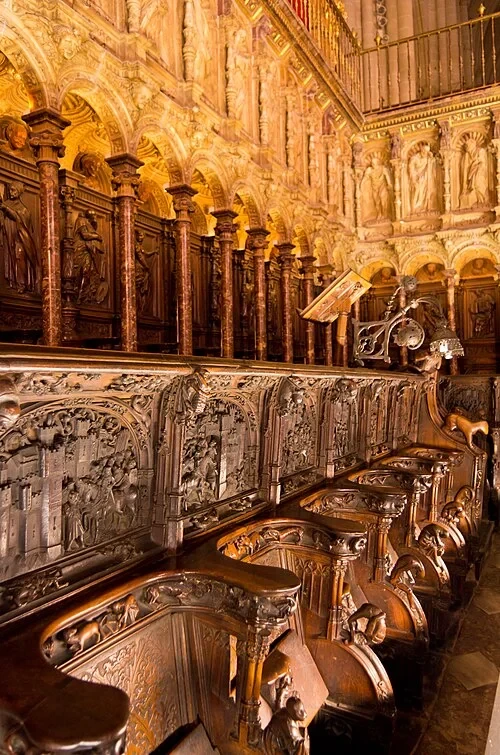 The Choir and the White VirginThe Renaissance Choir Stalls
The choir stalls are a gallery of Renaissance craftsmanship, carved with such precision that the wood seems to come to life. The upper stalls were the subject of a famous artistic competition between two masters: Alonso Berruguete and Felipe Vigarny. Each artist brought their own unique style to the project, with Berruguete leaning toward more expressive, almost mannerist forms, while Vigarny focused on classical balance and detail. This rivalry resulted in some of the finest wood carvings in Spain. Below these, the lower stalls offer a different kind of narrative. They are older and depict detailed scenes from the conquest of Granada in 1492. As you look closely, you can see tiny battles, sieges, and historical figures, providing a visual chronicle of the end of the Reconquista. The sheer density of the imagery is staggering; every armrest and panel is adorned with figures, animals, or foliage. These stalls served as the daily seating for the cathedral's canons during long hours of prayer and song. They represent a peak of late Gothic and early Renaissance art, combining historical reporting with pure creative imagination. Each seat offers a different story carved into the dark wood.
Listen in the appAntoine Taveneaux · CC BY-SA 3.0
08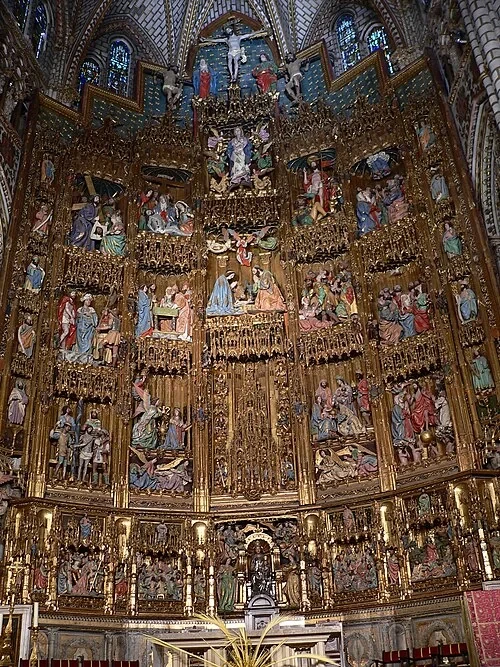 The High Altar and Gilded GrilleMain Altarpiece of Toledo Cathedral
The Main Altarpiece, or Capilla Mayor, is a staggering display of late Gothic splendor. Commissioned by Cardinal Cisneros at the turn of the 16th century, it was designed to be the ultimate visual teaching tool for the faithful. The entire structure is made of larch wood, which has been meticulously gilded and polychromed to create a glowing, jewel-like effect. It is one of the largest and most complex retables in the world, involving a team of the era's best sculptors and painters. The panels depict key moments from the life of Christ, from the Nativity to the Passion and Resurrection. Each scene is filled with dozens of expressive figures, all set within intricate architectural frames that mimic the cathedral’s own Gothic windows. The scale is intentional; the altarpiece rises nearly to the vaults, ensuring that even those at the back of the nave could see the holy stories unfolding. It represents a final, brilliant flowering of the florid Gothic style before the Renaissance took full hold in Spain. The play of light across the gold leaf creates a shimmering atmosphere that is particularly striking during religious services when candles illuminate the various scenes.
Listen in the appNo machine-readable author provided. Manuel González Olaechea assumed (based on copyright claims). · CC BY-SA 3.0
09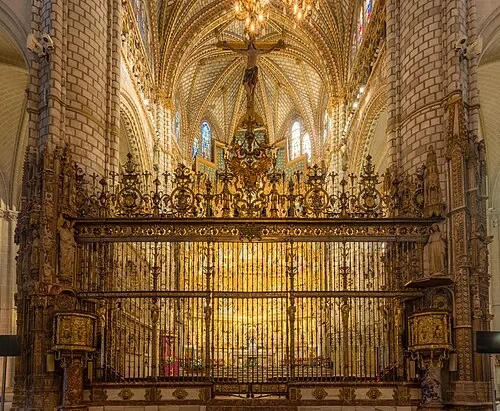 The High Altar and Gilded GrilleThe High Altar Grille
Separating the central nave from the high altar is an extraordinary example of Spanish ironwork. These monumental grilles, known as 'rejas,' were not just functional barriers; they were symbols of the threshold between the earthly world and the divine sanctuary of the altar. The level of detail achieved in the iron is remarkable, with delicate patterns of vines, figures, and heraldry that appear almost like lace. In its original state, this entire grille was covered in actual gold leaf, making it a shimmering golden wall that reflected the light from the altarpiece behind it. Creating such a massive yet intricate structure required immense skill from the master blacksmiths, who had to forge and join thousands of individual pieces of metal. The design allowed the public to see and hear the ceremonies within while maintaining a physical separation for the clergy. This tradition of ornate ironwork became a hallmark of Spanish cathedrals, but the example here in Toledo is widely considered one of the finest. It showcases the transition from Gothic motifs to Renaissance elegance, acting as a sturdy yet beautiful frame for the most sacred part of the building.
Listen in the appPhoto: Fernando · CC BY-SA 4.0
10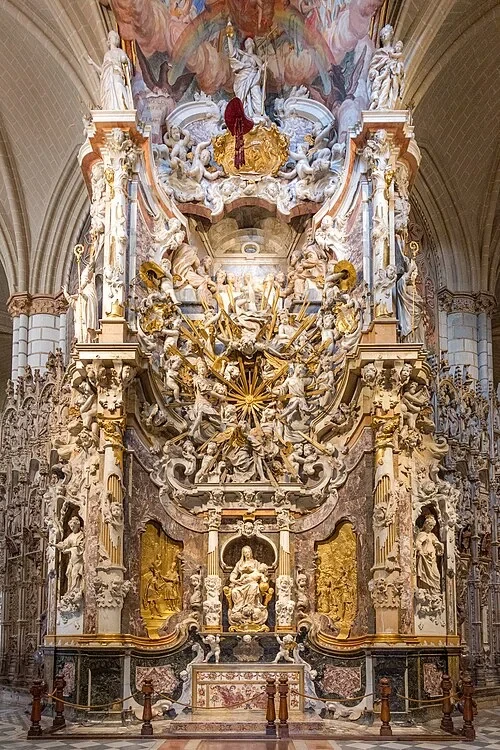 El Transparente: A Window to HeavenThe Transparente Altarpiece
As you walk around the ambulatory behind the main altar, you will encounter the 'Transparente,' an 18th-century Baroque altarpiece that seems to burst forth from the stone. Designed by Narciso Tomé, it was a radical addition to the cathedral's Gothic architecture. The Transparente is a dense, theatrical composition of sculpture and architecture, featuring angels, saints, and clouds that appear to float in mid-air. Its primary purpose is to house and highlight the tabernacle, where the Eucharist is kept. The style is incredibly detailed and energetic, marking a complete shift from the structured lines of the medieval cathedral. Tomé used a variety of materials and colors to create a sense of depth and divine chaos. It was controversial when it was first built, as many felt its exuberant Baroque style was out of place in such a somber Gothic setting. However, it remains one of the most famous examples of Spanish Baroque art. The work is not just a sculpture; it is a total environment designed to inspire awe through its complexity and its unique relationship with natural light. The figures seem to move as the light changes throughout the day.
Listen in the appPhoto: Fernando · CC BY-SA 4.0
Catedral de Toledo
Frequently asked questions
How much does the guide cost?
Free app download. Listed guide price: $0.99. Guide price shown in the app. Audio guide only. Venue admission is separate.
Can I listen without internet?
Yes. Download the guide’s audio, images, and maps in the app before your visit. Your downloaded content is then available offline.
Can I listen in my language?
Stanza supports 15 languages. Check the app for the languages available for this guide.
Do I need to follow a schedule?
No. This is a self-guided experience. Choose your stops, pause whenever you like, and return to a story at your own pace.
At your own pace
Explore Catedral de Toledo.
Download Stanza, then search for “Catedral de Toledo”.
Free app download · Guide price shown in the app
Keep exploring
Nearby audio guides
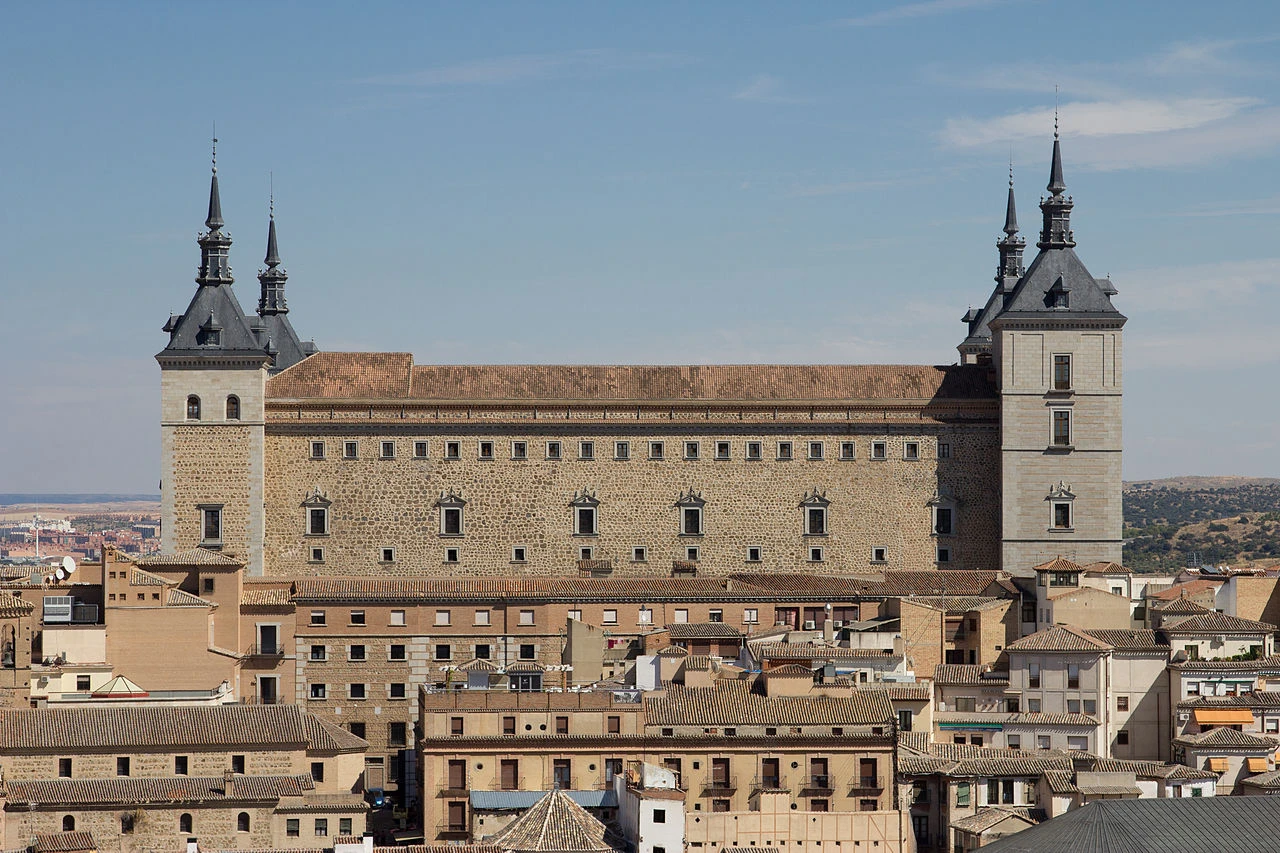
Toledo
Alcázar de Toledo
Content & sources
Carlos Delgado · CC BY-SA 3.0 es
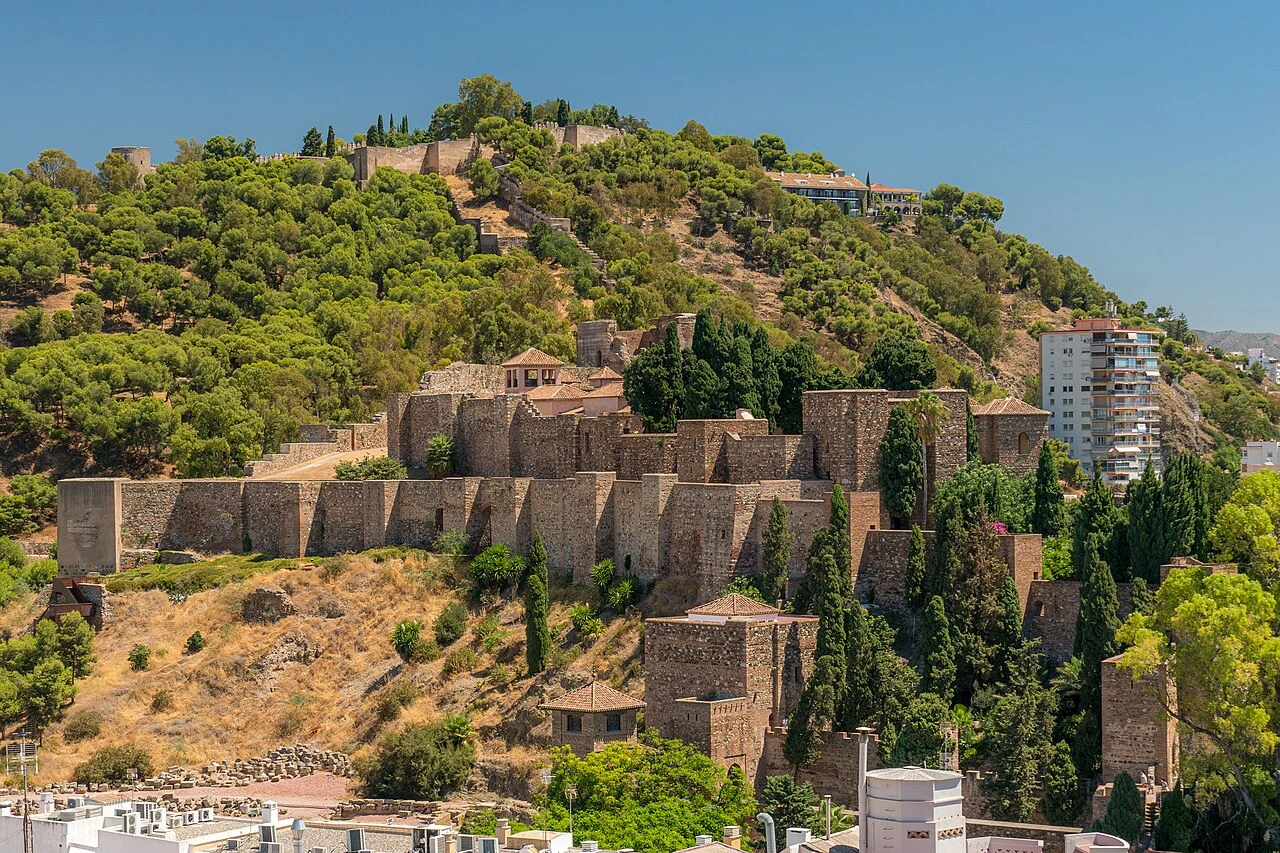
Málaga
Alcazaba de Málaga
Content & sources
Photo: Fernando · CC BY-SA 4.0
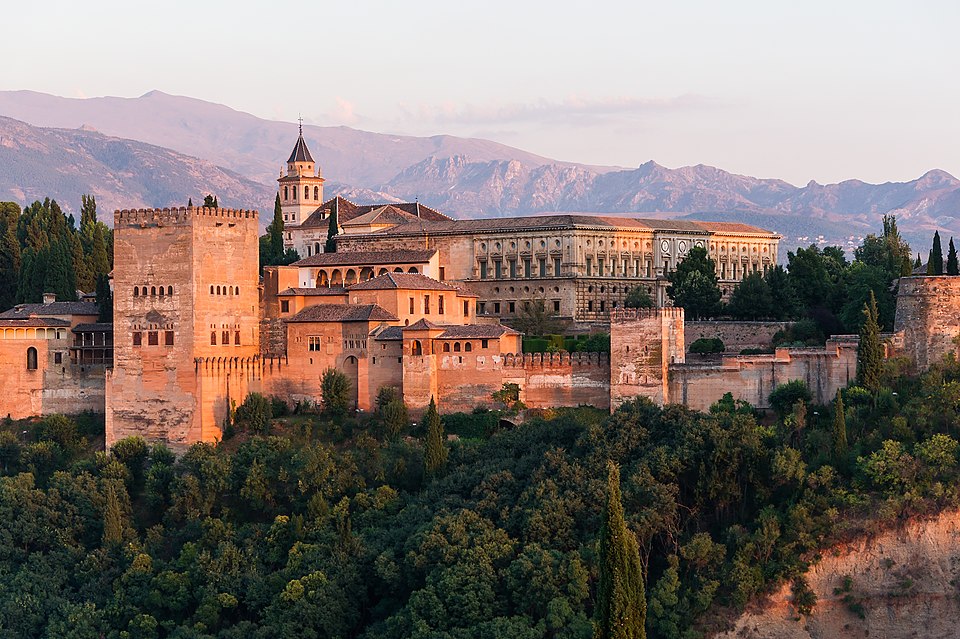
Alhambra
Content & sources
Photo: Jebulon · CC0
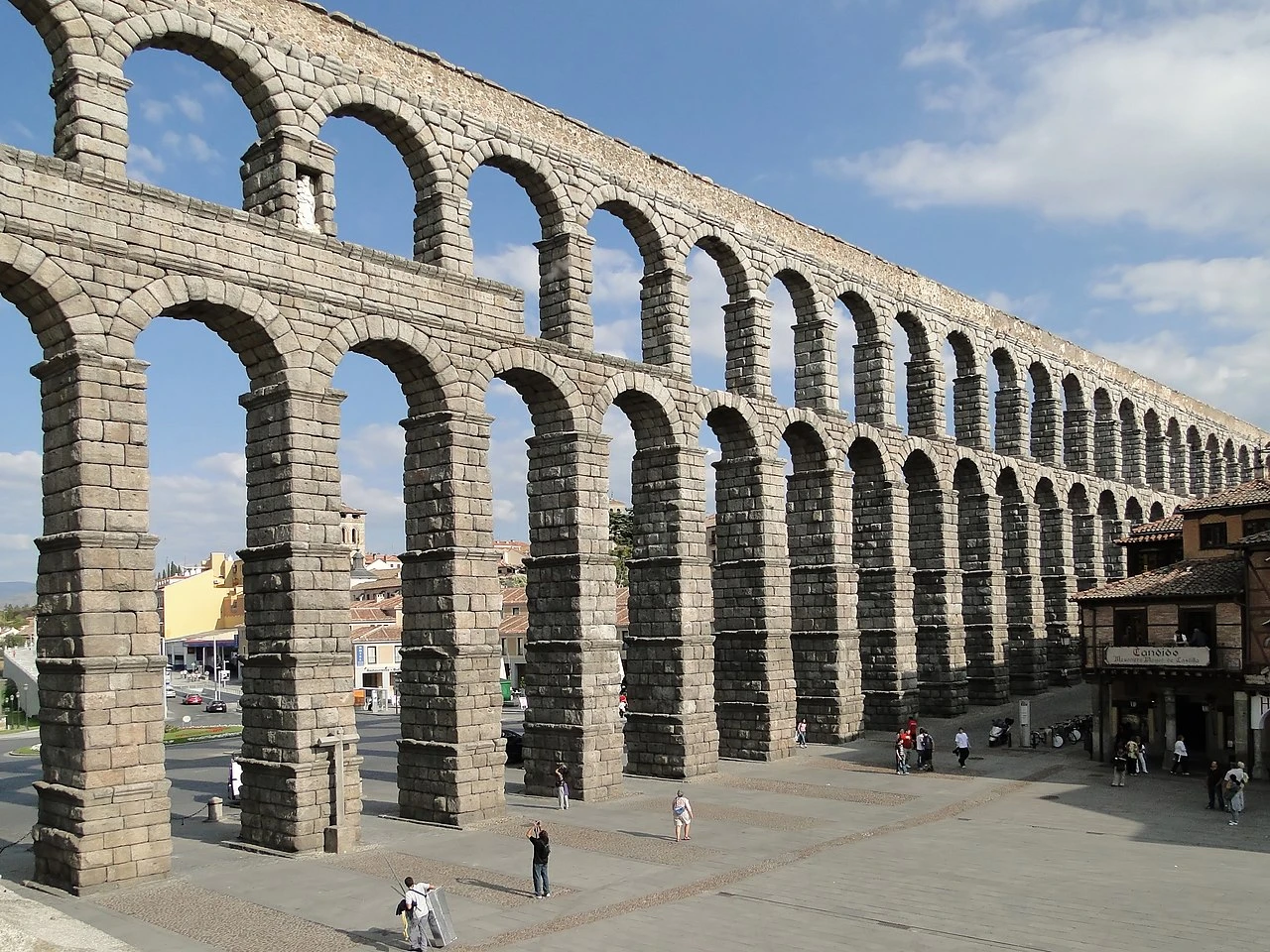
Segovia
Aqueduct of Segovia
Content & sources
Bernard Gagnon · CC BY-SA 3.0