Stanza · Audio guide
Fatih Camii Audio Guide
A place to remember. A story to take with you.
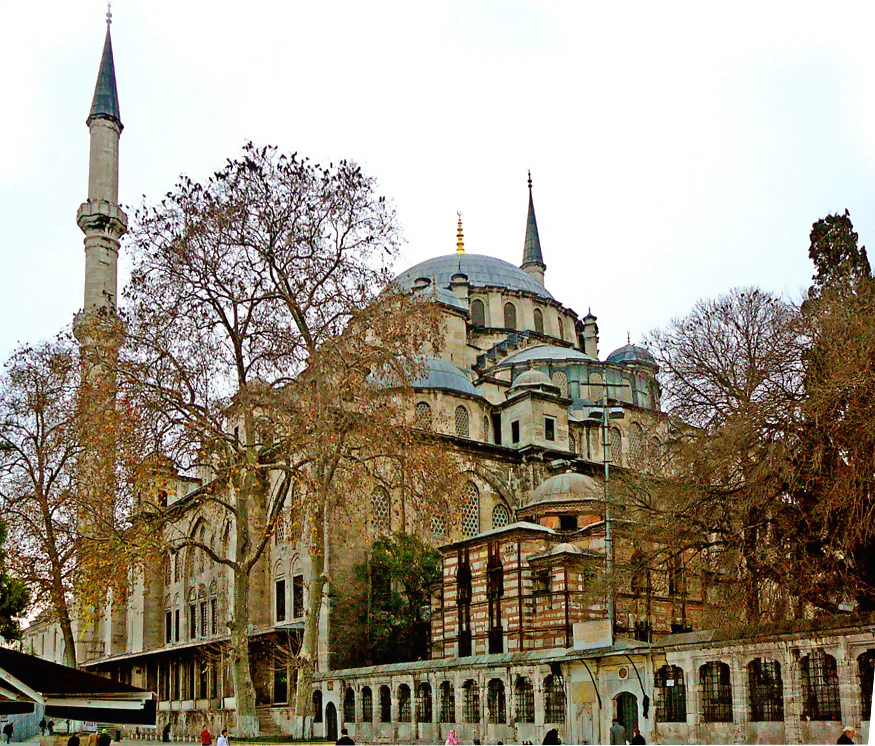
The Fatih Mosque is an Ottoman mosque located in the Fatih district of Istanbul. It is named after the Ottoman sultan Mehmed the Conqueror, who conquered Constantinople in 1453.
Download Stanza, then search for “Fatih Camii”.
About the tour
One guide. Your kind of visit.
The Fatih Mosque is an Ottoman mosque located in the Fatih district of Istanbul. It is named after the Ottoman sultan Mehmed the Conqueror, who conquered Constantinople in 1453.
Ready when you are.
- 01Get the free Stanza app.
iOS & Android
- 02Find your guide.
“Fatih Camii”
- 03Download before you go.
Works offline
Audio guide / 13 narrated stops
Inside the guide
Get to know a few of the stories before you go. Open a stop to read more.
01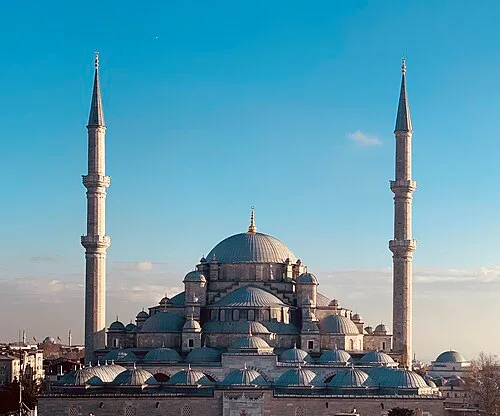 Outer Precinct and Byzantine Imperial Heritage
The Conqueror's Mosque on the Fourth Hill
Welcome to the mosque of the Conqueror. In 1453 the Ottoman sultan Mehmed the Second took Constantinople and ended the Byzantine Empire. He chose one of the city's hills for a mosque that would carry his name, Fatih, the Conqueror. It was the first monumental imperial mosque complex in the city he had won, a statement that the dynasty had come to stay. From the approach, the building shows itself in a cascade of domes falling towards two slender minarets. That silhouette has watched over this district ever since. The walk ahead leads through the courtyard, into the prayer hall, and out to the Conqueror's own tomb, with the colleges of his university at the end.
Ezzeldin.Elbaksawy · CC BY-SA 4.0
02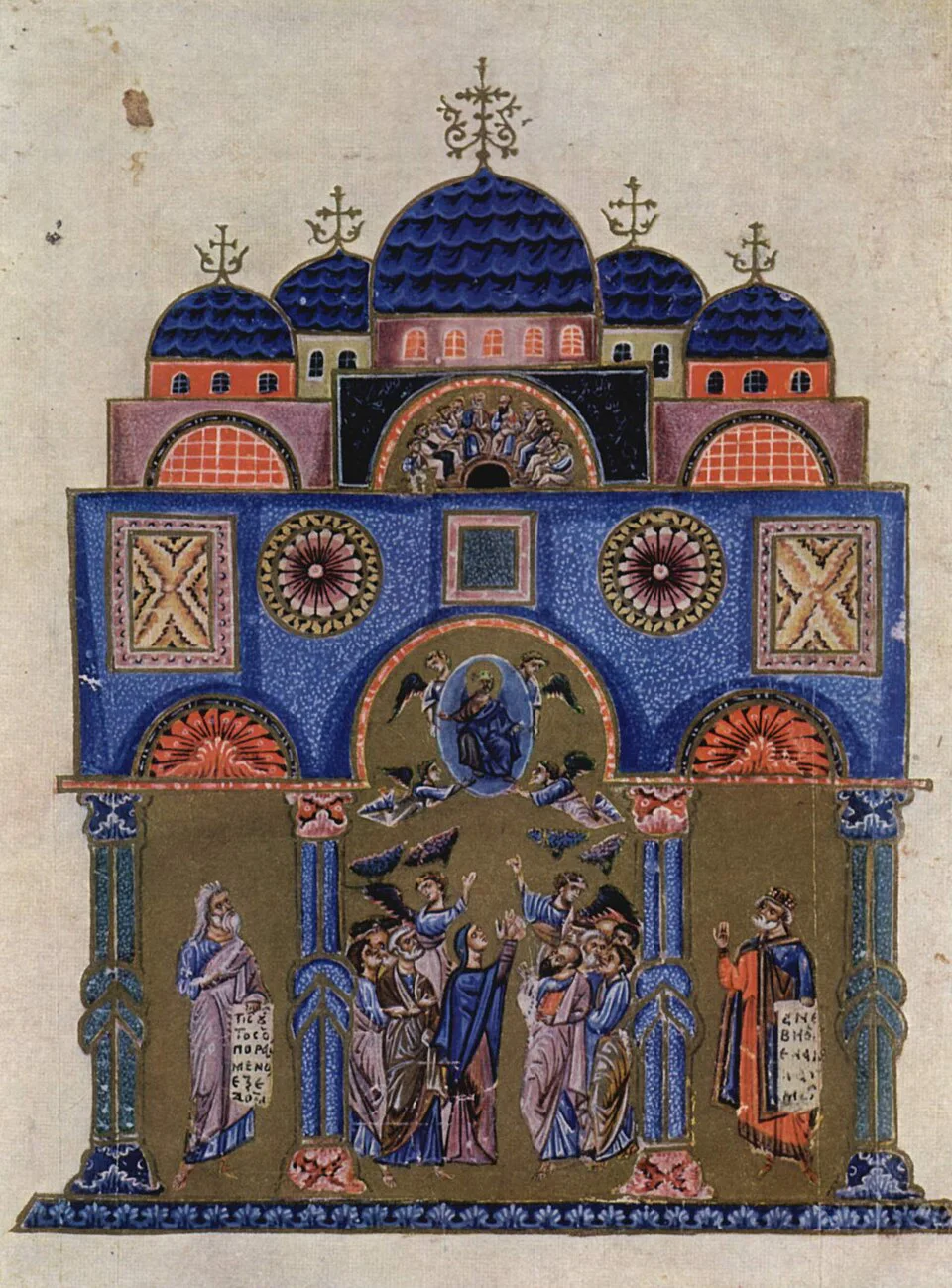 Outer Precinct and Byzantine Imperial Heritage
The Church That Stood Here: Holy Apostles Heritage
Before the mosque, another holy building crowned this hill. It was the Church of the Holy Apostles, a great Byzantine church of the sixth century. The illumination here comes from a Byzantine manuscript and shows a church of that world, its domes and crosses painted in blue and gold; it gives a sense of the tradition, not the building itself. The Holy Apostles had fared badly since the Fourth Crusade. Though it was the cathedral of the Ecumenical Patriarch, he was not permitted to carry out essential repairs, and the church slid into ruin. It was also an imperial burial ground. Constantine the Great lay there among many Roman emperors, his sarcophagus set in the middle of twelve others standing for the Apostles, in the place of Christ. When Mehmed the Conqueror chose this hill for his mosque, he chose a spot already heavy with imperial meaning, and claimed that inheritance for his own dynasty.
Meister der Predigten des Mönchs Johannes Kokkinobaphos · Public domain
03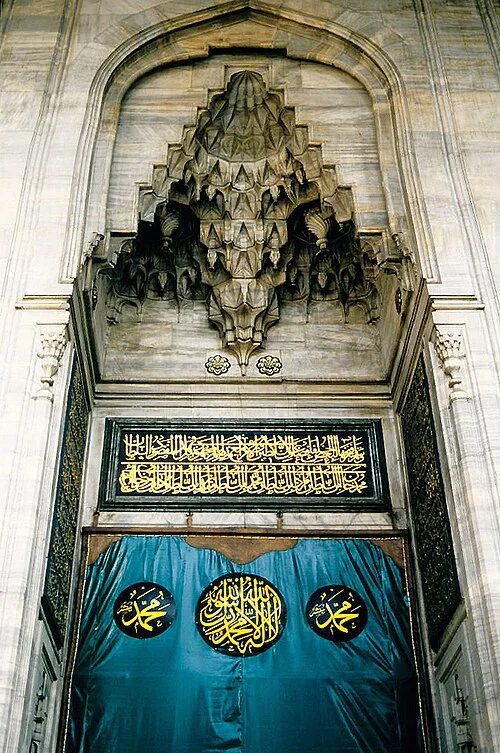 Monumental Portal and Arcaded Ablution Courtyard
The Crown Gate: A Survivor of 1470
The way into the sacred precinct runs through this towering gate. Above the doorway, carved stone niches stack into a honeycomb canopy, a form called muqarnas, and panels of gilded calligraphy run beneath it. This portal is one of the rare survivors of the first mosque, finished in 1470. When an earthquake brought the building down in 1766, the gate held, along with the courtyard walls and the lower shafts of the minarets. In the first mosque, as now, this was the ceremonial threshold. Worshippers passed under the carved canopy and into the ablution courtyard, leaving the street behind.
Listen in the appPhoto: LBM1948 · CC BY-SA 4.0
04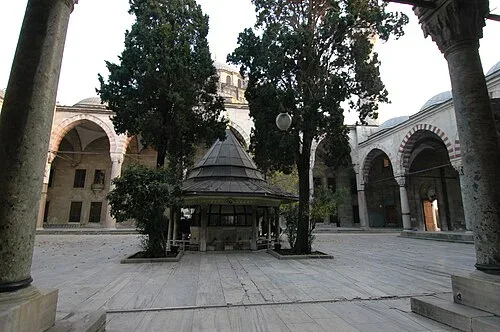 Monumental Portal and Arcaded Ablution Courtyard
The Arcaded Courtyard and Salvaged Marble
This courtyard is one of the few parts of the original complex still with us. Its arcades sheltered worshippers who came to perform their ablutions, washing hands, face and feet before prayer, as the faith requires. Marble paving runs under the arcades, and the complex was built of granite and marble by design. Some of that stone was old long before the mosque. In the dervish inn at the edge of the precinct, a courtyard rests on sixteen columns of verd antique and granite, almost certainly salvaged from Byzantine monuments, quite possibly from the Church of the Holy Apostles itself. The conqueror's mosque was raised, in part, from the stone of the city he conquered.
Listen in the appPhoto: Dosseman · CC BY-SA 4.0
05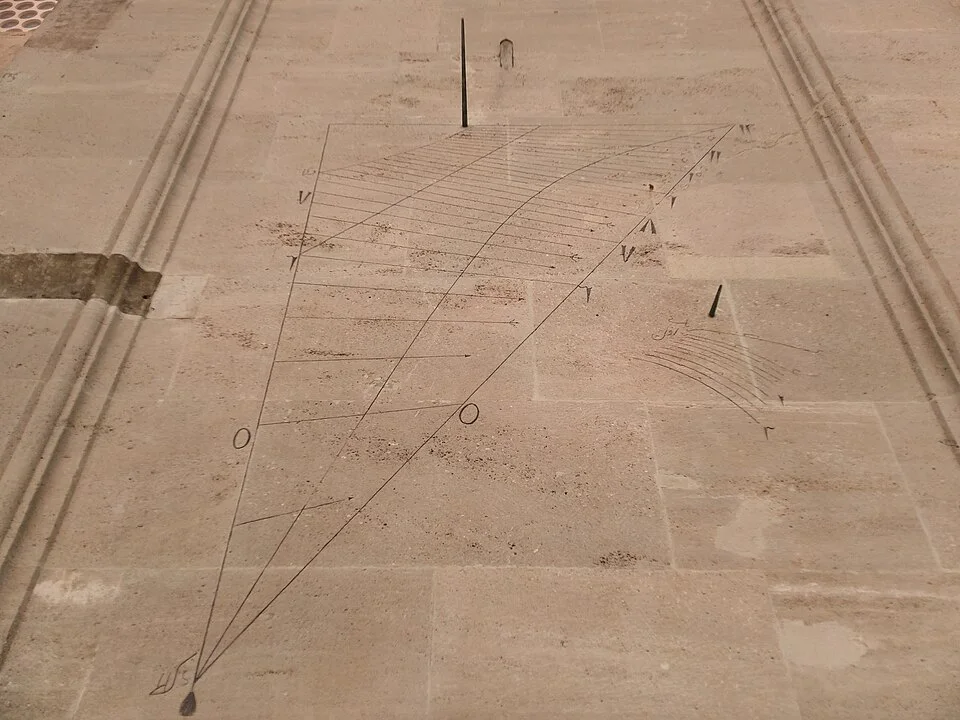 Monumental Portal and Arcaded Ablution Courtyard
The Sundial and the Hours of Prayer
Cut into the courtyard stone are fine engraved lines, fanning out from a metal rod that casts its shadow across them. This is a sundial, and its work was to keep the hours of prayer. Muslim prayer follows the sun, five times a day from dawn to nightfall, and the exact moment of each prayer shifts with the seasons. Sundials in mosque courtyards turned that moving schedule into something a community could read. Where the shadow crossed a carved line, the hour had come. Nobody knows who cut these lines or when, but their purpose is plain enough. A complex that kept time by the sun, and taught astronomy nearby, was a place where worship and learning shared the same courtyard.
Listen in the appPhoto: Ahmet Yurtbakan · CC BY-SA 4.0
06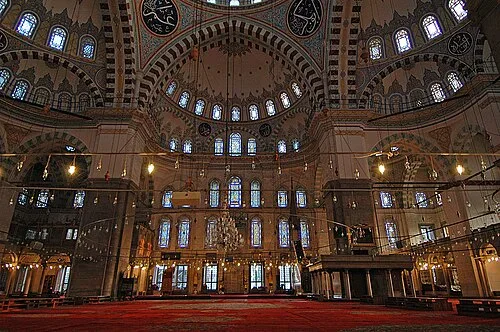 Grand Prayer Hall and Central Baroque Dome
The Prayer Hall: Rebirth from the 1766 Earthquake
On the twenty-second of May, 1766, an earthquake struck Istanbul with terrible force. The great dome of the Fatih Mosque collapsed, and the walls were damaged beyond repair. The sultan of the day, Mustafa the Third, commissioned a new mosque on the site. Between 1767 and 1771 his architect, Mehmed Tahir Ağa, raised the building seen here, on a plan entirely different from the first. Tahir Ağa worked old classical pieces from the ruined mosque into his new Baroque fabric, so the two eras meet in the same walls. This hall remains what it has always been, the worship space of a working Friday mosque, built to hold the whole congregation at noon prayers.
Listen in the appPhoto: Dosseman · CC BY-SA 4.0
07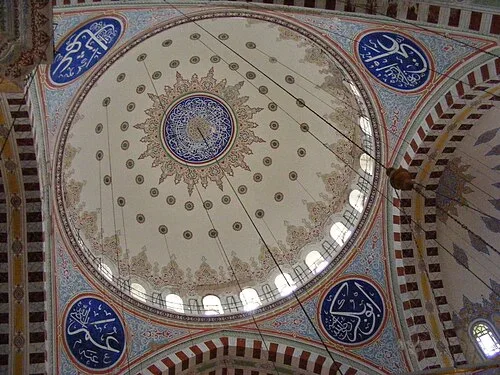 Grand Prayer Hall and Central Baroque Dome
The 26-Meter Dome and the Sinan Plan
The dome overhead spans twenty-six meters, held up by four semi-domes, one on each axis, resting in turn on four great marble columns. That arrangement is a deliberate echo of Hagia Sophia, and of the designs Mimar Sinan pioneered and reused across Istanbul, so the room reads as a copy of an older idea of heaven. The first mosque was built differently: its dome also measured twenty-six meters across, but it was supported by a single semi-dome, on the qibla side. A story has clung to that first dome for centuries. It says the Sultan raged that his dome was neither as broad nor as high as Hagia Sophia's, and that the architect answered that a lower dome stood better against earthquakes. The tale ends with the architect's severed hands. It is folklore, told and retold, but it captures how fiercely the Conqueror wanted his mosque to rival the great church of the city.
Listen in the appPhoto: Alaexis · CC BY-SA 2.5
08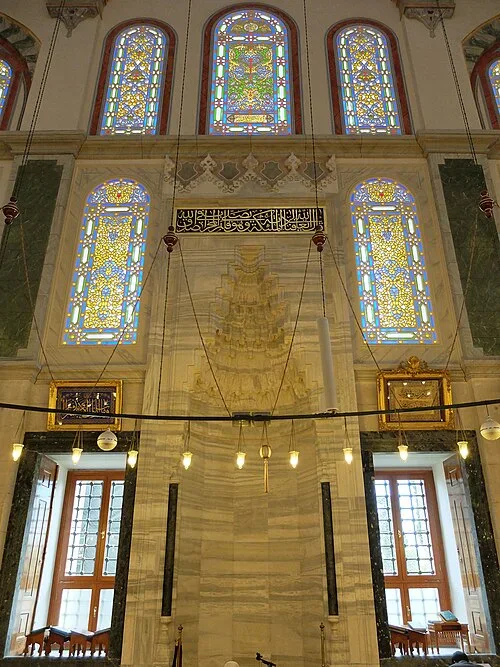 The Sanctuary: Surviving 15th-Century Mihrab and Minbar
The Mihrab: Original Stone of 1470
At the centre of the qibla wall stands the mihrab, the niche that shows the direction of Mecca, towards which every prayer here is directed. Above it, stained glass windows pour coloured light down the marble. This niche is a genuine survivor. It stood here in the original mosque, completed in 1470, and it stayed when everything around it fell. Construction of that first building began in 1463, on the Conqueror's order, and its architect was Atik Sinan, a Greek architect of the Ottoman court. Inside the prayer hall, the oldest thing is not a wall or the dome but this frame of stone, one of the few survivors of the first building, still marking the direction of prayer after more than five centuries.
Listen in the appPhoto: R Prazeres · CC BY-SA 4.0
09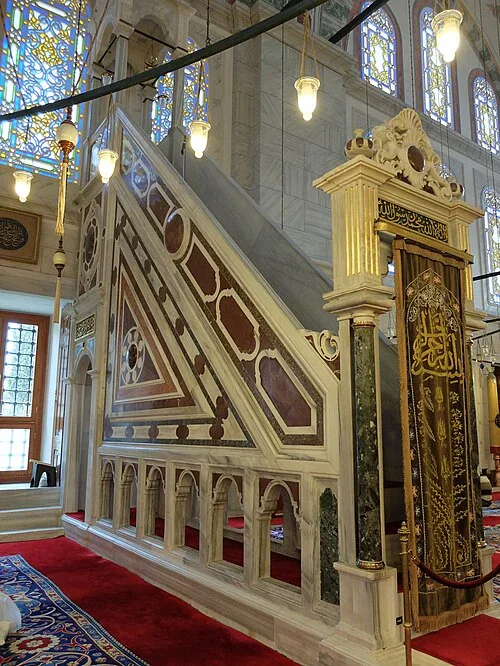 The Sanctuary: Surviving 15th-Century Mihrab and Minbar
The Minbar and the Turkish Call to Prayer
Beside the mihrab rises the minbar, the tall staircase pulpit from which the sermon is delivered at Friday prayers. Its marble carving, with inlaid panels and a gilded canopy, belongs to the rebuilding of 1771, in the Baroque taste of that age. From these steps the preacher addresses the congregation each week, as imams have done here since the Conqueror's time. This mosque also holds a place in modern history. On the thirtieth of January, 1932, the call to prayer was performed here in the Turkish language for the first time, part of the reforms of the early Turkish Republic. For centuries the adhan had been sung in Arabic; from this mosque, a new era heard it in Turkish.
Listen in the appPhoto: R Prazeres · CC BY-SA 4.0
10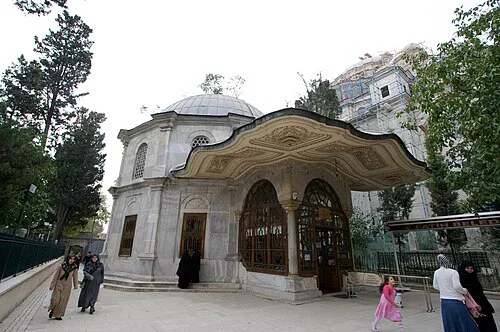 Imperial Shrine: Mausoleum of Mehmed the Conqueror
The Tomb of Mehmed the Conqueror
In the garden behind the mosque stands a domed building with wide, sheltering eaves. This is the tomb of Mehmed the Second, the Conqueror himself, who died in 1481. It is the venerated heart of the whole complex, and like the mosque it was rebuilt after the earthquake of 1766. For the Ottoman dynasty it was more than a grave. When a new sultan was enthroned, he first girded the Sword of Osman at the Eyüp Sultan Mosque, the act that made his reign official. Then he came here, to the tomb of the Conqueror, to honour the man who had won the city, before he took up residence at Topkapı Palace.
Listen in the appSitomon · CC BY-SA 2.0
- 11
Inside the Imperial Mausoleum
Inside the Conqueror's tomb: a richly painted chamber still used for official ceremonies.
- 12
The Royal Graveyard (Hazire)
The hazire, the mosque's burial garden where the grandees of the Ottoman Empire lie.
- 13
The Sahn-ı Seman: The Conqueror's University
The Sahn-ı Seman, the eight colleges that made the Conqueror's mosque a university for a thousand students.
Fatih Camii
Frequently asked questions
How much does the guide cost?
Free app download. Listed guide price: $0.99. Guide price shown in the app. Audio guide only. Venue admission is separate.
Can I listen without internet?
Yes. Download the guide’s audio, images, and maps in the app before your visit. Your downloaded content is then available offline.
Can I listen in my language?
This audio guide is available in 15 languages, including English.
Do I need to follow a schedule?
No. This is a self-guided experience. Choose your stops, pause whenever you like, and return to a story at your own pace.
At your own pace
Explore Fatih Camii.
Download Stanza, then search for “Fatih Camii”.
Free app download · Guide price shown in the app
Keep exploring
Nearby audio guides
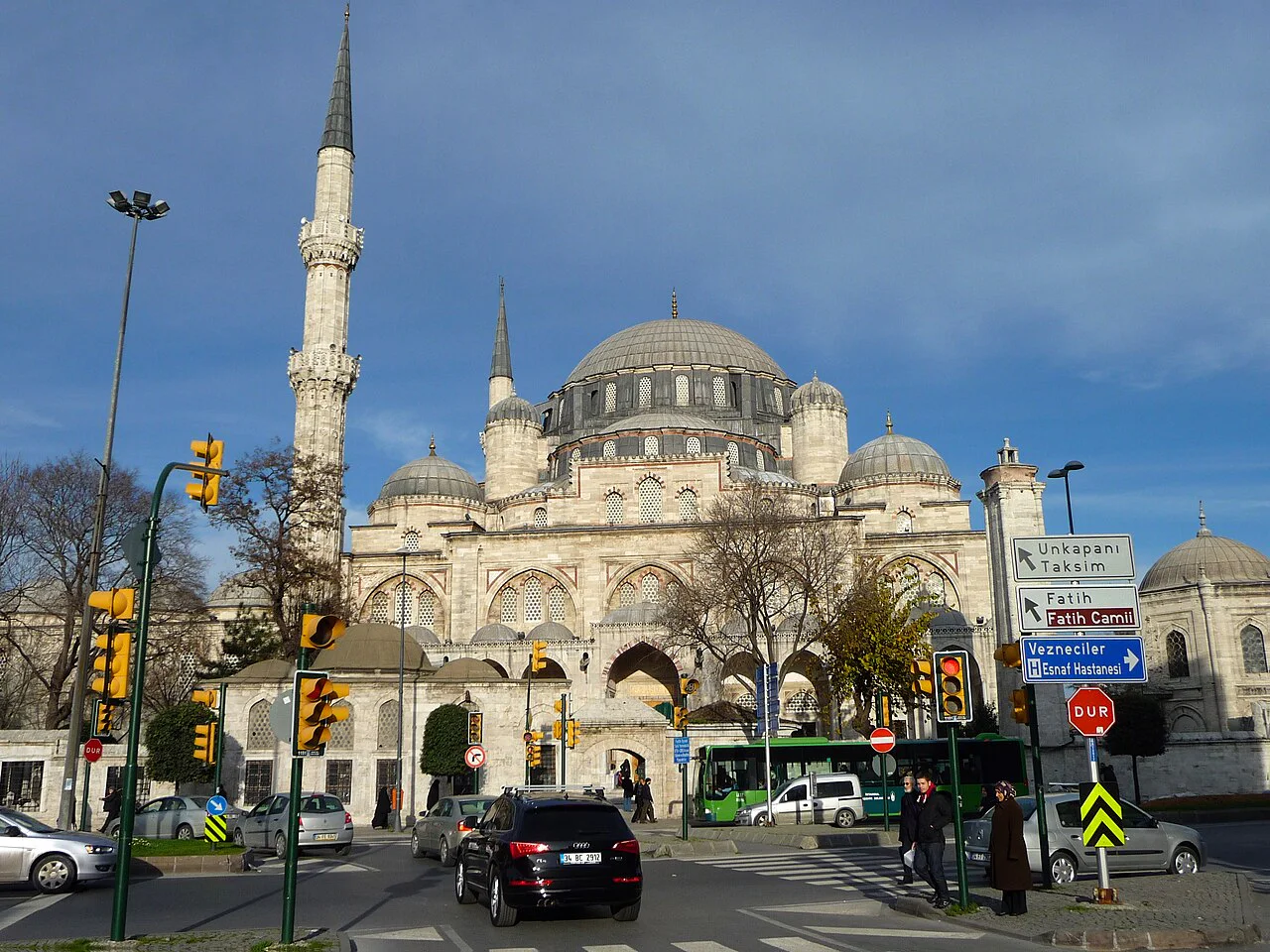
Istanbul · 1 km
Şehzade Camii
Content & sources
Photo: Ondřej Žváček · CC BY 2.5
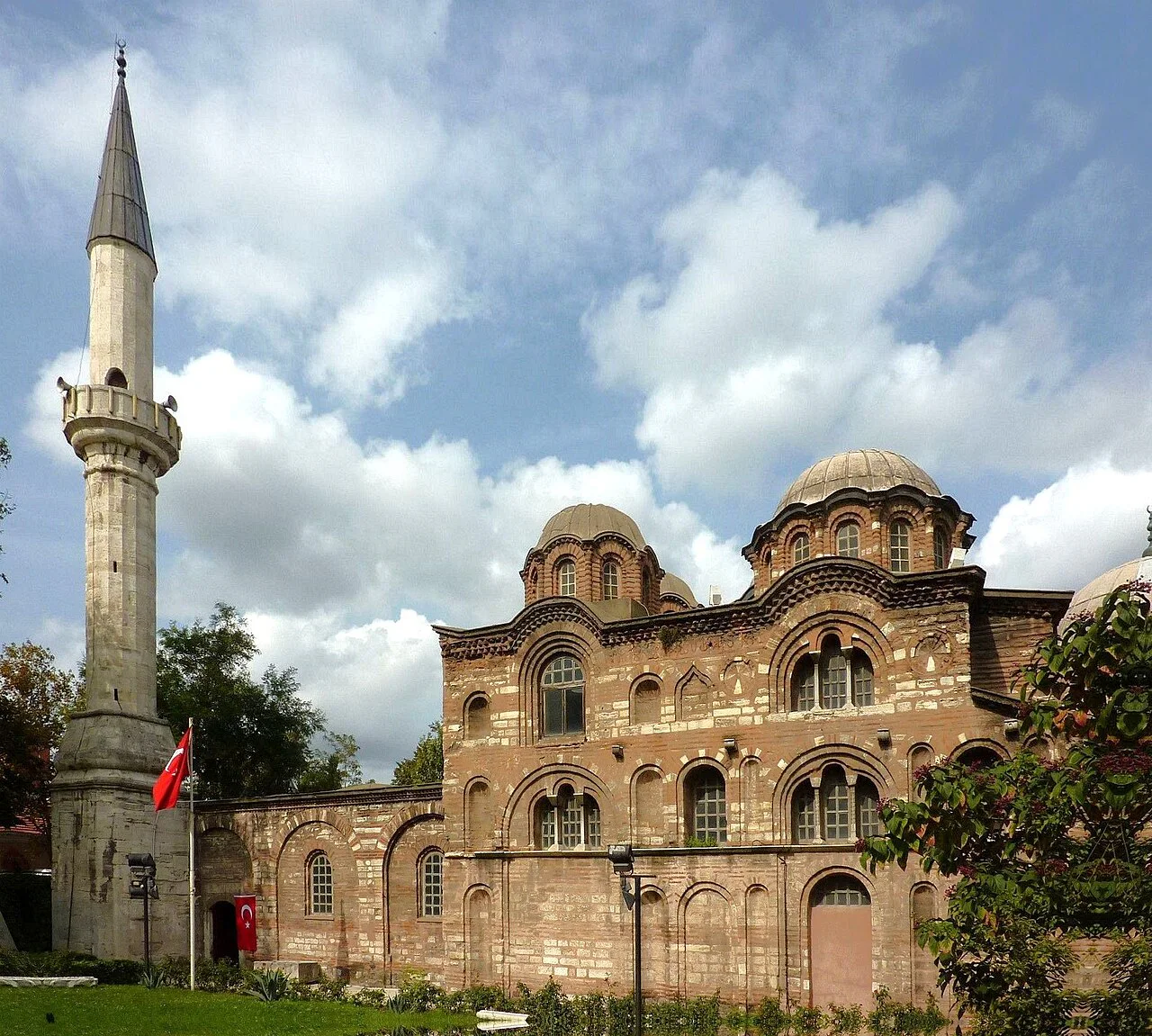
Istanbul · 1 km
Fethiye Camii
Content & sources
Photo: Chris06 · CC BY-SA 4.0
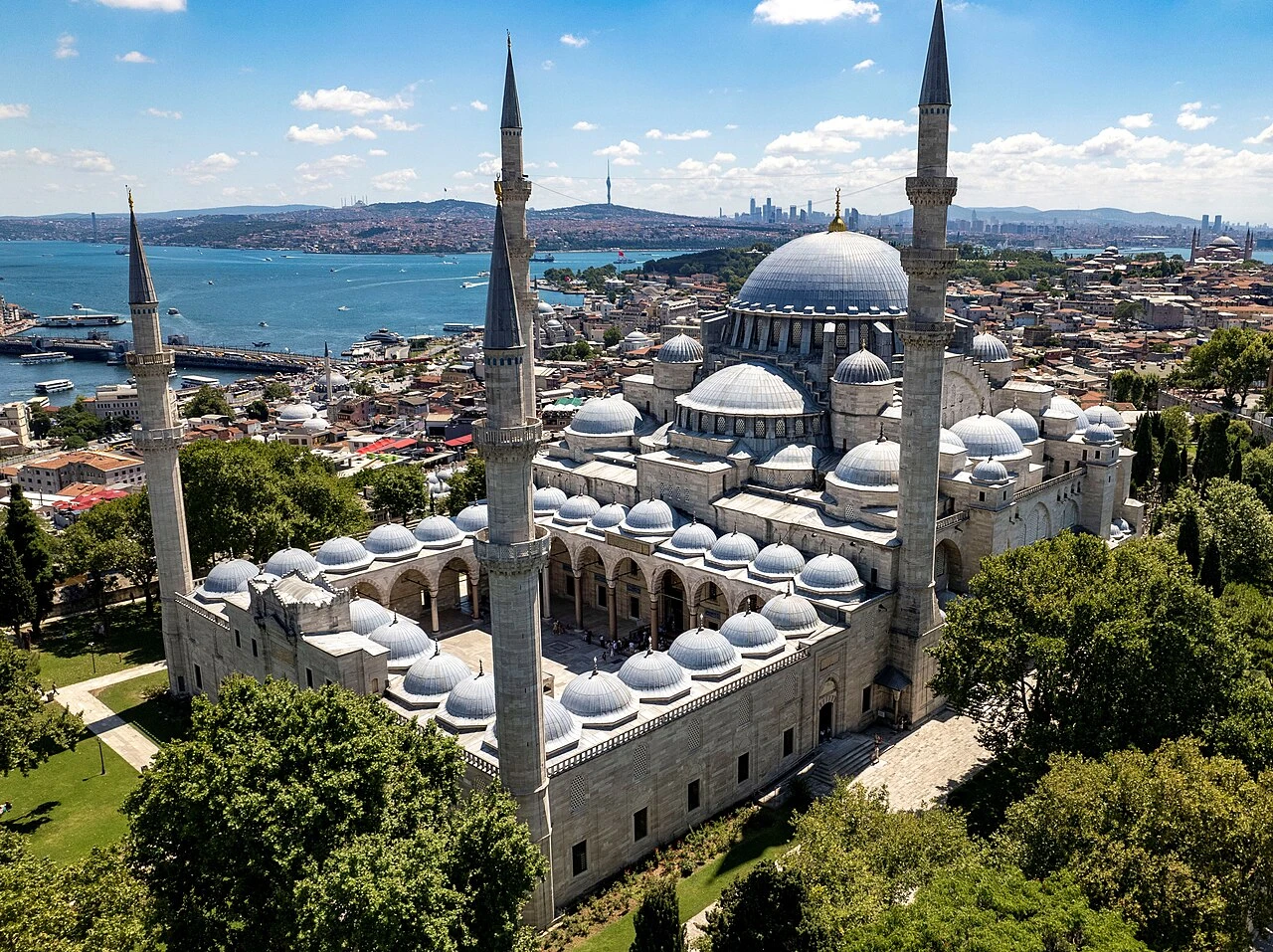
Istanbul · 1 km
Süleymaniye Mosque
Content & sources
Hunanuk · CC0
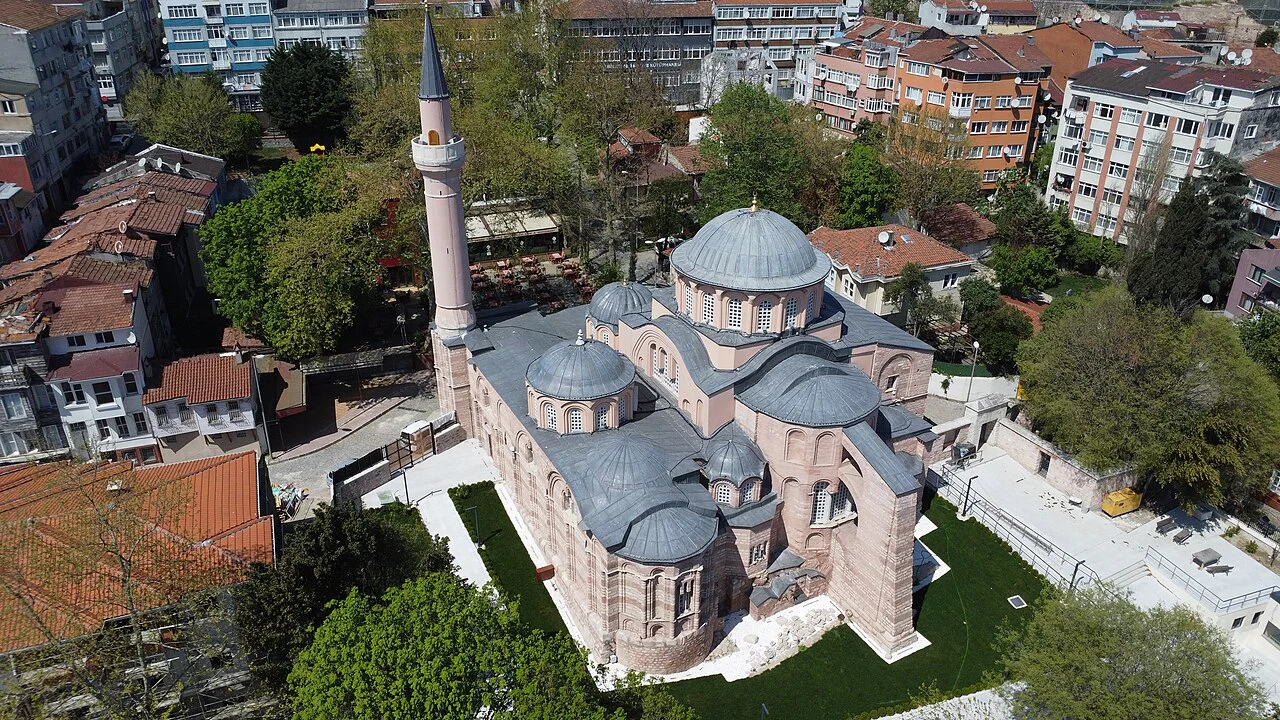
Istanbul · 2 km
Kariye Camii
Content & sources
Photo: Tadam · CC0