Stanza · Audio guide
Kariye Camii Audio Guide
A place to remember. A story to take with you.
The Chora is a Byzantine church in Istanbul that has been converted into a mosque. It is famous for its collection of Late Byzantine mosaics and frescos.
Download Stanza, then search for “Kariye Camii”.
About the tour
One guide. Your kind of visit.
The Chora is a Byzantine church in Istanbul that has been converted into a mosque. It is famous for its collection of Late Byzantine mosaics and frescos.
Ready when you are.
- 01Get the free Stanza app.
iOS & Android
- 02Find your guide.
“Kariye Camii”
- 03Download before you go.
Works offline
Audio guide / 15 narrated stops
Inside the guide
Get to know a few of the stories before you go. Open a stop to read more.
01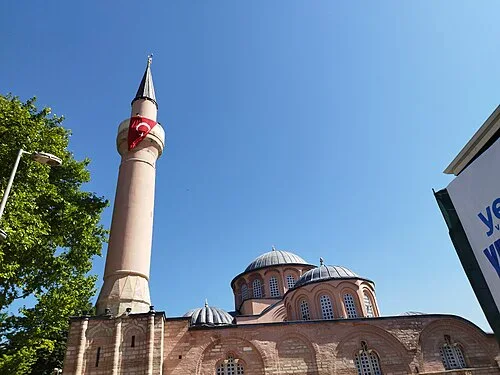 Western Main Facade and Exterior Courtyard
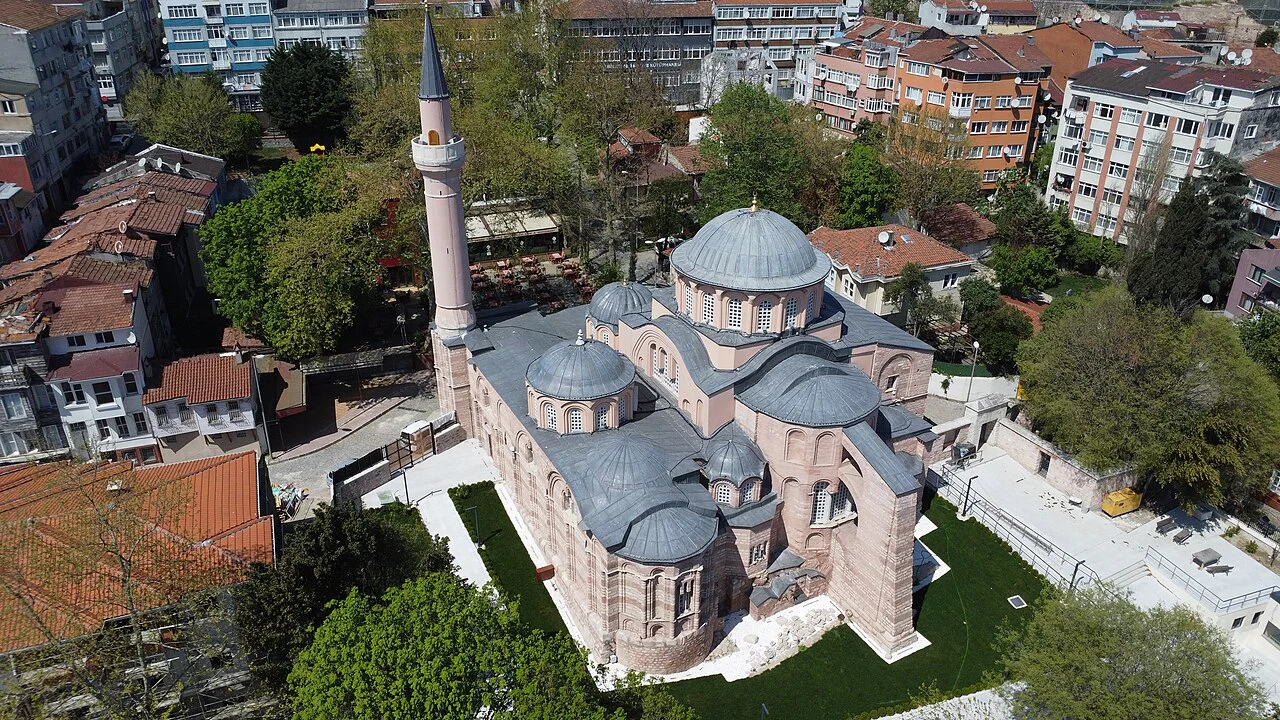
Kariye Camii: The Church of the Holy Saviour in the Country
Welcome to Kariye Camii, known for centuries as the Church of the Holy Saviour in the Country. The Greek word chora means country, or fields, and the name began as plain geography: the monastery stood outside the walls of Constantinople when it was founded in the early fourth century. In 413 the prefect Anthemius raised the great Theodosian walls, and the church found itself inside the city's defences. It kept its country name all the same, and the name grew into something more — a title and a piece of wordplay you will meet at the Christ panel inside. The silhouette carries its own layers, with Byzantine domes of brick rising among later mosque lines. Ahead lie two long narthexes of mosaic, a burial chapel, and some of the finest surviving Byzantine mosaics and frescoes anywhere. The story runs from a statesman's ambition to a fresco of the resurrection.
Photo: Limes Sorabicus · CC0
02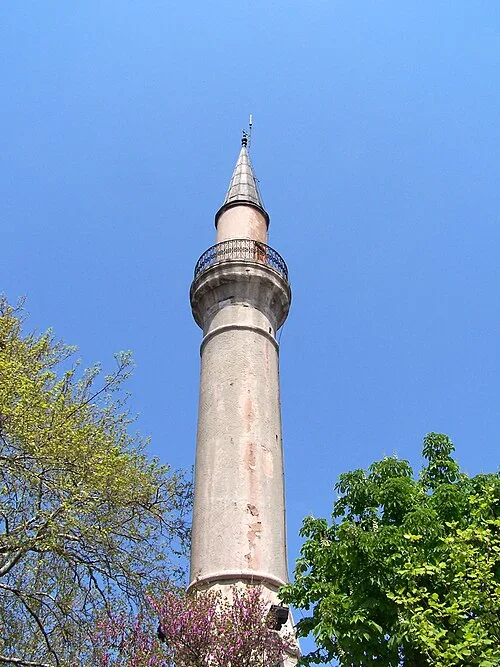 Western Main Facade and Exterior Courtyard
The Minaret: From Church to Mosque
Every mosque calls the faithful to prayer from a minaret, and this slender one rises at the southwest corner, where the bell tower of the old church had stood. Around 1511 Atik Ali Pasha, grand vizier to Sultan Bayezid the Second, turned the church into a mosque. The Turkish name, Kariye Camii, simply carries the old Greek word Chora over into a new tongue. The conversion was restrained: minor structural changes, a marble mihrab at the southeast corner, and this minaret. Because Islamic practice forbids figural images in places of prayer, the mosaics and frescoes were covered with plaster. That plaster, meant to hide them, ended up shielding them for more than four centuries. In 1948 the American scholars Thomas Whittemore and Paul Underwood began a full restoration. The building opened as a museum ten years later, and in 2020 it became a mosque again — mosaics and all.
User:Darwinek · CC BY-SA 3.0
03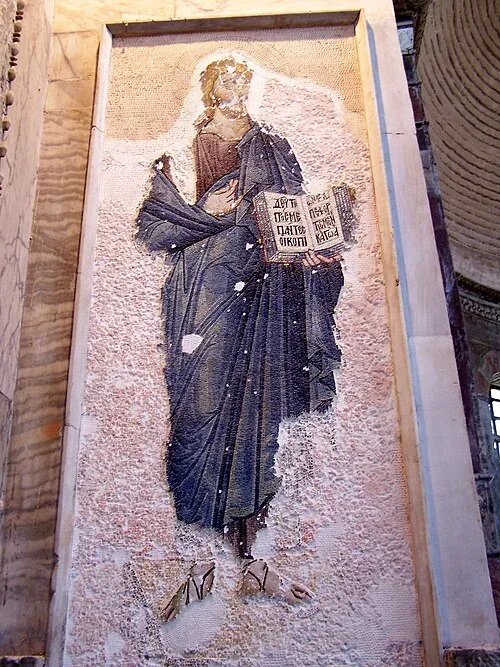 The Exonarthex (Outer Narthex) - Christ's Miracles and Infancy
Christ Mosaic
Christ stands nearly full length, a jeweled Gospel book in one hand, the other raised in blessing. His Greek title here calls him the Chora of the Living — the Land of the Living — turning the monastery's own name into a promise. The phrase comes from Psalm 116, sung in the Orthodox funeral service. That was a pointed choice for this house: it had gained its own burial chapel, and the man who paid for the decoration expected to lie there. Much of the surface has flaked away, the accumulated loss of centuries. The panel was one of a pair. A matching Virgin stood opposite, and together they flanked the barrier before the sanctuary as icons for veneration.
Listen in the appbrewbooks from near Seattle, USA · CC BY-SA 2.0
04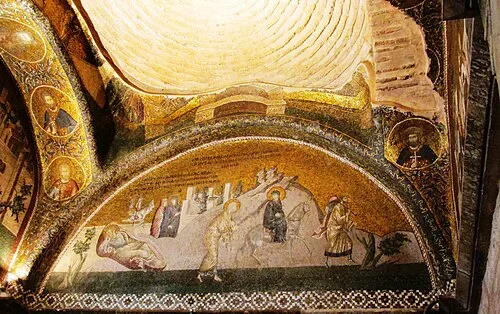 The Exonarthex (Outer Narthex) - Christ's Miracles and Infancy
Journey to Bethlehem
Mary and Joseph make their way to Bethlehem, small figures in a broad, open landscape. Ahead of them a crowd gathers for the enrollment for taxation before Governor Quirinius — the census that, in the Gospel account, brought the couple to the town. The outer narthex reads like a story told in pictures, bay by bay along the corridor: Christ's infancy first, then his public life of healing and miracles. The artists set each scene in spacious surroundings, with classical buildings and rolling ground serving almost as stage scenery.
Listen in the appbrewbooks from near Seattle, USA · CC BY-SA 2.0
05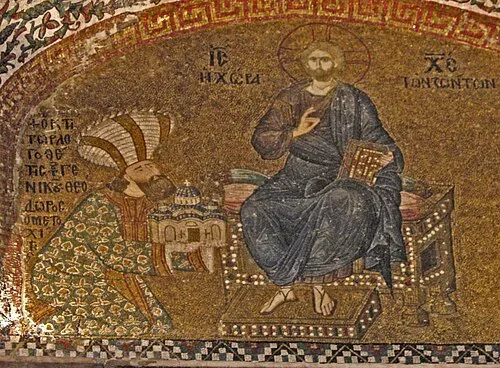 The Esonarthex (Inner Narthex) - Imperial Patronage and Genealogy
The Dedication Mosaic: Theodore Metochites
The man kneeling in the extravagant hat is Theodore Metochites, and this church is his life's work. He was Grand Logothete of the Treasury, effectively the empire's chief finance minister, as well as a renowned classical scholar. In the 1310s he poured his fortune into Chora, rebuilding and decorating until the interior became famous across the Byzantine world. Above the door to the main church he had himself painted in the traditional donor pose: elaborate court dress, a tall turbaned hat, offering a model of the church to Christ enthroned. He gave his celebrated library to the monastery as well. In 1328 the new emperor, Andronikos the Third, sent him into exile. Two years later he was allowed back, and he lived out his last years here as a monk. When he died in 1332, he was buried in the mortuary chapel he had prepared for himself.
Listen in the appGryffindor · CC BY-SA 4.0
06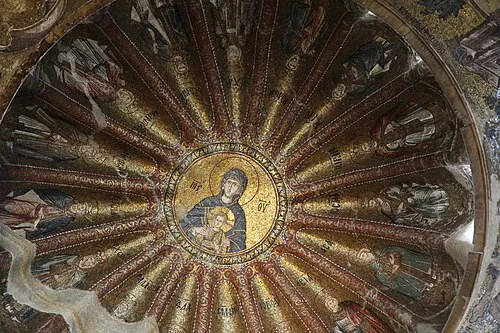 The Esonarthex (Inner Narthex) - Imperial Patronage and Genealogy
Genealogy Dome of the Virgin
From the centre of this ribbed dome, the Virgin and Child look out from a round medallion. Around them the ribs fan outward, each carrying smaller medallion portraits — the ancestors and holy kin of Christ and his mother, arranged overhead like a family tree in gold. The inner narthex holds two of these pumpkin domes, named for their ribbed, melon-like shape. The twin dome carries Christ Pantocrator, the Almighty. Between them, the domes keep the pairing that runs through the whole building: Mary on one, Christ on the other, their imagery echoing across both corridors.
Listen in the appTill Niermann · CC BY-SA 3.0
07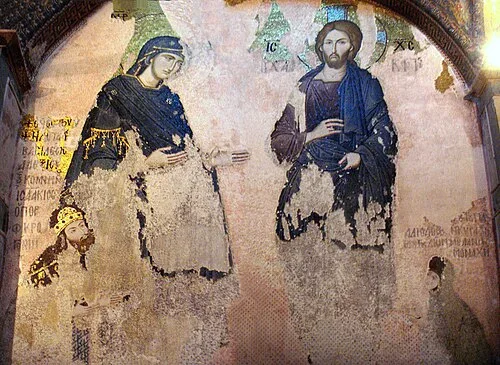 The Esonarthex (Inner Narthex) - Imperial Patronage and Genealogy
The Great Deesis
Two monumental figures dominate this wall: Christ and his mother, face to face in prayer. This is a Deesis — the plea for mercy at the last judgment — though John the Baptist, who usually completes the group, is absent. Below them kneel two earlier donors. One is Isaac Komnenos, a son of the Emperor Alexios, who had this church rebuilt some two centuries earlier. The other is a nun styled Melanie, the Lady of the Mongols, who may have been a daughter of Emperor Michael the Eighth. Time has been cruel: large areas of the panel are lost, and the faces are barely legible. Even so, the scale is the message. A famous Deesis of similar size had been installed in the south gallery of Hagia Sophia after the Latin occupation ended, and scholars hear this panel answering it.
Listen in the appPhoto: World Imaging · CC BY-SA 3.0
08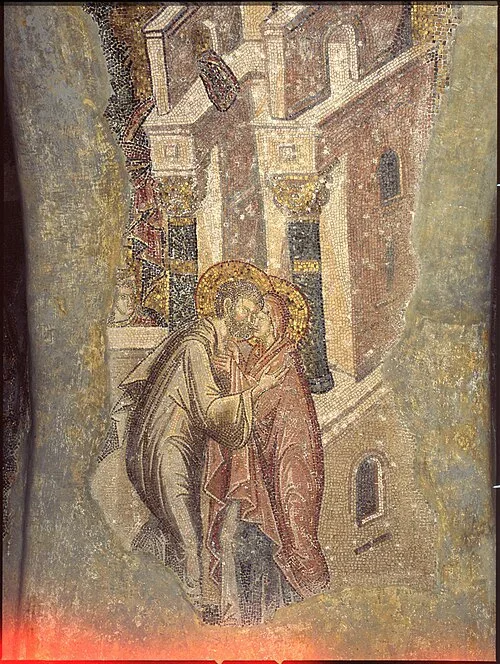 The Esonarthex (Inner Narthex) - The Life of the Virgin Mary
Meeting of Anne and Joachim
An elderly couple embraces at a gate, and with them the whole story of the Virgin begins. Her parents, Joachim and Anne, were childless, and Joachim's offering had been rejected at the temple. The scene follows the Apocryphal Gospels, writings outside the Bible that shaped medieval devotion all the same. Their meeting at the golden gate of Jerusalem is the moment that leads to Anne's conception of Mary. What makes this corridor remarkable is its scope: a full mosaic cycle devoted to Mary's life, scene after scene across the vaults of one narrow passage, is an exceptional survival.
Listen in the appJosé Luiz · CC BY-SA 3.0
09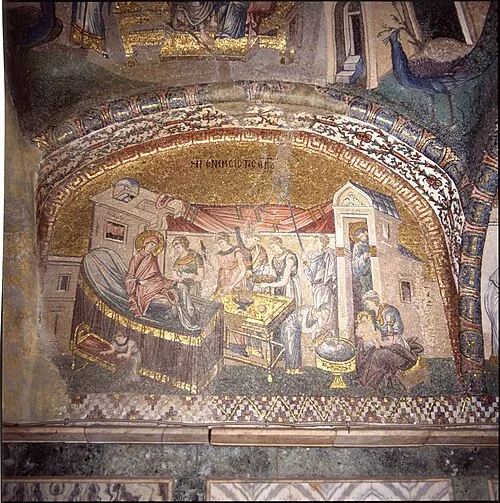 The Esonarthex (Inner Narthex) - The Life of the Virgin Mary
Birth of the Virgin
Anne rests on a draped bed while the household bustles around her: she has just given birth to Mary. Attendants prepare the newborn, warm water at the ready, in a chamber furnished like a well-off Byzantine home — servants, basins, heavy fabrics. The mosaicists treated holy story with the textures of ordinary household life. Across these vaults the corridor keeps building the biography, one domestic scene at a time.
Listen in the appM. Erem Çalıkoğlu · CC BY 4.0
10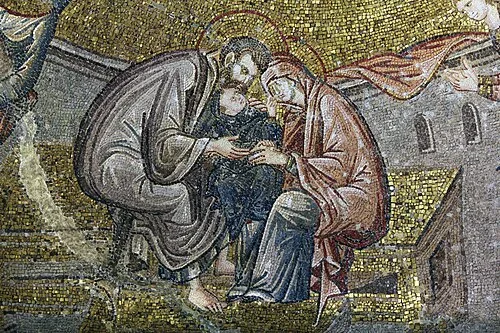 The Esonarthex (Inner Narthex) - The Life of the Virgin Mary
The Virgin Caressed by Her Parents
A little girl is kissed by both her parents at once. That small gesture of affection is what makes this mosaic remarkable. Earlier Byzantine art had shown holy figures stiff and frontal, much the same for centuries. Here Joachim and Anne lean in towards their child, bodies soft with movement, faces full of feeling. Art historians call this flowering the Palaeologan Renaissance, and they often compare it with Giotto's Arena Chapel in Padua, painted at roughly the same time — both filled with scenes of Mary, her parents Anne and Joachim, and Christ. None of the Chora's mosaicists left their names. All the credit rests with the patron whose kneeling figure was met earlier.
Listen in the appTill Niermann · CC BY-SA 3.0
- 11
Virgin Entrusted to Joseph
The High Priest Zechariah, the rods on the altar, and the sign that chose Joseph.
- 12
Theotokos Mosaic of the Naos
One of only three surviving mosaics in the main hall, and the great marble space around it.
- 13
Koimesis: The Dormition of the Virgin
Mary's last sleep, with her soul held in Christ's hands like an infant.
- 14
The Anastasis: Resurrection in the Parecclesion
Christ in blazing white pulls Adam and Eve from their tombs — the famous Anastasis of the burial chapel.
- 15
The Parecclesion Dome: Heavenly Court
Saints and angels circle the burial chapel's dome, closing the tour on the heavenly court.
Kariye Camii
Frequently asked questions
How much does the guide cost?
Free app download. Listed guide price: $1.99. Guide price shown in the app. Audio guide only. Venue admission is separate.
Can I listen without internet?
Yes. Download the guide’s audio, images, and maps in the app before your visit. Your downloaded content is then available offline.
Can I listen in my language?
This audio guide is available in 15 languages, including English.
Do I need to follow a schedule?
No. This is a self-guided experience. Choose your stops, pause whenever you like, and return to a story at your own pace.
At your own pace
Explore Kariye Camii.
Download Stanza, then search for “Kariye Camii”.
Free app download · Guide price shown in the app
Keep exploring
Nearby audio guides
Istanbul · 1 km
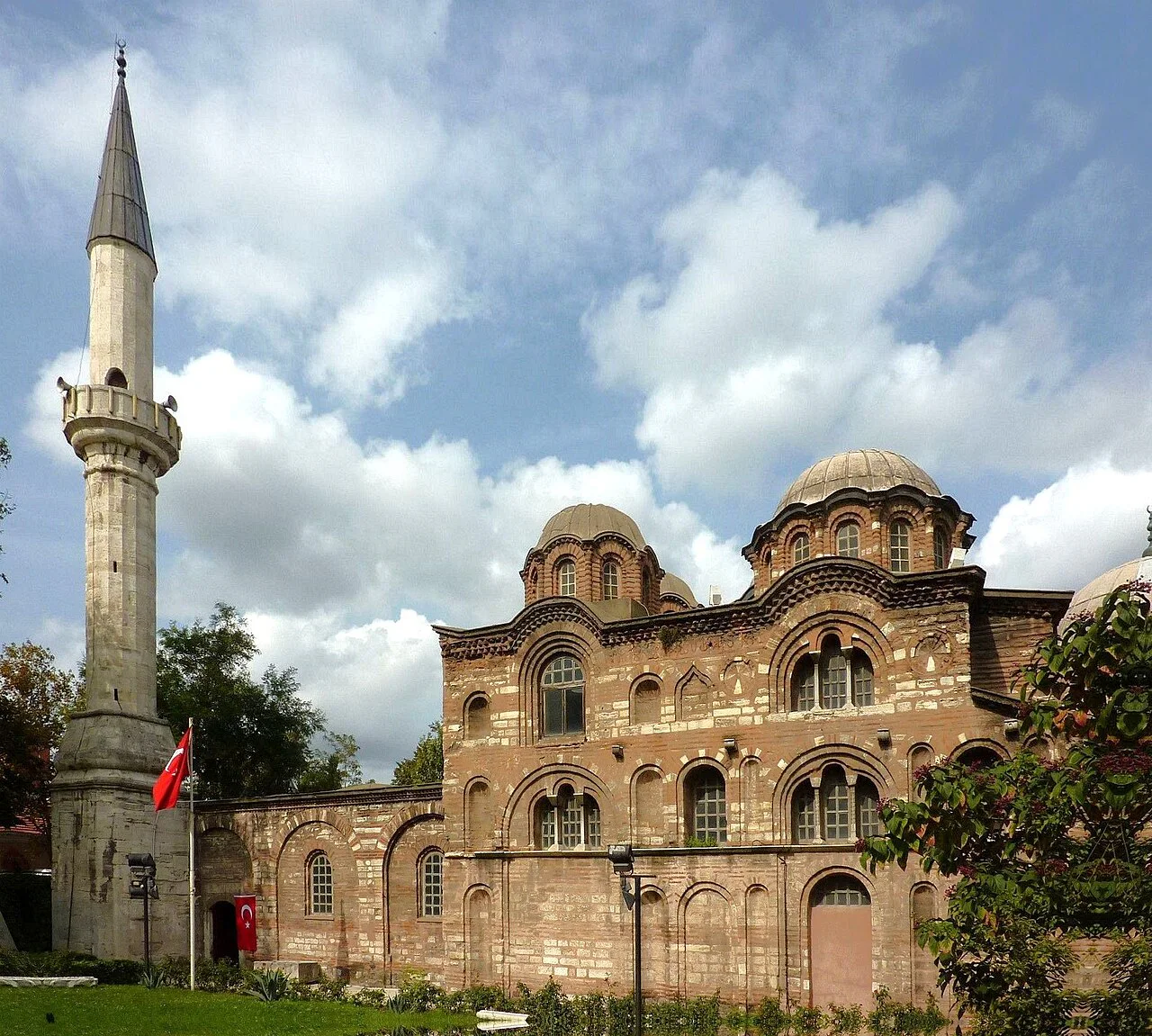
Fethiye Camii
Content & sources
Photo: Chris06 · CC BY-SA 4.0
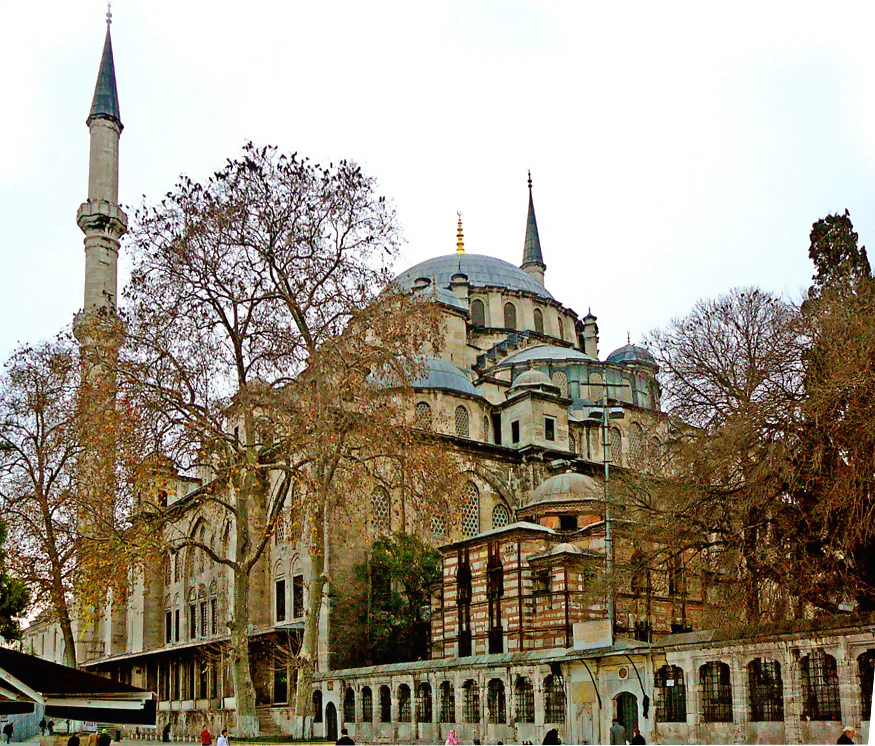
Istanbul · 2 km
Fatih Camii
Content & sources
Muscol · CC BY-SA 3.0
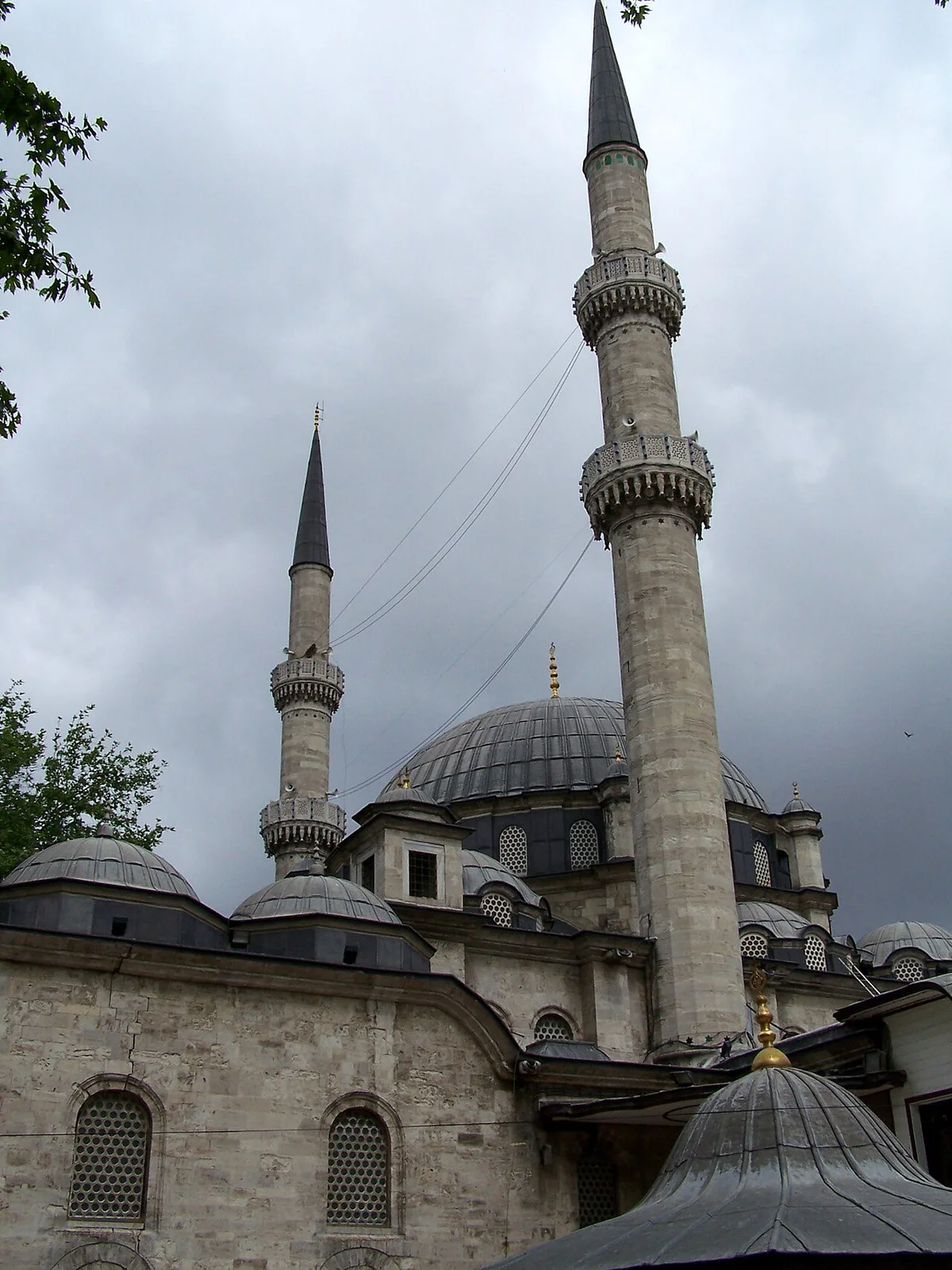
Eyüpsultan · 2 km
Eyüp Sultan Camii
Content & sources
User:Darwinek · CC BY-SA 3.0
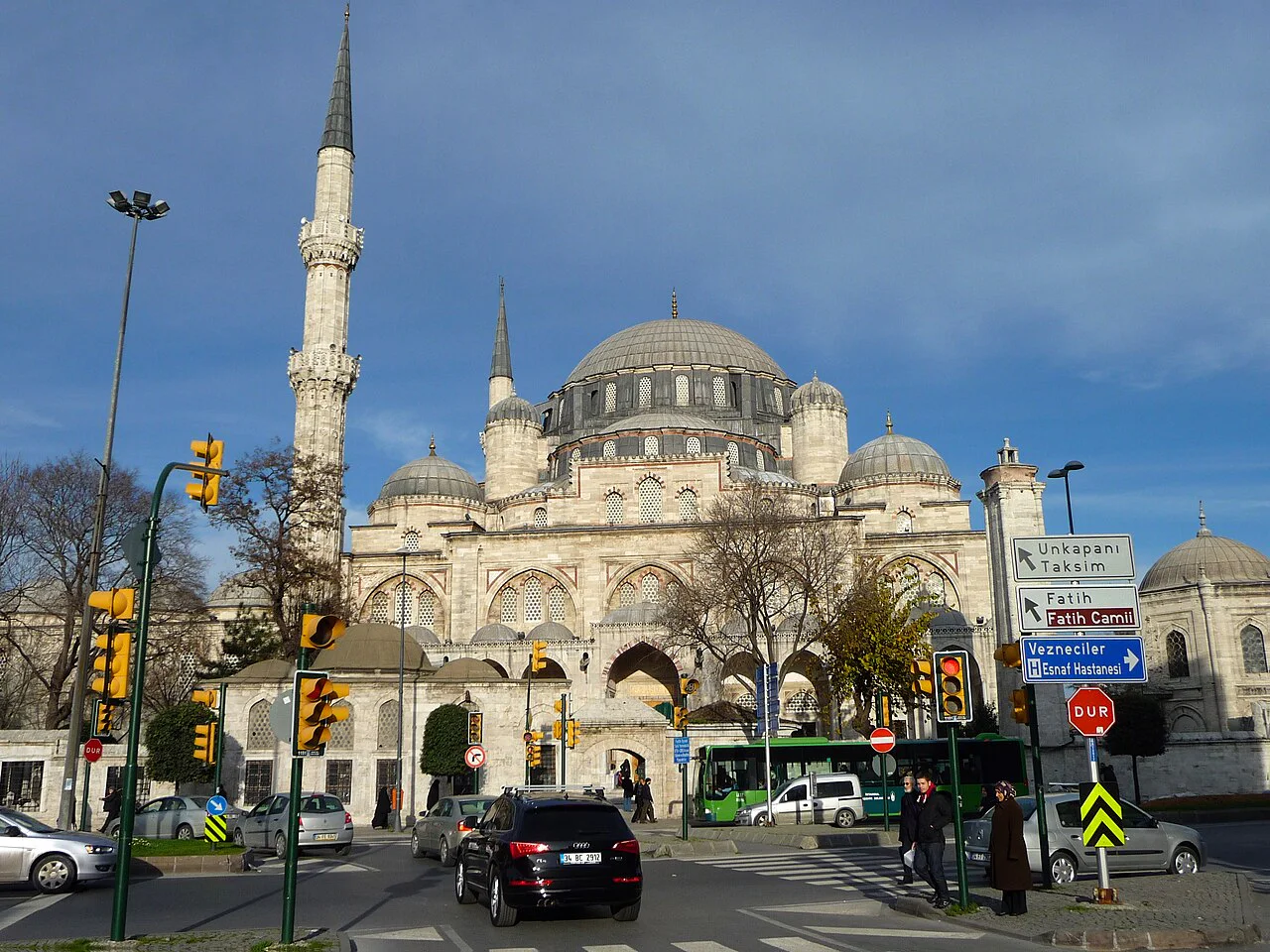
Istanbul · 2 km
Şehzade Camii
Content & sources
Photo: Ondřej Žváček · CC BY 2.5