Stanza · Audio guide
Eyüp Sultan Camii Audio Guide
A place to remember. A story to take with you.
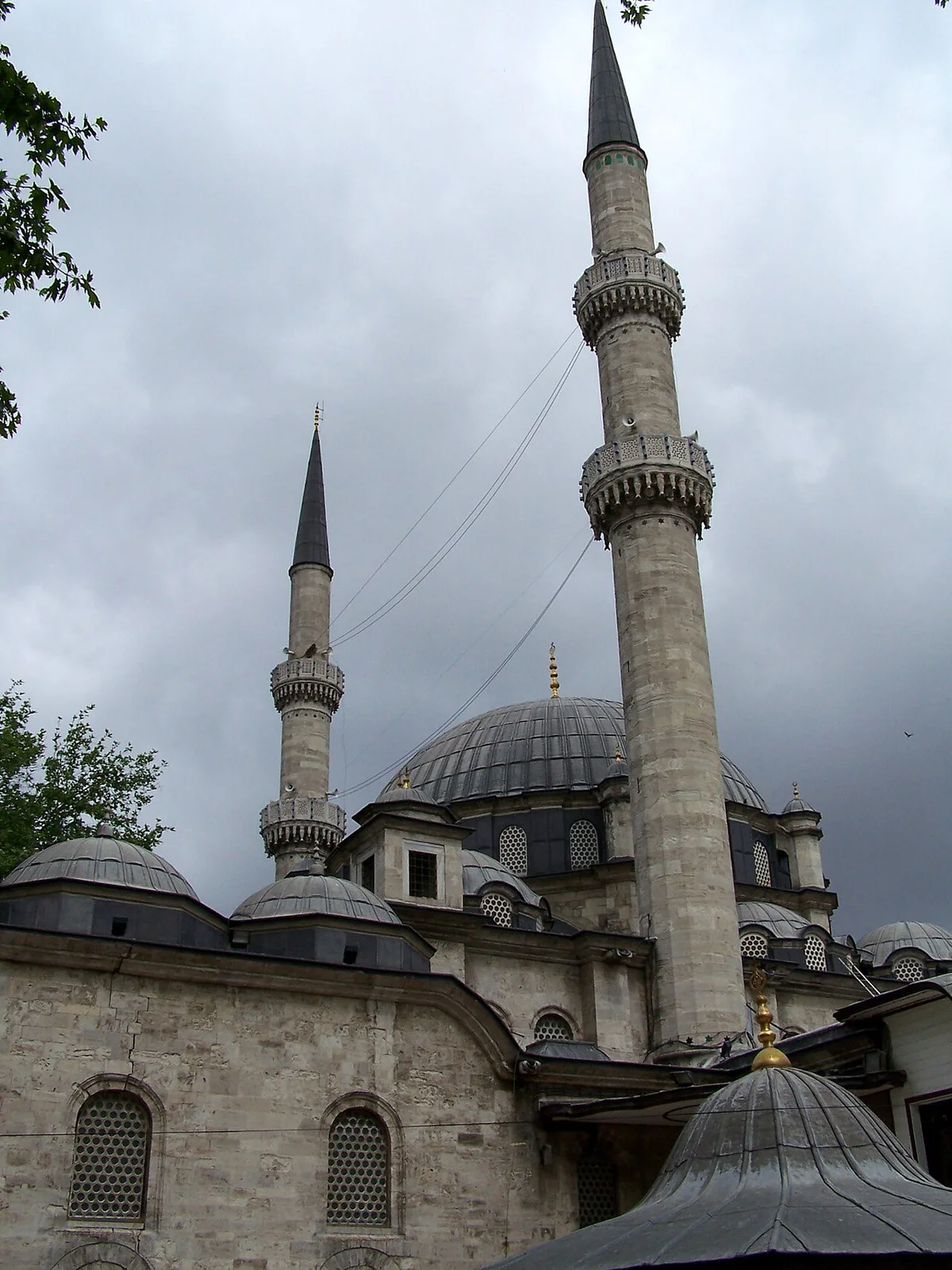
The Eyüp Sultan Mosque is a mosque located in the Eyüp district of Istanbul, Turkey. The complex includes a mausoleum marking the burial site of Ebu Eyüp el-Ansari, a companion of the prophet Muhammad.
Download Stanza, then search for “Eyüp Sultan Camii”.
About the tour
One guide. Your kind of visit.
The Eyüp Sultan Mosque is a mosque located in the Eyüp district of Istanbul, Turkey. The complex includes a mausoleum marking the burial site of Ebu Eyüp el-Ansari, a companion of the prophet Muhammad.
Ready when you are.
- 01Get the free Stanza app.
iOS & Android
- 02Find your guide.
“Eyüp Sultan Camii”
- 03Download before you go.
Works offline
Audio guide / 11 narrated stops
Inside the guide
Get to know a few of the stories before you go. Open a stop to read more.
01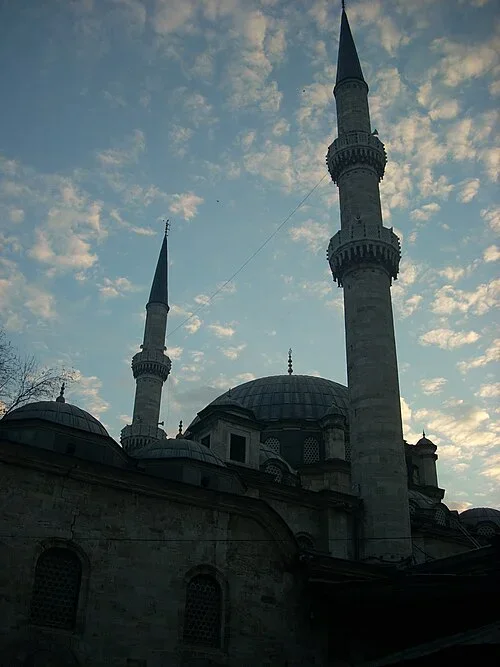 Eyüpsultan Square and Outer Courtyard
Eyüp Sultan Mosque from Outside
Welcome to the Eyüp Sultan Mosque, one of the holiest pilgrimage sites in the Islamic world. Over the next stops we move from the courtyards to the tomb at the heart of it all. The mosque stands on the Golden Horn, in the Istanbul district that takes its name from it. It grew around the resting place of Abu Ayyub al-Ansari, a companion and standard-bearer of the Prophet Muhammad. Sultan Mehmed II built a full mosque complex here in 1458, five years after his conquest of Constantinople. The site was already a place of reverence long before that. The silhouette shows a classical Ottoman arrangement: a central dome ringed by semi-domes, with two slender minarets beside it. Sultan Ahmed III rebuilt both minarets in their current form in the early eighteenth century. The eastern minaret was then rebuilt in the original style by Mahmud II in 1822. The prayer hall itself is younger than it looks, and its story waits inside.
Alperx · CC BY-SA 3.0
02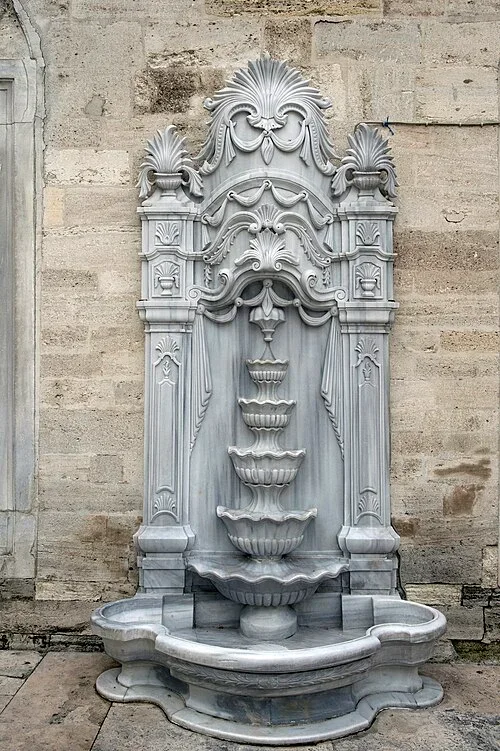 Eyüpsultan Square and Outer Courtyard
Outer Courtyard Fountain
Water comes first at any mosque, and here it flows from marble carved with shells and scrolling leaves. This wall fountain is where worshippers perform their ablutions, washing hands, face and feet before prayer. Its style is Ottoman Baroque, a taste that recurs across the whole complex, from gateways to tombs. The mosque was once the centre of a larger charitable foundation, a külliye. It included a theological school, a soup kitchen that fed the poor, and public baths. Most of the bathhouse survives and remains in use today, though its original changing room has been replaced by a newer wooden one. The fountain served the stream of pilgrims and worshippers arriving from the square, the first station of their visit.
Photo: Dosseman · CC BY-SA 4.0
03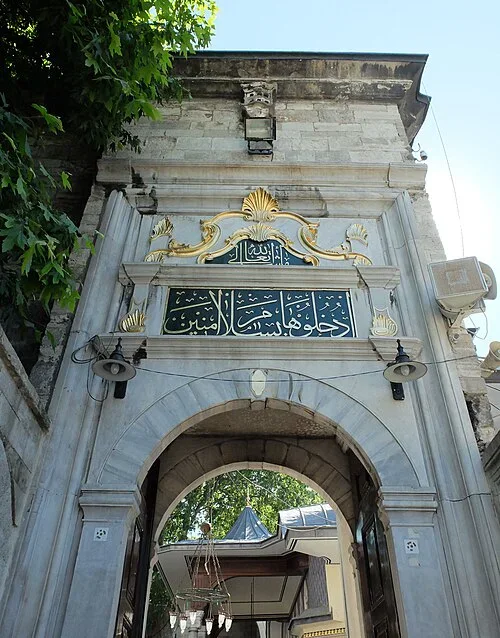 Inner Courtyard and Sword Girding Platform
Gate to the Inner Courtyard
Over the arch of this gateway runs a calligraphic inscription in gilded script, framed by carved shells and leaves. The gate marks the passage from the outer world into the inner courtyard. Through it, one side leads to the prayer hall, the other to the tomb of Abu Ayyub al-Ansari. Rank once decided how people entered. Along the south side of the outer courtyard runs an elevated, enclosed corridor. It was built as the sultan's private entrance, carrying him to a screened balcony, his loge, inside the prayer hall, where he could pray unseen by the crowd. Beyond the gate lies the courtyard platform that received an even grander imperial procession.
Listen in the appPhoto: Dosseman · CC BY-SA 4.0
04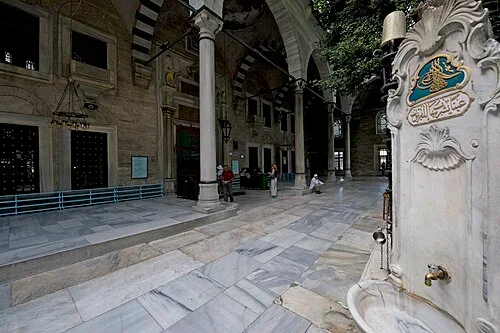 Inner Courtyard and Sword Girding Platform
Sword Girding Platform and Plane Tree
In the middle of this courtyard an old plane tree stands on a rectangular platform, with Baroque marble fountains at its corners. It looks like a garden, but it was a throne room of sorts. When a new Ottoman sultan acceded, he came here to be girded with the Sword of Osman, the sword of the dynasty's founder. This girding was the Ottoman equivalent of a coronation. The sultan arrived along a grand route known as the Cülûs Yolu, the Accession Way, which led through this district to the mosque. The symbolism was deliberate: taking up the founder's sword at the tomb of the Prophet's companion bound the new ruler to sacred legitimacy and to leadership in war. Once the ceremony was done, the courtyard returned to ordinary use, and it still serves worshippers today.
Listen in the appPhoto: Dosseman · CC BY-SA 4.0
05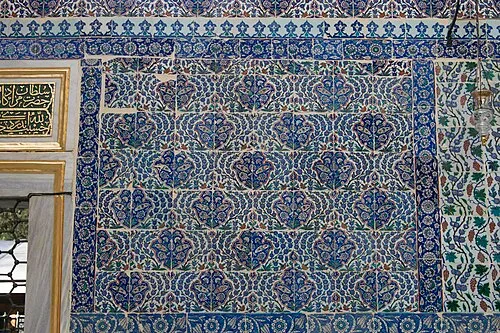 Mausoleum of Abu Ayyub al-Ansari and Sacred Relics
İznik Tile Panels of the Mausoleum
The wall of the tomb facing the portico is dressed in panels of İznik tiles, the celebrated ceramics of the Ottoman town of İznik. The panels come from different periods and were brought together during the rebuilding works that ended in 1799, a kind of rescue assembly of older tilework. In the vestibule, the walls carry tiles from around 1580 showing the sealing-wax red glaze known as Armenian bole. That red marks the high point of İznik tile design. The Victoria and Albert Museum in London holds similar tiles, and the British Museum keeps a panel of three navy and turquoise tiles from around 1550 that resemble some on the shrine's outer wall. Such parallels suggest some of these tiles may once have decorated other Ottoman buildings, possibly the demolished entrance hall of the baths. The tiles also have a modern story. In 2022 a man attacked the panels beside the prayer window with a hammer, claiming their floral motifs hid devil's horns. Restorers repaired the damaged tiles and reinstalled them within the same month.
Listen in the appPhoto: Dosseman · CC BY-SA 4.0
06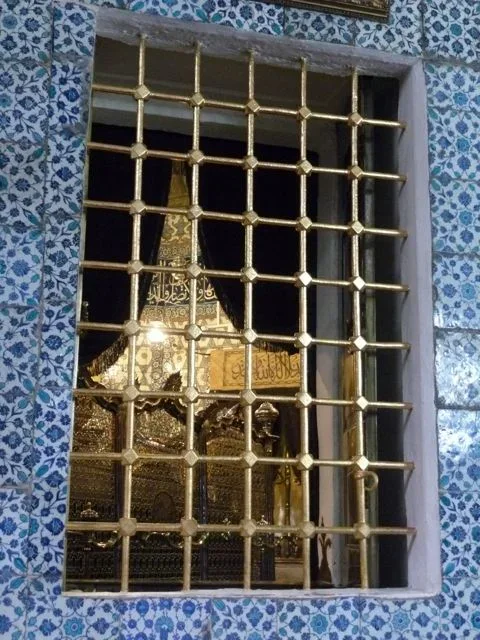 Mausoleum of Abu Ayyub al-Ansari and Sacred Relics
Tomb of Abu Ayyub al-Ansari
Behind the silver screen lies the reason this whole complex exists. The sarcophagus there marks the tomb of Abu Ayyub al-Ansari, a close and trusted companion of the Prophet Muhammad, who carried his banner as standard-bearer. He is believed to have died here during the first Arab siege of Constantinople in the 670s, nearly eight centuries before the Ottomans reached the city. How his grave was found is told as a story rather than a record. Mehmed II's teacher, Akşemseddin, is said to have described a light on the hillside and predicted that a white marble slab would mark the spot. Excavation there reportedly uncovered a stone inscribed with the words: the grave of Halid ibn Zayd, Abu Ayyub's own name. On that discovery the Sultan ordered a mosque and tomb built beside the grave. The tomb chamber follows the traditional octagonal form, covered by a dome. Inside, a Baroque silver screen encloses the sarcophagus, hung with framed calligraphy, lamps and ornaments.
Listen in the appWalter57 · Public domain
07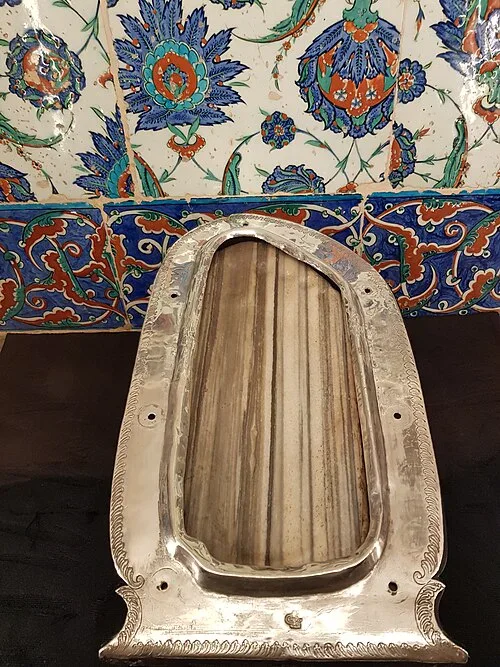 Mausoleum of Abu Ayyub al-Ansari and Sacred Relics
Sacred Relic in the Vestibule
The vestibule before the tomb chamber holds another layer of reverence. Religious relics are displayed here, among them items believed to have belonged to the Prophet Muhammad himself. One of the most venerated is a footprint impressed in stone, set in a worked silver frame against the tiled wall. For the faithful, a trace of the Prophet is a presence of the Prophet. This is part of why Eyüp Sultan draws pilgrims from all over the country, throughout the year.
Listen in the appPhoto: Ahmer Jamil Khan · CC BY-SA 4.0
08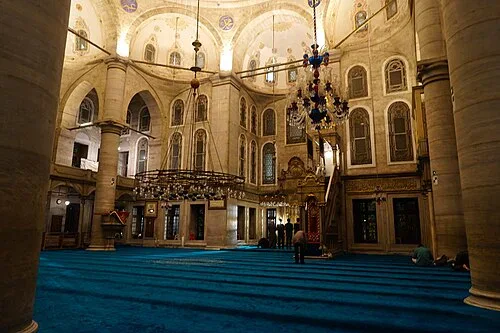 Grand Ottoman Baroque Prayer Hall
Prayer Hall of the Rebuilt Mosque
The prayer hall is younger than its classical proportions suggest. By the end of the eighteenth century the mosque had fallen into a ruinous state, perhaps after earthquake damage. In 1798 Sultan Selim III ordered the whole structure pulled down and rebuilt, everything except the minarets. The work was completed in 1800. What is striking is what the builders chose to keep. Despite the late date, the new hall stayed faithful to the classical Ottoman style popularised by Mimar Sinan in the sixteenth century. The space still does what it was built for. Turquoise carpets run across the floor, light falls from ring upon ring of lamps, and worshippers gather here for prayer as they have for two centuries. In one corner sits the sultan's loge, the screened balcony reached by his private corridor.
Listen in the appPhoto: Canercangul · CC BY-SA 4.0
09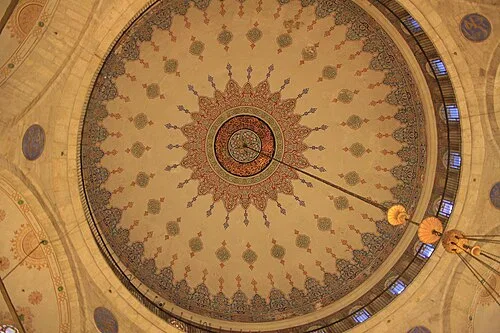 Grand Ottoman Baroque Prayer Hall
Central Dome from Below
The painted crown of the dome radiates from a central medallion, petals of ornament and calligraphy spreading out to the rim. The structure beneath it is the real story. The builders used what is called an octagonal baldaquin design: a central dome resting on an octagon of supports, with semi-domes flowing out around it. It is the same system used at the Sokollu Mehmed Pasha Mosque in the Azapkapı neighbourhood, and architectural historians directly compare the two. That mosque was designed by Mimar Sinan, the great master of sixteenth-century Ottoman architecture. So a hall rebuilt around 1800 speaks the structural language of the classical age, even as its surfaces lean toward the Baroque.
Listen in the appPhoto: Khateeb88 · CC BY-SA 3.0
10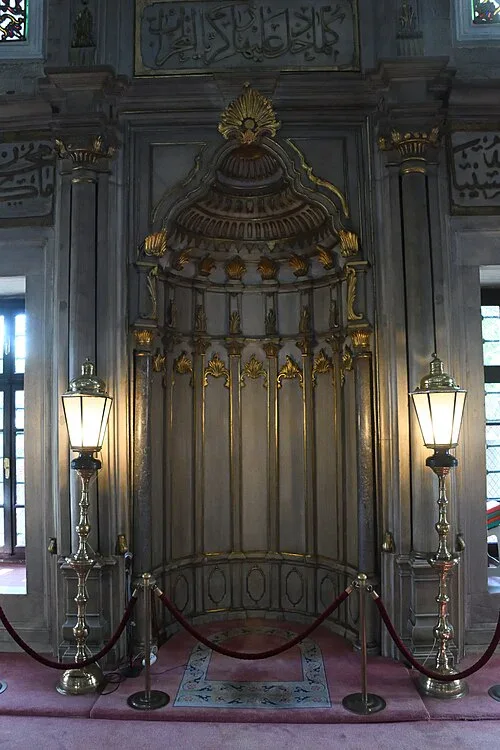 Grand Ottoman Baroque Prayer Hall
The Mihrab
The mihrab is the niche that shows the direction of Mecca, the focal point of every prayer. This one is a showpiece of Ottoman Baroque carving. Its surface undulates with engaged columns, carved leaves and shell forms, picked out in gilding and rising to a shell crest at the top. This decoration is ranked among the finest examples of the style from the Ottoman Baroque period. The minbar, the pulpit staircase beside it, carries matching work. Set against the sober geometry of the dome above, its gilded carving stands out. Brass lamps and stanchions stand before the niche, and the carpet in front of it is kept for those at prayer.
Listen in the appPhoto: Dosseman · CC BY-SA 4.0
- 11
Mihrişah Valide Sultan Türbe
The domed Baroque tomb of Mihrişah Valide Sultan, and the grandees and royals who chose burial beside the shrine.
Eyüp Sultan Camii
Frequently asked questions
How much does the guide cost?
Free app download. Listed guide price: $0.99. Guide price shown in the app. Audio guide only. Venue admission is separate.
Can I listen without internet?
Yes. Download the guide’s audio, images, and maps in the app before your visit. Your downloaded content is then available offline.
Can I listen in my language?
This audio guide is available in 15 languages, including English.
Do I need to follow a schedule?
No. This is a self-guided experience. Choose your stops, pause whenever you like, and return to a story at your own pace.
At your own pace
Explore Eyüp Sultan Camii.
Download Stanza, then search for “Eyüp Sultan Camii”.
Free app download · Guide price shown in the app
Keep exploring
Nearby audio guides
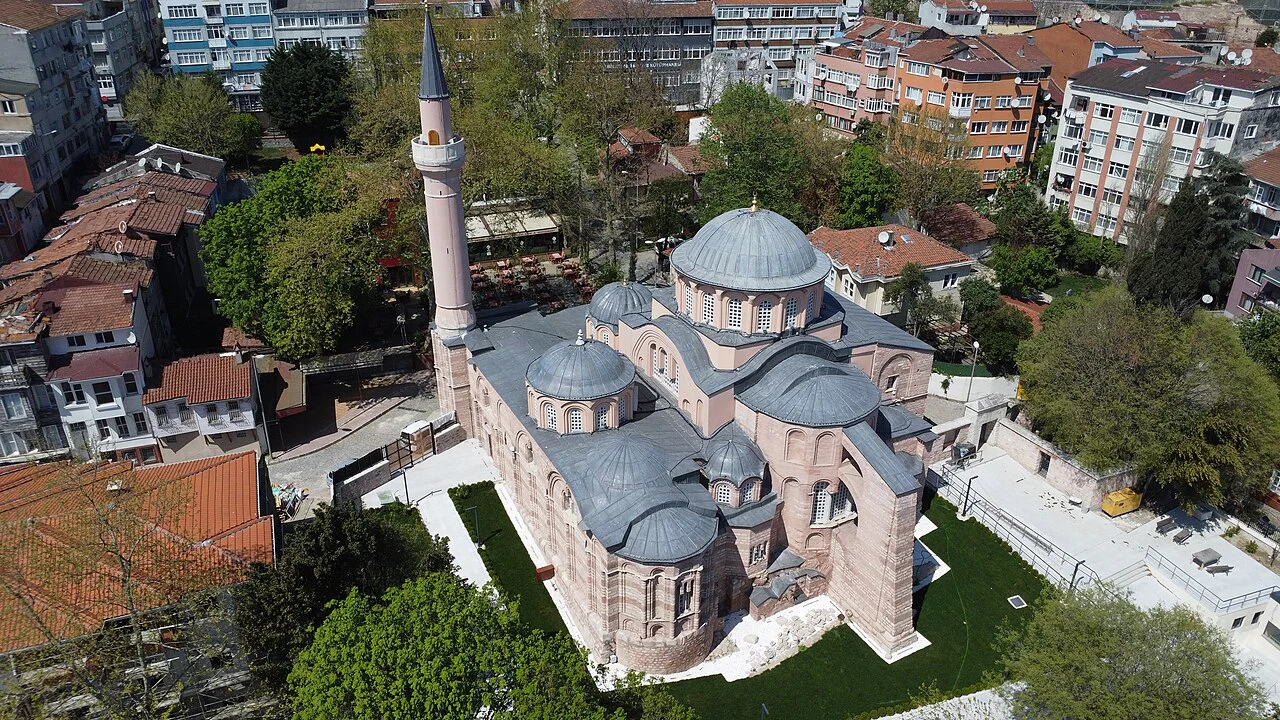
Istanbul · 2 km
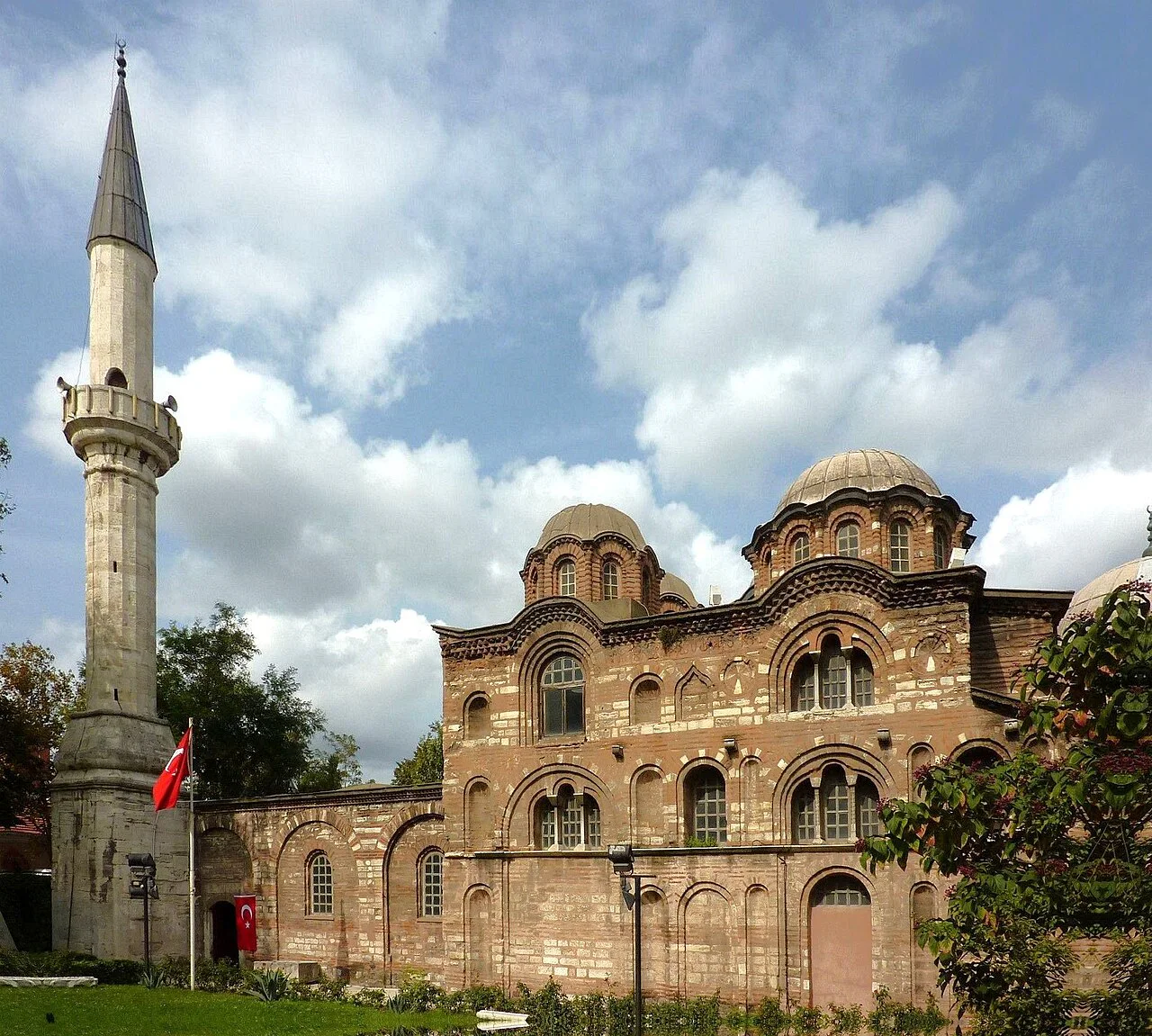
Kariye Camii
Content & sources
Photo: Tadam · CC0
Istanbul · 2 km
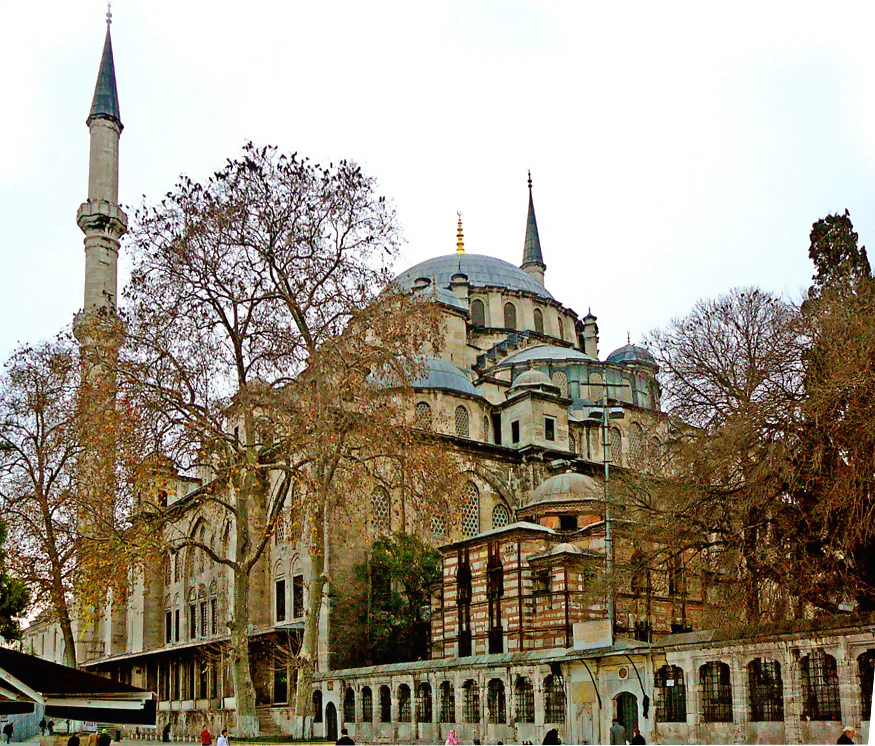
Fethiye Camii
Content & sources
Photo: Chris06 · CC BY-SA 4.0
Istanbul · 3 km
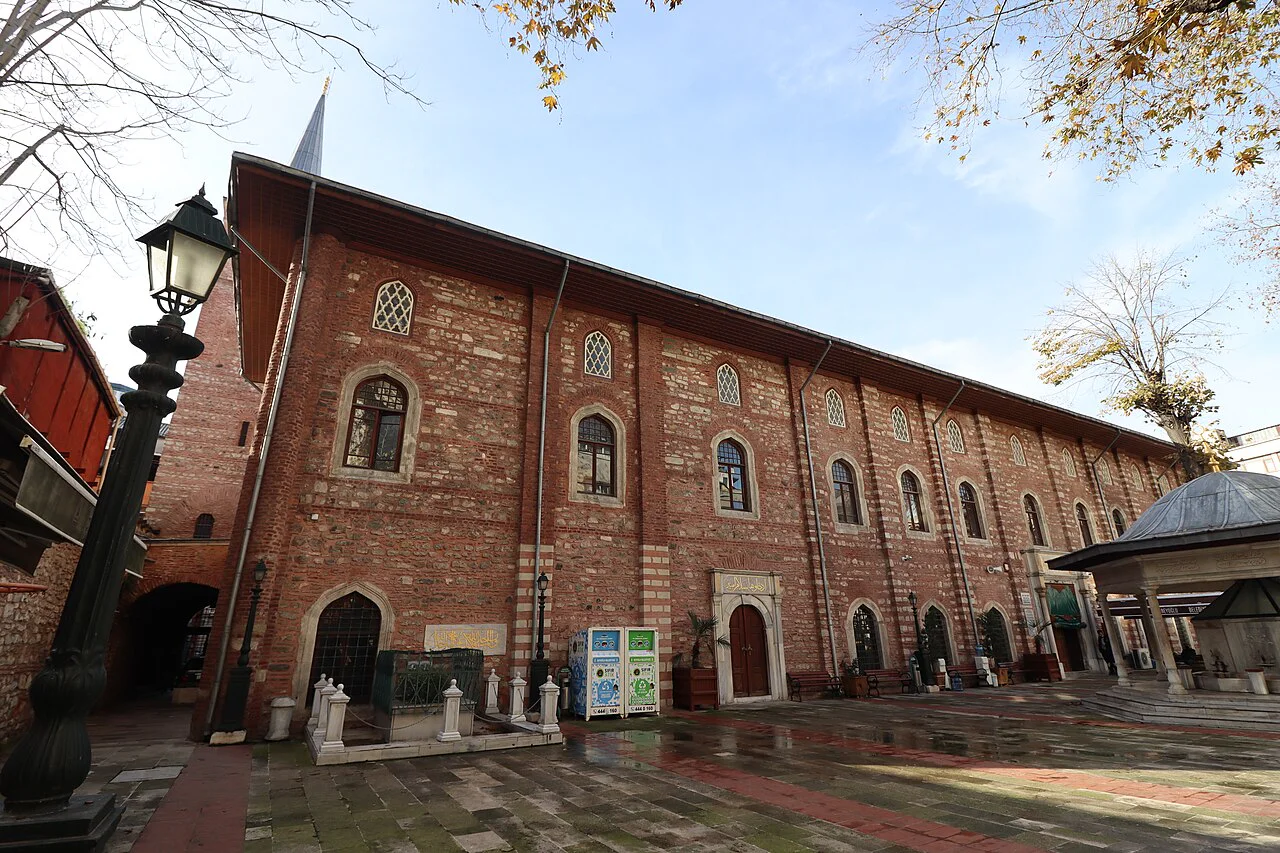
Fatih Camii
Content & sources
Muscol · CC BY-SA 3.0
Istanbul · 4 km
Arap Camii
Content & sources
vlyalcin · CC BY-SA 4.0