Stanza · Audio guide
Dolwyddelan Castle Audio Guide
A place to remember. A story to take with you.
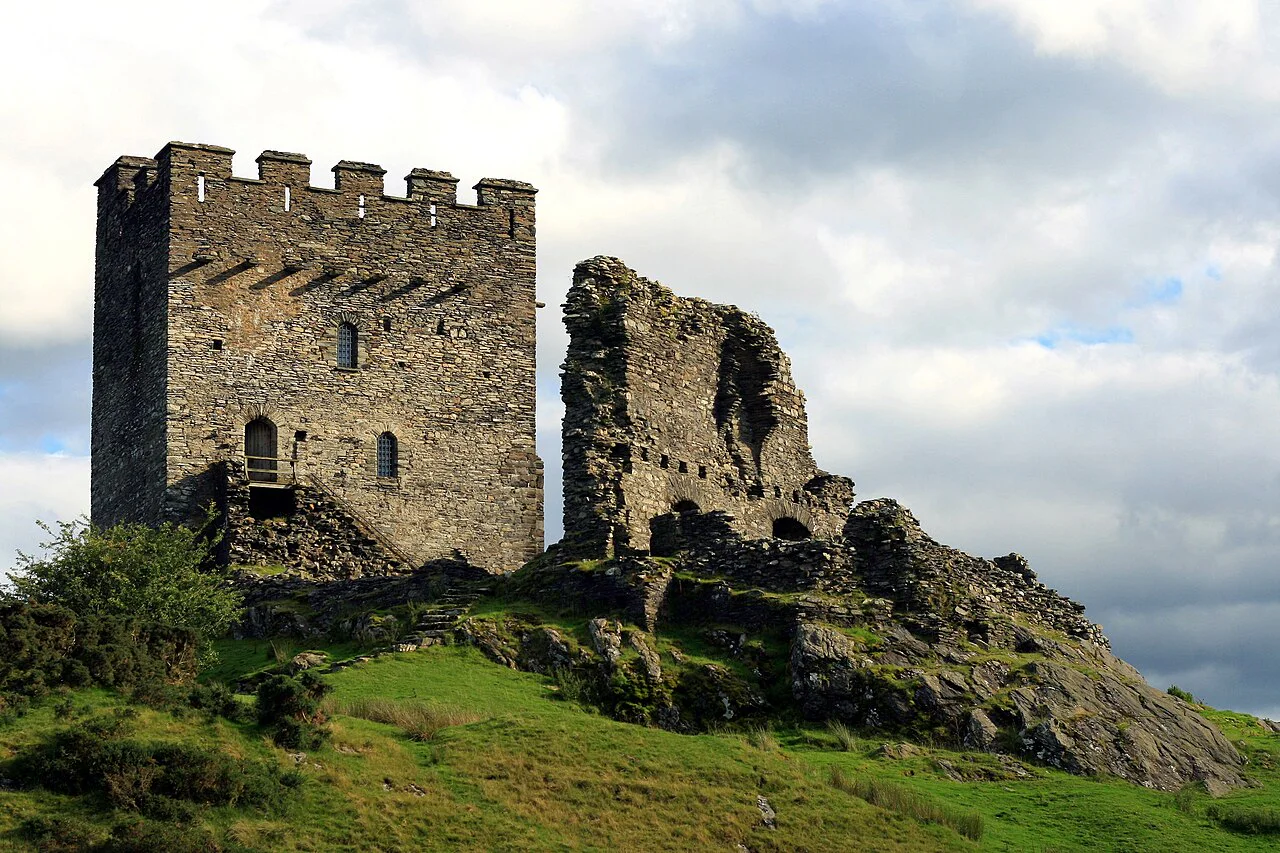
Dolwyddelan Castle is a thirteenth-century castle located west of Dolwyddelan in Conwy County Borough, Wales. Tomen Castell, a late twelfth-century tower, is located south-east of the castle.
Download Stanza, then search for “Dolwyddelan Castle”.
About the tour
One guide. Your kind of visit.
Dolwyddelan Castle is a thirteenth-century castle located west of Dolwyddelan in Conwy County Borough, Wales. Tomen Castell, a late twelfth-century tower, is located south-east of the castle.
Ready when you are.
- 01Get the free Stanza app.
iOS & Android
- 02Find your guide.
“Dolwyddelan Castle”
- 03Download before you go.
Works offline
Audio guide / 7 narrated stops
Inside the guide
Get to know a few of the stories before you go. Open a stop to read more.
01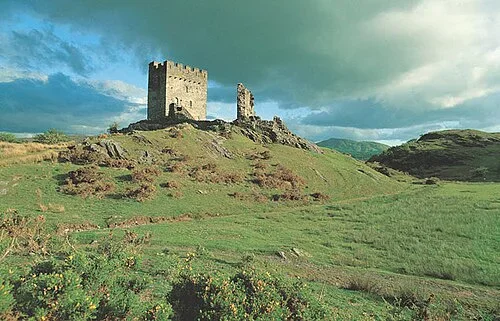 Hilltop Approach and Welsh Stronghold
The Welsh Stronghold on the Knoll
Welcome to Dolwyddelan Castle, one of the rare fortresses that independent Wales built for itself. Most castles in this country were raised by invading kings. This one was probably begun by Llywelyn ab Iorwerth, Prince of Gwynedd, between about 1210 and 1240. He is remembered as Llywelyn the Great, the ruler who pulled the Welsh kingdoms under one strong hand. His masons set the castle on a rocky knoll at Ffriddgelli, a spot the princes of Gwynedd used as summer grazing for their cattle in the Lledr valley. Local tradition says Llywelyn was born here, in the castle itself. The older story points elsewhere, to a small tower called Tomen Castell on the rocks between this castle and the river. That tower predates the castle, and it is the likelier birthplace of the prince. Tradition gave him to the grander building; the stones suggest the humbler one. Either way, this knoll holds the story of a native Welsh state in stone.
Cadw · OGL v1.0
02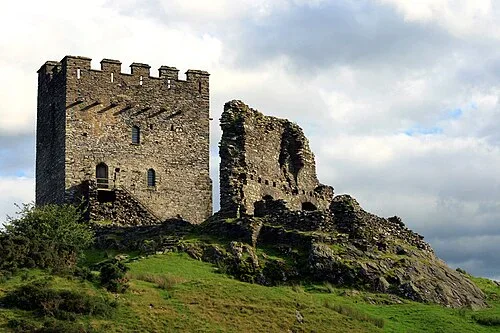 Courtyard Enclosure and the West Tower Ruins
The Ruined West Tower
The broken tower on the left of the enclosure is the castle's puzzle. Nobody knows for certain when it was built. It certainly came after the curtain wall, and its cut stone suggests the late thirteenth or early fourteenth century. It may have been raised by Llywelyn ap Gruffudd, grandson of the castle's founder, who built similar towers at Criccieth and Dolforwyn. Or it may date from after Edward the First's men took the castle in 1283, since an account from that very year mentions a new lodging being built here. Two centuries of silence follow. In 1488 a man named Maredudd ab Ieuan bought the lease. His family came from Eifionydd, a district notorious for bitter feuds between kindreds, and a family history written by his descendant Sir John Wynn says he moved here to escape his own relatives and extend his influence. The castle had shortly before sheltered Hywel ab Ieuan ap Rhys, a captain and an outlaw. Maredudd built himself a new house nearby, but the spacious chambers of this tower are thought to have been his preferred rooms. When he bought Gwydir Castle around 1515, Dolwyddelan passed with it into the Gwydir estate.
Jeff Buck · CC BY-SA 2.0
03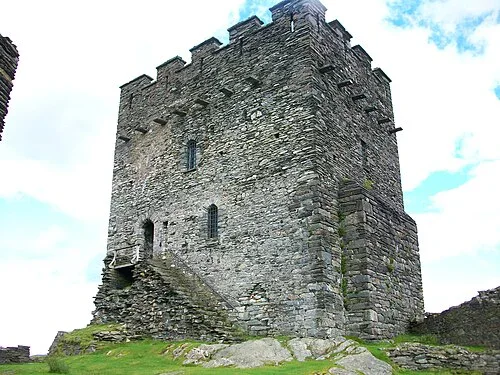 The Great Keep and Victorian Restoration
The Princely Keep
The tall square tower is the oldest part of the castle, and it is pure Welsh princely work. Its rectangular keep is typical of the towers the thirteenth-century princes of Gwynedd raised, and it closely resembles the ones Llywelyn built at Castell y Bere and Criccieth. The walls are of local grit and slate rubble, hauled from the ground around the valley. When it was first built, the keep stood alone. The curtain wall that now links it to the rest of the castle was added by Llywelyn soon afterwards. Entry was never at ground level. The doorway sits on the first floor, reached by the flight of steps climbing the outside of the tower. A forebuilding once shielded anyone climbing those stairs, and its remains still show at the tower's foot. An attacker who made it past the forebuilding still had a defended doorway above him, a stair that could be pulled away, and a basement and two storeys above to storm.
Listen in the appJeff Buck · CC BY-SA 2.0
04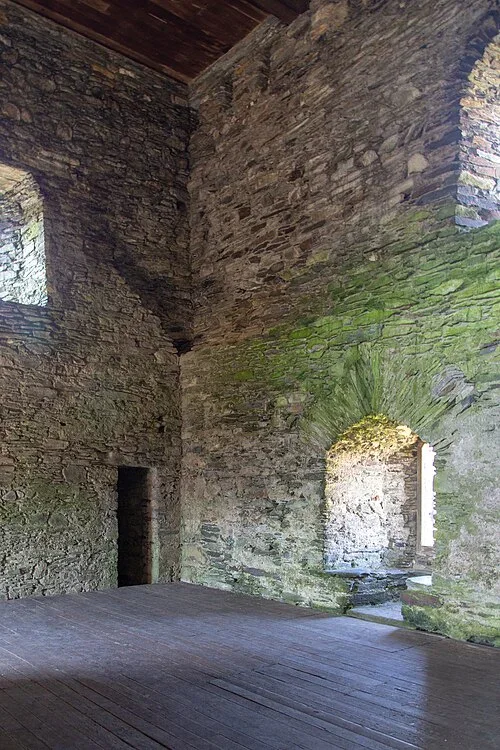 The Great Keep and Victorian Restoration
Inside the Restored Keep
Inside, the keep tells two stories at once. By the mid-nineteenth century it was a ruin, with a great V-shaped bite missing from its northern wall. Between 1848 and 1850 it was restored by Lord Willoughby de Eresby, Peter Drummond-Burrell, a distant descendant of Maredudd ab Ieuan. His workmen raised the keep to its present height, added the battlements, renewed the doors and windows and opened new windows into the second storey. The drains projecting from the upper walls are his invention, built for the look of a working fortress rather than the use of one. Before all that, the ruin had its own admirers. Samuel and Nathaniel Buck engraved it in 1742. Moses Griffith painted it in 1788 for Thomas Pennant's Tour in Wales, which carried a history of the castle. The artist Edward Pugh wrote an account in 1816 suggesting one of the towers had collapsed about a decade earlier. Even a rough sketch of 1799 may be by J. M. W. Turner. Those drawings and descriptions are why the pre-Victorian castle can still be told apart from Lord Willoughby's masonry.
Listen in the appTom Parnell from Scottish Borders, Scotland · CC BY-SA 2.0
05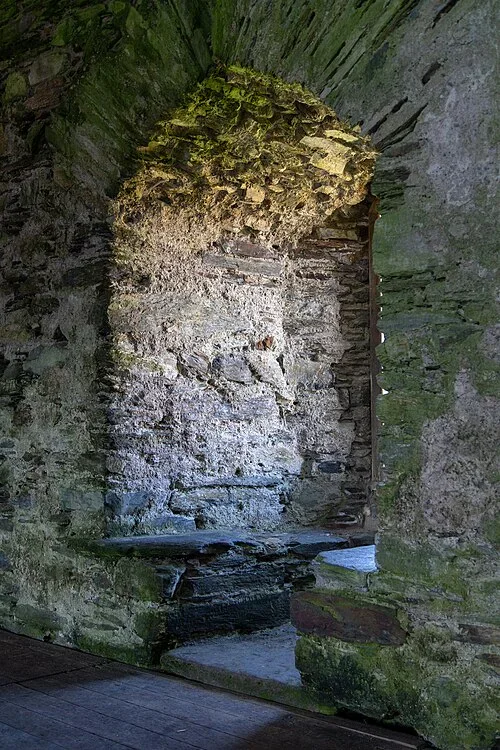 The Great Keep and Victorian Restoration
A Stair Hidden in the Wall
Beside the fireplace in the east wall, a window embrasure hides a stair. The opening to it sits in the embrasure to the left of the hearth, and the stair runs up through the thickness of the wall to the roof. There is no sign of a door from it onto a second floor. Any such door may have been lost in the nineteenth-century rebuilding, which also supplied the second-floor windows. The fireplace itself is a lesson in layers: its back is thirteenth century, and the rest of it dates from the restoration. The tower has in fact been heightened twice, first by either Edward the First or Maredudd ab Ieuan, and then again in the 1840s. Which of those two rivals did the first raising is still argued over. From the roof, the stair emerges beside the battlements, and that walkway is where the next stop goes.
Listen in the appTom Parnell from Scottish Borders, Scotland · CC BY-SA 2.0
06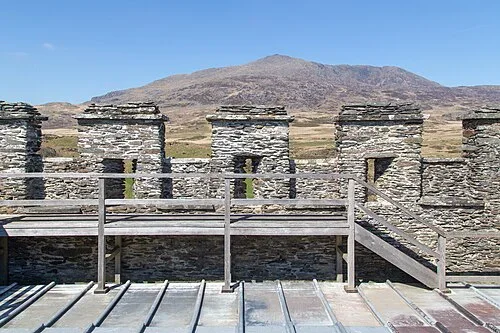 Battlements and the Lledr Valley Lookout
The Keep Roof and the Lledr Pass
From the roof, the reason for the castle explains itself. The old road from Nant Conwy to Meirionydd ran along the valley side and passed just to the west of this knoll, so whoever held this tower held the east-west route through the kingdom. In all seasons the knoll watched the road. Beyond the battlements the mountains climb towards Moel Siabod, and the pass threads between them. That silhouette has caught other eyes too. In 1980 the castle served as a filming location for the fantasy film Dragonslayer, its battlements playing a part in a story of dragons and sorcerers.
Listen in the appRichard Hoare · CC BY-SA 2.0
07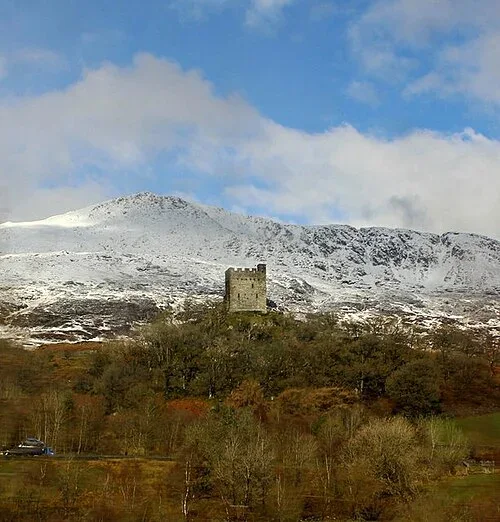 Battlements and the Lledr Valley Lookout
Winter over Moel Siabod: the Fall of 1283
Moel Siabod explains the ending of this story. In the conquest of Wales by Edward the First, English forces closed on Dolwyddelan in the depth of winter and captured it on 18 January 1283. The siege did not last long, and it is possible the constable negotiated a surrender. What followed is the detail people remember. The English garrison was issued with white material brought from Ireland, and white stockings, so that they would blend into the snow-covered mountains around them. Soldiers in camouflage, more than six centuries before the word existed. The castle was refortified at once and supplied with a siege engine built at Betws-y-Coed, and between 1283 and 1292 it was repaired, with a new bridge and water mill raised in the valley. English troops stayed until at least 1290, when the constable appointed in 1284, a Welshman named Gruffudd ap Tudur, was still in office. Dolwyddelan is one of the few native Welsh castles to survive its conquest, a stone record of the state Llywelyn the Great built and Edward the First took.
Listen in the appRichard Hoare · CC BY-SA 2.0
Dolwyddelan Castle
Frequently asked questions
How much does the guide cost?
Free app download. Listed guide price: $0.99. Guide price shown in the app. Audio guide only. Venue admission is separate.
Can I listen without internet?
Yes. Download the guide’s audio, images, and maps in the app before your visit. Your downloaded content is then available offline.
Can I listen in my language?
This audio guide is available in 15 languages, including English.
Do I need to follow a schedule?
No. This is a self-guided experience. Choose your stops, pause whenever you like, and return to a story at your own pace.
At your own pace
Explore Dolwyddelan Castle.
Download Stanza, then search for “Dolwyddelan Castle”.
Free app download · Guide price shown in the app
Keep exploring
Nearby audio guides
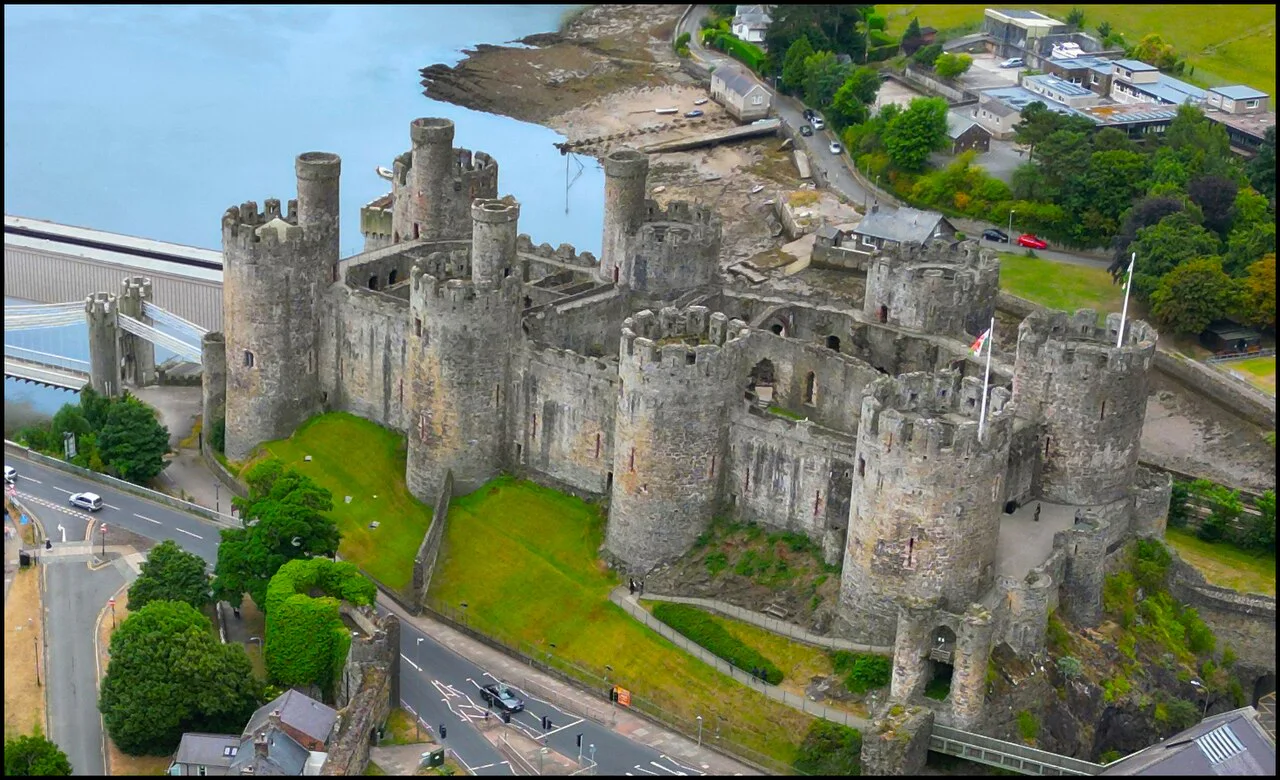
Conwy · 26 km
Conwy Castle
Content & sources
Source: Llywelyn2000Derivative: User:MathKnight · CC BY-SA 4.0
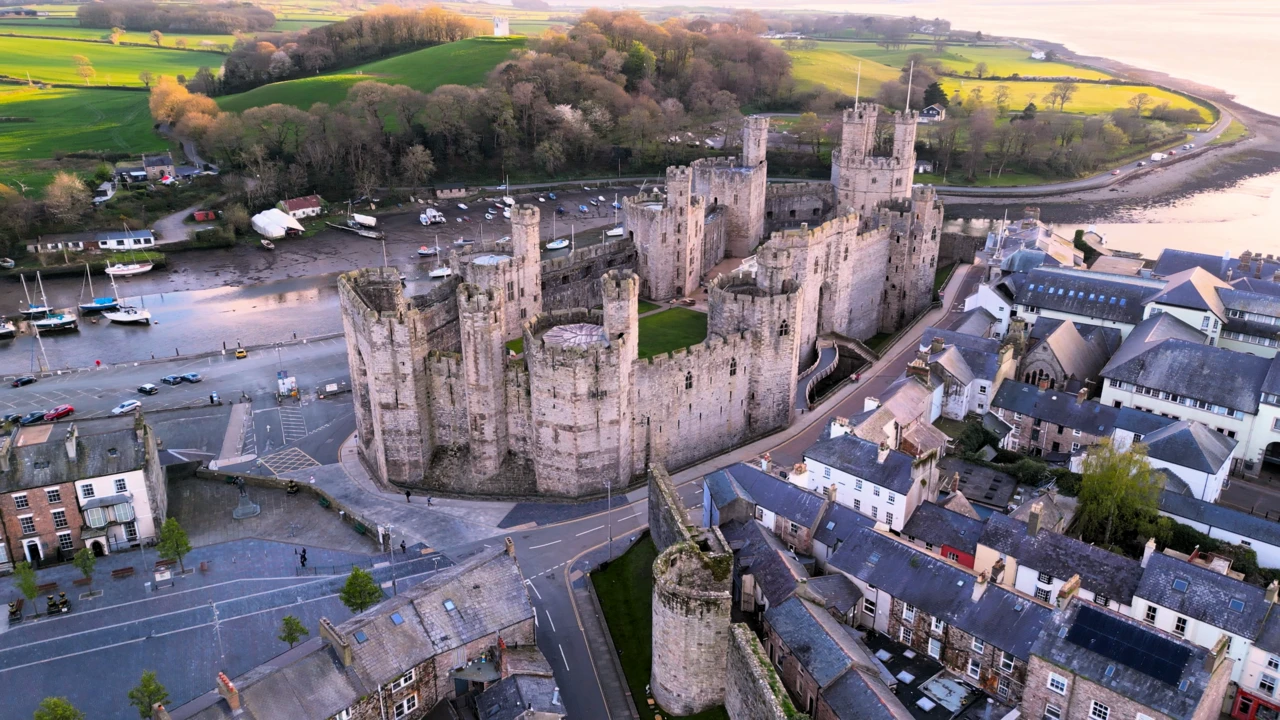
Caernarfon · 26 km
Caernarfon Castle
Content & sources
Photo: Llywelyn2000 · CC BY-SA 4.0
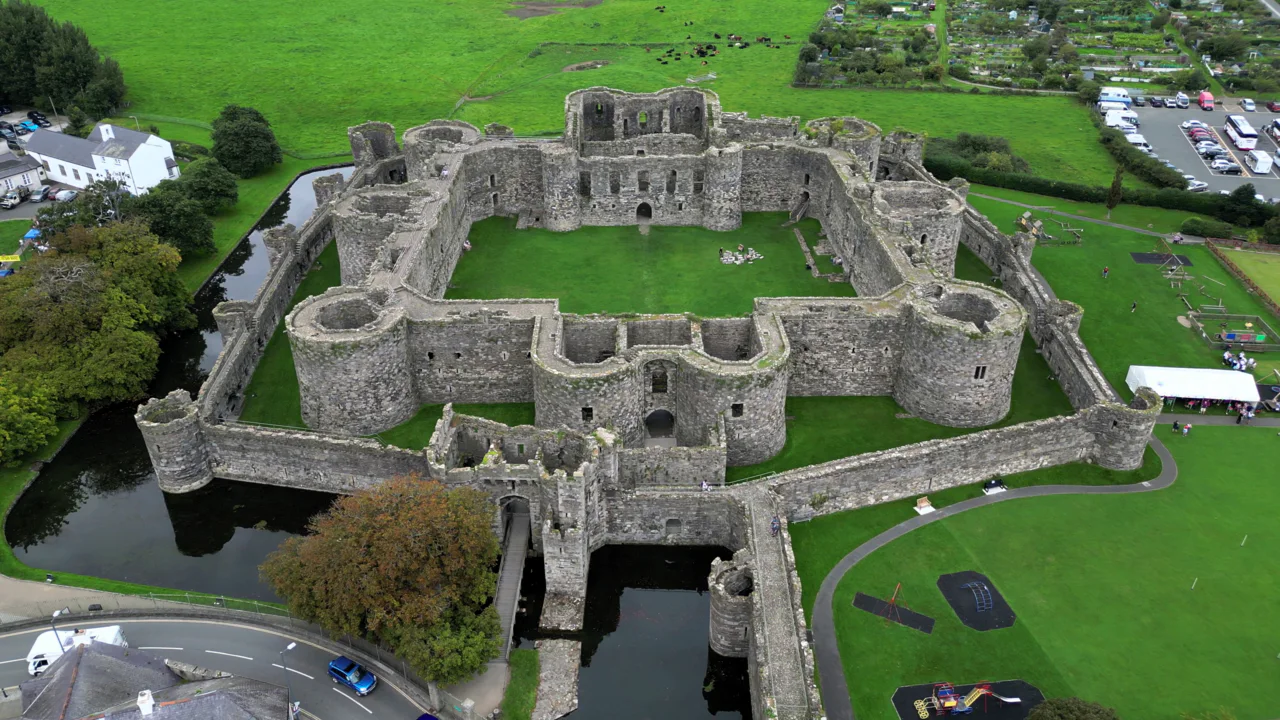
Beaumaris · 26 km
Beaumaris Castle
Content & sources
Photo: Llywelyn2000 · CC BY-SA 4.0
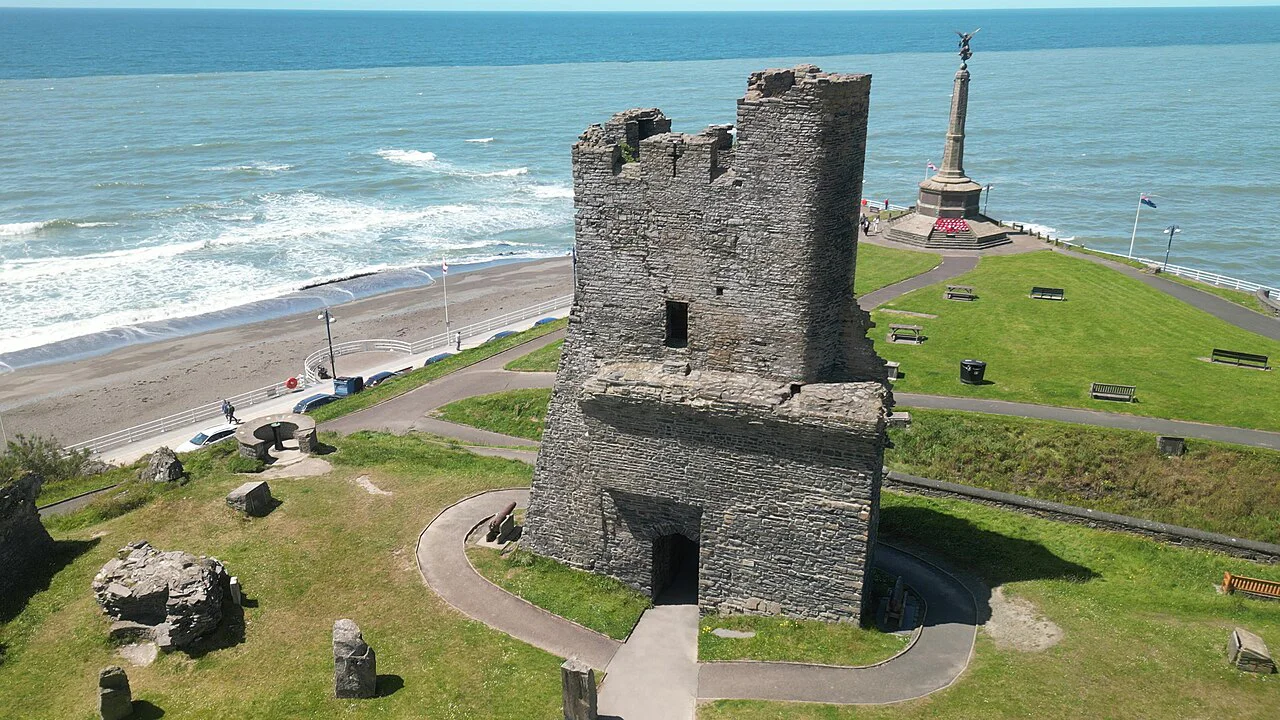
Aberystwyth · 72 km
Aberystwyth Castle
Content & sources
Photo: Llywelyn2000 · CC BY-SA 4.0