Languages
15Caernarfon Castle Audio Guide
Caernarfon Castle is a landmark in Caernarfon, United Kingdom. Explore it with Stanza's GPS-triggered offline audio guide — available in 15 languages.
Quick Facts
16
Stops
15
Languages
100%
Offline
📍 Caernarfon, United Kingdom · 53.1393°N, -4.2769°E
About Caernarfon Castle
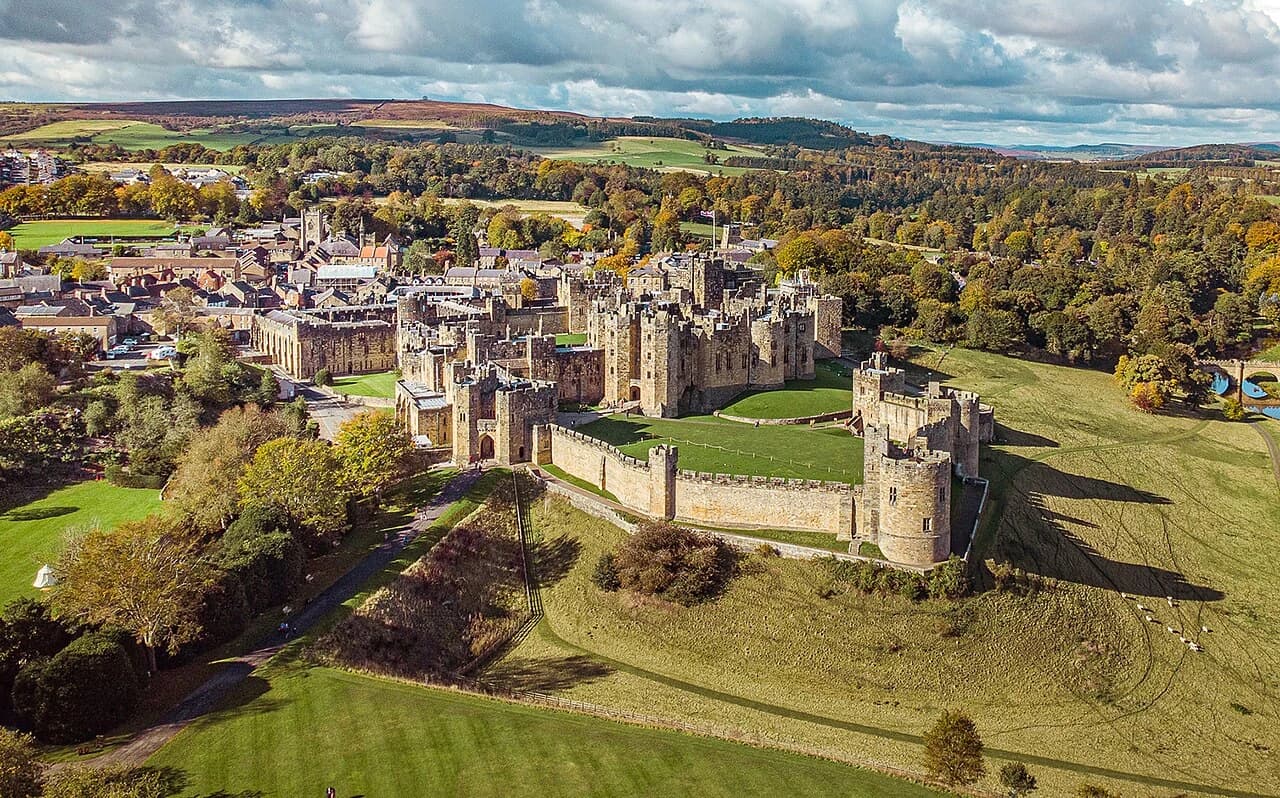
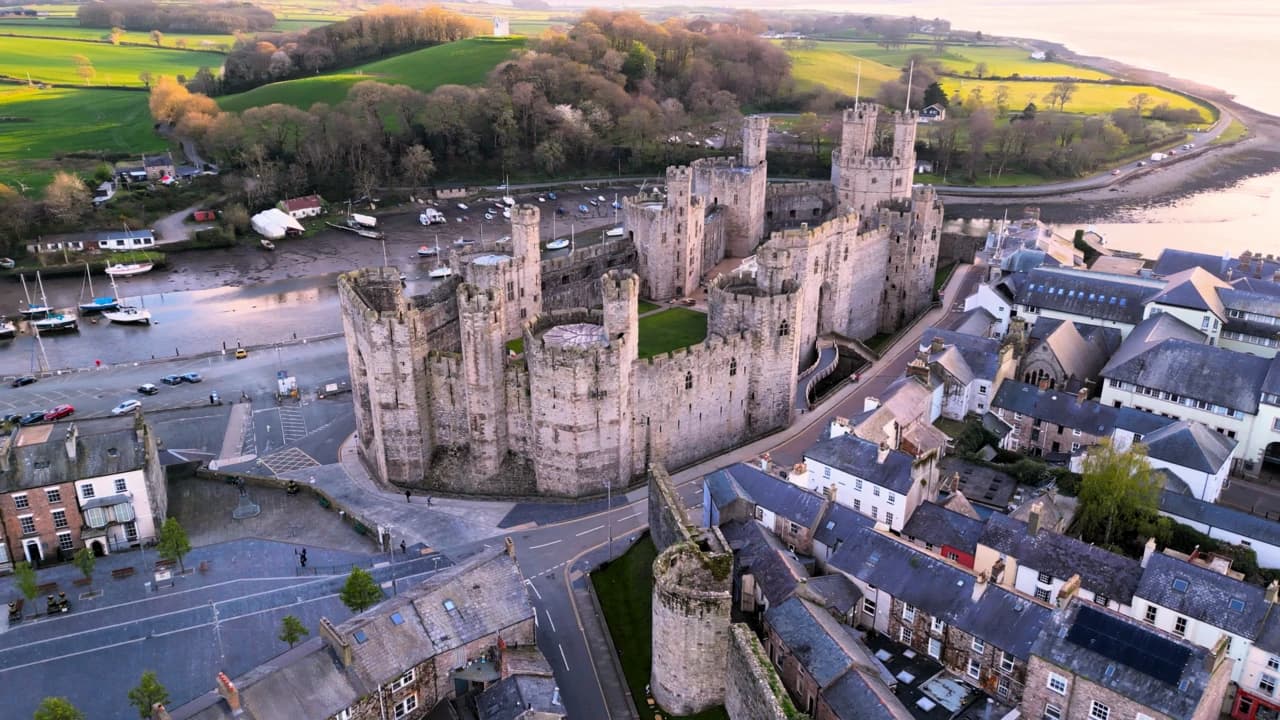
Caernarfon Castle is a medieval fortress located in Caernarfon, North Wales. It is a UNESCO World Heritage Site and a well-preserved example of 13th-century military architecture.
Caernarfon Castle is also known as Castell Caernarfon, Caernarvon Castle, Caernarfon Castle (Caernarfon, Wales) -- Photographs, Caernarfon Castle (Caernarfon, Wales) -- Poetry.
This self-guided audio tour features 16 narrated stops organized across 4 sections, including The Lower Ward and Great Hall, The Eagle Tower and Royal Lodgings, The Upper Ward and Investiture Site, Royal Welch Fusiliers Museum. As a castle, Caernarfon Castle offers a unique cultural experience in the heart of Caernarfon, United Kingdom.
The Stanza audio guide is available in 15 languages and works entirely offline — download the complete tour including audio narration, maps, and images before your visit. As you walk through Caernarfon Castle, GPS-triggered narration plays automatically at each point of interest.
Last updated:
What you will hear
The Lower Ward and Great Hall
Explore the foundations of the castle's domestic heart, where royal entertainment and daily administration once took place.
The Lower Ward
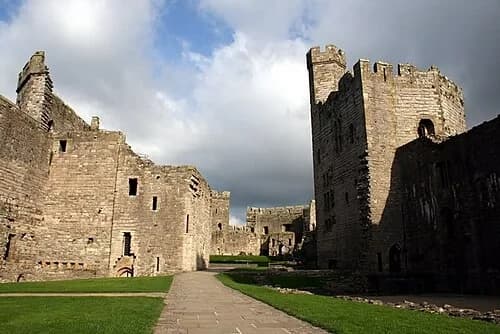
The interior of the castle is organized into a unique figure-eight pattern, split into two large open areas known as the Lower and Upper Wards. Standing here in the Lower Ward, you can truly appreciate the staggering scale of Edward I’s investment. Records from the 13th century reveal that construction costs reached approximately £25,000. For context, this was an astronomical sum that significantly drained the royal treasury, representing more than the entire annual income of the English crown at the time. The vast open grass you see today was never intended to be empty. It was designed to accommodate a range of grand domestic buildings, including palatial apartments for the royal family and administrative offices for the officials governing the region. Most of these wooden and stone structures were either never built or have long since disappeared, leaving behind this expansive courtyard. This layout allowed for large gatherings and the movement of garrisoned troops, ensuring the castle functioned as both a luxurious royal palace and a high-readiness military headquarters. The surrounding walls, punctuated by massive towers, create an intimidating perimeter that protected these intended civic spaces from the outside world.
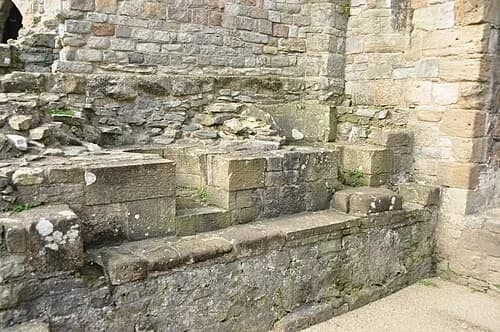
Great Hall Foundations
Look closely at the low stone footings embedded in the grass. These are the foundations of the Great Hall, a structure that was meant to serve as the primary setting for royal feasts, legal proceedings, and official ceremonies. In the medieval period, the Great Hall was the social heart of any major castle, where the King or his representative would hold court and demonstrate their wealth and power. While the massive exterior curtain walls of the castle were largely completed by 1330, the interior was a different story. The fortress remained an ongoing project for decades, and many of the planned internal buildings, like this hall, were never fully realized to their original grand specifications. These foundations offer a glimpse into the logistical challenges of such a massive building program; even with the King’s vast resources, the work often stalled due to lack of funding or shifts in political priorities. Today, these footings outline the intended scale of the room, suggesting a space that would have been filled with light from tall windows and the sounds of music and debate. Now, they stand as a quiet architectural record of a grand administrative vision that stopped just short of completion.
The Eagle Tower and Royal Lodgings
Ascend the grandest tower of the castle to see the imperial design and the luxurious quarters intended for the king.
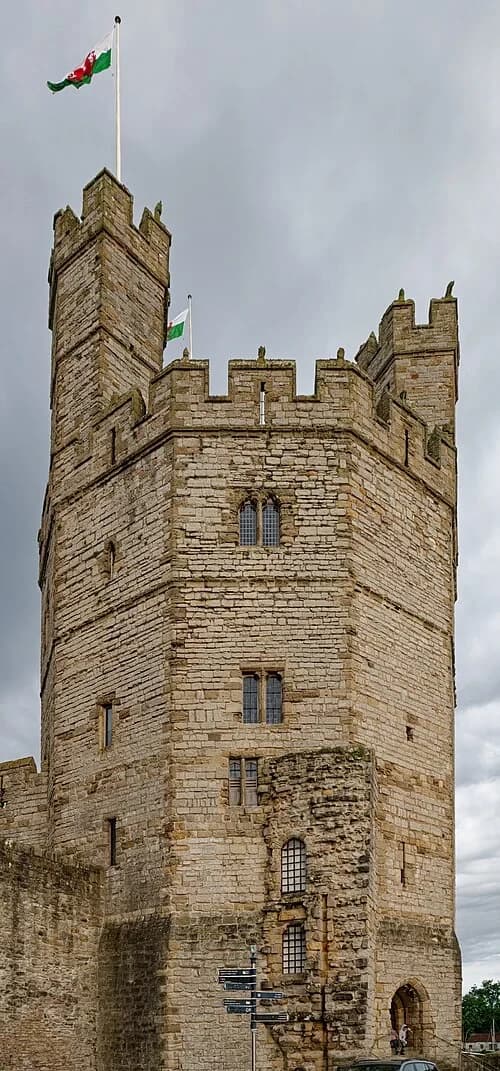
The Eagle Tower
Dominating the western end of the castle is the Eagle Tower, the most impressive of the ten towers that punctuate the curtain wall. You can easily identify it by the three smaller turrets that rise from its roof. This tower was designed for more than just defense; it was the primary residence for the Justiciar of North Wales, the King’s most important local representative. The interior rooms were constructed with an emphasis on comfort and status, featuring fine stonework and ample living space. One of its most strategic features is the water gate at its base. This entrance allowed VIPs and vital supplies to arrive directly from the River Seiont by boat. By using the water gate, travelers could enter the safety of the fortress without having to navigate the town of Caernarfon outside. This made the Eagle Tower a secure and private sanctuary for the royal administration. The tower's height also provided an unparalleled vantage point for monitoring maritime activity along the river and the Menai Strait. Its massive walls, several meters thick in places, were built to withstand both the natural elements of the Welsh coast and the threat of heavy artillery during a siege.
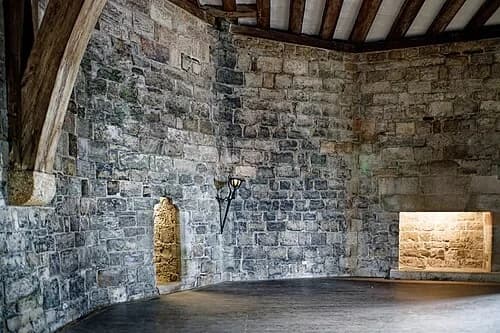
Royal Lodgings Interior
The interior of the royal lodgings reveals the sophisticated level of comfort planned for King Edward I and his family. Even in their current ruined state, you can see evidence of high-status living, such as the massive fireplace and the intricate stone-corbeled ceiling that supported the floors above. During the castle's peak, these rooms would have looked entirely different than the bare stone you see today. They would have been transformed with vibrant, colorful tapestries hanging from the walls to provide insulation and decoration, while heavy wooden furniture and plush textiles would have filled the space. This level of domestic luxury stood in sharp contrast to the cold, imposing military exterior of the fortress. These rooms were designed to impress visiting dignitaries and provide a suitable environment for the ruling elite to conduct state business in private. The stone corbels, which are the protruding brackets you see high on the walls, are particularly notable for their craftsmanship, showing that even in a fortress built primarily for war, no detail was too small for the royal architects. Walking through these spaces helps bridge the gap between the castle's role as a military stronghold and its function as a prestigious royal palace.
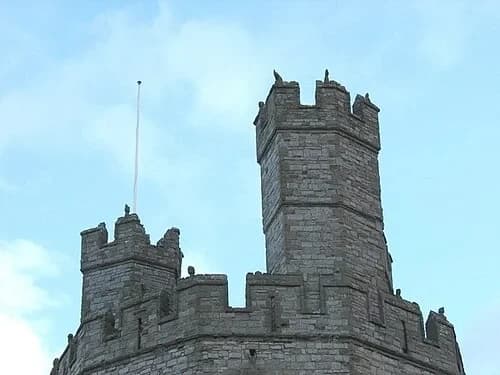
The Three Turrets
Look up at the very top of the Eagle Tower's three turrets to see the weathered remains of stone eagles. These figures were not merely decorative; they were a potent piece of political propaganda. In the 13th century, the eagle was the symbol of the Roman Empire, and by placing them here, King Edward I was deliberately linking his rule to the power of ancient Rome. This connection was further reinforced by the 'Dream of Macsen Wledig,' a famous Welsh legend from the Mabinogion. In the story, the Roman Emperor Magnus Maximus dreams of a magnificent castle at the mouth of a river, exactly where Caernarfon stands. By building a castle that looked like the Roman walls of Constantinople and decorating it with imperial eagles, Edward was attempting to fulfill this ancient prophecy. He wanted to present his conquest of Wales not as a foreign invasion, but as the restoration of a rightful imperial order. This clever use of local mythology and international symbols was intended to legitimate English rule in the eyes of the Welsh people. Although many of the stone eagles have crumbled over the centuries, the few that remain serve as a reminder of the psychological warfare that accompanied the physical building of these massive stone walls.
The Upper Ward and Investiture Site
Move to the Upper Ward to discover the site of the modern Prince of Wales investitures and the castle's continuing royal legacy.
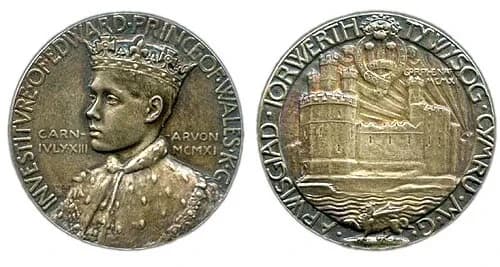
Investiture of Edward, Prince of Wales
This commemorative medal from 1911 was created to mark the investiture of the future King Edward VIII. On the front, or obverse, you can see a finely detailed profile of the young prince, wearing his ceremonial robes. The reverse of the medal features a striking depiction of Caernarfon Castle itself, emphasizing the fortress as the rightful home of the Prince of Wales. These objects were much more than simple souvenirs; they were widely distributed to help cement the connection between the British Monarchy and Welsh identity in the early 20th century. By holding the investiture at the castle for the first time in centuries and producing these commemorative items, the government sought to foster a sense of shared heritage. The detail of the castle on the medal is quite accurate, showing the distinct polygonal towers and the Eagle Tower. The use of Latin and Welsh inscriptions on such artifacts further highlighted the dual nature of the prince’s role. These small, portable pieces of art allowed the message of the ceremony to travel far beyond the castle walls, reaching the pockets and homes of people throughout the British Empire and reinforcing the castle's status as a central symbol of royal power.
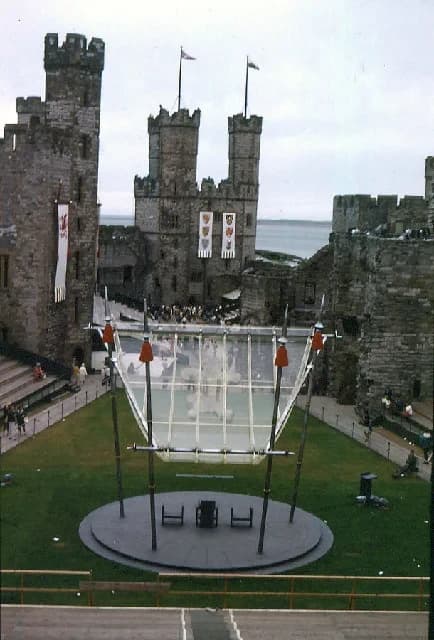
Investiture of Charles, Prince of Wales
The 1969 investiture of Prince Charles was a landmark event that blended ancient tradition with modern technology. For the ceremony, a massive modernist canopy was installed over the central dais you saw in the ward. This striking structure, made of lightweight materials, provided a sharp visual contrast to the heavy, medieval masonry of the surrounding towers. It was a clear signal that the monarchy was looking toward the future, even as it celebrated the past. The scale of the event was truly global; it was the first investiture to be broadcast live on television, reaching an estimated 500 million people worldwide. The ancient architecture of Caernarfon Castle provided a dramatic and prestigious backdrop, lending the modern ceremony an air of historical weight and permanence. Every detail, from the vibrant red uniforms of the guards to the contemporary design of the canopy, was carefully choreographed for the cameras. This event transformed the castle from a silent monument into a living stage, demonstrating how historic sites can be adapted to maintain their relevance in the modern era. The image of the young prince standing amidst these ruins became one of the defining royal photographs of the late 20th century.
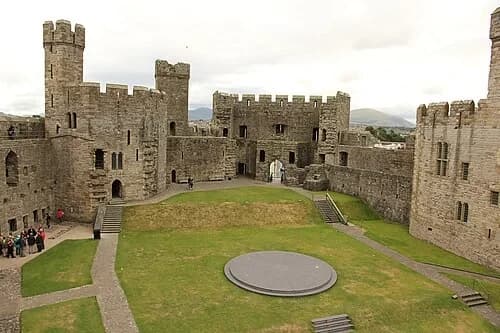
The Investiture Site
In the center of the castle ward, you will find a circular stone dais that stands out from the surrounding grass. This platform transitions the story of Caernarfon from the medieval period into the 20th century. This is the official site used for the investiture of the Prince of Wales, a ceremony where the heir to the British throne is formally acknowledged. While the title dates back to 1301, the tradition of holding the ceremony here at Caernarfon was revived in 1911 for the future King Edward VIII. It was here again, in July 1969, that the current King, then Prince Charles, was formally invested by Queen Elizabeth II. The choice of this specific location for the ceremony was a deliberate attempt to connect the modern British monarchy with the deep historical roots of the castle. The dais itself is modern, designed to provide a focused stage for the elaborate rituals involved in the investiture. Surrounding this spot, temporary grandstands were once erected to hold thousands of guests, turning the ancient fortress into a grand open-air theater. The site remains a focal point for visitors, representing the ongoing role of the castle as a venue for state ritual and a symbol of national identity.
Royal Welch Fusiliers Museum
Visit the museum housed within the castle towers to learn about the long military history of the Welsh regiment.
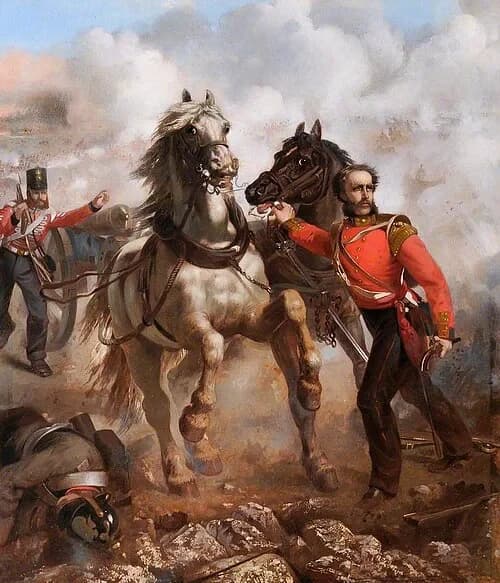
Captain Bell Winning the Victoria Cross
Among the most compelling displays in the museum is a dramatic depiction of the Battle of the Alma, fought during the Crimean War in 1854. The painting focuses on the heroic actions of Captain Edward Bell of the Royal Welch Fusiliers. During the heat of the battle, Bell realized that a Russian gun was about to be withdrawn by the enemy. He single-handedly charged forward, captured the gun, and turned it back against the Russian forces. This act of extraordinary valor earned him the Victoria Cross, the highest military decoration for bravery in the British armed forces. This artwork serves as a powerful reminder of the human stories that exist behind the abstract concepts of military history and regiment numbers. It captures the chaos, smoke, and intensity of 19th-century warfare, providing a stark contrast to the quiet stone corridors of the castle where you are standing. Captain Bell’s story is just one of many thousands of individual accounts preserved here, illustrating the courage and sacrifice of the soldiers who have served in this historic Welsh regiment over the last three centuries.
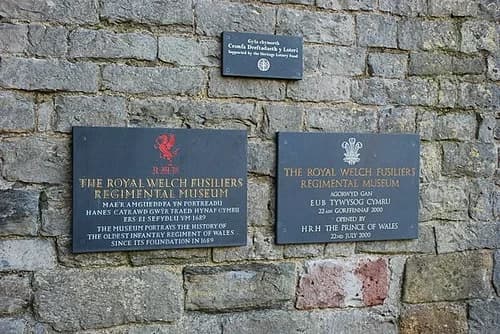
Royal Welch Fusiliers Museum
1960
The North East and Queen's Towers currently house the Royal Welch Fusiliers Museum. This regiment, founded in 1689, holds the distinction of being the oldest infantry regiment in Wales. The museum's location within the castle walls is highly significant, as it creates a direct link between the fortress’s medieval military origins and over 300 years of more recent Welsh military history. Inside, the exhibits chronicle the regiment's service in conflicts across the globe, from the American War of Independence to both World Wars. You can see a wide array of artifacts, including uniforms, medals, and personal items that belonged to the soldiers. The museum also highlights the regiment's unique traditions, such as the famous goat mascot that leads their parades. By exploring these towers, you transition from the grand strategies of kings to the personal stories of the men who served under the regimental banner. The thick stone walls that once housed medieval archers now protect the memory of those who fought in the trenches and on distant battlefields, showing the enduring military legacy of Caernarfon as a center for defense and regimental pride.
Want to hear the rest?
Download the Stanza app to unlock all 16 stops and full GPS-guided navigation.
Frequently Asked Questions
How long does the Caernarfon Castle audio tour take?
The Caernarfon Castle audio guide includes 16 narrated stops. Most visitors spend 45 minutes to 1.5 hours exploring the complete tour, though you can listen at your own pace and skip or revisit any stop.
Is the Caernarfon Castle audio guide available in my language?
Stanza supports 15 languages: English, Spanish, French, German, Italian, Portuguese, Russian, Japanese, Chinese, Korean, Arabic, Hindi, Polish, Dutch, Hebrew. Check the guide in the app to confirm the languages currently available for this tour.
Can I use the audio guide offline at Caernarfon Castle?
Yes! Download the complete Caernarfon Castle tour — including all audio, maps, and images — before your visit. The Stanza app works completely offline, so you don't need WiFi or mobile data at the venue.
How much does the Caernarfon Castle audio guide cost?
The Stanza app is free to download. The current listed price for the Caernarfon Castle audio guide is $2.99; app-store region and currency may affect the final price.
How do I use the Stanza audio guide at Caernarfon Castle?
Download the free Stanza app, search for "Caernarfon Castle", and download the tour. When you arrive at the venue, the app uses GPS to detect your location and automatically plays the relevant narration as you move between points of interest — completely hands-free.
What makes the Stanza audio guide different from other Caernarfon Castle tours?
Stanza offers GPS-triggered narration that plays automatically as you walk through Caernarfon Castle — no need to manually select stops. The tour is available in 15 languages, works fully offline, and includes 16 expertly narrated stops with images and historical context.
What other audio guides are available near Caernarfon Castle?
Stanza offers multiple audio guides in Caernarfon, United Kingdom and nearby areas. After downloading the app, browse the map to discover all available tours near Caernarfon Castle. Each guide can be downloaded for offline use.