Languages
15Blenheim Palace Audio Guide
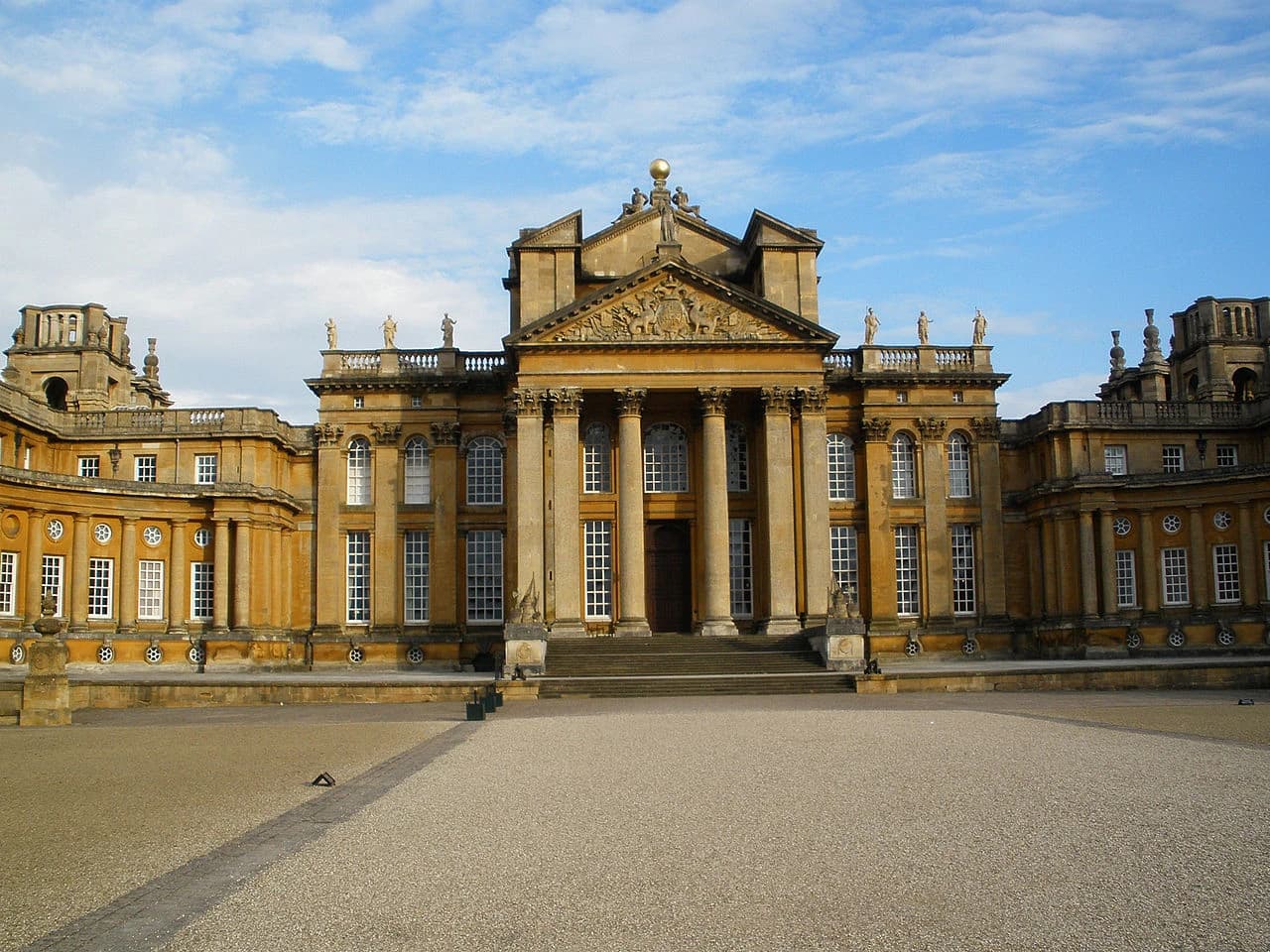
Blenheim Palace is a landmark in West Oxfordshire, United Kingdom. Explore it with Stanza's GPS-triggered offline audio guide — available in 15 languages.
Quick Facts
31
Stops
15
Languages
100%
Offline
📍 West Oxfordshire, United Kingdom · 51.8414°N, -1.3609°E
About Blenheim Palace
Blenheim Palace is a monumental country house in Oxfordshire, England, notable as the birthplace of Sir Winston Churchill and the principal residence of the Dukes of Marlborough. It is the only non-royal, non-episcopal country house in England to hold the title of palace and is a UNESCO World Heritage Site.
Blenheim Palace is also known as Blenheim Park.
This self-guided audio tour features 31 narrated stops organized across 7 sections. As a palace, Blenheim Palace offers a unique cultural experience in the heart of West Oxfordshire, United Kingdom.
The Stanza audio guide is available in 15 languages and works entirely offline — download the complete tour including audio narration, maps, and images before your visit. As you walk through Blenheim Palace, GPS-triggered narration plays automatically at each point of interest.
Last updated:
What you will hear
The Great Court and North Portico
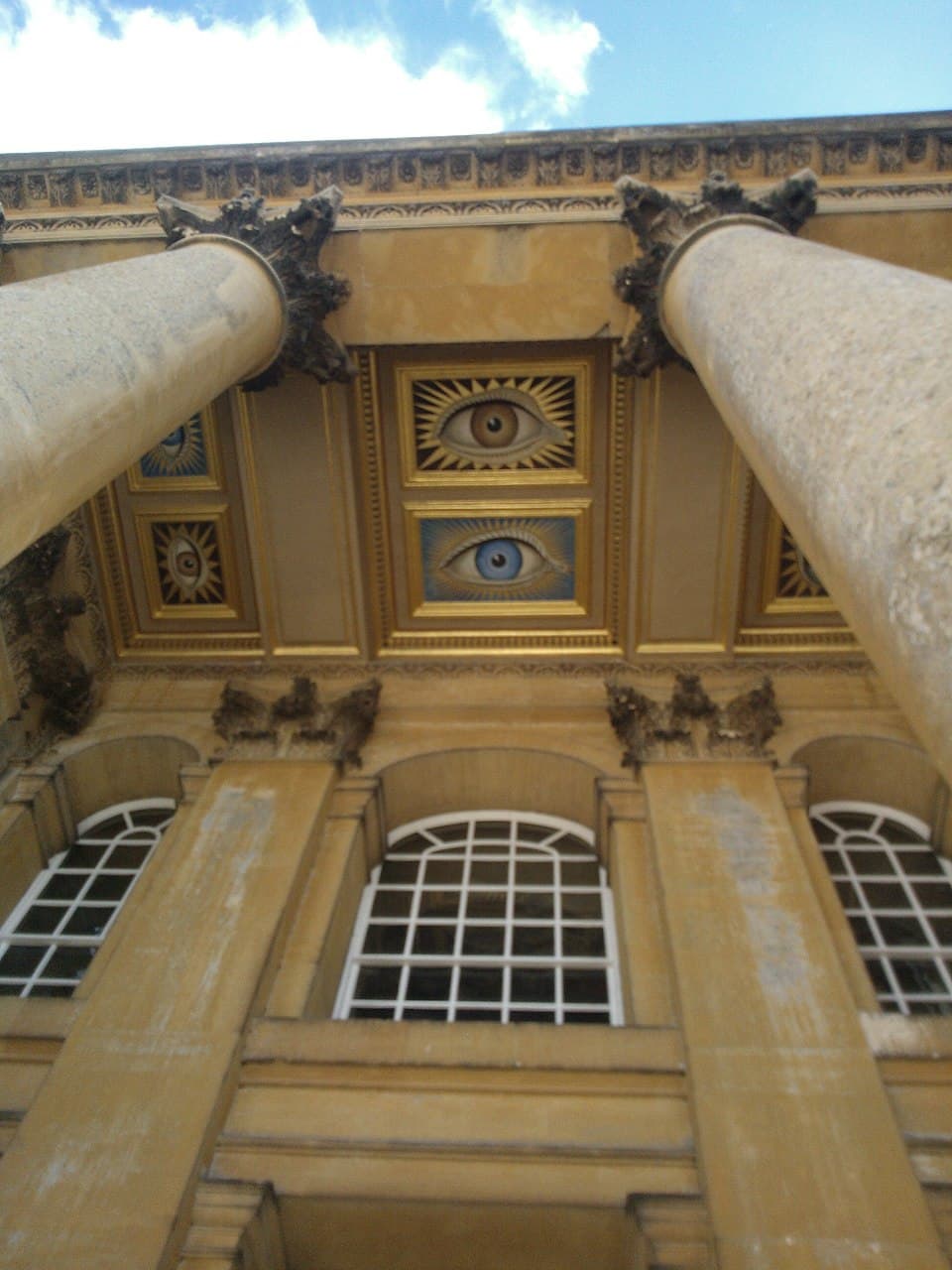
Establishes the 'English Baroque' masterpiece and the palace's unique status. Includes the signature 'painted eyes' on the ceiling.
The Painted Eyes
Direct the visitor to look up at the portico ceiling. Tell the story of Gladys Deacon, the 9th Duchess, who had her own blue eyes painted here in the 1920s so she could 'watch' guests arriving. Compare them to the brown eyes of her husband.
The Great Hall and Stone Carvings
Focuses on the 67-foot ceiling and the military origins of the palace. Includes the stolen gold toilet POI.
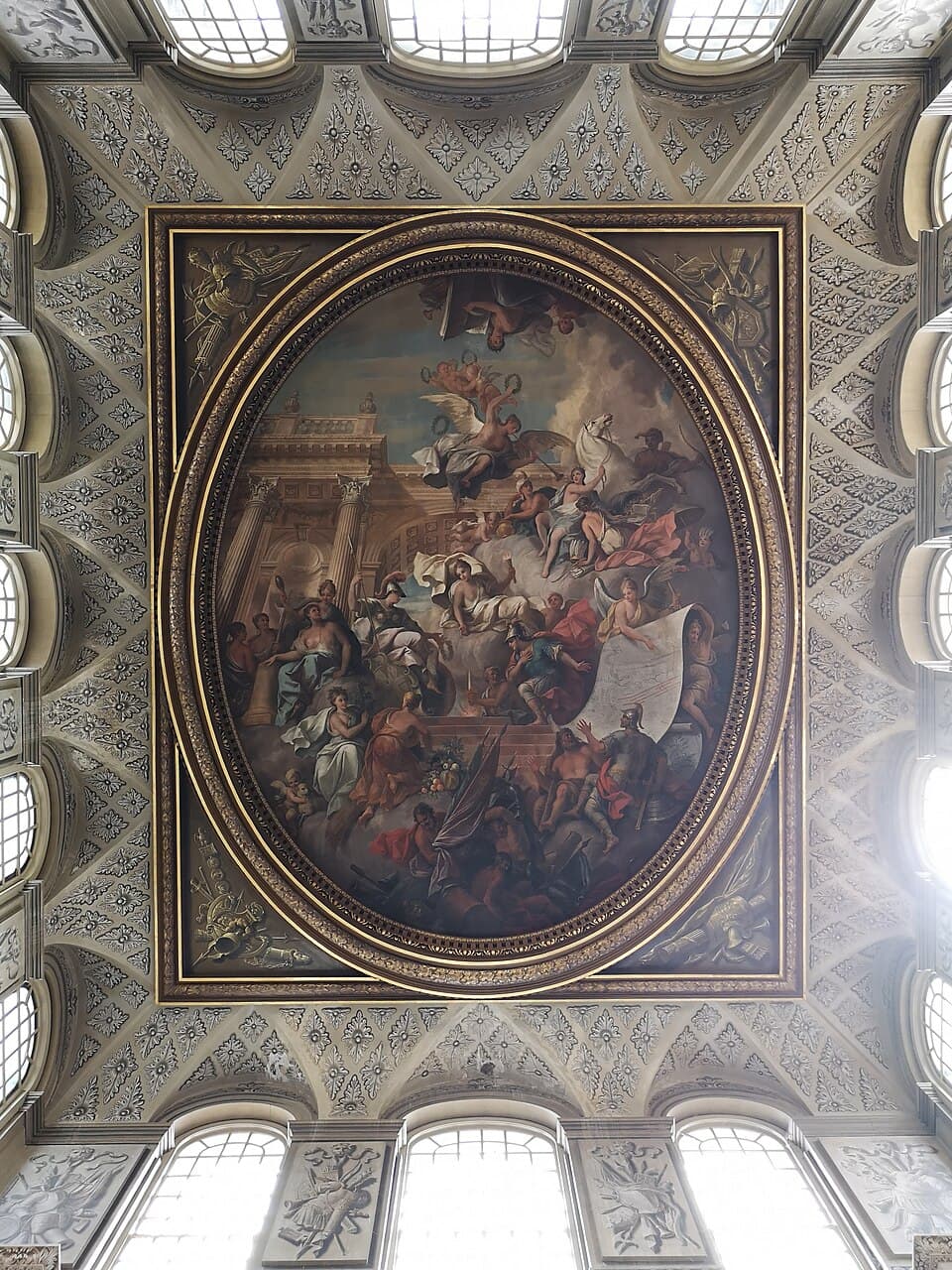
Marlborough's Triumph Ceiling
Describe the scene overhead: the 1st Duke presenting his battle plan for Blenheim to Britannia. Explain how this painting serves as propaganda, cementing the family's status as protectors of the nation.
The Churchill Exhibition and Birth Room
Personal connection to Sir Winston Churchill, including the modest room where he was born in 1874.
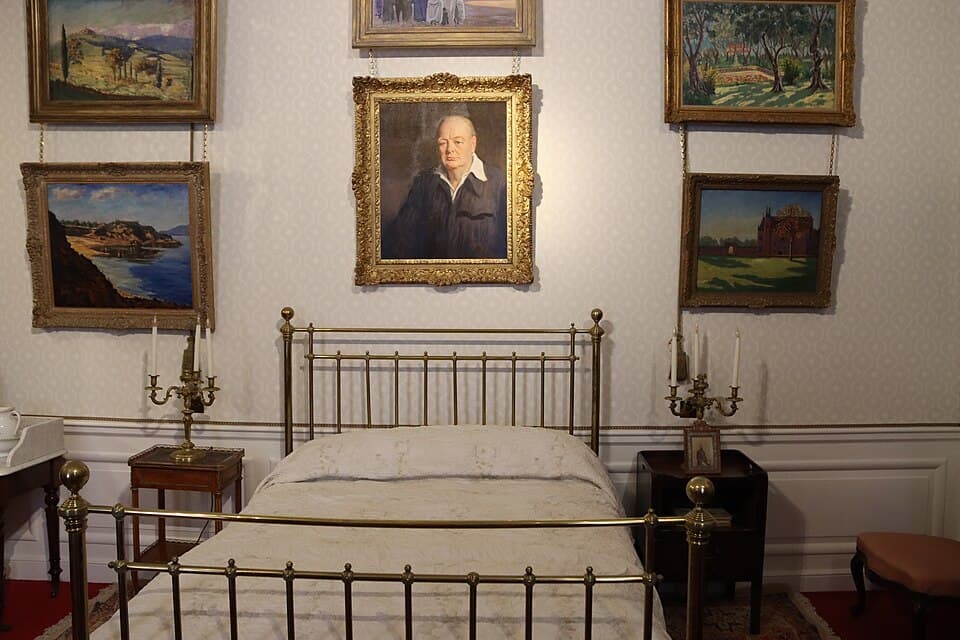
Churchill's Birth Room
Pivot to Sir Winston Churchill, born in this small room in 1874. Explain that he wasn't expected to be born here; his mother, Jennie, went into labor unexpectedly during a ball at the palace. Note the modest brass bed compared to the surrounding grandeur.
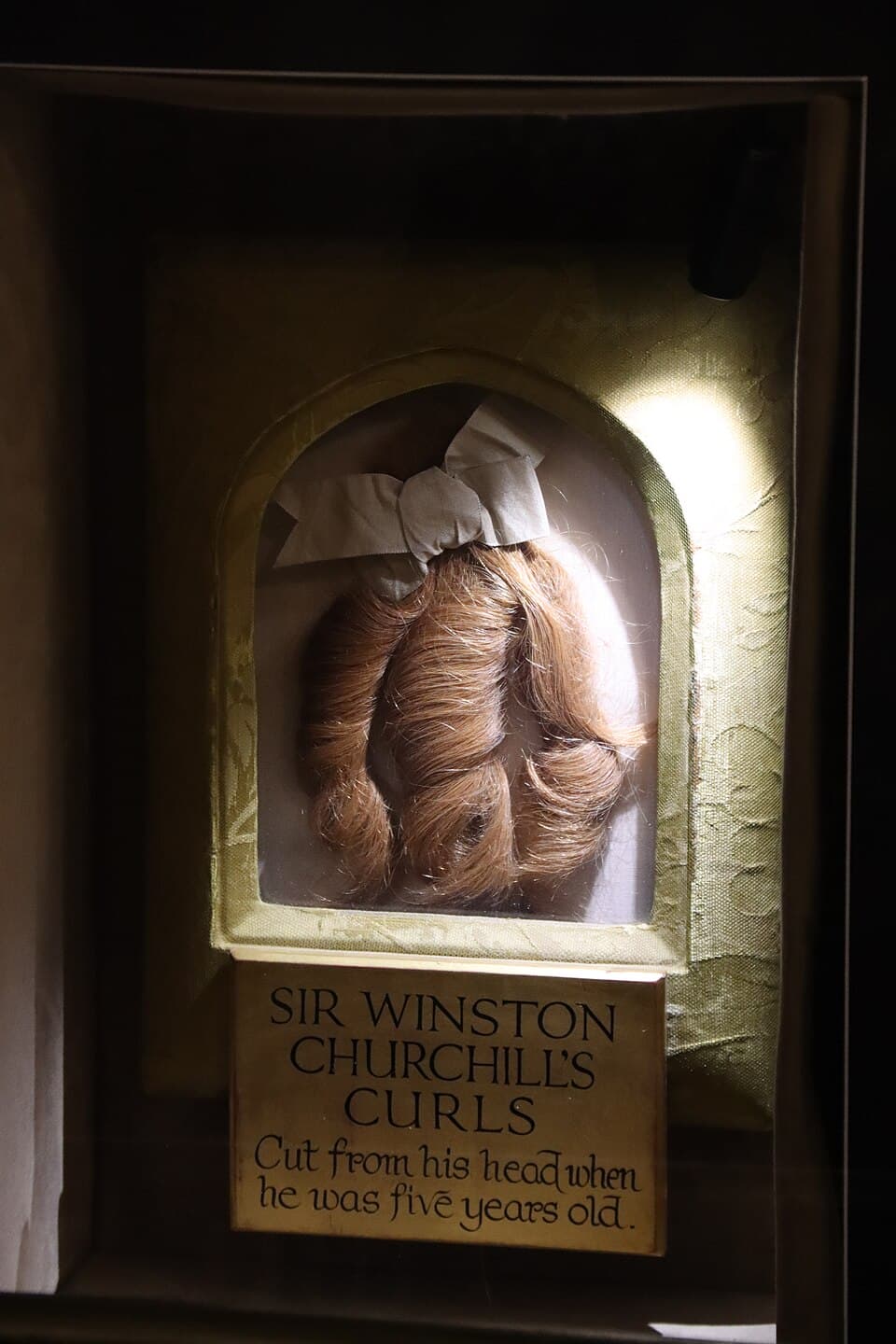
Winston's Childhood Curls
Describe this intimate artifact: a lock of Churchill’s hair from age five. Use this to humanize the formidable 'British Bulldog' by showing his fragile beginnings as a red-haired boy in this very house.
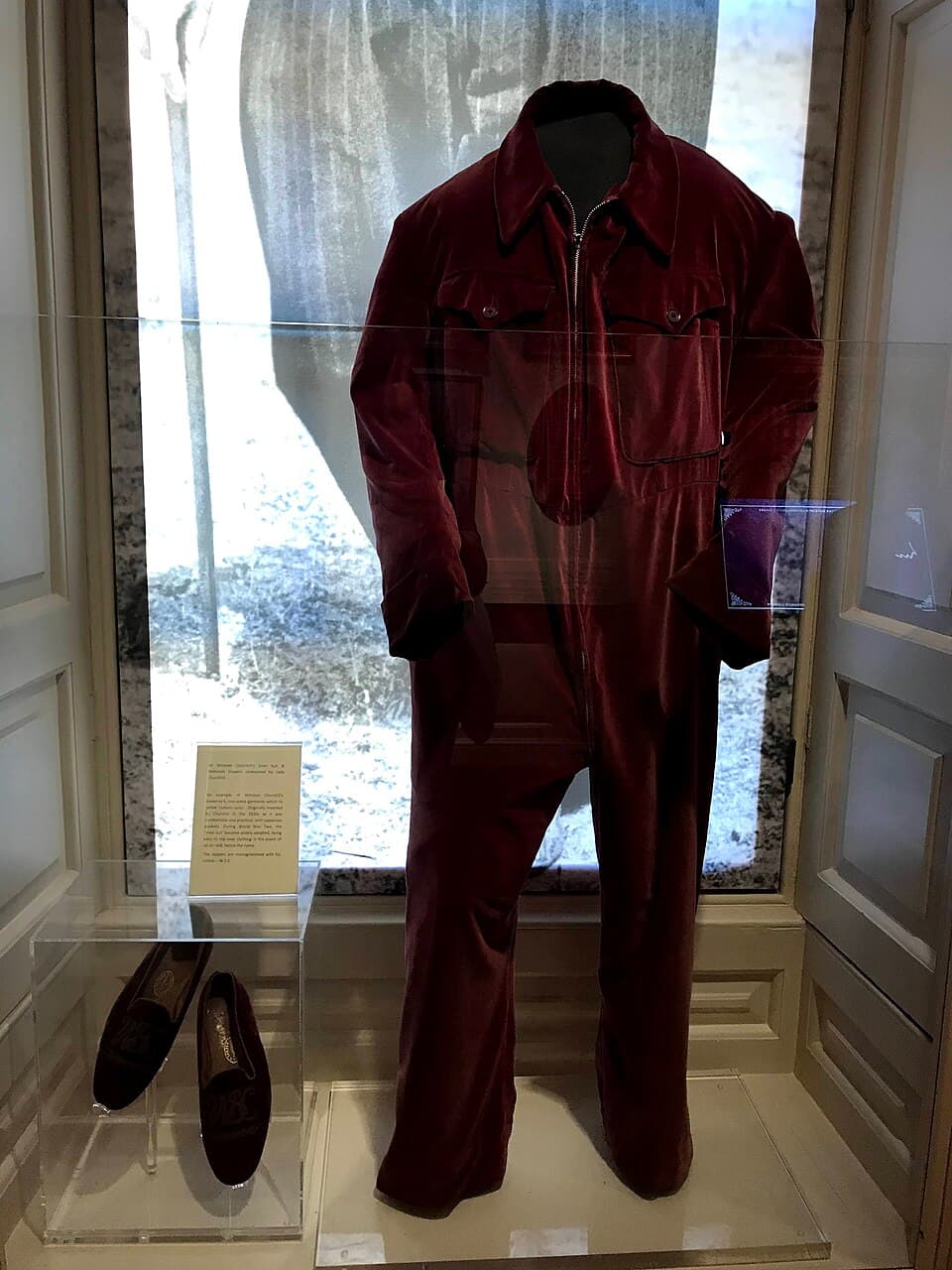
The Siren Suit
Focus on the velvet one-piece 'siren suit' designed by Churchill himself. Explain why he loved it: it was practical for jumping into during air raids, proving that even his fashion was directed by the needs of wartime leadership.
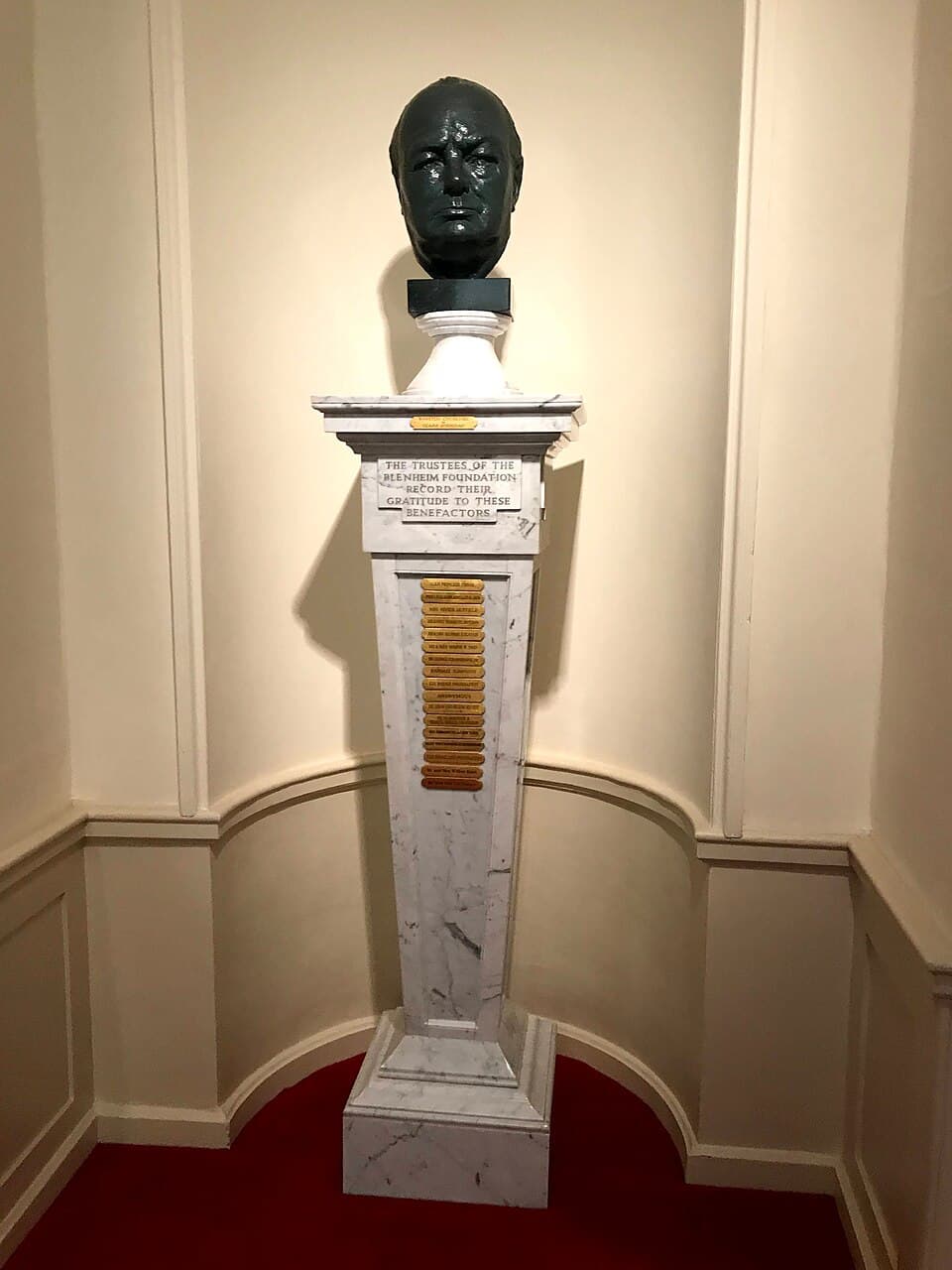
Winston Churchill Bust
Identify this bust of the older statesman. Discuss his deep love for Blenheim, where he famously proposed to his wife, Clementine, in the Temple of Diana on the grounds. He is buried just a few miles away in Bladon.
The State Apartments and Victory Tapestries
Showcases the 'Victories Series' tapestries and the 'Dollar Princess' story through the 9th Duke's family portrait.
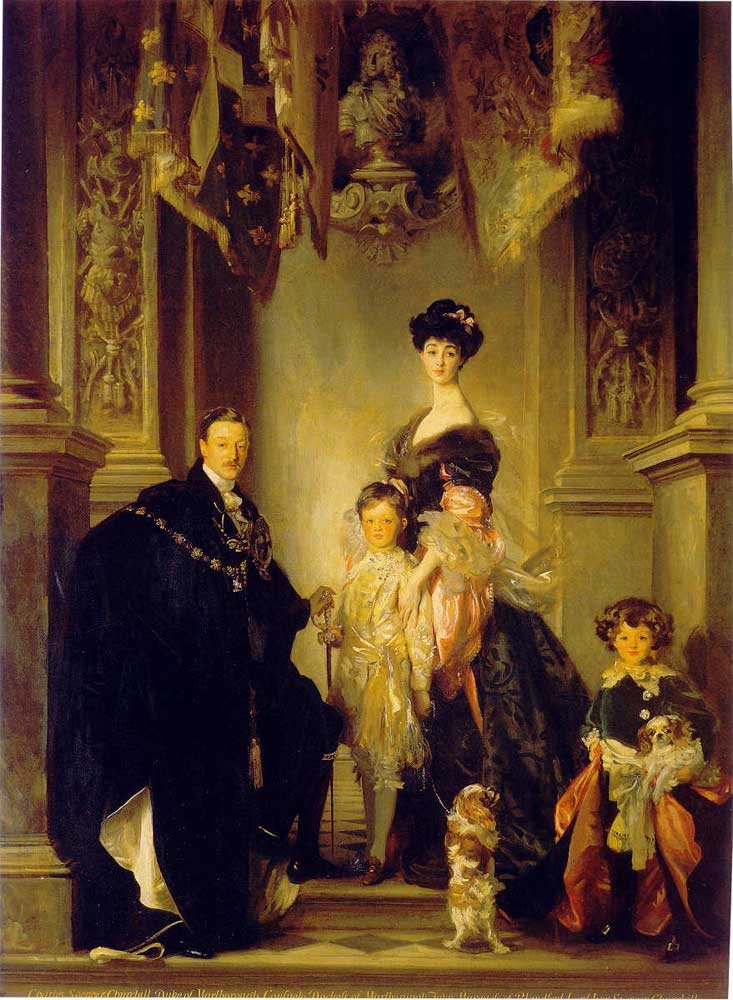
Portrait of the 9th Duke of Marlborough with his family
John Singer Sargent · 1905 · canvas
Introduce Consuelo Vanderbilt, the American railroad heiress. Explain the 'Dollar Princess' rescue: her $2.5 million dowry (worth over $75m today) saved the palace from bankruptcy in 1895 and funded the restoration of the gardens you'll see later.
The Long Library
One of the longest private rooms in Britain, housing rare books and the Europe's largest private pipe organ.
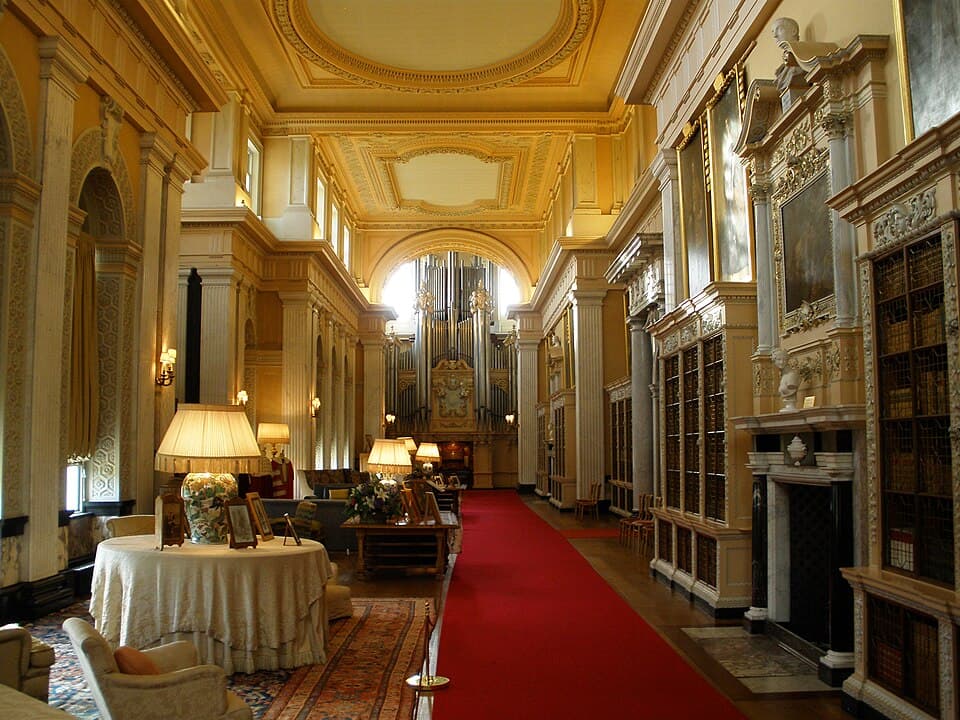
The Long Library
The Long Library is a space of truly monumental proportions. Originally conceived by the architect Vanbrugh as a gallery for displaying the family’s vast collection of paintings, it was later transformed into a magnificent library. Today, it houses over 10,000 rare and historically significant books, many of which are contained within the floor-to-ceiling shelving that lines the walls. The sheer length of the room—183 feet—makes it one of the largest private rooms in the country, designed to impress visitors with its scale and scholarly wealth. As you look down the length of the room, notice the intricate stucco work on the ceiling and the refined architectural details that frame the space. The library was designed to be a place of quiet study and intellectual pursuit, but its scale also allowed it to be used for grand social functions. Walking from one end to the other provides a sense of the palace’s immense horizontal reach. The transition from a simple art gallery to a world-class library reflected the changing tastes of the Dukes of Marlborough as they sought to balance their military heritage with a reputation for culture and learning.
The Water Terraces and Italian Garden
Formal French-inspired gardens created during the Vanderbilt restoration era.
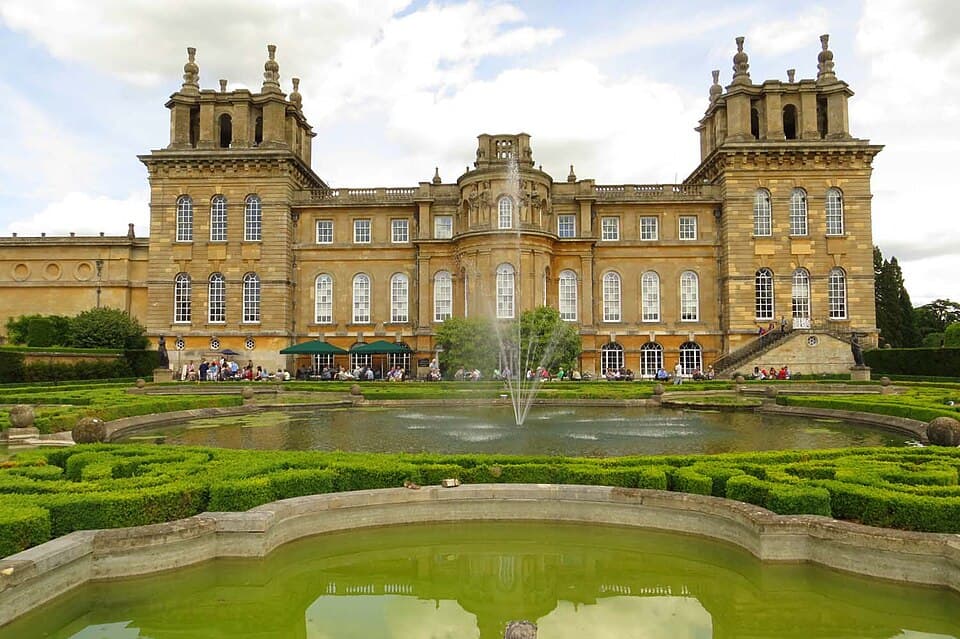
The Water Terraces
Moving outside, the Water Terraces offer a breathtaking display of formal garden design. Added between 1925 and 1930, these terraces were the work of the French landscape architect Achille Duchêne, commissioned by the 9th Duke of Marlborough. The design features a series of interconnected pools, fountains, and low stone walls, all meticulously aligned to create a sense of perfect symmetry and order. The sound of flowing water adds a sensory layer to the visual beauty of the space. The style is intentionally reminiscent of the gardens at the Palace of Versailles in France. This choice was a bit of a cheeky architectural joke; Blenheim Palace was originally built to celebrate a massive military victory over the French, yet two centuries later, the family chose a quintessentially French style for their most prestigious garden renovation. The terraces provide a stunning transition between the massive stone walls of the palace and the more naturalistic landscape of the surrounding park. They represent a period of renewed investment in the estate’s beauty, fueled by the financial stability brought to the family in the late 19th century.
The Grand Bridge and Great Lake
Capability Brown's landscape masterpiece, where he dammed the River Glyme to create the Great Lake.
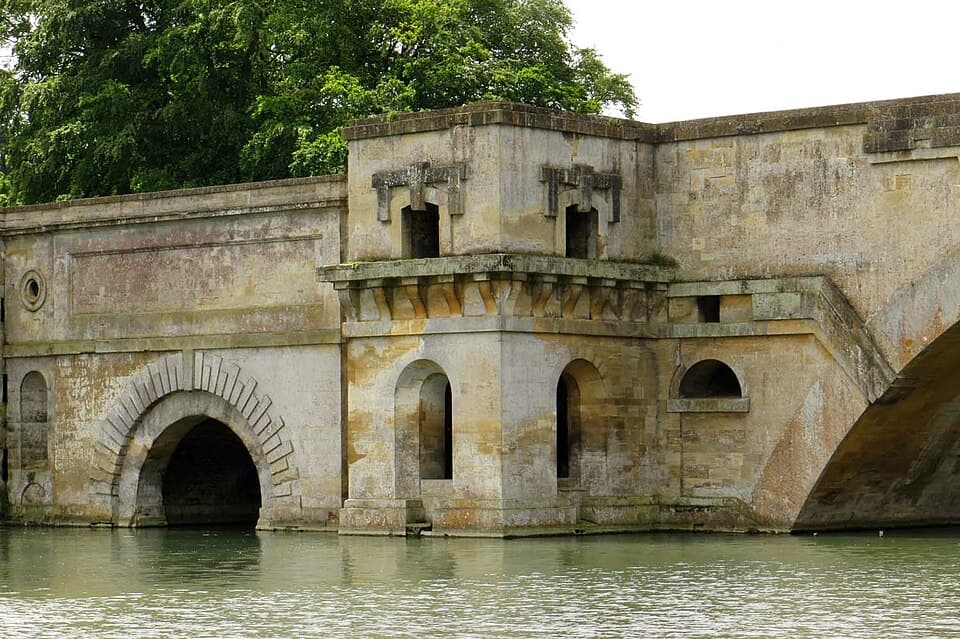
The Hidden Rooms
The Grand Bridge hides a fascinating architectural secret within its massive stone piers. When the architect Sir John Vanbrugh originally designed the bridge, he didn't just intend for it to be a way to cross the valley; he envisioned it as a habitable monument. Inside the structure, he built a complex of 33 rooms, some of which were quite grand, featuring fireplaces and decorative windows. These rooms were intended for use by guests or staff, making the bridge a functional extension of the palace itself. However, when 'Capability' Brown flooded the valley to create the Great Lake in the 1760s, the destiny of these rooms changed forever. As the water level rose, the lower rooms were completely submerged, and the upper ones became damp and unreachable. Today, these 'hidden rooms' remain beneath the waterline or sealed off within the bridge's structure, a lost piece of Vanbrugh’s original, ambitious vision. They serve as a behind-the-scenes detail of the palace's construction, illustrating how the desire for a picturesque landscape eventually took priority over the practical, habitable architecture of the earlier Baroque era.
Want to hear the rest?
Download the Stanza app to unlock all 31 stops and full GPS-guided navigation.
Frequently Asked Questions
How long does the Blenheim Palace audio tour take?
The Blenheim Palace audio guide includes 31 narrated stops. Most visitors spend 45 minutes to 1.5 hours exploring the complete tour, though you can listen at your own pace and skip or revisit any stop.
Is the Blenheim Palace audio guide available in my language?
Stanza supports 15 languages: English, Spanish, French, German, Italian, Portuguese, Russian, Japanese, Chinese, Korean, Arabic, Hindi, Polish, Dutch, Hebrew. Check the guide in the app to confirm the languages currently available for this tour.
Can I use the audio guide offline at Blenheim Palace?
Yes! Download the complete Blenheim Palace tour — including all audio, maps, and images — before your visit. The Stanza app works completely offline, so you don't need WiFi or mobile data at the venue.
How much does the Blenheim Palace audio guide cost?
The Stanza app is free to download. The current listed price for the Blenheim Palace audio guide is $2.99; app-store region and currency may affect the final price.
How do I use the Stanza audio guide at Blenheim Palace?
Download the free Stanza app, search for "Blenheim Palace", and download the tour. When you arrive at the venue, the app uses GPS to detect your location and automatically plays the relevant narration as you move between points of interest — completely hands-free.
What makes the Stanza audio guide different from other Blenheim Palace tours?
Stanza offers GPS-triggered narration that plays automatically as you walk through Blenheim Palace — no need to manually select stops. The tour is available in 15 languages, works fully offline, and includes 31 expertly narrated stops with images and historical context.
What other audio guides are available near Blenheim Palace?
Stanza offers multiple audio guides in West Oxfordshire, United Kingdom and nearby areas. After downloading the app, browse the map to discover all available tours near Blenheim Palace. Each guide can be downloaded for offline use.