Languages
15Alnwick Castle Audio Guide
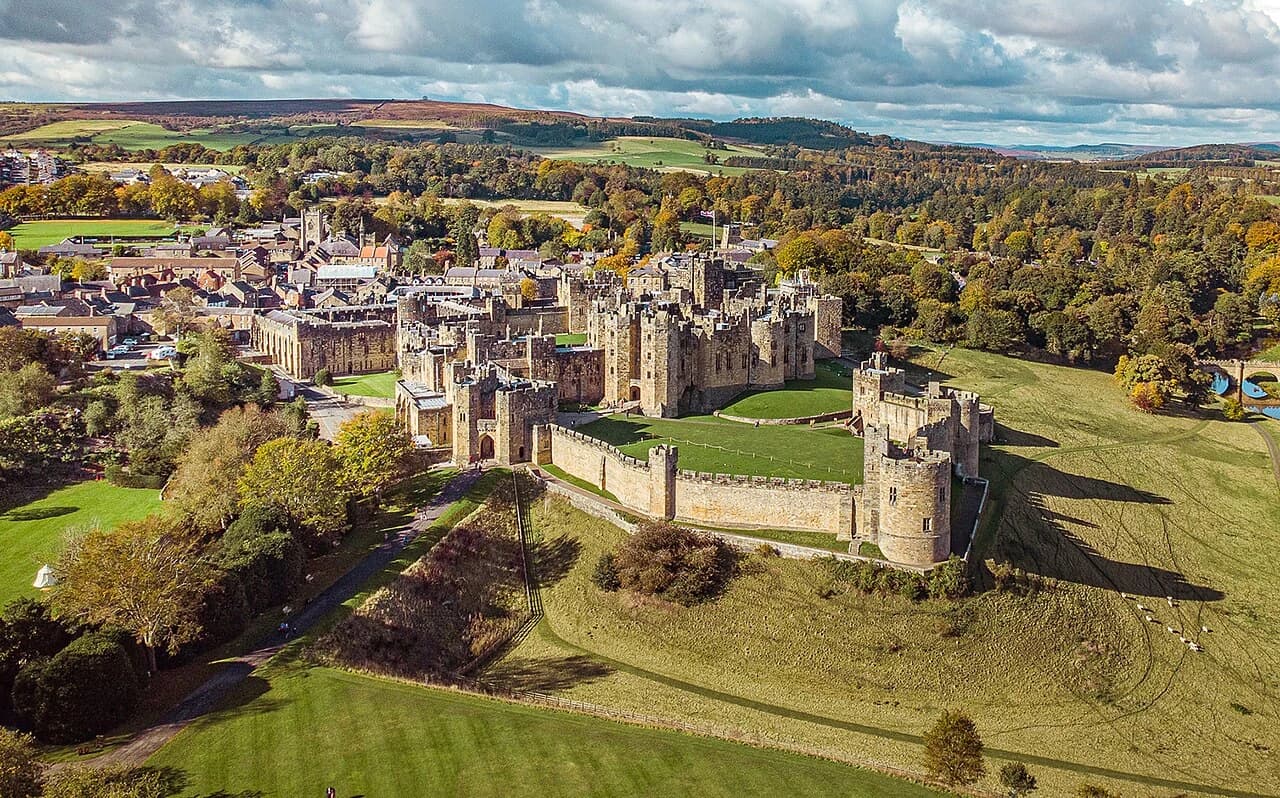
Alnwick Castle is a landmark in Alnwick, United Kingdom. Explore it with Stanza's GPS-triggered offline audio guide — available in 15 languages.
Quick Facts
17
Stops
15
Languages
100%
Offline
📍 Alnwick, United Kingdom · 55.4158°N, -1.7061°E
About Alnwick Castle
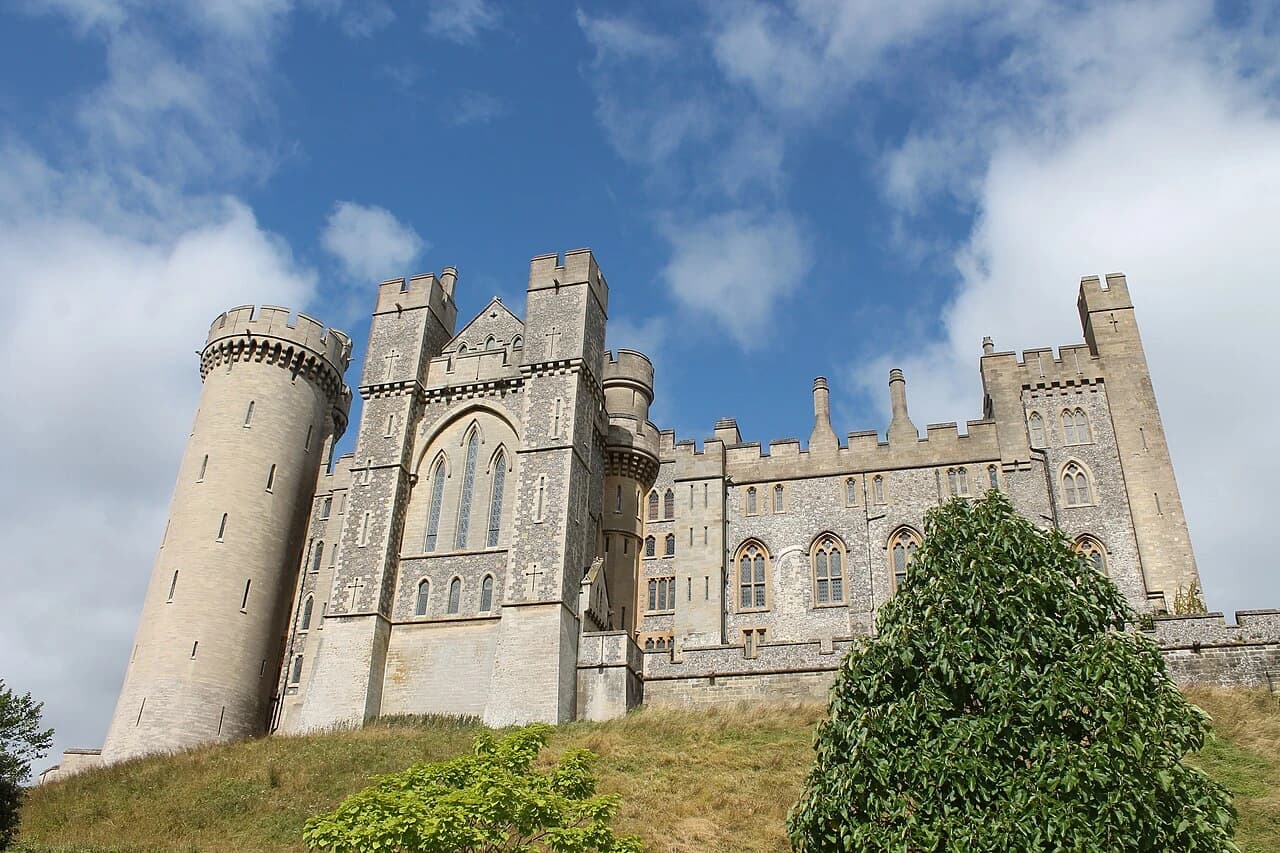
Alnwick Castle is a historic castle and stately home that serves as the seat of the Duke of Northumberland. It is a well-known site frequently featured in film and television productions.
This self-guided audio tour features 17 narrated stops organized across 7 sections. As a castle, Alnwick Castle offers a unique cultural experience in the heart of Alnwick, United Kingdom.
The Stanza audio guide is available in 15 languages and works entirely offline — download the complete tour including audio narration, maps, and images before your visit. As you walk through Alnwick Castle, GPS-triggered narration plays automatically at each point of interest.
Last updated:
What you will hear
The Barbican and Gatehouse
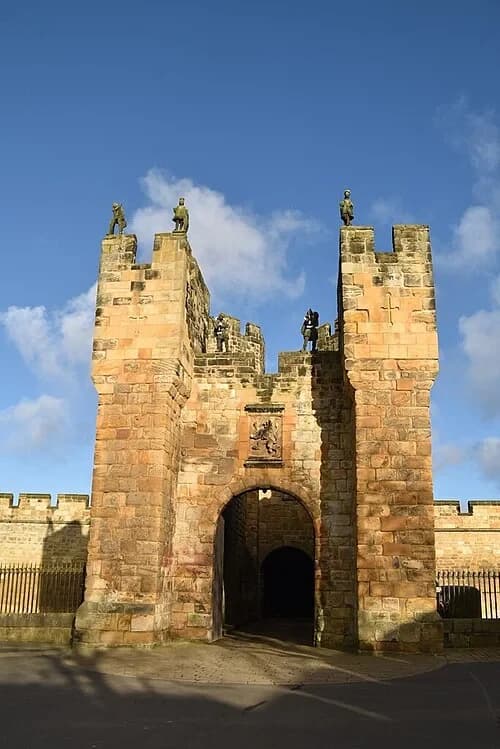
Starting at the main entrance to establish the castle's 1096 Norman origins and its role as a border fortress. Includes the approach to the gatehouse and the defensive barbican.
The Main Gatehouse
Starting here at the Gatehouse, you are entering a site with roots stretching back to 1096. Originally built as a Norman fortification, Alnwick has evolved over centuries to become a massive residence, surpassed in size only by Windsor Castle. This formidable entryway sets the tone with its thick walls and early defensive architecture, designed to withstand the volatile conflicts of the Anglo-Scottish border. For over 700 years, this has been the seat of the Percy family, the Dukes of Northumberland, whose influence shaped Northern English history. As you observe the heavy masonry, consider that the gatehouse wasn't just a door; it was a complex system of security meant to control access to one of the most powerful families in the kingdom. The transition from timber to stone in the 12th century marked the beginning of the enduring structure you see today. Look for the early heraldry carved into the stone above the archway, marking the entrance to the outer bailey.
The Outer Bailey and Film Locations
Focuses on the expansive lawns famous as the filming location for Hogwarts broomstick lessons and the site of historical sieges like that of William the Lion in 1174.
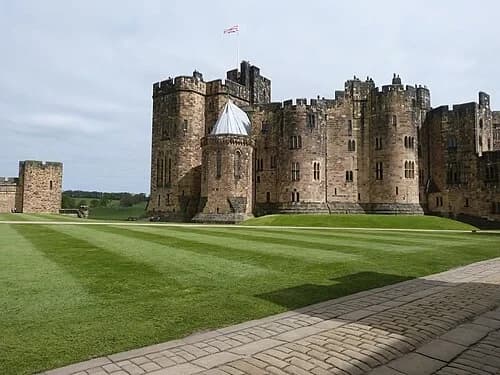
The Outer Bailey
This wide, grassy area is instantly recognizable to millions as a filming location for Hogwarts. It was right here that Harry Potter had his first flying lesson on a broomstick and where the game of Quidditch was introduced. The castle's towering walls and medieval atmosphere provided the perfect cinematic setting for the Wizarding World. However, long before movie cameras arrived, the reality of this space was much grittier. For centuries, this bailey served as a vital staging ground where thousands of soldiers would gather before heading north to face Scottish armies during border conflicts. It was a place of frantic activity, filled with the sounds of sharpening blades, neighing horses, and the voices of men preparing for battle. Today, while children might still visit to practice their wizardry, the scale of the bailey serves as a reminder of its original function: providing enough space to house an army within the safety of the curtain walls. The contrast between Hollywood magic and the ancient history of the border provides a unique layer to the landscape.
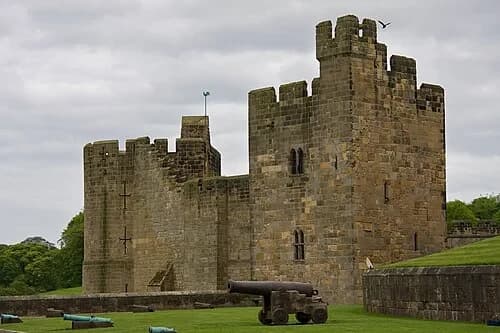
The Battlements and Cannons
The battlements here offer a clear view of the surrounding landscape, which proved decisive in 1174 during the Siege of William the Lion. King William of Scotland had besieged Alnwick, but under the cover of a thick Northumbrian mist, a small group of English knights surprised the Scottish forces. William was captured right outside these walls, a pivotal moment that effectively ended the invasion and shifted the power balance on the border. Along the curtain wall, you can see a line of heavy cannons. While the walls themselves are much older, these particular artillery pieces date from the 18th century. They reflect a later period in the castle’s history when the threat shifted from cross-border raids to more organized military defense against European powers. The wide mouths of the cannons and their heavy carriages emphasize the transition from the era of bows and arrows to the age of gunpowder. Looking out from between the crenellations, it is easy to see how the castle’s position allowed its defenders to monitor any movement across the River Aln.
The Keep and Inner Ward
Entering the heart of the castle to discuss the unique shell keep design and the Percy family legacy, featuring the statue of the famous Harry Hotspur.
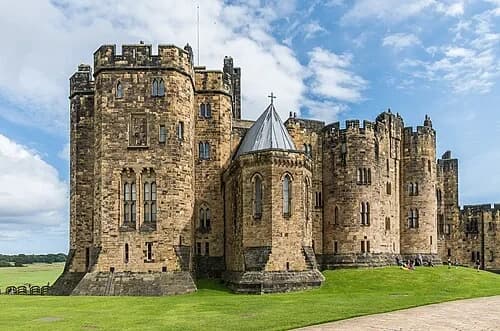
The Shell Keep
Unlike typical square or circular keeps, Alnwick features a 'shell keep' layout. This architectural style involves a series of towers linked together to form a ring, creating a secure inner ward that was almost a castle within a castle. The current appearance of this structure owes much to the extensive remodeling directed by architect Anthony Salvin between 1854 and 1865. Salvin was commissioned to give the exterior a more imposing Victorian-medieval aesthetic, heightening the towers and adding decorative elements that enhanced the fortress-like silhouette. This 19th-century work aimed to restore the castle’s grandeur while incorporating modern comforts for the Percy family inside. Despite the Victorian updates, the fundamental layout remains medieval, preserving the ancient core of the stronghold. The high walls of the keep create a sheltered space that served as the final line of defense. The texture of the masonry varies where older stones meet the 19th-century additions, documenting the ongoing evolution of the castle as both a defensive post and a grand family home. You can still see original medieval stonework at the base of several towers.
The State Rooms and Art Collections
Showcases the 19th-century Victorian remodeling by Anthony Salvin and the world-class art collection housed within the palatial interiors.
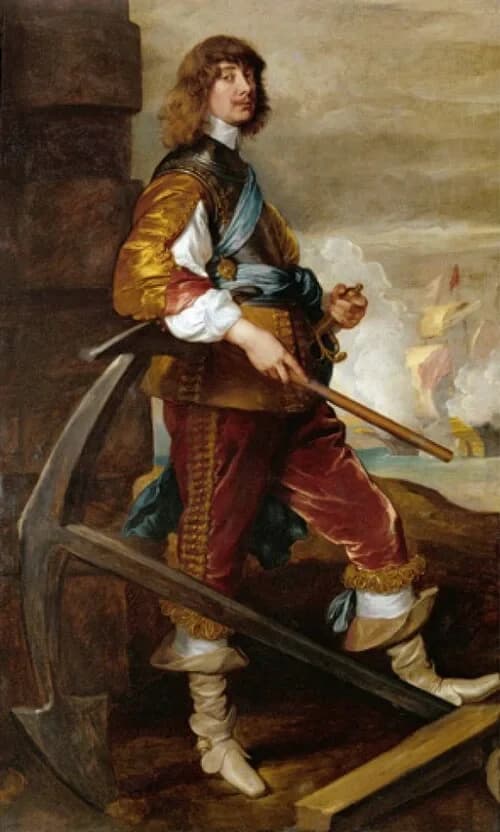
Portrait of Algernon Percy, 10th Earl of Northumberland (1602-1668)
Anthony van Dyck · 1638 · oil paint
This work shows Algernon Percy, the 10th Earl of Northumberland, who served as Lord High Admiral during the turbulent years leading up to the English Civil War. Painted by the celebrated court artist Anthony van Dyck, the portrait is rich with symbolism reflecting Percy's maritime authority. An anchor is visible in the foreground, while a fleet of ships sails in the distance, both serving as emblems of his naval command. Algernon Percy was more than just a military leader; he was a sophisticated connoisseur of art. His personal acquisitions, which included works by great masters like Van Dyck and Titian, formed the foundation of the Percy family collection. Today, that collection remains one of the finest private art galleries in the world. The Earl’s pose is composed and aristocratic, a stark contrast to the martial energy of his medieval ancestors. His investment in fine art marked a significant shift for the Percy family, as they began to use culture and collection to demonstrate their status and power. The fine detailing of his silk clothing and the glint of his armor showcase Van Dyck's mastery of light and texture.

Mary's Visitation
Sebastiano del Piombo · 1540s
Mary's Visitation is a significant work by the Venetian artist Sebastiano del Piombo. In the 16th century, del Piombo was a major figure in the Roman art scene and a direct rival to Raphael. This painting showcases the Venetian style’s emphasis on rich color and soft lighting, combined with the monumental figural style the artist learned while working in Rome. It is rare to find a work of this caliber outside a major national museum, and its presence at Alnwick is a testament to the Percy family's reach as art collectors. Acquiring continental masterpieces allowed the Dukes of Northumberland to display their worldly connections and sophisticated taste, even while living in a remote northern castle. The composition focuses on the emotional meeting between Mary and Elizabeth, with the heavy drapery and expressive gestures characteristic of the High Renaissance. The survival of this delicate work in the rugged environment of a border fortress illustrates the care with which the family has preserved its cultural heritage over several centuries. Look closely at the subtle transitions of shadow on the figures' faces.
The Fusiliers Museum of Northumberland
Housed within the castle towers, this museum details the military history of the Northumberland Fusiliers and features unique ducal artifacts.
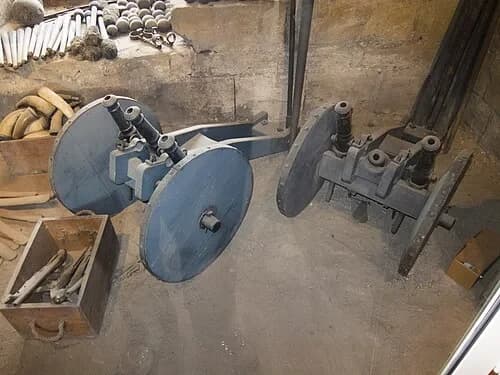
Military Curiosities
Alnwick's history has a darker side, particularly regarding its connection to the Gunpowder Plot of 1605. Thomas Percy, who served as the castle’s constable and was a relative of the 9th Earl, was one of the key conspirators alongside Guy Fawkes. The plot aimed to blow up the Houses of Parliament and assassinate King James I. While the Earl himself was imprisoned for years on suspicion, it was Thomas Percy who was directly involved in the planning and the eventual flight from London. These military curiosities, ranging from early firearms to armor and equipment, reflect the era of religious tension and political intrigue. For a castle on the border, constant readiness for conflict was a way of life, but the Gunpowder Plot shows that threats could also come from within. The collection of weapons and gear highlights the technical evolution of warfare, from the heavy plate armor of the medieval knight to the early gunpowder weapons that eventually made such defenses obsolete. Look for the small, multi-barreled artillery pieces, which were early attempts at increasing firepower on the battlefield.
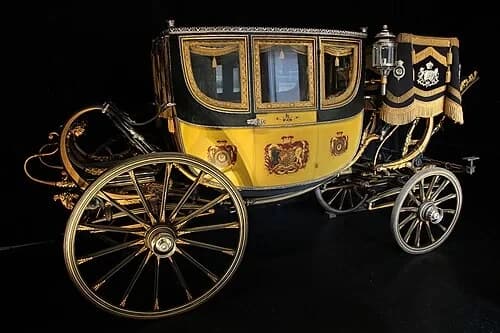
The Ducal State Coach
The Ducal State Coach is a grand example of 19th-century craftsmanship, featuring ornate decoration and the family crest on its doors. For generations, this carriage has been used for major state occasions, such as royal coronations and weddings. While it may appear like a museum piece, it symbolizes the continuity of the Percy family’s presence here. Alnwick is the second-largest inhabited castle in England, serving as the private home of the 12th Duke of Northumberland and his family. This dual nature is part of what makes the castle unique; visitors walk through state rooms that are still used for family functions and formal events. The coach itself is kept in excellent condition, representing the bridge between the castle's medieval past and its modern role as a hub for local life and international tourism. Its presence in the stables provides a tangible link to the pageantry that still accompanies one of Britain's oldest and most powerful noble titles. Note the large, spoked wheels and the heavy leather suspension straps designed to provide a smoother ride on cobbled streets.
The Alnwick Garden and Grand Cascade
Transitioning to the adjacent gardens to explore the modern transformation of the grounds and the famous Grand Cascade fountain.
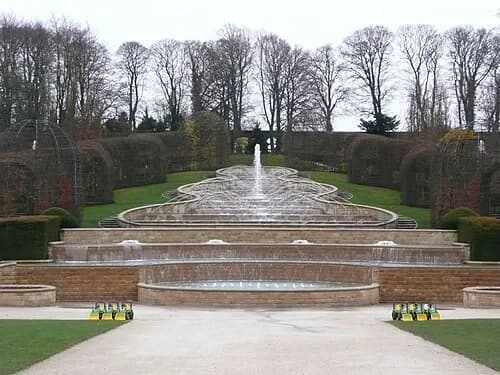
The Grand Cascade
The Grand Cascade is a dramatic departure from the medieval stone walls of the castle. Part of a massive redevelopment project that began in 1997, the cascade is a contemporary marvel of hydraulic engineering. It features thirty separate tiers of falling water, with jets that can be programmed to create elaborate, rhythmic displays. This ambitious project was the vision of the current Duchess of Northumberland, who sought to transform the derelict castle gardens into a world-class public space. Her goal was to create something that would not only be beautiful but would also drive local tourism and provide a unique experience for visitors. Today, the gardens attract over 600,000 people annually, making them one of the most popular attractions in the North of England. The movement and sound of the water provide a lively, modern energy that contrasts with the silent, ancient stones of the fortress. The cascade is a symbol of the castle's ability to reinvent itself for the 21st century, moving beyond its defensive history to become a center for community and horticulture. The symmetrical design leads the eye up toward the wooded horizon.
The Treehouse Complex
Visiting one of the world's largest wooden treehouses, a whimsical highlight of the Alnwick Garden experience.
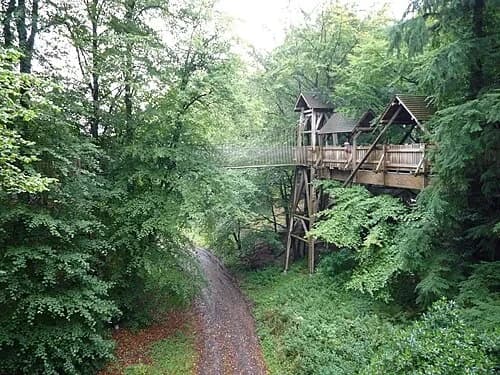
The Rope Bridges
Walking across these elevated rope bridges provides a rhythmic, swaying sensation that immediately connects you to the movement of the trees. This network of pathways is a deliberate design choice intended to pull visitors away from static viewing and into an active, tactile exploration of the Northumberland woodland. Instead of observing the garden from a distance, you are suspended within it, surrounded by the rustle of leaves and the scent of pine. The bridges connect various levels of the massive treehouse structure, creating a sense of adventure that appeals to all ages. As you cross, the structure beneath your feet responds to every step, requiring a degree of balance and awareness of the environment. This physical engagement is a core philosophy of this part of the gardens—to foster a deeper appreciation for the natural world through movement and play. Looking down, the woodland floor reveals a different layer of the ecosystem, while looking out provides glimpses of the castle's distant towers through the branches. The design uses sustainable materials that weather naturally, ensuring the bridges feel like an extension of the forest rather than an intrusion. The height and gentle movement encourage a slower pace, forcing a focus on the immediate surroundings.
Want to hear the rest?
Download the Stanza app to unlock all 17 stops and full GPS-guided navigation.
Frequently Asked Questions
How long does the Alnwick Castle audio tour take?
The Alnwick Castle audio guide includes 17 narrated stops. Most visitors spend 45 minutes to 1.5 hours exploring the complete tour, though you can listen at your own pace and skip or revisit any stop.
Is the Alnwick Castle audio guide available in my language?
Stanza supports 15 languages: English, Spanish, French, German, Italian, Portuguese, Russian, Japanese, Chinese, Korean, Arabic, Hindi, Polish, Dutch, Hebrew. Check the guide in the app to confirm the languages currently available for this tour.
Can I use the audio guide offline at Alnwick Castle?
Yes! Download the complete Alnwick Castle tour — including all audio, maps, and images — before your visit. The Stanza app works completely offline, so you don't need WiFi or mobile data at the venue.
How much does the Alnwick Castle audio guide cost?
The Stanza app is free to download. Free and paid audio guides are available; current prices are shown in the app.
How do I use the Stanza audio guide at Alnwick Castle?
Download the free Stanza app, search for "Alnwick Castle", and download the tour. When you arrive at the venue, the app uses GPS to detect your location and automatically plays the relevant narration as you move between points of interest — completely hands-free.
What makes the Stanza audio guide different from other Alnwick Castle tours?
Stanza offers GPS-triggered narration that plays automatically as you walk through Alnwick Castle — no need to manually select stops. The tour is available in 15 languages, works fully offline, and includes 17 expertly narrated stops with images and historical context.
What other audio guides are available near Alnwick Castle?
Stanza offers multiple audio guides in Alnwick, United Kingdom and nearby areas. After downloading the app, browse the map to discover all available tours near Alnwick Castle. Each guide can be downloaded for offline use.