Languages
15Big Ben Audio Guide
Big Ben is a landmark in City of Westminster, United Kingdom. Explore it with Stanza's GPS-triggered offline audio guide — available in 15 languages.
Quick Facts
16
Stops
15
Languages
100%
Offline
📍 City of Westminster, United Kingdom · 51.5007°N, -0.1246°E
About Big Ben
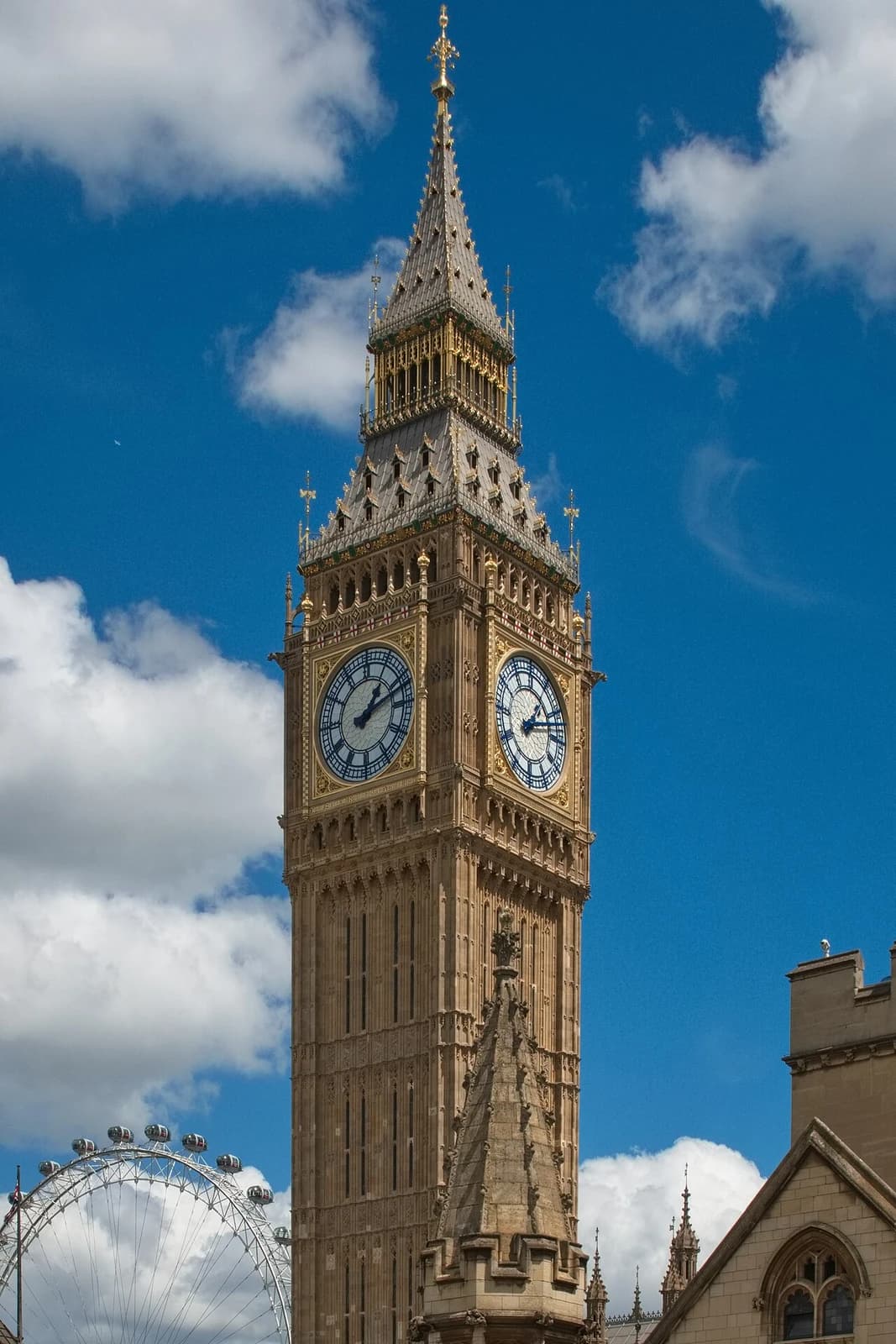
Big Ben is the iconic clock tower located at the Palace of Westminster in London. Officially known as Elizabeth Tower, it houses the Great Bell and is a world-renowned symbol of the United Kingdom.
Big Ben is also known as Elizabeth Tower, Clock Tower, Big Ben Tower, St Stephen's Tower, and 3 other names in various languages.
This self-guided audio tour features 16 narrated stops organized across 7 sections. As a tower, Big Ben offers a unique cultural experience in the heart of City of Westminster, United Kingdom.
The Stanza audio guide is available in 15 languages and works entirely offline — download the complete tour including audio narration, maps, and images before your visit. As you walk through Big Ben, GPS-triggered narration plays automatically at each point of interest.
Last updated:
What you will hear
The Iconic Silhouette (Westminster Bridge)
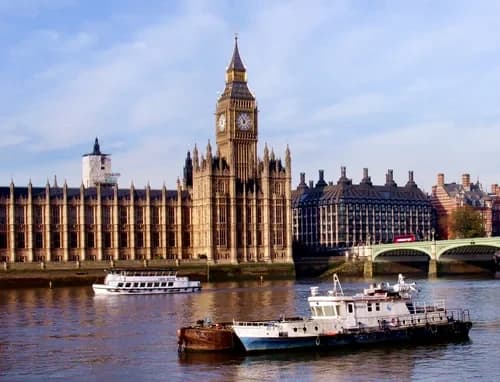
Establishes the tour at the primary exterior viewpoint. Includes a wide panoramic shot and a classic view of the tower against the Palace of Westminster.
View from the Thames
The position of the tower right at the water's edge was a strategic choice made by Victorian planners. When construction began on September 28, 1843, the River Thames acted as a vital industrial highway. Because London's streets were narrow and often congested, the vast majority of the heavy building materials were brought in via barge. This allowed the construction to proceed steadily over a period of 16 years, reaching completion in 1859. From this perspective, you can see how the tower anchors the Palace of Westminster, serving as a global symbol of parliamentary democracy. The scale of the project was immense for the mid-19th century, requiring a workforce of hundreds and precise coordination. The proximity to the river not only facilitated its creation but also enhanced its visual impact, allowing the tower's reflection to dance on the water. Today, the sight of the tower beside the Thames is an image synonymous with the United Kingdom, representing a stable point of reference in a city that has evolved dramatically around it since those first stones were laid in the 1840s.
Pugin's Gothic Mastery
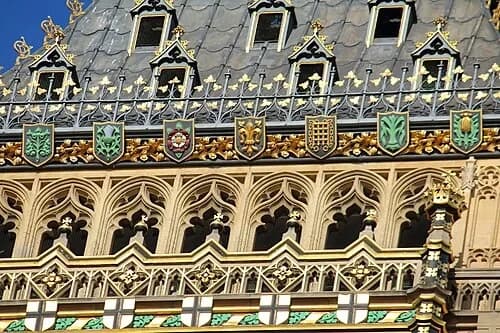
Focuses on the Victorian Perpendicular Gothic architecture at the tower's base and the decorative national emblems.
Symbols of the Kingdom
Just above the clock dials, the tower displays a series of 52 decorative shields, each one rich with heraldic meaning. These carvings are not merely ornamental; they serve as a visual representation of the four nations that comprise the United Kingdom, alongside the symbols of the Tudor dynasty. If you look closely at the details of these carvings, you can identify the specific floral emblems associated with each region. The rose represents England, the thistle stands for Scotland, the shamrock signifies Ireland, and the leek denotes Wales. These symbols are intricately carved into the stone and highlighted with gold leaf, which catches the light and ensures they remain visible even from the ground far below. The use of gold leaf is a traditional technique used throughout the palace to denote areas of high importance and royal connection. By placing these symbols so prominently on the clock tower, the architects were making a statement about national unity and the reach of parliamentary authority. It is a reminder that while the tower is located in London, it stands as a sentinel for the entire kingdom, celebrating the diverse identities that have shaped British history over many centuries.
The Restored Prussian Blue Dials
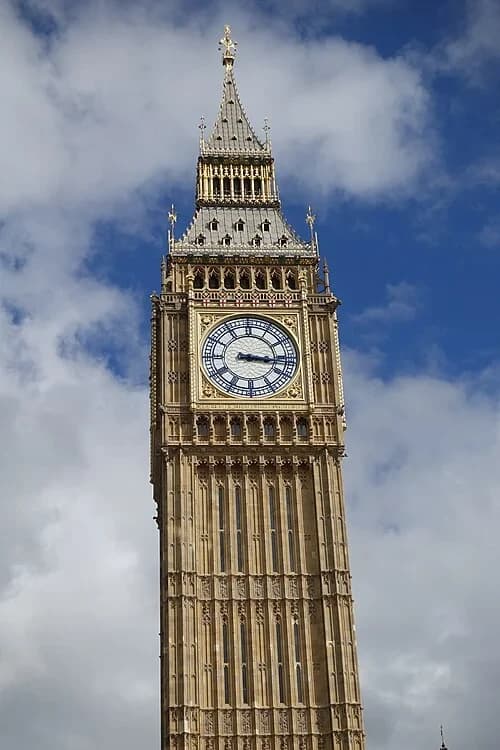
Highlights the 2017-2021 restoration that returned the clock faces to their original Victorian color scheme.
Climbing the Tower
Ascending the Elizabeth Tower is a rigorous physical experience that few get to undertake. There are 334 stone steps winding upward to reach the belfry where the bells are housed. For over 150 years, maintenance workers and clockmakers had to make this climb daily to ensure the mechanism was functioning correctly. The staircase is narrow and spiraled, creating a sense of enclosed verticality that contrasts sharply with the sprawling, horizontal layout of the Palace of Westminster located directly below. Because the tower was built in the mid-19th century, it was never designed with a lift. However, during the recent major renovation, a service lift was finally installed to assist with maintenance and emergency access. Despite this modern addition, the stone steps remain the primary way to experience the tower's internal architecture. The climb provides a unique perspective on the tower's construction, revealing the massive thickness of the walls required to support such a height. As you reach the higher levels, the sounds of the city below begin to fade, replaced by the humming of the clock mechanism and the anticipation of standing near the famous bells that chime across the capital.
Surviving the Blitz
Recounts the tower's survival during World War II despite sustaining direct damage.
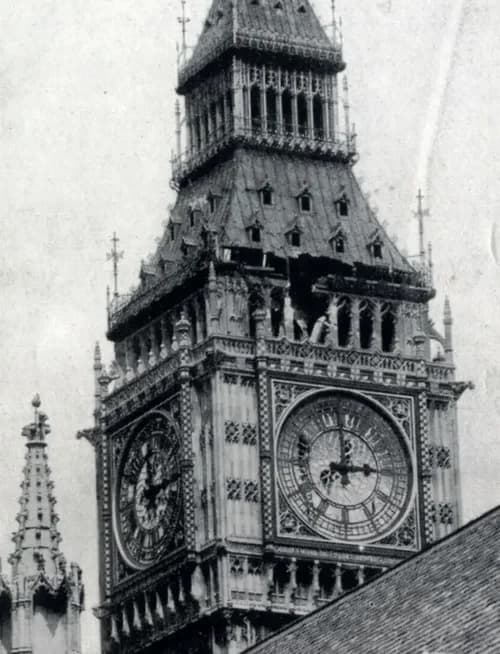
Survival of the Blitz
The Elizabeth Tower is more than just an architectural feat; it is a survivor of modern warfare. During the London Blitz in World War II, the Palace of Westminster was hit by enemy bombs multiple times. One of the most significant incidents occurred in May 1941, when an air raid caused substantial damage to the roof of the tower and smashed the south clock dial. Despite the surrounding destruction and the damage to its own frame, the clock mechanism itself proved remarkably resilient. Crucially, the clock continued to keep time accurately throughout the raid and the subsequent repairs. This ability to maintain its steady beat while the city around it was under fire turned the tower into a potent national symbol of endurance. For the British public, the sound of the chimes on the radio and the sight of the tower still standing amidst the smoke was a sign that the country would not be broken. It became a beacon of stability in an era of chaos. Today, the restored dials show no obvious scars from the war, but the story of its survival remains a vital part of its legacy, representing the spirit of a city that refused to stop even in its most difficult hours.
The Clock Mechanism Room
Features the verified POI of the mechanical room, showcasing the Victorian engineering that keeps the world's most famous clock accurate.
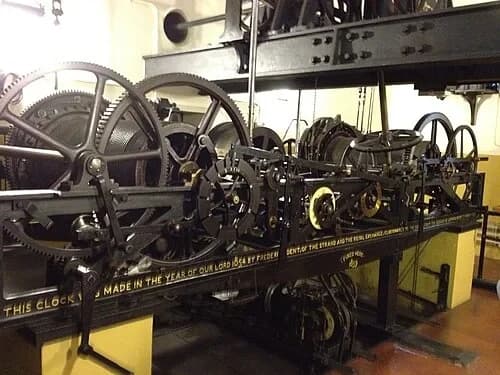
The Great Clock Mechanism
Deep inside the tower sits a five-ton internal mechanism that is a masterpiece of Victorian engineering. Designed by Edmund Beckett Denison and Edward Dent, the clock utilizes what is known as a 'double three-legged gravity escapement.' This ingenious invention ensures that the clock remains accurate to within one second, as it isolates the pendulum from external forces like high winds or heavy snow on the clock hands. It was a revolutionary step forward in horology when it was installed in the 1850s. One of the most charming aspects of this high-precision machine is the 'Penny Regulation' system. To adjust the speed of the clock, horologists don’t use digital computers; they use old copper pennies. By adding or removing a single pre-decimal penny from the top of the massive pendulum, they can change the weight and, consequently, the speed of the swing. A single penny added to the stack changes the clock's speed by precisely 0.4 seconds per day. This low-tech solution for a high-stakes job demonstrates the enduring brilliance of Victorian mechanical design. It is a rare example of a 19th-century machine that still performs its primary function with world-class accuracy in the modern age.
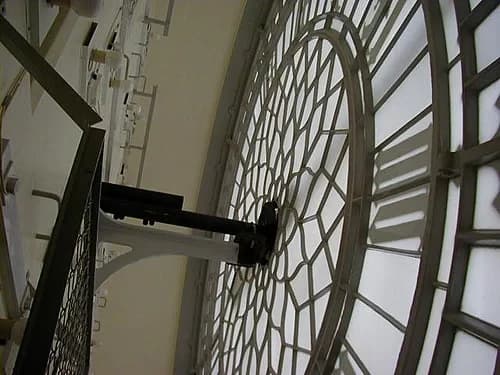
Behind the Dials
Standing behind the clock faces offers a perspective on the tower's scale that is difficult to appreciate from the ground. Each of the four dials is composed of 324 individual pieces of opalescent glass, which glow brilliantly when backlit. From this vantage point, you can truly appreciate the size of the clock hands. The minute hands are approximately 4.2 meters, or 14 feet, long. Because they are so large and exposed to the elements, they were originally made of copper to save weight while remaining durable against London’s weather. The immense size of these hands once led to a famous and bizarre delay. In 1949, a flock of starlings decided to use one of the minute hands as a perch. The collective weight of the birds was so significant that it physically slowed the mechanical movement, causing the clock to fall four and a half minutes behind schedule. It is a reminder that even the most robust Victorian engineering is still subject to the whims of nature. Today, the glass remains a vital barrier, protecting the delicate machinery from the environment while allowing the light of the tower to serve as a constant timekeeper for the streets of Westminster below.
The Ayrton Light and Spire
Focuses on the very top of the tower, including the lantern lit when Parliament is in session.
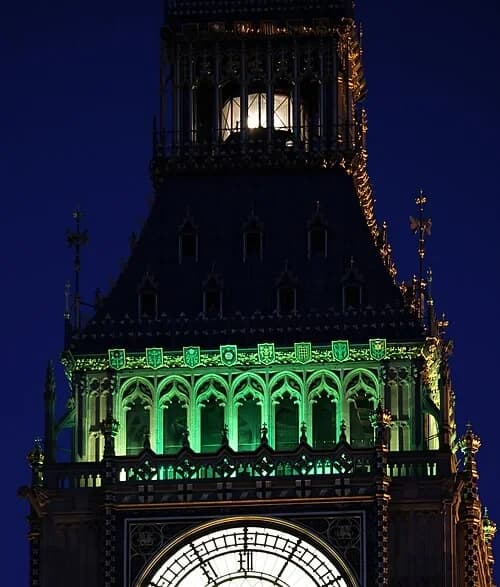
The Ayrton Light
High above the belfry and the clock dials sits a lantern structure known as the Ayrton Light. This feature was not part of the original 1859 design; it was added in 1885 at the direct request of Queen Victoria. The Queen wanted a way to see from Buckingham Palace whether the Members of Parliament were still working late into the evening. To this day, the light is switched on whenever the House of Commons is sitting after dark. For Londoners, the Ayrton Light is a visual signal that the nation's representatives are at work. It is named after Acton Smee Ayrton, a politician who was the First Commissioner of Works when the light was being developed. Originally powered by gas, the lantern has since been upgraded to electric lights, but its symbolic purpose remains identical. It serves as a beacon of transparency and a reminder of the proximity between the monarch and the parliament. On nights when the debates run long into the early morning hours, the glow of the Ayrton Light remains a steady presence at the top of the spire, marking the tower as a living, working part of the British government.
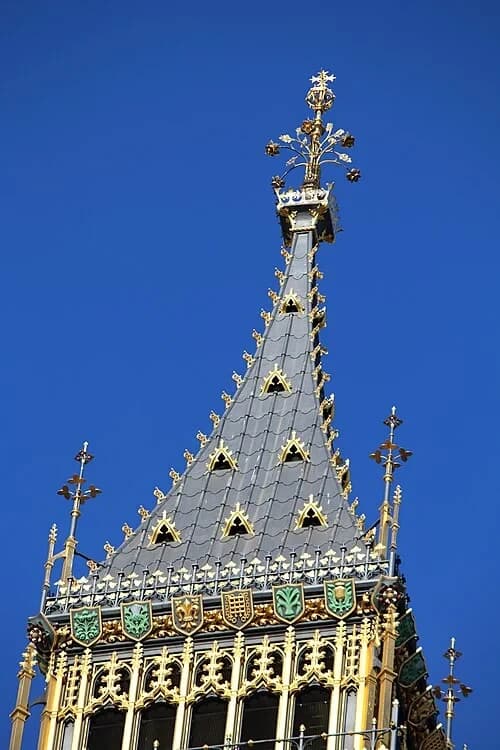
The Iron Spire
At the very peak of the Elizabeth Tower is a soaring spire characterized by its complex ironwork and gilded decorations. This upper section is not just for show; it houses essential infrastructure for the building's survival. The spire is equipped with a sophisticated lightning protection system, which is vital given the tower's height and its prominent position on the skyline. Because it is the tallest structure in the immediate vicinity, it is struck by lightning dozens of times every year. This system safely channels the electrical discharge into the ground, protecting the delicate clock mechanism and the masonry below. Visually, the spire is topped with an ornate gilded crown and a cross, symbolizing the historical and legal connection between the Parliament and the British Monarchy. The metalwork is incredibly intricate, featuring finials and decorative scrolling that match the Gothic style of the rest of the tower. During the recent restoration, this ironwork was carefully cleaned and regilded, ensuring that it shines brightly even on the grayest London days. The spire represents the final flourish of Victorian ambition, blending the heavy industrial capabilities of the mid-19th century with a commitment to artistic detail and symbolic meaning.
A Global Beacon by Night
Concludes the tour with the illuminated night silhouette, a symbol of parliamentary democracy recognizable worldwide.
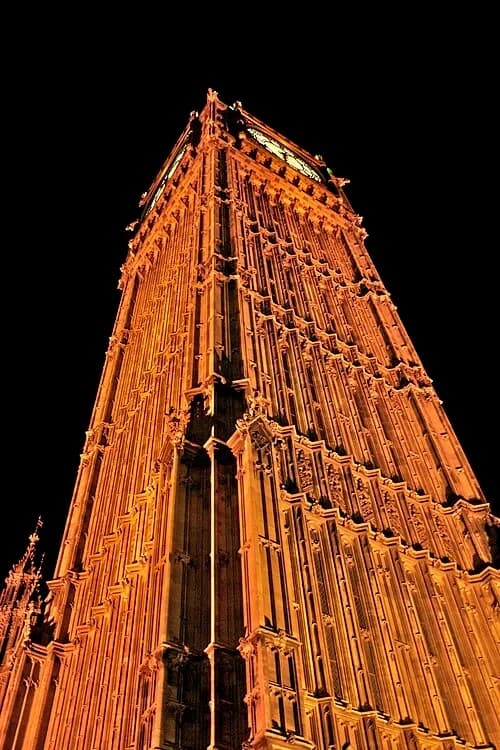
The Night Silhouette
As evening falls, the Elizabeth Tower undergoes a dramatic transformation. Carefully placed illumination highlights the intricate stonework and ensures the clock dials are visible for miles. This night silhouette has made the tower arguably the most photographed landmark in London, a glowing beacon that defines the city's nightscape. But the experience of the tower at night is as much about sound as it is about sight. In addition to the Great Bell, the tower houses four smaller quarter bells. These bells are responsible for the 'Westminster Chimes,' the melody that plays every fifteen minutes. This famous tune is actually based on a musical phrase from George Frideric Handel's 'Messiah,' specifically from the aria 'I know that my Redeemer liveth.' The melody has been copied by clocks all over the world, but there is nothing quite like hearing it ring out over the quiet streets of Westminster at night. The combination of the glowing dials and the rhythmic, musical marking of the hours creates a sensory experience that has remained largely unchanged since the mid-1800s, providing a sense of continuity and peace in the heart of a bustling metropolis.
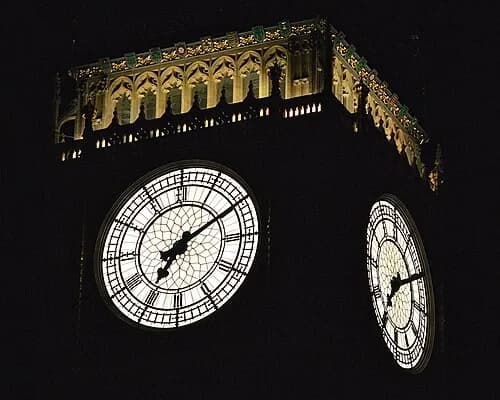
The Light of Westminster
We conclude our look at this historic monument by focusing on the glowing dials that have served as the nation's timekeeper since 1859. The Elizabeth Tower is far more than an impressive piece of Victorian architecture; it is a testament to the precision of human engineering. Despite its age and the fact that its heart is a purely mechanical system of gears and pendulums, it remains accurate to the second. This reliability is a point of pride for the horologists who maintain it and a source of comfort for the public. Throughout its history, the tower has stood as a beacon of stability. It has seen the transition of monarchs, survived the destruction of world wars, and witnessed the evolving political landscape of the United Kingdom. As you look at the dials one last time, consider the millions of people who have glanced up at these same faces over the last century and a half to check the time. It remains a focal point for national celebrations, particularly on New Year's Eve, when its chimes signal a fresh start for the country. The Light of Westminster continues to shine, representing the endurance of the past and a steady guide into the future.
Want to hear the rest?
Download the Stanza app to unlock all 16 stops and full GPS-guided navigation.
Frequently Asked Questions
How long does the Big Ben audio tour take?
The Big Ben audio guide includes 16 narrated stops. Most visitors spend 45 minutes to 1.5 hours exploring the complete tour, though you can listen at your own pace and skip or revisit any stop.
Is the Big Ben audio guide available in my language?
Stanza supports 15 languages: English, Spanish, French, German, Italian, Portuguese, Russian, Japanese, Chinese, Korean, Arabic, Hindi, Polish, Dutch, Hebrew. Check the guide in the app to confirm the languages currently available for this tour.
Can I use the audio guide offline at Big Ben?
Yes! Download the complete Big Ben tour — including all audio, maps, and images — before your visit. The Stanza app works completely offline, so you don't need WiFi or mobile data at the venue.
How much does the Big Ben audio guide cost?
The Stanza app is free to download. The current listed price for the Big Ben audio guide is $3.99; app-store region and currency may affect the final price.
How do I use the Stanza audio guide at Big Ben?
Download the free Stanza app, search for "Big Ben", and download the tour. When you arrive at the venue, the app uses GPS to detect your location and automatically plays the relevant narration as you move between points of interest — completely hands-free.
What makes the Stanza audio guide different from other Big Ben tours?
Stanza offers GPS-triggered narration that plays automatically as you walk through Big Ben — no need to manually select stops. The tour is available in 15 languages, works fully offline, and includes 16 expertly narrated stops with images and historical context.
What other audio guides are available near Big Ben?
Stanza offers multiple audio guides in City of Westminster, United Kingdom and nearby areas. After downloading the app, browse the map to discover all available tours near Big Ben. Each guide can be downloaded for offline use.
Nearby Audio Guides
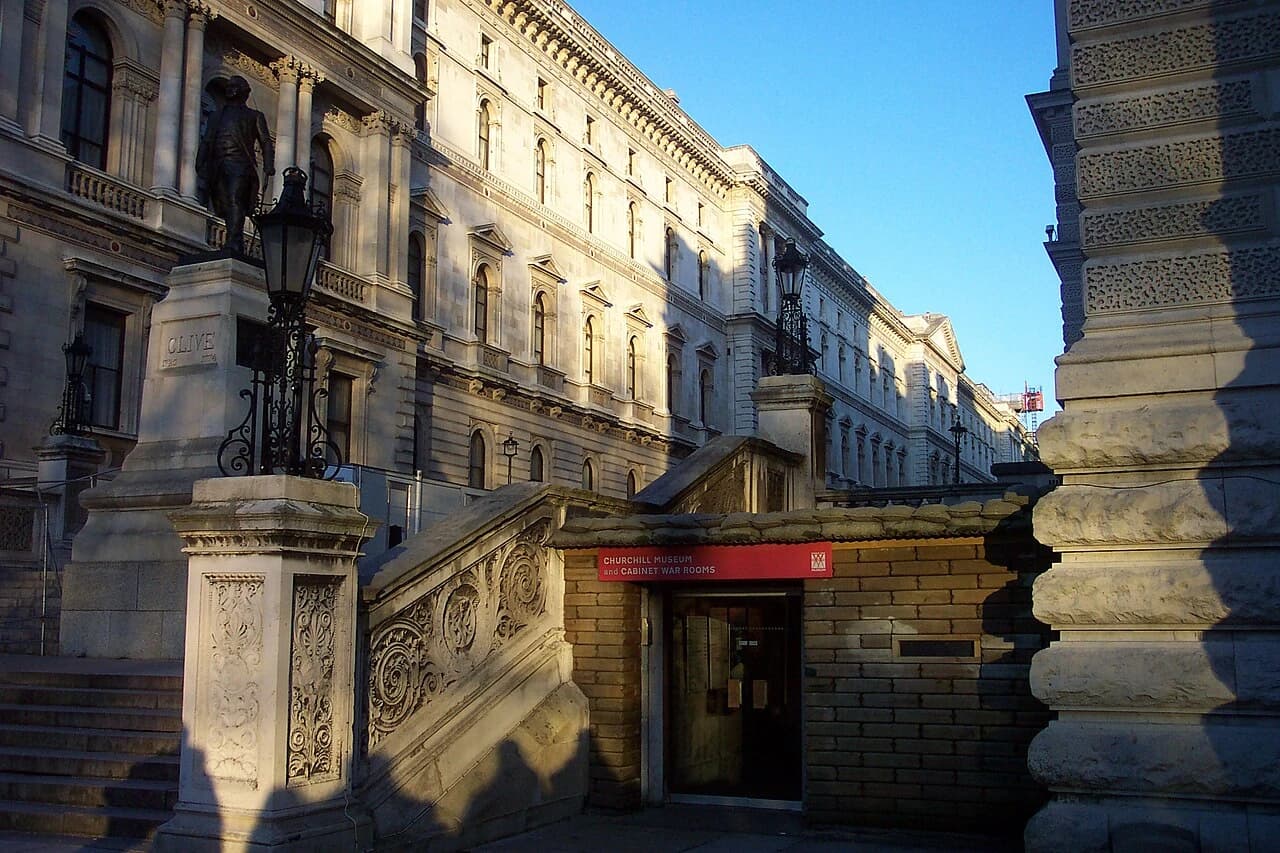
Churchill War Rooms
City of Westminster, United Kingdom
Courtauld Institute of Art
City of Westminster, United Kingdom
Palace of Westminster
City of Westminster, United Kingdom
Royal Albert Hall
City of Westminster, United Kingdom
Sherlock Holmes Museum
City of Westminster, United Kingdom
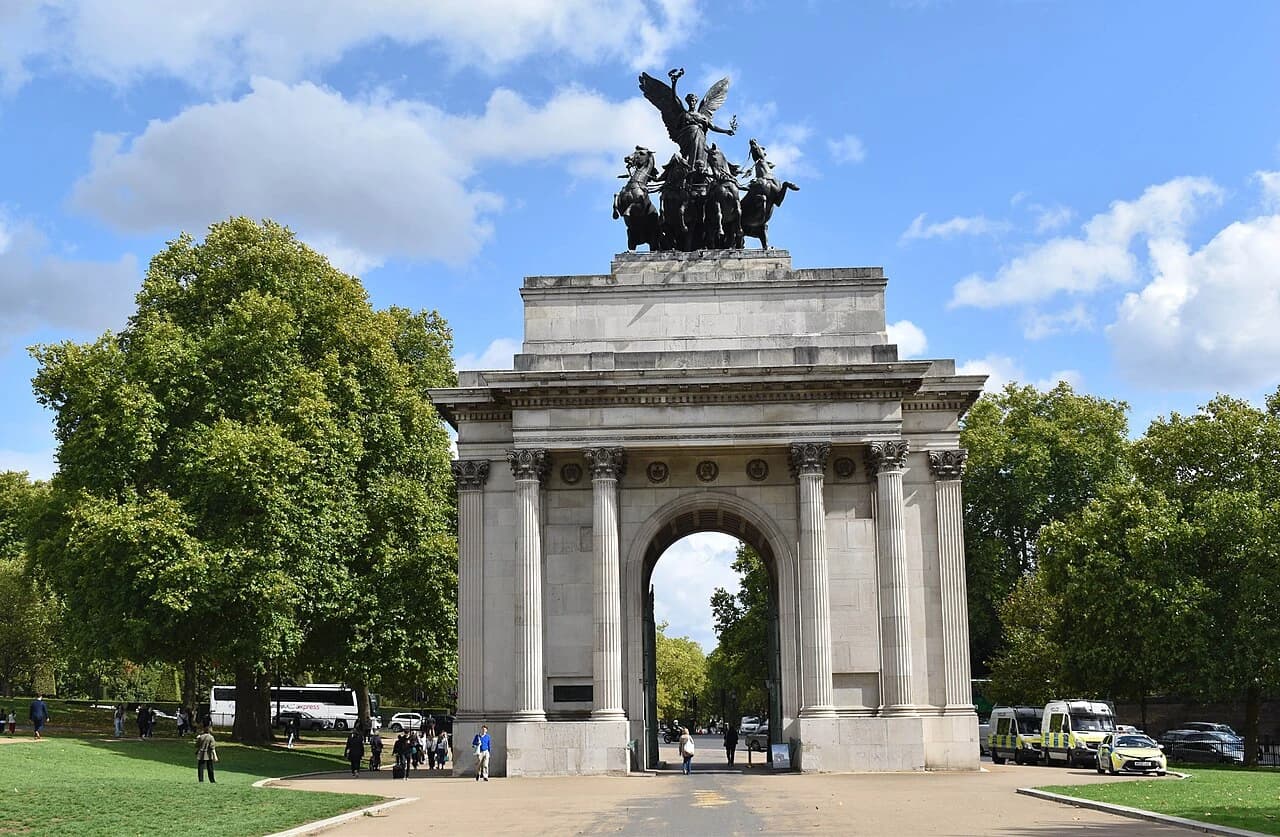
Wellington Arch
City of Westminster, United Kingdom