Languages
15Courtauld Institute of Art Audio Guide
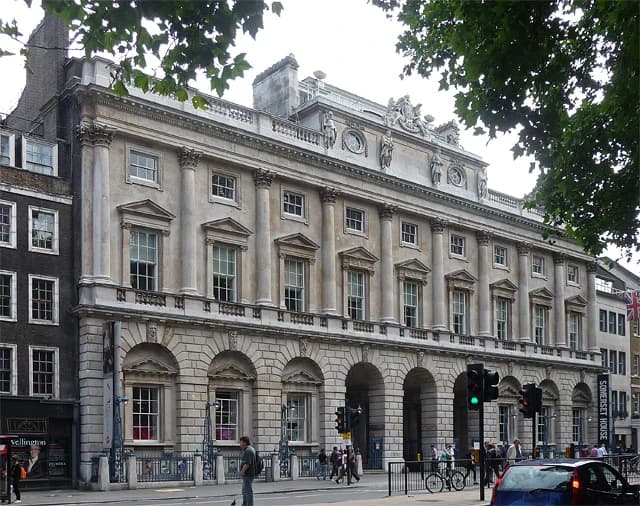
Courtauld Institute of Art is a landmark in City of Westminster, United Kingdom. Explore it with Stanza's GPS-triggered offline audio guide — available in 15 languages.
Quick Facts
439
Stops
15
Languages
100%
Offline
📍 City of Westminster, United Kingdom · 51.5107°N, -0.1169°E
About Courtauld Institute of Art
The Courtauld Institute of Art is a public university and a higher education institution in London, specializing in the study of art history and conservation.
This self-guided audio tour features 439 narrated stops organized across 1 sections, including Tour Stops. As a university building, Courtauld Institute of Art offers a unique cultural experience in the heart of City of Westminster, United Kingdom.
The Stanza audio guide is available in 15 languages and works entirely offline — download the complete tour including audio narration, maps, and images before your visit. As you walk through Courtauld Institute of Art, GPS-triggered narration plays automatically at each point of interest.
Last updated:
What you will hear
Tour Stops
Saint Paul
Antoniazzo Romano · 1470-01-01T00:00:00Z · oil paint, panel
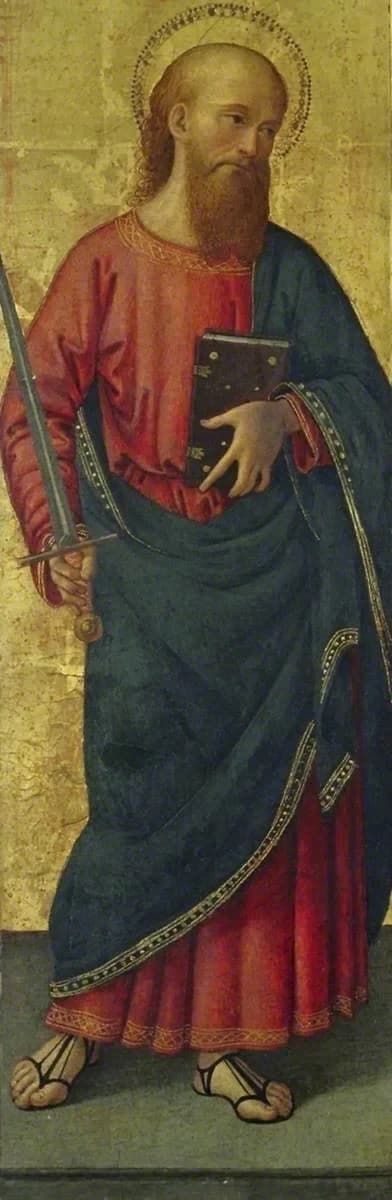
This panel served as the left wing of a triptych and is the companion to the figure of Saint Peter. It depicts Saint Paul, traditionally shown with a long, brown beard and a high forehead. He holds a large sword, the instrument of his martyrdom, and a book representing his influential epistles to early Christian communities. Paul is dressed in a vibrant red tunic under a dark blue-green cloak, decorated with golden borders that match the detail on the Saint Peter panel. Attributed to Antoniazzo Romano, this work exemplifies the artist's ability to create figures with a sense of physical presence and dignity. The use of oil paint on panel allowed for richer color saturation than traditional tempera. The simple, sturdy sandals and the heavy folds of his garments suggest a figure grounded in the world. Paul’s somber, thoughtful expression reflects his role as a scholar and a steadfast defender of the faith.
Saint James the Less
Filippo Lippi · 1460-01-01T00:00:00Z · tempera, panel
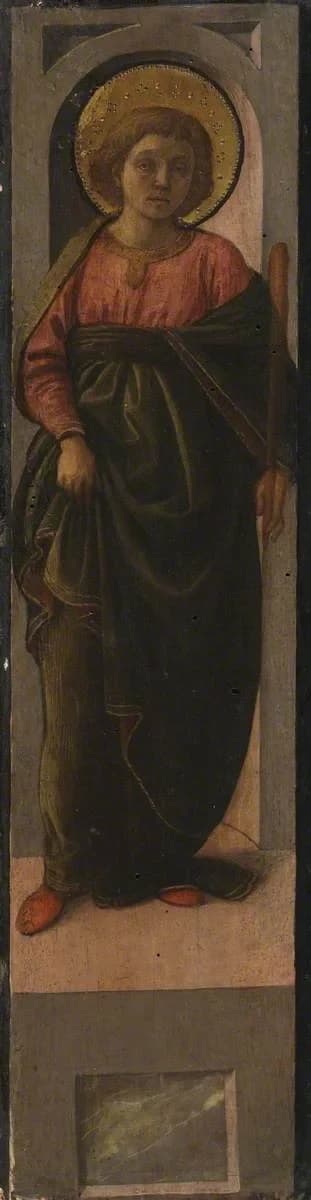
This slender panel features a young man standing within a grey stone niche. He is identified as Saint James the Less, one of the twelve apostles. He holds a large, wooden fuller's club, the weapon used during his martyrdom. This work is attributed to the Florentine master Filippo Lippi and his workshop. Lippi’s influence is visible in the soft, slightly melancholic expression of the saint and the fluid draping of his heavy green cloak over a pink tunic. The saint stands in a relaxed, natural pose, his weight shifted slightly to one side. This figure was part of a larger multi-paneled altarpiece, likely decorating the side pillars. The architectural framing helps to ground the figure in a believable space, even within the narrow confines of the panel. The warm tones of his face and hands contrast with the cooler grey of the stone arch, drawing the viewer's eye to the figure's humanity.
Portrait of a Bearded Man
David Teniers the Younger · 1656-01-01T00:00:00Z · oil paint, canvas
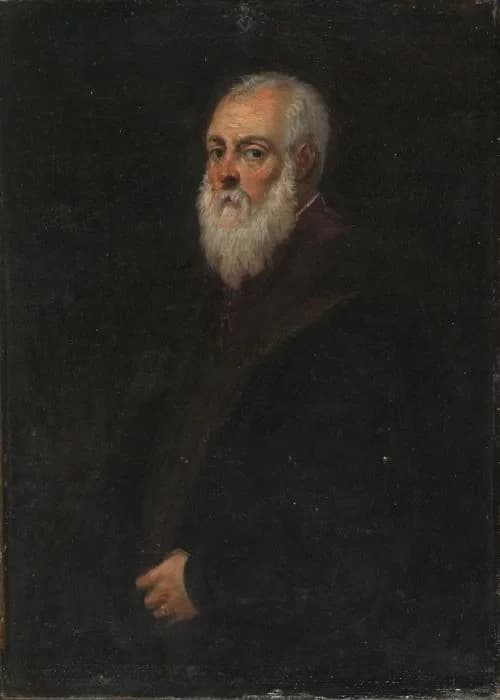
This small-scale oil painting by David Teniers the Younger dates to 1656. It is a miniature portrait of an elderly man with a long, white beard. The subject is depicted in a three-quarter view, looking directly toward the viewer with a steady, sober expression. He wears a dark, heavy cloak over a deep burgundy garment. The dark, uniform background ensures that all attention remains on the man’s face and the texture of his facial hair. Teniers was the court painter to Archduke Leopold Wilhelm, the Governor of the Southern Netherlands. As part of his duties, he created many small-scale copies of the masterpieces in the Archduke's vast collection. These 'modelli' served as guides for engravers to produce a catalog called the Theatrum Pictorium. This specific portrait demonstrates Teniers’ skill in capturing individual character and fabric textures on a very small scale, likely measuring only a few centimeters in height.
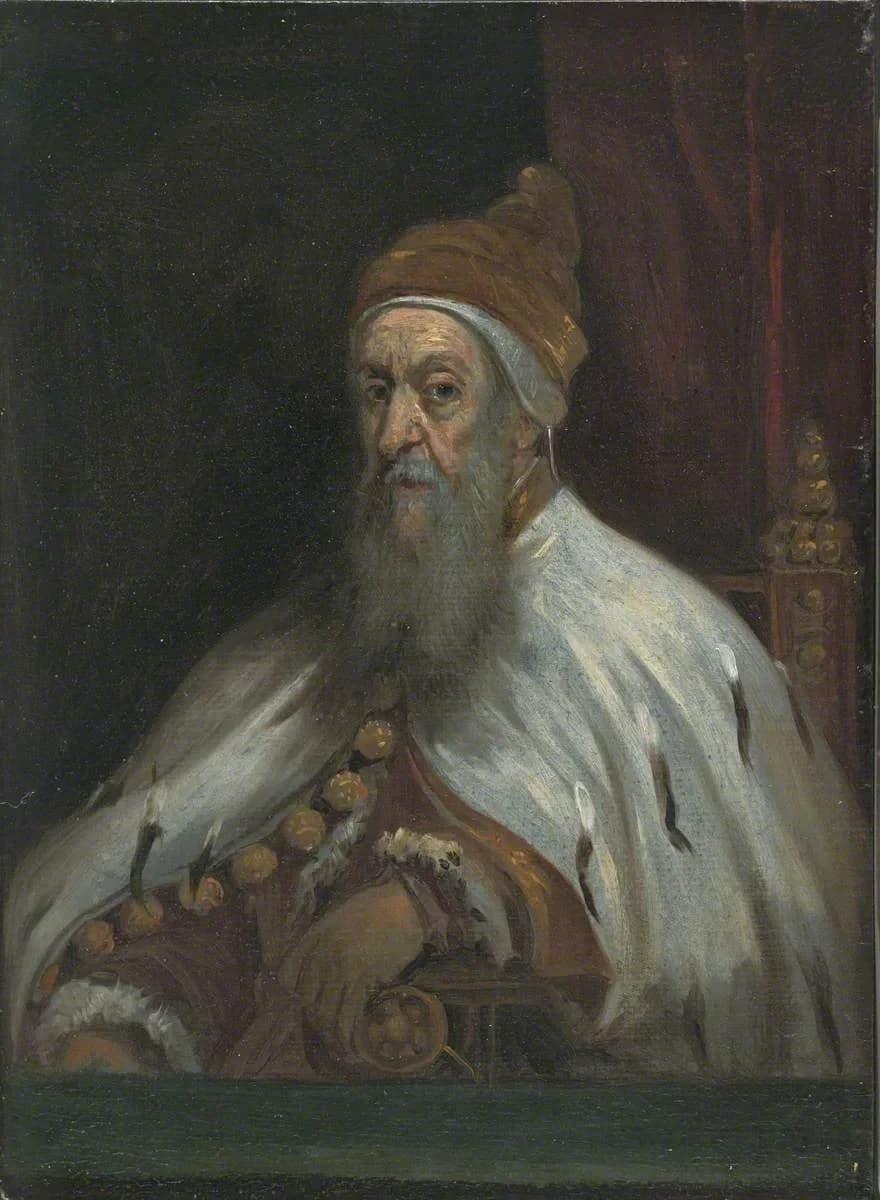
Portrait of a Doge
David Teniers the Younger · 1650-01-01T00:00:00Z · oil paint, canvas
Created around 1650, this miniature portrait by David Teniers the Younger depicts Nicolò da Ponte, who served as the Doge of Venice in the late 16th century. This work is a small-scale copy of an original painting by the Venetian master Jacopo Tintoretto. The Doge is shown wearing his official robes and the 'corno ducale,' the distinctive horned cap of his office. He is seated before a dark red curtain, which adds a sense of theatricality and status to the composition. Teniers produced this work as a 'modello' or small-scale study. It was intended to be used by an engraver to create a print for the Theatrum Pictorium, an ambitious publication documenting the art collection of Archduke Leopold Wilhelm. By looking at this miniature, you are seeing how 17th-century artists used small copies to record and disseminate the images of famous works from earlier generations and distant cities.
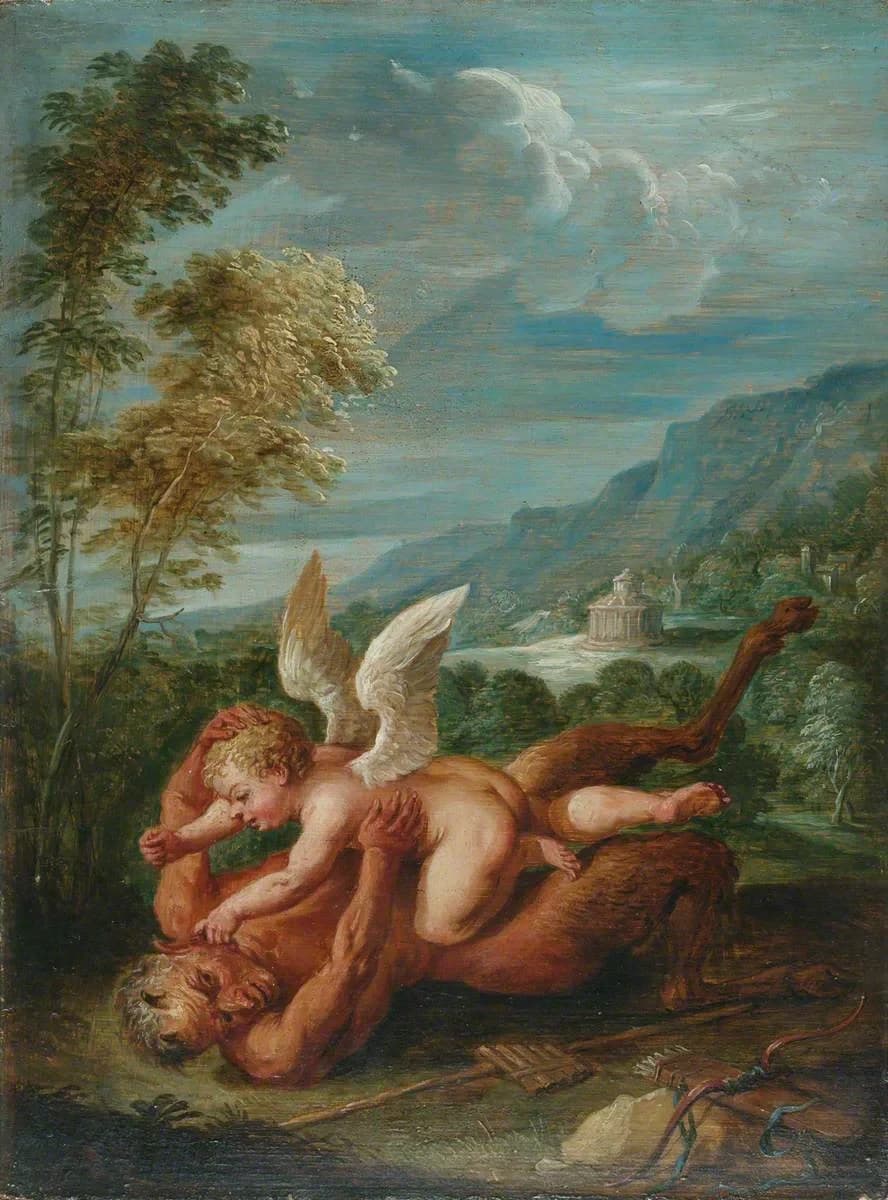
Cupid Overcoming Pan
David Teniers the Younger · 1656-01-01T00:00:00Z · oil paint, panel
This mythological scene is a small oil study by David Teniers the Younger, created around 1656. It is based on a famous composition by the Italian Baroque master Annibale Carracci. The painting depicts a struggle between Cupid, the winged god of love, and Pan, the goat-legged god of nature and wild desire. Cupid is shown pinning Pan to the ground, signifying the triumph of divine or spiritual love over earthly lust. In the foreground, Pan's discarded pipes and Cupid's bow lie on the grass. The background opens into a soft, hazy landscape featuring a classical circular temple. This work served as a 'modello' for Teniers’ massive project, the Theatrum Pictorium, which was the first illustrated catalog of a major art collection. These small panels allowed engravers to work from a consistent size and color palette when reproducing the Archduke Leopold Wilhelm’s masterpieces for print.
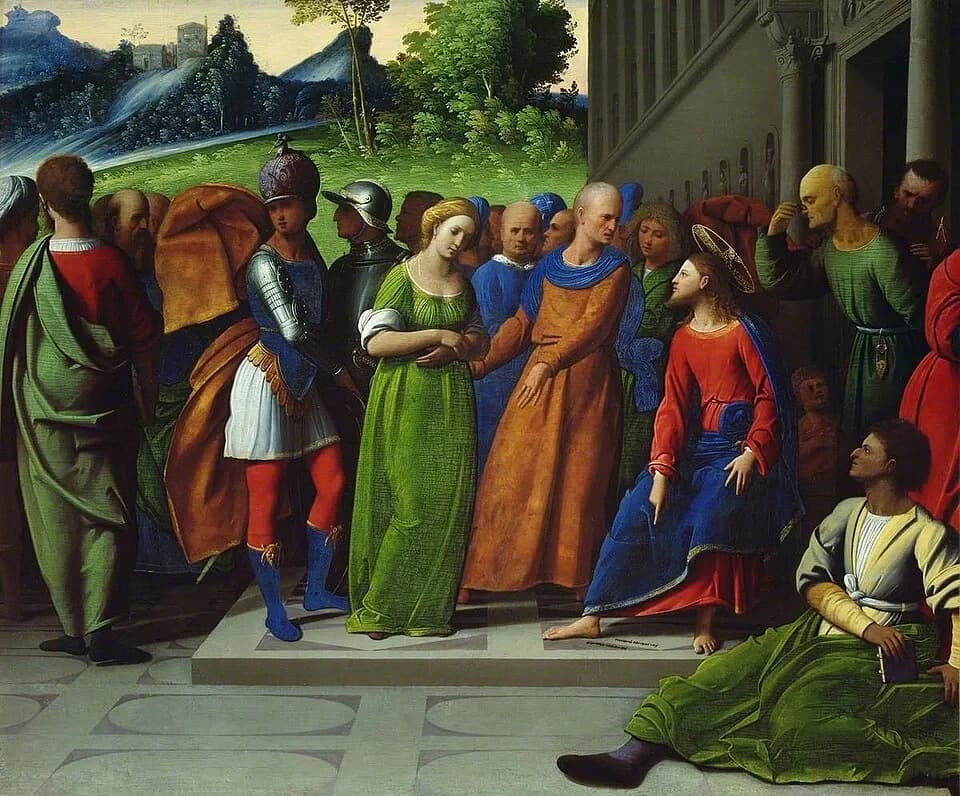
Woman Taken in Adultery
Ortolano · 1525-01-01T00:00:00Z · oil paint, panel
The Ferrara artist Ortolano painted this biblical scene around 1525. It depicts the moment a group of scribes and Pharisees bring a woman accused of adultery before Jesus. They intend to trap him by asking if she should be stoned according to the law. Christ, seated to the right, famously responds by writing in the dust. The woman stands at the center in a striking green dress, her head bowed in shame. Around her is a dense crowd of accusers, including figures in contemporary armor and colorful robes. The artist uses bright, saturated colors and clear lighting to distinguish the various characters. The landscape in the upper left, with its blue-toned mountains and distant buildings, provides a sense of depth and scale. Ortolano’s style is characterized by a keen interest in the physical presence and varied expressions of his figures, reflecting the influence of Venetian art on the Ferrara school.
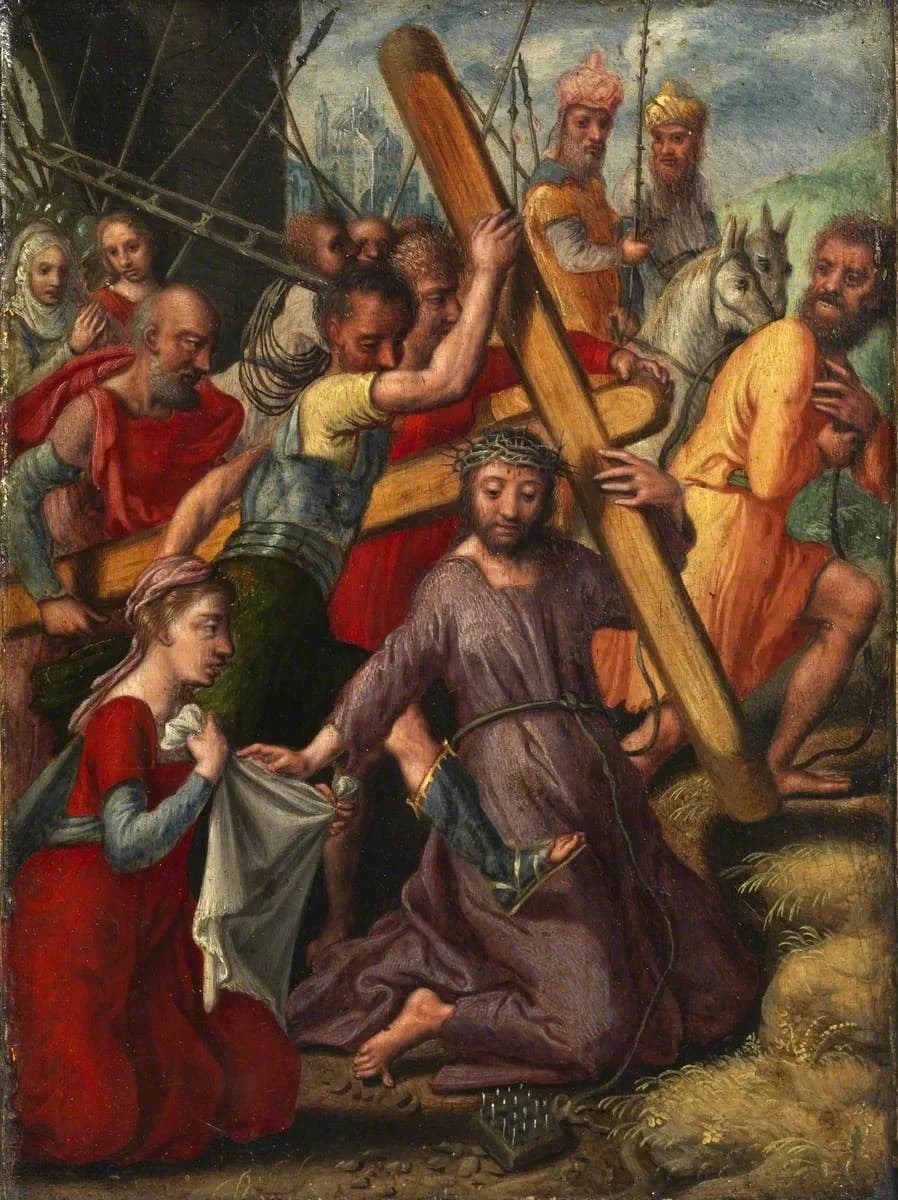
Christ Bearing the Cross
Pieter Aertsen · 1530-01-01T00:00:00Z · oil paint, panel
This small panel by the Dutch artist Pieter Aertsen dates to around 1530. It shows Christ struggling under the weight of the cross on his way to Calvary. The composition is crowded and intense, filled with figures that seem to press in on the central action. Christ has fallen to his knees, his expression one of quiet suffering. In the lower left, Saint Veronica kneels, holding the white cloth she used to wipe his face. Aertsen was a master of Northern Mannerism, a style known for complex compositions and slightly elongated figures. Notice the variety of costumes, from the Roman soldier’s armor to the elaborate turbans of the onlookers. Despite its tiny size—just over sixteen centimeters tall—the painting is packed with detail and emotional drama. It likely served as a small portable altar for private devotion, allowing the viewer to contemplate the scene of the Passion in a very personal way.
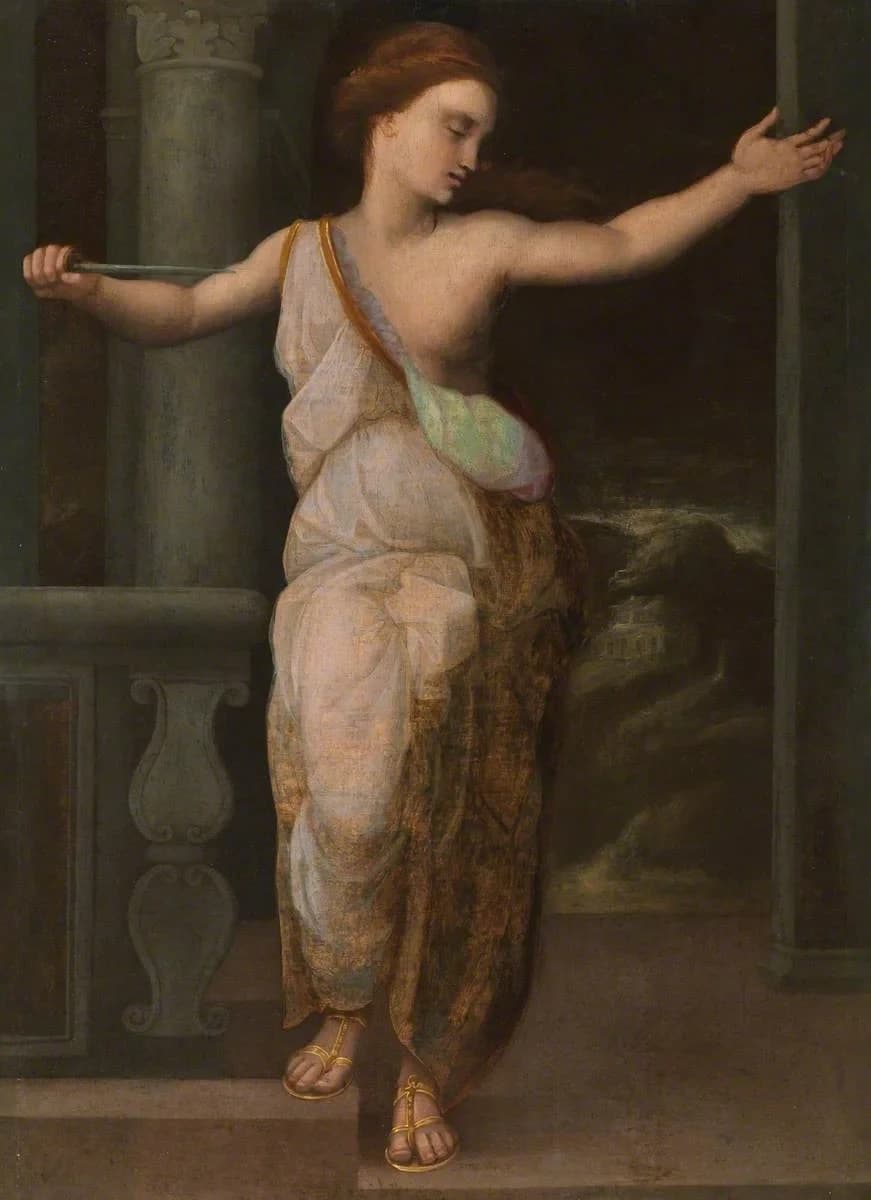
Suicide of Lucretia
anonymous · 1540-01-01T00:00:00Z · oil paint, panel
This painting, created around 1540 by an anonymous Northern European artist, depicts the tragic story of Lucretia. According to Roman legend, Lucretia took her own life to preserve her honor after being assaulted by the son of the king. Her death sparked the revolution that led to the Roman Republic. Lucretia is shown in the center, partially draped in a translucent garment, as she drives a dagger into her chest. Her pose, with arms outstretched, is both dramatic and sculptural, reflecting the influence of the Italian Renaissance master Raphael. The artist has placed her in a grand architectural setting with classical columns, emphasizing the gravity of her sacrifice. In the background, a dark, atmospheric landscape hints at a distant city. This work is a fine example of how Northern artists adopted the idealized forms and heroic subjects of Italian art during the mid-sixteenth century.
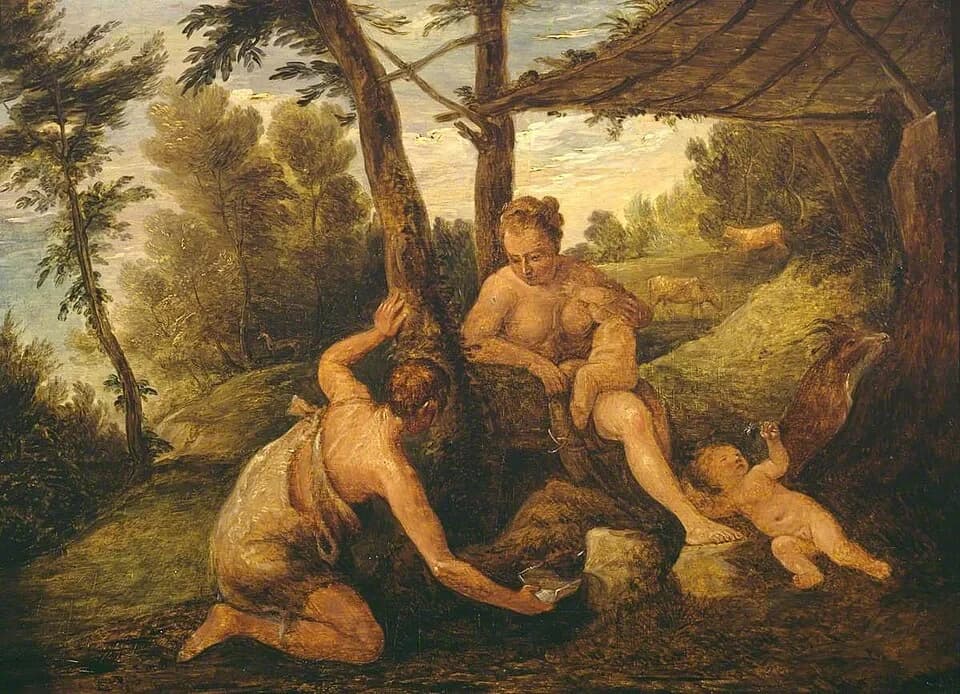
Adam and Eve after the Expulsion
David Teniers the Younger · 1656-01-01T00:00:00Z · oil paint, panel
This small panel is a copy of a larger work by the Italian master Paolo Veronese. David Teniers the Younger, a Flemish painter, created it as part of an ambitious project to document the vast art collection of Archduke Leopold Wilhelm. The scene depicts Adam and Eve in the harsh reality of life outside the Garden of Eden. Adam is shown working the land, leaning against a tree as he uses a primitive tool. Eve sits nearby, cradling one of her children, while another child lies on the ground nearby. The lush paradise of their past has been replaced by a rustic, rugged landscape. Teniers captures the scene with quick, fluid brushstrokes that differ from the polished style of the original Italian source. In the distance, cattle graze on a hillside under a hazy, clouded sky. This miniature version allowed the Archduke to keep a visual record of his most prized possessions in a portable format.
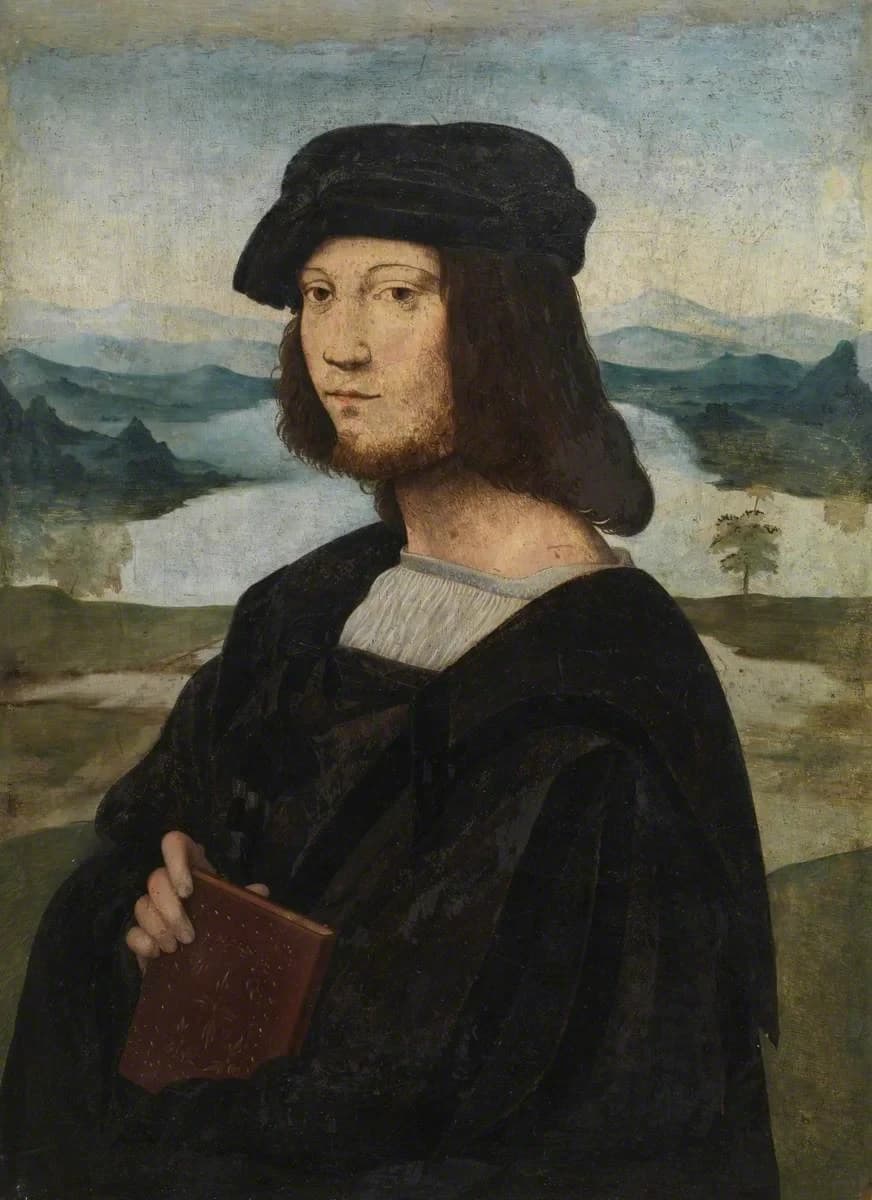
Portrait of a Young Man
Filippo Mazzola · oil paint, panel
This portrait of a man with a thin beard and a soft black cap was once associated with the artist Filippo Mazzola. However, modern technical analysis has identified it as a forgery. The subject gazes directly at the viewer, holding a small red book, while a winding river and distant mountains form the background. The landscape style mimics the works of the High Renaissance, specifically the misty atmospheres of Leonardo da Vinci. Forgeries like this are often created to deceive collectors by imitating the style of a known master using older materials. Despite its status as a fake, the work offers a fascinating look into the history of art collecting and the evolution of authentication techniques. It challenges us to look beyond the name of the artist and consider the physical properties and historical accuracy of the paint and panel. This includes analyzing the pigments and the condition of the wood.
Want to hear the rest?
Download the Stanza app to unlock all 439 stops and full GPS-guided navigation.
Frequently Asked Questions
How long does the Courtauld Institute of Art audio tour take?
The Courtauld Institute of Art audio guide includes 439 narrated stops. Most visitors spend 45 minutes to 1.5 hours exploring the complete tour, though you can listen at your own pace and skip or revisit any stop.
Is the Courtauld Institute of Art audio guide available in my language?
Stanza supports 15 languages: English, Spanish, French, German, Italian, Portuguese, Russian, Japanese, Chinese, Korean, Arabic, Hindi, Polish, Dutch, Hebrew. Check the guide in the app to confirm the languages currently available for this tour.
Can I use the audio guide offline at Courtauld Institute of Art?
Yes! Download the complete Courtauld Institute of Art tour — including all audio, maps, and images — before your visit. The Stanza app works completely offline, so you don't need WiFi or mobile data at the venue.
How much does the Courtauld Institute of Art audio guide cost?
The Stanza app is free to download. The current listed price for the Courtauld Institute of Art audio guide is $1.99; app-store region and currency may affect the final price.
How do I use the Stanza audio guide at Courtauld Institute of Art?
Download the free Stanza app, search for "Courtauld Institute of Art", and download the tour. When you arrive at the venue, the app uses GPS to detect your location and automatically plays the relevant narration as you move between points of interest — completely hands-free.
What makes the Stanza audio guide different from other Courtauld Institute of Art tours?
Stanza offers GPS-triggered narration that plays automatically as you walk through Courtauld Institute of Art — no need to manually select stops. The tour is available in 15 languages, works fully offline, and includes 439 expertly narrated stops with images and historical context.
What other audio guides are available near Courtauld Institute of Art?
Stanza offers multiple audio guides in City of Westminster, United Kingdom and nearby areas. After downloading the app, browse the map to discover all available tours near Courtauld Institute of Art. Each guide can be downloaded for offline use.
Nearby Audio Guides
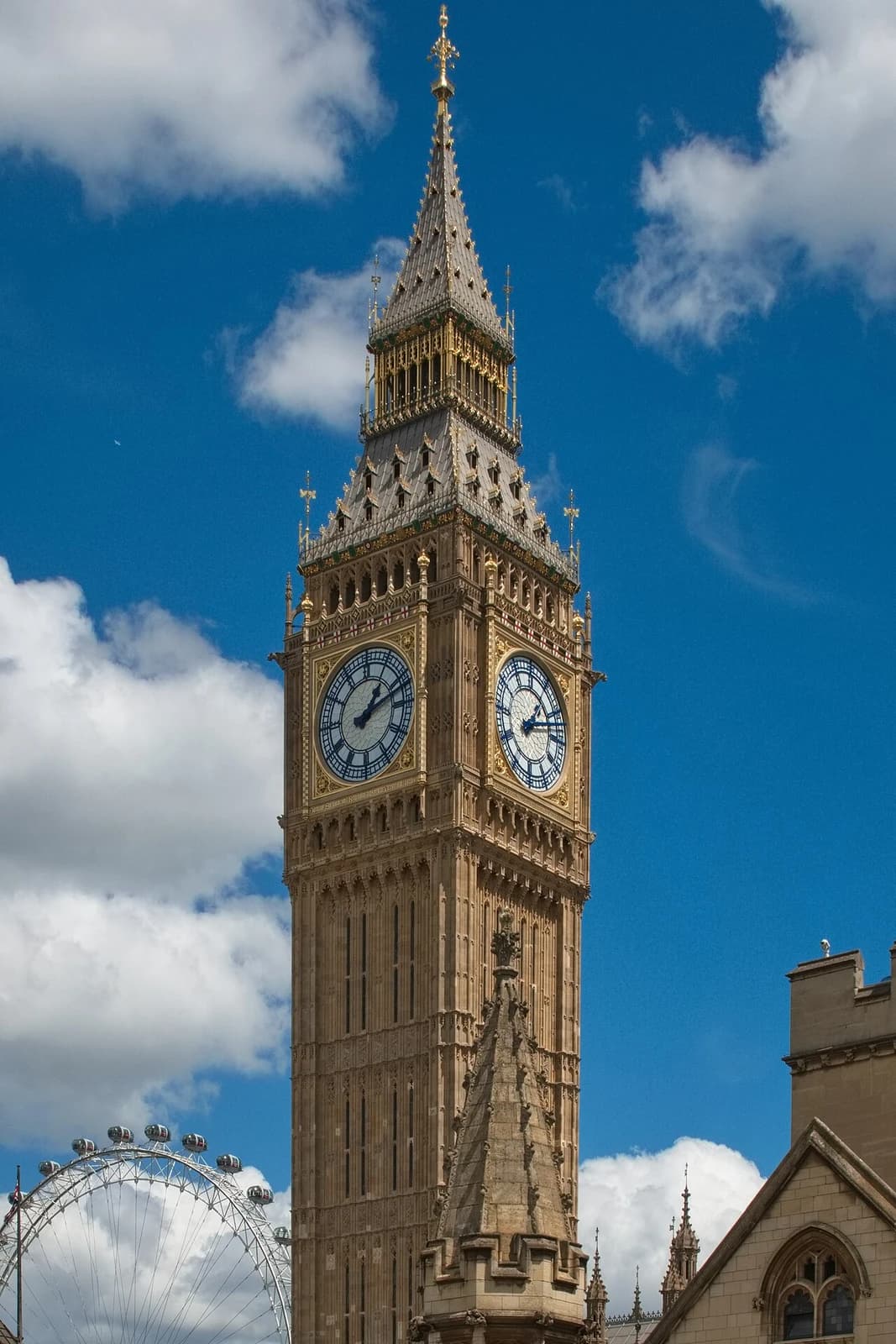
Big Ben
City of Westminster, United Kingdom
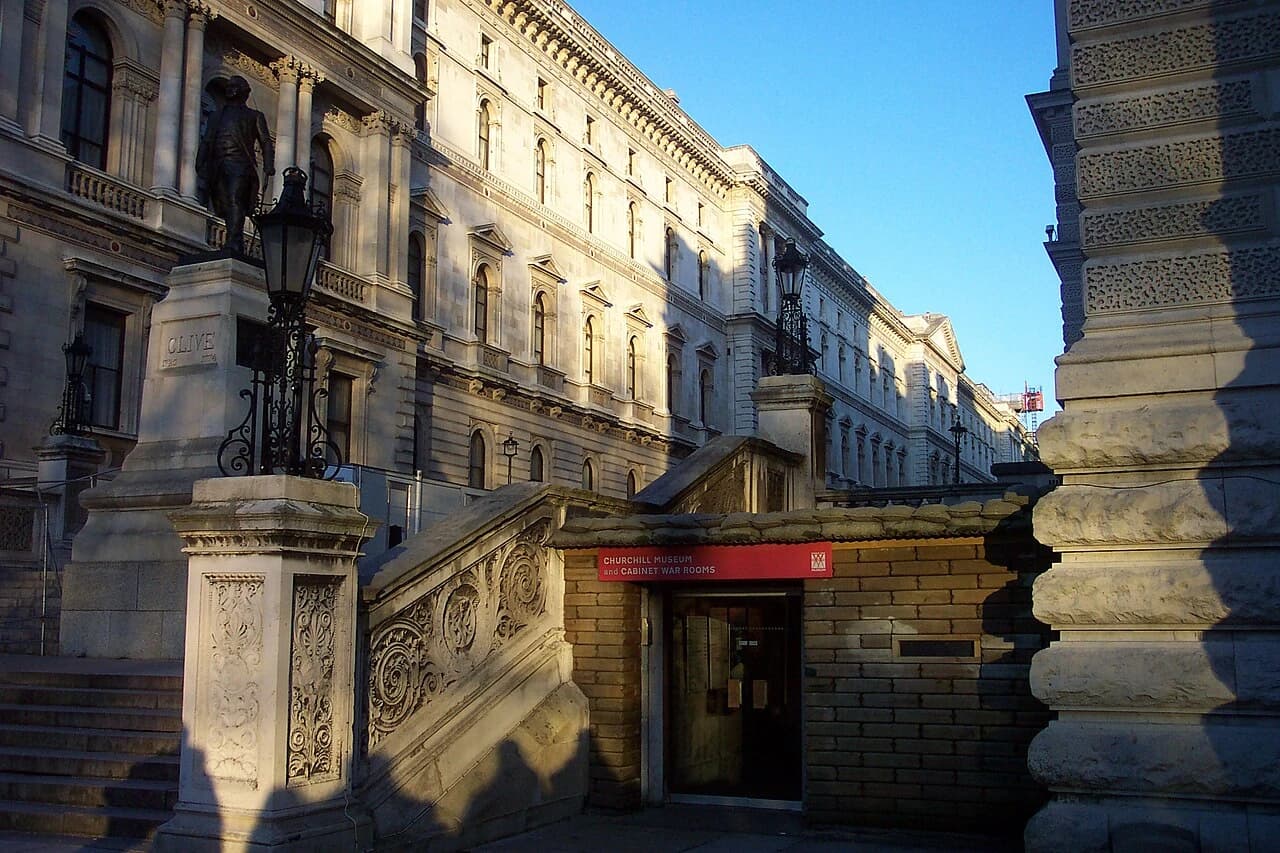
Churchill War Rooms
City of Westminster, United Kingdom

Palace of Westminster
City of Westminster, United Kingdom
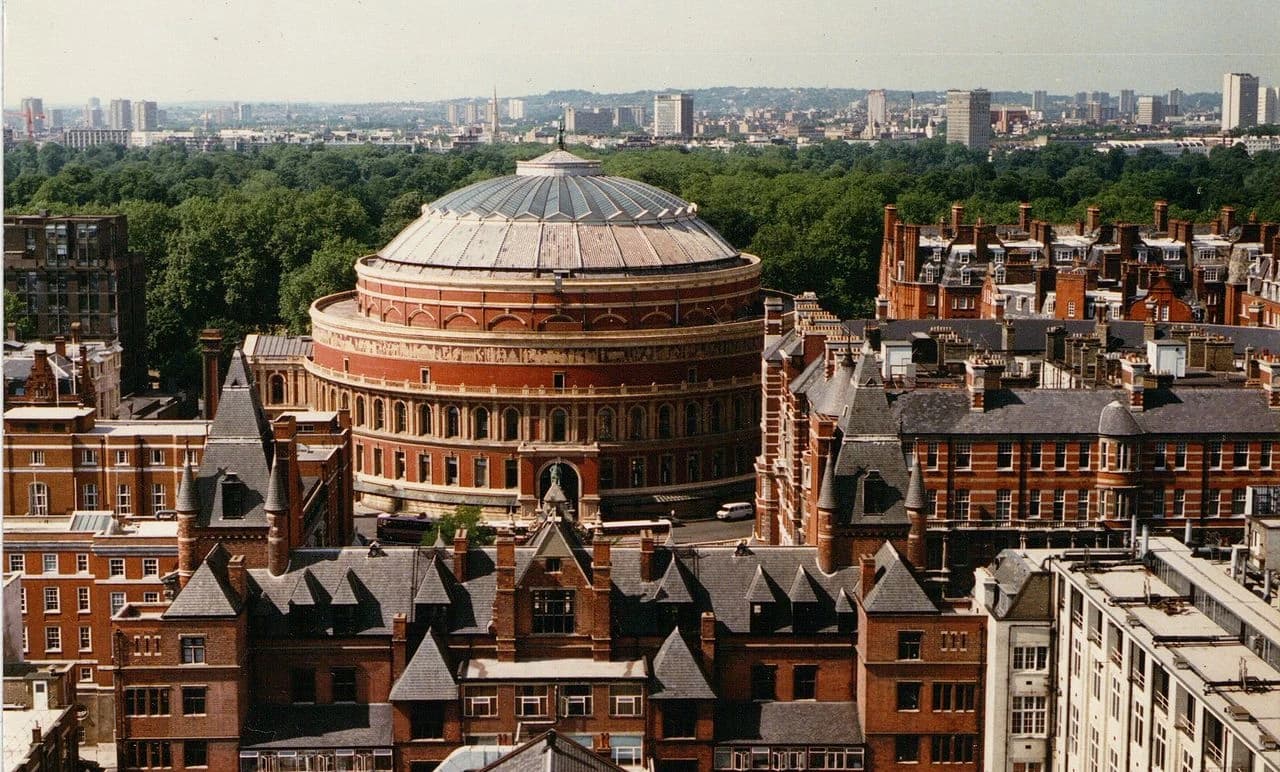
Royal Albert Hall
City of Westminster, United Kingdom
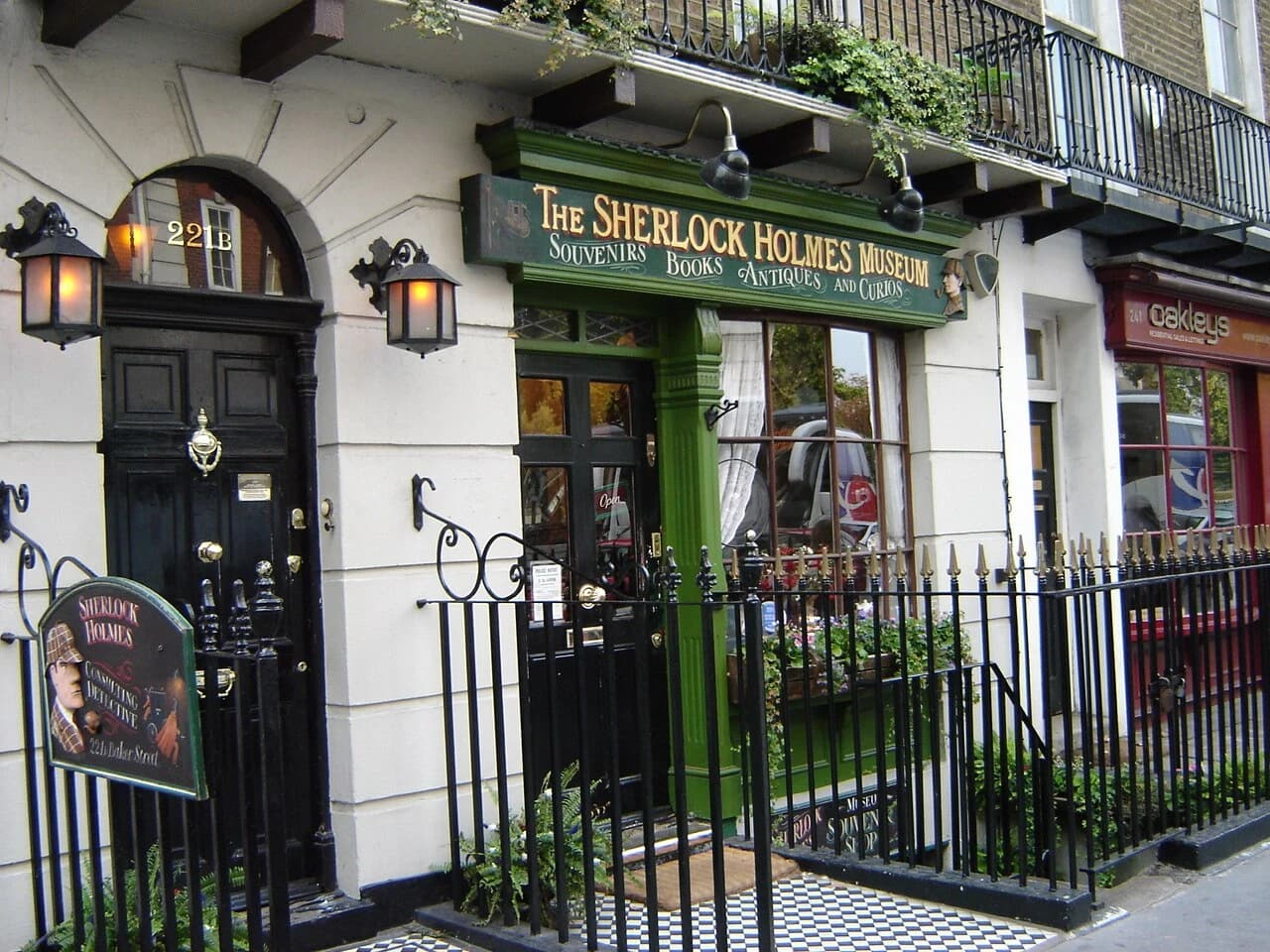
Sherlock Holmes Museum
City of Westminster, United Kingdom
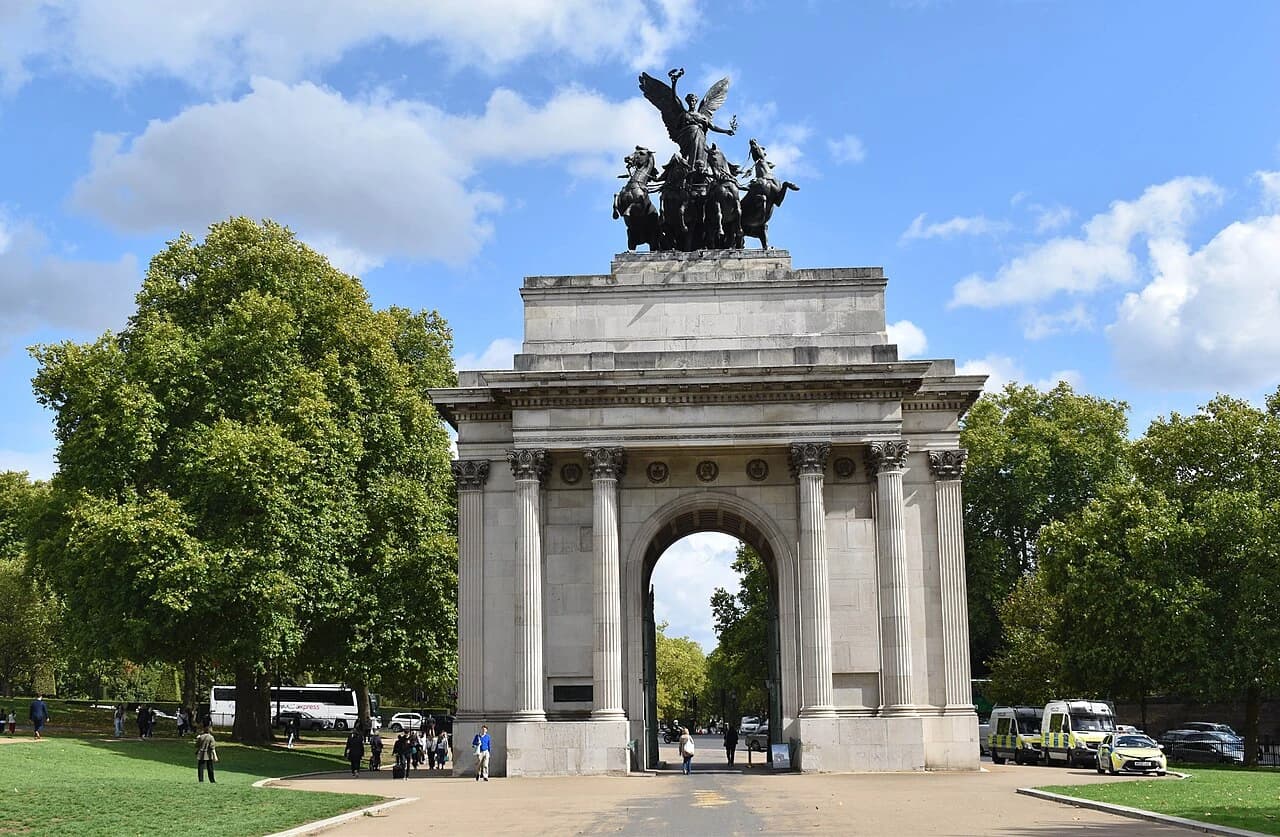
Wellington Arch
City of Westminster, United Kingdom