Languages
15Sherlock Holmes Museum Audio Guide
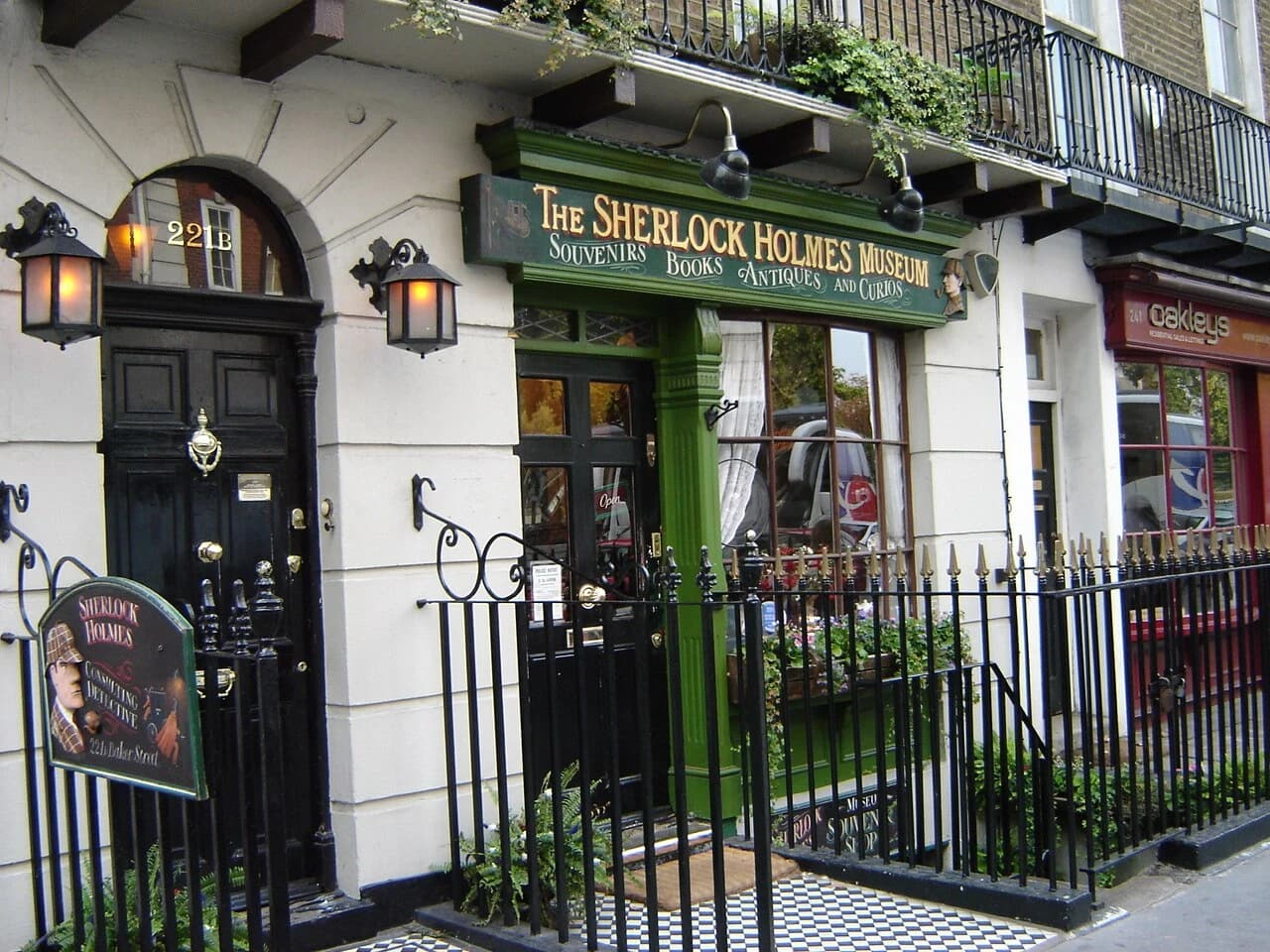
Sherlock Holmes Museum is a museum in City of Westminster, United Kingdom. Explore it with Stanza's visual scanner and offline audio guide — available in 15 languages.
Quick Facts
16
Stops
15
Languages
100%
Offline
📍 City of Westminster, United Kingdom · 51.5237°N, -0.1610°E
About Sherlock Holmes Museum
The Sherlock Holmes Museum is a private museum located in London, England, dedicated to the fictional detective Sherlock Holmes. It recreates the Victorian-era lodgings described in the stories at 221B Baker Street.
This self-guided audio tour features 16 narrated stops organized across 6 sections, including The First Floor Sitting Room, Sherlock Holmes's Private Quarters, Dr. Watson's Room, Mrs. Hudson's Dining Room, The Chemistry Laboratory, The Attic Wax Recreations. As a museum, Sherlock Holmes Museum offers a unique cultural experience in the heart of City of Westminster, United Kingdom.
The Stanza audio guide is available in 15 languages and works entirely offline — download the complete tour including audio narration, maps, and images before your visit. As you walk through Sherlock Holmes Museum, GPS-triggered narration plays automatically at each point of interest.
Last updated:
Artworks on display
The First Floor Sitting Room
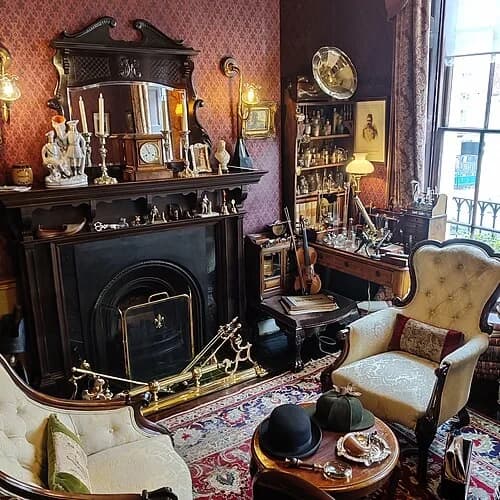
This room is the heart of the museum, recreated to match the descriptions in Sir Arthur Conan Doyle's stories. Here, Holmes and Watson would entertain clients by the fire amidst a clutter of pipes and newspapers.
The Sitting Room
The sitting room is designed as a direct physical manifestation of Sir Arthur Conan Doyle’s descriptions. Every corner of the room is packed with the kind of intellectual and domestic clutter one would expect of an eccentric Victorian bachelor. Large velvet armchairs are positioned near the fireplace, suggesting long nights of deliberation and discussion. Stacks of newspapers, unanswered correspondence pinned with a jack-knife, and various pipes scattered about reflect Holmes's disorganized but brilliant mind. This space was the primary theater for the detective's work; it was here that desperate clients would arrive to tell their strange tales of scandal, theft, or murder. The museum has gone to great lengths to ensure the wallpaper, carpeting, and furniture all match the aesthetic of the 1880s and 90s. The room doesn't just display objects; it recreates the lived-in feel of a space shared by two men of very different temperaments. While the room is filled with artifacts, it is the arrangement—the "organized chaos"—that truly captures the essence of the character's life. It remains the most recognizable room in the house, a sanctuary for logic in a city often shrouded in fog and mystery.
The Patriotic Wall
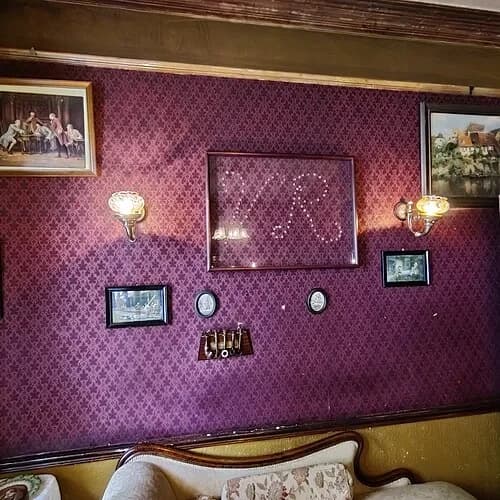
If you look at the wallpaper, you will see the letters 'V.R.' formed by a series of small pockmarks. These stand for 'Victoria Regina,' referring to Queen Victoria, the reigning monarch during most of Holmes’s career. In 'The Musgrave Ritual', Dr. Watson describes this peculiar habit, noting that his companion would sometimes sit in an armchair with a hair-trigger Boxer revolver and proceed to "adorn the opposite wall with a patriotic V.R. done in bullet-pocks." This detail provides a fascinating look into Holmes’s personality—specifically his intense boredom when he was not occupied by a challenging case. For Holmes, domestic target practice was a way to vent restless energy, much to the presumed distress of Mrs. Hudson and the constant annoyance of Watson. The museum has recreated this scene precisely to show the detective's darker, more erratic side. It serves as a reminder that Holmes was not just a cold calculating machine, but a man of intense, sometimes destructive impulses. The presence of these marks on such elegant Victorian wallpaper captures the clash between the refined society of the era and the wild, untamable intellect of the man who lived here.
The Detective's Equipment
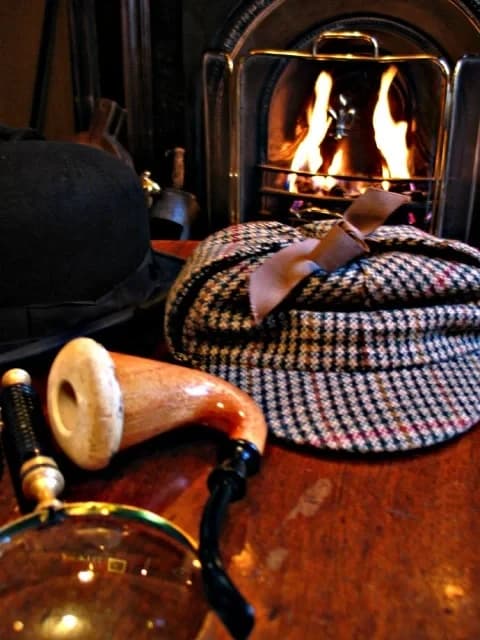
On the table, you will find the essential tools of the trade: a magnifying glass, a calabash pipe, and the famous deerstalker hat. Interestingly, while the deerstalker is now perhaps the most recognizable part of the Holmes silhouette, Conan Doyle himself never explicitly named this specific type of hat in his text. Instead, he usually described Holmes as wearing a "close-fitting cloth cap." The transition to the deerstalker happened because of Sidney Paget, the original illustrator for 'The Strand Magazine'. Paget decided to give Holmes this distinctive "country" headwear for a scene involving travel to the countryside, and the image stuck so firmly in the public mind that it became permanent. Similarly, the curved calabash pipe became a staple of stage and screen adaptations because it was easier for actors to hold while speaking than the straight pipes Doyle described. These items represent the evolution of Sherlock Holmes from a literary figure into a cultural icon. They ground the detective in a tangible reality, reminding us that his methods were rooted in the observation of physical evidence. Each piece here is more than a prop; it is a key element of the visual language that defines the world's most famous detective.
Sherlock Holmes's Private Quarters
Adjacent to the sitting room is Holmes's bedroom. It offers a glimpse into his private habits, featuring period-appropriate furniture and personal effects that suggest a man of both discipline and eccentricity.
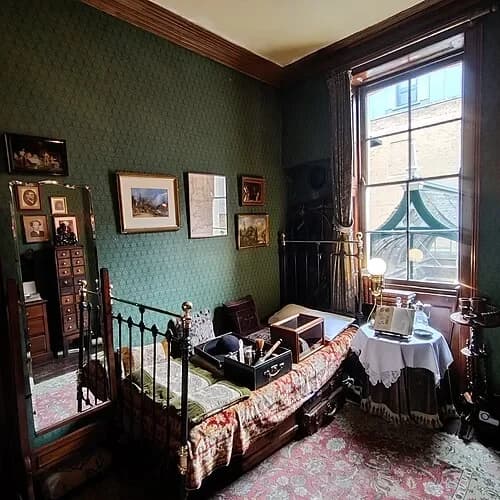
Sherlock Holmes's Bedroom
The bedroom provides a more personal perspective on a character often defined by his public exploits. Here, the museum displays a washstand, personal grooming items, and a modest bed, all typical of a gentleman's quarters in the late 19th century. Interestingly, the creation of this museum was not without controversy. Dame Jean Conan Doyle, the author’s daughter, initially objected to the project. She was concerned that a physical museum dedicated to a fictional character at a real-world address would further blur the lines between history and literature, potentially leading people to forget that her father had invented the man. However, the museum’s popularity eventually helped cement the legacy of both the creator and his creation. The room is designed to feel as though Holmes has just stepped out for a moment; the personal effects are laid out with a sense of quiet residence. By focusing on these mundane, everyday objects, the display grounds the brilliant detective in a relatable human reality. It allows visitors to imagine the man behind the magnifying glass, dealing with the same daily rituals as any other Londoner of the period, before his next great adventure began.
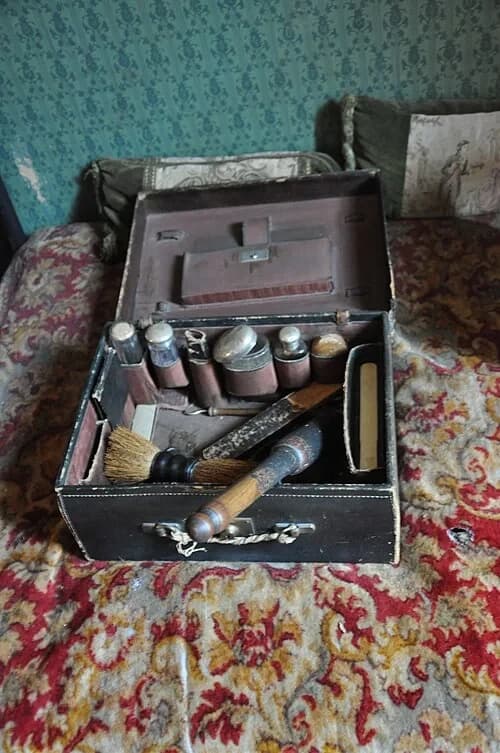
The Traveling Case
Sitting on the bed is a leather traveling case, a necessary accessory for a Victorian gentleman. A close look reveals a variety of specialized tools, including straight razors, shaving brushes, and various glass bottles that likely held oils or tonics. These items are period-accurate, selected to represent what a man of Holmes's status would have carried while investigating a case in the countryside or traveling abroad. During the 19th century, travel was a significant undertaking, and maintaining one's appearance was a mark of social standing. For a detective like Holmes, who often had to go undercover or move between social classes, such a kit would have been indispensable. These physical artifacts help to anchor the fictional world in the material culture of the 1800s. They remind us that despite his extraordinary intellect, Holmes was still a man subject to the technologies and limitations of his time. The worn leather and the clink of glass bottles evoke the sensory experience of Victorian travel, where every journey started with a carefully packed bag and a sense of impending mystery. The case is a silent witness to the mobility required of a detective who followed clues wherever they might lead.
Dr. Watson's Room
Located on the second floor, this room highlights the life of the doctor and chronicler. You'll see his medical instruments and travel-worn luggage, reminding us of his background as an army surgeon.
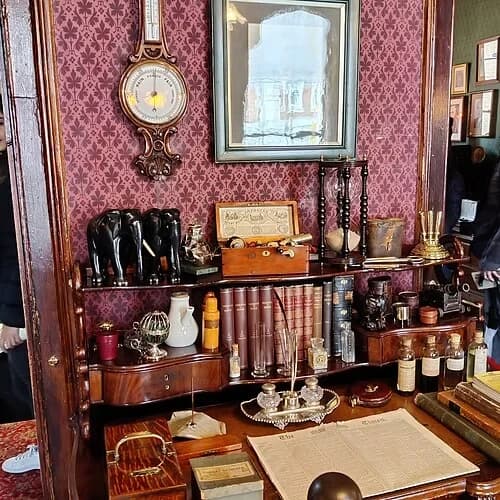
Dr. Watson's Study
Dr. Watson’s study reflects the dual nature of his life as an army surgeon and a writer. On the desk, you will find a variety of medical instruments alongside the papers and books where he recorded the adventures of his more famous roommate. As a veteran of the Second Anglo-Afghan War, Watson brought a practical, disciplined perspective to the household at 221B. The room is filled with items that denote his role as the stabilizing force in the partnership; while Holmes was prone to fits of manic energy or deep depression, Watson was the reliable observer. Notice the barometer on the wall and the travel-worn volumes on the shelves, suggesting a man of science and world experience. This space highlights Watson’s vital contribution to the stories; without his narrative voice, the reader would have no window into the brilliance of Holmes. The study is a tribute to the "everyman" hero who grounded the extraordinary in the relatable. It reminds us that every brilliant lead needs a steady chronicler to ensure the story is told. The atmosphere here is one of professional competence and quiet dedication, a stark contrast to the brilliant chaos found in the sitting room downstairs.
Mrs. Hudson's Dining Room
This room honors the long-suffering landlady who kept the household running. The table is set for a traditional Victorian meal, reflecting the domestic reality of a boarding house in the late 1800s.
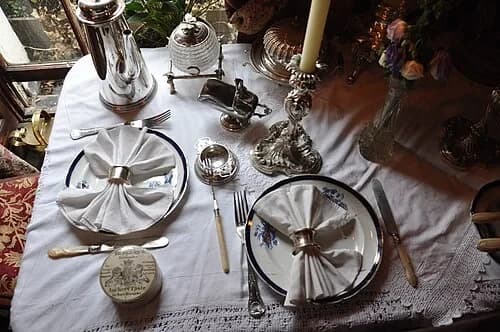
Mrs. Hudson's Table
The dining table is meticulously set for a mid-day meal, featuring polished silverware and linen napkins neatly held in silver rings. This display is dedicated to Mrs. Hudson, the long-suffering landlady of the Baker Street lodgings. While she is often a background figure in the stories, her role was vital to the functioning of the household. It was Mrs. Hudson who managed the daily needs of two eccentric tenants, dealing with their irregular hours, chemical experiments, and the constant stream of strange visitors. She provided the domestic stability that allowed Holmes and Watson to focus entirely on their work. The table setting reflects the standards of a respectable Victorian middle-class home, where meals were formal affairs and hospitality was a point of pride. Using this space to highlight her contribution reminds us that behind every great detective is a well-run home. The clink of a fork against a plate or the pouring of tea would have been the soundtrack to many debriefings after a long day of chasing clues. This room captures the domestic reality of life in the 1880s, where the order of the dining room stood in quiet defiance of the chaos found in the city’s criminal underworld.
The Chemistry Laboratory
Holmes was a pioneer of forensic science. This chemistry workstation, crowded with glass retorts and test tubes, represents his 'scientific' side, where he would spend hours analyzing blood stains or poison residues.
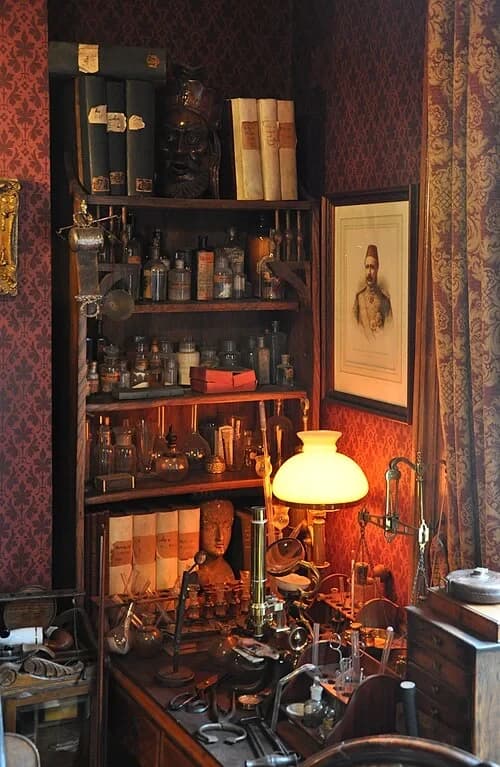
The Chemistry Laboratory
Sherlock Holmes was famously one of the first detectives in fiction to use what we now recognize as forensic science. His laboratory area is a dense collection of late-19th-century scientific equipment, including test tubes, glass retorts, and a microscope. Holmes often spent hours hunched over these tools, performing chemical tests to identify bloodstains, poisons, or various types of tobacco ash. In the stories, Watson frequently mentions the "stinging" smells and messy residues left behind by these experiments. At a time when police work relied primarily on witnesses and basic deductions, Holmes’s use of physical evidence was revolutionary. He understood that a single microscopic fiber or a chemical reaction could reveal more than an hour of interrogation. This workstation serves as a bridge between the old-fashioned mystery story and the modern crime scene investigation. The array of glass and metal instruments highlights the rigorous, methodical approach Holmes applied to his work. It reminds visitors that the detective’s success wasn't just due to intuition, but to his commitment to hard science. Every bottle and tube here represents a potential breakthrough in a case that would otherwise have remained unsolved, cementing Holmes's status as the father of modern criminalistics.
The Attic Wax Recreations
In the attic spaces, the museum brings the stories to life through lifelike wax figures. You'll encounter famous villains like Professor Moriarty and iconic scenes like the Hound of the Baskervilles.
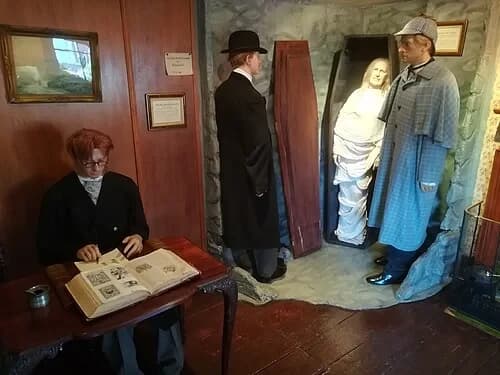
The Carfax Mystery
The attic of the museum houses several wax recreations of famous scenes from the stories, including this one from 'The Disappearance of Lady Frances Carfax'. The scene features a double-depth coffin, a key element in one of the more macabre plots encountered by the detective. This specific recreation illustrates the museum's commitment to showcasing the wide range of themes in the stories, from intellectual puzzles to moments of genuine horror and suspense. In this adventure, Holmes must race against time to rescue a kidnapped woman from a truly terrifying fate involving a deceptive burial. The use of wax figures allows the museum to present the characters in a way that feels immediate and visceral, moving beyond the static displays of books and artifacts found on the lower floors. The dimly lit attic environment adds to the tension, recreating the atmosphere of the Victorian "shilling shocker" mysteries. This display highlights the darker side of late 19th-century London, a place where beneath the surface of respectability, dangerous and bizarre crimes could take place. It serves as a reminder that the world of Sherlock Holmes was often one of high stakes and mortal peril, requiring not just logic, but also bravery.
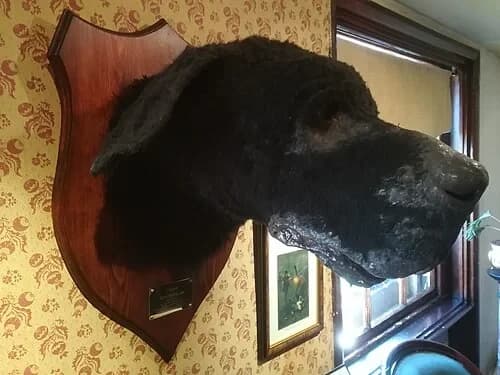
The Hound of the Baskervilles
Mounted on the wall is a taxidermy representation of the legendary hound from 'The Hound of the Baskervilles,' arguably the most famous story in the entire Sherlock Holmes canon. First serialized in 1901, the novel tells the story of a terrifying supernatural dog that supposedly haunts the Baskerville family. Holmes, ever the skeptic, eventually proves that the "demon" is actually a large hound coated in phosphorus to give it a glowing, ghostly appearance, used by a cunning murderer to scare his victims to death. This display item captures the gothic atmosphere of the moors and the primal fear that the creature inspired. The presence of the hound’s head here serves as a focal point for visitors to discuss the blend of horror and mystery that made the story a masterpiece. It represents the ultimate triumph of logic over superstition, a central theme throughout the detective's career. The detail on the mount, including the menacing expression and dark fur, helps to bring the literary description into the physical world. It remains one of the museum's most photographed items, symbolizing the high-stakes drama and enduring popularity of the Holmes mysteries.
Want to hear the rest?
Download the Stanza app to unlock all 16 artworks and the visual scanner feature.
Frequently Asked Questions
How long does the Sherlock Holmes Museum audio tour take?
The Sherlock Holmes Museum audio guide includes 16 narrated stops. Most visitors spend 45 minutes to 1.5 hours exploring the complete tour, though you can listen at your own pace and skip or revisit any stop.
Is the Sherlock Holmes Museum audio guide available in my language?
Stanza supports 15 languages: English, Spanish, French, German, Italian, Portuguese, Russian, Japanese, Chinese, Korean, Arabic, Hindi, Polish, Dutch, Hebrew. Check the guide in the app to confirm the languages currently available for this tour.
Can I use the audio guide offline at Sherlock Holmes Museum?
Yes! Download the complete Sherlock Holmes Museum tour — including all audio, maps, and images — before your visit. The Stanza app works completely offline, so you don't need WiFi or mobile data at the venue.
How much does the Sherlock Holmes Museum audio guide cost?
The Stanza app is free to download. The current listed price for the Sherlock Holmes Museum audio guide is $0.99; app-store region and currency may affect the final price.
How do I use the Stanza audio guide at Sherlock Holmes Museum?
Download the free Stanza app, search for "Sherlock Holmes Museum", and download the tour. When you arrive at the venue, the app uses GPS to detect your location and automatically plays the relevant narration as you move between points of interest — completely hands-free.
What makes the Stanza audio guide different from other Sherlock Holmes Museum tours?
Stanza offers GPS-triggered narration that plays automatically as you walk through Sherlock Holmes Museum — no need to manually select stops. The tour is available in 15 languages, works fully offline, and includes 16 expertly narrated stops with images and historical context.
What other audio guides are available near Sherlock Holmes Museum?
Stanza offers multiple audio guides in City of Westminster, United Kingdom and nearby areas. After downloading the app, browse the map to discover all available tours near Sherlock Holmes Museum. Each guide can be downloaded for offline use.
Nearby Audio Guides
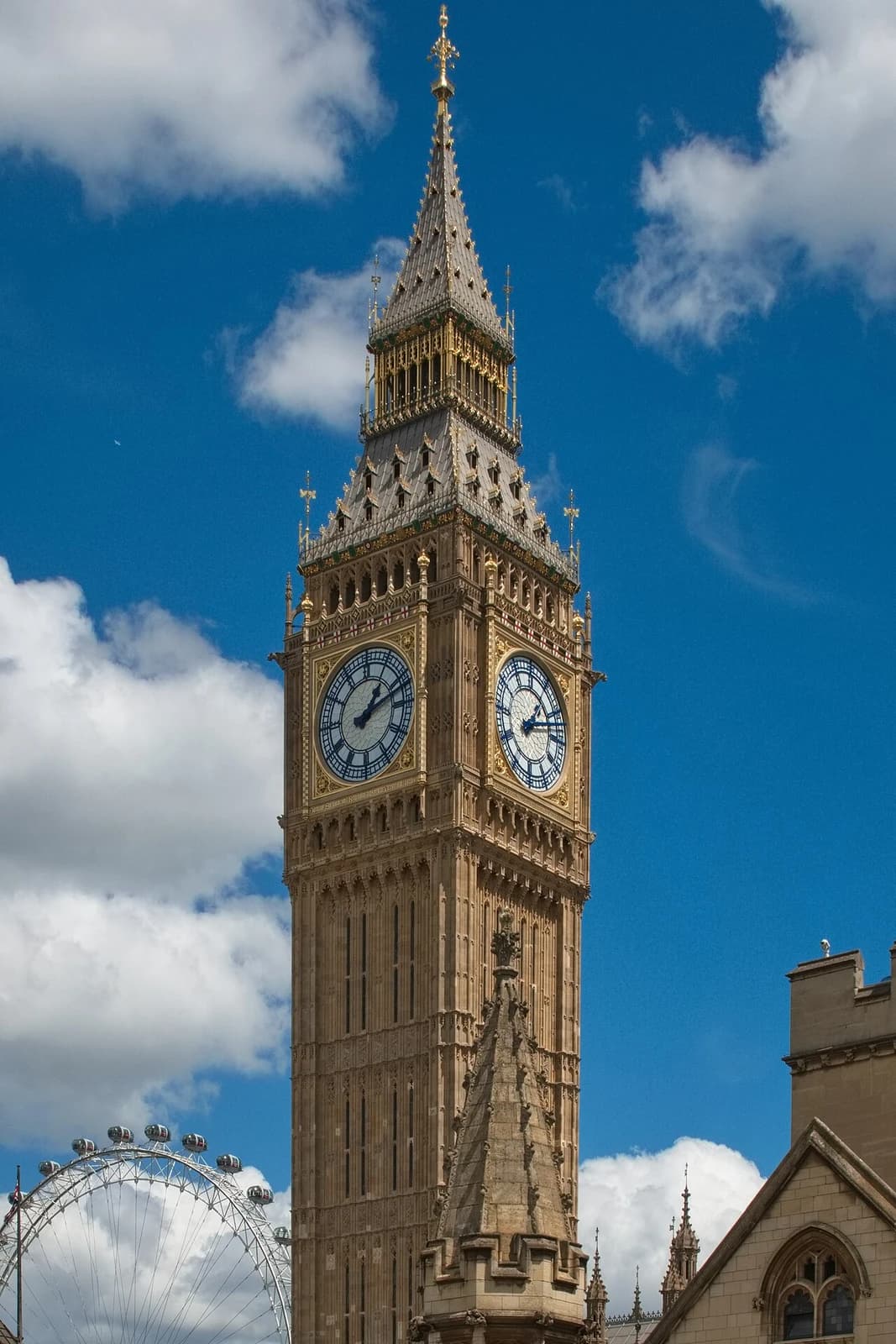
Big Ben
City of Westminster, United Kingdom
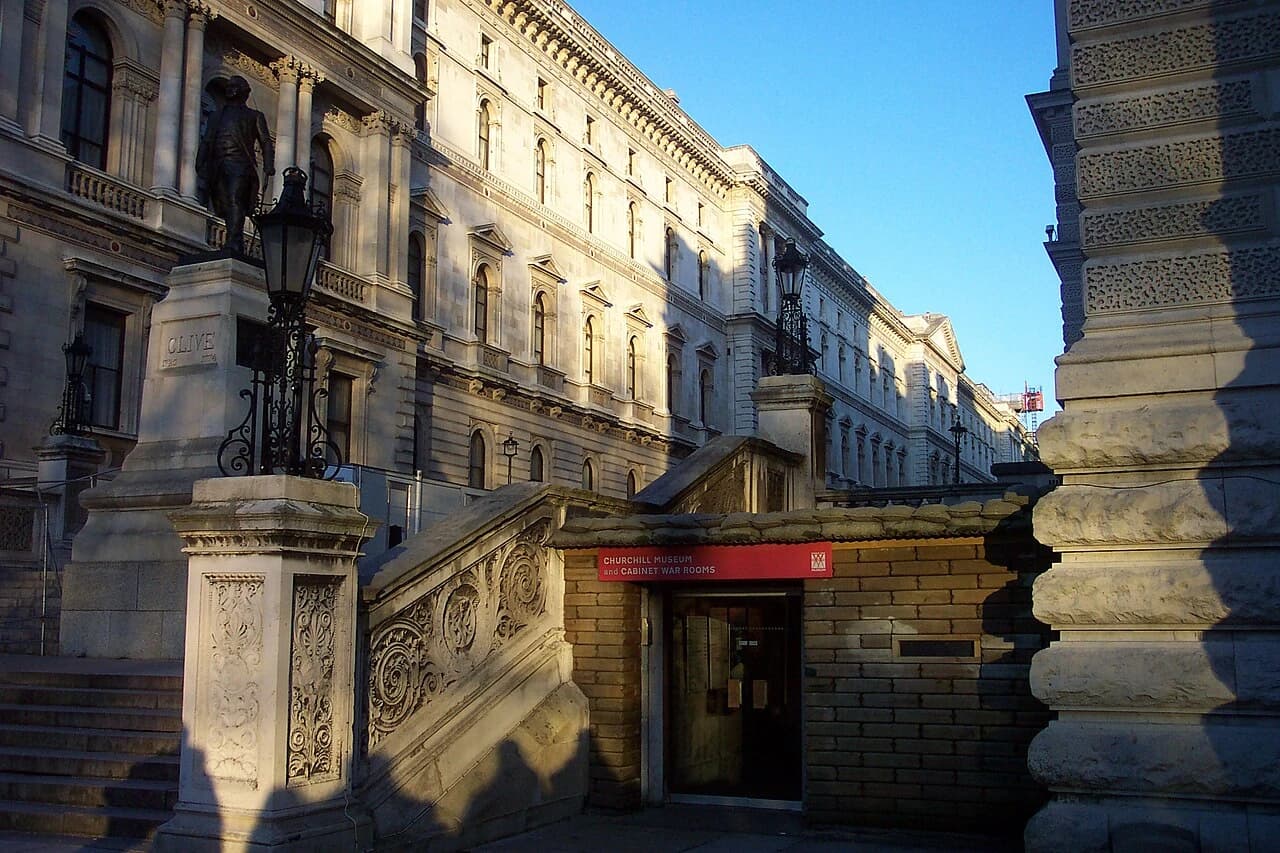
Churchill War Rooms
City of Westminster, United Kingdom
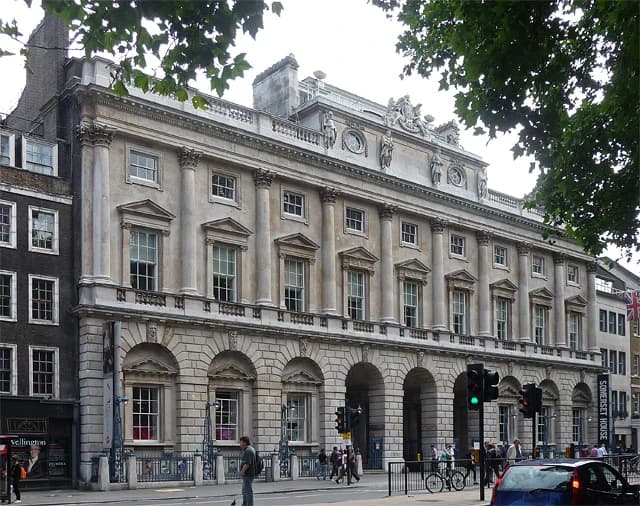
Courtauld Institute of Art
City of Westminster, United Kingdom

Palace of Westminster
City of Westminster, United Kingdom
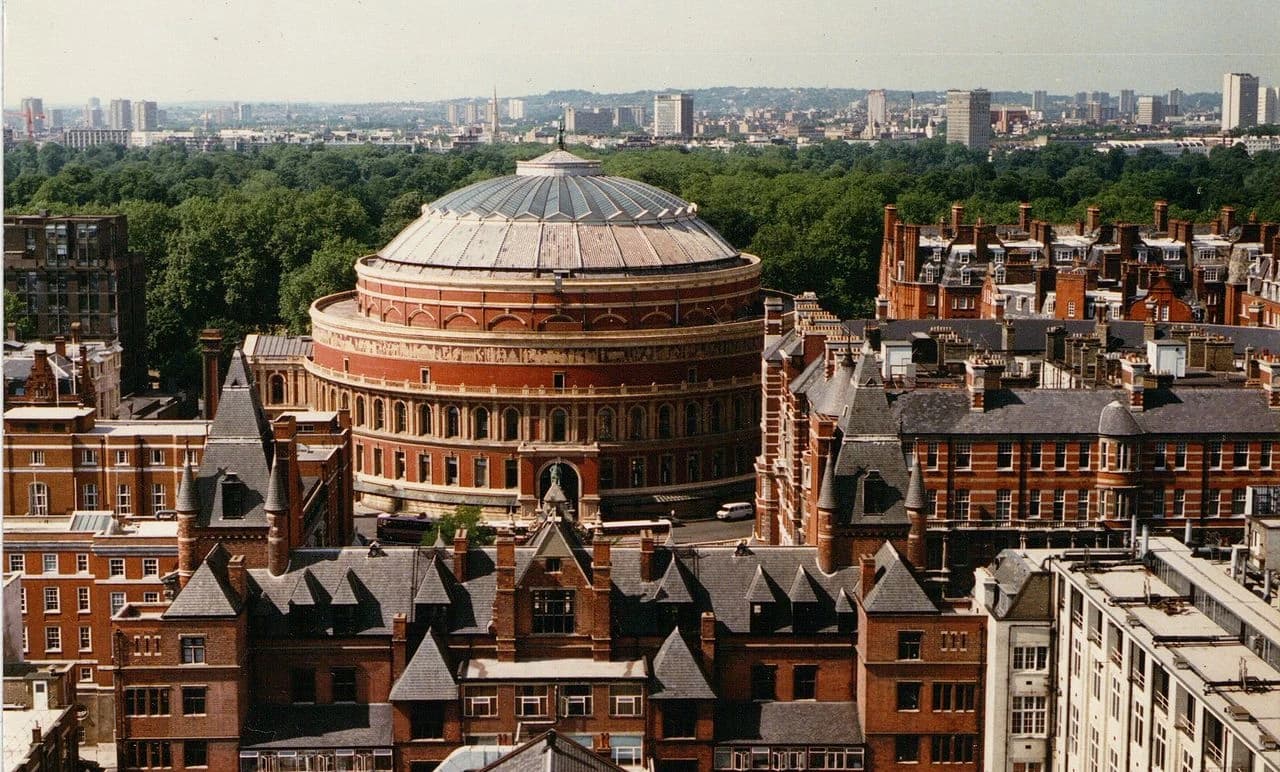
Royal Albert Hall
City of Westminster, United Kingdom

Wellington Arch
City of Westminster, United Kingdom