Languages
15Royal Albert Hall Audio Guide
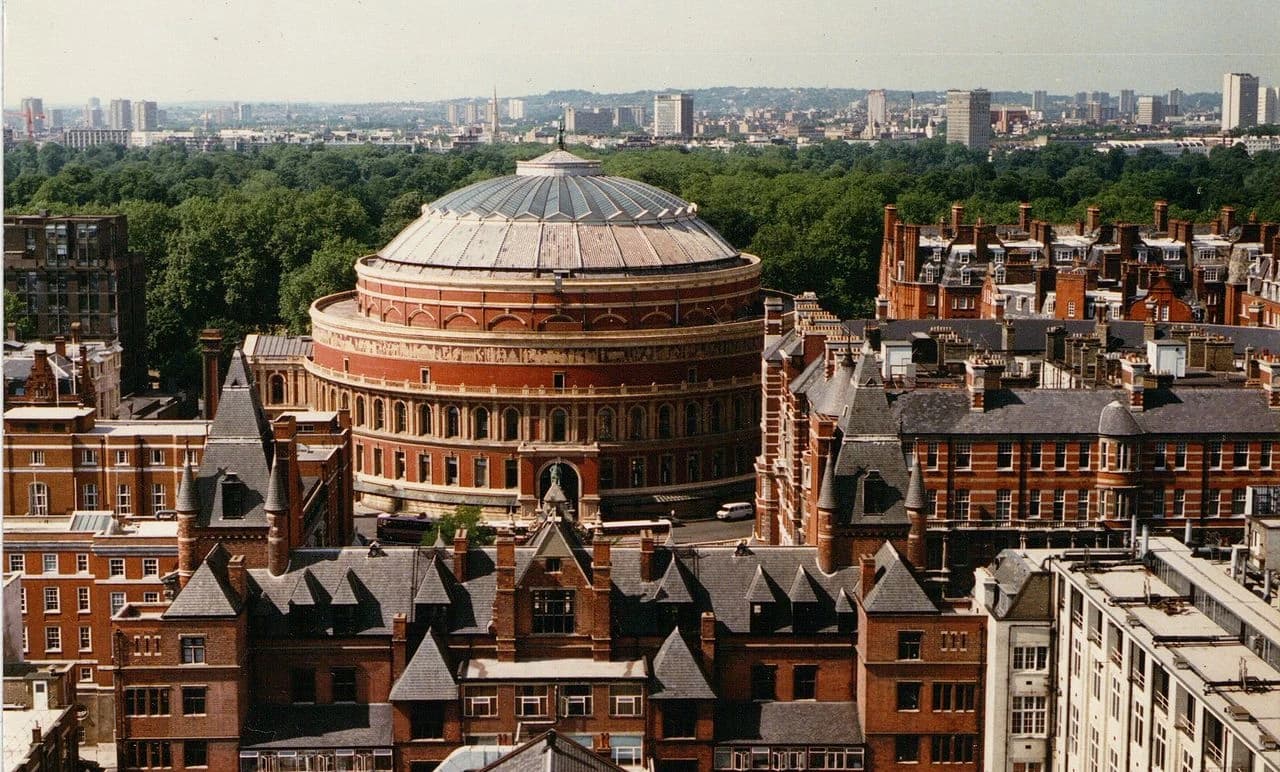
Royal Albert Hall is a landmark in City of Westminster, United Kingdom. Explore it with Stanza's GPS-triggered offline audio guide — available in 15 languages.
Quick Facts
22
Stops
15
Languages
100%
Offline
📍 City of Westminster, United Kingdom · 51.5010°N, -0.1775°E
About Royal Albert Hall
The Royal Albert Hall is a concert hall located in South Kensington, London, England. It is a prominent venue for music concerts and other performances.
Royal Albert Hall is also known as Royal Albert Hall of Arts and Sciences.
This self-guided audio tour features 22 narrated stops organized across 8 sections. As a concert hall, Royal Albert Hall offers a unique cultural experience in the heart of City of Westminster, United Kingdom.
The Stanza audio guide is available in 15 languages and works entirely offline — download the complete tour including audio narration, maps, and images before your visit. As you walk through Royal Albert Hall, GPS-triggered narration plays automatically at each point of interest.
Last updated:
What you will hear
The Triumph of Arts and Sciences Frieze
Focus on the 800-foot terracotta mosaic that wraps around the building, illustrating the Victorian ideals of progress.
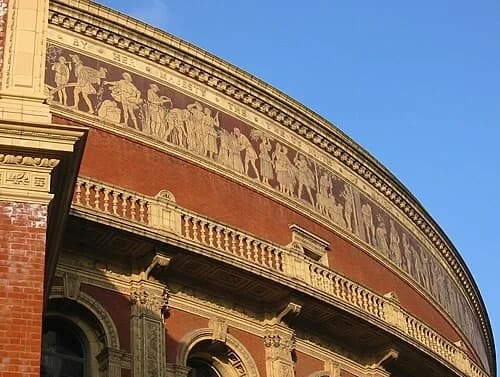
The Triumph of Arts and Letters: Nations of the World Presenting Art and Goods to Britannia at the Great Exhibition of 1851
Эдвард Джон Пойнтер · 1870
Circling the upper reaches of the building is a continuous terracotta mosaic frieze that stretches 800 feet, known as 'The Triumph of Arts and Sciences.' This impressive decorative feature was created by artists from what is now the Victoria and Albert Museum. The frieze depicts various allegorical scenes of the world's nations presenting art and goods to Britannia, celebrating the spirit of international cooperation seen at the Great Exhibition. The technique used to create this work was highly innovative for its time. Individual mosaic tiles were crafted by skilled women at the Minton Hollins tile works in Stoke-on-Trent, using a dry-press process. These tiles were then meticulously assembled into the scenes you see today. This method allowed for a high level of detail and durability, ensuring the frieze would survive London's industrial smog. The frieze is divided into sixteen different sections, each representing a different area of human achievement, such as music, engineering, and astronomy. It serves as an architectural storytelling device, wrapping the entire hall in a narrative of progress and global achievement. The use of terracotta was a hallmark of Victorian South Kensington, chosen for its resistance to weathering and its warm, red hue.
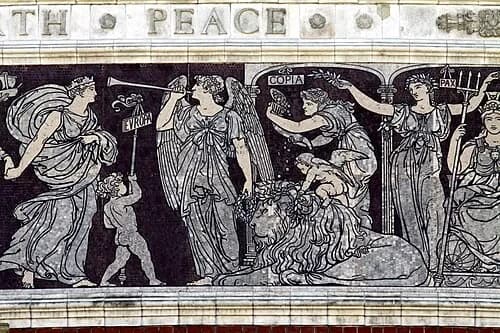
Victorian Progress in Terracotta
Taking a closer look at the mosaic frieze reveals personified virtues that the Victorians held in the highest regard. Among the many figures, you can spot representations of 'Peace' and 'Copia,' or Plenty, depicted in classical styles. These figures are not merely decorative; they symbolize the Victorian belief that through global trade, advanced engineering, and the pursuit of the arts, humanity could achieve lasting prosperity. The frieze captures a moment in history when the British Empire saw itself as the leader of industrial and cultural progress. Note the figures holding tools of trade and scientific instruments, highlighting the practical application of knowledge that defined the era. The presence of 'Peace' is particularly significant, as the Great Exhibition was intended to foster harmony between nations through the exchange of ideas and goods. These allegorical scenes were meant to inspire all who approached the hall, suggesting that the performances and lectures held within were part of a larger global story. The level of craftsmanship in these terracotta figures shows the meticulous attention to detail Victorian artisans brought to public works. It remains one of the most complete and well-preserved examples of large-scale Victorian architectural mosaics in the city.
The Royal Entrance
Transition from the exterior to the interior through the grand porches, highlighting the modern statues of the late Queen and Prince Philip.
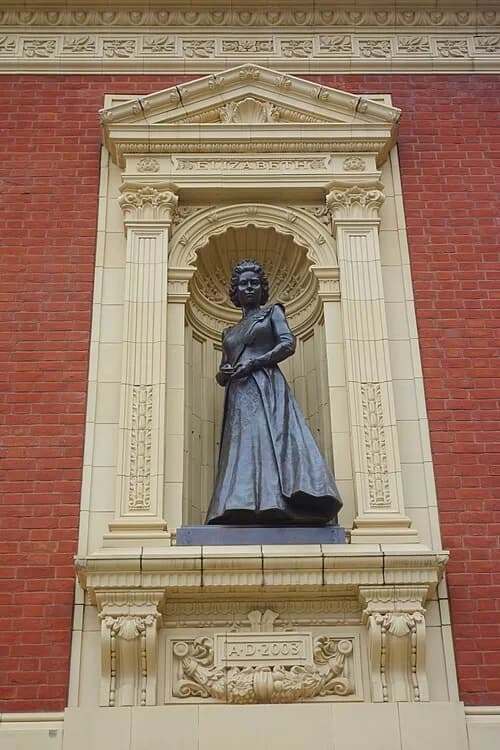
Statue of Queen Elizabeth II
Modern additions to the hall’s exterior niches, such as this statue of Queen Elizabeth II, ensure the venue’s royal connection remains current. This statue was commissioned to celebrate the building’s 150th anniversary, serving as a contemporary bookend to the hall's long history of patronage. It captures the late monarch in a dignified pose, maintaining the tradition of royal involvement that began when Queen Victoria laid the foundation stone in 1867. Unlike the terracotta and brickwork of the main structure, this figure is a recent installation, yet it was designed to fit seamlessly into the existing architectural program. The royal family has always played a pivotal role here, with various members acting as patrons or attending high-profile events. The placement of this statue in an exterior niche follows the original plan of the architects, who intended these spaces to eventually house figures of significance. By adding new statues in the twenty-first century, the hall demonstrates that it is not a static museum, but a venue that continues to evolve alongside the nation. The statue serves as a quiet reminder of the institutional stability that has allowed the hall to thrive across three different centuries.
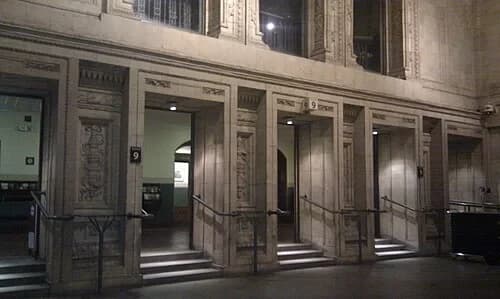
Grand Entrance Porch
The grand entrance porches, such as Door 9, are key to understanding the building's practical design. When the hall first opened, it was designed to accommodate up to 8,000 people, a staggering number for a nineteenth-century indoor venue. To ensure that such a large crowd could enter and exit quickly and safely, the architects included multiple grand entrances around the entire circular perimeter. Each entrance is clearly numbered and features intricate stonework that reflects the hall's overall Roman-inspired aesthetic. These porches served as efficient transition points, where visitors would arrive by carriage before stepping into the sheltered corridors inside. The engineering required to move thousands of people through a single space was a major concern for the designers, Fowke and Scott. They utilized wide doorways and a series of radiating corridors to prevent bottlenecks. While modern safety regulations have reduced the hall's capacity to just over 5,000, these original entrances still function perfectly for today's audiences. The combination of decorative stonework and functional layout is a hallmark of the Royal Engineers who designed the structure. As you look at the numbered doors, you can see how the Victorian focus on efficiency was built directly into the ornamental facade.
The Nation's Village Hall
Enter the main auditorium to experience the scale and versatility of the venue, from boxing matches to rock concerts.
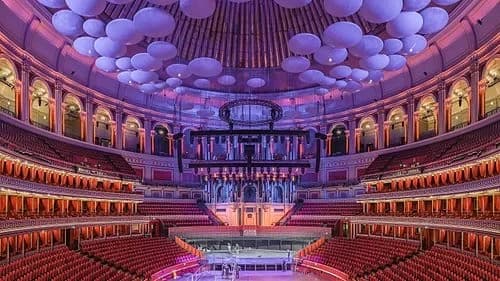
Auditorium Scale
Looking out into the vast auditorium, the sheer scale of the Royal Albert Hall is truly revealed. The space is defined by its iconic red seating and ornate gold leaf detailing, creating a regal atmosphere that has welcomed kings, queens, and world leaders. While the building was originally designed to hold 8,000 people, modern safety regulations and the need for improved sightlines mean that capacity is now capped at 5,272. The seating is arranged in a series of tiers that rise high toward the ceiling, ensuring that every member of the audience has a view of the stage. This 'vertical' design is another feature borrowed from classical amphitheaters, intended to make the crowd feel as though they are part of the performance. The color scheme of crimson and gold was chosen to reflect the hall's royal status and to provide a warm, inviting backdrop for the diverse range of events hosted here. From the arena floor to the gallery at the very top, the space is engineered for grand spectacle. The lighting rigs and modern technical equipment are integrated into the Victorian architecture, allowing the hall to function as a world-class venue for everything from symphonies to boxing matches.
The Voice of Jupiter Organ
Examine the massive pipe organ, the second largest in the British Isles, which dominates the stage area.
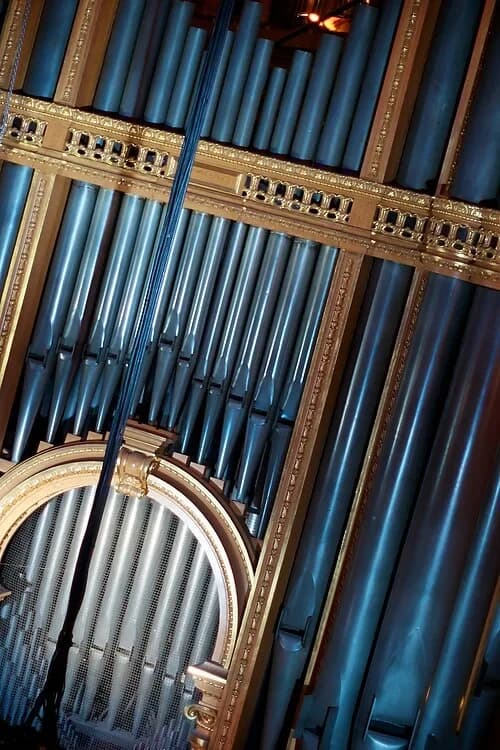
Pipes of the Great Organ
A closer look at the Great Organ reveals the staggering scale of its components. The instrument contains exactly 9,997 pipes, ranging in size from just a few inches to nearly 30 feet tall. There are 147 stops, which allow the organist to control the different sounds and tones produced. The pipes you see at the front are finished with gold leaf, creating a striking visual impact that complements the auditorium's color scheme. Between 2002 and 2004, the organ underwent a massive, multi-million-pound restoration to bring it back to its original Victorian glory. Every single pipe was removed, cleaned, and repaired by specialist craftsmen before being reinstalled. This renovation also included the addition of modern electronic controls, allowing the organ to be played with greater precision while retaining its historic sound. The restoration was a significant undertaking, involving thousands of hours of skilled labor to ensure the 'Voice of Jupiter' would continue to thunder for future generations. Today, the organ is in better condition than ever, its sound as clear and powerful as the day it was first played. The gold-tipped pipes remain one of the most recognizable features of the stage, a testament to the enduring craftsmanship of the Willis firm.
The Acoustic Mushrooms
Look up to the ceiling to see the 1969 fiberglass discs that finally solved the hall's notorious echo problem.
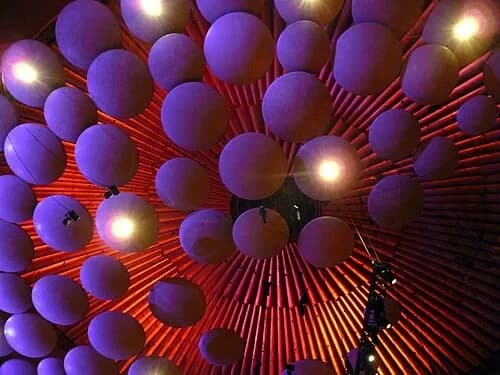
The Acoustic Mushrooms
High above the auditorium, suspended from the ceiling, are dozens of large fiberglass discs known as 'mushrooms.' These were installed in 1969 to solve a long-standing problem: the hall's notorious echo. Because of the building's circular shape and hard surfaces, sound would bounce off the walls, reaching the audience's ears twice. It was famously joked that the Royal Albert Hall was the only venue where a composer could hear their work performed twice for the price of a single ticket. The 'mushrooms' function by diffusing the sound waves, preventing them from creating the distracting delay. There are 135 of these discs in total, varying in size and height to fine-tune the acoustics of the space. Their installation completely transformed the hall's reputation as a difficult place for music, making it suitable for high-quality recordings and broadcast. While they were initially controversial for their modern appearance, they have since become an iconic part of the hall's interior landscape. During certain events, the mushrooms can be illuminated with different colors to enhance the mood of a performance. They represent a successful mid-century intervention into a Victorian space, proving that even a historic landmark can be adapted to meet modern technical standards.
A Stage for History
Highlight the diversity of events, from the Festival of Remembrance to legendary rock performances like R.E.M.
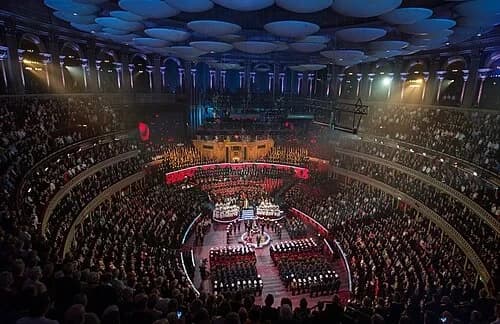
Festival of Remembrance
Beyond concerts and festivals, the Royal Albert Hall serves as the stage for significant national ceremonies, most notably the Royal British Legion Festival of Remembrance. This solemn event brings together members of the Armed Forces and the public to honor those who have served. The atmosphere within the auditorium shifts dramatically, with the bright lights dimmed and a quiet, respectful tone established. The emotional high point of the evening occurs during the act of remembrance, when the ceiling dome becomes a focal point. From the hidden walkways and vents high above the auditorium floor, thousands of paper poppy petals are released. Each petal represents a life lost in conflict, and as they slowly drift down through the air, they create a silent, visual cascade that blankets the floor and the people gathered below. This tradition has been held at the Hall since the 1920s, utilizing the unique height and volume of the dome to create a powerful collective experience. The silence in the room during this descent is profound, emphasizing the site's status as a center of shared national memory. Look for the small vents and openings in the roof structure where the petals are released.
The Gallery & Engineering
Climb to the highest level for a breathtaking view of the architecture and a deeper look at the hall's construction.
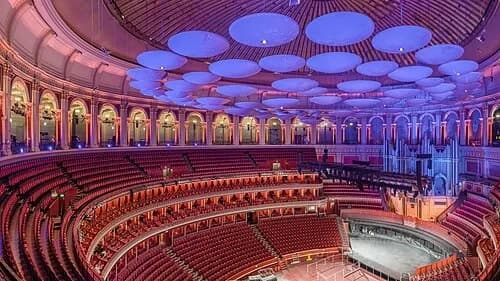
The High Gallery
The highest point in the auditorium accessible to the public is the Gallery, which circles the entire perimeter just beneath the iron-and-glass dome. Unlike the velvet-lined boxes and stalls below, this area is primarily standing-only for major concerts and events. It remains one of the most popular spots for regular visitors because it offers the most affordable tickets, allowing a wider audience to experience world-class performances. Standing here provides a unique perspective on the architecture; you are close enough to the ceiling to see the intricate details of the dome's ironwork and the suspension cables for the acoustic discs. Looking down, the scale of the space is truly impressive, with the arena floor and stage appearing like a distant, miniature world. This area was historically intended for the least expensive tickets, but today it is prized for its informal and energetic atmosphere, especially during the Proms. The acoustics at this height are often surprisingly clear, as sound carries upward into the rotunda. The wide, circular walkway also allows visitors to move around and view the stage from various angles throughout a performance, provided they have a standing ticket.
The South Steps & Great Excavation
Exit via the grand southern steps to see the 1851 memorial and learn about the massive 2017 basement expansion.
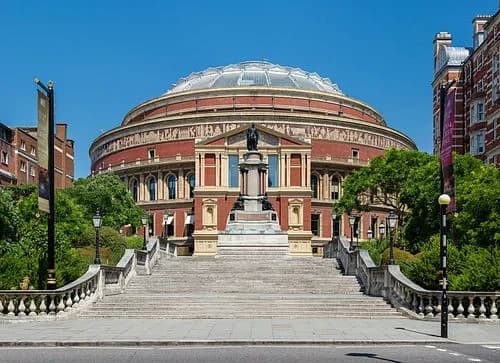
The Great Exhibition Memorial
Standing on the south side of the building, you encounter the Memorial of the 1851 Exhibition, featuring a central figure of Prince Albert. This bronze statue sits atop a large plinth at the head of a grand set of stairs. Albert is shown seated, looking directly toward the Hall that was built to carry out his mission of promoting the arts and sciences. The statue is surrounded by figures representing the four corners of the globe, acknowledging the international reach of the Great Exhibition of 1851. From this vantage point, you can also appreciate the clean, symmetrical lines of the southern facade. Unlike the ornate entrance porches found on the northern and western sides, the southern entrance has a more understated, classical look. The brickwork and terracotta detailing here remain exceptionally well-preserved, showcasing the quality of the materials used in the late 1860s. This memorial serves as a physical link between the building and the profits from the 1851 exhibition, which funded the purchase of the land for this entire cultural district. It provides a quiet space for reflection away from the busy main road on the north side.
Want to hear the rest?
Download the Stanza app to unlock all 22 stops and full GPS-guided navigation.
Frequently Asked Questions
How long does the Royal Albert Hall audio tour take?
The Royal Albert Hall audio guide includes 22 narrated stops. Most visitors spend 45 minutes to 1.5 hours exploring the complete tour, though you can listen at your own pace and skip or revisit any stop.
Is the Royal Albert Hall audio guide available in my language?
Stanza supports 15 languages: English, Spanish, French, German, Italian, Portuguese, Russian, Japanese, Chinese, Korean, Arabic, Hindi, Polish, Dutch, Hebrew. Check the guide in the app to confirm the languages currently available for this tour.
Can I use the audio guide offline at Royal Albert Hall?
Yes! Download the complete Royal Albert Hall tour — including all audio, maps, and images — before your visit. The Stanza app works completely offline, so you don't need WiFi or mobile data at the venue.
How much does the Royal Albert Hall audio guide cost?
The Stanza app is free to download. The current listed price for the Royal Albert Hall audio guide is $0.99; app-store region and currency may affect the final price.
How do I use the Stanza audio guide at Royal Albert Hall?
Download the free Stanza app, search for "Royal Albert Hall", and download the tour. When you arrive at the venue, the app uses GPS to detect your location and automatically plays the relevant narration as you move between points of interest — completely hands-free.
What makes the Stanza audio guide different from other Royal Albert Hall tours?
Stanza offers GPS-triggered narration that plays automatically as you walk through Royal Albert Hall — no need to manually select stops. The tour is available in 15 languages, works fully offline, and includes 22 expertly narrated stops with images and historical context.
What other audio guides are available near Royal Albert Hall?
Stanza offers multiple audio guides in City of Westminster, United Kingdom and nearby areas. After downloading the app, browse the map to discover all available tours near Royal Albert Hall. Each guide can be downloaded for offline use.
Nearby Audio Guides
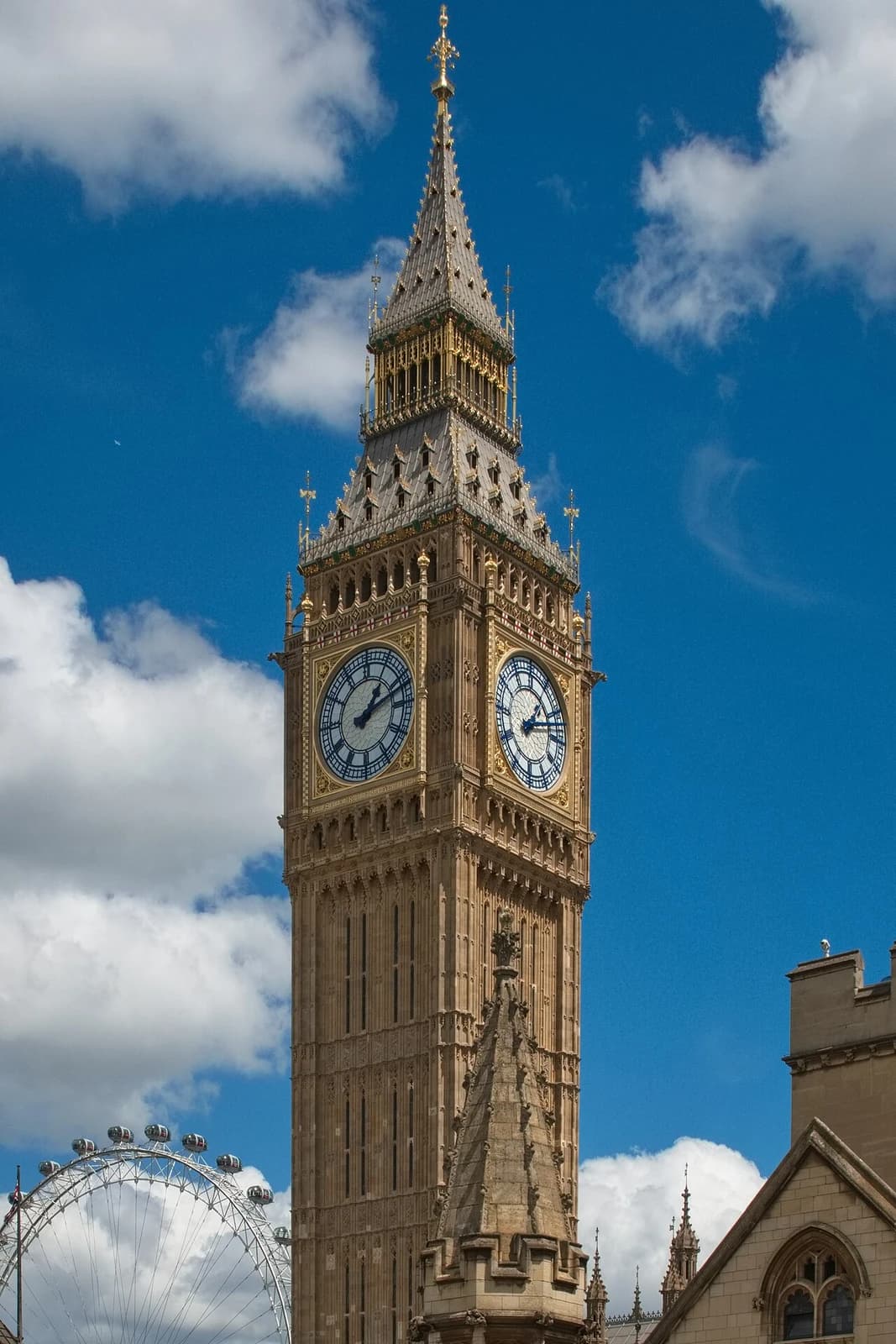
Big Ben
City of Westminster, United Kingdom
Churchill War Rooms
City of Westminster, United Kingdom
Courtauld Institute of Art
City of Westminster, United Kingdom
Palace of Westminster
City of Westminster, United Kingdom
Sherlock Holmes Museum
City of Westminster, United Kingdom
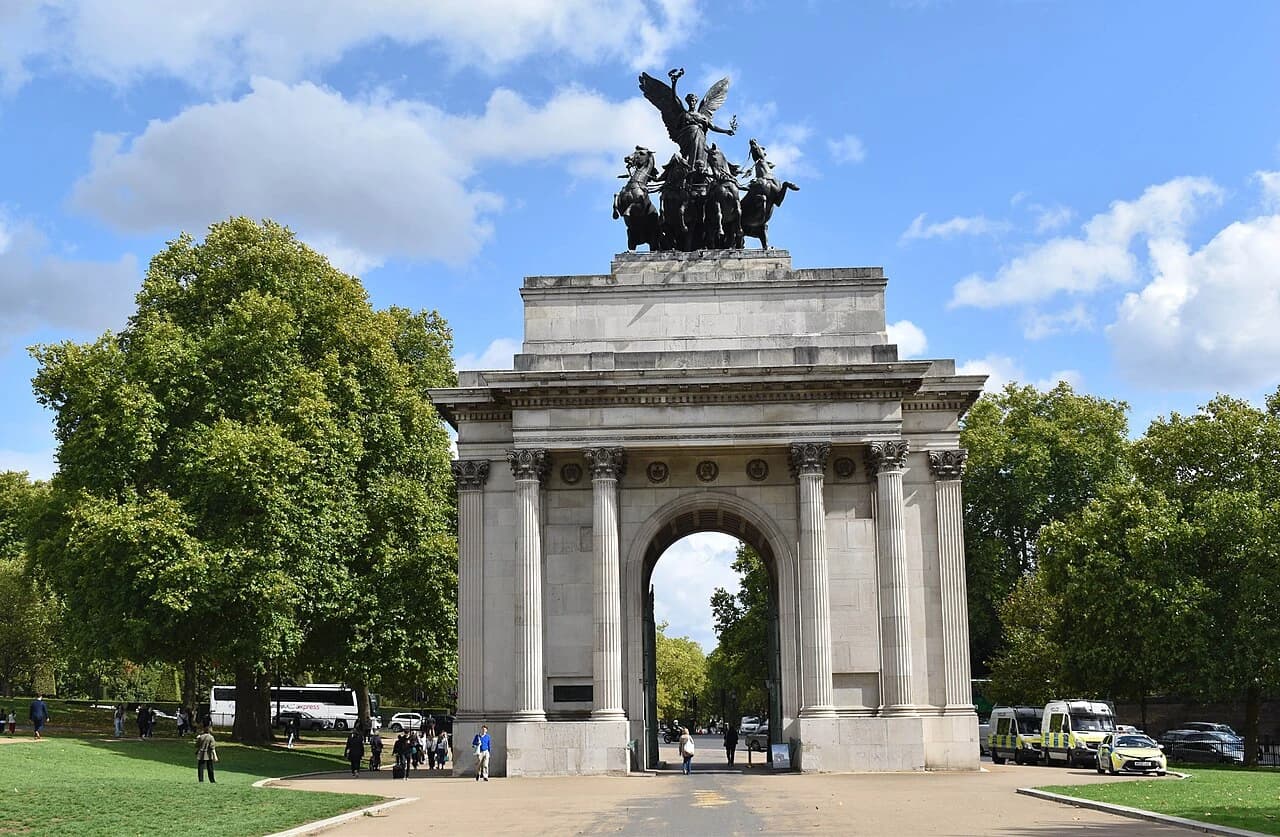
Wellington Arch
City of Westminster, United Kingdom