Travel tips/Heraklion, Crete, Greece
Knossos and Heraklion Archaeological Museum in one day: what belongs where?
See the palace as a place, then meet its surviving objects. A practical day connecting Knossos with the museum, without confusing replicas and originals.
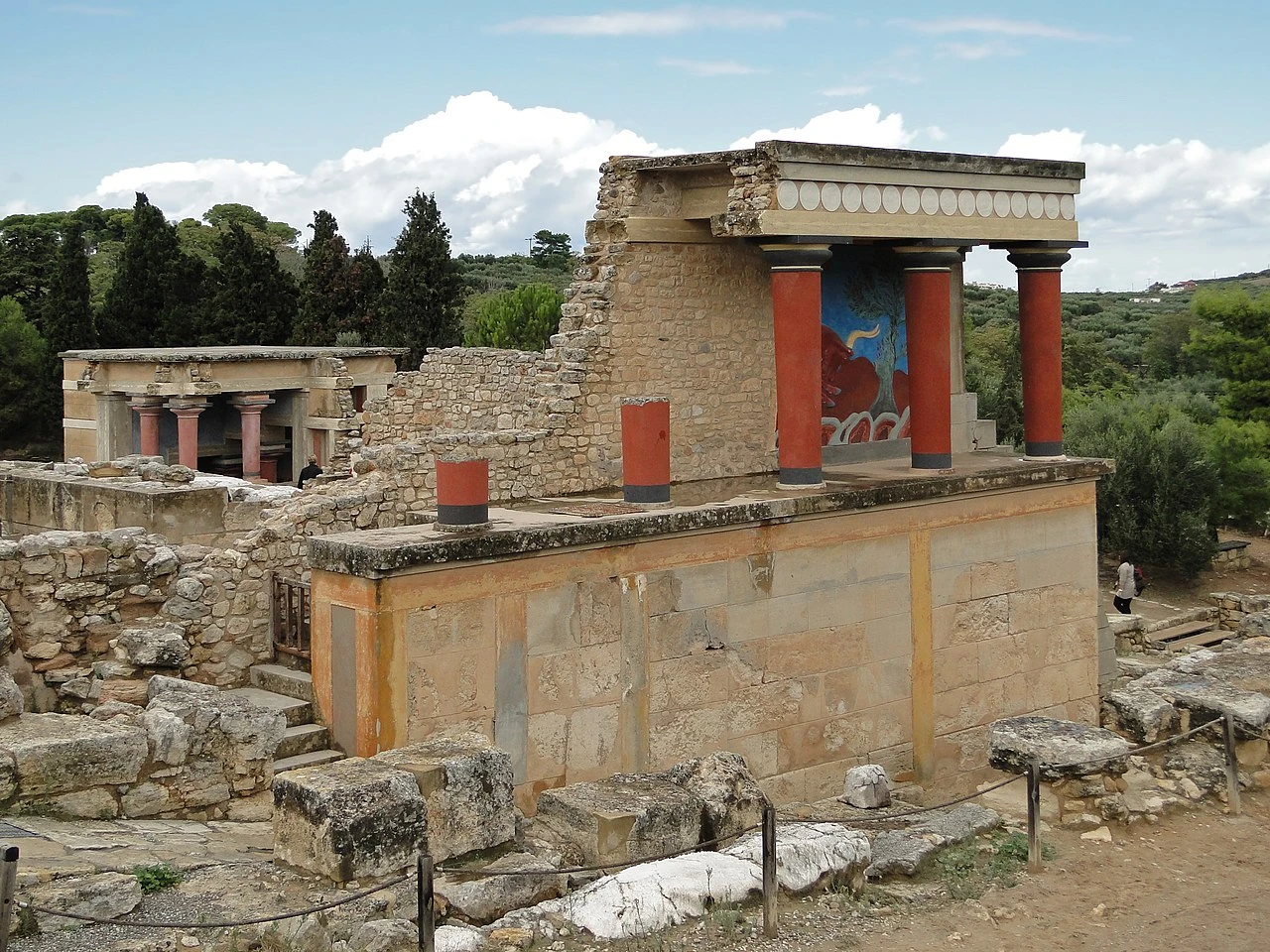
Knossos supplies the scale: courts, passages and the relationship between rooms. Heraklion Archaeological Museum supplies close encounters with surviving works. Together they turn a palace photograph into questions about making, ceremony and power. They are separate venues, and the museum tells the story of all Crete, not just Knossos.
At Knossos: read the building and its reconstruction
Begin with the courts and the arrangement of wings around the central court. Look for changes of level and storage spaces: a palace was an organised complex, not a single royal sitting room. Follow the open visitor route; an architectural feature on a plan does not guarantee access to it.
The red columns and restored painted scenes also tell a twentieth-century story. Arthur Evans’s team rebuilt architecture and decoration. Treat these as interpretations alongside ancient remains. The Minotaur belongs to the site’s mythological associations, not proof that a monster or a purpose-built maze occupied these rooms.
At the museum: three connections worth making
Look for the Bull-Leaping Fresco from Knossos’s East Wing: the painted bull and human figures bring movement into the palace’s empty spaces. Surviving painted fragments and modern completion are different things; “original” does not mean an untouched, complete ancient panel. Read the restoration information rather than expecting every coloured surface to be ancient.
The faience figures known as the “Snake Goddesses” came from Knossos’s Temple Repositories. Notice the flounced skirts and snakes; the museum interprets the figures as goddesses or priestesses. Linear B tablets from Knossos add another connection: writing belonged to palace administration. These are collection examples to seek, subject to current display and room access.
Keep reading find-place labels. The Phaistos Disc comes from Phaistos; the museum’s wider Cretan story is part of its value. Do not turn every famous object into a Knossos find, or assume that all originals removed from the palace are on view here.
Budget for two admissions and check the date
The official Knossos page and current ticket product list €20 full admission; the museum visitor page also lists €20. Budget €40 per full-paying adult for the two admissions, before transport, food or optional audio. Check concessions separately. The museum FAQ still describes an older combined ticket, but a current offer including both venues was not verified: buy only what the actual product explicitly covers.
The official Knossos ticket product requires timed entry. Choose the date and slot before fixing the museum booking. Recheck both venues’ hours and last admission for your day, especially Wednesdays and seasonal changes. The museum’s dated summer calendar lists a 13:00 Wednesday opening through 31 October 2026; do not generalise that to another season.
Make the transfer a break, not a race
Heraklion Urban Bus lists line 2 for Knossos–Skalani, with separate weekday, Saturday and Sunday timetables. Use its itinerary page and live stop information to confirm the city boarding point, direction and return. Hellenic Heritage estimates 20 minutes by city bus or 15 by car from Heraklion; these exclude your waiting, walking, traffic and parking. A taxi is another transfer choice; confirm the fare before leaving.
After the palace, return to the centre and stop for lunch before entering the museum near Eleftherias Square. Our suggested 45–60-minute transfer buffer is not a bus frequency. If short hours or an onward departure squeeze the museum below a useful visit, split the pair across two days. Museum-first also works when its opening and your palace slot fit better.
Choose audio for the place where you will use it
Stanza’s Knossos page has public previews and lists 32 narrated stops. Try a preview to judge the style, then check language and price in the app and download before leaving. It is an independent palace guide; it does not include entry, transport or a museum tour. Signs and your own reading are also valid ways to visit.
For museum preparation, the museum’s own exhibit pages include audio for the Bull-Leaping Fresco and “Snake Goddesses”. Use those official resources as an alternative or complement, and follow the museum’s current device rules. A palace stop list is not evidence that a room is open today.
A few more questions before you go
Can I see the original frescoes at the palace?
Painted scenes at Knossos include modern reconstructions. The museum holds important surviving fresco material, itself often assembled and restored. Check the label and current display rather than treating either venue as wholly original or wholly replica.
Sources & further reading
Visitor information checked .
Official heritage, museum, ticket and bus pages checked on 18 October 2026. Some museum pages were accessible only as indexed official text. Combined-ticket information conflicts; no current combined offer was verified. Confirm date-specific hours, tickets and displays. Timings below are editorial allowances.
- Hellenic Heritage: Knossos visitor information
- Official Knossos ticket product
- Heraklion Archaeological Museum: visiting and calendar
- Museum: Bull-Leaping Fresco and official audio
- Museum: “Snake Goddesses” and official audio
- Museum: exhibition and collections
- Heraklion Urban Bus: timetables by line and day
- Museum FAQ: combined-ticket claim requiring reconfirmation
Questions or a correction? Let us know. Our content standards (English).