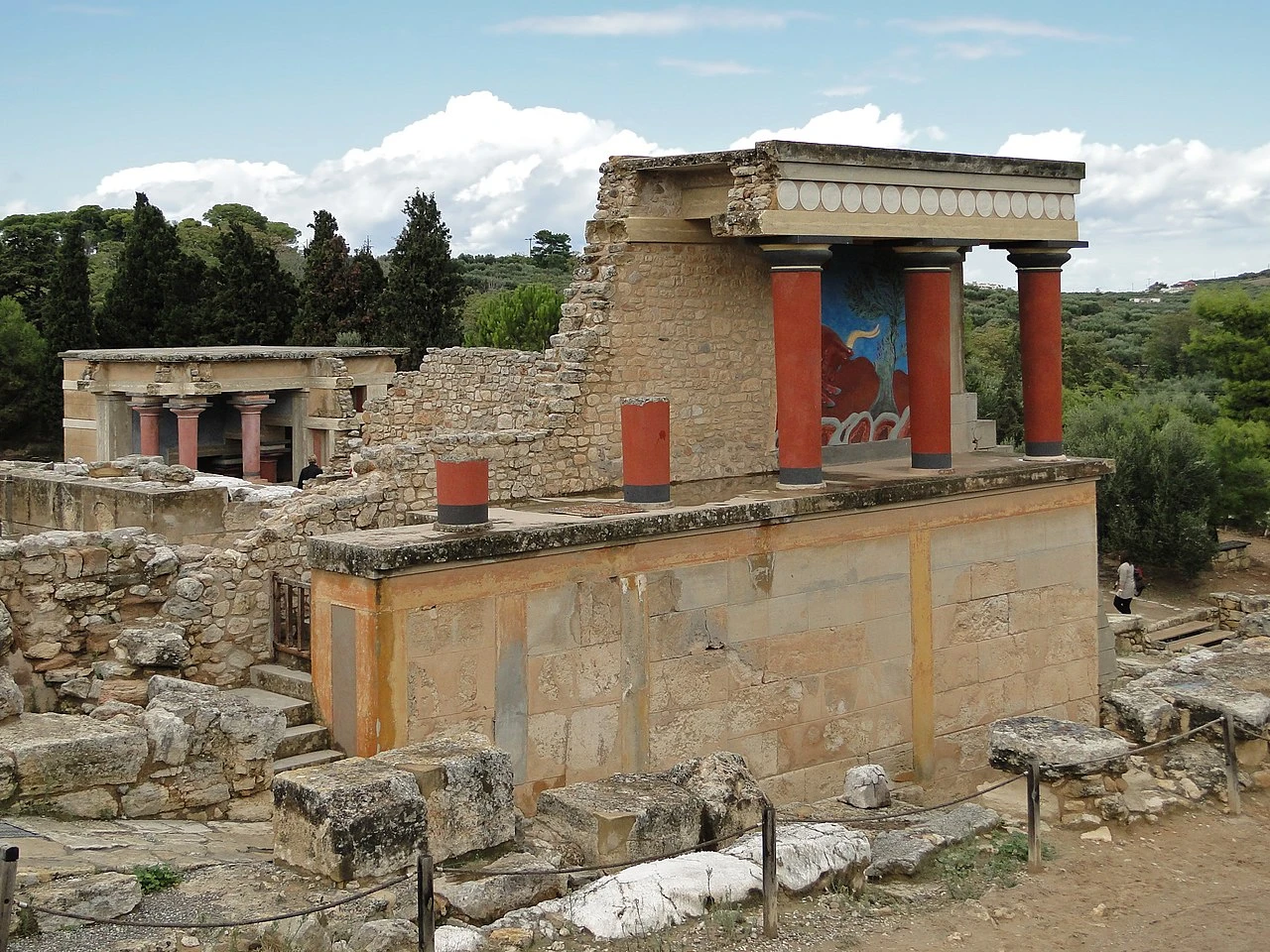
Stanza · Audio guide
KnossosAudio guide
A place to remember. A story to take with you.
Knossos is an ancient Minoan through Roman administrative center and city on the island of Crete. It is renowned as a major organized archaeological site and tourist attraction.
Download Stanza, then search for “Knossos”.
About the tour
One guide. Your kind of visit.
Knossos is an ancient Minoan through Roman administrative center and city on the island of Crete. It is renowned as a major organized archaeological site and tourist attraction.
Ready when you are.
- 01Get the free Stanza app.
iOS & Android
- 02Find your guide.
“Knossos”
- 03Download before you go.
Works offline
Audio guide / 32 narrated stops
Inside the guide
Get to know a few of the stories before you go. Open a stop to read more.
01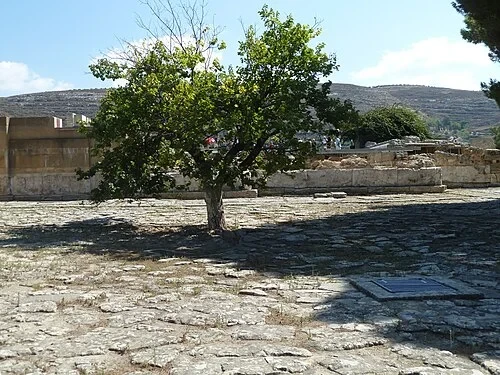 West CourtWest Court
Look closely at the ground and you will see the 'Processional Way' cutting through the court. These paving stones are nearly 4,000 years old, marking the route used for ancient ceremonies. This was the palace’s public face, a space where large crowds gathered to witness rituals and official business. Within the court, you will notice circular, stone-lined pits known as 'Kouloures.' Their exact purpose remains a topic of debate among scholars. While some suggest they were used for large-scale grain storage, functioning as underground silos, most archaeologists now believe they likely held ritual offerings or even trees for sacred gardens. Standing here, you are in the very spot where the Minoan elite interacted with the public, demonstrating their power and religious authority through complex choreography. The court's layout reflects a sophisticated understanding of urban planning, designed to funnel visitors toward the grand entrances of the palace proper. It sets the stage for the architectural wonders found deeper within the complex ruins.
Deror_avi · CC BY-SA 3.0
02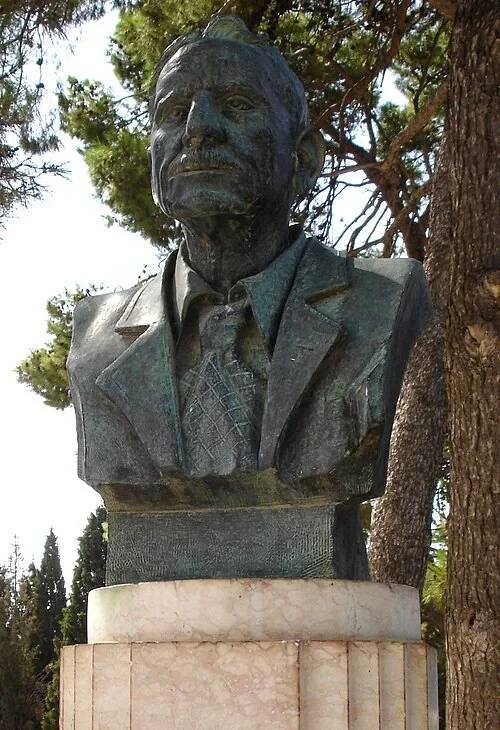 Bust of Arthur EvansBust of Arthur Evans
Arthur Evans was the man who 'found' Knossos, though he was not the first to excavate here. Starting in 1900, he spent a significant portion of his personal fortune to purchase the site and fund decades of excavation work. As you look at the ruins around you, you are seeing Evans’ specific interpretation of the past. He made the bold decision to use reinforced concrete to rebuild parts of the palace. This was done to preserve the site's verticality and prevent the fragile ruins from collapsing further under their own weight. However, this move horrified many purists who felt he overstepped the bounds of archaeology, essentially creating a reimagined version of the ancient world. Some critics argue his work reflects early 20th-century aesthetic preferences more than Minoan reality. Regardless of the debate, his efforts ensured that Knossos remains a tangible, three-dimensional experience today. Without his intervention, the palace might have remained a series of flat stone foundations. His legacy is etched into every concrete beam and painted column you encounter on this site.
Photo: Peterak · Public domain
03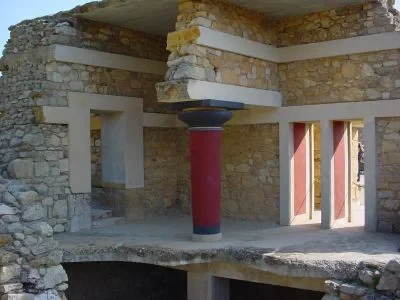 South PropylaeumSouth Propylaeum
Notice the unusual shape of these columns. Unlike the classical Greek style, Minoan columns are tapered, narrowing toward the base. There is a practical, engineering logic behind this design. The original Minoan columns were crafted from cypress tree trunks. Builders placed these trunks upside down for two vital purposes. First, it prevented the wood from potentially sprouting again after being installed. Second, by placing the narrower end at the bottom, they reduced the surface area in contact with the damp ground, which helped slow the process of rot moving upward into the structure. The vibrant red color you see here is based on evidence found in ancient frescoes that depicted these grand gateways. These columns supported a heavy upper floor, and their unique profile became a hallmark of Minoan architecture throughout Crete. The Propylaeum served as a grand entrance, designed to transition visitors into the more private and sacred areas of the palace complex. The massive masonry blocks at the base show the scale of the original construction.
Listen in the appReinhard Kraasch · CC BY-SA 4.0
04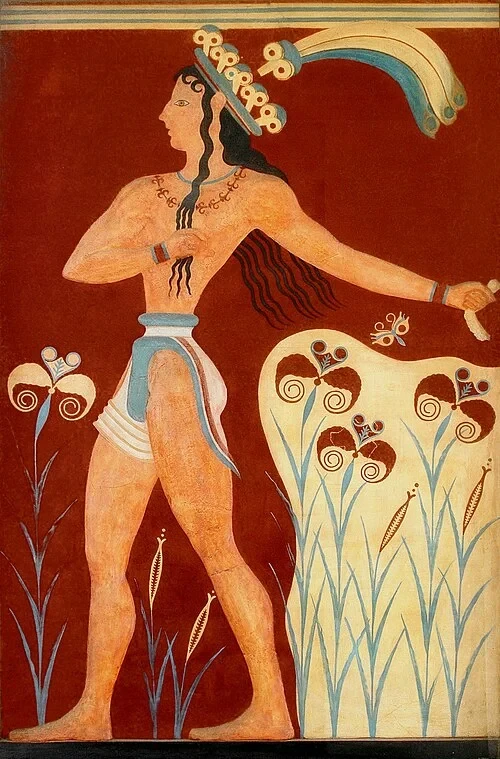 South PropylaeumThe Prince of the Lilies
The figure before you is a centerpiece of Minoan art, but what you see is largely a modern reconstruction. When Arthur Evans' team excavated the palace, they found only a few small, disconnected fragments of painted plaster in this area. To create this complete 'heroic' figure, the team combined those fragments—a crown, a torso, and a leg—from different spots. Many modern archaeologists are skeptical of this assembly, believing these pieces may have actually belonged to three entirely different people: perhaps a priest, a boxer, and a king. This composite creation reflects the desire of early excavators to find a single, powerful 'ruler' figure within the ruins. Despite the controversy over its accuracy, the image captures several Minoan ideals, such as the elaborate lily crown and the athletic physique. The background is filled with stylized lilies and butterflies, common motifs in their nature-oriented art. It stands as a reminder that our understanding of the ancient world is often filtered through the interpretations and reconstructions of the people who first uncovered it.
Listen in the appPhoto prise par Harrieta171 · CC BY-SA 3.0
05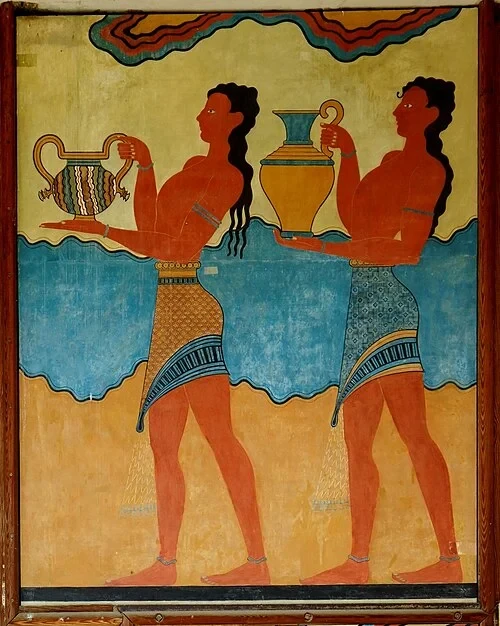 South PropylaeumThe Cup Bearers
Examine the physical forms of these participants. The extremely narrow 'wasp-waists' are a hallmark of Minoan artistic ideals, emphasizing a lithe, athletic grace. This fresco depicts a formal ritual procession, with figures carefully carrying silver and gold vessels, likely intended for libations or palace banquets. Every detail, from the elaborate jewelry around their necks and wrists to the intricately embroidered kilts, signals the high social status of these individuals. They were likely high-ranking members of the court participating in a sacred or official palace ceremony rather than simple servants. The vibrant colors and steady profile view reflect a style that shares similarities with contemporary Egyptian art, yet remains uniquely Cretan in its execution. By painting these processions directly onto the walls of the palace's corridors, the Minoans created a permanent, visual record of the ceremonies that once filled these spaces. You are seeing a snapshot of the luxury and ritualized life that defined the height of the Minoan civilization before its sudden decline.
Listen in the appUser:Nikater · CC BY-SA 3.0
06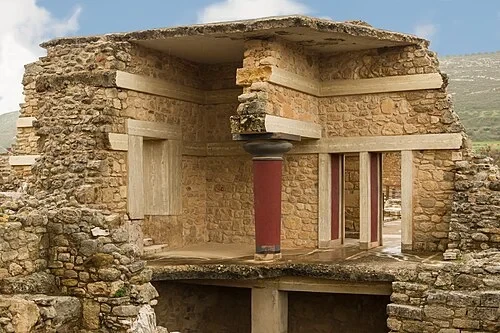 South PropylaeumThe Ceremonial Gateway
This grand entrance served as the formal threshold for those arriving at the palace of Knossos. Look at the base of the structure, where you can see massive stone blocks that have supported the weight of this gateway for millennia. Above these foundations, Arthur Evans reconstructed the upper floor to provide a sense of the building's original height and scale. The experience of entering through this gate was carefully choreographed. In ancient times, the walls here were lined with the 'Procession Fresco,' a long painting featuring hundreds of ritual figures. As visitors walked through, they would have effectively joined this painted crowd, moving in unison with a silent, eternal procession of priestesses and dignitaries. This architectural design was intended to impress and even slightly overwhelm anyone arriving for an audience or a festival. It signaled the transition from the outside world into the sophisticated, highly organized heart of the Minoan empire. The combination of massive masonry and bright, detailed artwork made this one of the most important architectural features of the palace exterior.
Listen in the appPhoto: Jebulon · CC0
07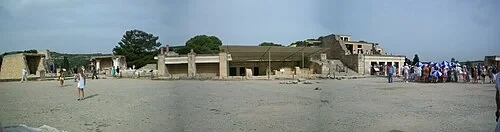 Central CourtCentral Court
Spanning approximately 50 meters in length, this courtyard is the central hub of the entire site. Almost every major room and corridor in the palace opens onto this open-air space. Because of its central location, many archaeologists believe it was the primary stage for public spectacles, including the legendary bull-leaping rituals depicted in Minoan art. Athletes would have faced charging bulls here, performing acrobatic feats for the assembled court. One of the most striking things about this palace is the total lack of defensive walls. Unlike the fortified citadels of mainland Greece, Knossos is open and exposed. This suggests that the Minoans felt secure, likely because of their dominant navy. Historians refer to this as a 'Thalassocracy,' or sea empire. Their power was not based on stone walls, but on their control of the Mediterranean trade routes. This courtyard, therefore, represents a civilization at its peak—wealthy, confident, and deeply focused on internal ritual and administrative life rather than defense against invaders.
Listen in the appPhoto: C messier · CC BY-SA 3.0
08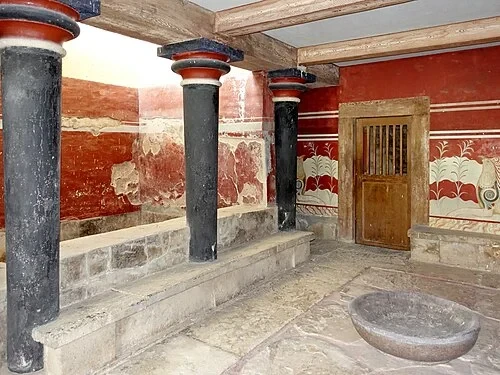 Throne RoomThrone Room
This room served as a primary seat of authority within the palace. Along the walls, you will see low stone benches where counselors or high-ranking officials sat during meetings. At the center of the northern wall sits the alabaster throne itself. You might notice that the throne is surprisingly small and delicate in its design. This physical detail has led many historians to speculate about who exactly sat here. Rather than a powerful warrior king, some suggest the seat was occupied by a High Priestess. This theory points toward a possibly matriarchal religious structure or a system where religious and political leadership were closely intertwined. The room's orientation and its connection to nearby lustral basins suggest it was used for more than just administration; it was a sacred space for rituals that reinforced the divine right of the ruler. The proximity of the counselors on their benches allowed for direct consultation, creating a formal and intimate setting for the governance of the sprawling Minoan state.
Listen in the appOlaf Tausch · CC BY 3.0
09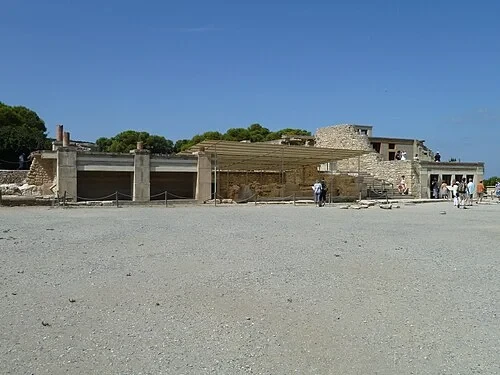 Throne RoomCentral Court
While this sunken area with its stone steps might resemble a modern bathtub, a key detail reveals its true purpose: it has no drain. This is a characteristic Minoan feature known as a 'Lustral Basin.' These basins were not used for bathing in the conventional sense, but rather for ritual purification. It is believed that priests, priestesses, or even the ruler would have stood here while oils or water were poured over them in a ceremonial cleansing process. This act was likely a required precursor to performing sacred duties or appearing before the throne in the adjacent room. The basin's location in the heart of the palace, right next to the seat of power, highlights the deep integration of religion and government in Minoan society. Every action taken by the leadership was framed by these ritual requirements. The use of gypsum and other fine stones for the lining added to the solemnity and importance of the purification ceremonies conducted within them, visible even in their ruined state.
Listen in the appDeror_avi · CC BY-SA 3.0
10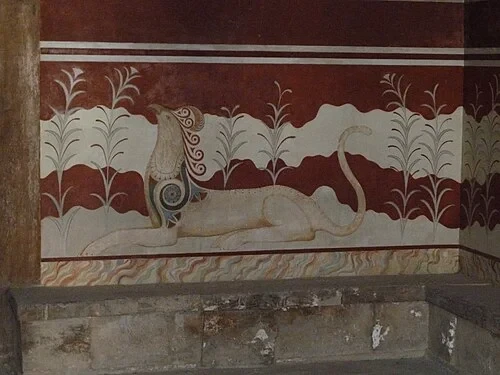 Throne RoomThe Guardian Griffins
Look closely at the frescoes on either side of the throne. You will see two griffins painted in a reclining position. Unlike the griffins found in later Greek or Near Eastern art, these Minoan versions are distinctly wingless. Their placement in the throne room is highly symbolic; they were likely viewed as divine guardians, protecting the individual who occupied the seat of power. The background behind these creatures features red and white horizontal bands, which art historians believe represent a stylized river landscape. Some suggest this is a depiction of the Nile, pointing to the deep and frequent cultural exchanges between the Minoans of Crete and the civilization of Ancient Egypt. These griffins were not just decorative; they imbued the room with an aura of divine protection and supernatural authority. The use of vibrant pigments like Egyptian blue and iron-based reds has allowed these images to retain their striking appearance. They watched over the rituals and decisions made here, serving as eternal sentinels of the Minoan state.
Listen in the appDeror_avi · CC BY-SA 3.0
Knossos
Frequently asked questions
How much does the guide cost?
Free app download. Listed guide price: $4.99. Guide price shown in the app. Audio guide only. Venue admission is separate.
Can I listen without internet?
Yes. Download the guide’s audio, images, and maps in the app before your visit. Your downloaded content is then available offline.
Can I listen in my language?
Stanza supports 15 languages. Check the app for the languages available for this guide.
Do I need to follow a schedule?
No. This is a self-guided experience. Choose your stops, pause whenever you like, and return to a story at your own pace.
At your own pace
Explore Knossos.
Download Stanza, then search for “Knossos”.
Free app download · Guide price shown in the app
Keep exploring
Nearby audio guides
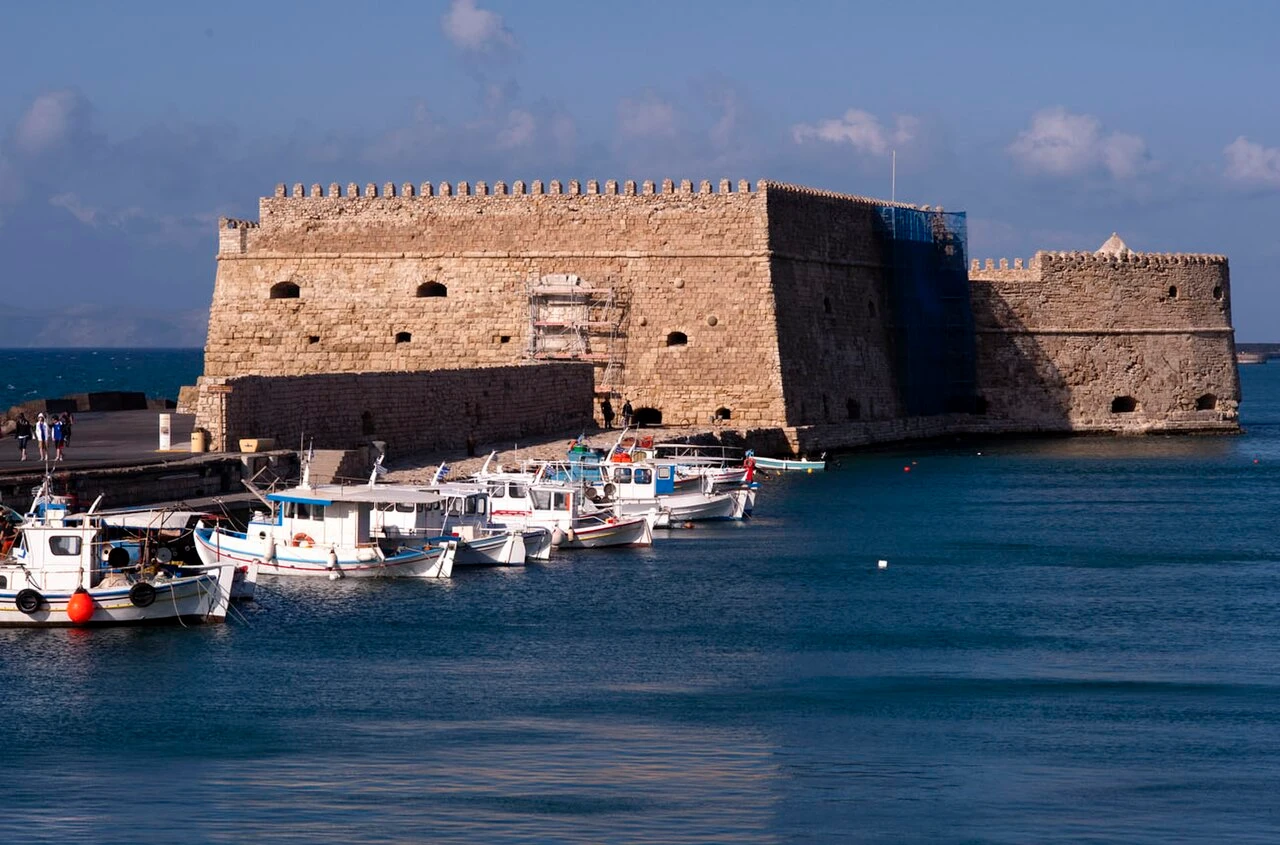
Heraklion
Rocca a Mare
Content & sources
Γεώργιος Γιαννόπουλος · CC BY-SA 3.0
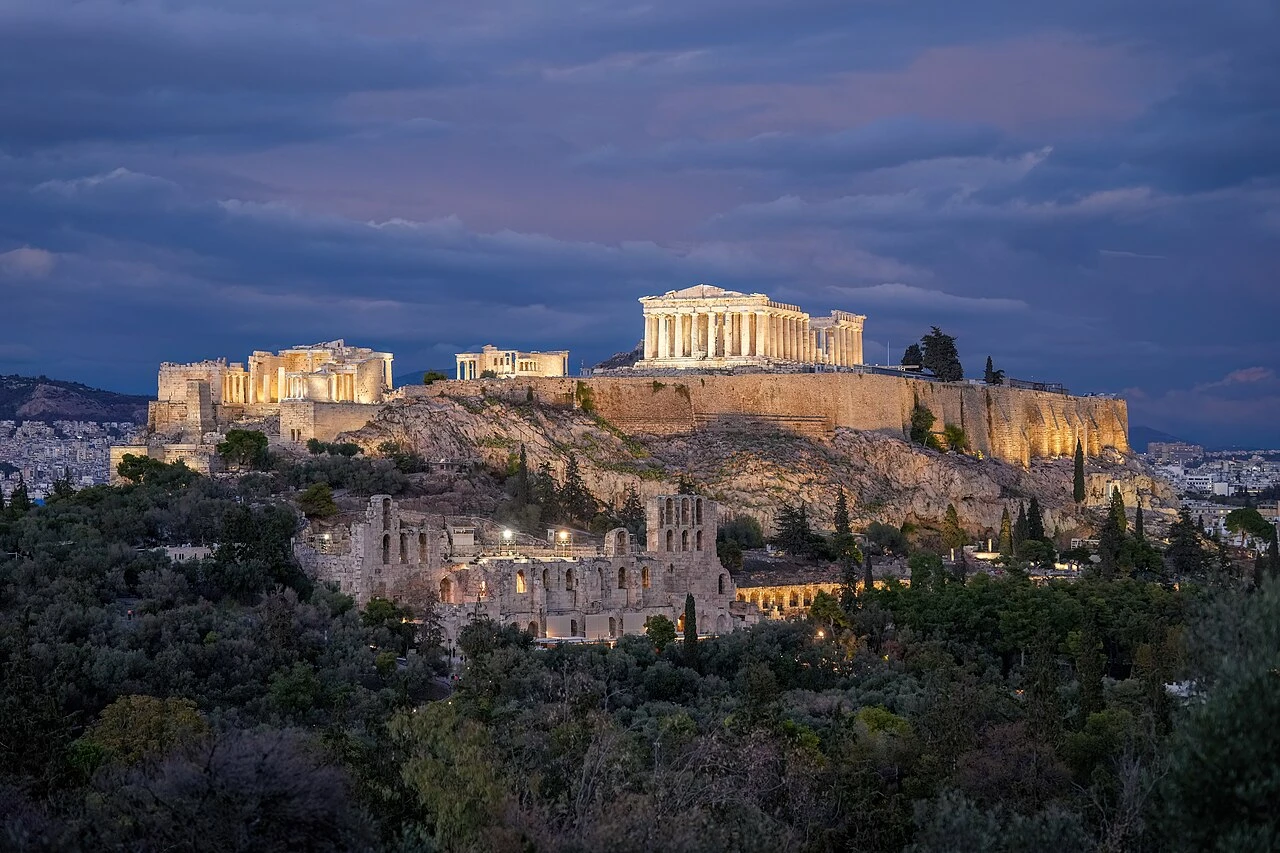
Athens
Acropolis of Athens
Content & sources
Photo: Giles Laurent · CC BY-SA 4.0
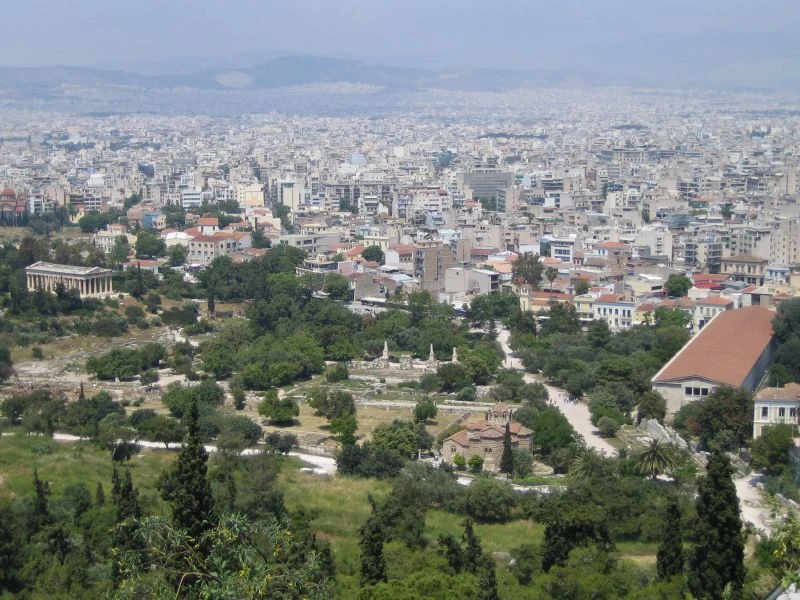
Athens
Ancient Agora of Athens
Content & sources
https://www.flickr.com/people/jonezes/ · CC BY-SA 2.0
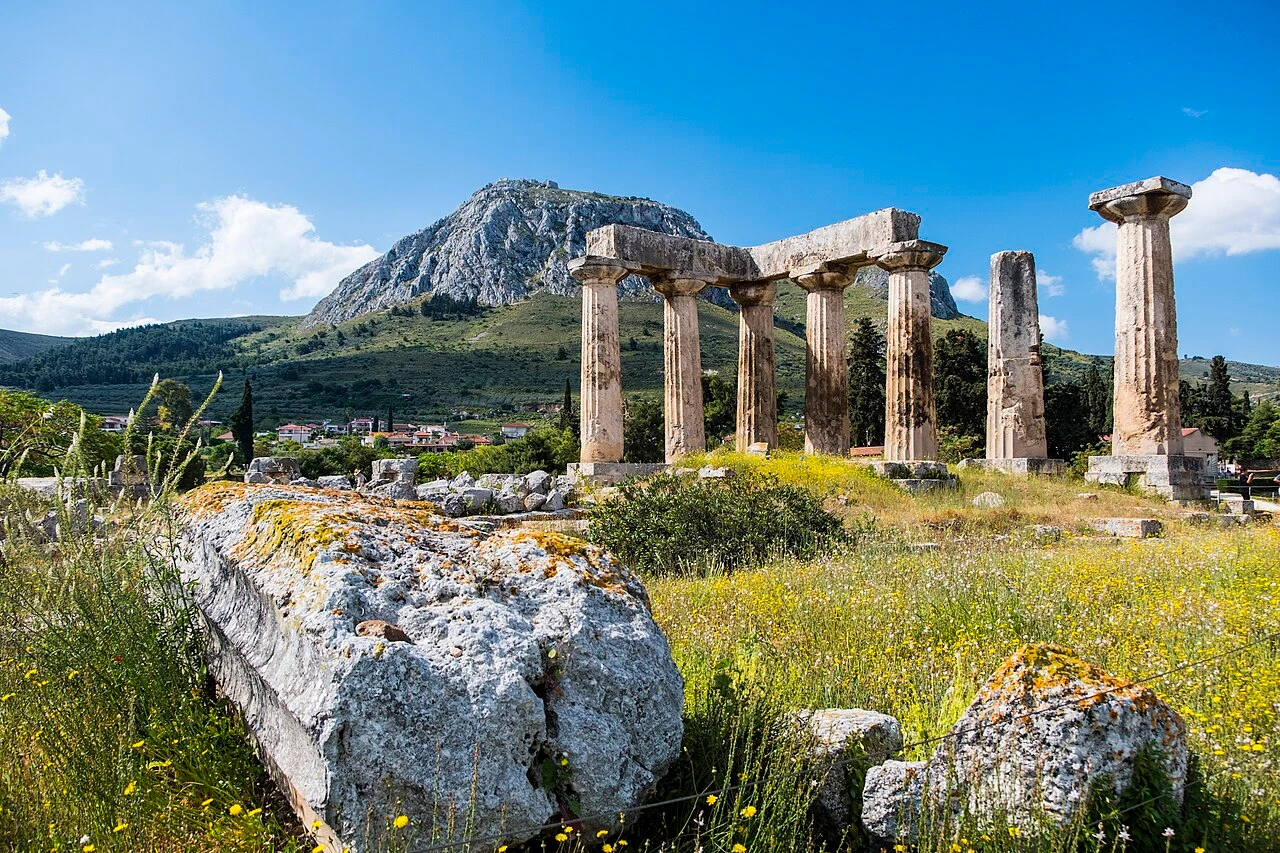
Corinth
Ancient Corinth
Content & sources
Davide Mauro · CC BY-SA 4.0