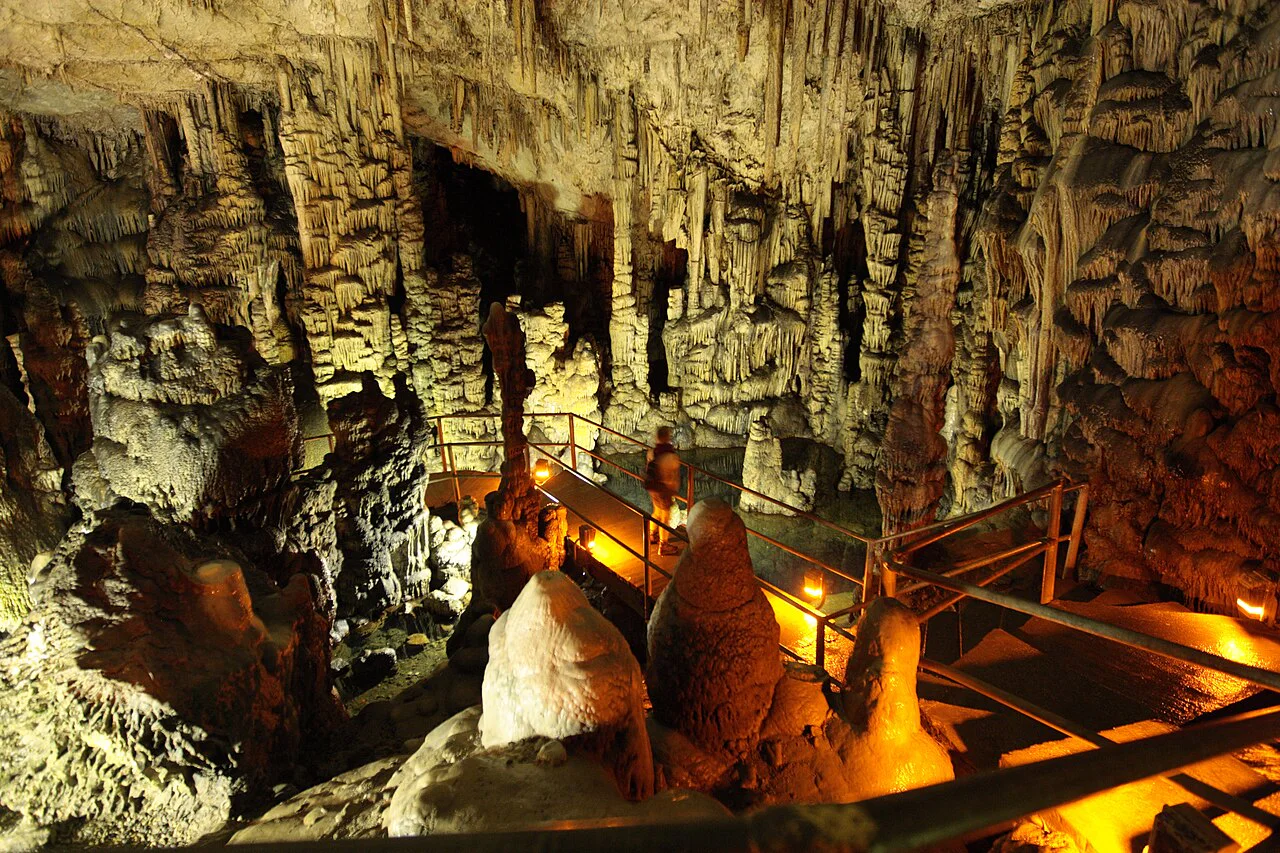
Stanza · Audio guide
Δικταίο Άντρο Audio Guide
A place to remember. A story to take with you.
Psychro Cave is an ancient Minoan sacred cave located in the Lasithi plateau of eastern Crete. Scholars have historically debated whether this site is the Dikte mentioned by ancient authors as the location of…
Download Stanza, then search for “Δικταίο Άντρο”.
About the tour
One guide. Your kind of visit.
Psychro Cave is an ancient Minoan sacred cave located in the Lasithi plateau of eastern Crete. Scholars have historically debated whether this site is the Dikte mentioned by ancient authors as the location of Zeus's upbringing.
Ready when you are.
- 01Get the free Stanza app.
iOS & Android
- 02Find your guide.
“Δικταίο Άντρο”
- 03Download before you go.
Works offline
Audio guide / 9 narrated stops
Inside the guide
Get to know a few of the stories before you go. Open a stop to read more.
01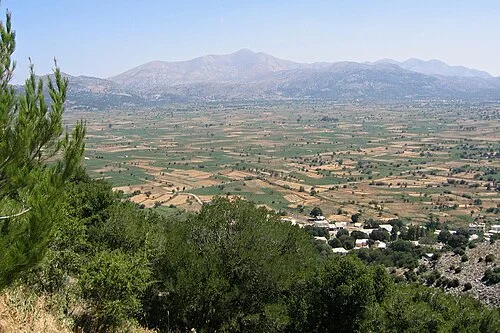 The Mountain Approach and Cavern Mouth
Approach View over the Lasithi Plateau
Welcome to the Diktaian Cave, a mountain sanctuary on Crete that ancient tradition wove around the god Zeus. This tour follows the story from the plateau below to the dark water at the bottom of the hill. The cave sits on the northern slope of Mount Dikti, above the village of Psychro, at about one thousand and twenty metres. From here the whole Lasithi Plateau spreads out below, a wide floor of fields ringed by mountains. In Minoan times the nearest sizable town was Malia, on the coast to the north. Anyone coming to the cave from there faced a long climb into the hills. That effort is part of the point. Sacred caves in Crete were deliberately placed high and hidden, and reaching one was itself an act of devotion. The climb was the first stage of the pilgrimage, long before the entrance came into view.
Photo: Zde · CC BY-SA 4.0
02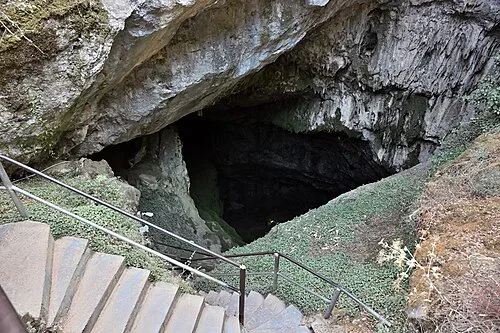 The Mountain Approach and Cavern Mouth
The Cavern Mouth
The entrance opens where the mountainside folds into a deep limestone hollow, sheltered by a massive overhanging rock. This is an ancient Minoan sacred cave, and one of the best known in Greece for both its mythology and its archaeology. The interior covers roughly two thousand two hundred square metres, and the visitor route through it runs about two hundred and fifty metres. People came here to worship over a span reaching from the Neolithic to the Roman period, and the finds they left behind prove it. The story of Zeus's infancy waits a little further down. What matters at the threshold is simpler. A hollow in the rock became a temple, and generations treated it as one.
Listen in the appPhoto: Cayambe · CC BY-SA 4.0
03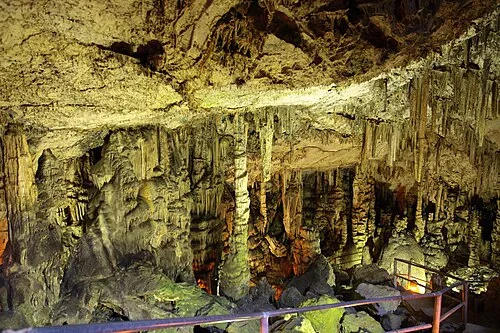 The Upper Grotto and Minoan Terrace
The Upper Grotto and Minoan Altar
The upper chamber is the brightest part of the cave, and it was the ritual heart. Here excavators in 1900 discovered an altar coated in plaster, ringed by layers of ash and pottery. Among the refuse were votive objects of bronze, terracotta, iron and bone. The ash held bones from sacrificed bulls, sheep, goats, deer and a boar. Around the altar lay fragments of some thirty stone libation tables, on which liquid offerings were poured out. Beside them were countless small conical ceramic cups, used for food offerings. The layers tell a long story of use. Worship here reached back to Early Minoan times, and by the Middle Minoan period the cave had become one of the most frequented shrines on the island. Most of the finds end with the Geometric style of the ninth century BCE, and only a few are later, down to the Roman period.
Listen in the appJerzy Strzelecki · CC BY-SA 3.0
04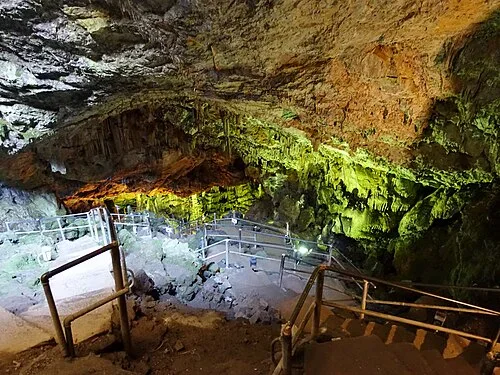 The Central Descent through the Speleothem Gallery
The Descent and the Concealment of Zeus
The walkway drops through the humid dark, past columns of ancient stone, and this is the setting for the cave's defining legend. The story goes that Cronus, lord of the earlier gods, learned a prophecy that one of his own children would overthrow him. So he swallowed each child his wife Rhea bore. When she was due with Zeus, Rhea fled to a cave on Mount Dikte and gave birth in secret. She handed Cronus a stone wrapped in swaddling clothes, and he swallowed that instead. The infant was raised in the cave by nymphs, on the milk of the goat Amalthea, in the telling preserved by the mythographer Apollodorus. His cries, though, could still give the secret away. So the Diktaian Kouretes, armored spirits of the mountain, clashed their weapons and shouted to drown out the sound. The tale is legend attached to this mountain, not established history, and ancient authors themselves disagreed about where Zeus was really raised.
Listen in the appOlaf Tausch · CC BY 3.0
05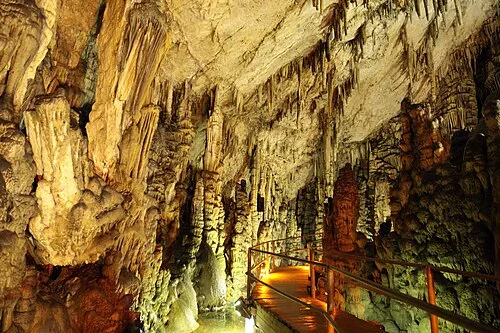 The Central Descent through the Speleothem Gallery
The Stalactite Gallery Walkway
The gallery runs past dripstones the size of trees, lit from below, on its way down toward the sound of water. Ancient tradition attached a second story to this deep interior, and it concerns a man rather than a god. Epimenides was a sage and prophet from Crete, whose name carried real weight in the ancient world. The story says he fell asleep in this cave and slept for several decades. When he woke, he believed he had slept only a single day, and he came out with the gift of prophecy. The tale belongs to the cave generally rather than to any one chamber, and it is legend, not record. But it fits the place. A cavern this deep and strange was exactly the kind of setting where the ancients expected the boundary between sleep and foresight to blur.
Listen in the appJerzy Strzelecki · CC BY-SA 3.0
06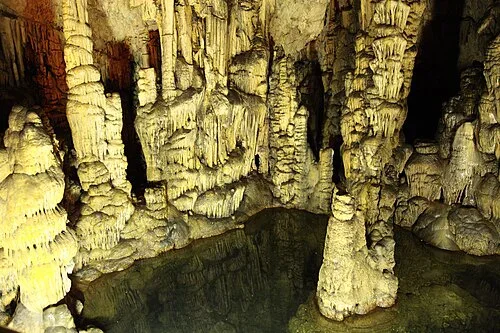 The Subterranean Lake and the Mantle of Zeus
The Subterranean Lake
The lower grotto falls steeply toward the water, and traces of a rock-cut stair suggest how ancient visitors made the same descent. At the bottom lies a dark pool, with stalactites hanging above it, their forms doubled in the still surface. This is where some of the cave's most remarkable offerings came to light. The mud at the water's edge held statuettes of two types, male and female, along with engraved gems. Psychro also yielded an uncommon wealth of semi-precious stones, among them carnelian, amethyst, jasper, hematite and steatite. Most striking of all was a bronze leg, a votive body part offered in place of a real limb. Sacred caves across Crete have produced lamps, cups and figurines, but this is the only votive body part ever found in one. What a pilgrim hoped for when leaving it at the water's edge, we cannot know.
Listen in the appJerzy Strzelecki · CC BY-SA 3.0
07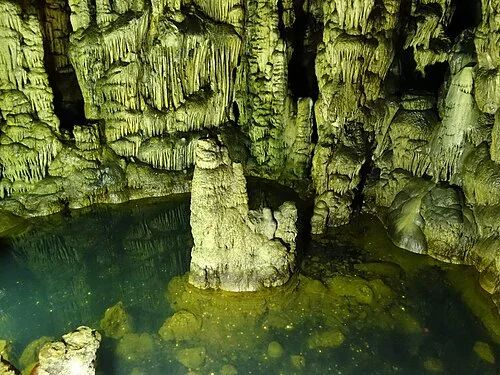 The Subterranean Lake and the Mantle of Zeus
Stalagmite Column at the Lake Edge
Beside the lake stands the cave's most photographed formation, a fluted stalagmite rising out of the water like a pillar in a hall of state. Ancient Cretan tradition gave this cavern a role fit for such a setting. King Minos, the legendary ruler of Crete, was said to be the son of Zeus himself. The story tells that Minos came periodically to the Diktaian Cave to meet his divine father. Here, in the dark by the water, he was said to receive the laws that governed the island. Still, the image is easy to hold. A ruler descending alone into a black chamber, standing before a pillar of stone, and emerging with the authority of heaven behind his word.
Listen in the appOlaf Tausch · CC BY 3.0
08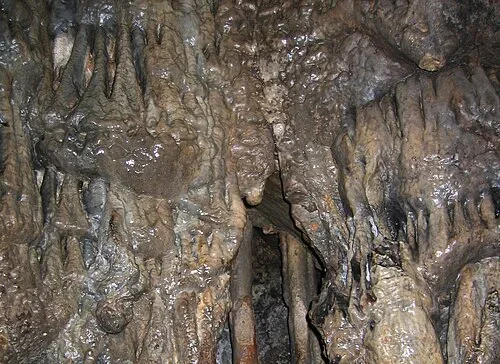 The Votive Crevices and Hogarth's Discovery
The Votive Crevices
The dripstone here is wet, creased and fissured, and those vertical chinks in the living stone held a secret. In 1900 David George Hogarth of the British School at Athens carried out the most extensive excavation the cave had seen. His workmen found toy double-axes, knife-blades, needles and other objects of bronze, wedged into the chinks of the lowest stalactites by ancient dedicators. Hogarth compared the chinks to niches. The mud around them was rich in similar things. His reports also give a frank picture of early archaeology at its roughest. Immense fallen blocks from the upper cave roof were blasted apart before removal, and the rich black earth had already been ransacked by earlier diggers. The finds themselves scattered to four collections, and they remain divided among the Heraklion Museum, the Ashmolean in Oxford, the Louvre and the British Museum.
Listen in the appPhoto: Zde · CC BY-SA 4.0
09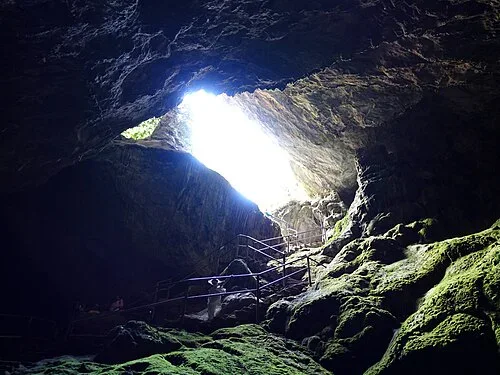 Return Ascent to the Daylight Opening
Return to Daylight
The last climb leads back up toward the great blaze of daylight at the entrance, and it is worth pausing on what the descent has shown. For well over two thousand years, people climbed this mountain and went down into the dark to reach toward powers beyond themselves. That is what the excavated evidence proves: an enduring pilgrimage, sustained by generation after generation. Whether this is the actual cave of the ancient sources is a separate question, and an old one. Arthur Evans and Hogarth themselves identified Psychro with the Diktaian Cave of the myths, but the location of Dikte has been argued over since antiquity. In 1988 Charles Crowther proposed that the true sanctuary lay at Palaikastro, with Mount Petsofas as Mount Dikte, and several later scholars have found that likely. Mieke Prent, writing in 2005, called the Psychro identification probably incorrect, though a link to the cave on Mount Aegaeon named by Hesiod remains possible. The cave keeps its secrets, and the pilgrims keep coming.
Listen in the appOlaf Tausch · CC BY 3.0
Δικταίο Άντρο
Frequently asked questions
How much does the guide cost?
Free app download. Listed guide price: $0.99. Guide price shown in the app. Audio guide only. Venue admission is separate.
Can I listen without internet?
Yes. Download the guide’s audio, images, and maps in the app before your visit. Your downloaded content is then available offline.
Can I listen in my language?
This audio guide is available in 15 languages, including English.
Do I need to follow a schedule?
No. This is a self-guided experience. Choose your stops, pause whenever you like, and return to a story at your own pace.
At your own pace
Explore Δικταίο Άντρο.
Download Stanza, then search for “Δικταίο Άντρο”.
Free app download · Guide price shown in the app
Keep exploring
Nearby audio guides
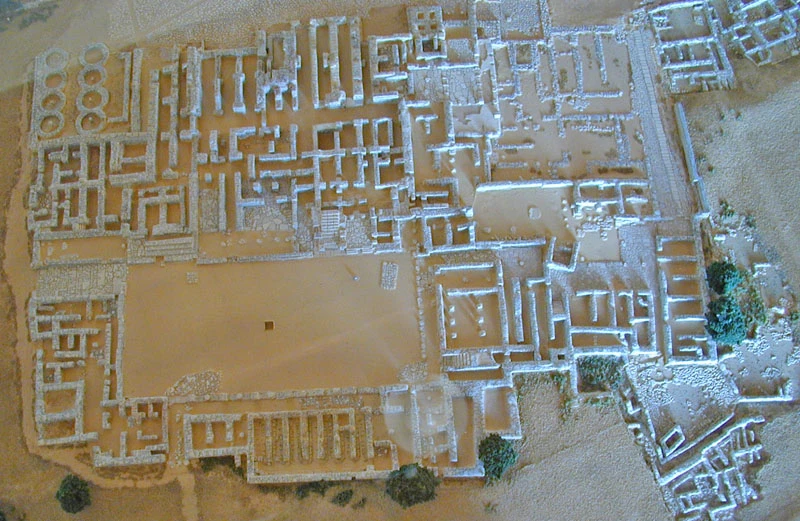
Malia · 15 km
Palace of Malia
Content & sources
No machine-readable author provided. Marsyas assumed (based on copyright claims). · CC BY 2.5
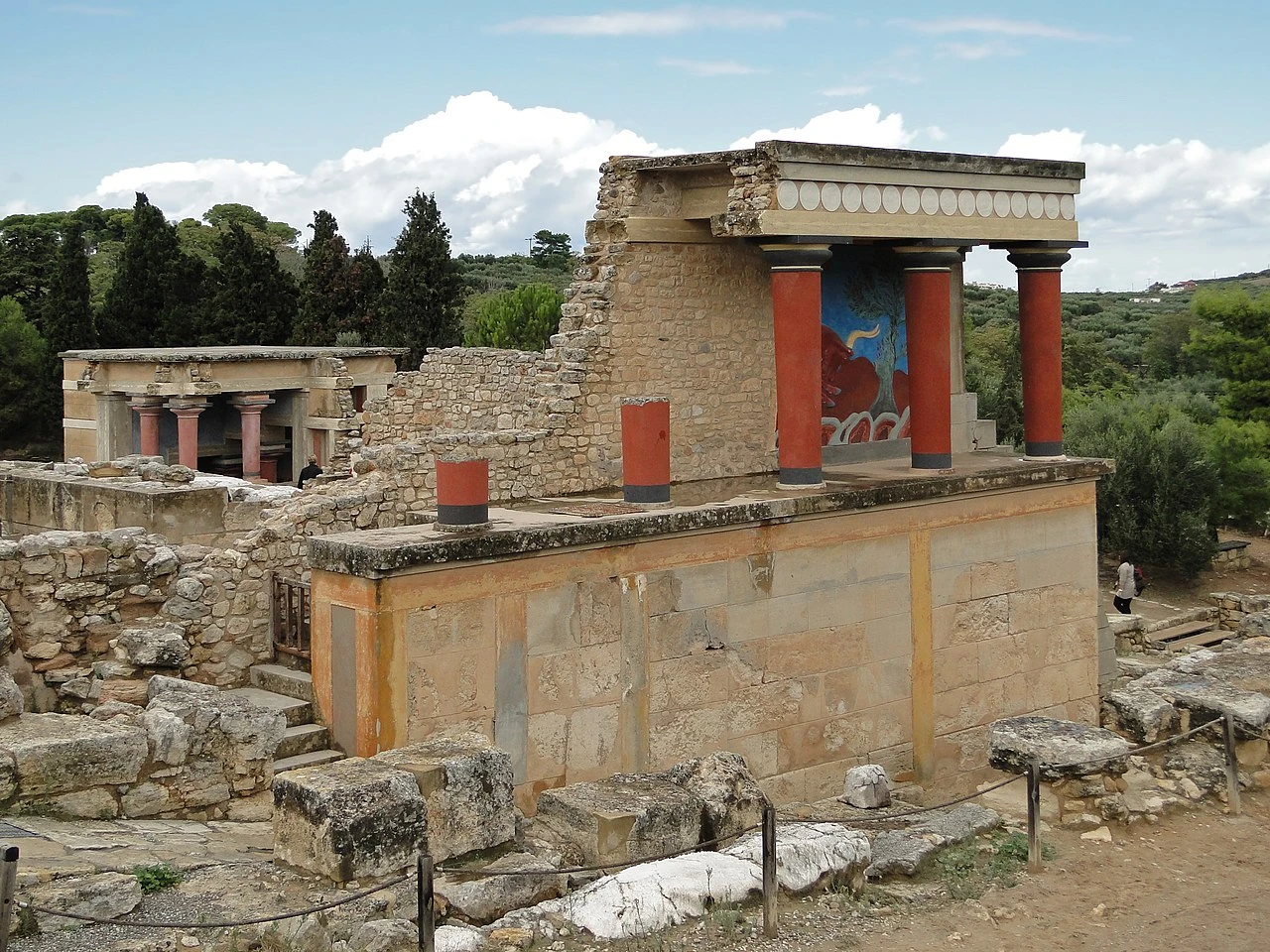
Heraklion · 30 km
Knossos
Content & sources
Bernard Gagnon · CC BY-SA 3.0
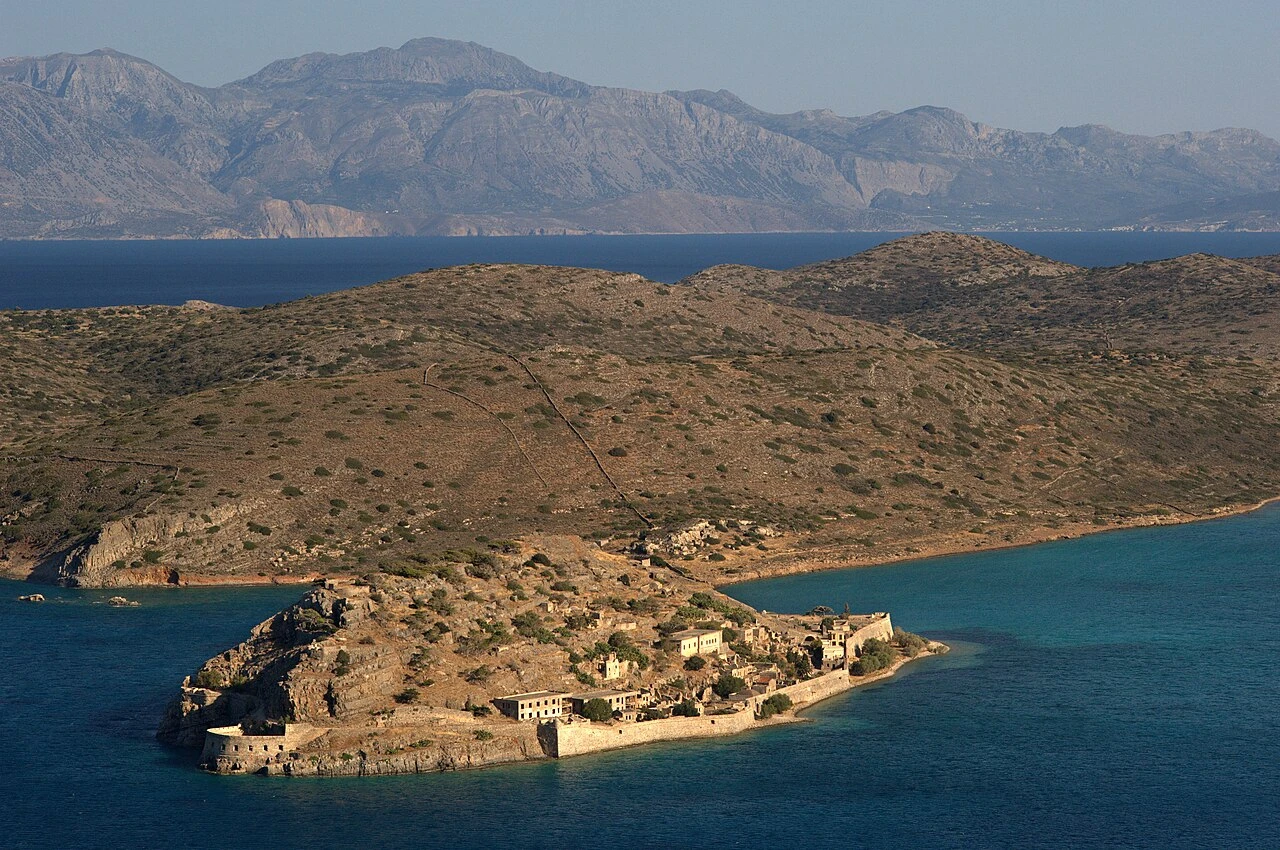
Agios Nikolaos Municipal Unit · 31 km
Spinalonga
Content & sources
Photo: Ggia · CC BY-SA 3.0
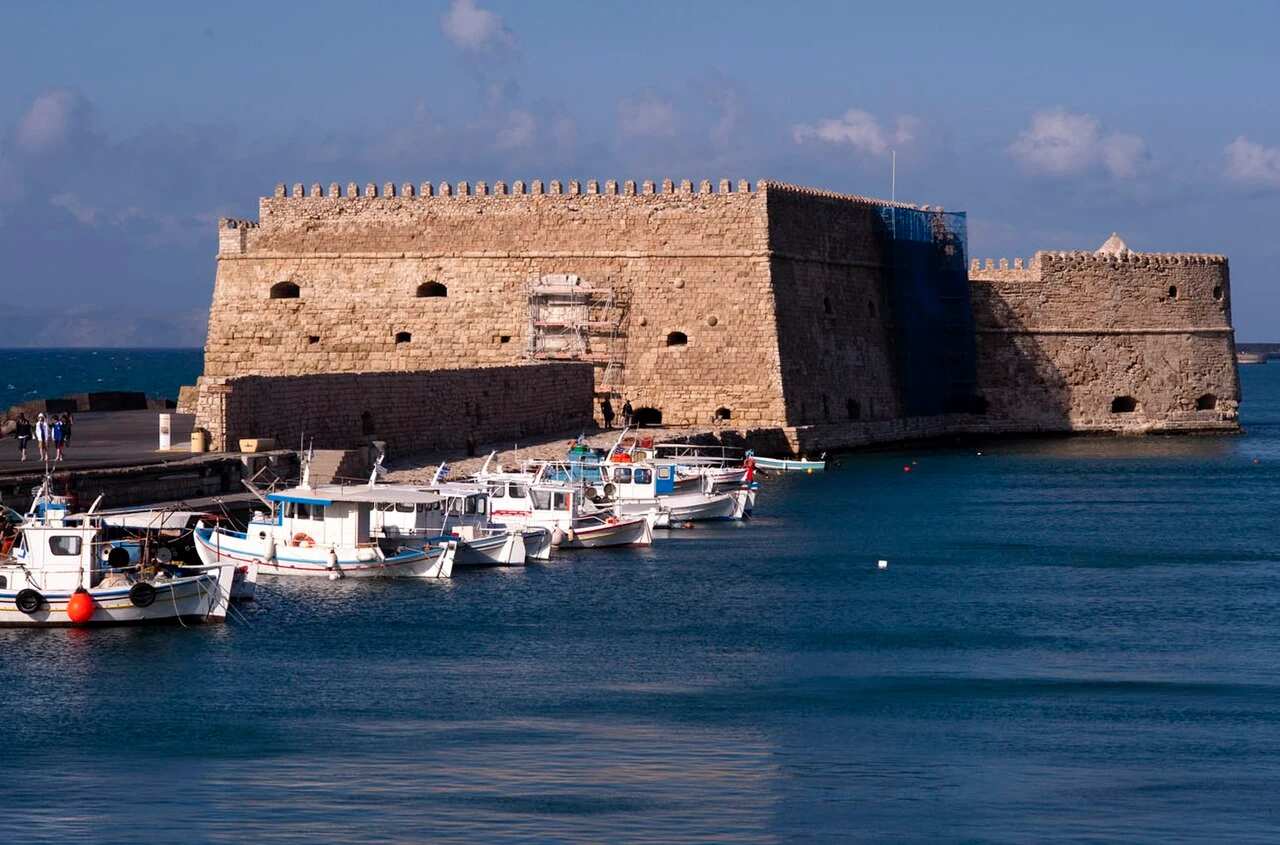
Heraklion · 35 km
Rocca a Mare
Content & sources
Γεώργιος Γιαννόπουλος · CC BY-SA 3.0