Stanza · Audio guide
Rocca a MareAudio guide
A place to remember. A story to take with you.
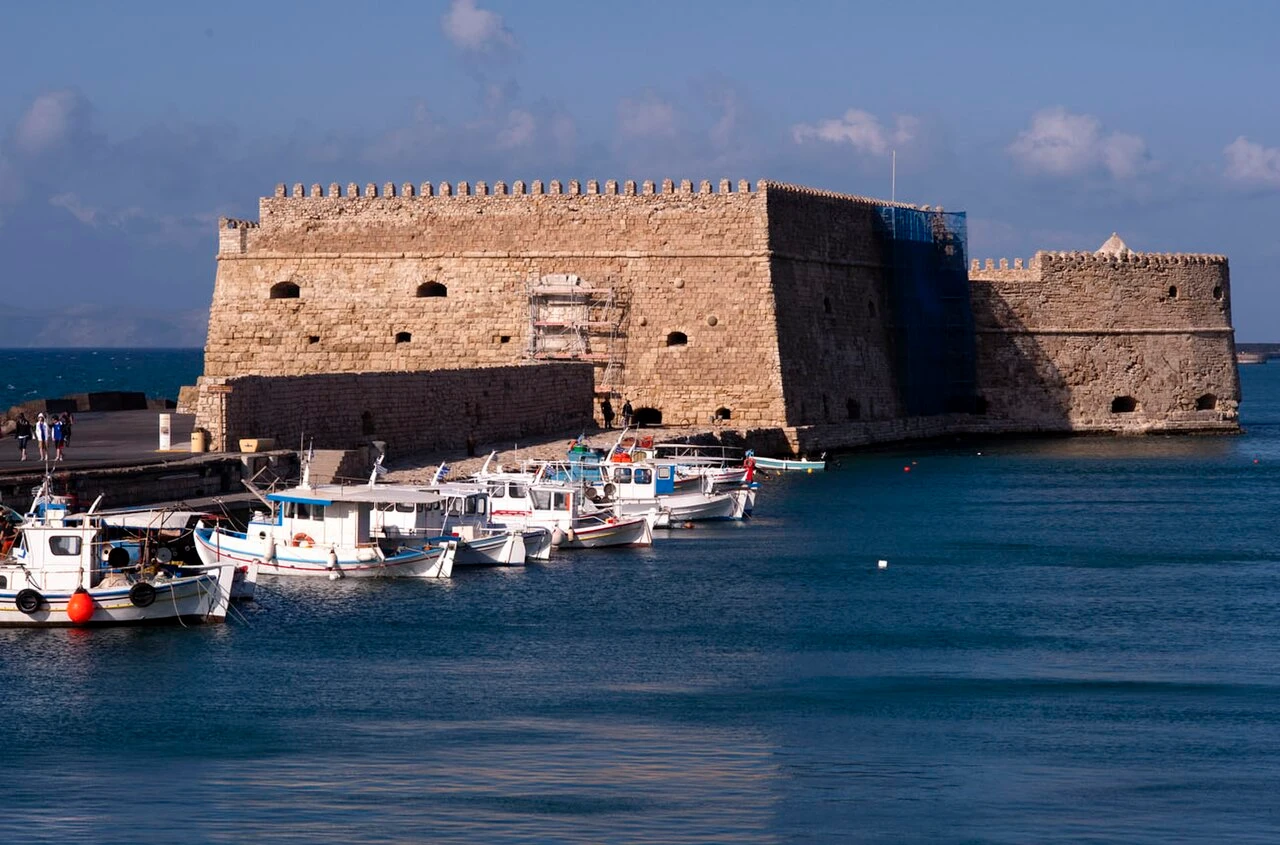
Rocca a Mare, also known as the Koules Fortress, is a massive 16th-century Venetian sea fort guarding the entrance to the old port of Heraklion. It served as a primary defensive fortification and grain…
Download Stanza, then search for “Rocca a Mare”.
About the tour
One guide. Your kind of visit.
Rocca a Mare, also known as the Koules Fortress, is a massive 16th-century Venetian sea fort guarding the entrance to the old port of Heraklion. It served as a primary defensive fortification and grain storage facility during the Venetian occupation of Crete.
Ready when you are.
- 01Get the free Stanza app.
iOS & Android
- 02Find your guide.
“Rocca a Mare”
- 03Download before you go.
Works offline
Audio guide / 17 narrated stops
Inside the guide
Get to know a few of the stories before you go. Open a stop to read more.
01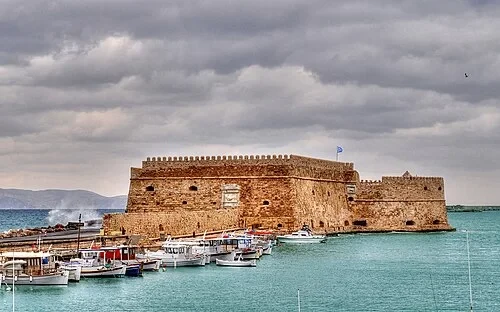 The Sea-Facing Facade and the Winged LionThe Sea Fortress Overview
Welcome to the Rocca a Mare, known today by its Ottoman-era name, Koules. This massive structure stands at the mouth of the old harbor, where it once served as the primary protector of the vital Venetian port of Candia. Construction on this site began in 1523, replacing an earlier fortification that had been damaged by earthquakes and the sea. The project required seventeen years of intensive labor to reach completion in 1540. The name Rocca a Mare literally translates to 'Fortress on the Sea,' a title that reflects its isolated position and defensive importance. During the Venetian period, this was the first line of defense against maritime threats, ensuring that no hostile fleet could easily enter the inner harbor where valuable merchant ships were docked. The stones you see here have endured centuries of wave action and military conflict. As you move through the tour, you will encounter the layers of history left behind by the various powers that sought to control this strategic Mediterranean hub. The fortress remains an example of 16th-century military engineering designed to withstand the transition from medieval walls to modern artillery-based warfare.
Photo: Xara Kreta · CC BY-SA 4.0
02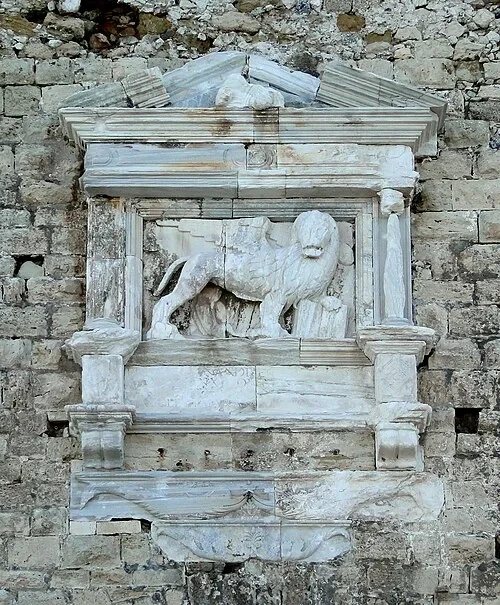 The Sea-Facing Facade and the Winged LionThe Winged Lion of St. Mark
The relief before you depicts the Winged Lion of St. Mark, the heraldic symbol of the Republic of Venice. In the 16th century, placing this image on a public building or fortification served as a 'seal' of sovereignty, identifying the territory as part of the Venetian maritime empire. The lion is shown holding an open book, a traditional depiction that often signaled peace, though here it stands atop a fortress of war. If you look closely at the surface of the marble, you can see the significant weathering caused by five centuries of direct exposure to salt-heavy sea spray and Aegean winds. These environmental forces have softened the once-sharp details of the lion's mane and wings. Despite this erosion, the sculpture’s presence remained a potent psychological tool, signaling Venetian maritime power to every sailor, merchant, and potential invader who entered the port of Candia. Three such reliefs were originally placed on the fortress walls, each facing a different cardinal direction to ensure the Republic’s authority was visible from both land and sea. This particular figure survives as a direct link to the era when Venice was the dominant naval force in the eastern Mediterranean.
Bernard Gagnon · CC BY-SA 3.0
03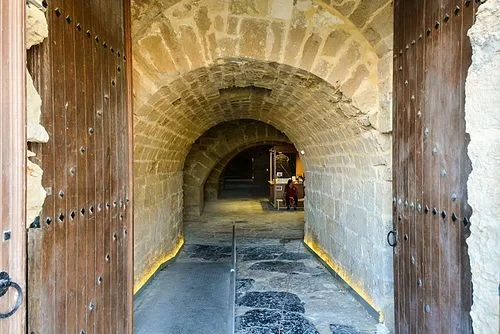 The Main PortalThe Main Entrance Gate
The heavy wooden doors here mark the main western entrance to the fortress. In a stronghold of this size, the management of movement was critical for security. This gate was one of three separate access points, each serving a specific strategic purpose. While other entrances were used for smaller groups or maritime deliveries, this western gate was the primary artery for moving soldiers and essential supplies into the interior. The design of the entrance area is deliberately constrained to prevent a large group of attackers from rushing the interior all at once. Once inside, the atmosphere changes immediately as the thick walls block out the sound of the wind and sea, replacing it with a cool, damp stillness. The transition from the bright Aegean sun to the dark masonry interior was intended to be both functional and intimidating. These doors were reinforced to withstand battering and were monitored by guards from nearby interior chambers. The stonework around the frame shows the precision of the Venetian masons who worked on the fortress during its seventeen-year construction period. The gateway leads directly into the ground-floor corridor, which served as the logistical heart of the garrison's daily operations.
Listen in the appPhoto: Vgargan · CC BY-SA 4.0
04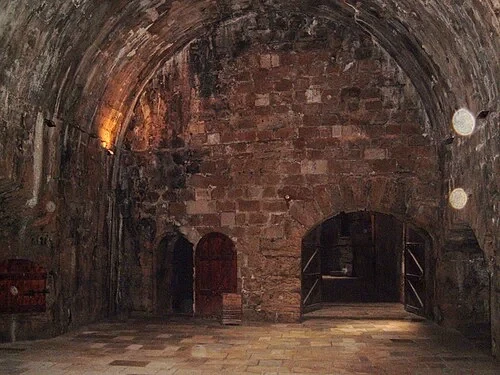 The Vaulted BarracksThe Vaulted Ground Floor
The ground floor of the fortress is a complex layout consisting of twenty-six distinct rooms. Each chamber was built with a specific function in mind, ranging from grain storage and water cisterns to barracks for the stationed soldiers. A defining feature of these rooms is the vaulted stone ceiling. These arches were not just an aesthetic choice; they provided the structural integrity necessary to support the massive upper levels and the heavy artillery positioned on the roof. More importantly, this architecture was designed to be bomb-proof. In an era when cannon fire was becoming increasingly powerful, the thick masonry of the vaults could distribute the impact of incoming projectiles, protecting the men and supplies stored within. The atmosphere here is often damp and cool, as the rooms are partially submerged or at sea level, with very little natural light reaching the interior. Small openings in the walls provided minimal ventilation while maintaining the defensive strength of the perimeter. This level essentially functioned as a self-sustained bunker, capable of housing the garrison during the long months of a naval blockade. The stones themselves are often rougher here than on the exterior, showing the utilitarian nature of these subterranean-like spaces.
Listen in the appPhoto: Cedric Labrousse · CC BY 3.0
05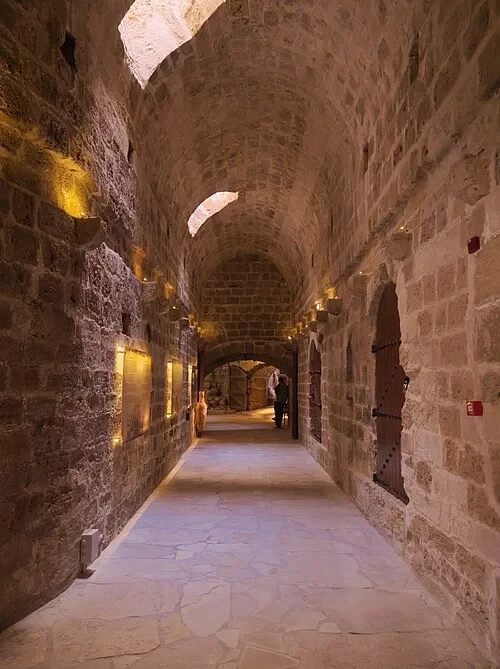 The Vaulted BarracksThe Soldiers' Corridor
The depth of this passage provides a clear view of the extreme scale of the fortress's construction. The outer walls here are exceptionally thick, measuring up to 8.7 meters in width. This massive amount of masonry was a dual-purpose engineering requirement. First, the walls needed to be wide enough to absorb the impact of early modern cannons, which had made thinner medieval walls obsolete. Second, the fortress had to resist the constant, crushing force of the Mediterranean waves. Because the building is situated directly in the path of northern Aegean storms, the base of the structure is subjected to a relentless battering from the sea. The Venetians used a combination of local limestone and harder volcanic rock to ensure durability. The length of the corridor allowed for the rapid movement of troops from one side of the fortress to the other without them having to expose themselves on the upper battlements. Small wall recesses along the path provided places for lamps to be placed, as natural light is scarce in the center of such thick walls. The stone floor is worn smooth in places, a result of the thousands of soldiers who walked these halls during the Venetian and Ottoman centuries.
Listen in the appPhoto: C messier · CC BY-SA 4.0
06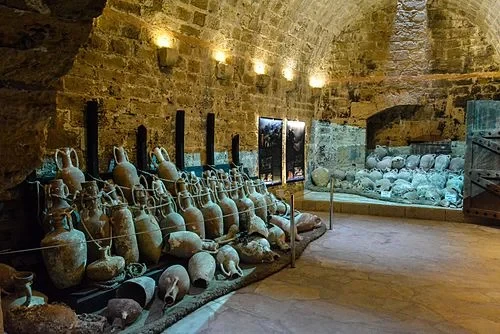 The Maritime Vaults and EngineeringAncient Cargo and Amphorae
The collection of clay amphorae displayed here represents the commercial lifeblood of the old harbor. These vessels were recovered by divers from the seabed immediately surrounding the fortress walls and the wider bay of Heraklion. For centuries, this port was one of the busiest trading hubs in the Mediterranean, where ships arrived from across Europe and the Levant. Amphorae were the standard shipping containers of the ancient and medieval world, used to transport bulk liquids like wine and olive oil, as well as dry goods such as grain or salted fish. Notice the variation in the shapes and sizes of these containers. The pointed bases of many amphorae allowed them to be stacked upright in layers of sand within the hold of a wooden ship, preventing them from shifting during a storm. Not every ship made it safely into the harbor; the presence of these artifacts is a reminder of the many wrecks caused by the treacherous northern winds that blow toward Crete. By studying the clay composition and specific stamps on the handles, archaeologists can trace exactly where these goods originated, helping to reconstruct the complex trade networks that the fortress was built to protect.
Listen in the appPhoto: Vgargan · CC BY-SA 4.0
07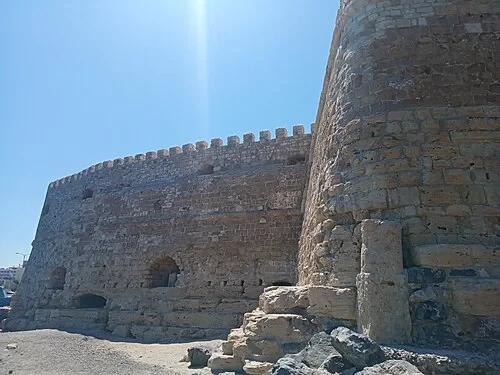 The Maritime Vaults and EngineeringThe Great Foundation
Building a 3,600-square-meter stone fortress on a marine site presented a significant engineering challenge in the early 16th century. To create a stable artificial platform for the Rocca a Mare, the Venetians employed a clever strategy. They took old, decommissioned ships, filled them with heavy stones, and sank them at the harbor mouth to form a solid base. These sunken hulls served as the foundation upon which the massive limestone blocks were eventually laid. You can see the result of this labor in the massive, salt-worn blocks at the base of the outer walls. These stones are larger and more roughly hewn than the ones used for the upper decorative elements. Over the centuries, the salt from the Aegean has crystallized in the pores of the stone, causing a unique pitting and erosion pattern. This foundation had to support not only the weight of the masonry but also the recoil of the heavy cannons mounted above. Despite the constant pressure of the tides and the occasional seismic activity common in Crete, the foundation has remained largely intact for five hundred years. The sheer scale of these lower blocks demonstrates the amount of manual labor required to transport and set such heavy material in a marine environment.
Listen in the appPhoto: Liubomir G · CC BY-SA 4.0
08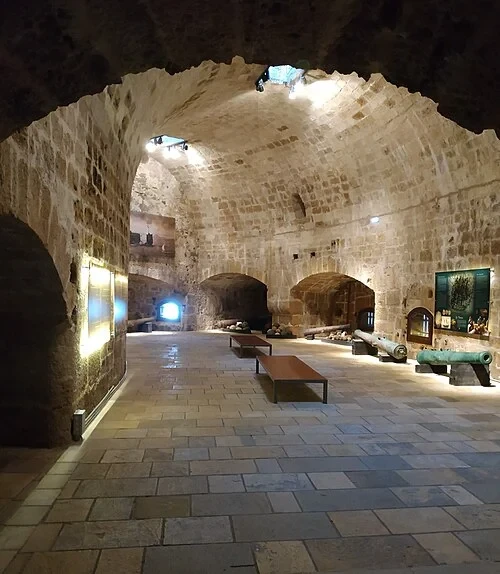 The Arsenal and Cannon EmbrasuresThe Interior Arsenal
This wide, multi-arched hall served as the fortress's primary interior arsenal on the ground floor. The layout was designed for the efficient storage and operation of heavy weaponry. By the year 1630, records indicate that this level alone was armed with eighteen cannons. If you look at the exterior walls, you will see narrow openings known as embrasures. These were carefully positioned to allow the artillery to fire upon any hostile ships attempting to force their way into the harbor. The arches in this room helped to dissipate the massive smoke and noise generated by a black powder discharge, which would have been deafening in such an enclosed stone space. The floor is made of durable stone slabs to handle the weight of the gun carriages and the constant movement of heavy equipment. This area also stored the tools needed for cleaning and loading the cannons, such as sponges, rammers, and ladles. During the frequent drills held by the Venetian garrison, this hall would have been filled with the shouts of officers and the scent of saltpeter. The architecture here balances the need for open space to maneuver the guns with the structural necessity of thick, load-bearing pillars.
Listen in the appPhoto: ElinaTzivara · CC BY-SA 4.0
09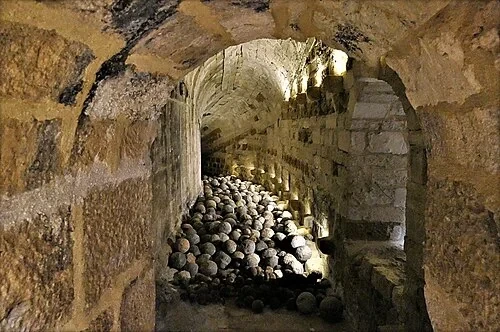 The Arsenal and Cannon EmbrasuresStone Cannonballs
The pile of stone projectiles you see here offers a glimpse into the logistics of early modern warfare. Before iron shot became the standard, cannonballs were often hand-carved from local stone. These were shaped to match the specific calibers of the various Venetian cannons mounted throughout the fortress. Carving these spheres was a laborious process, requiring skilled stonemasons to ensure they were round enough to fly accurately but not so heavy that they would damage the gun barrels. The sheer weight of these objects meant that moving them during a siege was a back-breaking task. Soldiers would have to manually haul them from storage piles like this to the gun positions on the ground floor or up to the roof battlements. During the famous Siege of Candia, which lasted for twenty-one years, the demand for ammunition was constant, and stockpiles like this were essential for the city's survival. The stones used were often chosen for their density and lack of internal cracks to prevent the ball from shattering upon impact. Even today, the weight of a single one of these spheres is surprising, serving as a reminder of the physical effort required to defend these walls against the Ottoman fleet.
Listen in the appRolf Dietrich Brecher from Germany · CC BY-SA 2.0
10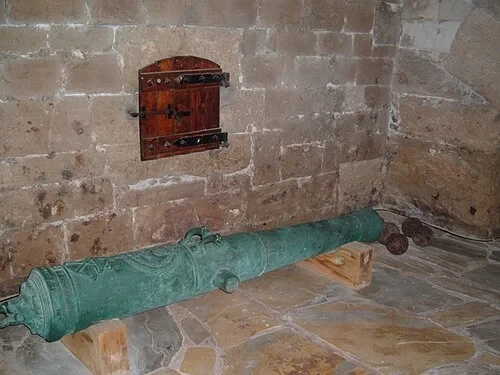 The Arsenal and Cannon EmbrasuresVenetian Bronze Artillery
The cannon before you is a notable example of 16th-century military technology. While many projectiles were made of stone, the guns themselves were often cast from bronze. Bronze cannons were highly prized because they were more durable and less likely to explode than the iron guns of the era, though they were significantly more expensive to produce. The green patina on the surface is a natural result of the copper in the bronze reacting with the salty sea air over several centuries. This specific type of artillery played a crucial role during the Siege of Candia, which began in 1648 and lasted until 1669. It was the second-longest siege in recorded history. The Venetian defenders used these guns to keep the Ottoman navy at a distance, effectively protecting the harbor entrance for over two decades. Eventually, however, the overwhelming land forces and relentless bombardment from the hills surrounding the city took their toll. In 1669, the Venetian commander surrendered the city, and these defenses were neutralized. The cannon remains as a physical remnant of the final years of Venetian Crete, when the Republic exhausted its treasury attempting to hold this single, vital fortification against the Ottoman Empire.
Listen in the appPhoto: Cedric Labrousse · CC BY 3.0
Rocca a Mare
Frequently asked questions
How much does the guide cost?
Free app download. Listed guide price: $3.99. Guide price shown in the app. Audio guide only. Venue admission is separate.
Can I listen without internet?
Yes. Download the guide’s audio, images, and maps in the app before your visit. Your downloaded content is then available offline.
Can I listen in my language?
Stanza supports 15 languages. Check the app for the languages available for this guide.
Do I need to follow a schedule?
No. This is a self-guided experience. Choose your stops, pause whenever you like, and return to a story at your own pace.
At your own pace
Explore Rocca a Mare.
Download Stanza, then search for “Rocca a Mare”.
Free app download · Guide price shown in the app
Keep exploring
Nearby audio guides
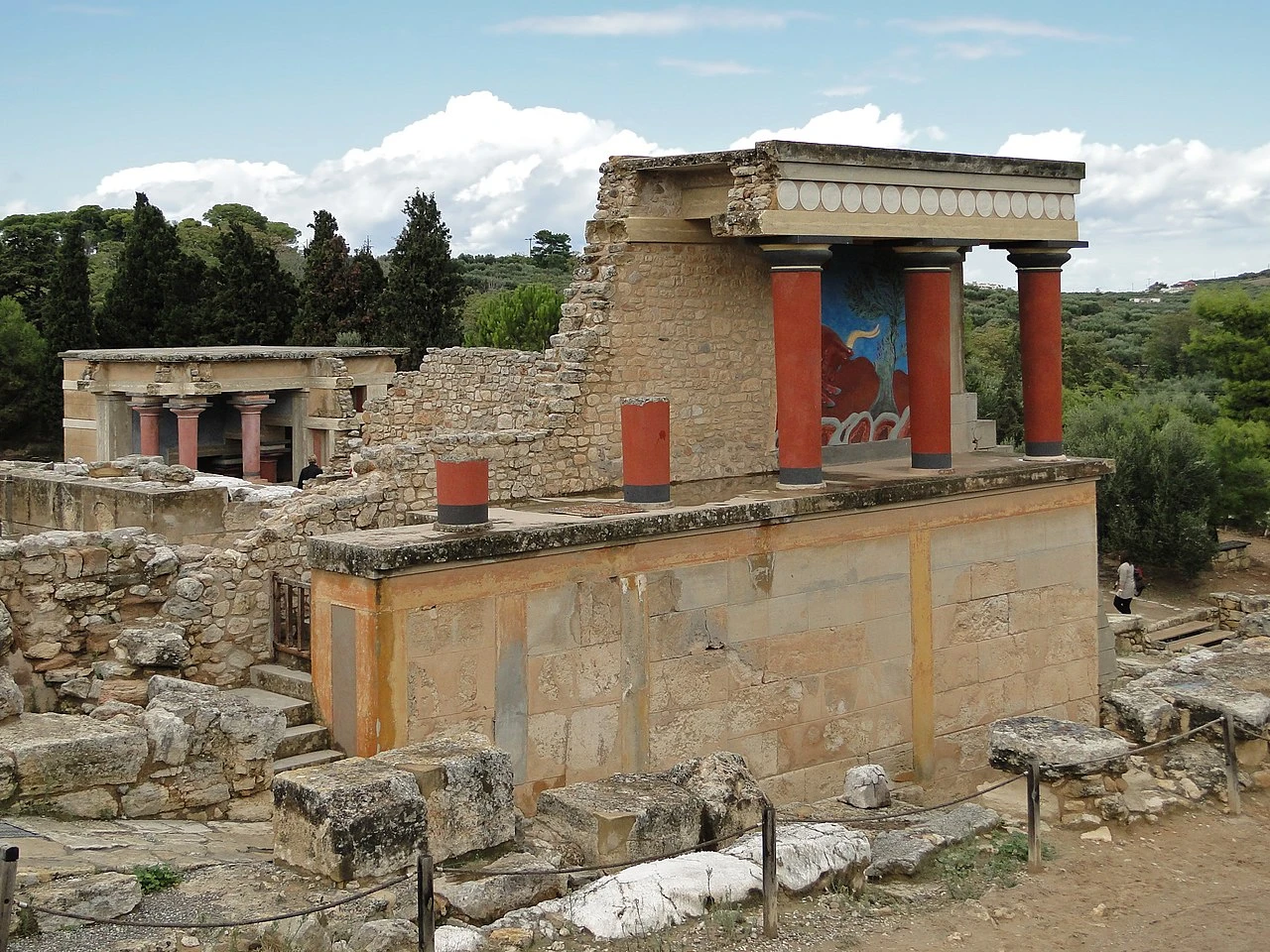
Heraklion
Knossos
Content & sources
Bernard Gagnon · CC BY-SA 3.0
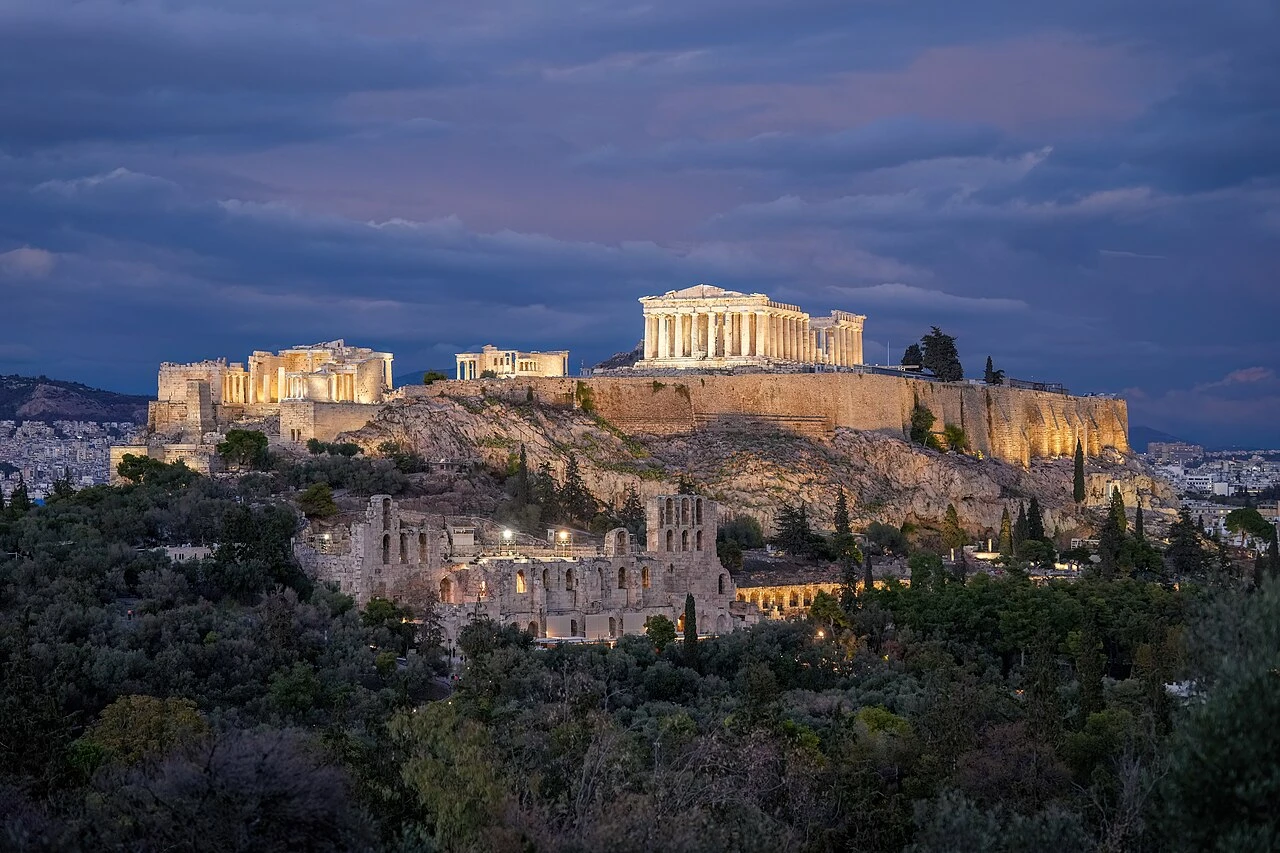
Athens
Acropolis of Athens
Content & sources
Photo: Giles Laurent · CC BY-SA 4.0
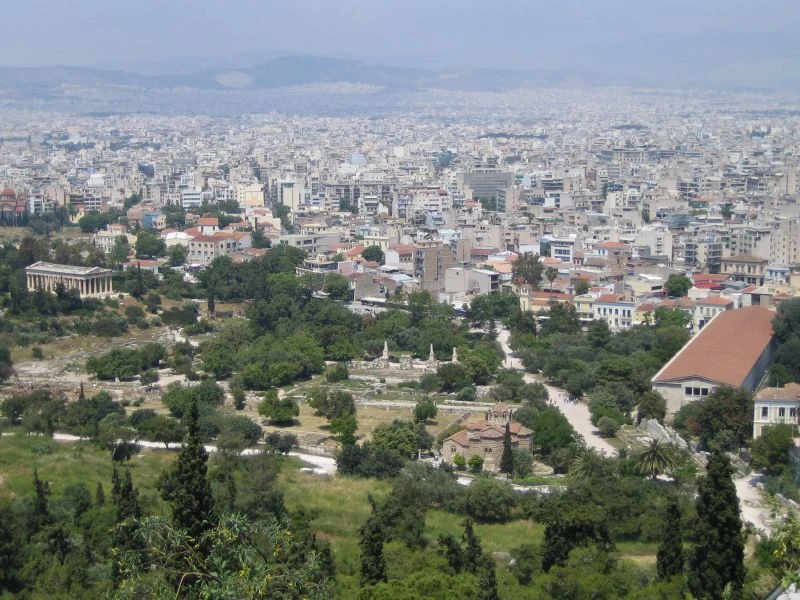
Athens
Ancient Agora of Athens
Content & sources
https://www.flickr.com/people/jonezes/ · CC BY-SA 2.0
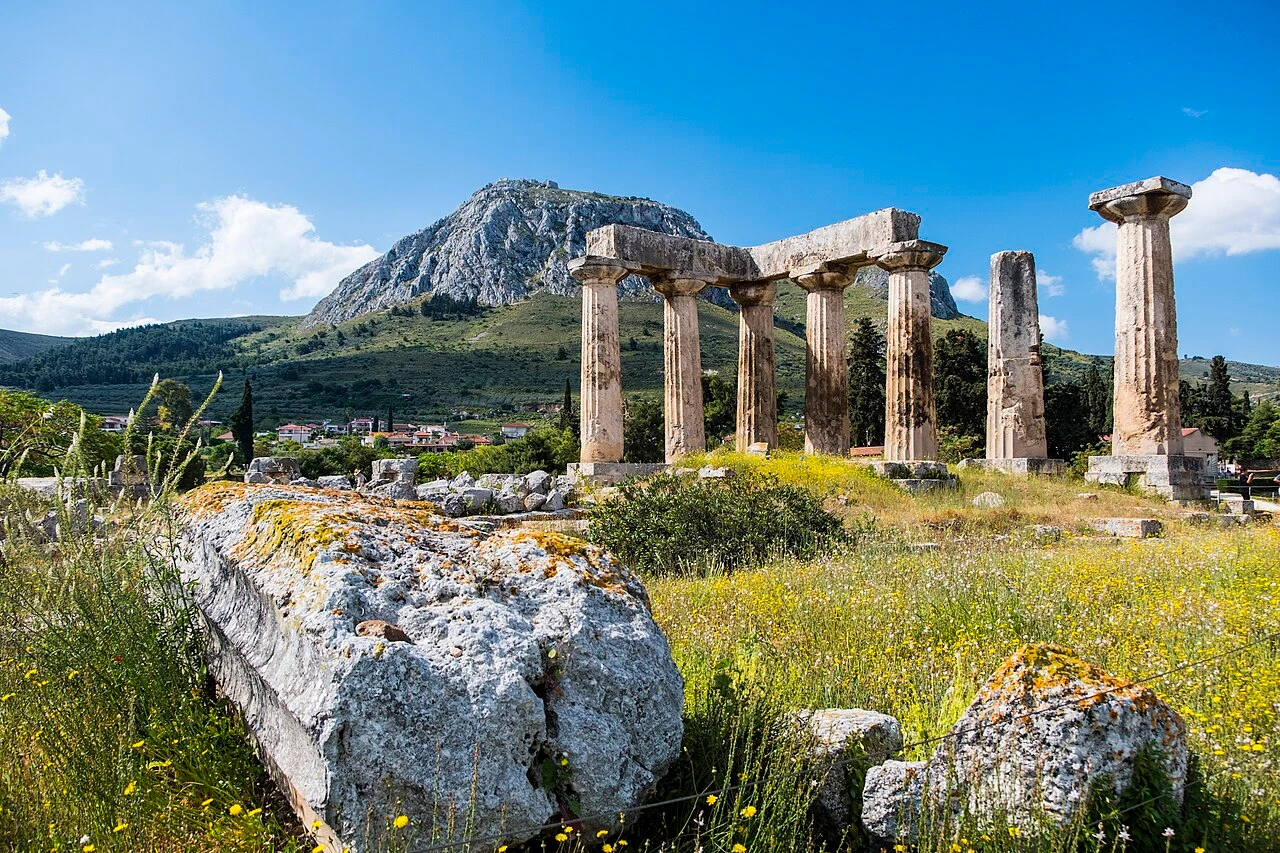
Corinth
Ancient Corinth
Content & sources
Davide Mauro · CC BY-SA 4.0