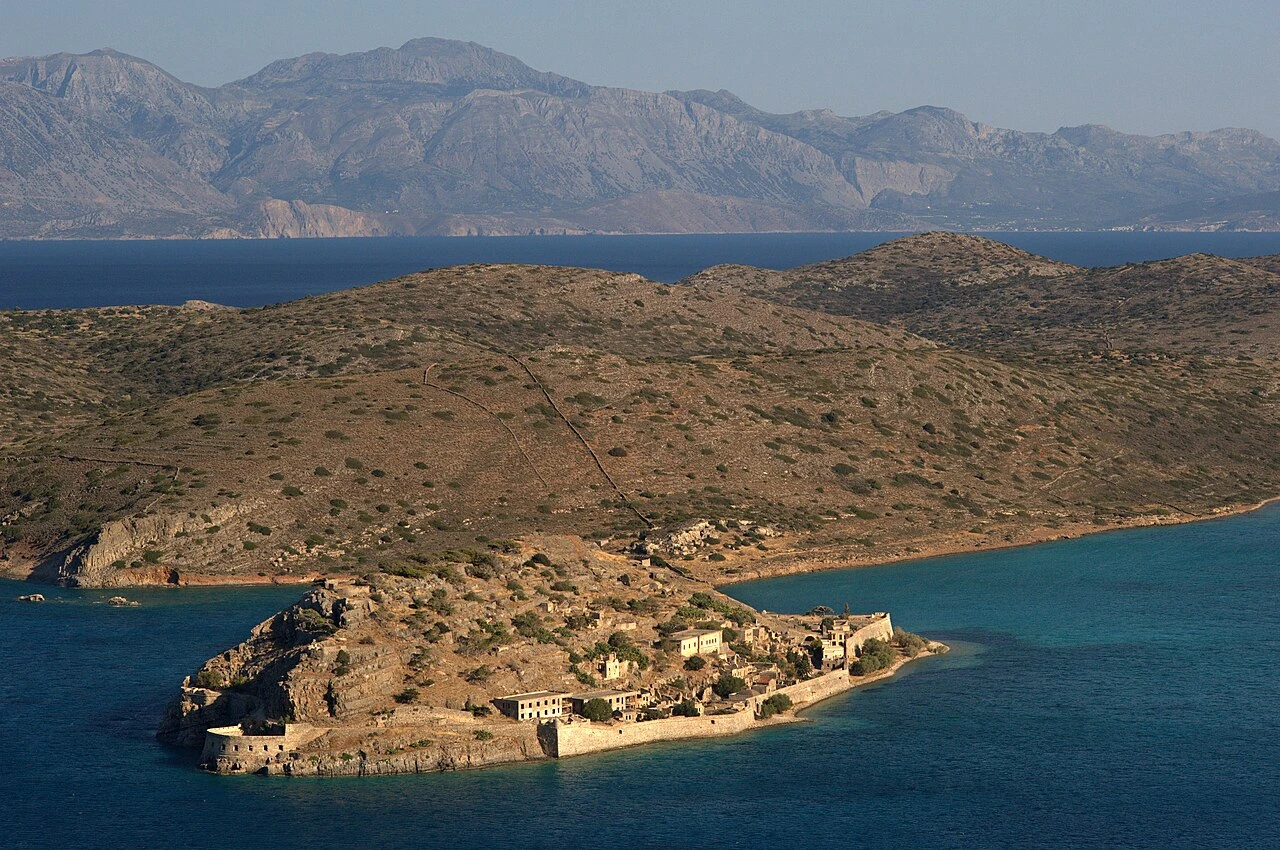
Stanza · Audio guide
SpinalongaAudio guide
A place to remember. A story to take with you.
Spinalonga is a small island in the Gulf of Elounda known for its historic Venetian fortress and its former use as a leper colony. It is now a prominent tourist destination and archaeological site.
Download Stanza, then search for “Spinalonga”.
About the tour
One guide. Your kind of visit.
Spinalonga is a small island in the Gulf of Elounda known for its historic Venetian fortress and its former use as a leper colony. It is now a prominent tourist destination and archaeological site.
Ready when you are.
- 01Get the free Stanza app.
iOS & Android
- 02Find your guide.
“Spinalonga”
- 03Download before you go.
Works offline
Audio guide / 33 narrated stops
Inside the guide
Get to know a few of the stories before you go. Open a stop to read more.
01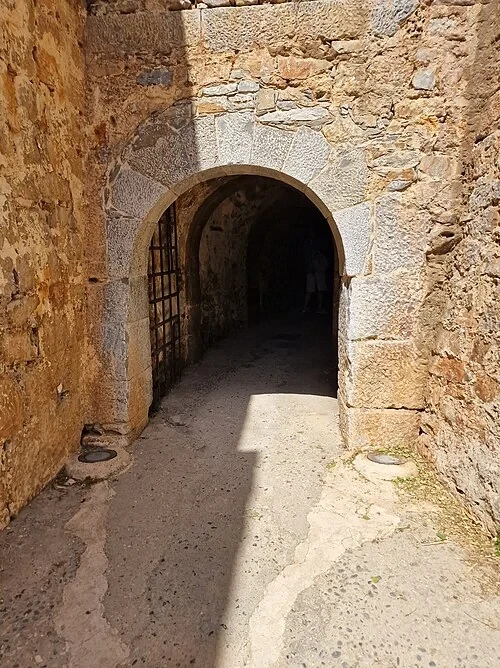 South Gate of SpinalongaSouth Gate of the Spinalonga Fortress
Welcome to one of the most storied locations on Crete. This arched entrance, often called the 'Gate of Tears,' was the first sight for newly arrived residents of the leper colony. Passing through this tunnel meant leaving behind family, friends, and your previous life on the mainland. The name reflects the emotional weight of this transition, as many who entered knew they might never leave the island again. Look at the rough stone masonry surrounding the entrance. The transition from the brilliant Cretan sunshine into this dark, vaulted passage was a physical and psychological shift into a world apart. Beyond housing people, this gate functioned as a vital logistics hub. Since contact between the sick and the healthy was strictly prohibited, goods and food were processed here using a clever system of exchange. Supplies would be left in the passage and later collected by residents, ensuring no physical interaction occurred. This carefully managed boundary allowed life on the island to continue while maintaining a total separation from the outside world. As you move forward, the darkness of the passage ahead creates an immediate sense of the isolation that defined the community here for over fifty years.
Photo: Rigorius · CC BY-SA 4.0
02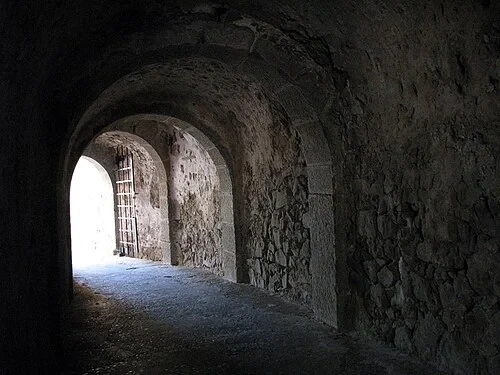 South Gate of SpinalongaThe Arrival Tunnel
Walking through this arched stone tunnel, you can feel the air turn cooler and the light from the outside fade. This structure was originally built by the Venetians in the late sixteenth century for a purely military purpose. Known as a 'sally port,' it was designed to allow soldiers to move quickly and safely under the protection of heavy stone, shielded from incoming enemy fire during a siege. During the leper colony era, which lasted from 1904 until 1957, the function of this tunnel shifted dramatically. It became a psychological threshold. For those stepping off the boat from the mainland, this was the first space they experienced on the island. The length and darkness of the passage heightened the sense of being removed from the world. Imagine the echo of footsteps on the stone floor as people moved toward the settlement, leaving the view of the open sea behind them. This engineering feat, intended to keep invaders out, ended up keeping residents in, serving as a permanent reminder of their separation from society. The sturdy construction of the arch reflects the Venetian commitment to making Spinalonga an impenetrable fortress, a quality that eventually turned the island into a secure and self-contained world for its residents.
Robin & Bazylek · CC BY 2.0
03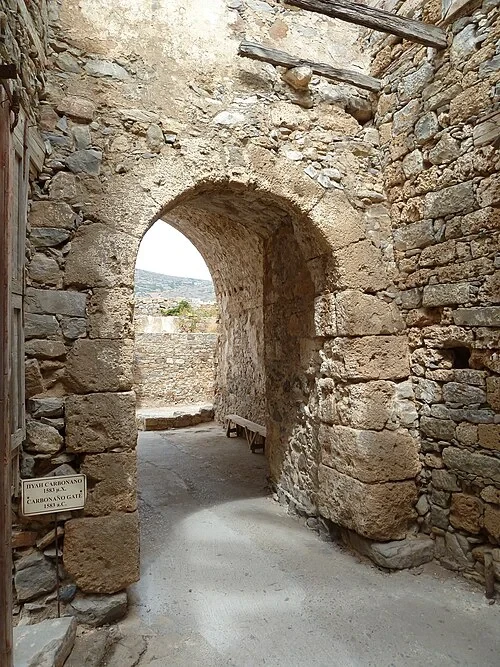 Carbonana GateCarbonara Gate
This secondary Venetian gate provides a clear look at the layered history of the island. On a sign next to the arch, you can see the date 1583 and a Latin inscription, confirming its origins as a defensive military portal. Once you pass through this arch, the atmosphere changes as you enter the area where the Ottoman-era settlement was located, later repurposed by the leper colony residents. The architecture here is a fascinating mix of styles and periods. The lower sections feature heavy, precisely cut Venetian stones intended to withstand cannon fire and the passage of time. Above these massive foundations, you'll see lighter, more domestic masonry used for the residential houses that lined these streets. If you look closely at the walls, you can still find original wooden beams embedded in the stone. These beams once supported the upper floors of dwellings where families lived and worked. The residents of the colony didn't just survive here; they rebuilt a village, turning these military structures into homes. This gate stood as the boundary between the heavy fortifications of the seawall and the intimate, crowded life of the village. It illustrates how the community adapted the harsh Venetian military environment into a functional, if isolated, town.
Listen in the appDeror_avi · CC BY-SA 3.0
04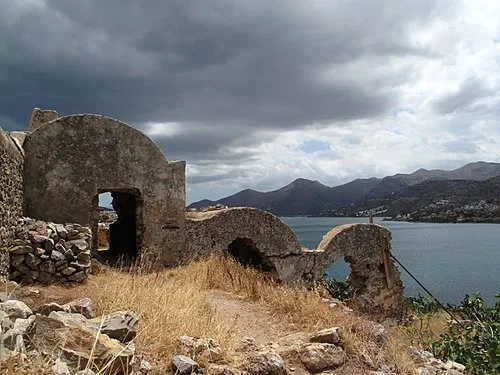 Tripartite BuildingTripartite Building
The stone ruins of the Tripartite Building follow the natural curve of the island's coastline, looking out over the blue waters toward the mainland. This multi-part structure began as part of an Ottoman settlement and was later adapted to meet the needs of the leper colony. While it may look like a simple ruin today, this area was once a hub of activity. Against all odds, the residents of Spinalonga created a fully functioning society that mirrored life on the outside. Within the colony, people established their own shops, socialized in cafes, and even ran a cinema. These ruins are a physical record of that 'layered' history, moving from a Venetian military base to an Ottoman village and finally to a place of medical exile. The proximity to the water was both a blessing and a reminder of their confinement. While the sea provided a cooling breeze and a beautiful view, it also formed the walls of their prison. Despite the difficult conditions and the stigma of their disease, the people here worked to maintain their dignity by creating a community that felt as normal as possible. They organized their own governance and social life, proving that even in exile, the human desire for connection and culture remains unshaken. These stones stand as the quiet remains of that vibrant, hidden world.
Listen in the appCharlie Phillips from London, UK · CC BY 2.0
05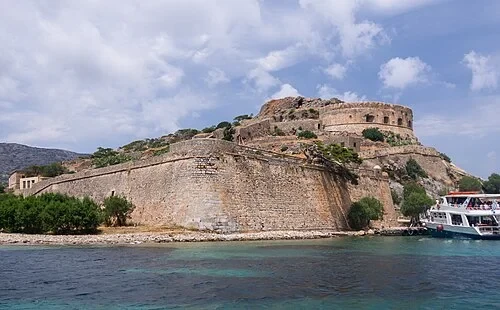 Tiepolo BastionTiepolo Bastion
The sheer scale of these fortification walls is a testament to the strategic importance of this island to the Venetian Republic. In the late sixteenth century, Venice spent a fortune constructing these defenses to protect the gulf of Elounda, a critical deep-water harbor. Notice the 'cordon,' the horizontal stone molding that runs along the mid-section of the wall. This is a classic feature of Venetian military architecture, serving both as a decorative element and a structural marker of the transition between the sloped base and the vertical upper wall. The engineering here was so effective that Spinalonga became one of the last Venetian strongholds to fall to the Ottoman Empire. While the rest of Crete was conquered by the mid-seventeenth century, the garrison here held out for several more decades, finally surrendering in 1715. The thickness of the stone and the clever angles of the bastion were designed to deflect cannon fire and make any naval assault nearly impossible. When the leper colony was established much later, these same imposing walls provided the ready-made security needed to keep the residents isolated. For the Venetian soldiers, these walls were a shield against invaders, but for the patients of the twentieth century, they became a boundary that separated them from the rest of the world.
Listen in the appPhoto: C messier · CC BY-SA 4.0
06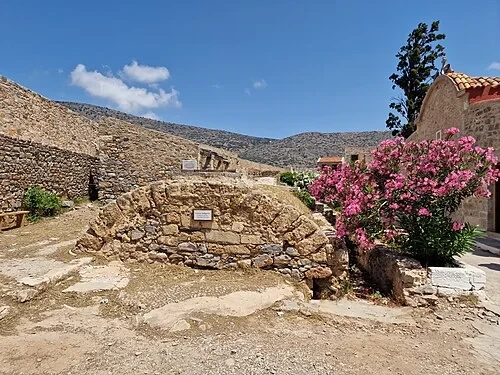 Vaulted CisternsVaulted Cisterns
Spinalonga is a famously arid rock with no natural springs or wells. Because of this, survival for every inhabitant, from Venetian soldiers to the residents of the leper colony, depended entirely on these underground cisterns. These low, vaulted stone structures were masterfully engineered to collect and store rainwater. A system of channels and pipes funneled water from the roofs of buildings and the paved courtyards directly into these cool, subterranean chambers. Throughout the island's history as a colony, clean water was a constant struggle. The residents had to be extremely careful with their consumption, especially during the long, dry summers. It wasn't until very late in the island’s history as a medical facility that a more modern water system was finally installed. Before that, the water stored in these chambers was used for everything from drinking and cooking to laundry. The vaulted design was not just for strength; it helped keep the water temperature stable and minimized evaporation. These stone reservoirs were the true lifeblood of the island. Without this Venetian engineering, the island would have been uninhabitable. Even today, the presence of these cisterns reminds us of the harsh environmental realities that the people living here had to overcome daily through careful management of their most precious resource.
Listen in the appPhoto: Rigorius · CC BY-SA 4.0
07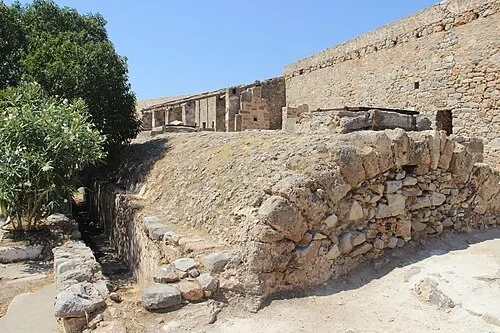 Vaulted CisternsVenetian Water Engineering
The thick masonry of this cistern highlights the sophisticated water management skills of the Venetian engineers who built it centuries ago. The walls were specifically designed with great thickness to provide natural insulation. This kept the stored rainwater cool and prevented it from evaporating, even when the island became a sun-baked kiln during the height of the Mediterranean summer. Such engineering allowed the fortress to withstand long sieges without running out of water. For the residents of the leper colony, these cisterns were essential to their daily existence. While the Venetian soldiers had relied on them for military survival, the patients used them for their basic health and hygiene needs. Imagine the daily ritual of drawing water from these stone depths, a task that became even more critical during the hot, dry months. The Venetians were masters at utilizing the natural slope of the land to guide every drop of rain into these reservoirs. Because the island is surrounded by saltwater, these freshwater stores were a luxury and a necessity. The durability of the construction is remarkable; these structures remained functional for hundreds of years, bridging the gap between a sixteenth-century military outpost and a twentieth-century community in exile. The survival of the residents was tied directly to the integrity of this ancient stone engineering.
Listen in the appVadim Indeikin · CC BY-SA 3.0
08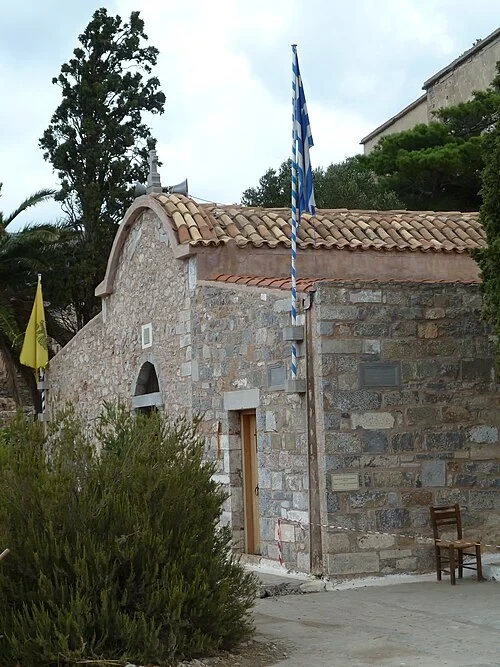 Church of Saint PantaleonChurch of Saint Pantaleon
The Church of Saint Pantaleon is a small stone building with a distinctive red-tiled roof that served as the spiritual and social center of the leper colony. It is fittingly dedicated to Saint Pantaleon, who is recognized in the Orthodox tradition as the patron saint of physicians and healers. For the residents, this was more than just a house of worship; it was a place where they could find hope, comfort, and a sense of belonging in a world that had rejected them. Outside, you can see the Greek and Byzantine flags flying, symbols of the community's cultural and religious identity. Every year on July 27th, the feast day of the saint, the entire island would gather here for a major celebration. This event was a rare moment of joy and social cohesion, breaking the monotony of life in exile. The church provided a framework for life on the island, hosting baptisms, weddings, and funerals. It stood as a reminder that even though the patients were separated from their homes, their traditions and faith remained intact. The building's humble appearance belies its immense importance to the islanders, acting as an anchor for a community facing incredible hardship. It remains one of the most significant buildings on Spinalonga, representing the resilience and spiritual strength of those who lived here.
Listen in the appDeror_avi · CC BY-SA 3.0
09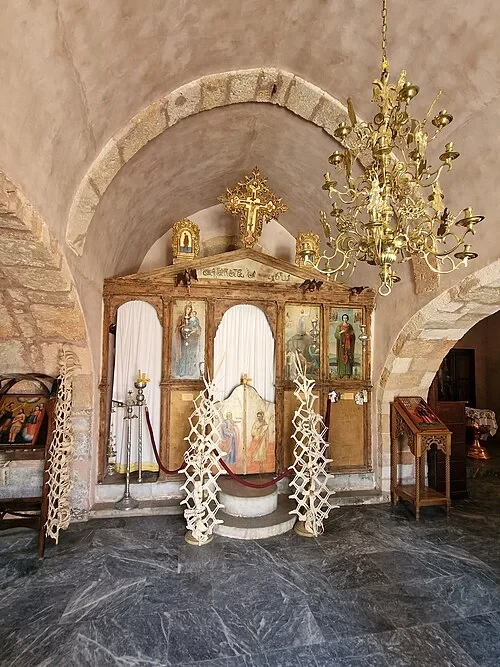 Church of Saint PantaleonThe Iconostasis of Saint Pantaleon
Stepping inside the Church of Saint Pantaleon, the most prominent feature is the iconostasis. This intricate wooden screen, decorated with icons, serves as the traditional boundary in Orthodox churches between the nave, where the congregation stands, and the sanctuary, which is reserved for the clergy. For the residents of Spinalonga, these icons were not just religious art; they were deeply personal objects of devotion. Patients would often kiss the icons and leave 'tamata,' which are small metal offerings. These plaques usually depicted a specific part of the body, such as a hand or an eye, representing a prayer for healing of that specific area. This practice turned the iconostasis into a wall of collective hope and shared suffering. Notice the detailed gold-leaf work that catches the light, along with the central icons of Christ and the Virgin Mary. In a place where modern medicine had long failed to provide a cure, many residents turned to these spiritual 'windows' for the strength to endure their condition. The iconostasis provided a sense of order and sacredness that contrasted with the often harsh reality of the colony outside. It remains a powerful symbol of the internal life of the community, where faith and the desire for physical wholeness were inextricably linked in the quiet of the sanctuary.
Listen in the appPhoto: Rigorius · CC BY-SA 4.0
10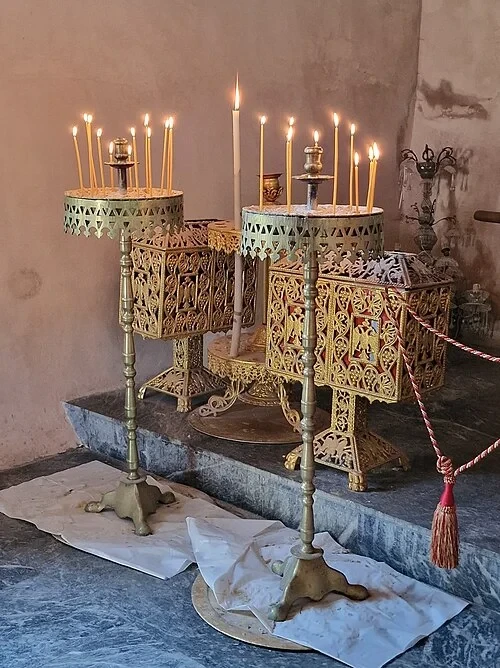 Church of Saint PantaleonVigil Lamps and Candles
In the quiet interior of the church, the tall brass candle stands and flickering flames are central to the experience of worship. Lighting a candle is a fundamental ritual in the Orthodox faith, symbolizing a living prayer offered to God. For the people of Spinalonga, this simple act took on a profound meaning. Each flame often represented a connection to the families and children they were forbidden to see, a small light sent out into the world beyond the fortress walls. The community maintained a very strict religious life, led by their own priest. Remarkably, the priest was often a healthy individual who made the brave choice to live among the lepers to provide spiritual guidance and comfort. He shared their daily life, led the liturgy, and ensured that the sacraments were available to everyone. This presence was vital for the morale of the residents, who felt cast out by society but not by their faith. The soft light from these candles provided a sense of peace and continuity. It reminded the residents that even in their state of exile, they were part of a larger spiritual family. These flickering lights were a constant presence in the church, serving as silent witnesses to the private hopes and sorrows of a community that found its greatest strength in shared ritual and devotion.
Listen in the appPhoto: Rigorius · CC BY-SA 4.0
Spinalonga
Frequently asked questions
How much does the guide cost?
Free app download. Listed guide price: $3.99. Guide price shown in the app. Audio guide only. Venue admission is separate.
Can I listen without internet?
Yes. Download the guide’s audio, images, and maps in the app before your visit. Your downloaded content is then available offline.
Can I listen in my language?
Stanza supports 15 languages. Check the app for the languages available for this guide.
Do I need to follow a schedule?
No. This is a self-guided experience. Choose your stops, pause whenever you like, and return to a story at your own pace.
At your own pace
Explore Spinalonga.
Download Stanza, then search for “Spinalonga”.
Free app download · Guide price shown in the app
Keep exploring
Nearby audio guides

Athens
Acropolis of Athens
Content & sources
Photo: Giles Laurent · CC BY-SA 4.0
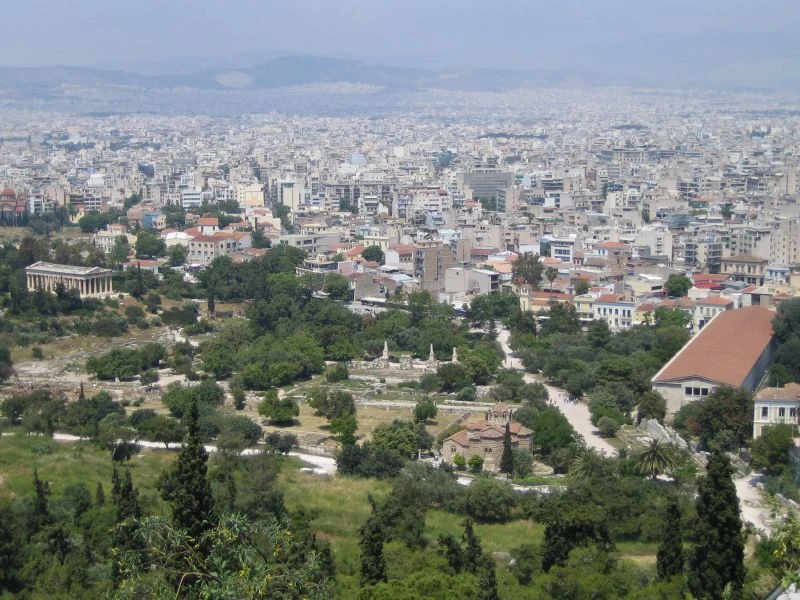
Athens
Ancient Agora of Athens
Content & sources
https://www.flickr.com/people/jonezes/ · CC BY-SA 2.0
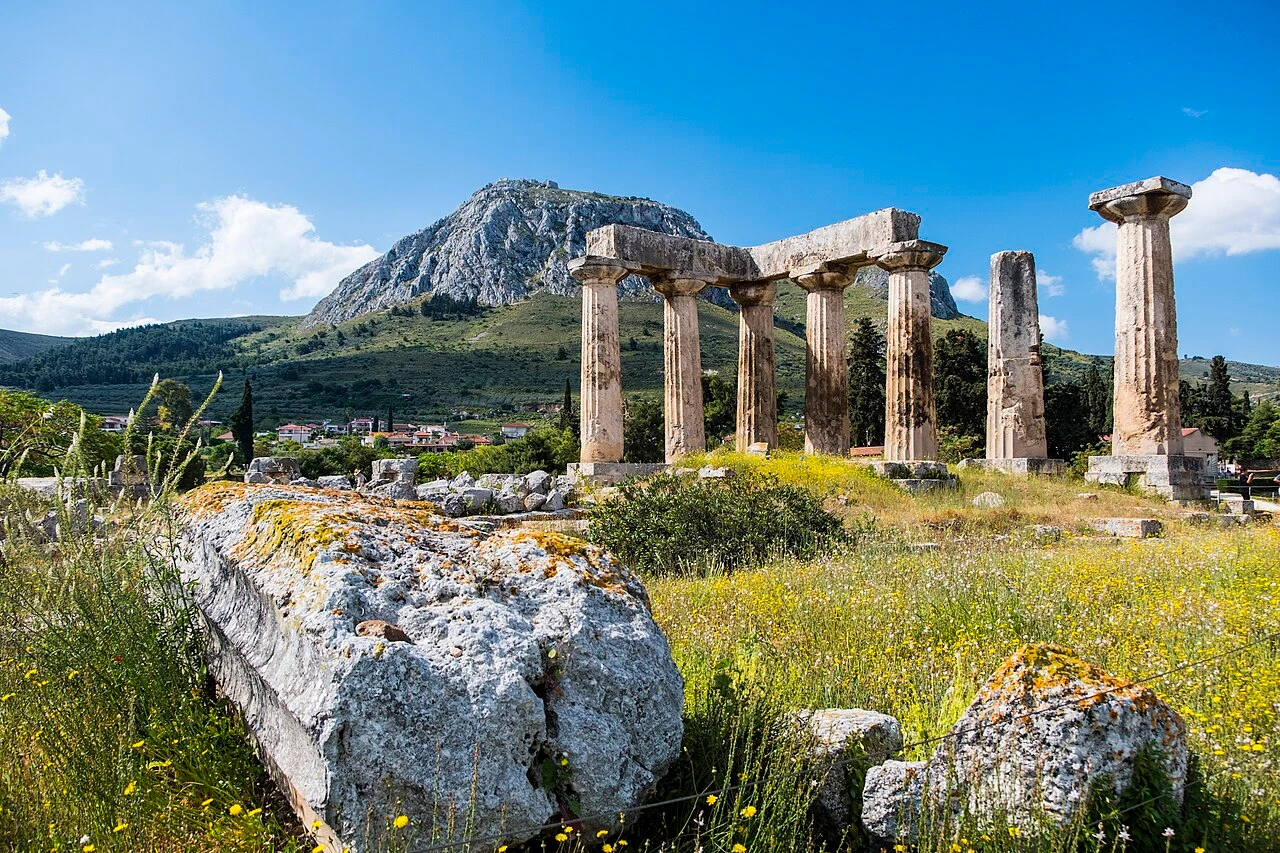
Municipal Unit of Corinth
Ancient Corinth
Content & sources
Davide Mauro · CC BY-SA 4.0
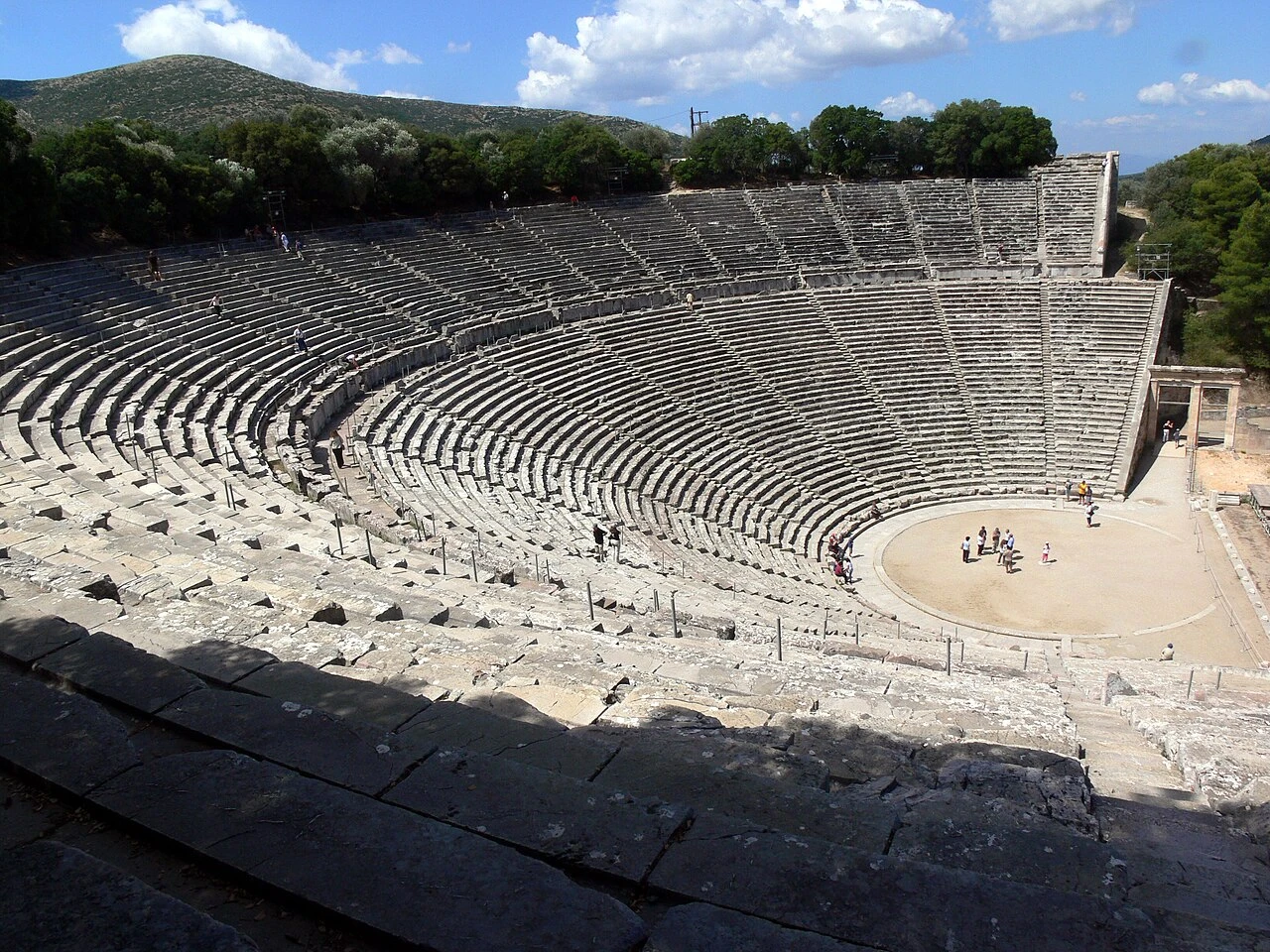
Municipal Unit of Asklipieio
Ancient Epidaurus
Content & sources
Photo: Fingalo · CC BY-SA 2.0 de