Languages
15Acropolis of Athens Audio Guide
Acropolis of Athens is an archaeological site in Athens, Greece. Explore it with Stanza's guided offline audio tour — narrated in 15 languages.
Quick Facts
23
Stops
15
Languages
100%
Offline
📍 Athens, Greece · 37.9717°N, 23.7261°E
About Acropolis of Athens
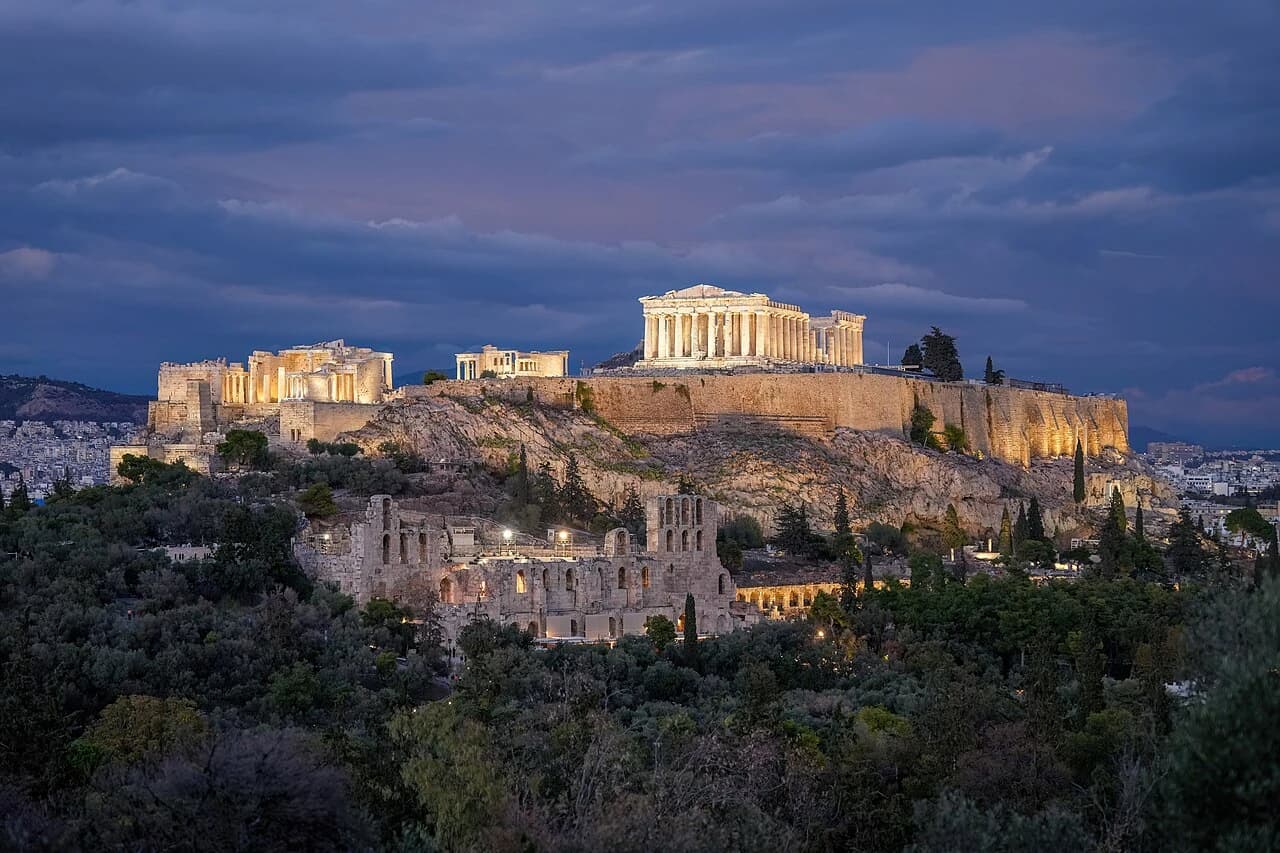
The Acropolis of Athens is an ancient citadel perched above the city of Athens, Greece. This UNESCO World Heritage site is home to several monumental architectural masterpieces from the Classical era, including the Parthenon.
This self-guided audio tour features 23 narrated stops organized across 9 sections. As a archaeological site, Acropolis of Athens offers a unique cultural experience in the heart of Athens, Greece.
The Stanza audio guide is available in 15 languages and works entirely offline — download the complete tour including audio narration, maps, and images before your visit. As you walk through Acropolis of Athens, GPS-triggered narration plays automatically at each point of interest.
Last updated:
What you will hear
Propylaea of Athens
The monumental gateway to the Acropolis, designed by Mnesicles to impress visitors as they transitioned from the secular city to the sacred summit.
Propylaea of Athens
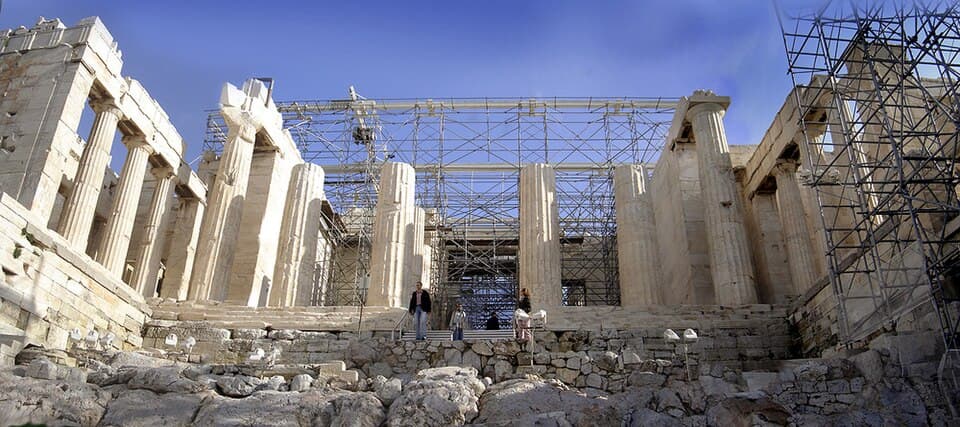
You are now passing through the Propylaea, the monumental gateway designed by the architect Mnesicles between 437 and 432 BC. Think of this as the 'red carpet' of the ancient world. Its primary purpose was to transition the visitor from the mundane, dusty, and crowded city streets below into the ethereal, sacred space of the Acropolis summit. Mnesicles used architecture to create a profound psychological impact. As you moved through the massive, shaded central hall, the darkness of the gateway would heighten your anticipation. Then, as you emerged on the other side, you would be struck by the sudden, brilliant light of the open plateau and the breathtaking sight of the Parthenon. This calculated use of light and shadow was meant to evoke a sense of divine transition. Building the Propylaea was also an incredible engineering challenge. Mnesicles had to navigate an extremely steep and uneven rocky slope, forcing him to design a building on multiple levels—a feat rarely attempted in classical architecture. Despite its unfinished state, the Propylaea remains a masterpiece of balance and scale, masterfully preparing the visitor for the wonders that await on the plateau above.
Pandroseion
An enclosure adjacent to the Erechtheion dedicated to Pandrosos, containing the sacred olive tree given to the city by Athena.
Pandroseion
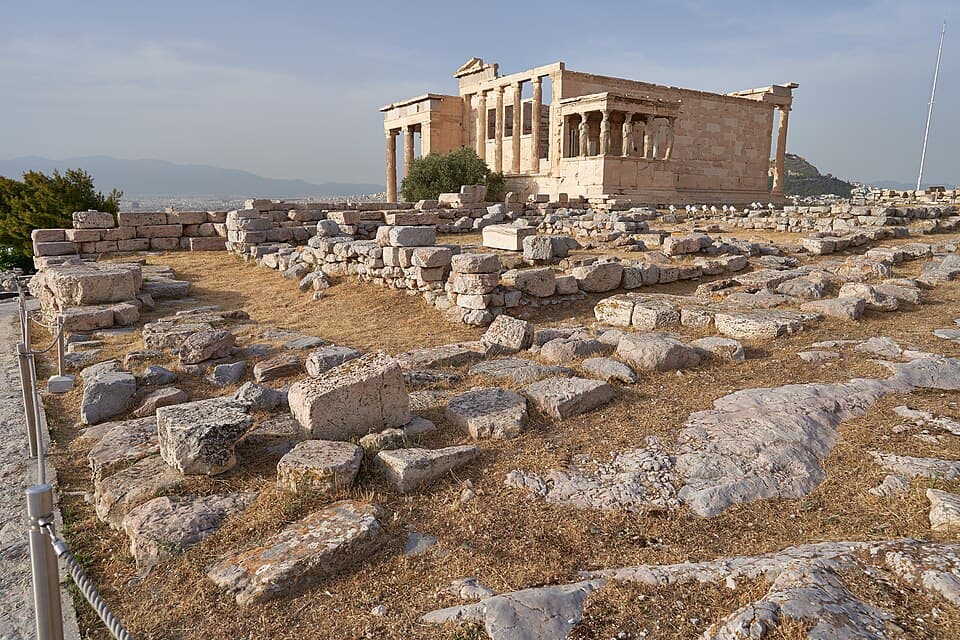
Adjacent to the western side of the Erechtheion is an open-air enclosure known as the Pandroseion. This space was dedicated to Pandrosos, the daughter of the first king of Athens and the city's very first priestess of Athena. This site is central to the most famous legend of the city: the contest between Athena and Poseidon to determine who would be the city’s patron deity. As the story goes, Poseidon struck the earth with his trident, bringing forth a salt spring. Athena, in turn, planted an olive tree. The citizens chose the olive tree for its practical gifts of food and oil, thus making Athena their patron. The olive tree you see standing here today is a direct link to that story. While the original ancient tree was burned during the Persian invasion, the current tree was planted in the early 20th century on the exact spot where the original was said to have grown. The Pandroseion served as a living bridge between the architecture of the temples and the natural elements of Athenian religion. Even today, the presence of the tree provides a rare splash of green against the weathered stone, a living symbol of the goddess’s enduring victory.
Old Temple of Athena
The foundations of the Archaic temple that served as the primary place of worship before the construction of the Parthenon.
Old Temple of Athena
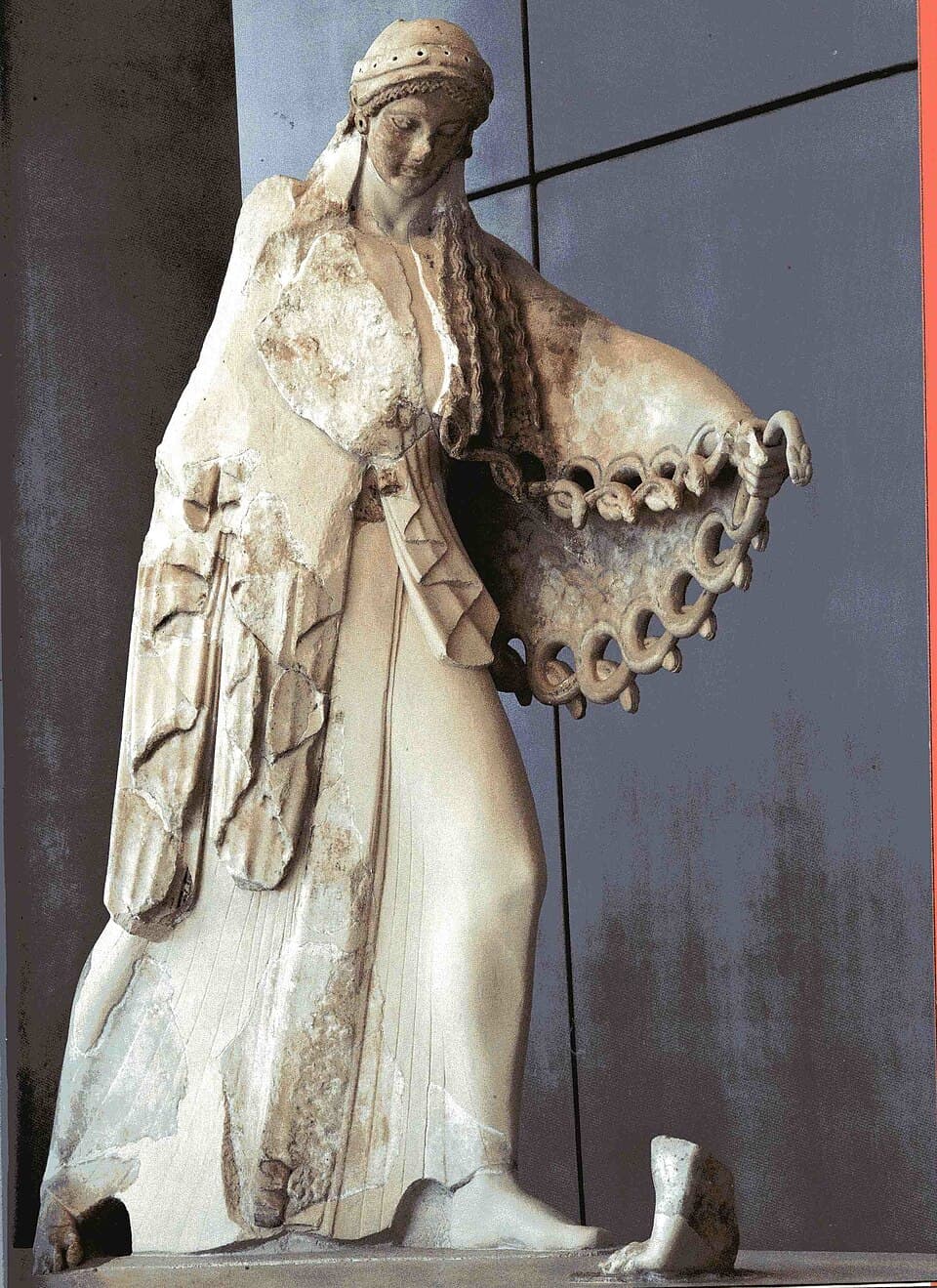
This statue represents the type of archaic worship that once took place in the 'Old Temple' of Athena before the Parthenon ever existed. The foundations you can see visible in the ground near the Erechtheion belong to this earlier temple, which was built around 525 BC. It was the primary center of religious life on the Acropolis until a catastrophic turning point in 480 BC, when the Persian army invaded and burned the entire sanctuary to the ground. After the Greeks eventually defeated the Persians, they were left with a dilemma: what to do with the charred remains of their most sacred shrines? In a powerful act of public memory, the Athenians decided to leave the ruins visible for decades. These blackened stones served as a 'war memorial,' a constant visual reminder to every citizen of the price of their freedom and the destruction they had survived. It wasn't until the mid-5th century BC that the site was finally cleared to make way for the Parthenon and the new buildings we see today. The figure shown here, with its rigid posture and intricate details, helps us imagine the more ancient world of Athenian worship that existed long before the Golden Age of architecture.
Parthenon
The supreme achievement of Doric architecture, built to house the massive gold-and-ivory statue of Athena Parthenos.
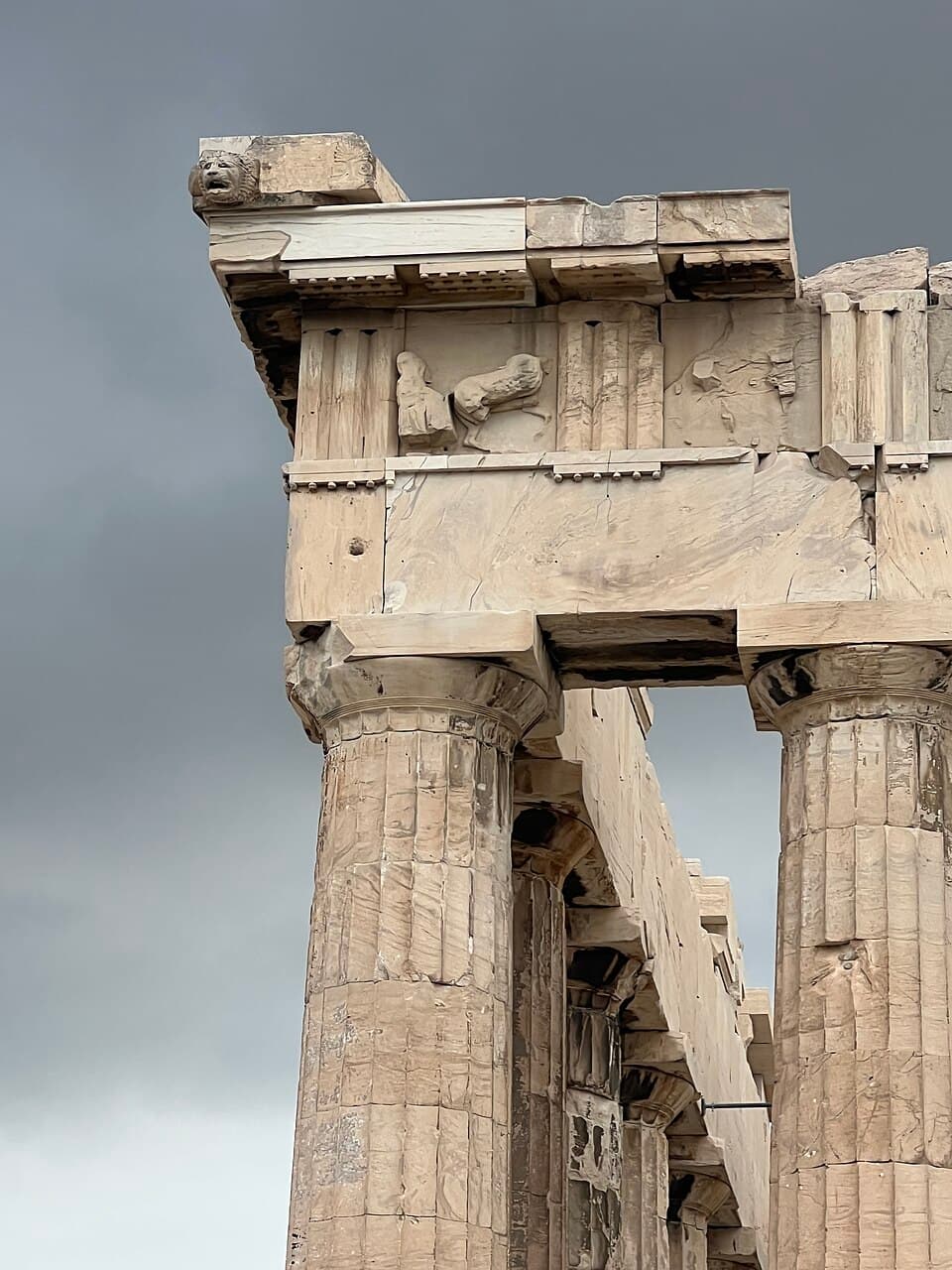
Optical Illusions in Marble
As you stand before the Parthenon, you might assume you are looking at a building made of perfectly straight lines. In reality, there isn't a single perfectly straight line in the entire structure. The ancient architects understood that a building of this size would actually appear to sag or bow to the human eye if built with mathematical straightness. To correct this, they employed a series of subtle 'optical illusions' in the marble. The most famous of these is 'entasis.' If you look at the columns, you will notice they bulge slightly in the middle. Furthermore, the columns are not perfectly vertical; they lean inward toward the center of the building. Even the platform they stand on is slightly curved, being higher in the middle than at the corners. These minute adjustments were designed to combat the way our brains process large scales. The bulge in the columns prevents them from looking 'pinched' at the center, while the inward lean gives the building a sense of stability and prevents it from appearing to splay outward. These 'tricks' ensure that when you stand back, the Parthenon appears perfectly straight and weightless. It is a testament to the incredible sophistication of the ancient Greek architects, who could manipulate stone to master the flaws of human vision.
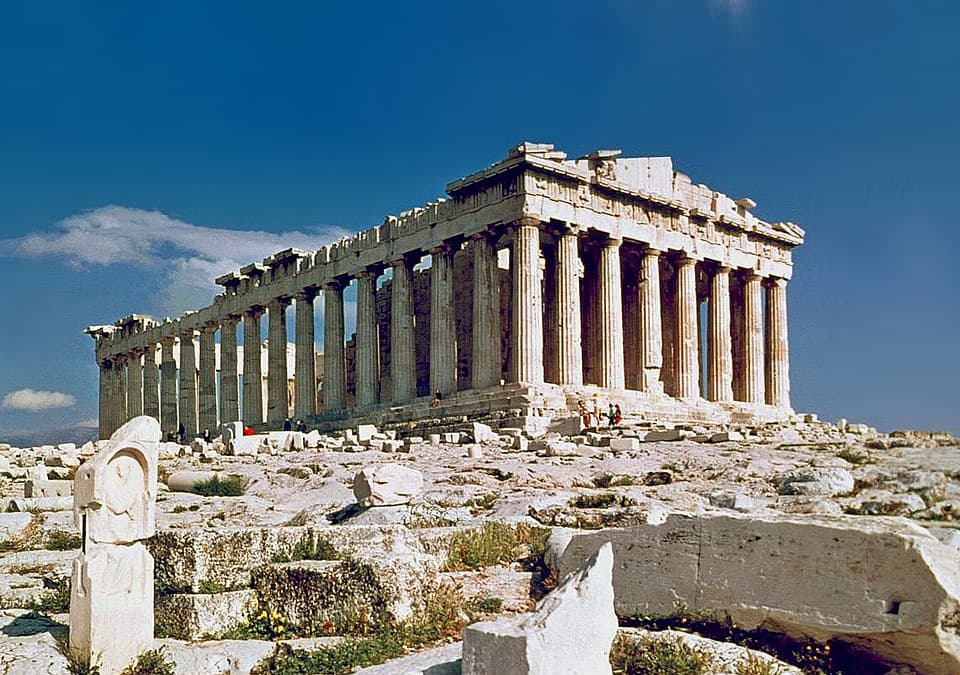
Parthenon
You are standing before the Parthenon, the definitive icon of Western architecture. Built between 447 and 438 BC, it was the crowning achievement of the Golden Age of Athens, overseen by the legendary sculptor Pheidias and designed by the architects Iktinos and Kallikrates. The structure features 46 massive outer columns in the Doric style, creating a sense of immense strength and stability. While we think of it primarily as a temple, the Parthenon served other vital roles. It was a high-security treasury, where the vast wealth of the Delian League—a massive naval alliance led by Athens—was stored. Furthermore, the building was designed specifically to house the colossal Athena Parthenos. This statue stood 12 meters tall and was made of gold and ivory. The gold plates alone weighed over a ton and were designed to be removable, essentially serving as the city’s emergency bank reserve in times of crisis. The Parthenon was meant to be the ultimate expression of Athenian excellence and wealth. Every detail, from the precision of its masonry to the sheer scale of its proportions, was calculated to overwhelm the visitor with the power of the city and its patron goddess.
Theatre of Dionysus
The birthplace of Greek drama and the site where masterpieces by Aeschylus, Sophocles, and Euripides were first performed.
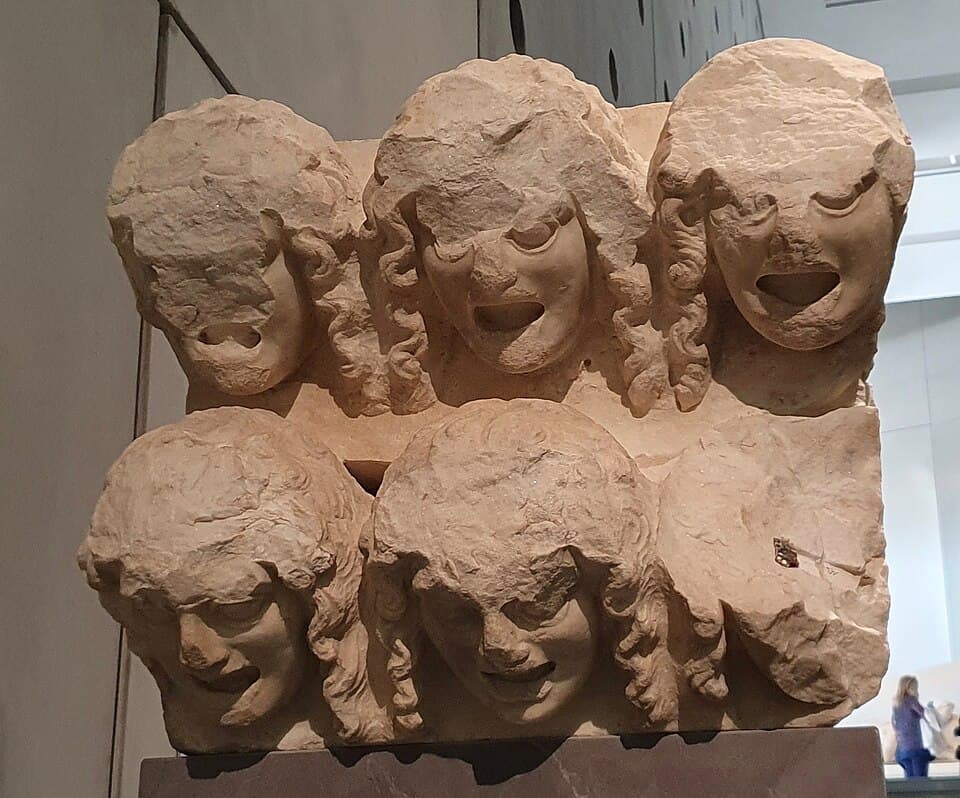
The Masks of Drama
Look closely at these carved figures in the stone, which represent the iconic masks used in ancient Greek theater. In the time of Sophocles and Aristophanes, all actors were men, and they relied on masks made from lightweight materials like stiffened linen, cork, or even wood. Because the masks covered the entire face and included hair, a single actor could transition between multiple characters—including women, gods, or elderly figures—simply by changing their headgear during a performance. The design of these masks was highly functional. With thousands of people seated far up the hillside, subtle facial expressions would have been impossible for the audience to see. Instead, the masks featured deeply carved, exaggerated features—wide-open mouths, furrowed brows, and distinct eyes—that clearly signaled a character’s identity and emotional state even to those in the highest rows. Some historians believe the shape of the mouth acted as a natural megaphone, helping to project the actor's voice across the vast outdoor space. While the original lightweight masks have long since perished, these stone reliefs preserve the visual legacy of the performers who once commanded this stage, reminding us of the stylized nature of ancient Greek performance.
Bema of Phaidros
The ornate stage front of the Theatre of Dionysus, decorated with intricate reliefs during the Roman period.
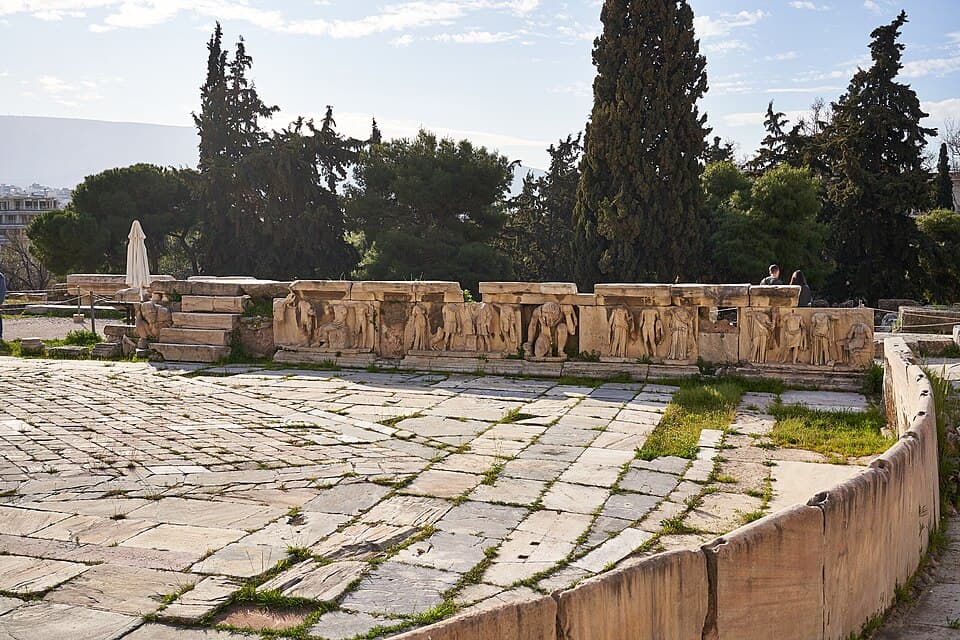
The Bema of Phaidros
This ornate marble wall is the Bema of Phaidros, an addition to the theater's stage dating from the 3rd century AD. Named after the Athenian official who dedicated it, the structure represents a later, more decorative phase of the theater’s long history during the Roman occupation. The relief carvings across its surface tell the story of Dionysus, the god of wine and festivities to whom this entire complex was dedicated. You can see various figures engaged in scenes that celebrate the god’s mythic life and his role as the patron of theater. One of the most striking features of the Bema is the row of crouching figures carved into the lower sections. These figures are Silenoi—mythical companions of Dionysus often depicted as elderly, rustic men with horse-like ears or tails. Here, they are shown in a stooped position, their muscular frames appearing to physically bear the immense weight of the stage and the performers above them. This architectural choice, using human-like figures as structural supports, echoes the design of the famous Caryatids found higher up on the Acropolis summit, but with a more rugged, earthy character suited to the wild nature of the god of the vine.
Ασκληπιείο Αθηνών
The sanctuary of Asclepius, the god of medicine, where patients sought healing through 'incubation' or dream therapy.
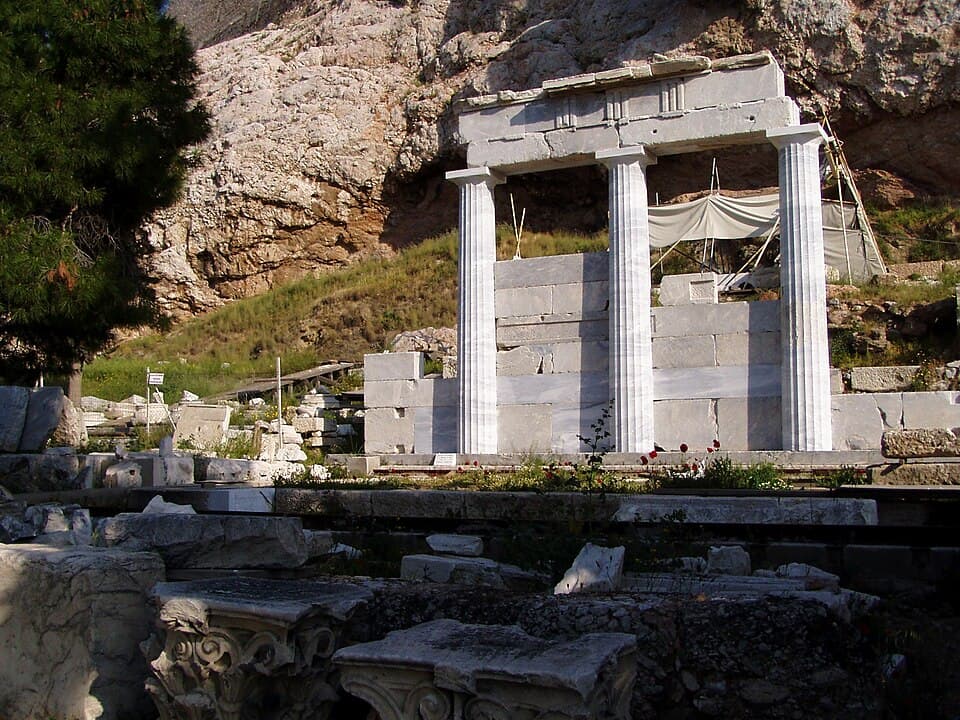
Ασκληπιείο Αθηνών
Nestled against the southern slope of the rock is the Asklepieion, the ancient world's equivalent of a hospital. Dedicated to Asclepius, the god of medicine and healing, this site provided a spiritual and physical refuge for those suffering from illness starting in the late 5th century BC. The complex included temples, living quarters, and a long colonnade where the primary healing ritual, known as 'incubation,' took place. During incubation, patients would spend the night sleeping on the floor of the sacred colonnade. They believed that while they slept, the god Asclepius—or perhaps his sacred serpents—would visit them in a dream to perform a surgery or reveal a specific cure. In the morning, the patients would share their visions with the resident priests, who would then prescribe treatments, diets, or exercises based on these divine messages. Water played a critical role in these rituals for both purification and hygiene; a sacred spring still flows from a cave in the rock nearby, just as it did thousands of years ago. The Asklepieion represents a fascinating intersection of religious faith and early medical practice, showing how the ancients sought both divine and practical intervention for their ailments.
Stoa of Eumenes
A long, two-story colonnade that provided shelter for theater audiences and served as a grand promenade for Athenian citizens.
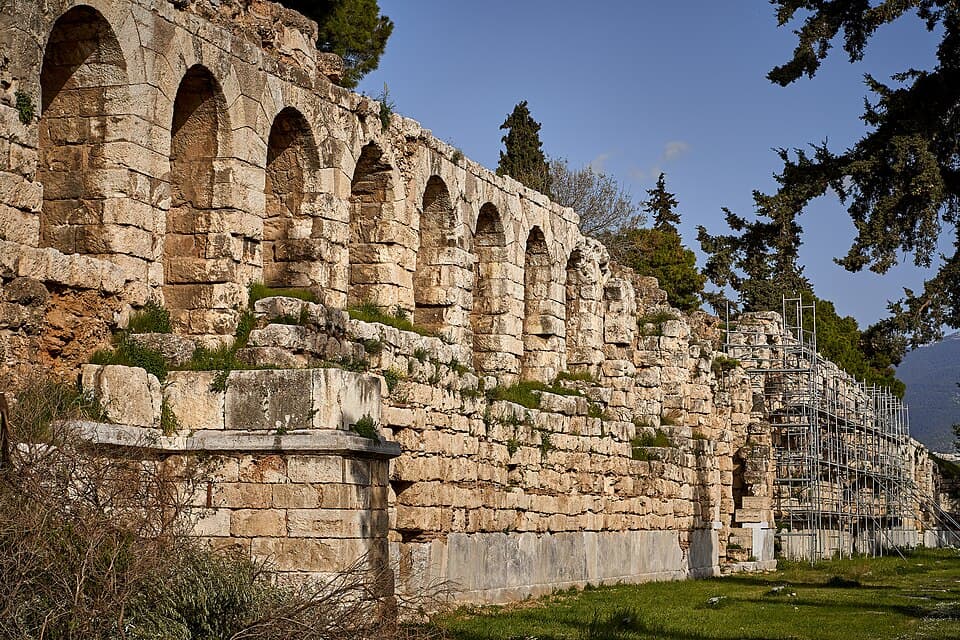
Stoa of Eumenes
This long, impressive foundation marks the Stoa of Eumenes, a two-story colonnade that once stretched 163 meters between the Theatre of Dionysus and the Odeon of Herodes Atticus. It was a generous gift to the city from King Eumenes II of Pergamon around 160 BC. Built during a time when Athens was no longer a major political power but remained the world's cultural beacon, the Stoa was designed as a grand public promenade. Functionally, the Stoa served as the ultimate theater foyer. Because the nearby Theatre of Dionysus was open to the sky, spectators needed a place to gather before shows, socialize during breaks, or seek sudden shelter from the Mediterranean rain or the scorching summer sun. Its two levels were lined with rows of columns, offering shaded walkways and beautiful views across the lower city. While much of the upper structure is gone, the massive retaining walls and the scale of the remaining masonry give us a clear sense of the grandeur that greeted ancient visitors as they strolled along this elegant Athenian boulevard, discussing the plays they had just seen or the news of the day.
Odeon of Herodes Atticus
A grand Roman theater still in use today, built by a wealthy benefactor in memory of his wife, Regilla.
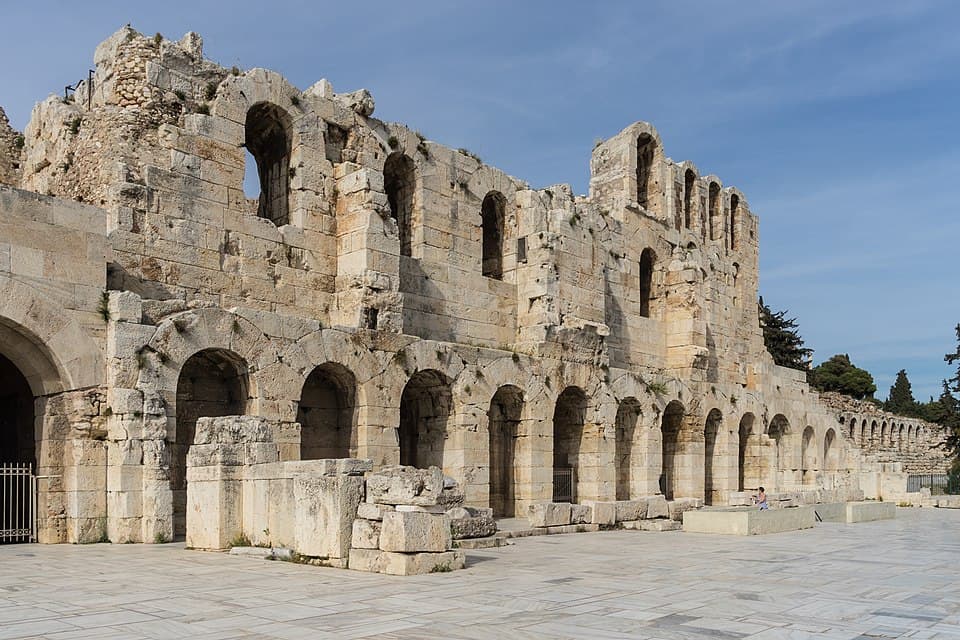
Odeon of Herodes Atticus
The steep semi-circle of stone you see here is the Odeon of Herodes Atticus, one of the most recognizable and well-preserved landmarks on the Acropolis slope. Completed in 161 AD during the Roman period, it was a deeply personal project commissioned by the incredibly wealthy Athenian aristocrat Herodes Atticus in memory of his beloved wife, Regilla. Unlike the older, open-air Greek theaters nearby, this Roman-style odeon was originally covered by a massive roof made of expensive cedar of Lebanon, which provided exceptional acoustics and protected the audience from the elements. The theater could accommodate roughly five thousand spectators, who sat in steeply tiered rows looking down at a stage backed by a towering three-story marble wall. While the roof and much of the original marble decoration are now lost, the core structure remains incredibly intact. Today, it is not just a silent ruin; it is a living venue. Every summer, it hosts the Athens Festival, where world-renowned musicians, opera singers, and dancers perform on the same stage where their ancient counterparts once stood. Watching a performance here, with the illuminated ruins of the Parthenon above and the modern city below, remains one of the most evocative cultural experiences in modern Greece.
Want to hear the rest?
Download the Stanza app to unlock all 23 stops and the complete guided audio tour.
Frequently Asked Questions
How long does the Acropolis of Athens audio tour take?
The Acropolis of Athens audio guide includes 23 narrated stops. Most visitors spend 45 minutes to 1.5 hours exploring the complete tour, though you can listen at your own pace and skip or revisit any stop.
Is the Acropolis of Athens audio guide available in my language?
Stanza supports 15 languages: English, Spanish, French, German, Italian, Portuguese, Russian, Japanese, Chinese, Korean, Arabic, Hindi, Polish, Dutch, Hebrew. Check the guide in the app to confirm the languages currently available for this tour.
Can I use the audio guide offline at Acropolis of Athens?
Yes! Download the complete Acropolis of Athens tour — including all audio, maps, and images — before your visit. The Stanza app works completely offline, so you don't need WiFi or mobile data at the venue.
How much does the Acropolis of Athens audio guide cost?
The Stanza app is free to download. The current listed price for the Acropolis of Athens audio guide is $4.99; app-store region and currency may affect the final price.
How do I use the Stanza audio guide at Acropolis of Athens?
Download the free Stanza app, search for "Acropolis of Athens", and download the tour. When you arrive at the venue, the app uses GPS to detect your location and automatically plays the relevant narration as you move between points of interest — completely hands-free.
What makes the Stanza audio guide different from other Acropolis of Athens tours?
Stanza offers GPS-triggered narration that plays automatically as you walk through Acropolis of Athens — no need to manually select stops. The tour is available in 15 languages, works fully offline, and includes 23 expertly narrated stops with images and historical context.
What other audio guides are available near Acropolis of Athens?
Stanza offers multiple audio guides in Athens, Greece and nearby areas. After downloading the app, browse the map to discover all available tours near Acropolis of Athens. Each guide can be downloaded for offline use.
Nearby Audio Guides
Ancient Agora of Athens
Athens, Greece
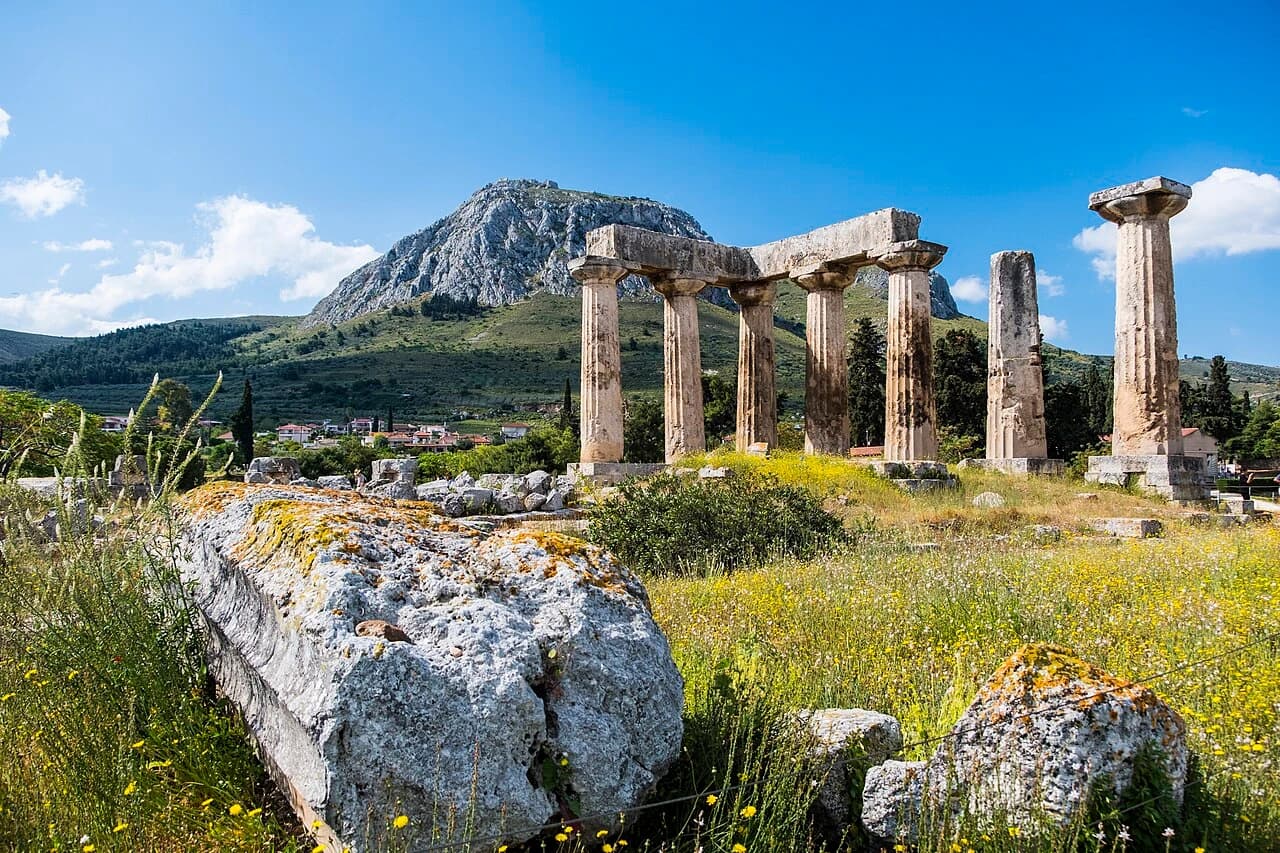
Ancient Corinth
Municipal Unit of Corinth, Greece
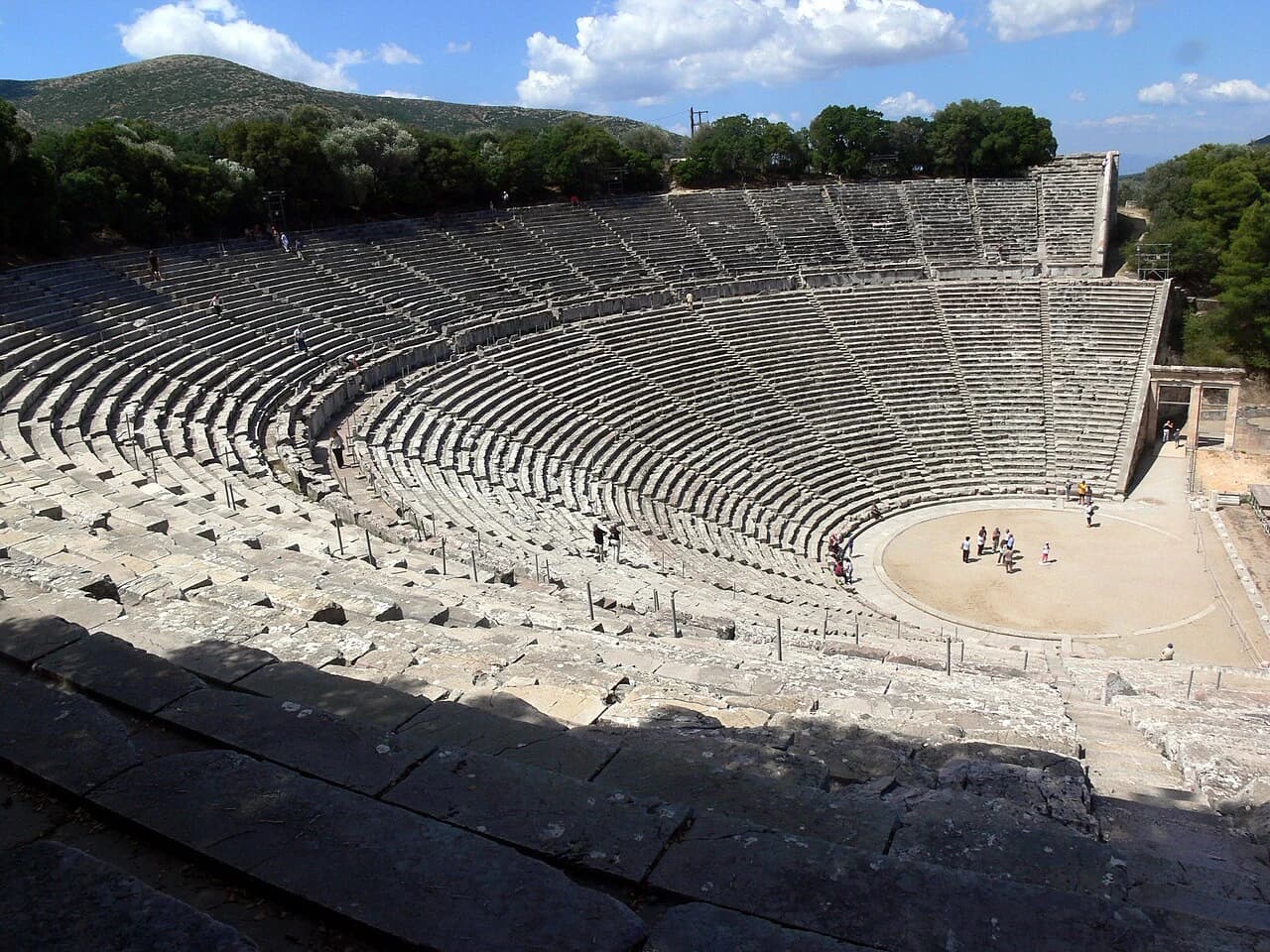
Ancient Epidaurus
Municipal Unit of Asklipieio, Greece
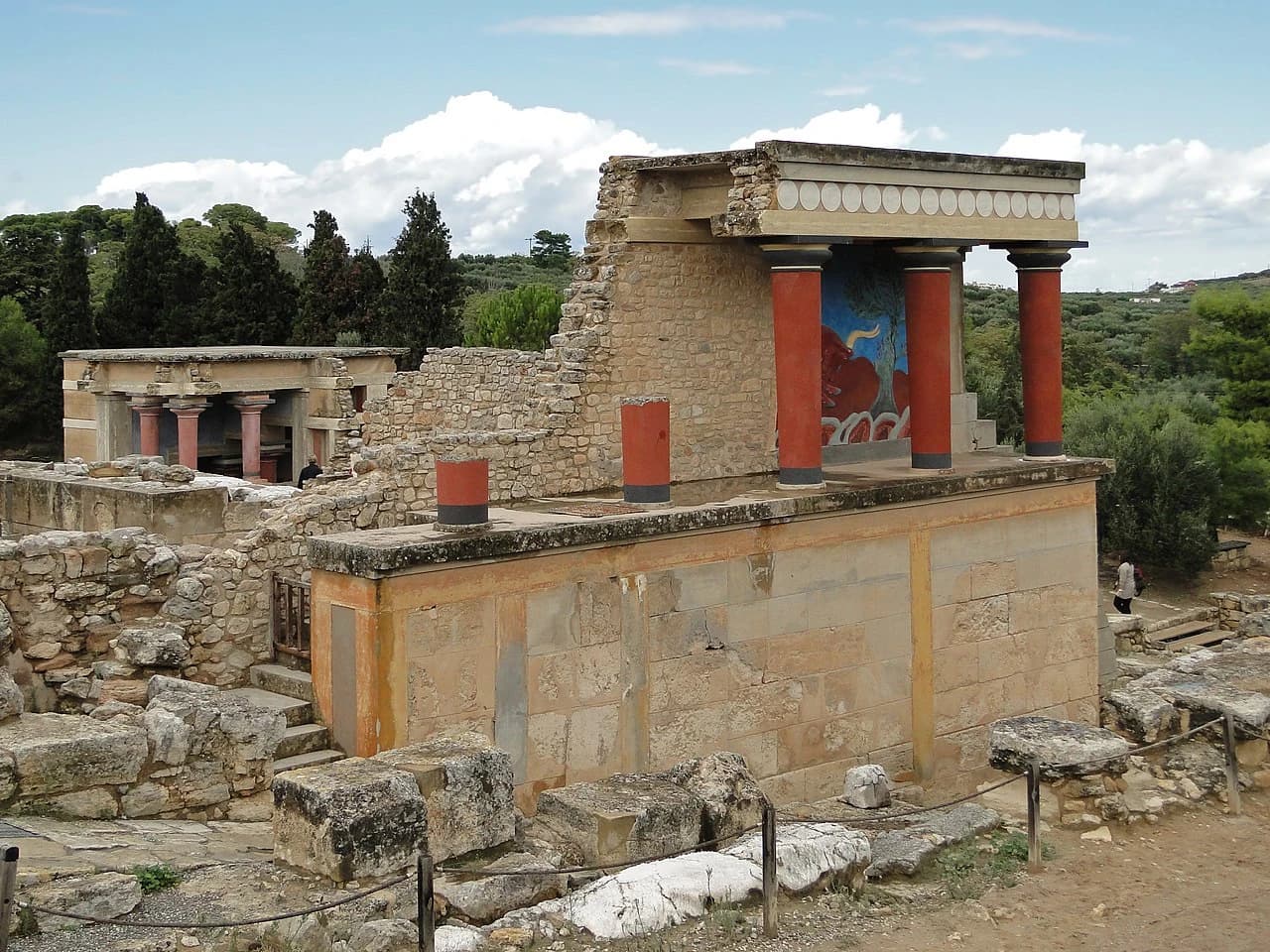
Knossos
Heraklion Municipal Unit, Greece
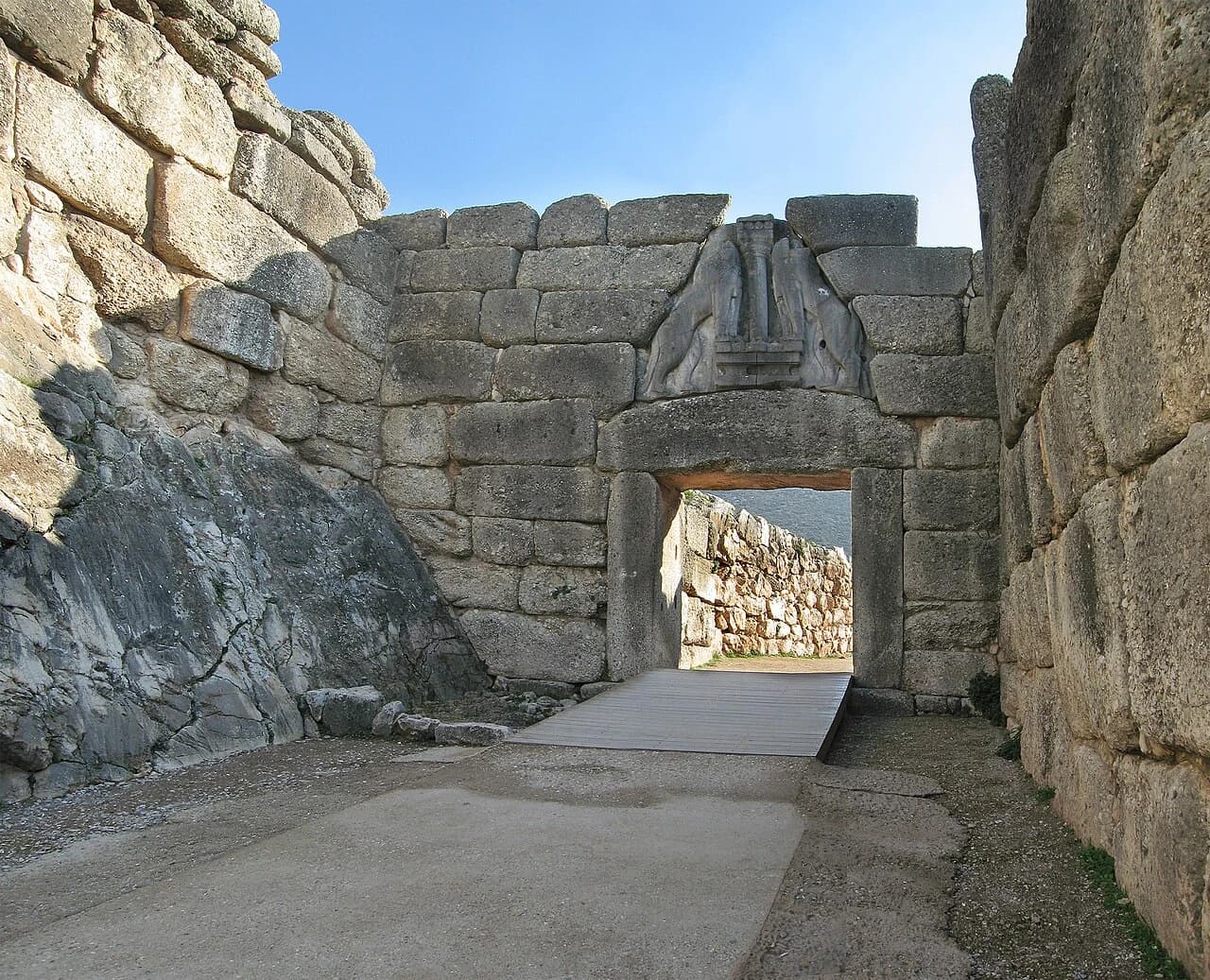
Mycenae Archaeological Site
Municipal Unit of Mykines, Greece
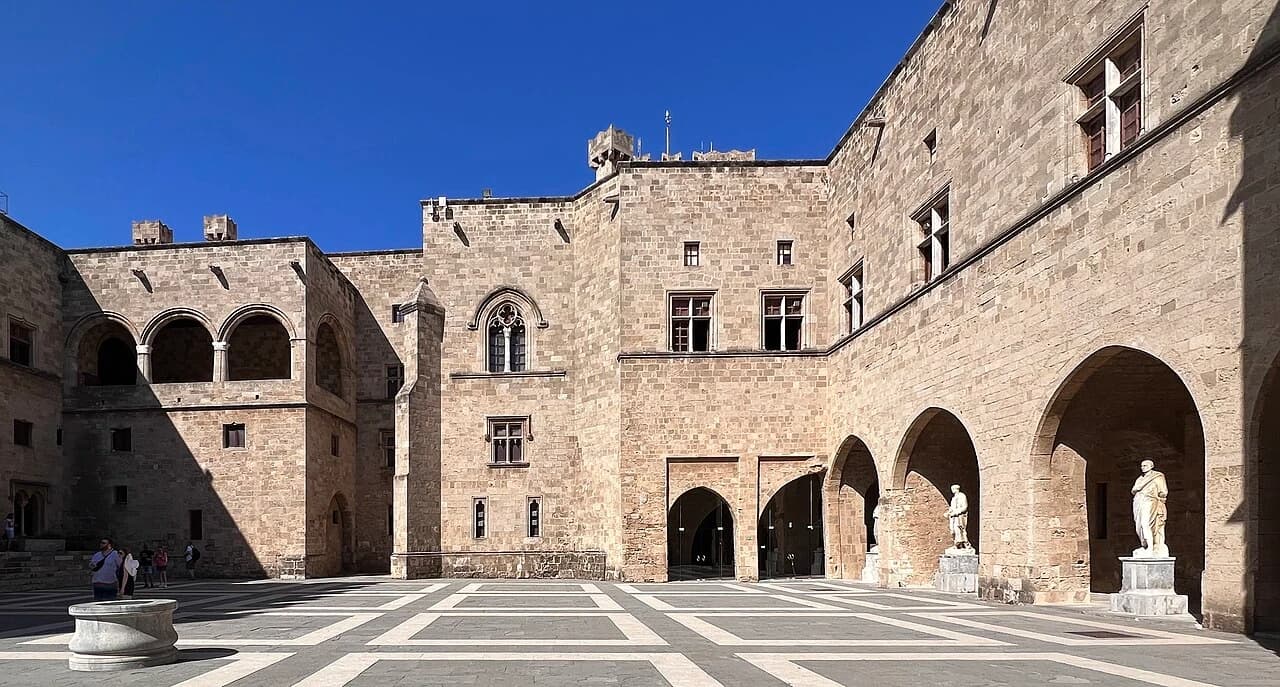
Palace of the Grand Master of the Knights of Rhodes
Municipal Unit of Rhodes, Greece