Languages
15Ancient Epidaurus Audio Guide
Ancient Epidaurus is an archaeological site in Municipal Unit of Asklipieio, Greece. Explore it with Stanza's guided offline audio tour — narrated in 15 languages.
Quick Facts
24
Stops
15
Languages
100%
Offline
📍 Municipal Unit of Asklipieio, Greece · 37.5978°N, 23.0744°E
About Ancient Epidaurus
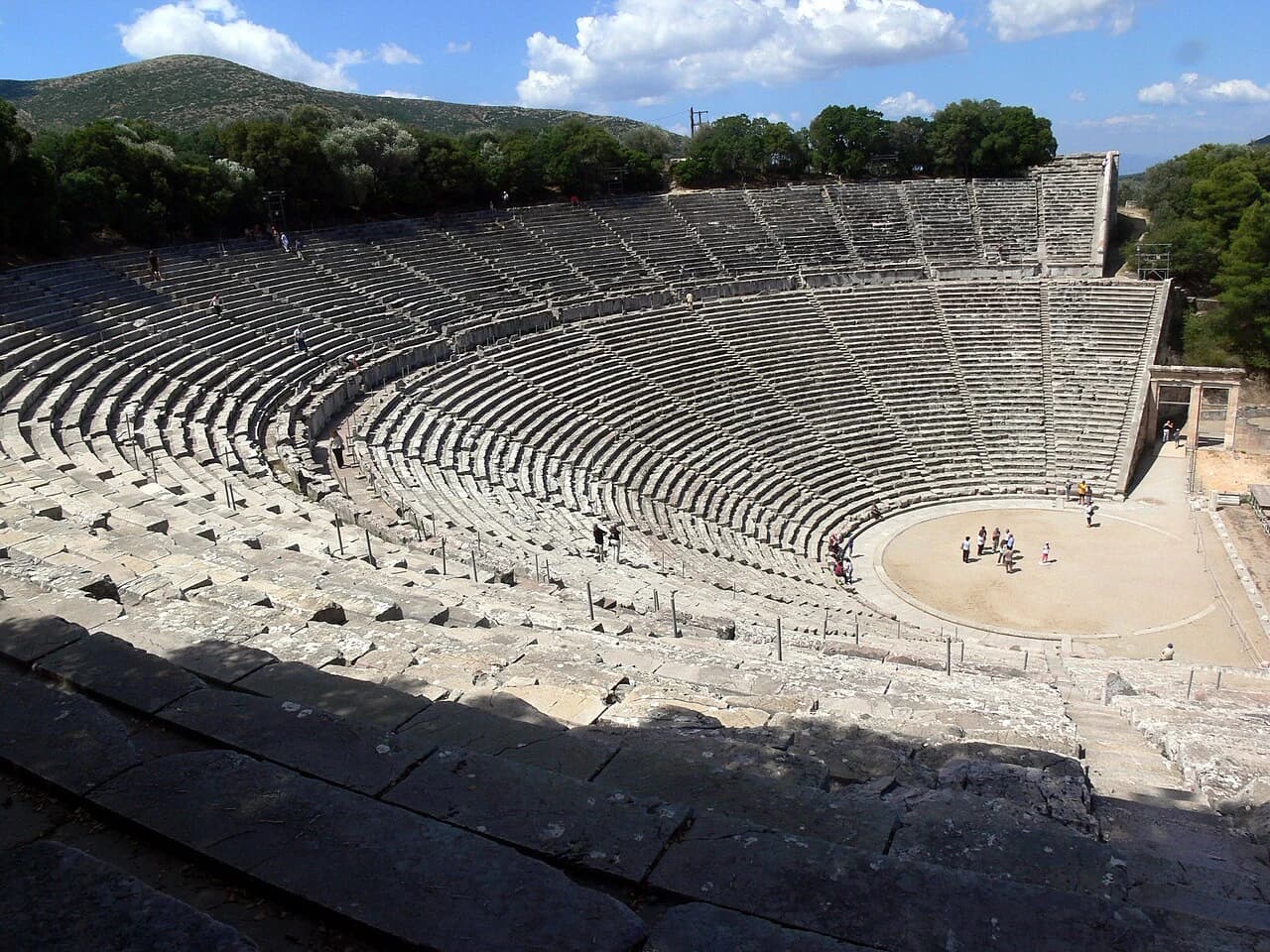
Epidaurus is an ancient city in Argolis, Greece, renowned for its well-preserved theater and the Sanctuary of Asclepius. It served as a major healing center in the classical world and is now a significant archaeological site.
This self-guided audio tour features 24 narrated stops organized across 8 sections. As a ancient city, Ancient Epidaurus offers a unique cultural experience in the heart of Municipal Unit of Asklipieio, Greece.
The Stanza audio guide is available in 15 languages and works entirely offline — download the complete tour including audio narration, maps, and images before your visit. As you walk through Ancient Epidaurus, GPS-triggered narration plays automatically at each point of interest.
Last updated:
What you will hear
Archaeological Museum of Epidaurus
Begin your journey here to see the tools of ancient medicine and the statues that once adorned the sanctuary.
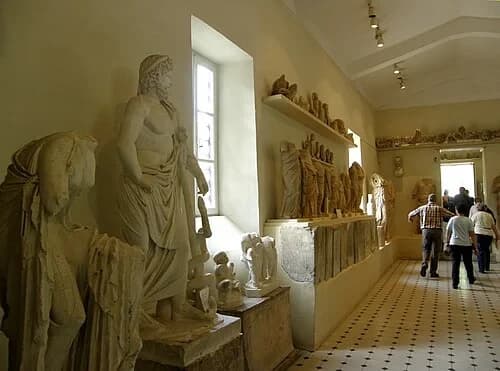
Archaeological Museum of Epidaurus
This first room contains the survivors of the sanctuary's former glory. As you walk through the space, you will see a row of headless figures positioned along the wall. In antiquity, it was a common practice to carve bodies separately from the heads. This allowed a statue to be efficiently updated with a new portrait head if a different benefactor or ruler took over the site or came into power. Beyond the figures, take a look at the massive size of the various architectural fragments displayed here. These heavy stone pieces were once perched high atop the temples. It reflects ancient engineering that these fragments were held in place primarily by their immense weight and high-precision carving rather than mortar. They give a clear sense of the monumental scale the sanctuary once possessed before time and earthquakes took their toll. Many of these pieces were recovered during excavations and moved indoors to protect them from further weathering. They represent the artistic and structural standards of one of the most important religious sites in the Peloponnese, where medicine and mythology met. Look at the jagged edges on the larger pieces; they still show the marks of the tools used to shape them thousands of years ago.
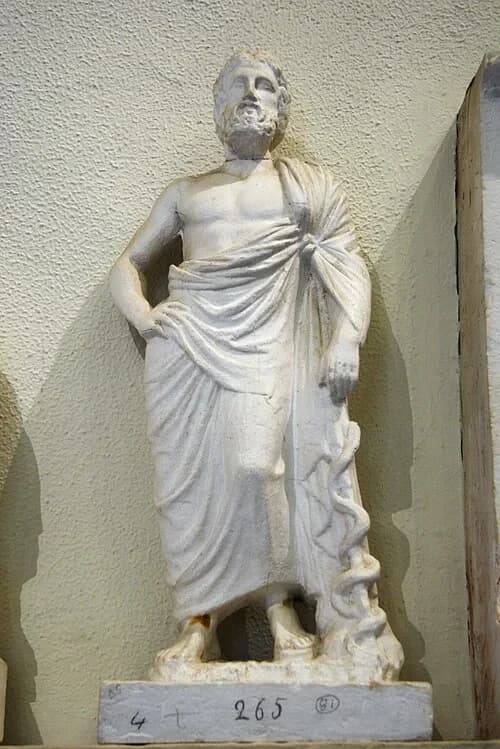
Statue of the Healing God
This figure represents Asclepius, the Greek god of medicine and the central figure of the sanctuary. If you look near his right leg, you can see a snake winding its way up his staff. This image, known as the 'Rod of Asclepius,' is still the international symbol for medicine. In ancient times, snakes were considered sacred because they shed their skin, which people interpreted as a visual symbol of rebirth and healing. The sculptors intentionally gave Asclepius a calm, fatherly expression. This was a deliberate artistic choice intended to reassure the nervous patients who often traveled hundreds of miles across treacherous terrain just to seek his help. His bearded, mature appearance suggests wisdom and care, qualities that would have inspired confidence in those seeking a miracle. In his original form, he might have been seated on a throne or standing tall as a beacon of hope within his temple. While the original temples are in ruins, statues like this one help us understand how the ancient Greeks personified the abstract concepts of health and physical restoration into a figure they could turn to in times of suffering. Small copies of these statues were often purchased by pilgrims to take home as protective charms.
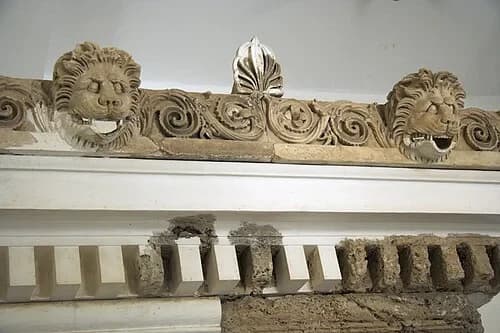
Lion Head Water Spouts
These fierce lion heads served a very practical purpose as functional gargoyles on the temple roofs. Look closely at the holes in their open mouths where water once jetted out. During heavy Greek rainstorms, these spouts channeled water away from the building’s foundations and its delicate, brightly painted marble surfaces. This prevented erosion and kept the sanctuary looking pristine and colorful. Dating back to approximately 280 BC, these specific carvings demonstrate impressive ancient engineering and artistic foresight. Because they were positioned high above the ground on the roofline, they were carved with deep, exaggerated features to ensure they remained visible and impressive to visitors looking up from below. The craftsmanship is remarkably detailed, from the flowing manes to the snarling teeth. Water management was a critical concern for ancient architects building monumental structures on sloping terrain. By transforming simple drainpipes into majestic predators, they combined utility with religious symbolism. These spouts are among the few decorative elements that survived the eventual collapse of the temples, giving us a glimpse into the sophisticated finishing touches that once adorned the sanctuary's most sacred buildings. One lion even has traces of the original paint still tucked into the crevices of its mane.
Bust of Panagiotis Kavvadias
A tribute to the Greek archaeologist who dedicated his life to excavating and revealing the wonders of Epidaurus.
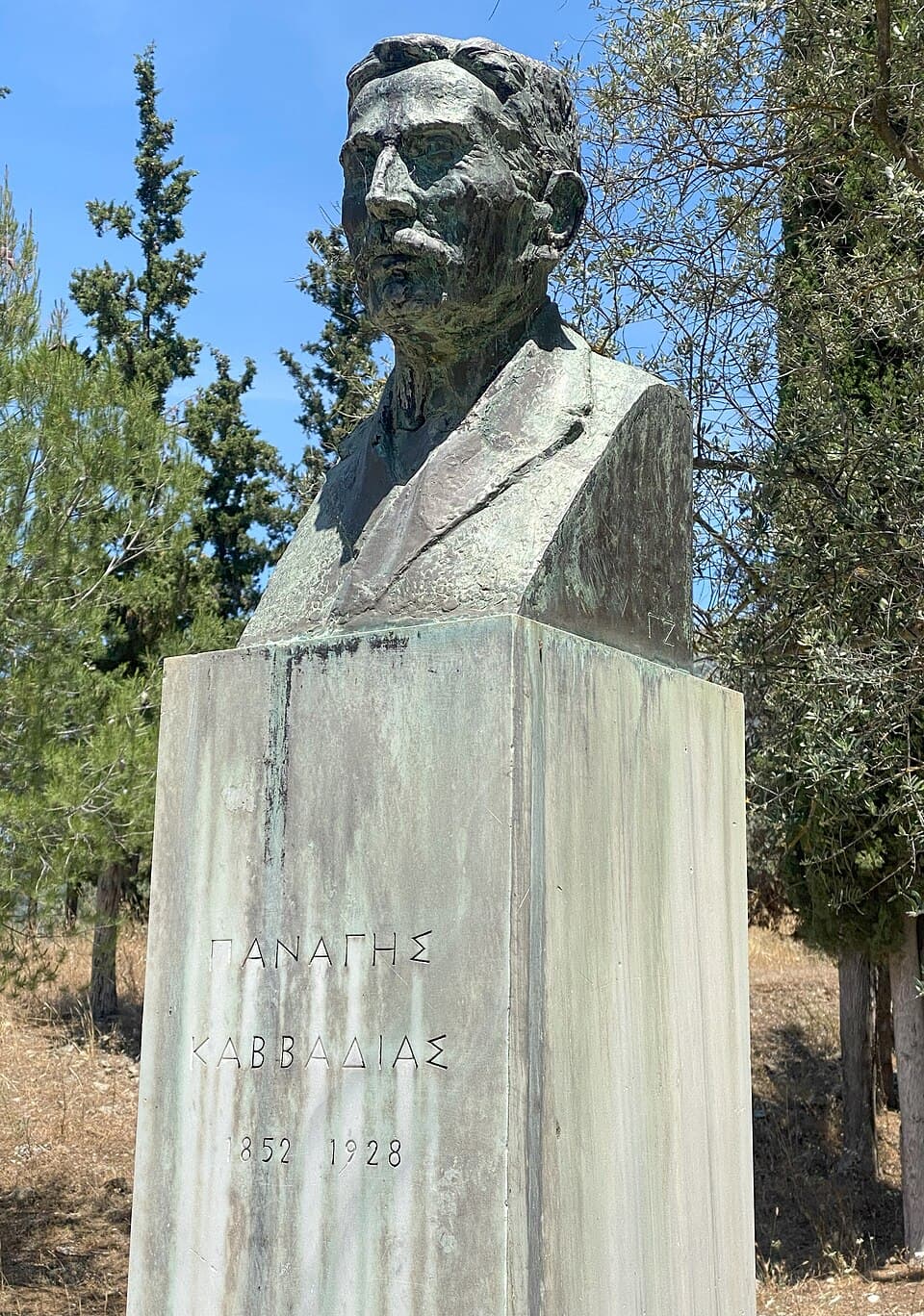
Bust of Panagiotis Kavvadias
This bust commemorates Panagiotis Kavvadias, the Greek archaeologist who was instrumental in bringing Epidaurus back to light. When he began his work here in 1881, the sanctuary was essentially lost to time, buried under meters of soil and hidden by dense overgrowth. Kavvadias dedicated nearly 40 years of his professional life to this single location. Notice the focused and determined expression on the statue's face; it reflects the decades of patience required to meticulously piece together thousands of shattered marble fragments found scattered across the valley. His work was not just about digging; it was about the careful reconstruction of a broken puzzle. Without his tireless efforts and systematic approach to excavation, our understanding of ancient Greek medicine and theater would be far more limited. He oversaw the discovery of the major temples, the guesthouse, and the famous theater, ensuring they were preserved for future generations. His legacy is the very site you see around you today. He stands as a central figure in the history of Greek archaeology, representing the transition from accidental discoveries to the scientific recovery of the past. The pedestal beneath the bust was placed there to honor him on the fiftieth anniversary of his first excavation.
The Katagogion (Ancient Hostel)
The largest building at the site, this two-story hostel provided 160 rooms for the many pilgrims seeking healing.
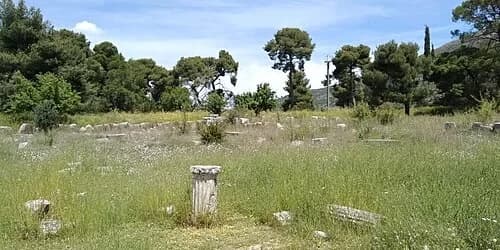
The Katagogion Guest House
These low stone foundations mark the site of the Katagogion, which was effectively the largest guest house in the ancient world. You can think of it as the 'Hilton' of antiquity. It was a massive square building divided into four internal courtyards, containing approximately 160 guest rooms. Because people traveled from all over the Mediterranean to reach Epidaurus, they often needed to stay for several weeks while waiting for their turn to consult with the priests. This building provided essential housing for these sick travelers, their families, and even their servants. The ruins suggest the building was originally two stories high, built around central open spaces that allowed for light and air circulation. Life here would have been a mix of hopeful anticipation and communal living. Patients from different cultures and backgrounds would share their stories while they prepared for the rituals ahead. While only the base of the walls remains today, the sheer footprint of the building gives a sense of the immense popularity of the sanctuary and the logistical effort required to host thousands of visitors every year. Archaeologists found hundreds of bronze coins dropped between the stones of the flooring, likely lost by travelers as they checked into their rooms.
The Great Dining Hall (Hestiatorion)
A massive complex where ritual meals were shared, featuring a monumental entrance gateway called a Propylon.
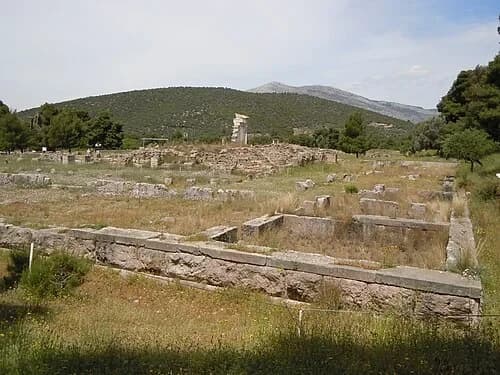
The Hestiatorium Banquet Hall
The ruins here belong to the Hestiatorium, a grand banquet hall used for ritual dining. Healing at Epidaurus was a holistic wellness retreat that extended far beyond medicine and surgery. The Greeks understood that social connection and healthy eating were vital components of physical recovery. In this space, pilgrims would gather to eat together, often sharing the meat from animals that had been sacrificed in the nearby temples. This communal act was both a religious ritual and a way to build a supportive community among the patients. Interestingly, the central courtyard once featured an indoor running track. This demonstrates the Greek belief that physical fitness was directly tied to medical health. Even as they sought divine cures, visitors were encouraged to keep their bodies active. The combination of prayer, social interaction, and physical exercise created a comprehensive environment designed to restore the whole person. Today, we only see the outlines of these rooms, but they once echoed with the sounds of hundreds of people dining and debating, all unified by their shared journey toward health. Some of the stone drainage channels used to wash the floors after banquets are still visible in the corners of the foundations.
Odeon of Epidaurus
A smaller, sheltered theatre built within the courtyard of the older gymnasium during the Roman period for musical performances.
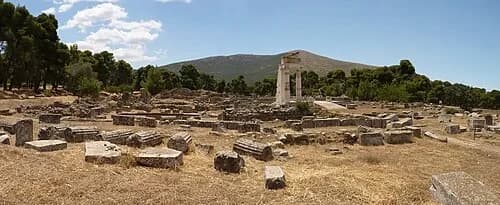
Music as Medicine
Looking across this debris field, you are standing near the heart of the sanctuary's musical life. The ancient Greeks did not see music simply as entertainment; they believed it had a literal, physical effect on the human body. The Odeon was specifically designed as a smaller, enclosed space to concentrate sound, making the auditory experience much more intense than in the open-air theater. Musicians would play instruments like the lyre and the flute, creating melodies intended to calm the minds of anxious patients. This musical therapy was a prerequisite for the more mystical and psychological parts of the healing process that followed. The goal was to reach a state of mental tranquility that would make the body more receptive to the god’s intervention. By soothing the nervous system, the priests believed they were preparing the body for a successful cure. Although the roof has long since collapsed and the music has stopped, the ruins of the Odeon remind us of the sophisticated understanding these ancient people had regarding the connection between our senses and our overall health. Fragments of mosaic flooring discovered here suggest that the space was decorated to match its important cultural function.
Temple of Artemis
A small but elegant temple dedicated to the goddess of the hunt, who was often associated with health and childbirth.
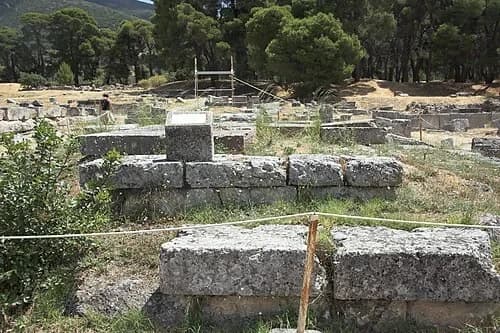
Temple of Artemis
Among the grander structures of the sanctuary, these modest foundations mark the Temple of Artemis. As the sister of Apollo and a powerful deity in her own right, she was deeply revered at Epidaurus, specifically as the protector of young children and the goddess of childbirth. Unlike the massive hospital-like zones nearby, this space offered a more intimate setting for women seeking divine aid. Local tradition suggests that women traveled from across the region to pray here for a safe delivery or to offer thanks after a child was born. Today, you can see the remaining stone blocks that once supported a ring of elegant Doric columns. These pillars would have given the temple a classical, dignified appearance, reflecting Artemis's status as a guardian of life's transitions. The temple's placement within the sacred precinct highlights how the ancient Greeks integrated family health and maternal well-being directly into their broader medical landscape. Small votive offerings found during excavations confirm the deeply personal connection patients felt toward this goddess. Look closely at the spacing of the base blocks to see the footprint of the original ring of pillars.
Tholos (The Labyrinth)
The most mysterious building at Epidaurus, this circular structure contains an underground labyrinth whose purpose remains a subject of debate.
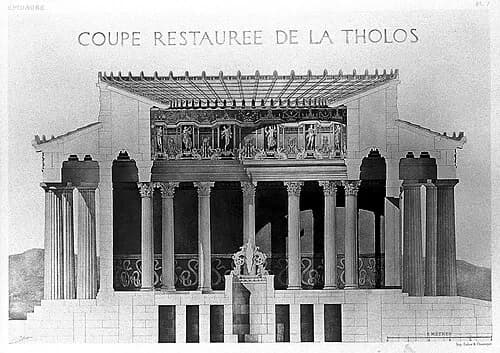
The Tholos
The circular building shown in this drawing, known as the Tholos, was arguably the most beautiful and enigmatic structure at Epidaurus. While its exterior featured a stunning colonnade, the real mystery lay beneath its floor. Excavations revealed a complex labyrinth consisting of concentric circular walls with small, deliberate openings. Many historians believe this subterranean maze was the home of the sacred snakes of Asclepius. It is possible that patients were led through these dark, winding tunnels as part of a therapeutic ritual. The experience was likely intended to force them to confront their fears in the darkness, metaphorically shedding their illnesses just as a snake sheds its skin to emerge renewed. This psychological aspect of healing was a hallmark of the Epidaurus experience. The architecture itself was a marvel of the 4th century BC, blending intricate carvings with this dark, mysterious underworld. The circular form was rare in Greek architecture, setting the Tholos apart from traditional rectangular temples. Even after centuries of study, the exact nature of the rituals performed here remains a subject of intense debate. Observe the intricate pattern of the concentric rings in the floor plan, which suggests a highly controlled movement of people or animals.
Abaton (The Sleeping Porch)
Patients would sleep here overnight, hoping to be visited by the god Asclepius in their dreams to receive a cure.
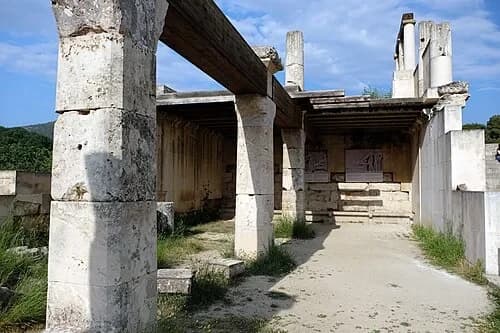
The Dream Clinic
Look toward the reconstructed section of the Abaton, marked by the prominent wooden beams. This gives a sense of the scale of this 70-meter-long porch where the logistics of ancient healing were carried out. While patients slept on the floor in their search for divine dreams, the priests would release harmless yellow Aesculapian snakes to crawl among them. To a modern visitor, the idea of serpents slithering over sleeping bodies might seem terrifying, but for the Greeks, it was a sacred blessing. Tradition held that if one of these snakes licked a wound or simply touched a patient during the night, they were instantly cured. These serpents were seen as living incarnations of Asclepius. This specific species of snake is still found in the region today and is known for its docile nature. The architecture of the porch provided a sheltered but open environment, allowing for fresh air while keeping the dreamers contained. The wooden beams you see here are modern reconstructions based on historical evidence of how these vast roofs were supported without internal walls. This area represents the intersection of biological reality and religious fervor that defined the Epidaurus experience. Notice how the open design of the porch would have allowed the sounds of the surrounding forest to drift in during the night.
Want to hear the rest?
Download the Stanza app to unlock all 24 stops and the complete guided audio tour.
Frequently Asked Questions
How long does the Ancient Epidaurus audio tour take?
The Ancient Epidaurus audio guide includes 24 narrated stops. Most visitors spend 45 minutes to 1.5 hours exploring the complete tour, though you can listen at your own pace and skip or revisit any stop.
Is the Ancient Epidaurus audio guide available in my language?
Stanza supports 15 languages: English, Spanish, French, German, Italian, Portuguese, Russian, Japanese, Chinese, Korean, Arabic, Hindi, Polish, Dutch, Hebrew. Check the guide in the app to confirm the languages currently available for this tour.
Can I use the audio guide offline at Ancient Epidaurus?
Yes! Download the complete Ancient Epidaurus tour — including all audio, maps, and images — before your visit. The Stanza app works completely offline, so you don't need WiFi or mobile data at the venue.
How much does the Ancient Epidaurus audio guide cost?
The Stanza app is free to download. The current listed price for the Ancient Epidaurus audio guide is $3.99; app-store region and currency may affect the final price.
How do I use the Stanza audio guide at Ancient Epidaurus?
Download the free Stanza app, search for "Ancient Epidaurus", and download the tour. When you arrive at the venue, the app uses GPS to detect your location and automatically plays the relevant narration as you move between points of interest — completely hands-free.
What makes the Stanza audio guide different from other Ancient Epidaurus tours?
Stanza offers GPS-triggered narration that plays automatically as you walk through Ancient Epidaurus — no need to manually select stops. The tour is available in 15 languages, works fully offline, and includes 24 expertly narrated stops with images and historical context.
What other audio guides are available near Ancient Epidaurus?
Stanza offers multiple audio guides in Municipal Unit of Asklipieio, Greece and nearby areas. After downloading the app, browse the map to discover all available tours near Ancient Epidaurus. Each guide can be downloaded for offline use.
Nearby Audio Guides
Acropolis of Athens
Athens, Greece
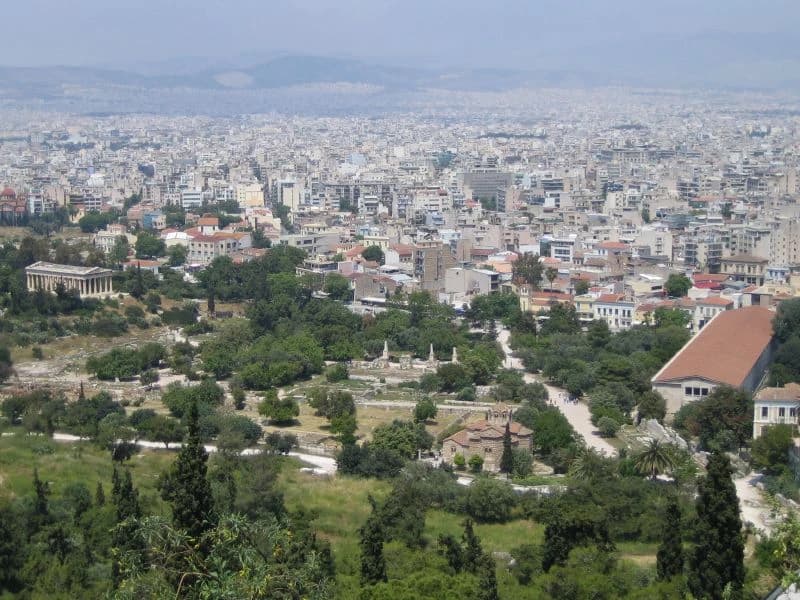
Ancient Agora of Athens
Athens, Greece
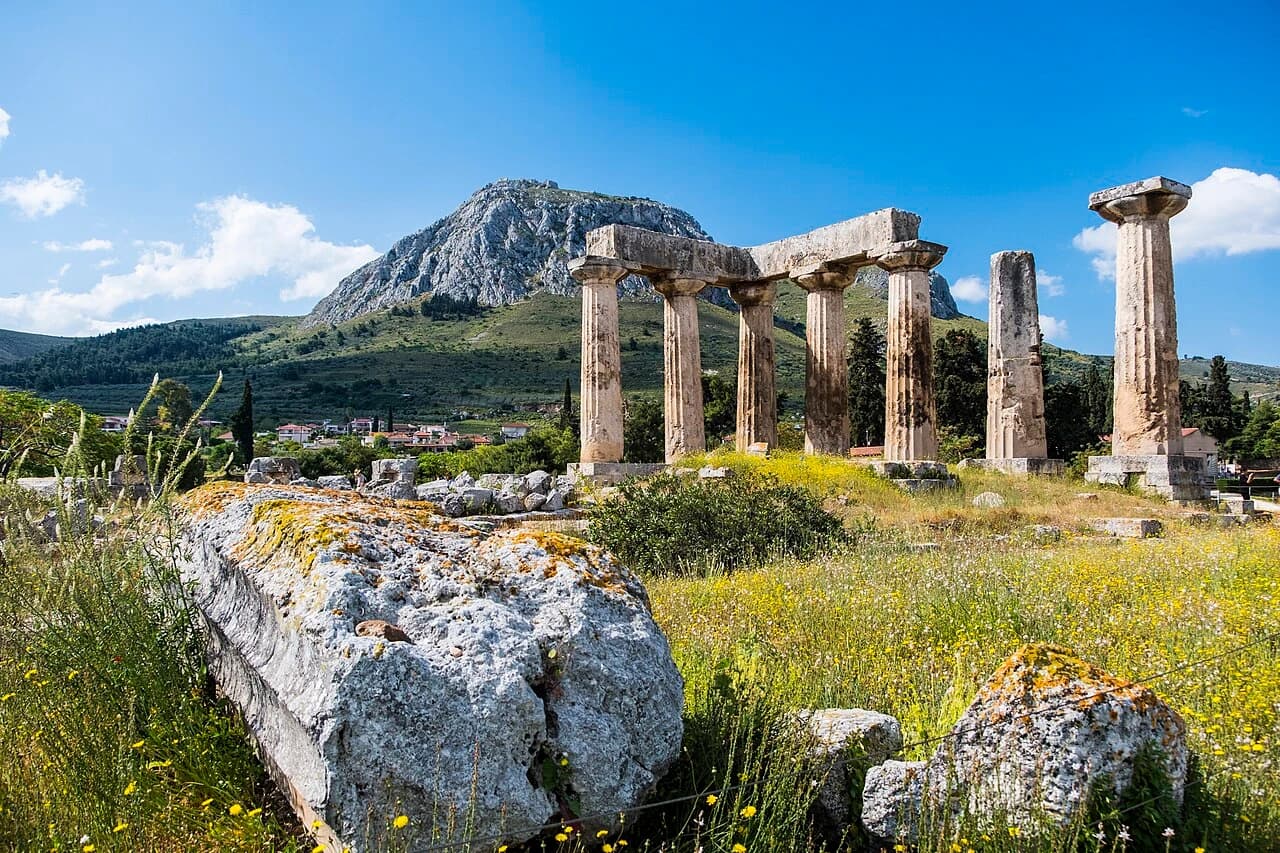
Ancient Corinth
Municipal Unit of Corinth, Greece
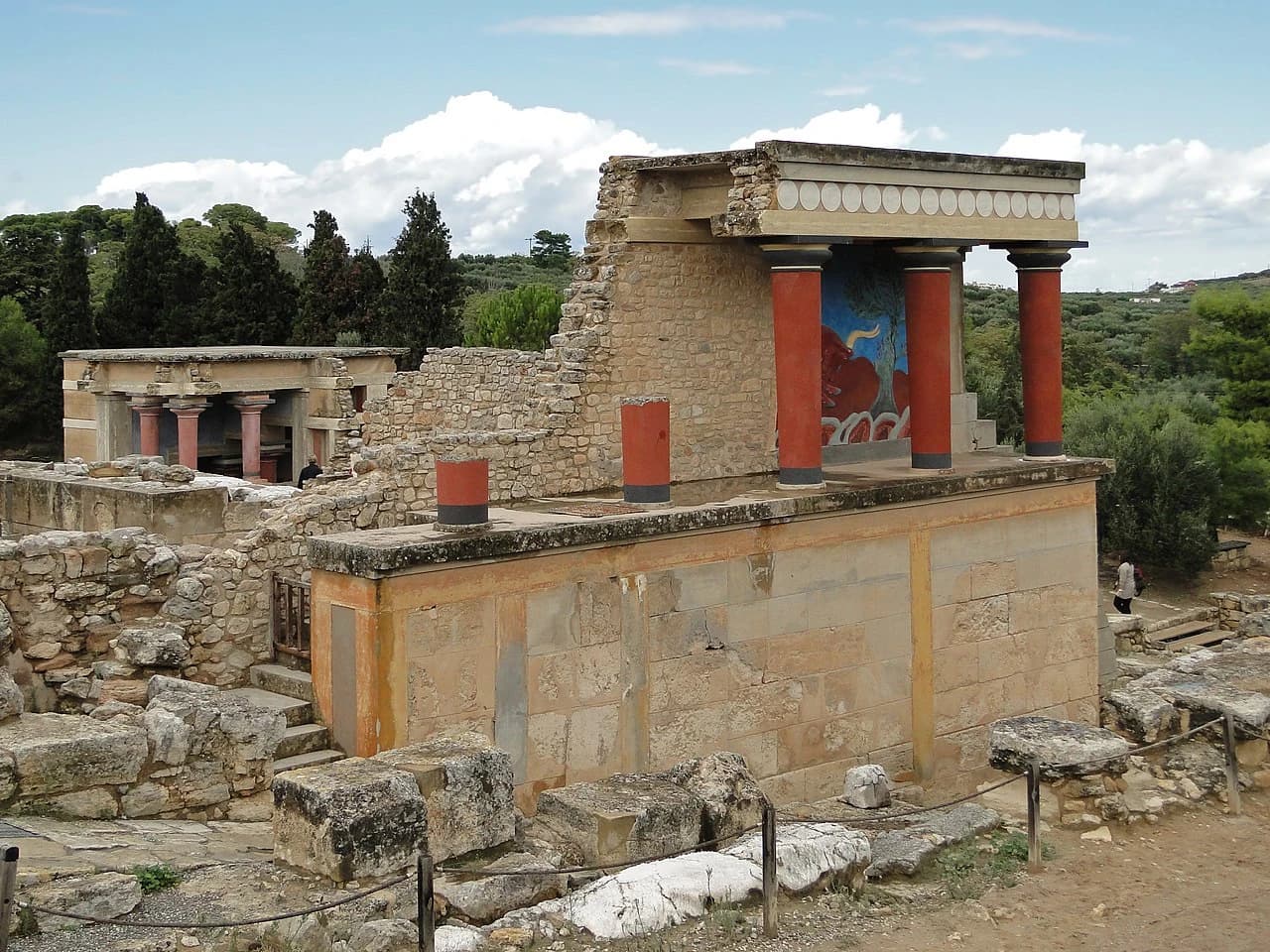
Knossos
Heraklion Municipal Unit, Greece
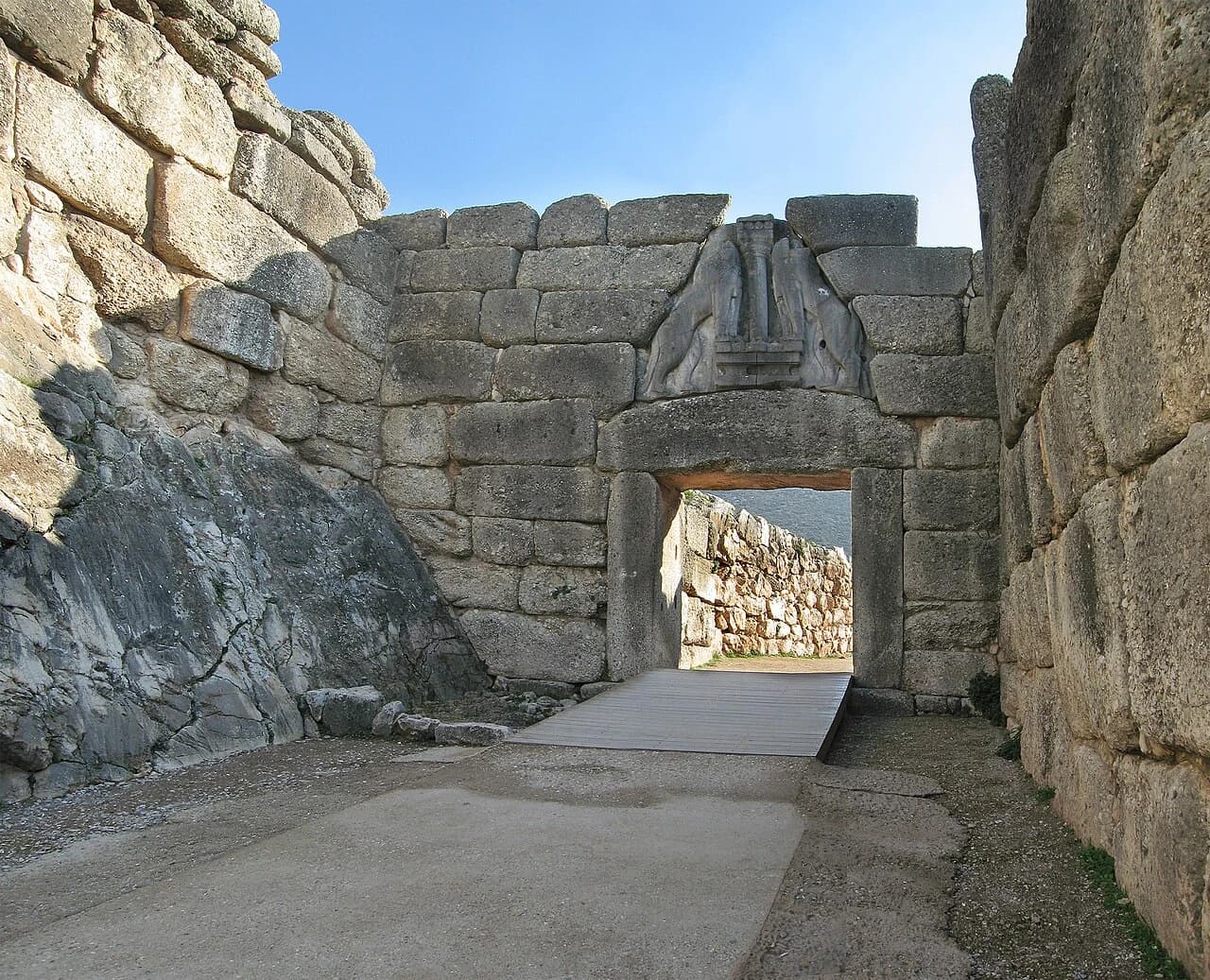
Mycenae Archaeological Site
Municipal Unit of Mykines, Greece
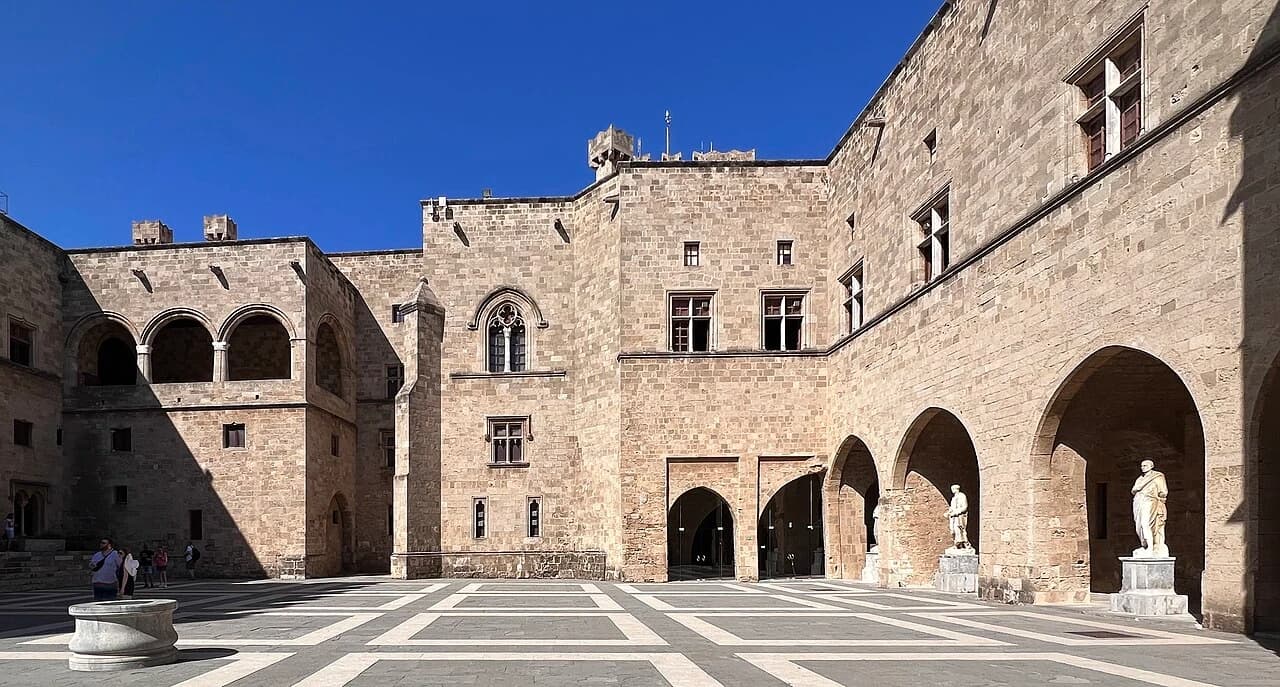
Palace of the Grand Master of the Knights of Rhodes
Municipal Unit of Rhodes, Greece