Travel tips/Luxor, Egypt
The Valley of the Kings and the Nile’s west bank at Luxor: how to plan the day
The royal tombs are the reason most people cross the Nile. Understand how the tickets work, pick one or two other sites, and leave room to look properly.
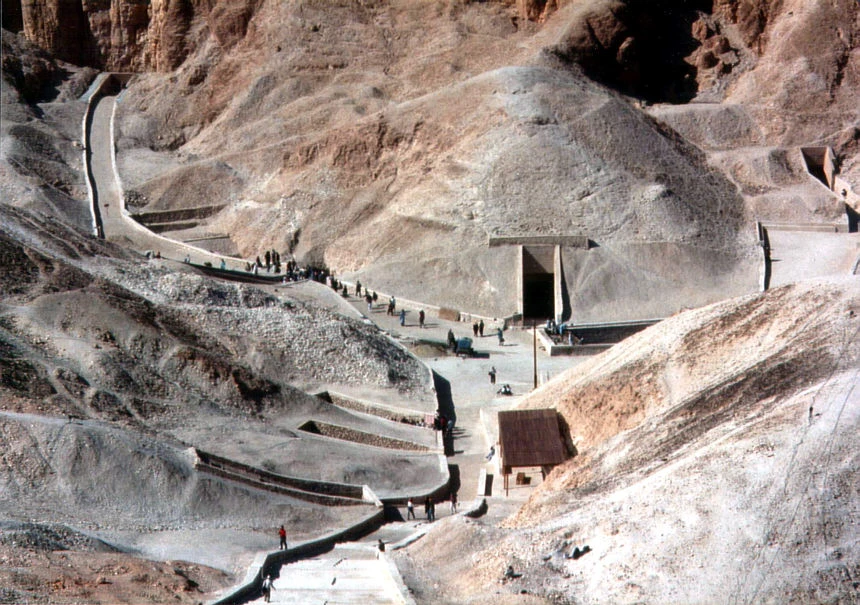
Across the river from Luxor’s great temples, the west bank of the Nile was where the kings of the New Kingdom chose to be buried, in a dry valley rather than under pyramids. A day there can feel overwhelming: dozens of tomb numbers, several tickets, and temples spread out across the plain. It gets easier once you know how the valley works and decide in advance what kind of day you want.
Why the kings were buried here
According to the ministry, rulers of the 18th, 19th and 20th Dynasties (about 1550 to 1069 BC) were buried in this desert valley across the river from ancient Thebes. The west bank of the Nile was linked with the setting sun and so with the dead, and a pyramid-shaped peak above the valley was sacred to Hathor, the Mistress of the West. Earlier pyramids had been robbed, so hidden rock-cut tombs offered more protection. Thutmose I is the first king confirmed to have been buried here.
Some royal family members and a few high officials were buried here too. The ministry counts more than 60 tombs, plus about 20 unfinished pits, across the East and West Valleys. The KV numbers over the entrances go back to John Gardner Wilkinson, who painted them in 1827. The area is part of the UNESCO World Heritage Site of Ancient Thebes with its Necropolis, inscribed in 1979.
How tickets and tombs work
Tombs are rarely all open at the same time, and some close for restoration, so the list changes. The general ticket covers a limited number of the tombs open that day; ask at the ticket office how many it includes and which are open before you choose.
At the time of writing (November 2026), the ministry’s page lists the Valley of the Kings as open daily from 06:00 to 17:00, with a general ticket of EGP 750 for foreign adults and EGP 375 for foreign students. The ministry lists Tutankhamun’s tomb (KV62) with its own price of EGP 700 for foreign adults. Other tombs, such as that of Seti I (KV17), may also need an extra ticket; confirm this on the day rather than relying on older blog posts. Photography rules can differ too, so ask before you raise a camera.
- Choose your tombs after seeing the list of what is open, not from an old ‘top tombs’ list.
- Bring enough for separate tomb tickets and check which payment methods are accepted.
Choosing which tombs to see
Instead of hunting for a ‘best’ list, pick tombs that tell you different things. Tutankhamun’s tomb is famous for what Howard Carter found in 1922: the ministry says it is the only royal tomb in the valley found relatively intact, with about 5,000 objects. The tomb itself is small, and only the burial chamber is decorated, which the ministry links to his short reign of about nine years. Go for the story rather than the scale.
Seti I’s tomb (KV17) was rediscovered by Giovanni Belzoni in 1817. The joint tomb of Ramesses V and Ramesses VI (KV9) carries more than a thousand Greek, Latin and Coptic graffiti left by ancient visitors. If they are open and in your budget, they contrast well with the tombs on the general ticket. Read the sign at each entrance before going down; it names the owner and shows the plan.
What to pair it with
Most people combine the valley with one or two other sites. Hatshepsut’s temple at Deir el-Bahari is the obvious partner: the ministry describes three levels with colonnades, designed by her steward Senenmut, with reliefs of an expedition to Punt. At the time of writing (November 2026), the ministry lists it as open 06:00 to 17:00 with a foreign adult ticket of EGP 440.
Deir el-Medina was the village of the craftsmen who cut and decorated the royal tombs: the valley from the workers’ side. The Ramesseum (Ramesses II) and Medinet Habu (Ramesses III, with its reliefs of the Sea Peoples) are mortuary temples where kings were worshipped after death. The Colossi of Memnon, two seated statues of Amenhotep III before his ruined temple, need only a short stop. Nefertari’s tomb in the Valley of the Queens has had restricted access and its own ticket, so check before planning around it.
Pacing a winter day
Winter is the comfortable season, but the sun on the west bank of the Nile is still strong and the sites are spread out, so you will need transport between them. A simple shape works well: the Valley of the Kings first, then Hatshepsut’s temple or Deir el-Medina, a proper lunch break, and one temple such as Medinet Habu or the Ramesseum in the afternoon if you still have energy. Three or four sites is plenty for most people.
Ask about walking distances and steps if mobility matters; tomb corridors can slope down steeply. Keep the east bank, with Karnak and Luxor Temple, for a separate day. If you want background without carrying a book, Stanza has audio guides for the valley and several sites on the west bank: try the free preview, then download before you cross, since they work offline.
- Carry water, a hat and sun protection.
- Agree the full route and waiting time with your driver before setting off.
A few more questions before you go
Do I need a separate ticket for Tutankhamun’s tomb?
The ministry lists Tutankhamun’s tomb with its own price, separate from the Valley of the Kings ticket. Check at the ticket office on the day, as arrangements can change.
How many tombs can I see with the general ticket?
The general ticket covers a limited number of the tombs open that day, and the list changes. Ask at the ticket office how many are included and which are open before you choose.
Can I see the west bank of the Nile in one day?
You can see the Valley of the Kings and two or three other sites in a day with transport and a break. Seeing every site in one day is not realistic for most people.
Sources & further reading
Visitor information checked .
Egyptian Ministry of Tourism and Antiquities pages and reference sources checked on 4 November 2026. Prices, hours and the list of open tombs change; reconfirm them for your date. This is an editorial plan, not a timed or accessibility-tested itinerary.
- Egyptian ministry: Valley of the Kings
- Egyptian ministry: Tomb of Tutankhamun
- Egyptian ministry: Hatshepsut Temple
- Wikipedia: Valley of the Kings
- Wikipedia: Theban Necropolis
- Wikipedia: Deir el-Medina
- Wikipedia: Medinet Habu
- Wikipedia: Colossi of Memnon
- Wikipedia: Tomb of Nefertari
Questions or a correction? Let us know. Our content standards (English).