Travel tips/Luxor, Egypt
Karnak and Luxor Temple in one day: two places, one story
One has a forest of columns; the other helps explain where the procession was going. Visit them as a connected story, with a proper break between.
After enough monumental columns, even extraordinary temples can blur together. Karnak and Luxor Temple become more memorable when you give each a different question: how did a great religious complex grow, and how did a procession connect it to another sanctuary? You do not need to learn every ruler’s name to follow that story.
Why see both?
The ministry describes Karnak as a complex of temples and chapels developed by successive rulers, with Amun at its heart. Luxor Temple, roughly three kilometres south, was a destination of the Opet Festival procession. Amun, Mut and Khonsu’s cult images travelled from Karnak to Luxor. This relationship explains why two separate visits can feel like one story. UNESCO includes both within Ancient Thebes and its Necropolis.
At Karnak, look beyond the size
Make the Great Hypostyle Hall your first anchor: its 134 columns are impressive, but compare a central column with those beside it rather than simply counting. From permitted viewpoints, look for surviving decoration and how the space changes between rows. Then choose an obelisk or the sacred lake as a second focus. This is a suggested way of looking, not a route through every precinct; check what is open.
At Luxor Temple, follow the procession idea
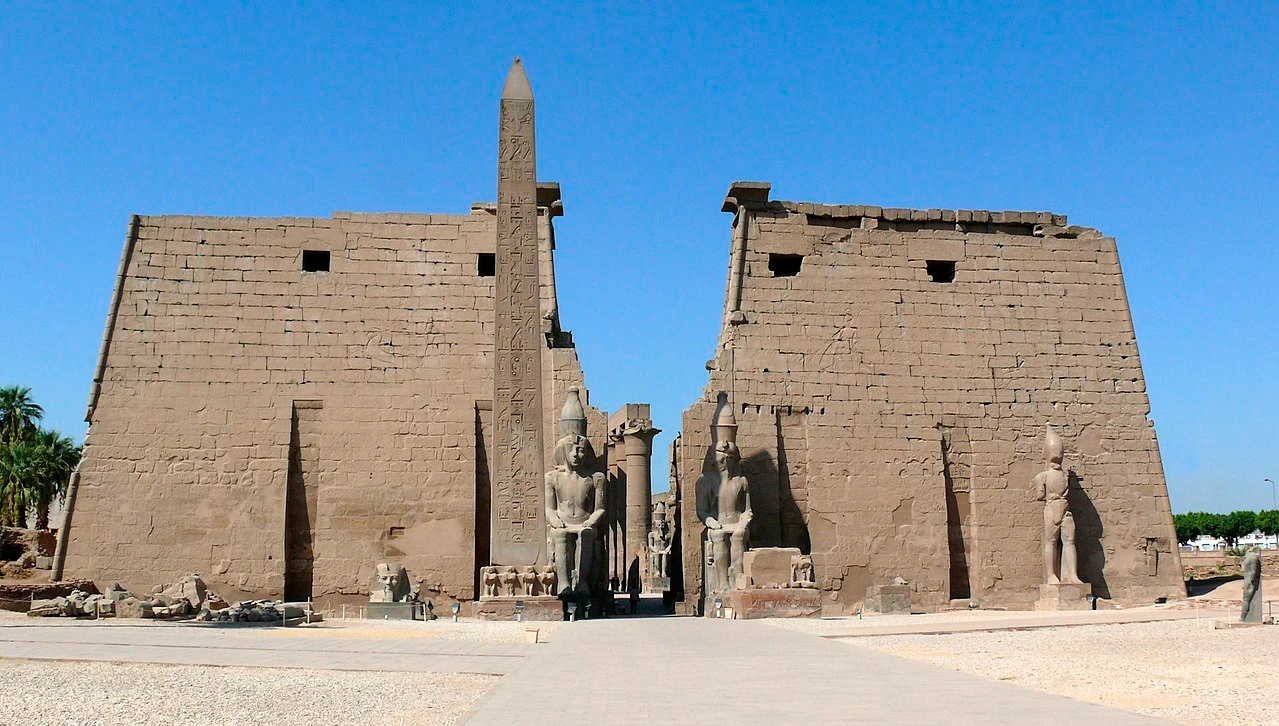
Start by noticing the entrance pylon and the contrast between courtyards and colonnades. The ministry links the temple’s orientation towards Karnak to the Opet Festival, and identifies festival scenes on the Great Colonnade. Use signs or a guide to locate details where access permits; do not assume every relief or room is visible. Compare this more focused sequence with Karnak’s many additions.
Plan the gap between the visits
Confirm opening and last-entry times directly, especially before planning a late Luxor Temple visit. Check ticket coverage, any extra precinct or event charge, and current access to the Avenue of Sphinxes; a historic connection is not a combined ticket. Allow for your transfer, food, water and rest. Take sun protection and ask about the specific route if steps or uneven ground matter. Stanza has independent guides for both temples: check languages and prices in the app and download before leaving. Audio does not include admission, transport or an evening show.
A few more questions before you go
If I only have energy for one temple, which should I choose?
Choose Karnak for the scale and variety of a large complex; choose Luxor Temple if a more focused visit suits you better. Match that preference to current hours, access and your own stamina rather than forcing both.
Can I walk between them on the Avenue of Sphinxes?
Check current access, ticket requirements and permitted entrances before planning that walk. The temples’ approximate separation is not a reliable door-to-door walking time, and the ancient route should not be assumed freely accessible.
Sources & further reading
Visitor information checked .
Egyptian Ministry of Tourism and Antiquities and UNESCO checked on 18 October 2026. Reconfirm hours, last admission, tickets and permitted routes for your date. This is an editorial plan, not a timed or accessibility-tested itinerary.
Questions or a correction? Let us know. Our content standards (English).