Languages
15Karnak Temple Complex Audio Guide
Karnak Temple Complex is an archaeological site in Old Karnak, Egypt. Explore it with Stanza's guided offline audio tour — narrated in 15 languages.
Quick Facts
55
Stops
15
Languages
100%
Offline
📍 Old Karnak, Egypt · 25.7183°N, 32.6583°E
About Karnak Temple Complex
The Karnak Temple Complex is a vast ancient Egyptian temple city or complex of temples and chapels. Dedicated primarily to the Theban Triad, it is one of the largest religious sites in the world.
This self-guided audio tour features 55 narrated stops organized across 8 sections. As a archaeological site, Karnak Temple Complex offers a unique cultural experience in the heart of Old Karnak, Egypt.
The Stanza audio guide is available in 15 languages and works entirely offline — download the complete tour including audio narration, maps, and images before your visit. As you walk through Karnak Temple Complex, GPS-triggered narration plays automatically at each point of interest.
Last updated:
What you will hear
Avenue of Sphinxes
A grand processional way lined with ram-headed sphinxes, symbolizing the god Amun-Re protecting the Pharaoh.
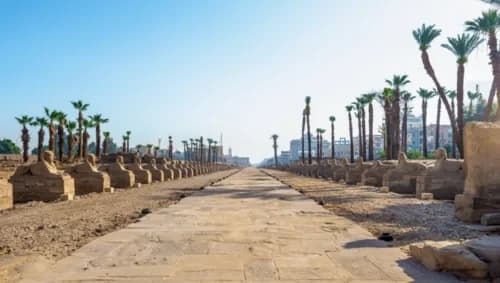
Avenue of Sphinxes
Lining the processional route are dozens of stone sphinxes, though they are only a fraction of the original number. When the avenue was complete, over 700 of these figures stood in silent vigil. Unlike the human-headed sphinxes seen elsewhere, these bear the head of a ram, the sacred animal of Amun-Re. The ram was a symbol of virility and creative power, qualities closely associated with the king of the gods. Each sphinx serves as a guardian, and many feature a small figure of the Pharaoh standing between their paws, showing the king under the direct protection of the deity. This avenue wasn't just a decoration; it was a ritual highway used during major religious processions. The most important was the annual journey where the image of Amun was carried in a magnificent parade to visit the Luxor Temple. For the Pharaohs who walked this path, the presence of these hundreds of guardians reinforced their divine right to rule and their special relationship with the gods. The repetition of the figures created a rhythmic, awe-inspiring experience for anyone approaching the temple’s inner sanctum.
First Pylon
The massive, unfinished entrance gate to the temple, built during the 30th Dynasty.
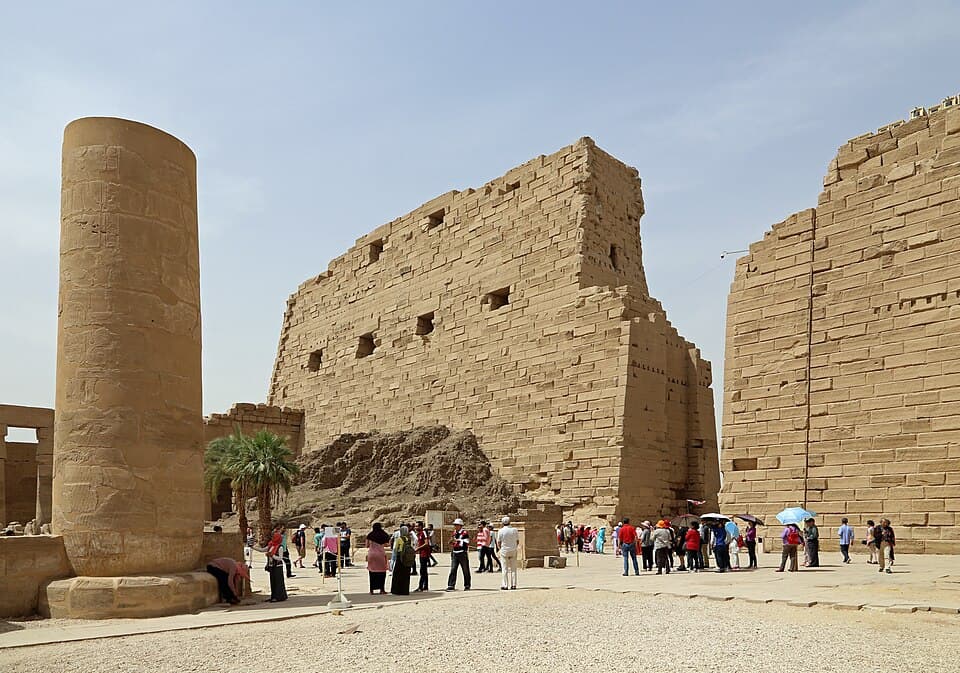
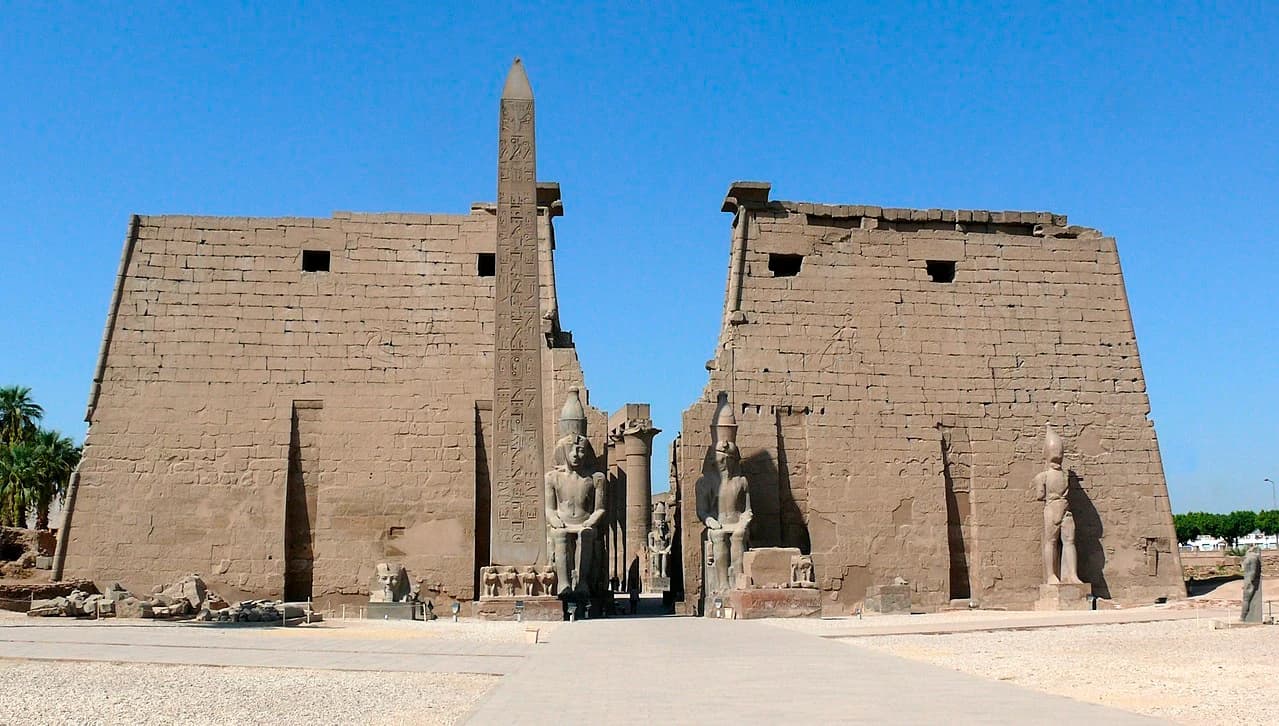
First Pylon
The First Pylon is the final gateway added to Karnak, dating to the 30th Dynasty, but it was never actually finished. Because it was left incomplete, it provides a rare, behind-the-scenes look at how the Egyptians built these massive structures. If you look at the interior face of the walls, you can still see the remains of the original mud-brick ramps. These weren't just paths; they functioned as heavy-duty construction elevators. Workers used these sloped mounds to haul massive stone blocks to the top of the wall as it grew higher. Once the construction was finished, the ramps would have been cleared away and the stone surfaces smoothed and carved. Because this pylon was abandoned before that final stage, we have a frozen moment in history showing the physical labor and engineering ingenuity required to move thousands of tons of rock without modern machinery. Standing nearly 44 meters high and over 100 meters wide, the sheer mass of this unfinished work highlights the ambition of the final Pharaohs to uphold the grand traditions of their predecessors.
Great Forecourt of Shoshenq I
The largest courtyard in the complex, containing several smaller shrines and the famous Bubastite Portal.
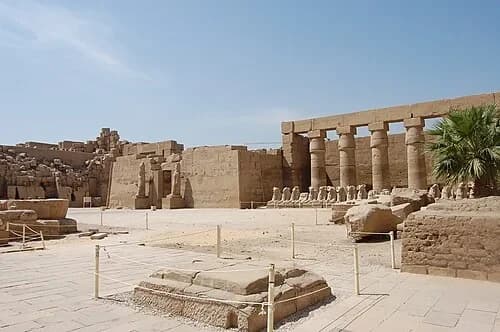
Shoshenq I Court
Known as the Great Forecourt, this is the largest courtyard in any Egyptian temple. It covers an area of roughly 8,000 square meters, a space large enough to hold several modern football fields. Its size served a specific social purpose. While the dark, inner rooms of the temple were strictly off-limits to everyone except high-ranking priests and the Pharaoh, this open courtyard was a public interface. During major festivals and religious celebrations, common citizens were permitted to gather here. They would stand in the shadow of the towering columns and pylons, catching a glimpse of the smoke from incense and hearing the distant chants of the rituals occurring deeper within the sanctuary. This space was the heart of public religious life in Thebes, where the population could feel a connection to the state religion without violating the sanctity of the hidden chambers beyond. The scale of the court was intended to humble the visitor, emphasizing the vast distance between the mortal world and the divine presence housed in the temple's core.
Temple Barque Chapel of Ramesses III
A complete, small-scale temple built to house the sacred boats during processions.
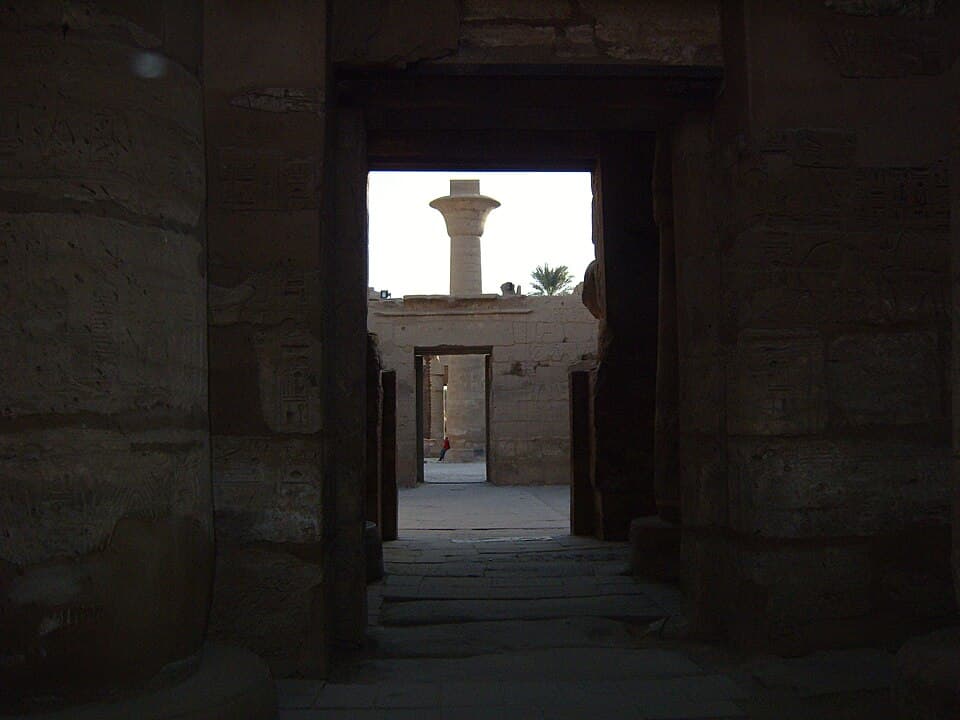
Temple Barque Chapel of Ramesses III
This structure is a self-contained temple within the larger courtyard, built by Ramesses III. As you look down the central aisle, you’ll notice the striking Osiride statues that line the pillars. These figures depict the Pharaoh himself, but in the mummiform guise of Osiris, the god of the afterlife and rebirth. This fusion of the king with a powerful deity emphasized the Pharaoh’s eternal nature. Like the Chapel of Seti II, this building served as a resting station for the sacred barque of Amun-Re during long processions. When the priests carried the god’s boat from the inner temple toward the river, they would stop here to perform rituals and allow the procession to pause. The presence of the king’s image on every pillar meant that Ramesses III was symbolically present to attend to the god for all eternity. The dark, colonnaded space created a sense of reverence, shielding the sacred boat from the bright Egyptian sun before it continued its journey to the quay.
Second Pylon
The entrance to the Great Hypostyle Hall, originally flanked by colossal statues of Ramesses II.
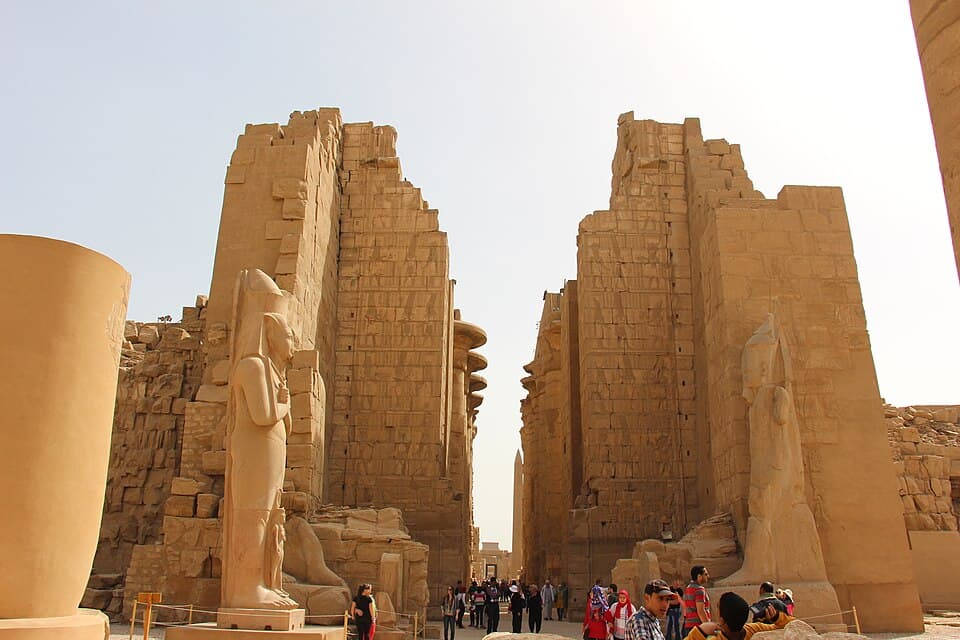
Second Pylon
The Second Pylon serves as the threshold to what many consider the heart of the Karnak experience: the Great Hypostyle Hall. Standing guard in front of this gateway are colossal statues of Ramesses II, carved from massive blocks of red granite. Though weathered by time, the sheer size of these figures was intended to convey the overwhelming power and divine status of the Pharaoh. Ramesses II was a prolific builder, and by placing his image here, he staked his claim as the protector of the temple's most sacred inner spaces. This pylon was originally constructed by Horemheb using recycled stones from earlier monuments, but it was completed and decorated by the kings of the 19th Dynasty. Passing through this gate was a highly symbolic act in ancient times; it meant leaving the public courtyard behind and entering the mound of creation. The statues acted as eternal sentinels, ensuring that only those who were ritually pure could pass into the forest of stone columns that lies just beyond this massive stone wall.
Great Hypostyle Hall
A world-famous 'forest' of 134 colossal columns, representing the swamp of creation.
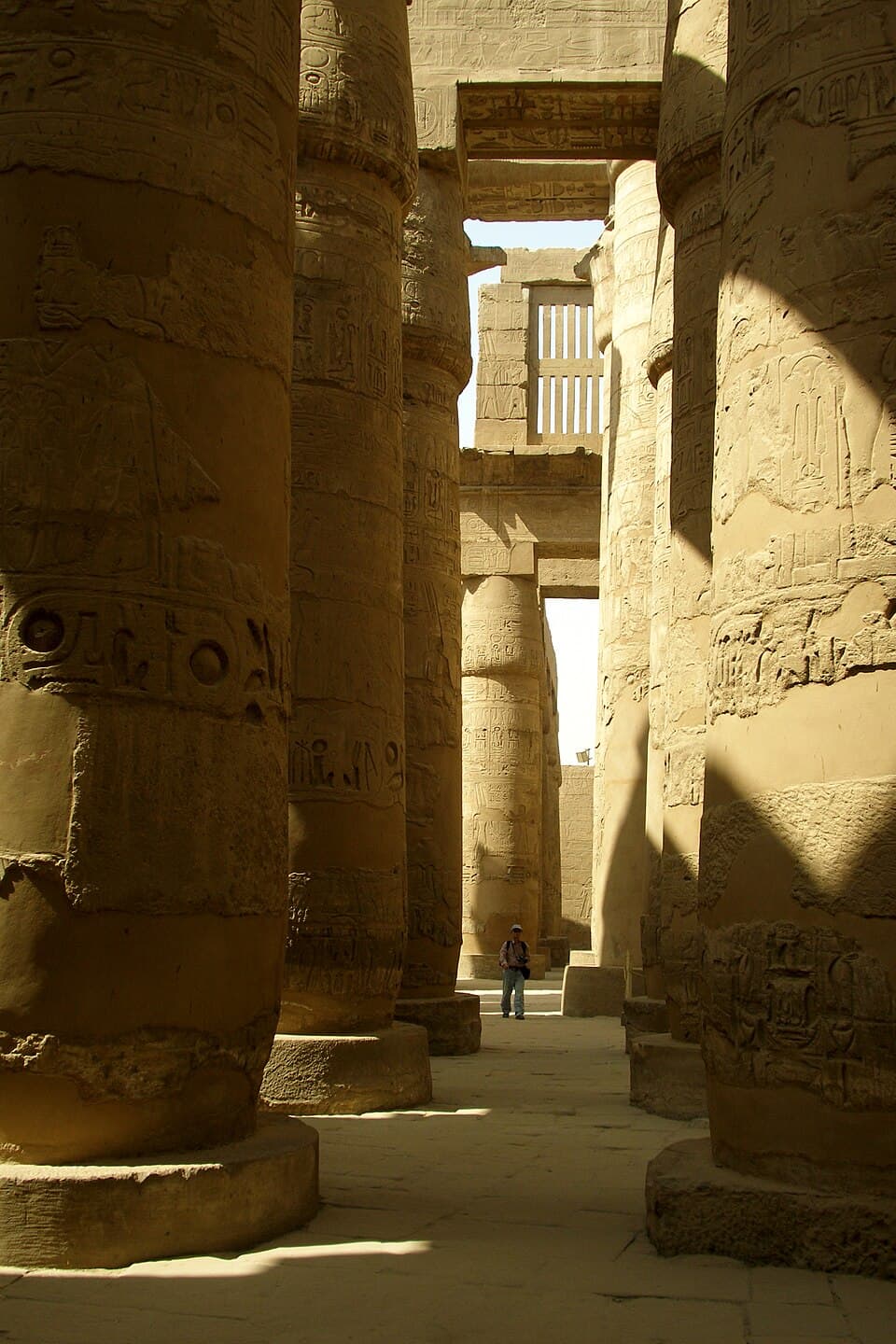
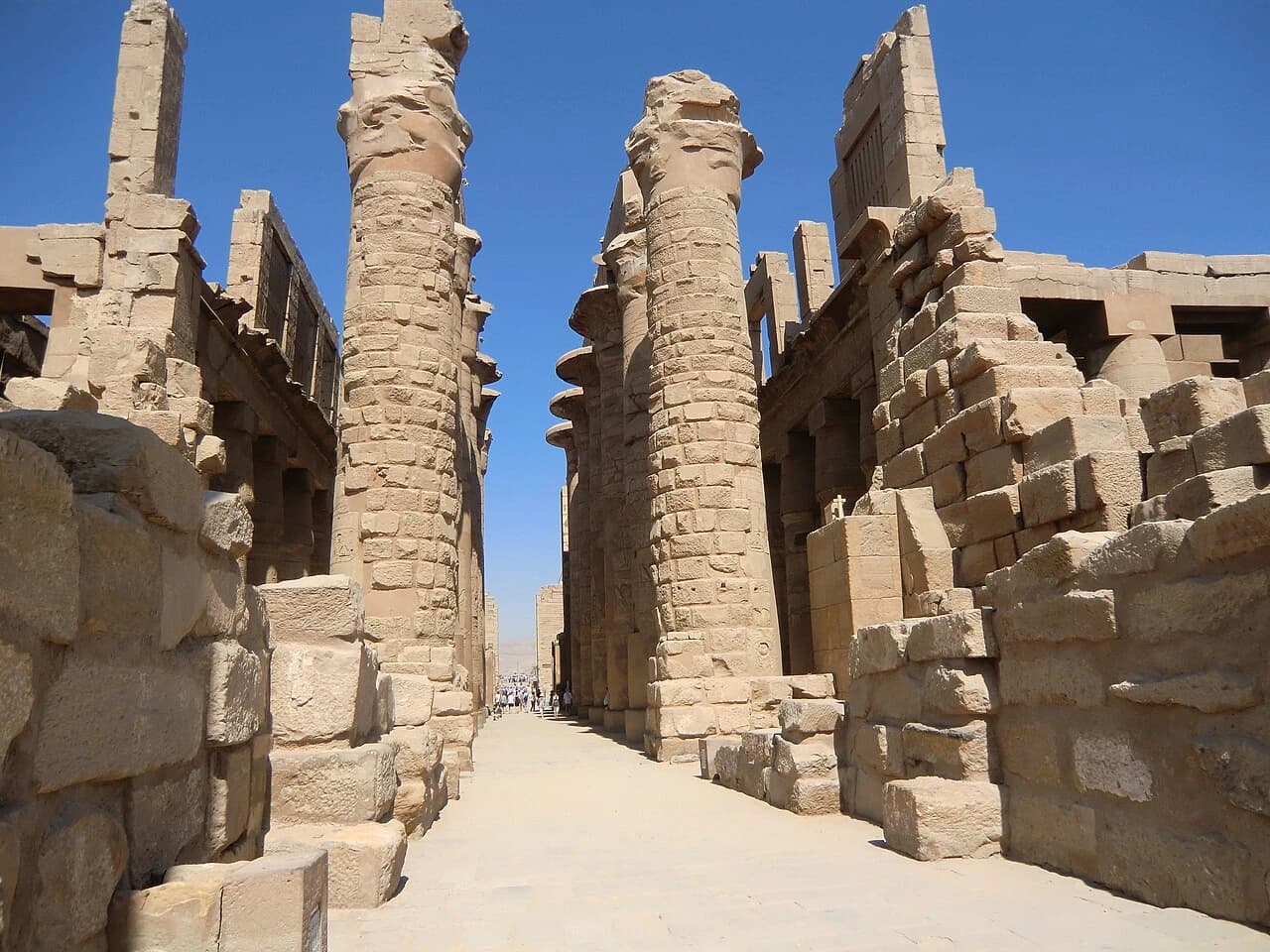
Great Hypostyle Hall
Entering the Great Hypostyle Hall is one of the most profound sensory experiences in all of ancient Egypt. You are surrounded by 134 massive columns, most of which are ten meters in circumference. The architecture here is deeply symbolic; the hall was intended to represent the primeval marsh of creation. In Egyptian mythology, the world began as a mound of earth rising from the waters of chaos, surrounded by thick papyrus plants. These columns are that swamp of stone, with their capitals shaped like papyrus buds and flowers. The floor would have represented the water, while the ceiling—once painted with stars—represented the sky. When the roof was intact, the hall was a place of deep shadows and cool air, creating a mysterious, otherworldly atmosphere. It was in this space that the Pharaoh would demonstrate his role as the maintainer of cosmic order, or Ma'at, mediating between the gods and the people. The sheer density of the stone pillars makes the space feel both vast and incredibly intimate, as if the very weight of history is pressing in from all sides.
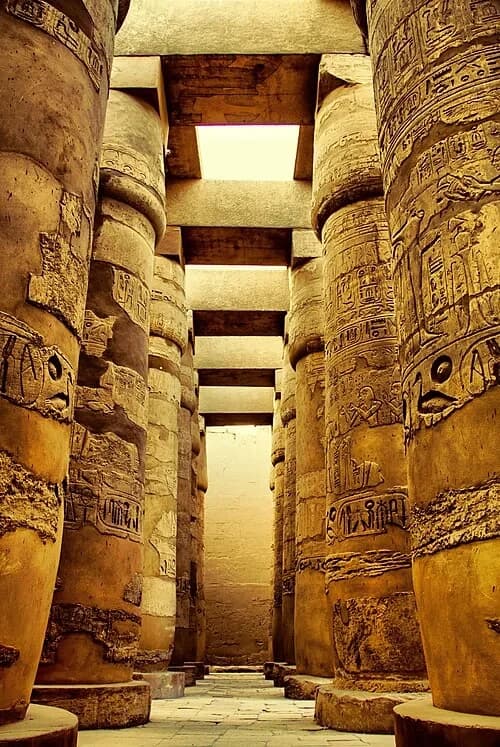
Architecture of the Sun
The engineering of the Great Hypostyle Hall reaches its peak in the central nave. These twelve massive central columns are significantly taller than the rest, rising 24 meters into the air—roughly the height of a seven-story building. This height difference allowed for the creation of clerestory windows along the roofline. These were stone grilles that let narrow shafts of sunlight cut through the perpetual twilight of the hall. As the sun moved across the sky, these beams of light would travel across the carved surfaces of the columns, momentarily illuminating figures of gods and kings before they faded back into shadow. This play of light and dark was a deliberate architectural choice, meant to evoke the feeling of the first sunrise at the moment of creation. The builders had to move and lift stones weighing hundreds of tons to these heights, a feat that remains one of the great mysteries of ancient construction. The result is a space that feels structurally impossible, where the massive stone slabs of the roof seem to float above a forest of colossal, sun-drenched pillars.
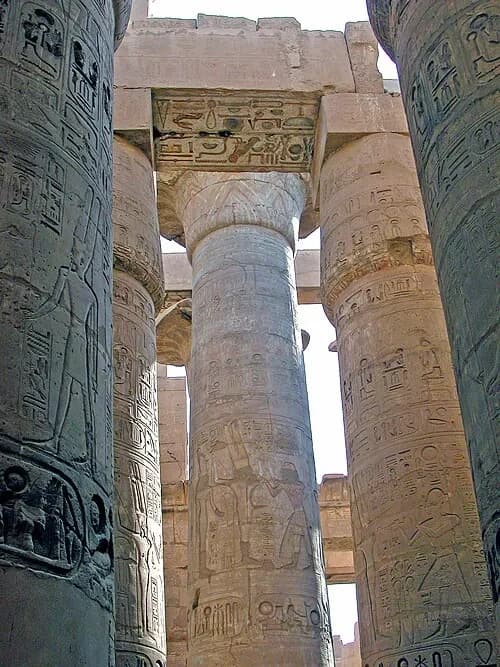
Stories in Stone
Every column in this hall serves as a monumental history book, covered from base to capital in shallow-relief carvings. The primary theme of these stories in stone is the maintenance of Ma'at, the concept of truth, balance, and cosmic order. You can see various Pharaohs making elaborate offerings of incense, food, and wine to the gods, a ritual act necessary to keep the sun rising and the Nile flooding. If you look closely at different sections of the hall, you can spot a shift in artistic style. The columns decorated under Seti I feature raised relief, where the background was carved away to leave the figures standing out. However, his son Ramesses II preferred sunken relief, where the outlines were cut deep into the stone. Sunken relief was not only faster to execute but also much easier to see in the harsh, direct sunlight of the Egyptian day. This transition marks a change in royal priorities and aesthetic taste, as each ruler used the temple's walls to broadcast their devotion and their inseparable link to the divine world. These carvings were meant to be eternal, ensuring the king's piety was recorded for both gods and men forever.
Obelisk of Thutmose I
Standing 22 meters tall, this is one of the few remaining monolithic granite needles from the 18th Dynasty.
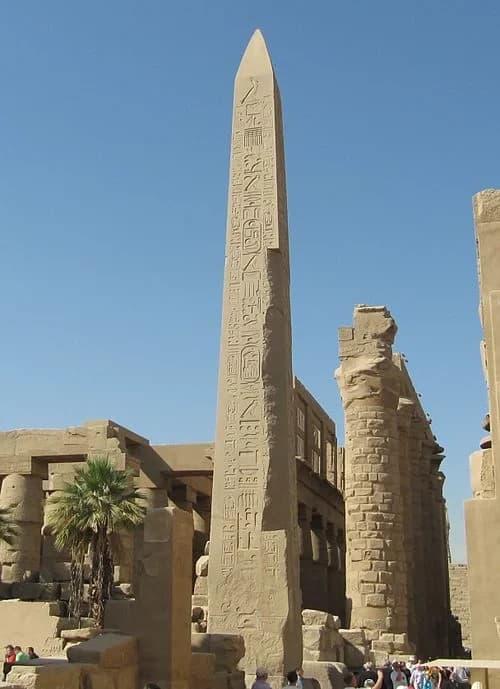
Obelisk of Thutmose I in Karnak
When Pharaoh Amenhotep III commissioned this pylon, it served as the grand entrance to the entire Karnak complex. Today we see the ruins of its stone core, but its original appearance was far more blinding. The massive wooden doors were crafted from imported cedar of Lebanon and encased in thick sheets of hammered gold. At dawn, as the sun rose over the eastern horizon, the first rays would hit these doors, reflecting a brilliant flash of light that could be seen for miles. This wasn't just for show; it symbolized the presence of the sun god, Amun-Re, returning to his earthly home. Beyond the doors, a pair of tall obelisks and colossal statues once framed the passage, creating a narrow, high-pressure entrance into the sacred grounds. Over the following centuries, as newer pylons were built further west, this gate lost its status as the main entrance and became an internal divider. Eventually, much of the stone from this pylon was recycled to build other monuments, leaving behind the skeletal remains and the lonely obelisk of Thutmose I that still stands nearby. The removal of the gold and wood long ago left the stone to weather, but the scale remains a testament to Amenhotep's architectural ambition.
Chapel of Alexander the Great
A sanctuary within the Akh-menu where the Macedonian conqueror is depicted as a Pharaoh making offerings.
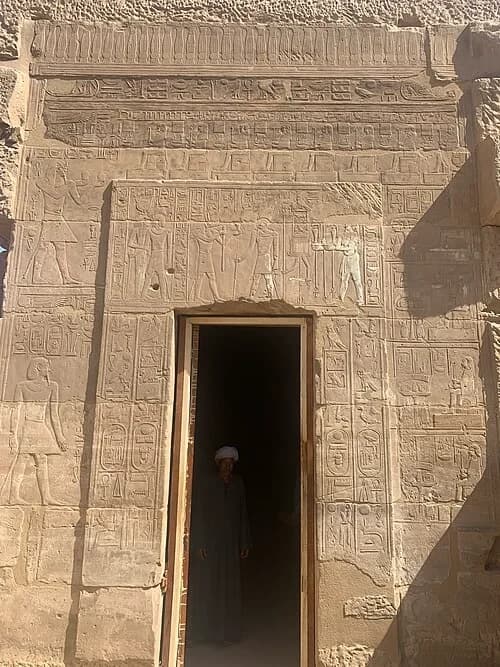
Chapel of Alexander the Great in the Akh-Menu
This small sanctuary, located within the older Akh-Menu festival hall, represents the arrival of a new era. It was constructed by Alexander the Great, the Macedonian conqueror who took Egypt in 332 BC. Despite his foreign origin, Alexander went to great lengths to show his devotion to the local gods, particularly Amun-Re. He even traveled to the remote Siwa Oasis to be declared the literal son of the god by an oracle. This chapel was built to house the sacred bark—the ritual boat used to carry the god's statue during processions. By adding this structure to the heart of Karnak, Alexander was following a tradition established by the Pharaohs for thousands of years. It was a clear political signal to the Egyptian people and the powerful priesthood that their new king was a pious follower of their ancient faith. The architecture and reliefs within the chapel are strictly Egyptian in style, showing Alexander participating in traditional rituals. This effort to blend in was highly successful; the Egyptian people generally accepted the Greek rulers because they maintained the religious institutions that were the foundation of Egyptian life. This chapel is a physical bridge between the world of the Pharaohs and the Hellenistic world that followed.
Want to hear the rest?
Download the Stanza app to unlock all 55 stops and the complete guided audio tour.
Frequently Asked Questions
How long does the Karnak Temple Complex audio tour take?
The Karnak Temple Complex audio guide includes 55 narrated stops. Most visitors spend 45 minutes to 1.5 hours exploring the complete tour, though you can listen at your own pace and skip or revisit any stop.
Is the Karnak Temple Complex audio guide available in my language?
Stanza supports 15 languages: English, Spanish, French, German, Italian, Portuguese, Russian, Japanese, Chinese, Korean, Arabic, Hindi, Polish, Dutch, Hebrew. Check the guide in the app to confirm the languages currently available for this tour.
Can I use the audio guide offline at Karnak Temple Complex?
Yes! Download the complete Karnak Temple Complex tour — including all audio, maps, and images — before your visit. The Stanza app works completely offline, so you don't need WiFi or mobile data at the venue.
How much does the Karnak Temple Complex audio guide cost?
The Stanza app is free to download. The current listed price for the Karnak Temple Complex audio guide is $5.99; app-store region and currency may affect the final price.
How do I use the Stanza audio guide at Karnak Temple Complex?
Download the free Stanza app, search for "Karnak Temple Complex", and download the tour. When you arrive at the venue, the app uses GPS to detect your location and automatically plays the relevant narration as you move between points of interest — completely hands-free.
What makes the Stanza audio guide different from other Karnak Temple Complex tours?
Stanza offers GPS-triggered narration that plays automatically as you walk through Karnak Temple Complex — no need to manually select stops. The tour is available in 15 languages, works fully offline, and includes 55 expertly narrated stops with images and historical context.
What other audio guides are available near Karnak Temple Complex?
Stanza offers multiple audio guides in Old Karnak, Egypt and nearby areas. After downloading the app, browse the map to discover all available tours near Karnak Temple Complex. Each guide can be downloaded for offline use.