Stanza · Audio guide
Dendera Temple complexAudio guide
A place to remember. A story to take with you.
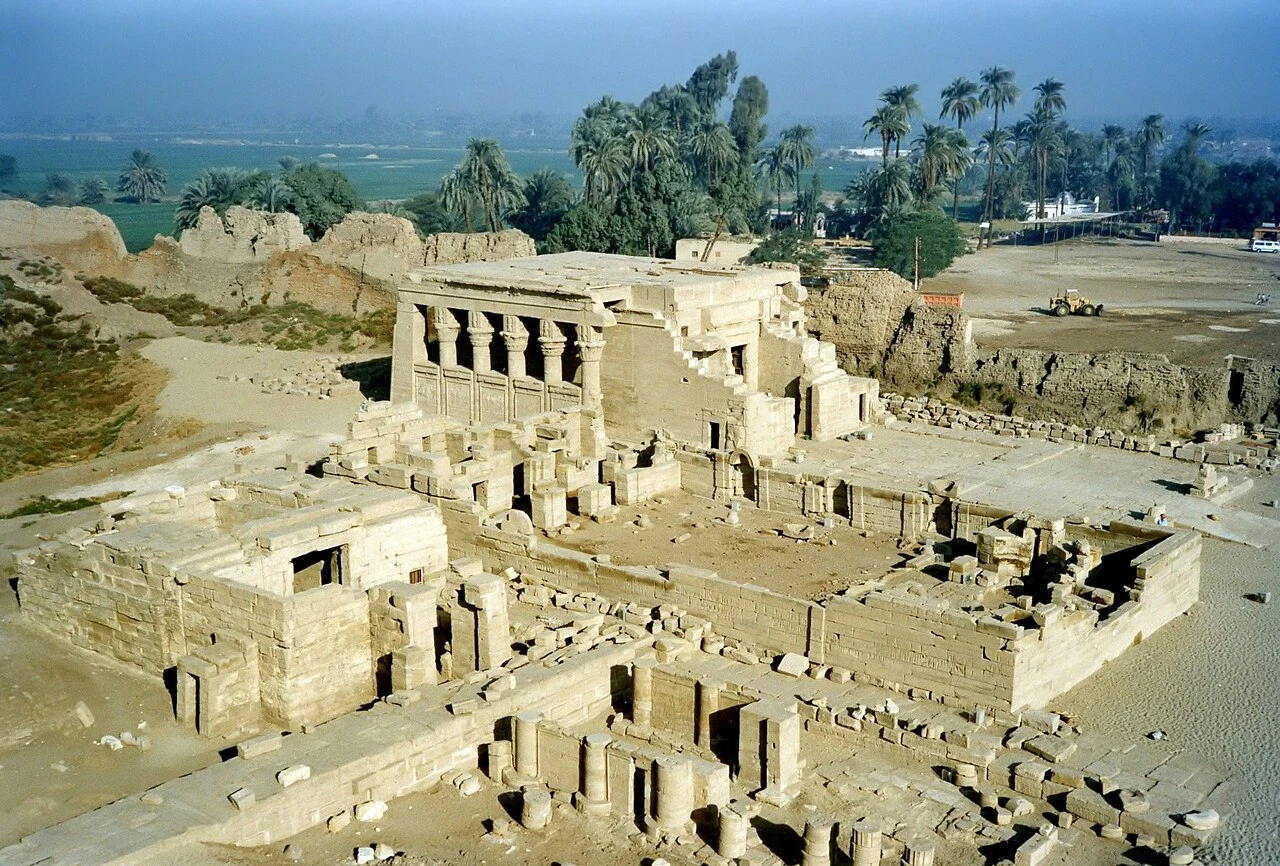
The Dendera Temple complex is one of the best-preserved ancient Egyptian temple sites, famed for its intricate reliefs and the Dendera zodiac. It served as a major cult center dedicated primarily to the…
Download Stanza, then search for “Dendera Temple complex”.
About the tour
One guide. Your kind of visit.
The Dendera Temple complex is one of the best-preserved ancient Egyptian temple sites, famed for its intricate reliefs and the Dendera zodiac. It served as a major cult center dedicated primarily to the goddess Hathor.
Ready when you are.
- 01Get the free Stanza app.
iOS & Android
- 02Find your guide.
“Dendera Temple complex”
- 03Download before you go.
Works offline
Audio guide / 15 narrated stops
Inside the guide
Get to know a few of the stories before you go. Open a stop to read more.
01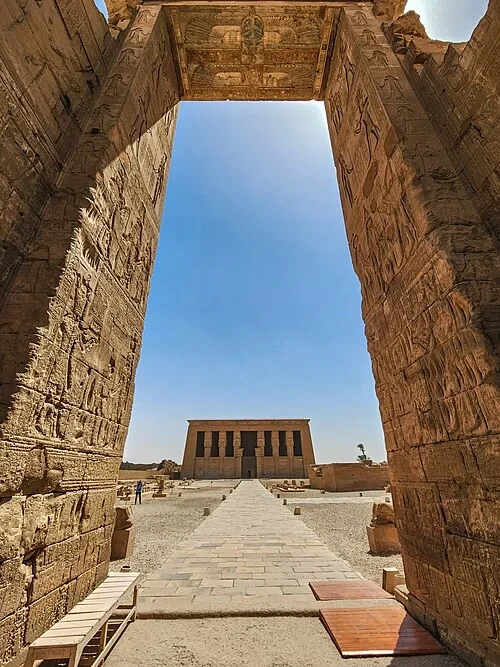 The Enclosure of TentyrisThe Monumental Gateway
Standing here at the threshold of the Dendera Temple complex, you are looking through a massive stone gateway that frames your first view of the main temple. This site, located roughly sixty kilometers north of Luxor, is widely considered the best-preserved temple complex in all of Egypt. It was dedicated primarily to Hathor, a powerful and multifaceted deity who reigned over music, dance, maternal care, and joy. Unlike many other ancient sites that have been weathered away by time and sand, much of what you see here remains largely intact, offering a rare opportunity to witness an ancient Egyptian sacred precinct in a condition close to its original state. As you move through this entrance, you are transitioning into a world where every carving and stone was intended to honor the divine. The gateway itself serves as a frame for the journey ahead, drawing your eye toward the towering facade of the main temple in the distance. This initial perspective highlights the immense scale and architectural ambition of the priests and builders who maintained this holy ground for centuries.
Photo: Harby6020 · CC BY-SA 4.0
02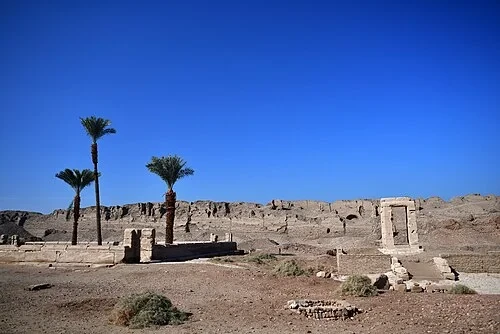 The Enclosure of TentyrisThe Mudbrick Enclosure
Looking beyond the stone structures, you can see the remnants of massive mudbrick walls that encircle the entire complex. These walls were a vital component of any major Egyptian temple precinct, serving a dual purpose that was both practical and deeply symbolic. Physically, they provided a sturdy defense against the encroaching desert sands and potential intruders, sheltering the temple's internal structures. Symbolically, however, the wall acted as a boundary between two worlds: the chaotic, unpredictable outside world and the ordered, sacred space of the divine interior. Within these fortifications lay the ancient city of Tentyris, a bustling urban center where thousands of people once lived, worked, and worshipped. Today, the height of these eroded mudbrick layers still hints at the formidable scale of the original enclosure. While the city of Tentyris has largely disappeared, the enduring presence of these walls helps define the massive footprint of the sacred precinct. They remind us that the temple was not an isolated monument, but the beating heart of a vibrant community where the daily needs of a city met the eternal rituals of the gods.
Panegyrics of Granovetter · CC BY-SA 2.0
03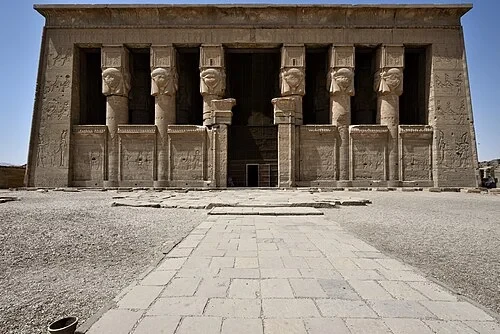 The Facade of HathorFacade of Hathor Temple
Standing before the main temple, the sheer verticality of the eighteen-meter-high facade is immediately striking. This current structure represents a relatively late period in Egyptian history, with construction beginning around 54 B.C.E. under the reign of Ptolemy XII. The front of the temple is dominated by six colossal columns that appear to be growing out of low walls. These are known as 'screen walls,' a signature feature of Ptolemaic and Roman-era temple architecture. Instead of a solid wall or a completely open colonnade, these screens allowed light to filter into the hall while maintaining the privacy and sanctity of the rituals occurring within. The facade is densely covered in reliefs and inscriptions that were added over decades, including during the subsequent Roman period. If you look closely at the upper sections, you can see how the architectural style blends traditional Egyptian motifs with the grandeur expected by the Greco-Roman rulers of the time. The massive flat roof above creates a powerful silhouette against the desert sky, emphasizing the temple's role as a monumental house for the goddess Hathor.
Listen in the appPhoto: Hamerani · CC BY-SA 4.0
04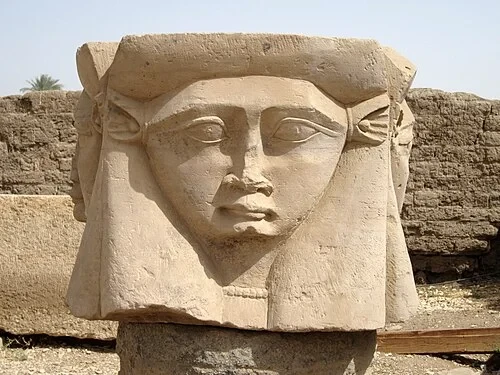 The Facade of HathorCapital of the Goddess
High above the ground, the columns are topped with distinctive capitals showing the face of the goddess Hathor. Each side of the capital depicts the goddess with her characteristic cow ears and an elaborate, heavy wig. These bovine features are not accidental; they symbolize Hathor's maternal, nurturing, and protective nature as a celestial mother figure. Notice how the faces are carved with a gentle, serene expression, intended to project a sense of divine calm to all who entered her presence. Interestingly, the overall shape of these capitals is designed to mimic the form of a sistrum. A sistrum was a sacred musical rattle used by priestesses and musicians during temple rituals to appease the gods and drive away evil spirits. By incorporating the sistrum shape into the architecture, the builders turned the very columns of the temple into instruments of worship. This integration of musical iconography reflects Hathor's status as the mistress of music and dance. Over the centuries, many of these faces were damaged or defaced, yet the recognizable silhouette of the goddess remains a defining feature of the temple's artistic identity.
Listen in the appOlaf Tausch · CC BY 3.0
05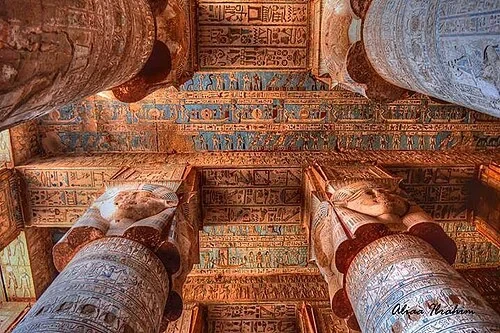 The Great Hypostyle HallThe Great Hypostyle Hall
Moving inside, you enter the Great Hypostyle Hall, a vast space supported by a forest of twenty-four massive columns. The scale here is designed to overwhelm, creating a transition from the bright exterior into the shadowed, cooler interior of the sanctuary. One of the most remarkable features of this hall is actually above you. In the early 2000s, a major conservation project carefully removed centuries of accumulated soot from cooking fires and torches, revealing the incredibly vibrant blue ceiling hidden beneath. The original pigments, dating from the Roman era, are now visible in their true brilliance. You can see detailed scenes depicting the heavens, populated by gods, constellations, and the sun's journey. Much of the decoration you see on these walls and columns was completed under the direction of the Roman Emperor Trajan, demonstrating how deeply the Roman rulers adopted and funded Egyptian religious traditions to maintain their legitimacy. The light that filters through small openings in the ceiling creates a shifting atmosphere of light and shadow, highlighting the deep carvings that cover every available inch of the stone surfaces.
Listen in the appPhoto: Alice-astro · CC BY-SA 3.0
06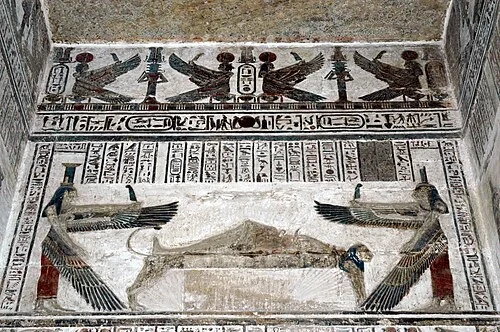 The Great Hypostyle HallCelestial Ceiling Reliefs
Looking upward at the cleaned ceiling panels, you can explore one of the most sophisticated astronomical maps of the ancient world. The dominant figure in these reliefs is Nut, the goddess of the sky, whose elongated body stretches across the celestial ceiling. According to Egyptian mythology, Nut swallowed the sun every evening and gave birth to it again every morning, a cycle that represented the eternal journey of life, death, and rebirth. These reliefs were not merely decorative; they functioned as a complex calendar used by priests to track the hours of the day, the shifting phases of the moon, and the movement of the stars. You can identify the twelve boats of the day and night, each representing an hour of time. These celestial maps provided the theological justification for the rituals performed on the ground, connecting the daily activities of the temple to the grand movements of the universe. The level of detail in the stars and figures is extraordinary, reflecting a deep knowledge of the night sky that the Egyptians had refined over thousands of years. The use of bright blue and gold pigments further enhanced the illusion of standing directly beneath the actual heavens.
Listen in the appFrancesco Gasparetti from Senigallia, Italy · CC BY 2.0
07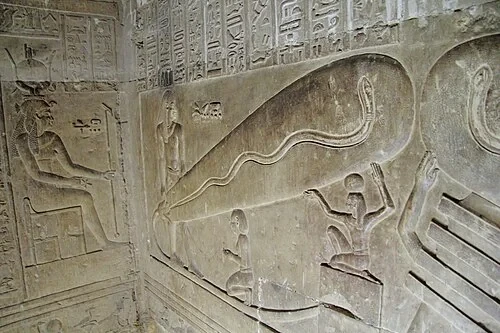 The Subterranean CryptsThe Dendera Light
Deep within the temple, you will find one of the most debated carvings in all of Egypt, often referred to as the 'Dendera Light.' The relief shows a large, bulbous object containing a winding snake, which is being supported by a djed pillar. While fringe theories have famously suggested this depicts an ancient light bulb or electrical device, mainstream archaeologists provide a different explanation rooted in Egyptian theology. The scene represents the primeval creation of the sun. The snake emerging from the lotus flower is a common symbol for the birth of the sun god at the beginning of time. The lotus itself represents the watery chaos from which life first sprang. For the ancient Egyptians, this relief was a deeply religious image illustrating the origins of light and life in the universe. The technical-looking elements are actually traditional symbols; the 'cable' is the stem of the lotus, and the 'insulators' are the pillars of stability. While the idea of ancient electricity is a popular modern fantasy, the actual meaning for the temple priests was far more profound, relating to the eternal renewal of the world through divine light.
Listen in the appPhoto: Djehouty · CC BY-SA 4.0
08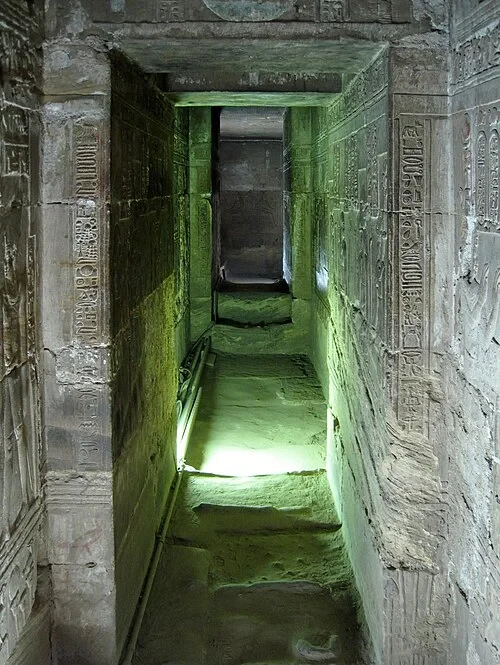 The Subterranean CryptsThe Secret Crypts
Beneath the main floor of the temple lie twelve secret crypts, narrow subterranean chambers carved directly into the foundation. These rooms were not intended for public view; instead, they served as highly secure storage areas for the temple's most valuable ritual objects, including statues of the gods made from precious metals and ornate vessels used in daily ceremonies. Because of their sacred function, these crypts were decorated with some of the most intricate and well-preserved reliefs in the entire complex. Only the highest-ranking priests were permitted to enter these confined spaces, where they would prepare the divine images for festivals. The passages are incredibly narrow and low, forcing anyone entering to move with deliberate care, which likely added to the sense of mystery and exclusivity. Unlike the main halls, which were subject to light and air, these chambers have protected their carvings from the elements for two millennia. Even today, entering these spaces offers a sense of the intense secrecy that surrounded the inner workings of an Egyptian temple. The walls are crowded with hieroglyphs and images of the gods, acting as a permanent catalog of the treasures once housed within these stone walls.
Listen in the appOlaf Tausch · CC BY 3.0
09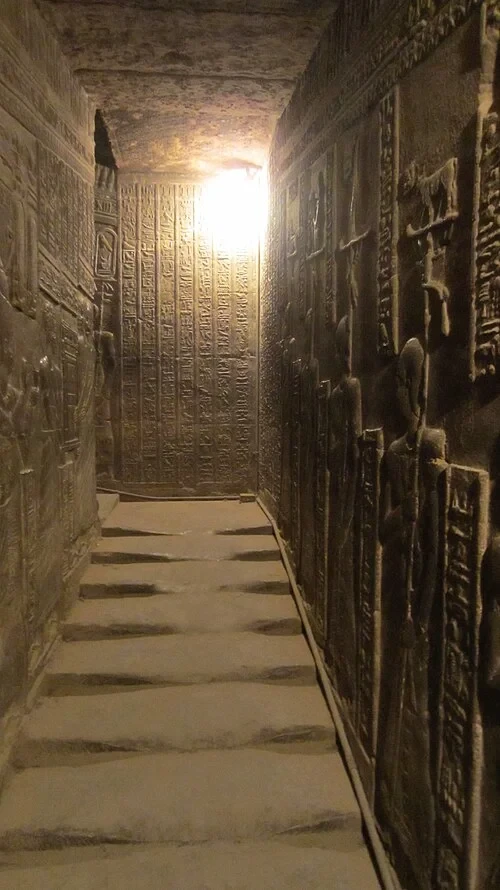 The Processional StaircaseThe Processional Staircase
Leading up to the roof is a remarkable stone staircase that tells a story through its very wear. If you look at the steps, they appear to have a 'melted' or flowing quality, with deep, smooth depressions worn into the center of each tread. This is not the result of heat, but of thousands of years of ritual foot traffic. Every year during the New Year's festival, a grand procession of priests would carry the sacred statue of the goddess Hathor up this very path. The goal was to reach the temple roof before dawn. As the first rays of the sun broke over the horizon, the statue would be exposed to the light, symbolically recharging the goddess with divine solar energy for the coming year. This 'Union with the Sun' was the most important event in the temple's ritual calendar. The walls lining the staircase are covered with reliefs showing the procession in detail, with figures of priests carrying banners, incense burners, and the goddess's shrine. The smooth, worn stone underfoot serves as a physical connection to those ancient celebrants, marking the path of a ceremony that was repeated for generations.
Listen in the appPhoto: A. Parrot · CC BY-SA 4.0
10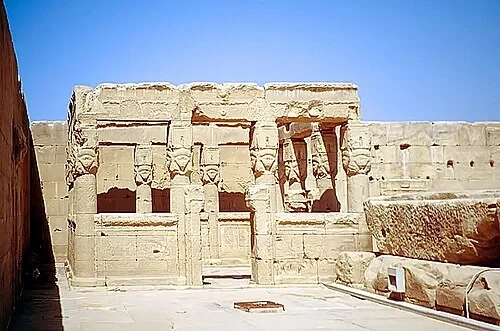 The Temple Roof and ZodiacThe Sun Kiosk
Once you reach the roof of the temple, you will find an elegant, open-air stone chapel known as the Sun Kiosk. This small but significant structure was the final destination of the New Year's procession. Its architectural design is intentional; it lacks a solid roof, allowing the interior to be flooded with direct sunlight. During the 'Union with the Sun' festival, the statues of Hathor and other visiting deities were placed here to bathe in the morning light. This act was believed to revitalize the gods' divine essence, bridging the gap between the terrestrial temple and the celestial powers above. The kiosk features beautifully carved columns and reliefs that commemorate these solar rituals. Standing here, you can appreciate the temple's vertical layout, which mirrors the Egyptian view of the world: from the dark, hidden crypts below ground, through the shadowed halls of the interior, and finally up to the sun-drenched roof. This highest point was the most direct link to the heavens. The surrounding roof area also offers a panoramic view of the mudbrick enclosure and the desert landscape beyond, placing the temple in its wider geographic and spiritual context.
Listen in the appRoland Unger · CC BY-SA 3.0
Dendera Temple complex
Frequently asked questions
How much does the guide cost?
Free app download. Listed guide price: $3.99. Guide price shown in the app. Audio guide only. Venue admission is separate.
Can I listen without internet?
Yes. Download the guide’s audio, images, and maps in the app before your visit. Your downloaded content is then available offline.
Can I listen in my language?
Stanza supports 15 languages. Check the app for the languages available for this guide.
Do I need to follow a schedule?
No. This is a self-guided experience. Choose your stops, pause whenever you like, and return to a story at your own pace.
At your own pace
Explore Dendera Temple complex.
Download Stanza, then search for “Dendera Temple complex”.
Free app download · Guide price shown in the app
Keep exploring
Nearby audio guides
Cairo
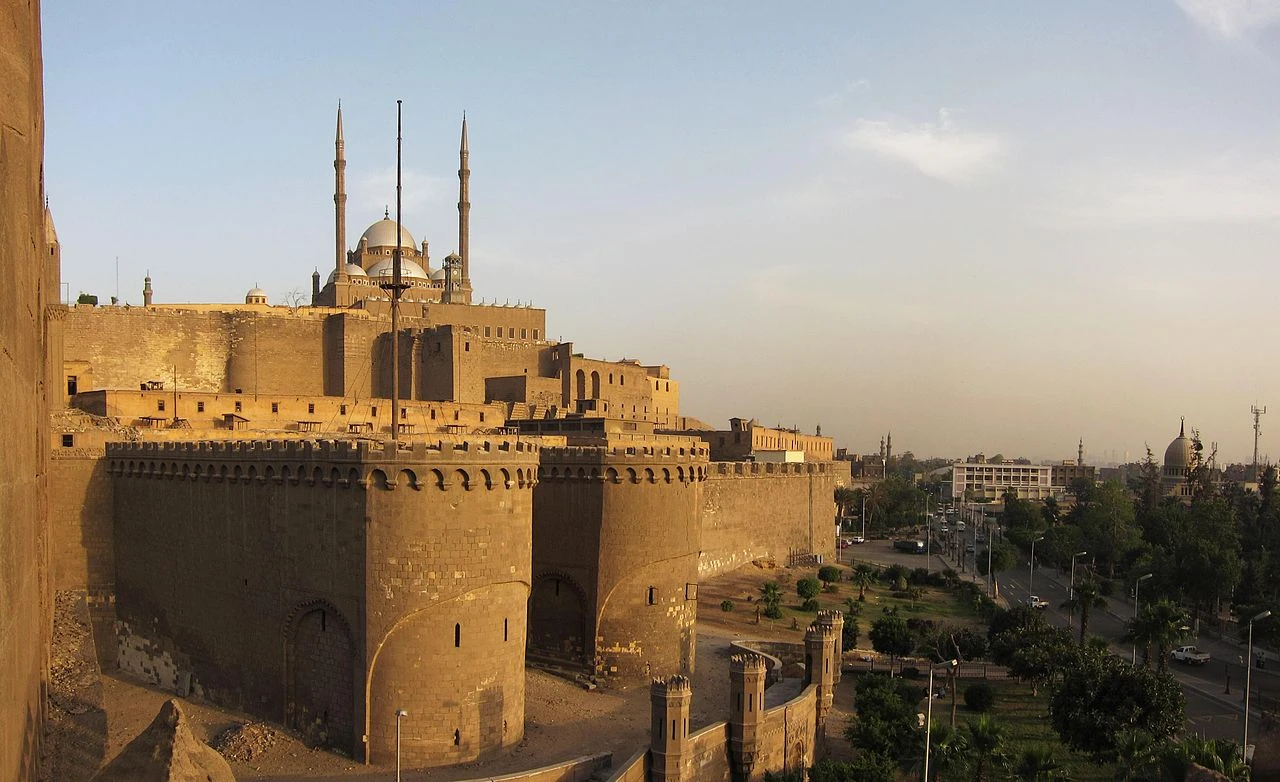
Cairo Citadel
Content & sources
Ahmed Al.Badawy from Cairo, Egypt · CC BY-SA 2.0
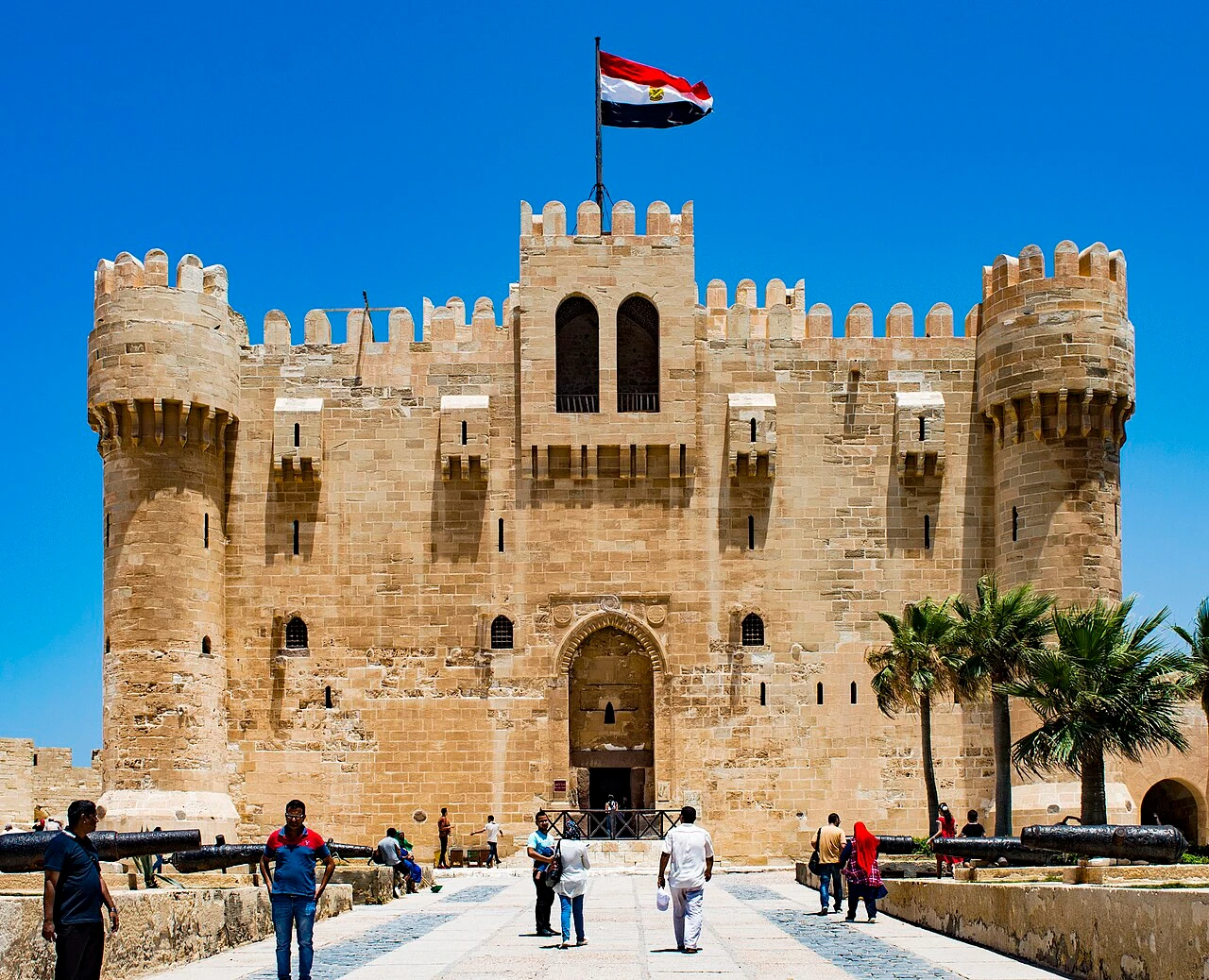
Alexandria
Citadel of Qaitbay
Content & sources
Ahnaf Saber · CC BY 3.0
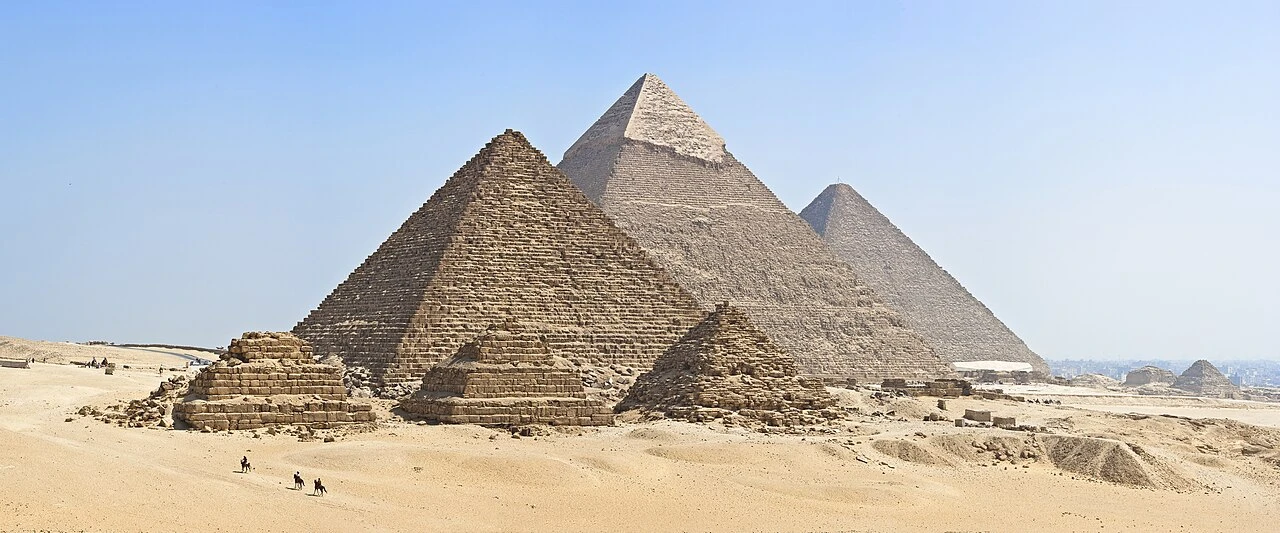
Giza
Giza pyramid complex
Content & sources
KennyOMG · CC BY-SA 4.0
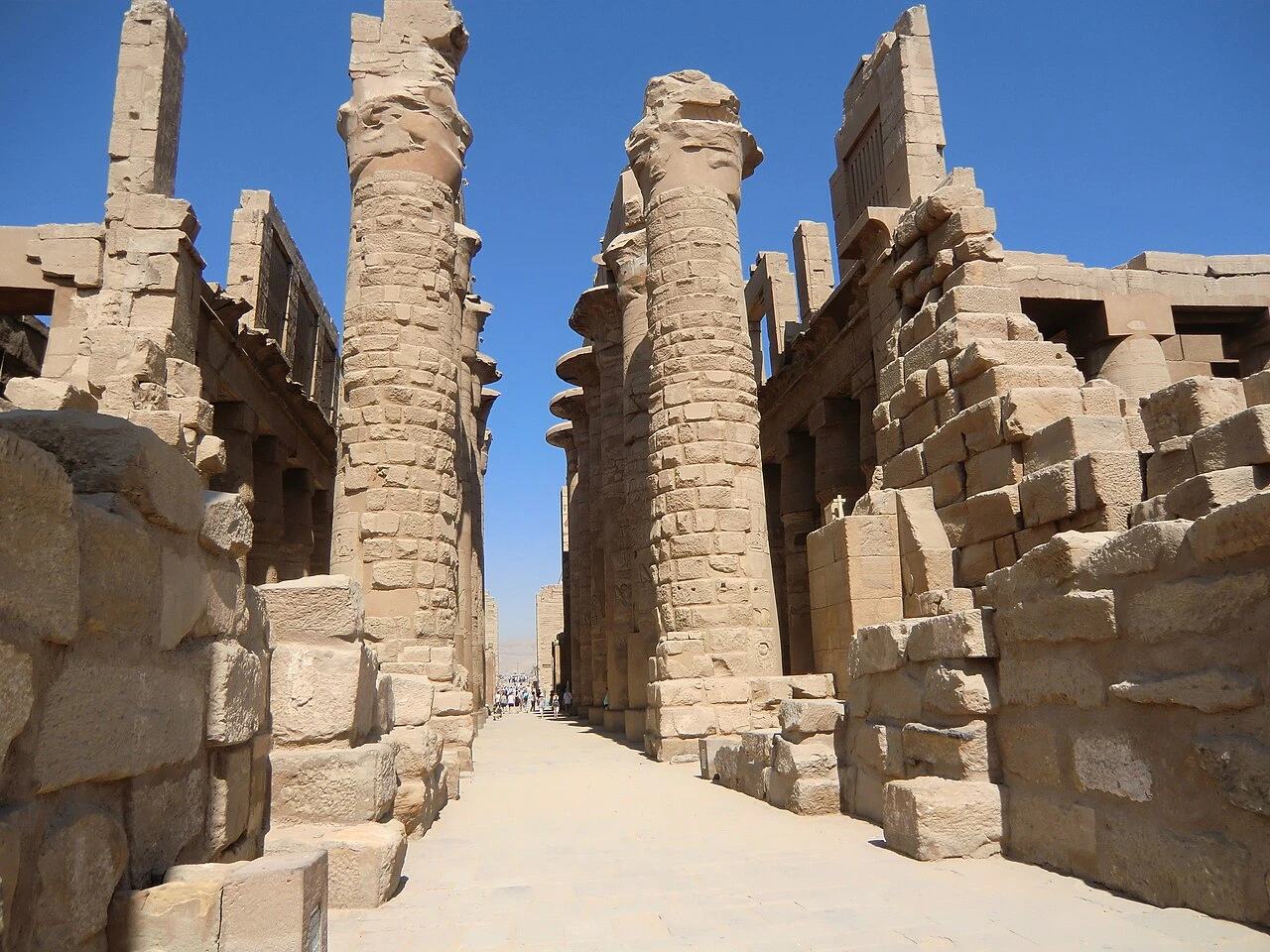
Old Karnak
Karnak Temple Complex
Content & sources
René Hourdry · CC BY-SA 4.0