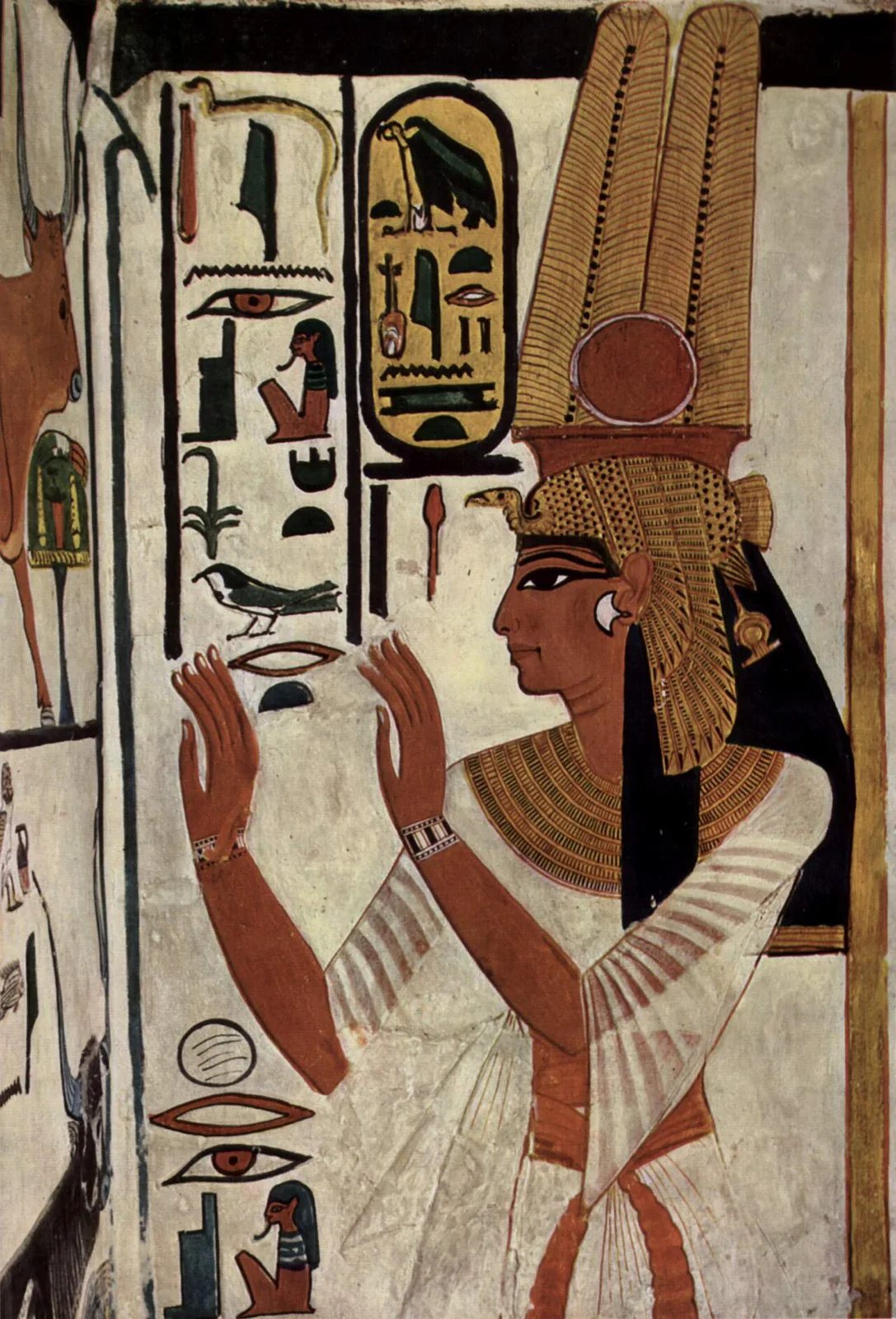
 Stanza / Audio guide
Content & sources
Stanza · Audio guide
Tomb of Nefertari Audio Guide
A place to remember. A story to take with you.
QV66 is the tomb of Queen Nefertari located in the Valley of the Queens in Egypt. It is significant for its extensive wall paintings that depict Nefertari and provide directions for navigating the afterlife.
Download Stanza, then search for “Tomb of Nefertari”.
About the tour
One guide. Your kind of visit.
QV66 is the tomb of Queen Nefertari located in the Valley of the Queens in Egypt. It is significant for its extensive wall paintings that depict Nefertari and provide directions for navigating the afterlife.
Ready when you are.
- 01Get the free Stanza app.
iOS & Android
- 02Find your guide.
“Tomb of Nefertari”
- 03Download before you go.
Works offline
Audio guide / 7 narrated stops
Inside the guide
Get to know a few of the stories before you go. Open a stop to read more.
01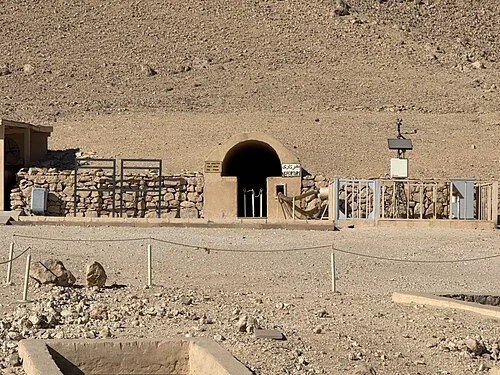 Descending Entrance Staircase
The Entrance in the Valley of the Queens
Welcome to the tomb of Nefertari, number sixty-six in Egypt's Valley of the Queens. She was the Great Royal Wife of Ramesses the Second, and his favourite. In his writings he calls her "the one for whom the sun shines", and he even built a temple for her at Abu Simbel, honouring her as a goddess. Her name means "the most beautiful of them". This rock-cut doorway and the steps beyond it lead down to a tomb built for one purpose: not only to hold the queen's mummified body, but to carry her through death to rebirth. The walls inside are covered with paintings in red, blue, yellow and green, showing gods, spells and gates — a guide through the afterlife. Three thousand years of dust and soot settled over them, and a conservation campaign finished in 1992 brought them back. Visitors are strictly limited today to keep the paintings safe. Over the next stops, the paintings themselves tell the rest.
Photo: Chabe01 · CC BY-SA 4.0
02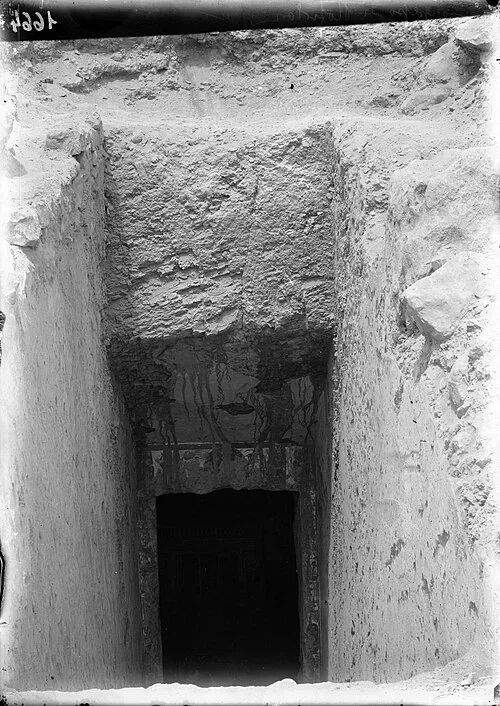 Descending Entrance Staircase
The Discovery: Schiaparelli's Descent, 1904
In 1903 the Italian Egyptologist Ernesto Schiaparelli obtained the exclusive concession to excavate in the Valley of the Queens. He was the first to work there with a systematic method, aided by his collaborator Francesco Ballerini. The following year, during the second campaign, workmen clearing debris north of the main wadi uncovered the first steps of a staircase — a sure sign of a tomb. Under the rubble appeared steps cut between two whitewashed walls, about 1.65 metres wide, with a central ramp for lowering a sarcophagus. They descended roughly eight metres to a doorway, and on the jambs was written the queen's name. But the tomb was open. No trace of the original sealing remained, and rubble had fallen as far as the first hall. The rooms stood empty. Looters had taken everything, perhaps already in antiquity; who they were, and when, nobody recorded. Of the pink granite sarcophagus only a few pieces survived, among them fragments of the lid. From all the grave goods there remained about thirty ushabti figures, parts of a few pottery and alabaster vessels, and bits of funerary caskets and furniture. Even the queen's mummy was gone, apart from parts of her knees, which Schiaparelli took to the Egyptian Museum in Turin, where they are still kept.
Photo: Marco Chemello (WMIT) · CC0
03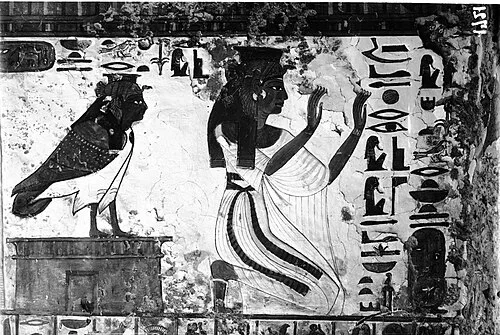 Antechamber of Celestial Rebirth
The Queen and Her Ba: Chapter 17
The bird with the human head beside the kneeling queen is a ba — the ancient Egyptian word for the part of a person that lives on after death. They imagined it as a bird with a human face, free to go wherever it wished. The antechamber's walls carry Chapter 17 of the Book of the Dead, a spell written to guide Nefertari through exactly this change: the queen becoming the ba. Becoming that bird was a promise of freedom, of movement beyond the tomb. Elsewhere in the same room, the painters gave her another kind of passage. A whole wall is dedicated to Nefertari playing senet, a board game a little like draughts, against an unseen opponent. Winning the game was part of winning her way into the afterlife. That senet scene is a different panel; the queen in this one kneels in prayer, caught in the moment of transformation.
Listen in the appPhoto: Marco Chemello (WMIT) · CC0
04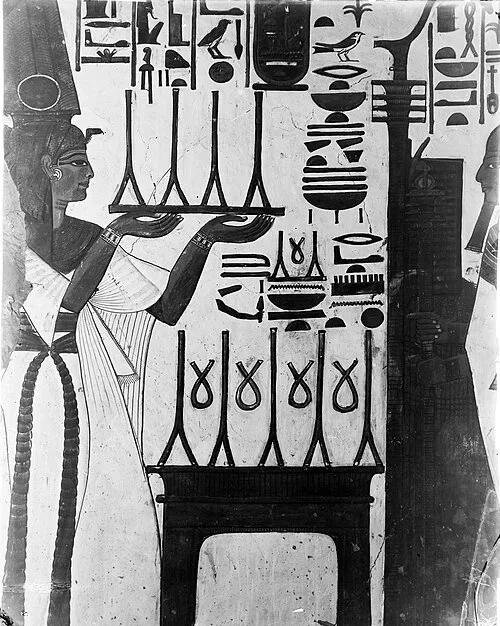 Side Chamber and Offering Vestibule
Nefertari Presents Her Offerings
The queen stands with arms outstretched, holding tall libation vessels over an offering stand. Scenes like this fill the tomb's rooms: in the upper annex room, Nefertari presenting offerings to enthroned gods such as Osiris and Atum, and to goddesses including Hathor and Serket. She is acting for her own cult, keeping her own offerings alive. And the vestibule before that chamber shows the exchange from the other side: Nefertari being led before the gods, who welcome her in. One more painting in the tomb is quieter but telling. It shows the queen before Thoth, the god of writing, proclaiming her title as scribe. That has suggested to some that Nefertari could read and write — a possibility, though no more than that.
Listen in the appPhoto: Marco Chemello (WMIT) · CC0
05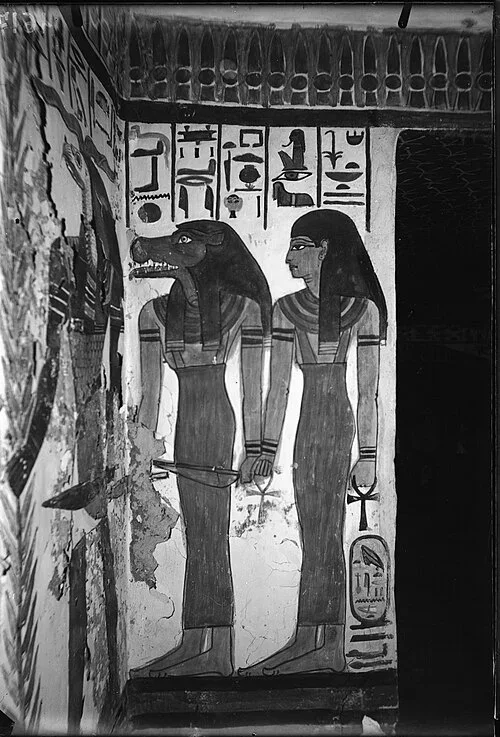 Inner Staircase and Gates of Osiris
Guardians at the Gates of Osiris
The jackal-headed god and his companion hold knives, and they are guardians. Lower down, on the way to the burial chamber, the decoration turns to Chapter 144 and Chapter 146 of the Book of the Dead. These chapters describe the gates and doors of the kingdom of Osiris, god of the dead, and the beings who guard them. Each gate has its keepers — fearsome figures armed with knives, like the pair in this panel. To go past each door, the deceased had to utter the right magic formula. The walls of the burial chamber carry these gate scenes and their spells, so that whatever the journey demanded, Nefertari had the answers painted around her.
Listen in the appPhoto: Marco Chemello (WMIT) · CC0
06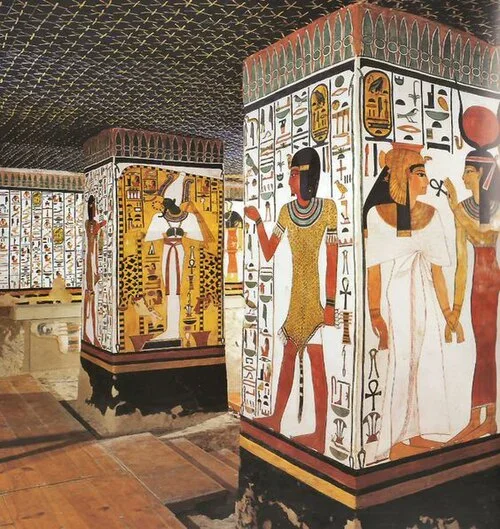 The Golden Hall Burial Chamber
The Golden Hall
The staircase leads down to a vast quadrangular chamber of about ninety square metres. Its ceiling is painted deep dark blue, scattered with countless golden five-pointed stars — the heavens themselves, spread over the queen. Four pillars, entirely covered with decoration, hold that sky up. The Egyptians of the time called this room the golden hall. By their doctrine, this was where the regeneration of the dead took place: the moment the deceased became whole again for eternity. The queen's pink granite sarcophagus originally stood in the middle of the chamber, directly beneath the painted stars.
Listen in the appPhoto: Heshbi · CC BY-SA 4.0
07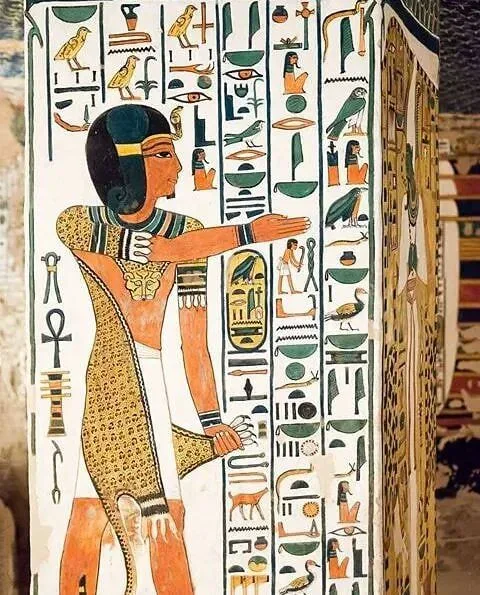 The Golden Hall Burial Chamber
Iunmutef on the Pillar: The Journey Completed
The priestly god on this pillar, arm outstretched, is Horus-Iunmutef, a figure who acts on behalf of the dead. He was painted by the elite royal craftsmen of Deir el-Medina, the village of artists who decorated the royal tombs of their day. Not one of their names is attached to this tomb. What survives is their skill: some four hundred and eighty square metres of wall painting. Two thirds of it remain. The painters gave particular care to Nefertari's face — the shape of her eyes, the blush of her cheeks, the line of her eyebrows. Their work is now among the best preserved and most detailed pictures of the Egyptian journey into the afterlife. And that journey has an ending. On the door of the burial chamber, the programme completes itself: Nefertari is reborn and emerges from the eastern horizon as a sun disc, victorious over the world of darkness. Few places tell the Egyptian vision of the afterlife so completely.
Listen in the appPhoto: Heshbi · CC BY-SA 4.0
Tomb of Nefertari
Frequently asked questions
How much does the guide cost?
Free app download. Listed guide price: $0.99. Guide price shown in the app. Audio guide only. Venue admission is separate.
Can I listen without internet?
Yes. Download the guide’s audio, images, and maps in the app before your visit. Your downloaded content is then available offline.
Can I listen in my language?
This audio guide is available in 15 languages, including English.
Do I need to follow a schedule?
No. This is a self-guided experience. Choose your stops, pause whenever you like, and return to a story at your own pace.
Tomb of Nefertari
The Stanza Journal
Travel tips
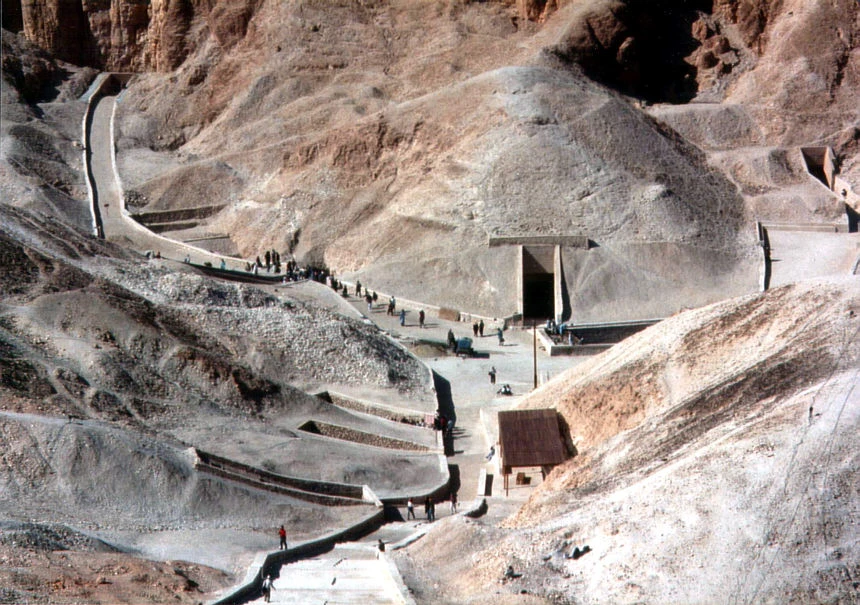
The Valley of the Kings and the Nile’s west bank at Luxor: how to plan the day
The royal tombs are the reason most people cross the Nile. Understand how the tickets work, pick one or two other sites, and leave room to look properly.Content & sources
Peter J. Bubenik (1995) · CC BY-SA 2.0 · Cropped
At your own pace
Explore Tomb of Nefertari.
Download Stanza, then search for “Tomb of Nefertari”.
Free app download · Guide price shown in the app
Keep exploring
Nearby audio guides
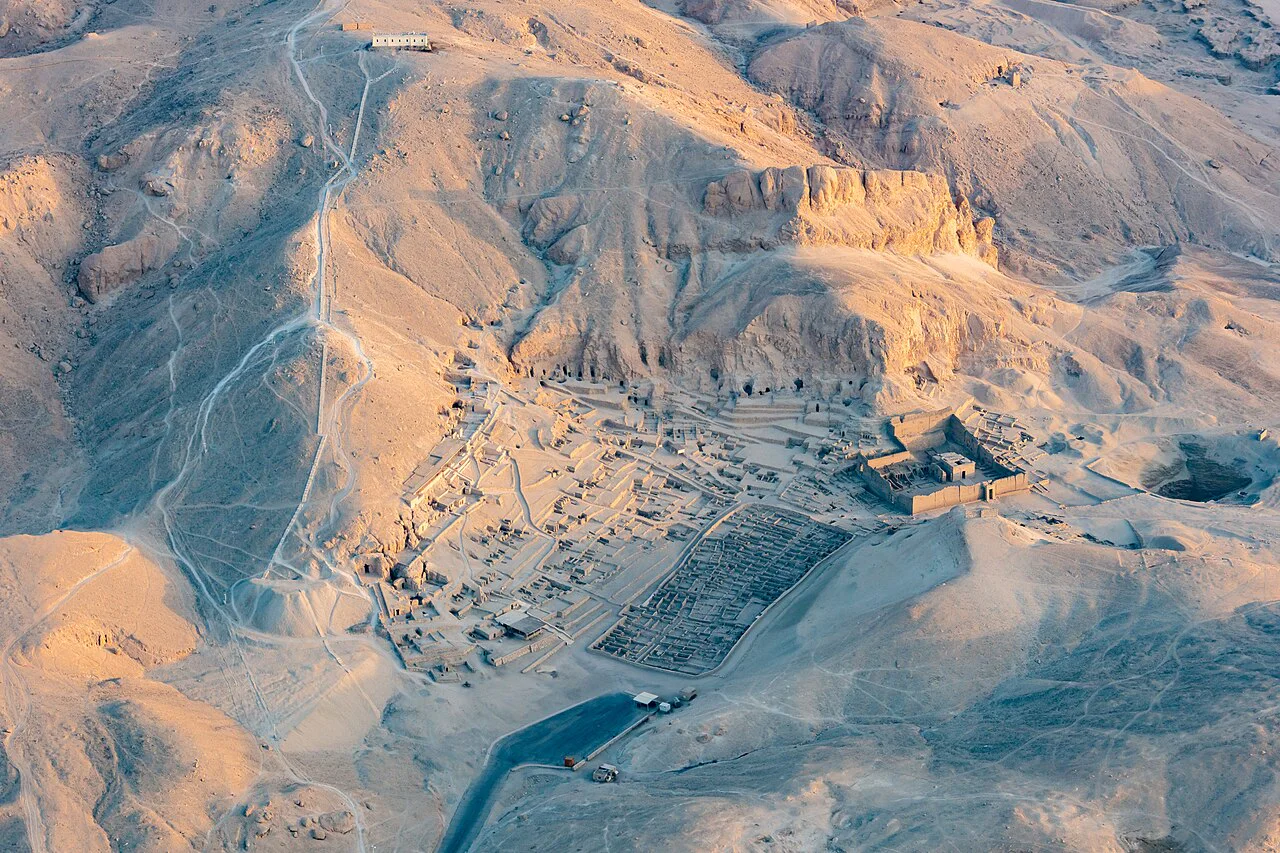
Al Baairat Village · 1 km
Deir el-Medina
Content & sources
Diego Delso · CC BY-SA 4.0
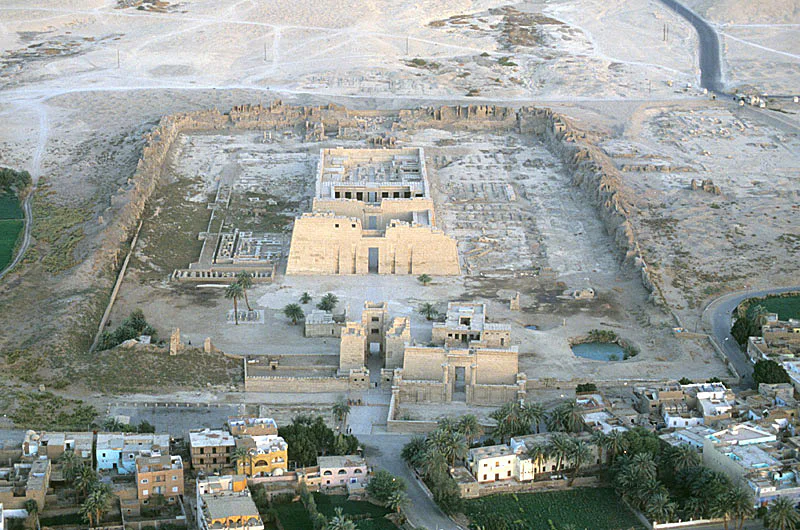
Al Baairat Village · 1 km
Mortuary Temple of Ramesses III
Content & sources
Roland Unger · CC BY-SA 3.0
Luxor · 2 km
Valley of the Kings
Content & sources
Fotograf/Photographer: Peter J. Bubenik (1995) · CC BY-SA 2.0
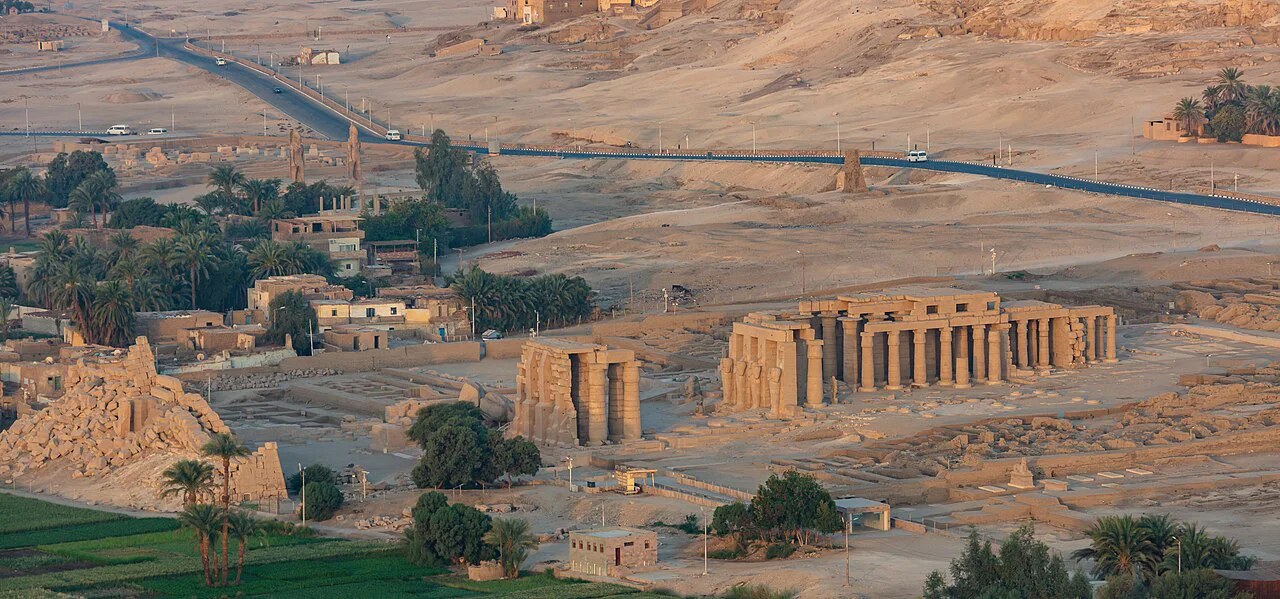
New Al Qarnh City · 2 km
Ramesseum
Content & sources
Diego Delso · CC BY-SA 4.0