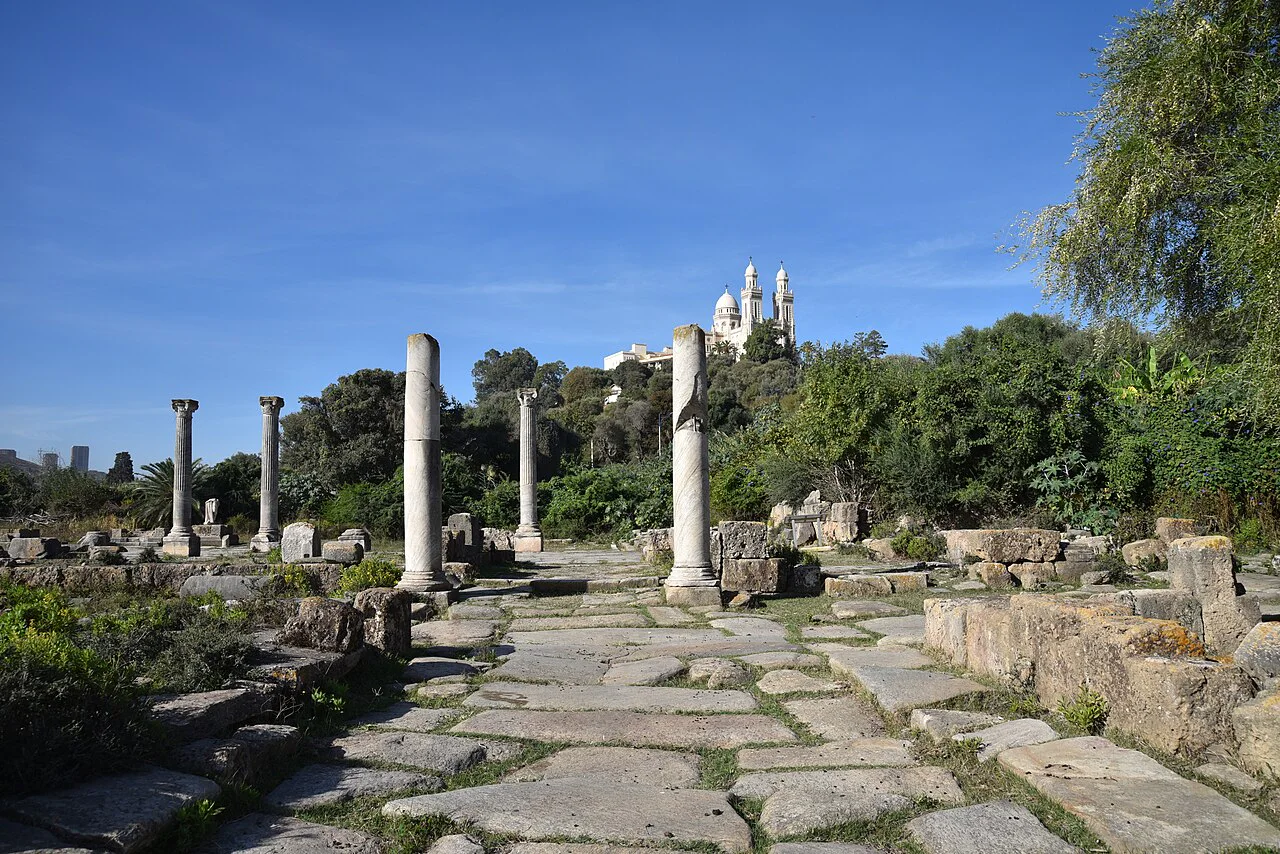
Stanza · Audio guide
Hippo Regius Audio Guide
A place to remember. A story to take with you.
Hippo Regius is the ancient name of the modern city of Annaba, Algeria. It served as an important city for the Phoenicians, Berbers, Romans, and Vandals.
Download Stanza, then search for “Hippo Regius”.
About the tour
One guide. Your kind of visit.
Hippo Regius is the ancient name of the modern city of Annaba, Algeria. It served as an important city for the Phoenicians, Berbers, Romans, and Vandals.
Ready when you are.
- 01Get the free Stanza app.
iOS & Android
- 02Find your guide.
“Hippo Regius”
- 03Download before you go.
Works offline
Audio guide / 11 narrated stops
Inside the guide
Get to know a few of the stories before you go. Open a stop to read more.
01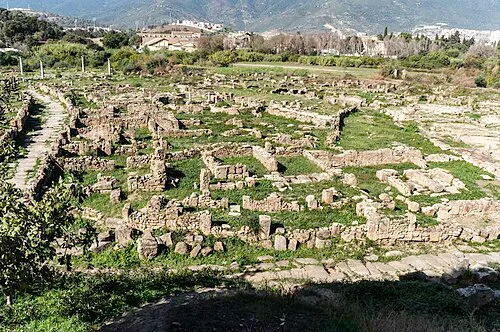 Arrival and Site Overview
Hippo Regius: An Orientation
Welcome to Hippo Regius, the ancient city whose ruins spread across this low ground near the sea. Traders from Tyre, a great Phoenician port, settled here around the twelfth century BC. Their Punic name for the town probably had something to do with the word for harbor. The Romans later called it Hippo Regius, the Royal Hippo, because the Numidian kings kept a residence here. In time it became a Roman colonia and grew into one of the major cities of Roman Africa. Two claims give this place its fame. It was the bishopric of Saint Augustine, and later the first capital of the Vandal Kingdom. Nearly two thousand years of building lie within these walls, Phoenician, Numidian, Roman, Vandal, Byzantine and early Islamic. No single architect designed any of it. Each generation built on top of the last, which is why the ruins sprawl so low and wide.
Dan Sloan · CC BY-SA 2.0
02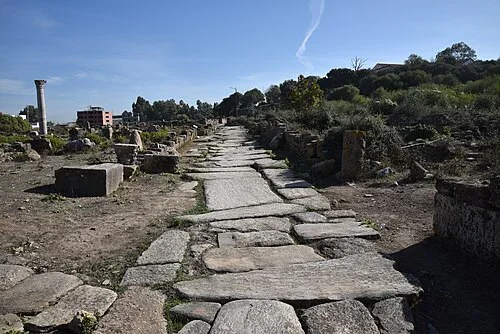 Arrival and Site Overview
Walking a Roman Street
These paving slabs carried the ordinary traffic of a Roman town. Hippo was a colonia, a city of Roman citizens. Under the emperor Diocletian's reforms it joined the Diocese of Africa, the empire's new administrative map. Streets like this one moved people between their houses, the baths, the market and the forum. The great slabs were laid to take carts, animals and feet. They still mark the line the street followed through the city.
Carole Raddato · CC BY-SA 2.0
03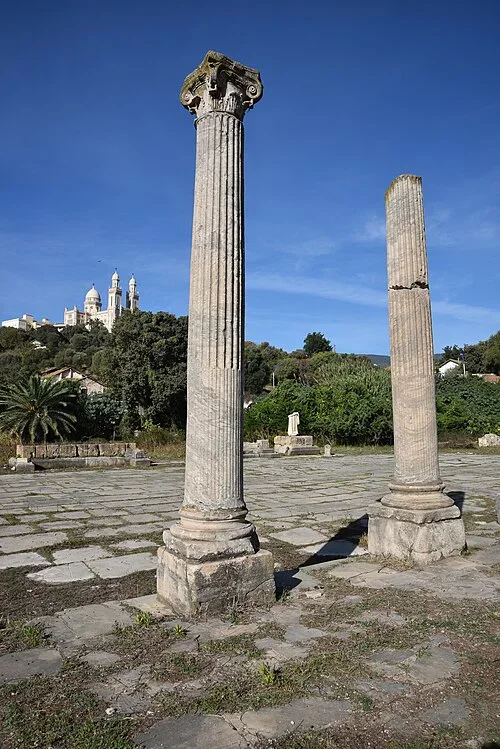 The Great Roman Forum
The Great Forum
A forum was the heart of any Roman city, and Hippo built itself an enormous one. The open plaza here measures about seventy-six metres on its long side. Across, it runs forty-three. That made it one of the largest forums in Roman North Africa. Politics, law courts, business and public gatherings all belonged to a space like this. The tall fluted columns still standing here carried roofs over the walkways along its edges. Centuries of weather and shifts in the earth have left them leaning at slight angles, no longer perfectly upright. On the hill above, a white basilica overlooks the ruins, and its story comes at the end of the tour.
Listen in the appCarole Raddato · CC BY-SA 2.0
04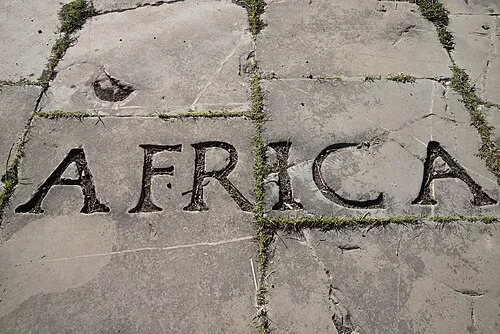 The Great Roman Forum
Africa, Carved in the Pavement
Cut into the stone slabs of the forum, the letters AFRICA stand out. They are not the name of the province. They belong to a long inscription that runs across the whole width of the forum, its letters once filled with bronze. It records that the paving was given by Gaius Paccius Africanus, proconsul of the province under the emperor Vespasian and patron of the town, so these letters are part of his name. Inscriptions were how a forum spoke. Honours to officials, decrees and the names of benefactors were set into public ground for everyone crossing the plaza to read, and no citizen could cross this square without walking over the name of the man who paid for it.
Listen in the appCarole Raddato · CC BY-SA 2.0
05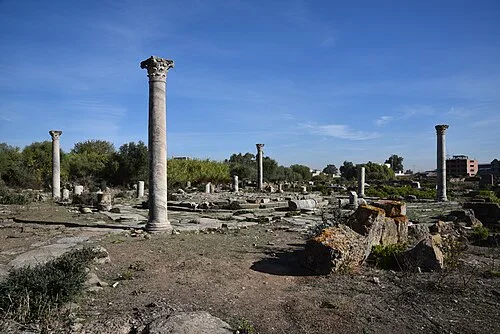 The Macellum and Residential Mosaics
The Macellum: The City Market
Markets fed Roman cities, and Hippo built itself a proper one. This market, the macellum, went up in the first century AD. It was refurbished in the fourth, so its last working form belonged to Hippo's late-Roman height. A macellum was a purpose-built food market, a courtyard ringed by stalls where butchers, fishmongers and greengrocers sold their goods. The scattered columns and paving here trace the shape of that courtyard. Refurbishing an old market in the fourth century says something too. The city was still prosperous enough, and hungry enough, to keep it in good order.
Listen in the appCarole Raddato · CC BY-SA 2.0
06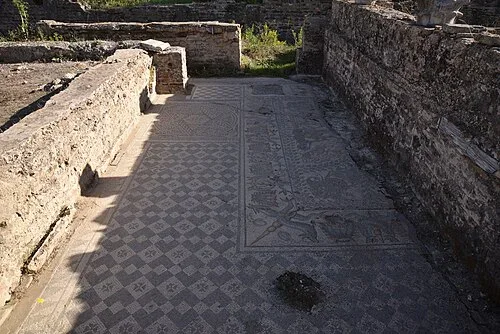 The Macellum and Residential Mosaics
Mosaics of the Residential Quarter
Private wealth showed itself at home, underfoot. This mosaic floor still lies where workmen set it, in the room it was made for. Geometric patterns run across it, with figured panels worked among them. Floors like this belonged to the houses of prosperous citizens, in the city's residential quarter. Across Roman Africa, villa owners competed in the mosaic craft, tiling their dining rooms and courtyards with patterns and pictures. These floors survive here because nobody ever moved them. The walls around have fallen, but the pavement keeps its place.
Listen in the appCarole Raddato · CC BY-SA 2.0
07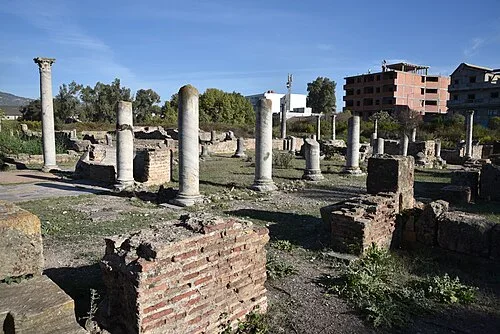 The Roman Baths and Vandal Conquest
The Roman Baths
Bathing was a daily habit for Roman citizens, and it took serious engineering. The brick piers and thick wall stumps here are characteristic of the bath complex in this part of the site. Roman bathhouses raised their floors on stacks of brick, leaving gaps underneath. Hot air from a furnace circulated through those gaps and warmed the rooms above. Bathers moved from cold rooms to warm ones to hot, then back again. Water had to be supplied, heated and drained, all day, every day. Baths were social places as much as washhouses, where citizens met friends, heard news and passed an afternoon. The columns standing among the brickwork once held up the roofs of these halls.
Listen in the appCarole Raddato · CC BY-SA 2.0
08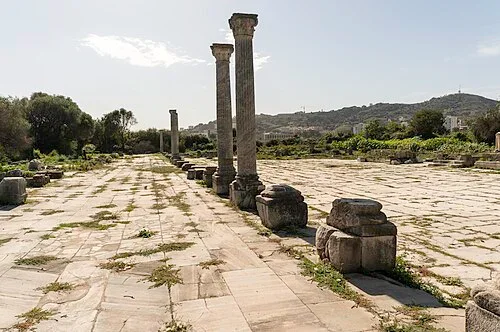 The Roman Baths and Vandal Conquest
The Siege of Hippo Regius
In the year 430, the Vandals came. Their king had led them east along the North African coast, and they laid siege to the walled city. Inside, Augustine and his priests prayed with the people for relief. If the city fell, much of the Christian population faced death or forced conversion to the Arian confession. Three months into the siege, Augustine died. The date was the twenty-eighth of August, in the year 430, and he was seventy-five years old. The wheat fields outside the walls lay unharvested, and hunger and disease struck besieged and besiegers alike. After fourteen months the Vandals lifted the siege. A peace treaty in 435 acknowledged their possession of the city, and their king Geiseric made Hippo the first capital of the Vandal Kingdom. That lasted until he took Carthage in 439 and moved his capital there. A tradition says the conquerors spared Augustine's cathedral and library out of respect for the man who had died during the siege. The story is told, but it is a legend rather than a settled fact.
Listen in the appDan Sloan · CC BY-SA 2.0
09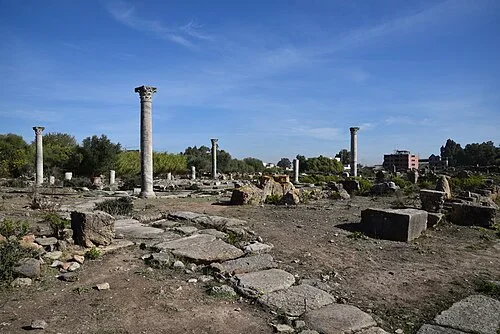 The Ancient Christian Basilica Ruins
The Christian Basilica
Augustine's church made this city famous long before the siege. Hippo was an ancient bishopric, and from 396 until his death Augustine led its church as bishop. He had served as coadjutor, the bishop's designated successor, from 395, ordained by Bishop Valerius. Under him the diocese ran at least three monasteries besides the bishop's own household. He preached here, and this ground held the Christian complex where the church gathered. Its greatest gathering came in 393, the Synod of Hippo. Bishops from across the African provinces met here and drew up a list of the books of Holy Scripture. That list still underlies the Catholic biblical canon. More synods met at Hippo over the following decades, down to 426. The siege that ended Augustine's life began outside these very walls, and the church he led carried on from this place.
Listen in the appCarole Raddato · CC BY-SA 2.0
10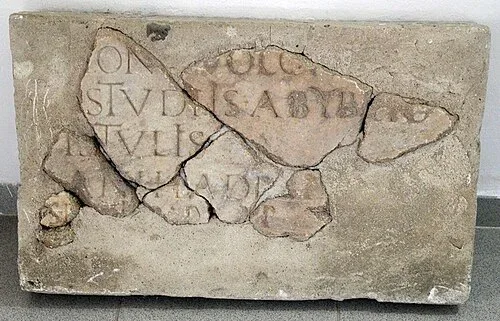 The Site Museum
The Suetonius Inscription
The site museum holds what written records survive, in stone. This inscription is a puzzle of broken fragments, their Latin letters set back into plaster. Stones were reused, shattered and reassembled over the centuries, and piecing them together is how scholars read the city's past. The name on this inscription is Gaius Suetonius Tranquillus, the famous biographer of the emperors. Found in the forum and published in 1952, it lists his posts at the imperial court, in charge of the emperor's studies, his libraries and finally his letters under Hadrian, and it is one of the main sources for his career. The museum's long view also carries the city into its later centuries. The Eastern Roman Empire reconquered Hippo in 534. Muslim armies took the region in 698, and under the Caliphate the town was rebuilt in the eighth century. After that, the ancient city's story fades into the history of its successors.
Listen in the appJona Lendering · Public domain
- 11
The Basilica on the Hill
Why the ruins were left quiet, and the modern basilica that keeps Augustine's memory.
Hippo Regius
Frequently asked questions
How much does the guide cost?
Free app download. Listed guide price: $0.99. Guide price shown in the app. Audio guide only. Venue admission is separate.
Can I listen without internet?
Yes. Download the guide’s audio, images, and maps in the app before your visit. Your downloaded content is then available offline.
Can I listen in my language?
This audio guide is available in 15 languages, including English.
Do I need to follow a schedule?
No. This is a self-guided experience. Choose your stops, pause whenever you like, and return to a story at your own pace.
At your own pace
Explore Hippo Regius.
Download Stanza, then search for “Hippo Regius”.
Free app download · Guide price shown in the app
Keep exploring
Audio guides — Algeria
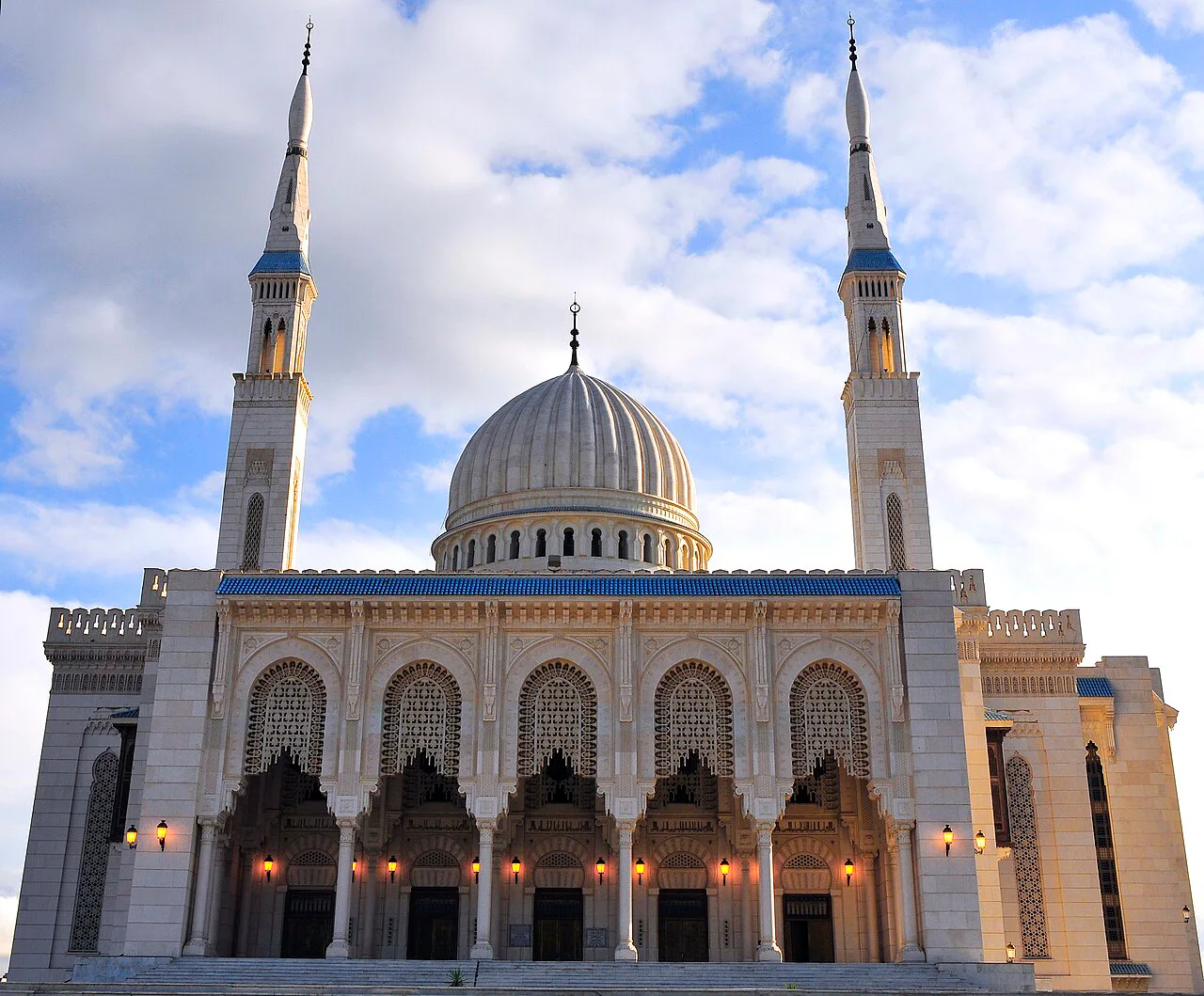
Constantine · 118 km
Emir Abdelkader Mosque
Content & sources
Photo: LBM1948 · CC BY-SA 4.0
Djemila
Djémila
Content & sources
Alioueche Mokhtar · CC BY-SA 4.0
Timgad
Timgad
Content & sources
Photo: Hamza-sia · CC BY-SA 3.0
Tazoult
Lambaesis
Content & sources
Unknown author · Public domain