Stanza · Audio guide
Djémila Audio Guide
A place to remember. A story to take with you.
Djémila is a small mountain village in Algeria that contains some of the best preserved Roman ruins in North Africa. Formerly known as Cuicul, the site serves as an archaeological record of an ancient Roman…
Download Stanza, then search for “Djémila”.
About the tour
One guide. Your kind of visit.
Djémila is a small mountain village in Algeria that contains some of the best preserved Roman ruins in North Africa. Formerly known as Cuicul, the site serves as an archaeological record of an ancient Roman city.
Ready when you are.
- 01Get the free Stanza app.
iOS & Android
- 02Find your guide.
“Djémila”
- 03Download before you go.
Works offline
Audio guide / 15 narrated stops
Inside the guide
Get to know a few of the stories before you go. Open a stop to read more.
01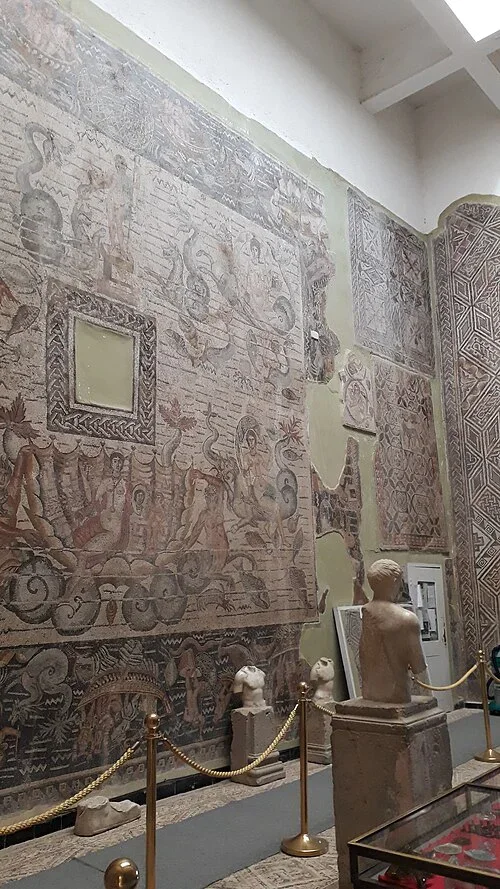 The Djémila Museum
Welcome to Djémila, one of the best preserved Roman sites in North Africa. Its ancient name was Cuicul, and it began as a colony of Roman soldiers from Italy. Emperor Nerva founded it in the years 96 to 98, on a narrow, rugged plateau about nine hundred metres above the sea, where two rivers meet. The terrain was hard going, and that shaped everything the Romans built here. This museum holds the pieces that were too fragile to leave in the open air. Great mythological floor mosaics, lifted from ruined houses, now cover the walls from floor to ceiling, alongside imperial sculptures carried in from the streets. UNESCO gave the site its World Heritage listing in 1982, for the unique way Roman architecture was adapted to a mountain environment. From here the tour moves downhill through the city, starting with the Old Forum, the first civic square the soldiers knew.
Photo: Rachim Fouad · CC BY-SA 4.0
02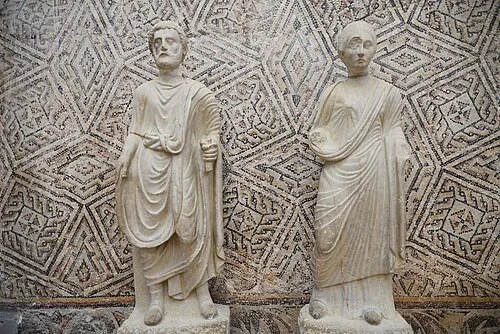 The Djémila Museum
Funerary Statues of a Couple
A man and a woman stand side by side, carved in stone, draped in Roman dress. These are funerary statues, monuments raised over the dead. The couple's names have not come down to us, and what they did in life is unknown. What they show is how the people of Cuicul chose to be remembered: in Roman dress, in Roman style, as citizens of the empire. The first settlers here were soldiers from Italy, and their descendants turned a garrison town into a provincial city. At its height, Cuicul held an estimated ten thousand people. Families who could afford it marked their graves the Roman way, and this couple has outlasted nearly everyone else buried in the city.
Carole Raddato from FRANKFURT, Germany · CC BY-SA 2.0
03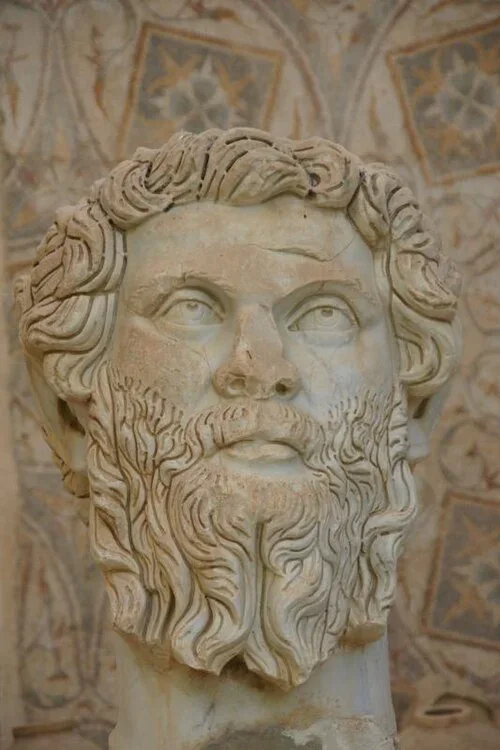 The Djémila Museum
Monumental Head of Septimius Severus
A face carved on a giant scale, with a full beard and deep-set eyes. This is a monumental marble head of Septimius Severus, an emperor born in North Africa. His family, the Severans, changed the fate of this city. Under their rule in the third century, Cuicul reached its architectural peak, growing richer and grander than the founding soldiers could have imagined. The head itself was found broken from its statue, as emperors' images often were when politics turned. Keep his face in mind for later in the tour. When you reach the New Forum, you will be walking through what his family built.
Listen in the appYves Jalabert · CC BY-SA 2.0
04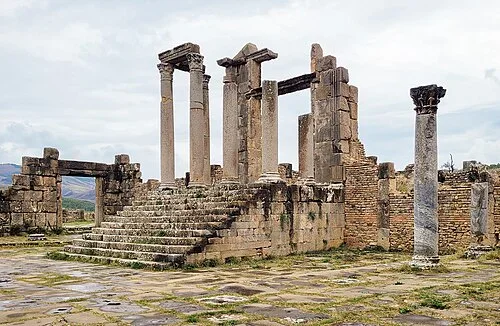 The Old Forum and Temple of Venus Genetrix
Temple of Venus Genetrix and the Old Forum
Roman town planners worked from a standard pattern: a forum at the centre, crossed by two main streets called the Cardo Maximus and the Decumanus Maximus. Cuicul's builders brought that pattern with them, and this tight rectangular square was its heart. Around the forum stood the buildings a young colony needed. A temple to Jupiter, the Capitol, for the state religion. A civil basilica for the courts. And this temple, dedicated to Venus Genetrix, with its staircase and columns still standing. Religion, law and government shared this one compact space in the early town. But the tidy Roman plan soon collided with the mountain. The plateau is narrow and uneven, and the grid could only bend so far before the terrain won.
Listen in the appBernard Gagnon · CC BY 4.0
05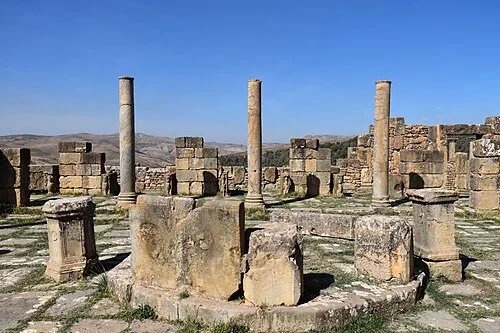 The Market of Cosinius
A garrison town got rich on what the land around it produced. Cuicul's wealth was essentially agricultural: cereals, olive trees and farming, traded across the region until the colony became a large market town. This building is the macellum, the covered market, and its stones record who paid for it. Two local brothers, Gaius and Lucius Cosinius, spent thirty thousand sesterces of their own money to put it up, during the reign of Antoninus Pius in the second century. That was private wealth turned into a public building, the mark of a family that had prospered in the trade. The market gave the city a proper hall for buying and selling, next door to the forum. Prosperity in Roman Africa was often paid for exactly like this, by citizens who wanted their names in stone.
Listen in the appCarole Raddato · CC BY-SA 2.0
06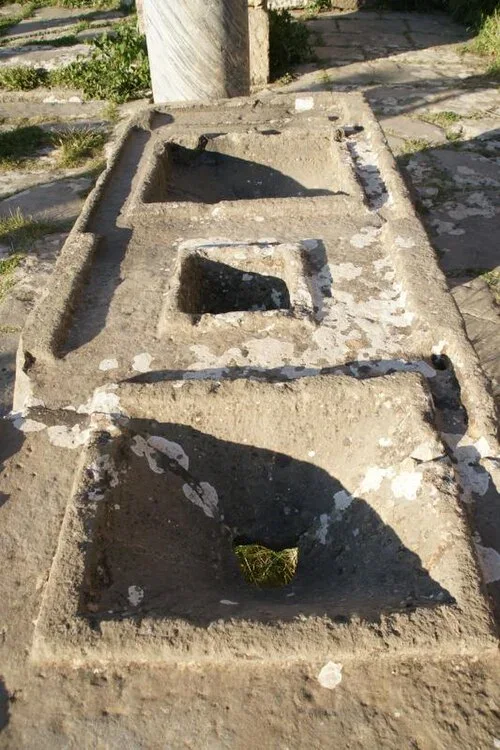 The Market of Cosinius
The Market Measuring Table
Beside the market sits a plain stone table, hollowed out into square basins. This is a measuring table, holding the standard measures for grain and other goods sold here. Trade in a Roman market ran on fixed quantities, so buyers and sellers checked what they were trading against measures cut into stone. A seller could not short the measure, and a buyer could not claim he had been cheated. It is a small thing, a single slab with hollows worn into it. But it is the machinery that made a provincial grain and olive trade actually work, day after day.
Listen in the appYves Jalabert · CC BY-SA 2.0
07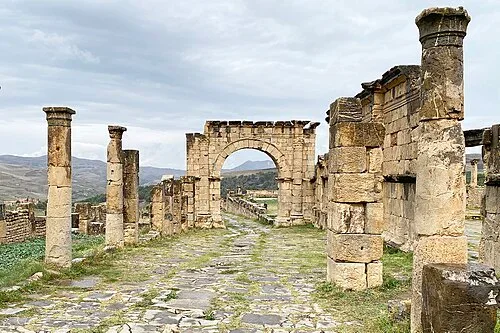 The Cardo Maximus
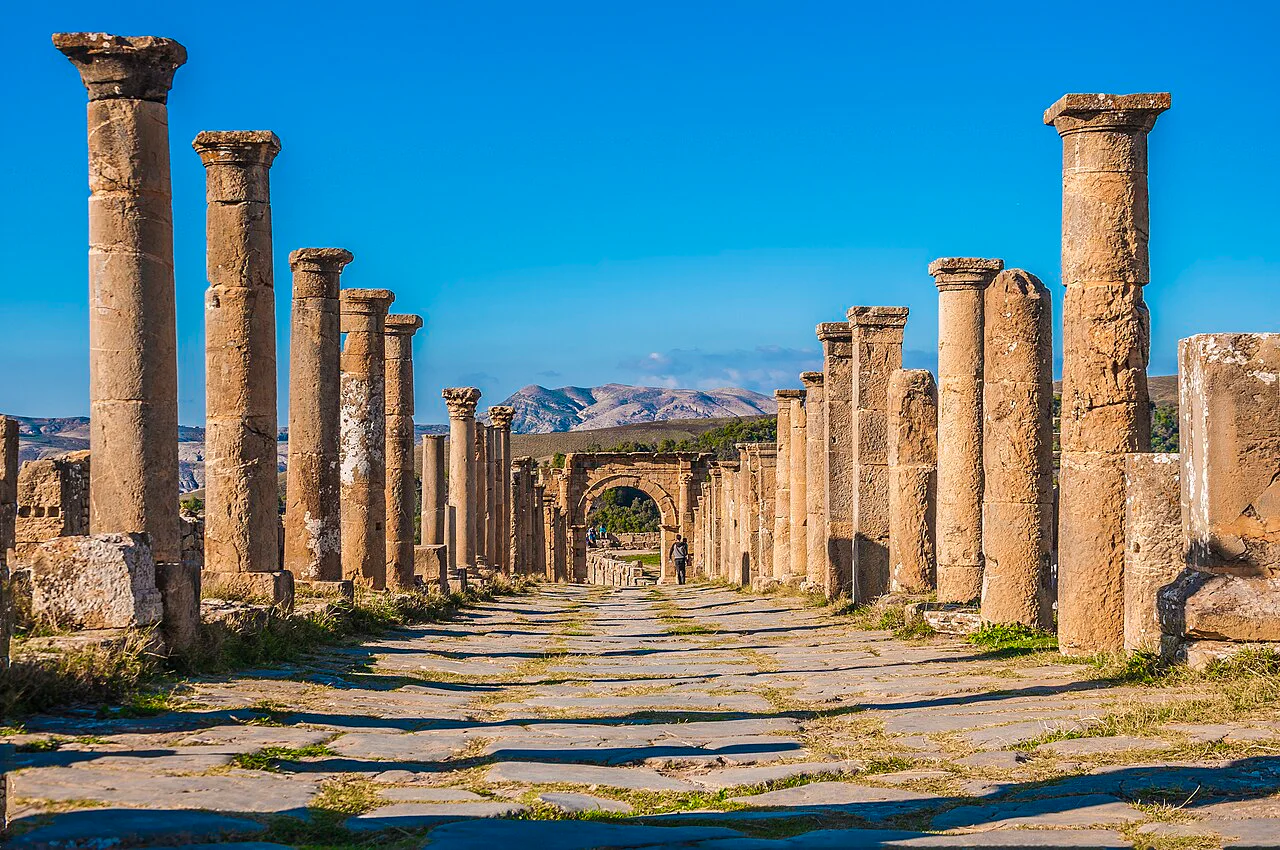
Every Roman town plan named one street the Cardo Maximus, the main north-south thoroughfare. Here it is, paved in stone, lined with the stumps of colonnades. This is where the mountain adaptation becomes visible on the ground. Instead of a flat grid, the paving and the colonnades follow the ridge, rising and falling with the rock beneath. The street links the crowded old city with the newer quarters to the south, and it carried everything: carts, animals, processions and shoppers. The terrain constrained everything in Cuicul. It is the reason, for one, that the theatre ended up outside the walls, which the tour reaches shortly. Follow the street in your mind's eye and it runs on toward the Severan quarter, the grandest part of the city.
Listen in the appBernard Gagnon · CC BY 4.0
08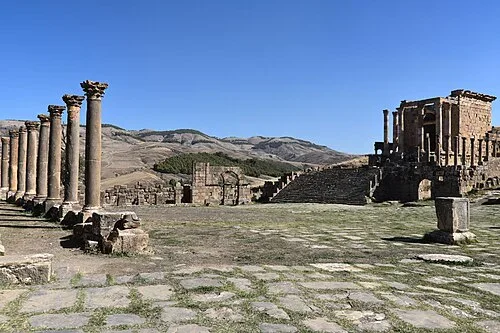 The Forum of the Severans and Temple of Gens Septimia
The Forum of the Severans
By the third century, Cuicul had outgrown the square its founders laid out. So its administrators did something drastic: they took down some of the old city ramparts and built a second forum on the freed ground. The result is nothing like the tight Old Forum you heard about earlier. This square is grand, irregular and sloped, the classic Roman plan bending to the mountainside. It was ringed by larger and more impressive buildings than those around the old forum, and it stayed open to everyday traffic. Markets, military parades and public celebrations all moved through here. A city that demolishes its own defences to build a plaza is telling you how confident it had become.
Listen in the appCarole Raddato · CC BY-SA 2.0
09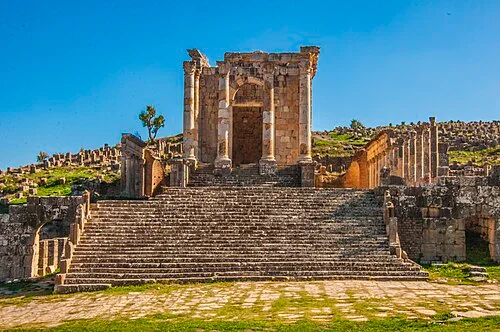 The Forum of the Severans and Temple of Gens Septimia
Temple of the Gens Septimia
A wide stone staircase climbs from the forum to a temple facade above it. This is the Temple of the Gens Septimia, built in the year 229. It was dedicated to the Severan family itself, the ruling dynasty of the emperor whose colossal head waits in the museum. To honour and deify the imperial house was a statement of loyalty, set in the most prominent spot the city had. The staircase matters as much as the temple. Worshippers and visitors climbed it in full view of the square below, a piece of staging that made power visible from the ground up. Temples in older Roman towns sat quietly on their forums. Here, the approach itself is the monument.
Listen in the appalioueche mokhtar · CC BY-SA 4.0
10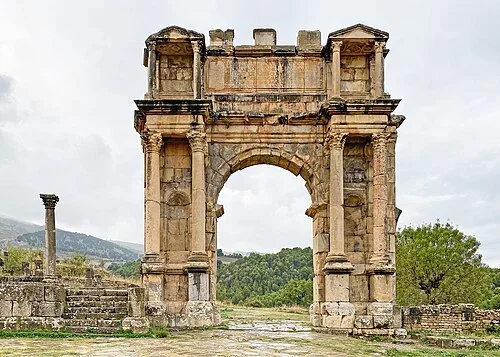 The Arch of Caracalla
Three archways side by side, framed by carved columns, with a heavy attic above. This is the Arch of Caracalla, erected in the year 216 in honour of the emperor himself. Caracalla was the Severan ruler under whose reign the old ramparts came down and the second forum rose, so the arch stands exactly where the city's story of that age is told. It served as a monumental gateway to the New Forum, the entrance through which parades and visitors passed into the grand square. The stonework is beautifully carved, and much of what stands has been carefully restored. A provincial city advertising its loyalty to the ruling house could do no better than a triumphal arch at its own front door.
Listen in the appBernard Gagnon · CC BY 4.0
- 11
The Roman Theatre
A theatre cut into the hillside outside the walls, with seats for three thousand ranked by class.
- 12
The Stage Wall of the Theatre
The stage wall with its acoustic niches, still hosting concerts after nearly two thousand years.
- 13
The Great Baths
The Great Baths, the southern complex where the whole city came to bathe and socialise.
- 14
The Christian Quarter and Baptistery
The fifth-century Christian quarter, and a bishop of Cuicul at the great Council of Carthage.
- 15
Inside the Baptistery
Inside the baptistery, where a dying city baptised converts, and how it got its modern name.
Djémila
Frequently asked questions
How much does the guide cost?
Free app download. Listed guide price: $2.99. Guide price shown in the app. Audio guide only. Venue admission is separate.
Can I listen without internet?
Yes. Download the guide’s audio, images, and maps in the app before your visit. Your downloaded content is then available offline.
Can I listen in my language?
This audio guide is available in 15 languages, including English.
Do I need to follow a schedule?
No. This is a self-guided experience. Choose your stops, pause whenever you like, and return to a story at your own pace.
At your own pace
Explore Djémila.
Download Stanza, then search for “Djémila”.
Free app download · Guide price shown in the app
Keep exploring
Audio guides — Algeria
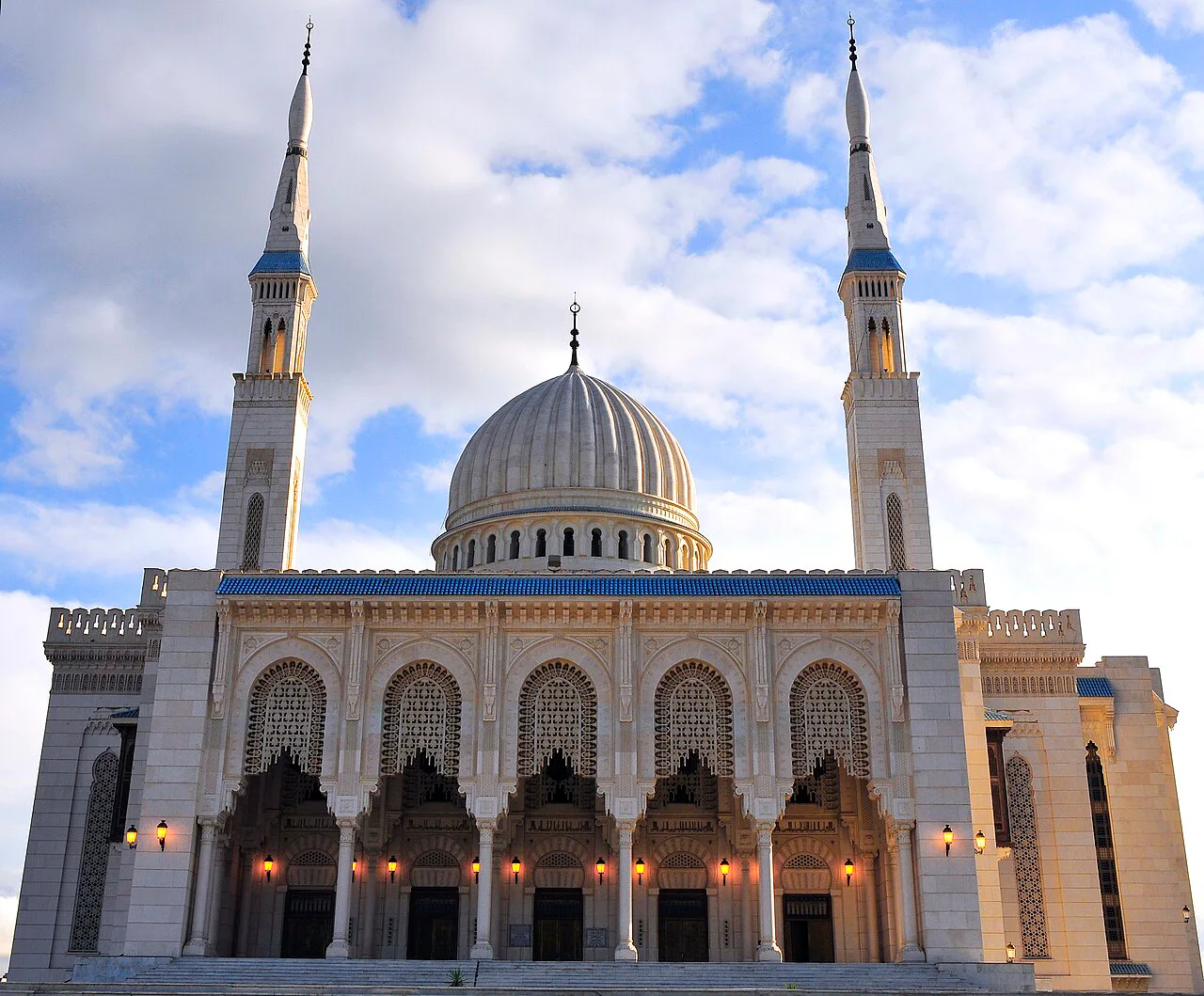
Constantine · 78 km
Emir Abdelkader Mosque
Content & sources
Photo: LBM1948 · CC BY-SA 4.0
Tazoult · 104 km
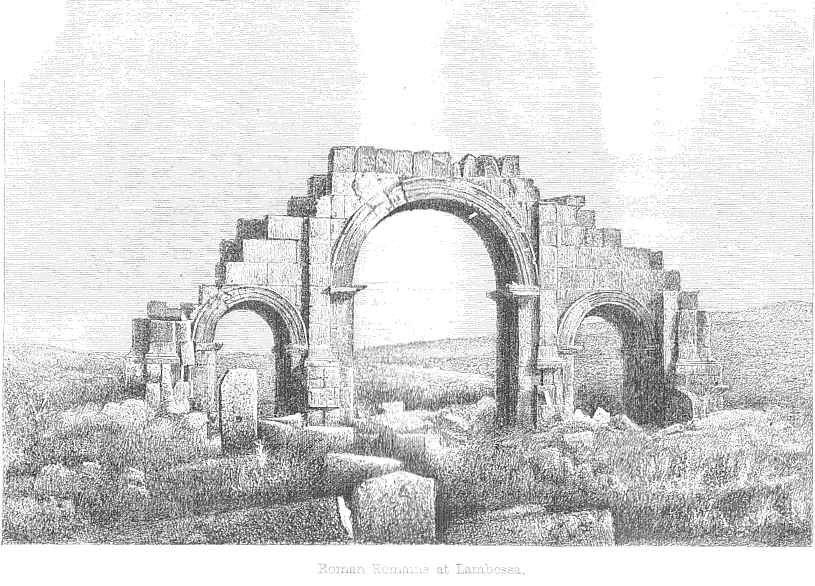
Lambaesis
Content & sources
Unknown author · Public domain
Timgad · 114 km
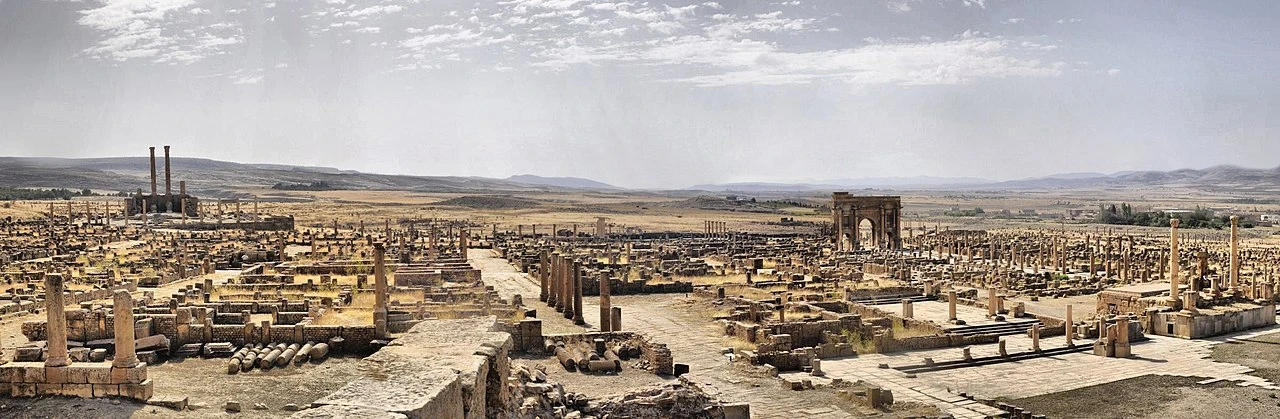
Timgad
Content & sources
Photo: Hamza-sia · CC BY-SA 3.0
Annaba
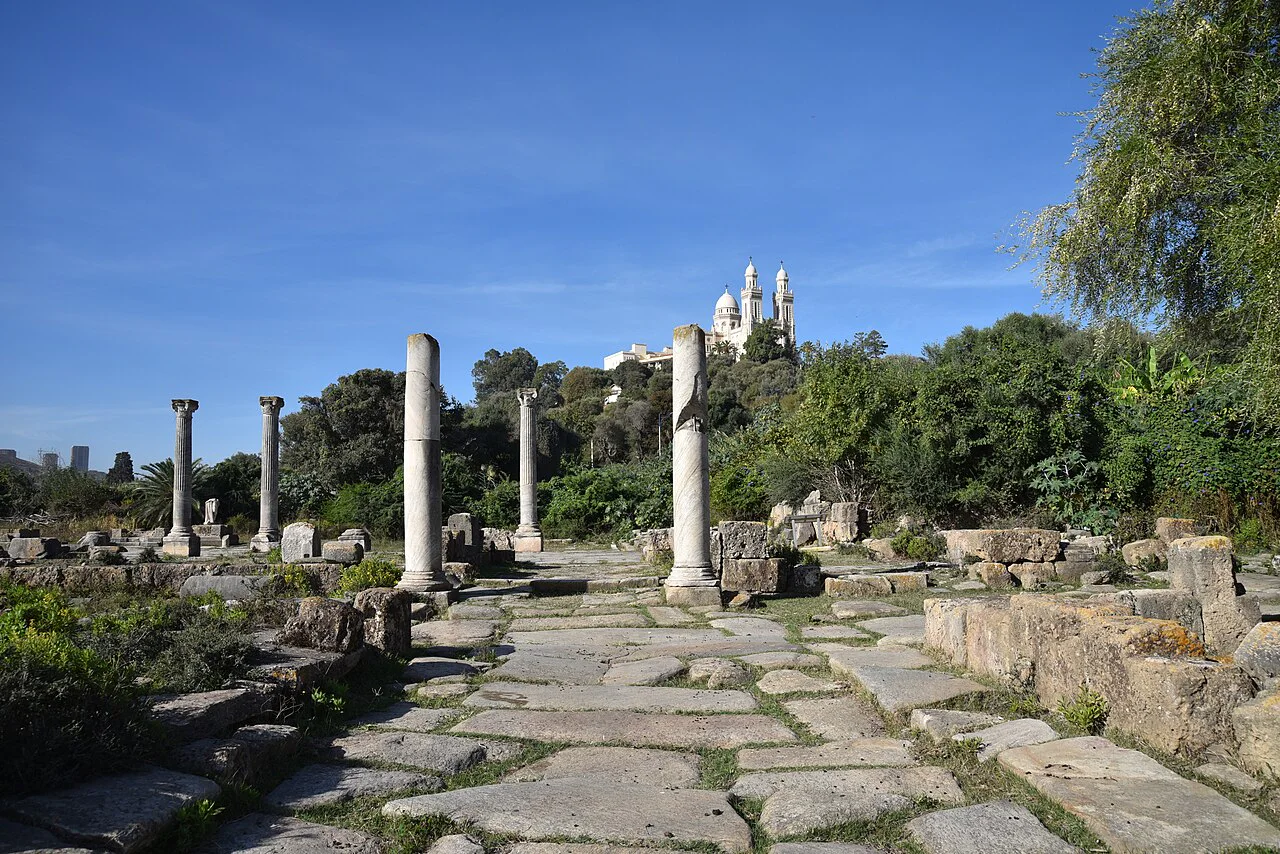
Hippo Regius
Content & sources
Carole Raddato · CC BY-SA 2.0
Casbah
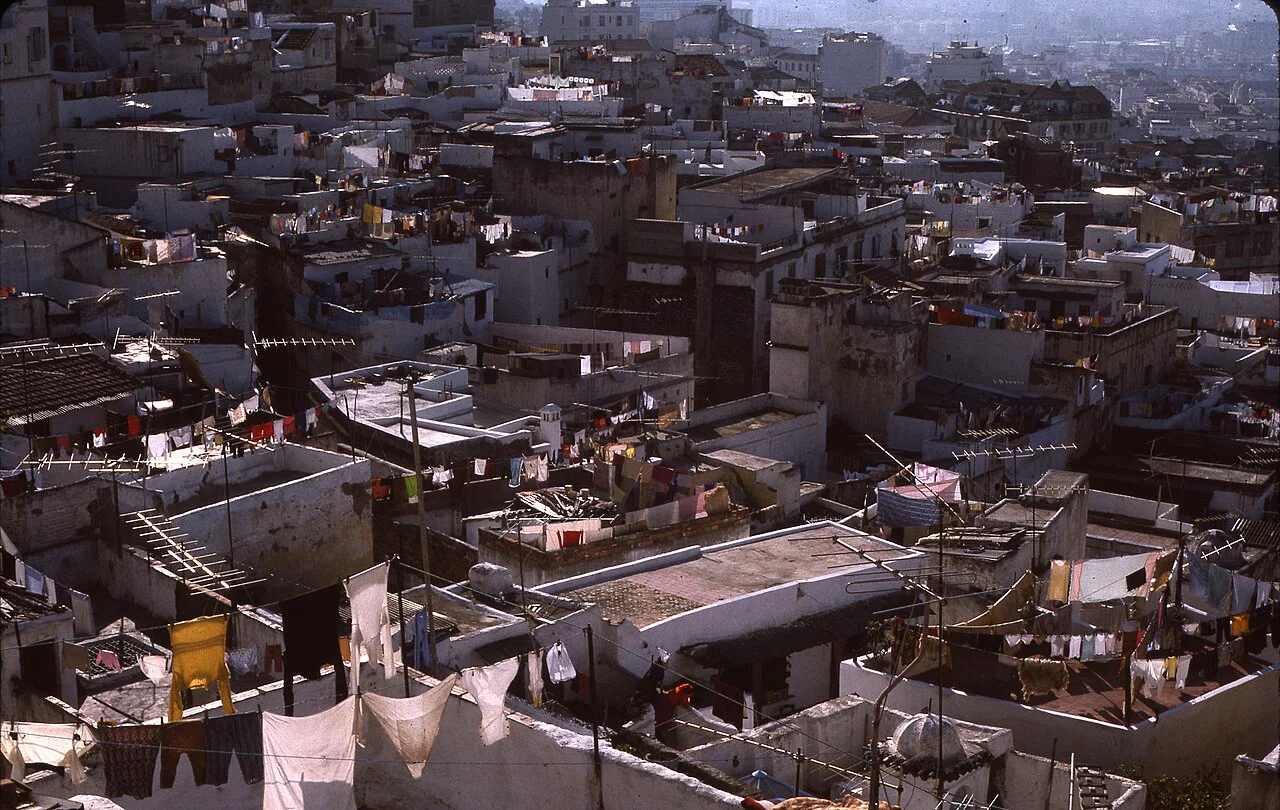
Casbah of Algiers
Content & sources
Maison Méditerranéenne Des Sciences de l'Homme Phonothèque, André Raymond · Licence Ouverte