Stanza · Audio guide
Emir Abdelkader Mosque Audio Guide
A place to remember. A story to take with you.
The Emir Abdelkader Mosque is a Sunni mosque located in the city of Constantine, Algeria. It is the second largest mosque in the country after Djamaa Al Djazair.
Download Stanza, then search for “Emir Abdelkader Mosque”.
About the tour
One guide. Your kind of visit.
The Emir Abdelkader Mosque is a Sunni mosque located in the city of Constantine, Algeria. It is the second largest mosque in the country after Djamaa Al Djazair.
Ready when you are.
- 01Get the free Stanza app.
iOS & Android
- 02Find your guide.
“Emir Abdelkader Mosque”
- 03Download before you go.
Works offline
Audio guide / 8 narrated stops
Inside the guide
Get to know a few of the stories before you go. Open a stop to read more.
01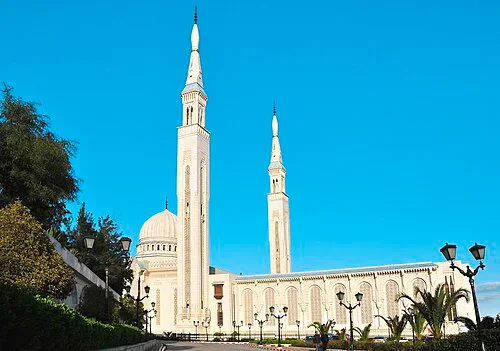 Monumental Plaza and the Soaring Minarets
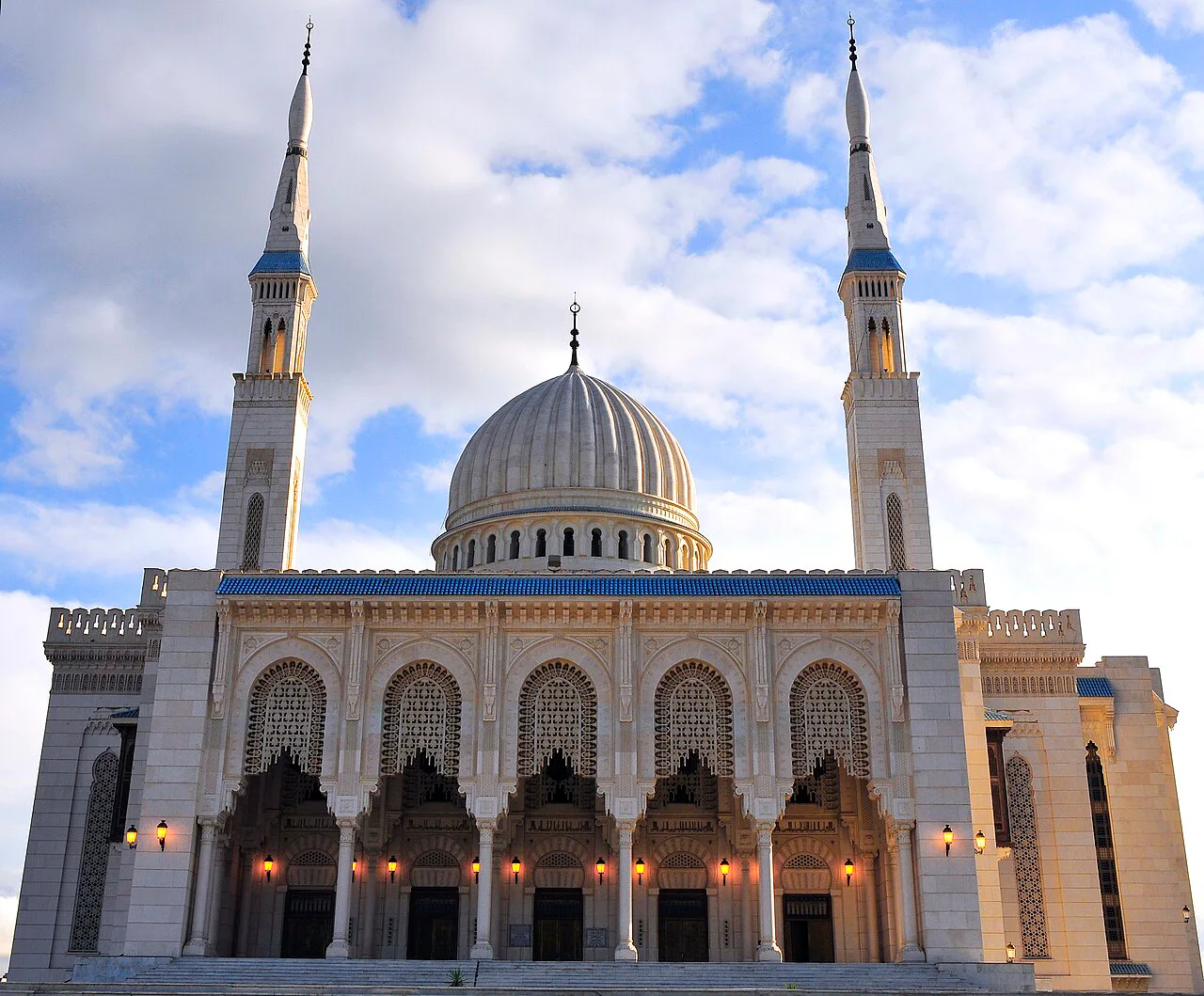
The Mosque and Its Twin Minarets from the Plaza
Welcome to the Emir Abdelkader Mosque, in the city of Constantine in eastern Algeria. This is the second largest mosque in the country, after the great Djamaa El Djazair in Algiers. Two slender minarets rise on either side of a dome above a long arcade of arches. The name belongs to a scholar and fighter born in 1807 near Mascara. Emir Abdelkader was a Sufi scholar who took up arms against the French invasion of Algeria. He fought the colonial army for years, and negotiated treaties with it when fighting gave way to talks. He ended his life far from home, in Damascus, where he died in 1883. Algerians honour him as the founder of the modern Algerian state, and this whole complex carries his name. It serves both as a place of worship and as a centre of Islamic learning.
Photo: LBM1948 · CC BY-SA 4.0
02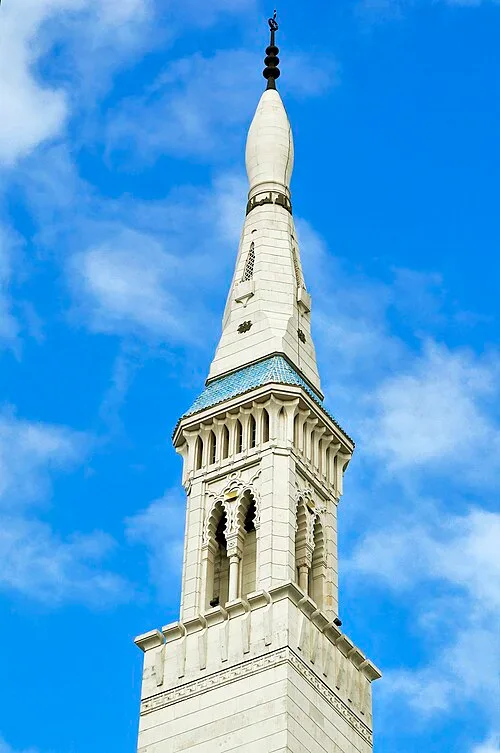 Monumental Plaza and the Soaring Minarets
Up the 107-Metre Minaret
Two minarets stand over this mosque, built to exactly the same design. Each rises a hundred and seven metres, and together they dominate the skyline of Constantine. That height places them among the tallest minarets in North Africa. A minaret is the tower from which the call to prayer is traditionally given, five times a day. The upper stages of the tower are worth reading from the bottom up. There is a balcony stage with paired horseshoe arches, the shape borrowed from the old mosques of the Islamic west. Above it runs a band of green tile, and above that the lantern tapers like a bud. A dark finial closes the very top, a slender point against the sky. The same taper repeats on its twin across the roof.
Photo: LBM1948 · CC BY-SA 4.0
03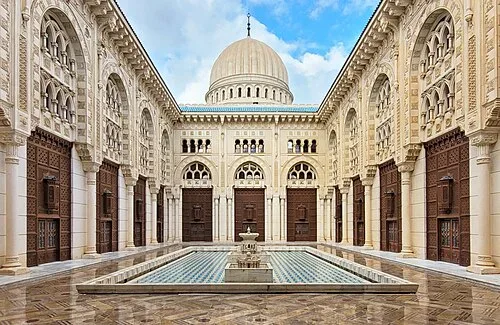 The Marble Courtyard and Grand Portico
The Marble Courtyard (Sahn)
Every great congregational mosque has an open courtyard at its heart, and here it is called the sahn. The paving is polished marble, laid in wide pale bands that mirror the arcades around it. At the centre sits a long fountain basin, still and bright under the sky. Behind it rises the dome, framed by carved wooden doors and galleries of arches. The whole complex was built in marble and granite, and the courtyard shows both off. Its working role is simple and clever. On major occasions the prayer hall fills, and worshippers overflow into this plaza, which holds thousands more. Rows of shoes line the edges on feast days, and the fountain basin serves the washing before prayer.
Listen in the appBernard Gagnon · CC BY 4.0
04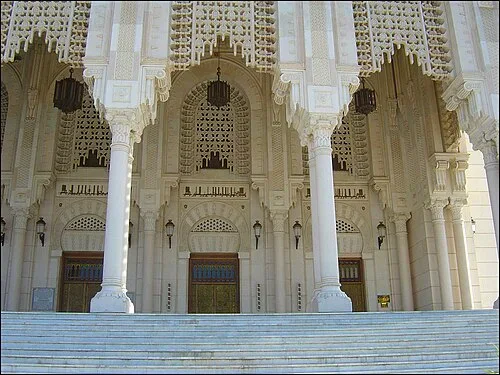 The Marble Courtyard and Grand Portico
The Grand Entrance Portico
The entrance portico gathers everything this mosque is about into one view. Arches stack upon arches, and every surface is carved in deep, lace-like patterns. The design came from Mustafa Moussa, a renowned Egyptian architect counted among the great Arab engineers of his generation. He was assisted by Dr Atta Ibrahim Abdel Aal, and by Abdel Aal's son Sabry. The son was known for his rare mastery of gypsum carving, the craft behind screens like these. Egyptian, Moroccan and Algerian engineers and artisans worked side by side on the building. Their shared design follows the Oriental-Andalusian style, the tradition of the Islamic west and the east meeting in one facade. Work began in the 1970s, and carried on for roughly two decades. The mosque finally opened in official ceremony on the thirty-first of October, 1994.
Listen in the appPhoto: Tmiyaf · CC BY-SA 3.0
05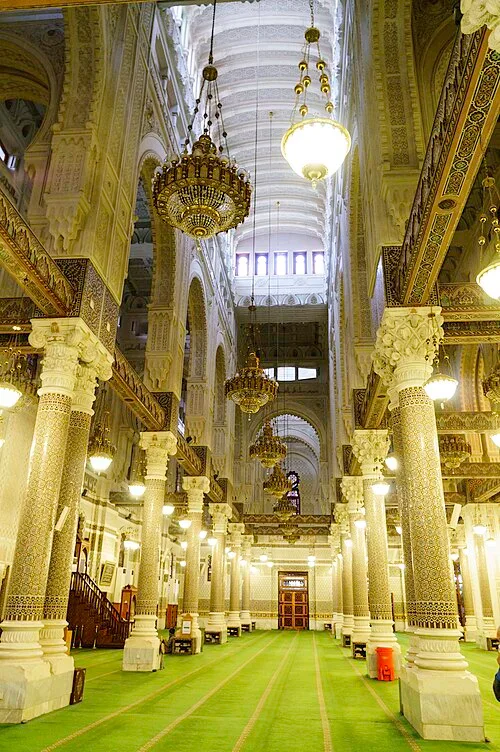 The Grand Prayer Hall
Inside the Grand Prayer Hall
The prayer hall opens like a stone forest. Columns rise on every side, carved and banded with ornament, holding up arches that march away in rows. Green carpet covers the whole floor, marked with pale lines that keep the rows of worshippers straight. Worshippers pray on this carpet, having left their shoes at the doors. On a full day the hall holds up to fifteen thousand people, which makes it the second largest prayer space in Algeria. Above the aisle hang chandeliers in tiers, brass and crystal, descending like inverted towers of light. The greatest of them is the largest chandelier in Algeria.
Listen in the appDan Sloan · CC BY-SA 2.0
06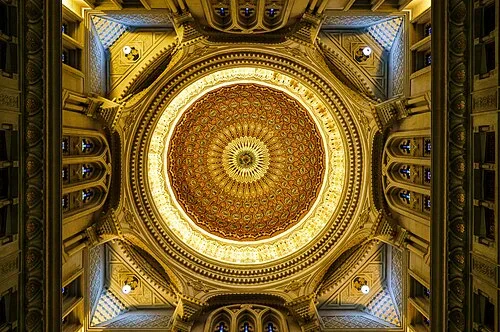 The Central Dome and the Mihrab
Looking Up into the Central Dome
Straight overhead, the dome closes the hall like a golden ceiling. Rings of carved ornament radiate outwards from a central boss, each ring finer than the last, lit warm from below. This is one great dome, not a cluster, and it shelters the very heart of the prayer hall. It spans twenty metres across at its outer edge. Its crown rises about sixty-five metres above the floor, though some accounts give sixty-four. Either way it climbs to a height second only to the twin minarets, which pass it easily. From underneath, the effect is of light falling through honeycombed stone, ring after ring, into the silence of the hall.
Listen in the appDan Sloan · CC BY-SA 2.0
07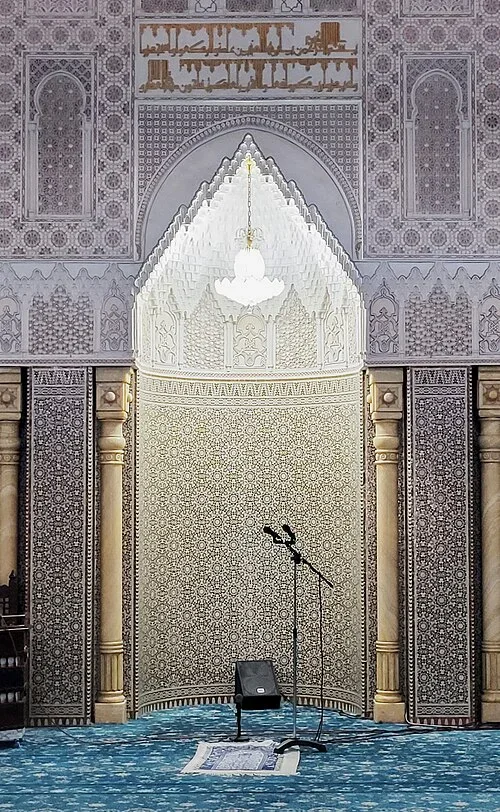 The Central Dome and the Mihrab
The Mihrab and the Qibla Wall
At the head of the hall stands the mihrab, the most ornate niche in the building. A mihrab has one job: it marks the qibla, the direction of Mecca, towards which every prayer is made. When the time comes, the imam stands here and leads the congregation, facing the same way as every worshipper behind him. A microphone stand waits at the mouth of the niche, and a prayer rug lies ready on the carpet. The niche itself is shaped like a pointed canopy, glowing pale against the wall around it. Marble columns flank it on both sides. The surrounding wall carries dense geometric carving, broken by gilded panels of calligraphy above.
Listen in the appBernard Gagnon · CC BY 4.0
08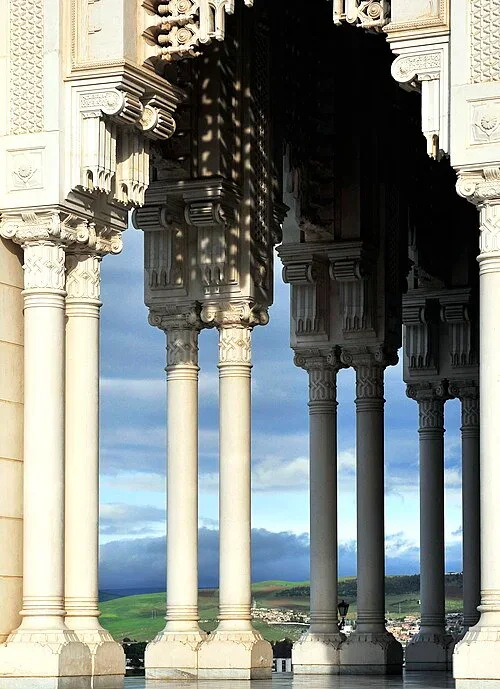 University Arcades and Constantine Panorama
University Arcades and the View over Constantine
Through these carved arches the view opens onto the hills and rooftops of Constantine. The colonnade belongs to the wider complex, which was built together with the Emir Abdelkader University of Islamic Sciences. Mosque and university were conceived as one project, worship and learning joined on a single site. Over the years, the university drew eminent scholars to its lecture halls. Among them were Sheikh Muhammad al-Ghazali and Sheikh Yusuf al-Qaradawi, two of the best-known Islamic thinkers of their generation. Dr Said Ramadan al-Bouti, the Syrian scholar, also lectured here and returned often. Their visits helped make Constantine a centre of Islamic religious and architectural study. The monument honours the scholar who resisted the French conquest, and it carries his work forward in the way he would have recognised, through teaching.
Listen in the appPhoto: LBM1948 · CC BY-SA 4.0
Emir Abdelkader Mosque
Frequently asked questions
How much does the guide cost?
Free app download. Listed guide price: $0.99. Guide price shown in the app. Audio guide only. Venue admission is separate.
Can I listen without internet?
Yes. Download the guide’s audio, images, and maps in the app before your visit. Your downloaded content is then available offline.
Can I listen in my language?
This audio guide is available in 15 languages, including English.
Do I need to follow a schedule?
No. This is a self-guided experience. Choose your stops, pause whenever you like, and return to a story at your own pace.
At your own pace
Explore Emir Abdelkader Mosque.
Download Stanza, then search for “Emir Abdelkader Mosque”.
Free app download · Guide price shown in the app
Keep exploring
Audio guides — Algeria
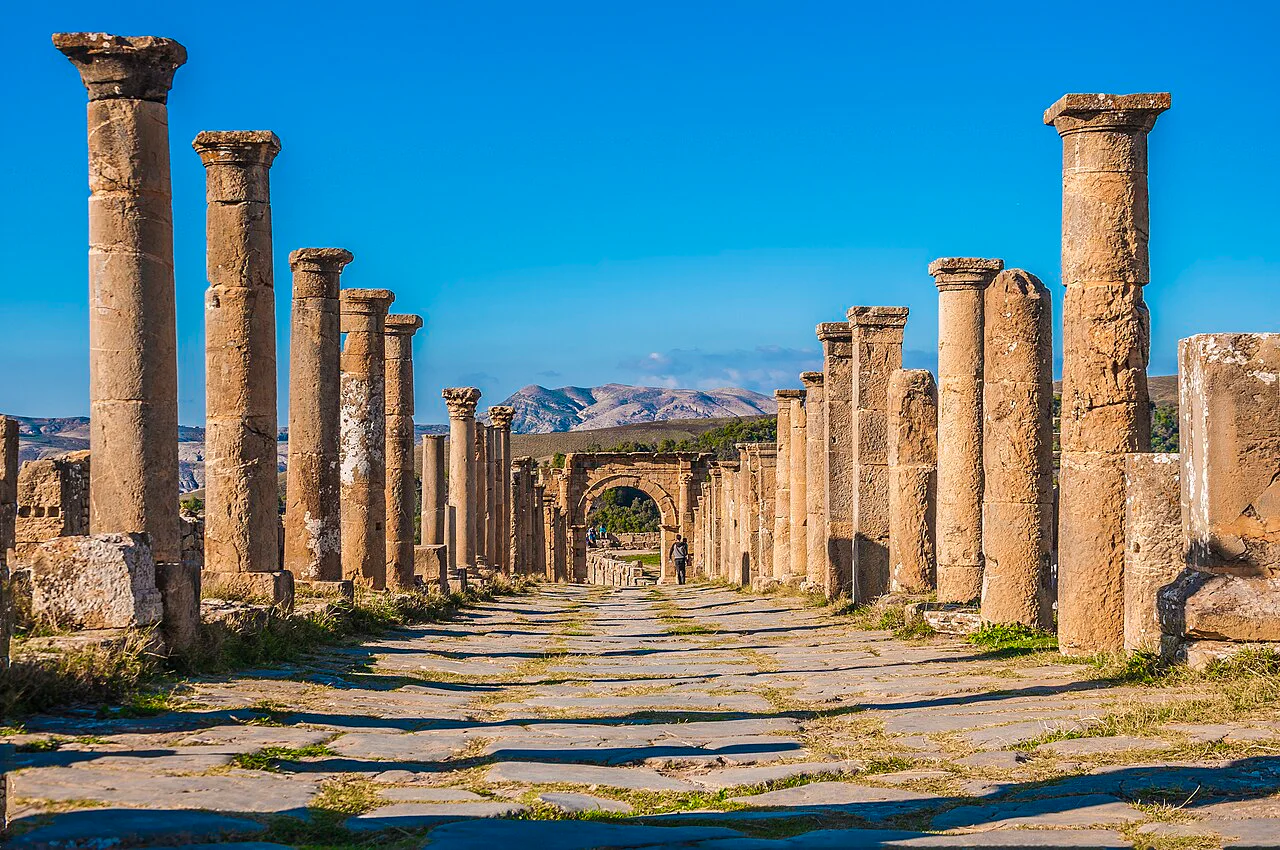
Djemila · 78 km
Djémila
Content & sources
Alioueche Mokhtar · CC BY-SA 4.0
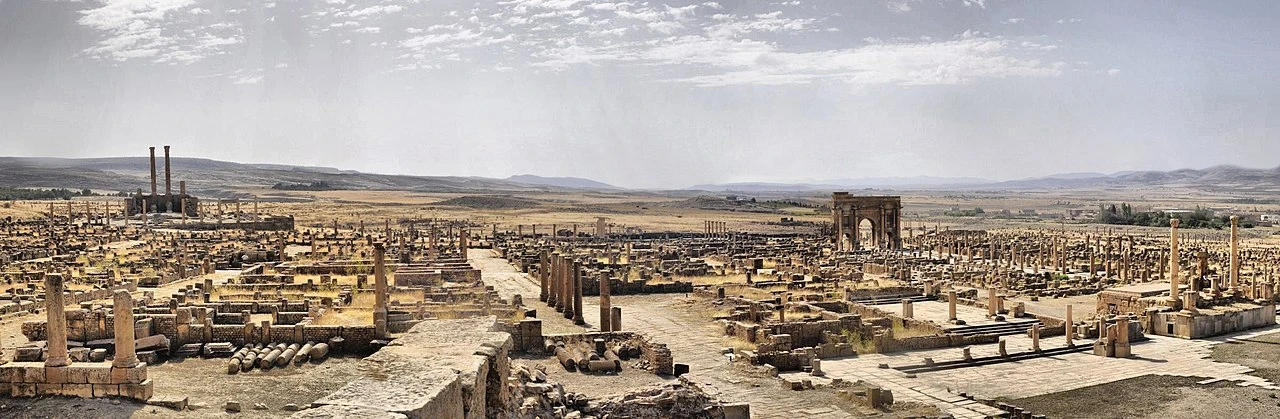
Timgad · 97 km
Timgad
Content & sources
Photo: Hamza-sia · CC BY-SA 3.0
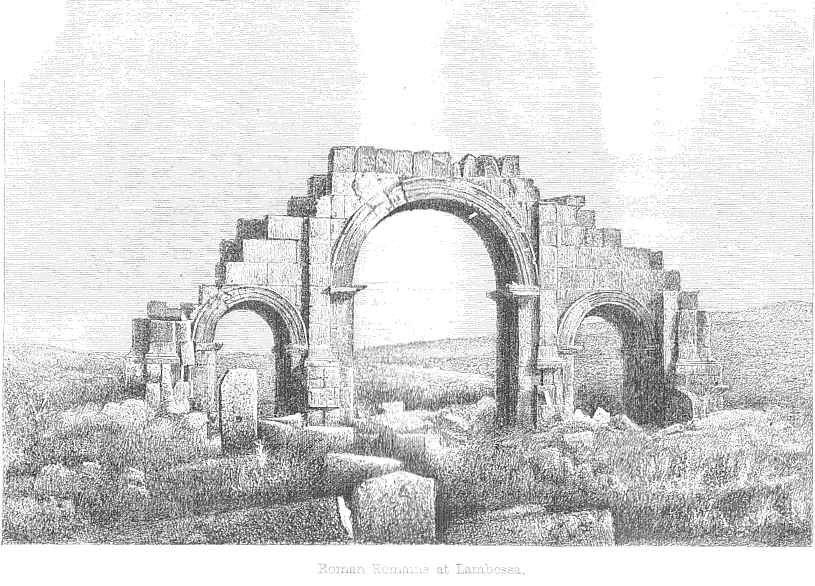
Tazoult · 100 km
Lambaesis
Content & sources
Unknown author · Public domain
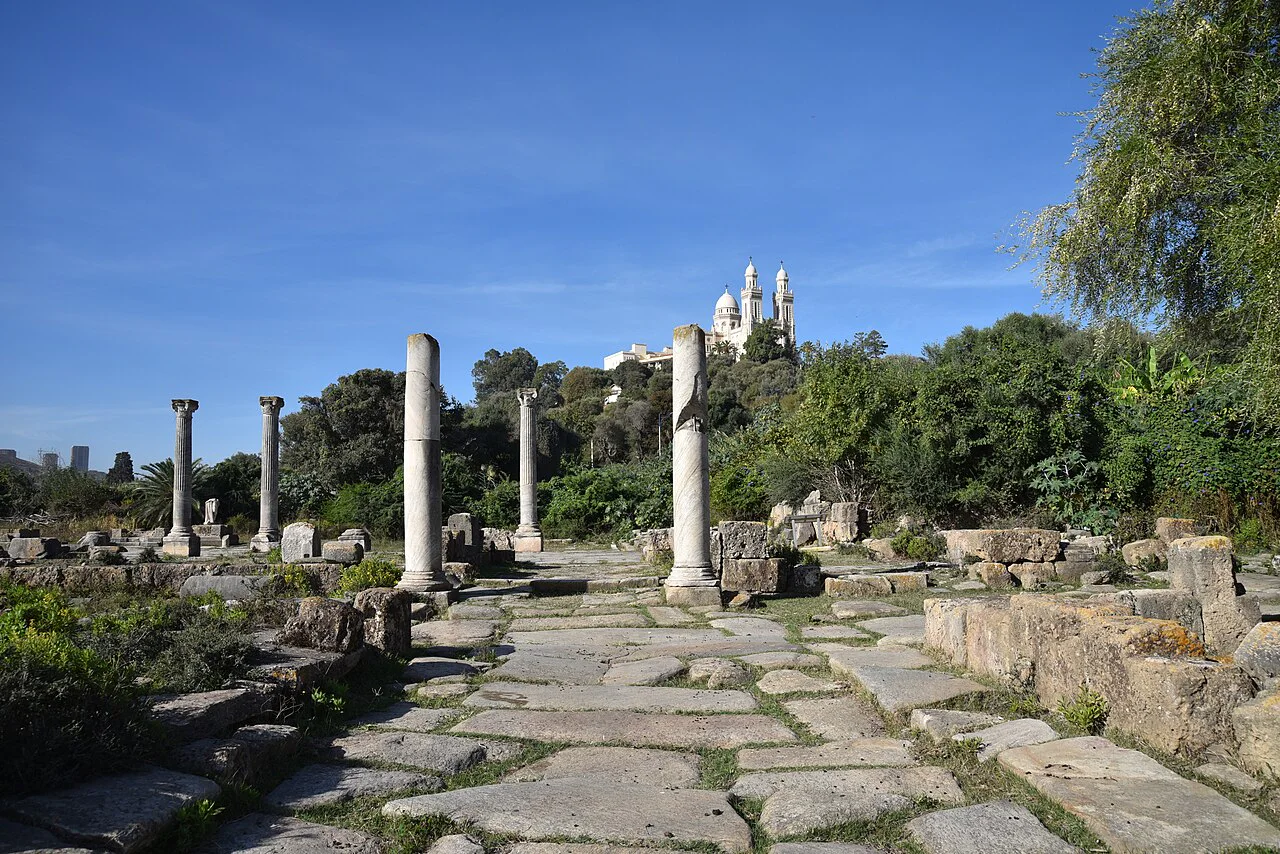
Annaba · 118 km
Hippo Regius
Content & sources
Carole Raddato · CC BY-SA 2.0
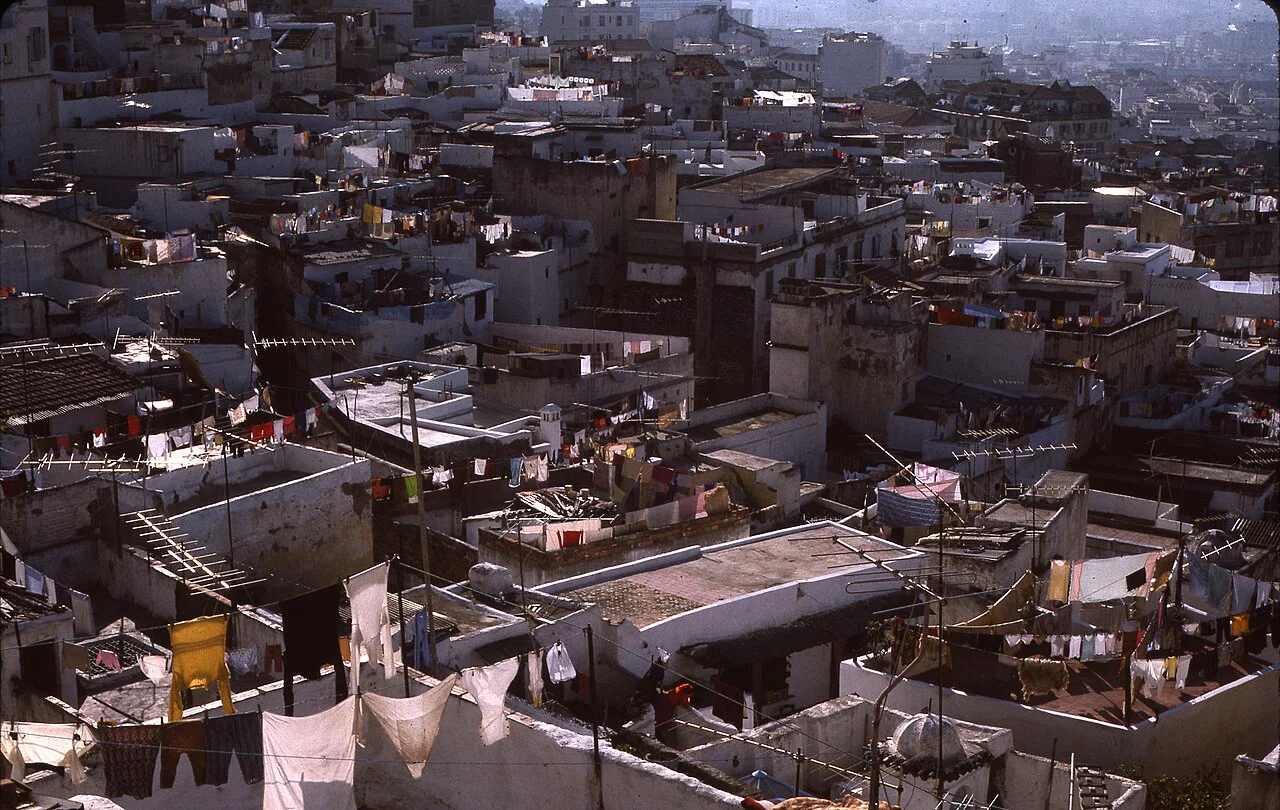
Casbah
Casbah of Algiers
Content & sources
Maison Méditerranéenne Des Sciences de l'Homme Phonothèque, André Raymond · Licence Ouverte