Stanza · Audio guide
Areni-1 cave Audio Guide
A place to remember. A story to take with you.
The Areni-1 cave complex is an ancient multicomponent site located near the Areni village in southern Armenia. It served as a late Chalcolithic and Early Bronze Age ritual site and settlement.
Download Stanza, then search for “Areni-1 cave”.
About the tour
One guide. Your kind of visit.
The Areni-1 cave complex is an ancient multicomponent site located near the Areni village in southern Armenia. It served as a late Chalcolithic and Early Bronze Age ritual site and settlement.
Ready when you are.
- 01Get the free Stanza app.
iOS & Android
- 02Find your guide.
“Areni-1 cave”
- 03Download before you go.
Works offline
Audio guide / 8 narrated stops
Inside the guide
Get to know a few of the stories before you go. Open a stop to read more.
01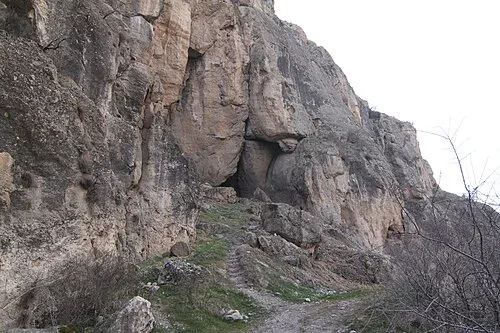 Scenic Approach and Cave Entrance
The Path up to Areni-1
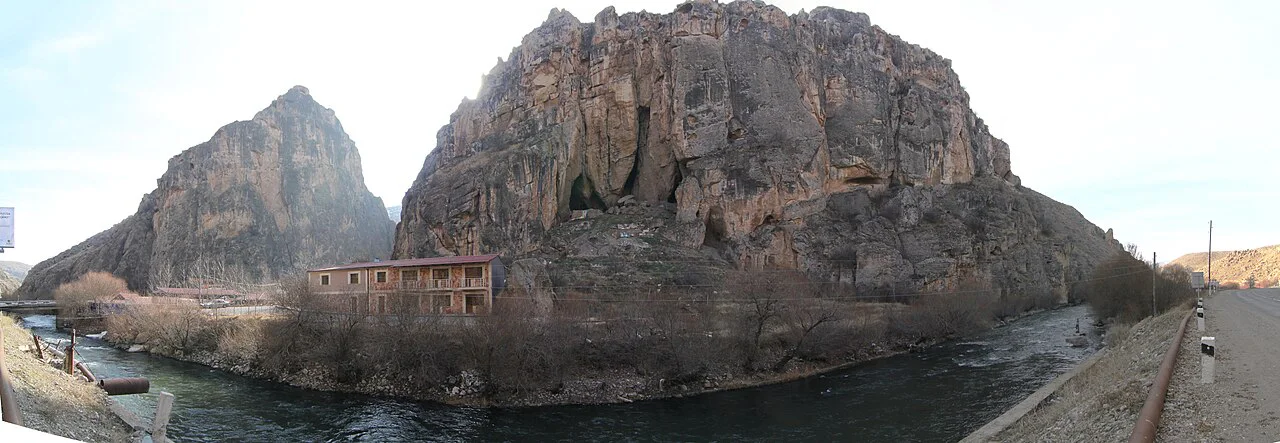
Welcome to Areni-1, a cave set into the cliffs of southern Armenia. It lies near the village of Areni, in Vayots Dzor province, above the Arpa River. People used this place in the late Copper Age, from about 4300 BCE. The latest traces of that world fall near 3500 BCE. And it was no ordinary dwelling. The cave served as a ritual site, with settlement and storage alongside. Systematic digs began in 2007, run by Armenia's Institute of Archaeology and Ethnography together with teams from UCLA and University College Cork in Ireland. Boris Gasparyan of the Institute led the Armenian side. The very first seasons hinted at something extraordinary. Since then, the cave has rewritten the history of winemaking, of footwear, and of how much organic material can survive six thousand years. The path ahead climbs toward a wide natural arch in the red rock.
Photo: Serouj · CC BY-SA 3.0
02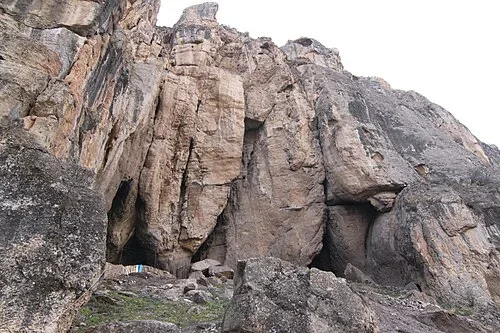 Scenic Approach and Cave Entrance
The Entrance and the Swallows
Swallows gave this cave its second name. They nest on the ceiling right at the entrance, darting in and out through the arch. In Armenian the site is simply the Birds' Cave, and English accounts call it Bird's Eye. The entrance has a later history of its own. Under the rock shelter by the mouth, archaeologists uncovered medieval ovens. The oldest were built in the twelfth century. People were still using them in the fourteenth. So long after the Copper Age, the cave mouth stayed a place of work and fire. The same arch that shelters the swallows held medieval hearths.
Photo: Serouj · CC BY 3.0
03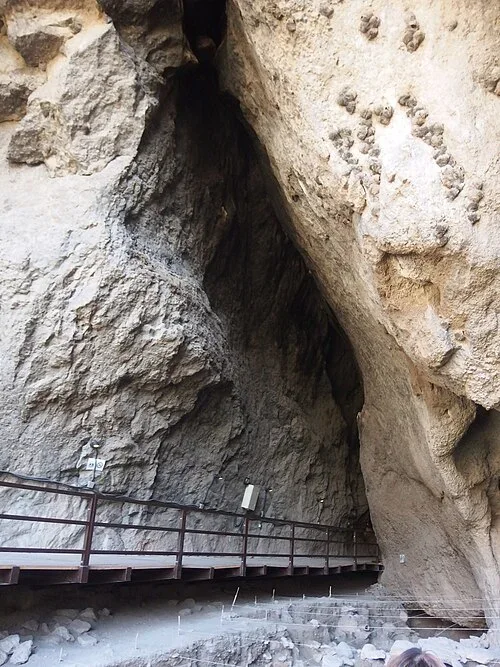 First Chamber and Cave Layout
Inside the Cave: Three Chambers and the Boardwalk
Inside, the cave is a natural hollow dissolved out of limestone conglomerate, a formation geologists call clastokarst. It runs about forty metres into the rock and opens into three chambers. All told, there are several hundred square metres of space. The floor holds at least four metres of cultural layers, one era stacked upon another. Most of that ground is still unexcavated. Digging further could block the passages and damage finds already made. That is why a raised metal walkway now crosses the interior, carrying visitors over the untouched layers rather than through them. The cave itself did its part as well: the air inside stays dry, and the temperature hardly changes.
Listen in the appPhoto: Palickap · CC BY 4.0
04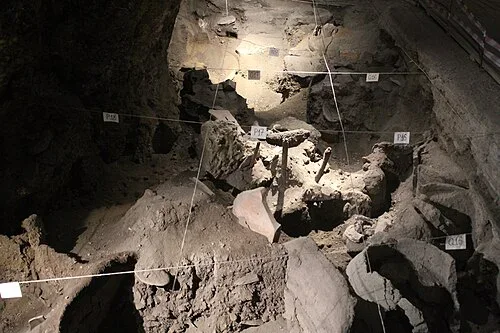 The Ancient Winery and Wine Press
The World's Oldest Winery
The earliest known winery in the world came to light inside this cave, announced in January 2011. It dates to the late Copper Age, around 4000 BCE. This was a proper production setup: a press for crushing grapes, and vats nearby for fermentation. The wine here appears to have been made above all for ritual, which fits a cave used as a sacred site. The excavation trench shows how the team works. String lines divide the ground into a grid of labelled squares, so every find is tied to the exact spot where it lay. Nothing is lifted from the earth until its position has been recorded.
Listen in the appPhoto: 23artashes · CC BY-SA 4.0
05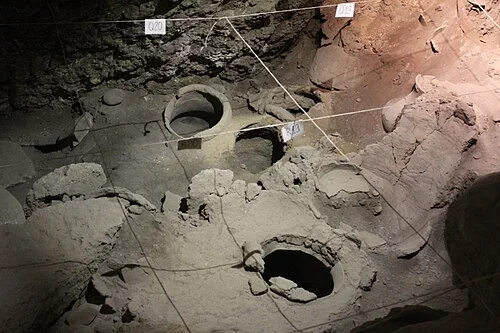 The Ancient Winery and Wine Press
Buried Jars and the Taste of Ancient Wine
Large clay jars, the karases still familiar in Armenian winemaking, were buried in the cave floor. Beside them lay hollow reeds, cut as drinking straws. The plant record from the cave is remarkable: seeds of more than thirty kinds of fruit, and dozens of grain types, among them grape seeds, dried grapes and plums. The Greek historian Xenophon gives the custom a voice. In his Anabasis, the account of a march through Armenia around 400 BCE, he described Armenians drinking wine through long reeds, from jars sunk into the ground. He wrote some three and a half thousand years after this winery worked. The jars and reeds here show that the habit he recorded was already ancient.
Listen in the appPhoto: 23artashes · CC BY-SA 4.0
06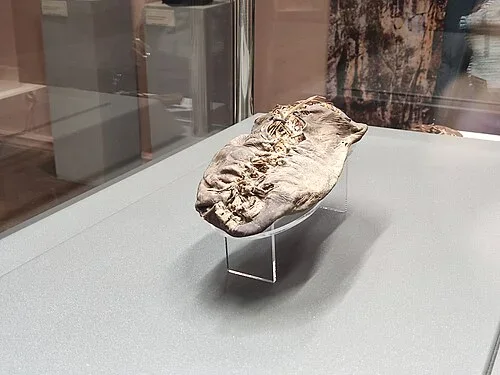 The Shoe Discovery Site
The World's Oldest Leather Shoe
The earliest known shoe in the world turned up here in September 2008. Its finder was Diana Zardaryan, then a PhD student at Armenia's Institute of Archaeology. The shoe is over 5,500 years old, cut from a single piece of leather, laced at the front and stuffed with grass. What kept it whole was an unlikely seal: a thick layer of sheep dung settled over it, shutting out moisture and oxygen. With the cave's dry, steady air, the leather simply lasted. The original is kept today in the History Museum of Armenia in Yerevan, laces and all, while the cave keeps the spot where it came to light.
Listen in the appPhoto: Yerevantsi · CC BY-SA 4.0
07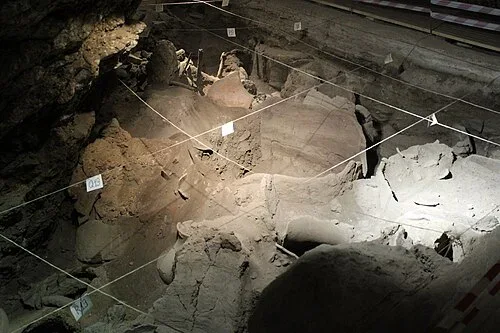 The Deep Burial Chambers
The Burials: Three Girls and a Preserved Brain
Deep in the cave, the excavations reached burials. The skulls of three teenage girls lay in clay pots, and study of the remains found evidence that they most likely died from blows to the head. They died around 6,000 years ago. One skull held something no other site had yielded: the oldest known mummified human brain, discovered in 2009. Soft tissue survives here because the cave built its own preservation system. A hard carbonate crust seals the Copper Age layers, and inside, extreme dryness and a stable temperature do the rest. The same ground gave up a straw skirt, about 5,900 years old, reported in September 2011. It is woven plant-fibre clothing of striking sophistication.
Listen in the appPhoto: 23artashes · CC BY-SA 4.0
08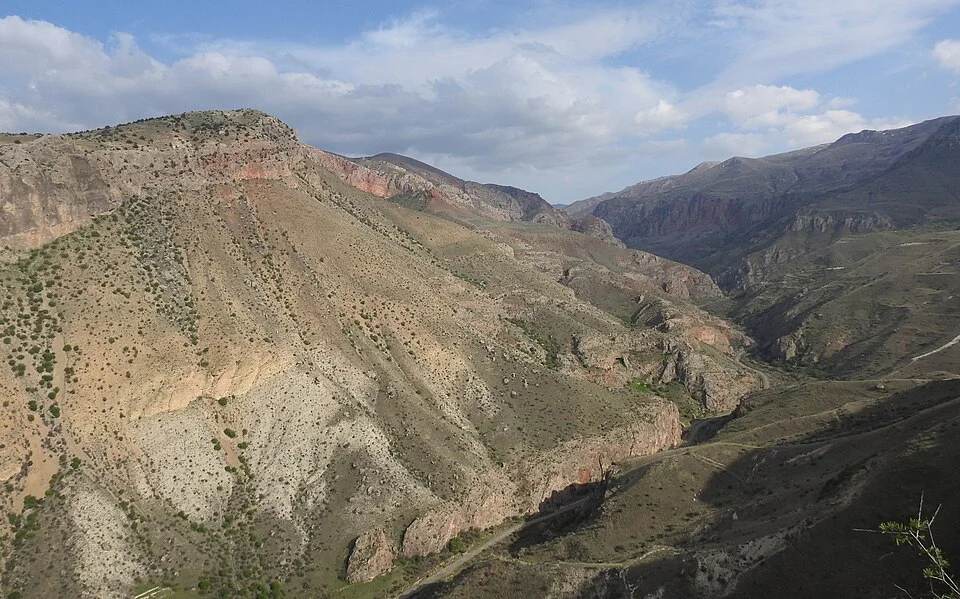 The Cave Exit and Gorge View
The Gorge Beyond: Why This Place Matters
The people who used this cave were not isolated. Their late Copper Age communities kept contact with Syro-Mesopotamia, the world of Ubaid and Uruk, and with the Maikop culture of the north Caucasus. Copper metallurgy was taking shape, with kilns, ingots and new metal tools like daggers and spearheads. Prestige goods travelled the trade routes: gold, silver, lapis-lazuli. Society was growing more complex, with stamp seals, sceptres and long-distance exchange. Genetics adds a personal note. Three individuals from the cave belonged to a male lineage called haplogroup L1a. One of them, his genome indicates, had red hair and blue eyes. Red hair and blue eyes, six thousand years back, in a cave above the Arpa River.
Listen in the appPhoto: Karen Aghababyan · CC BY-SA 4.0
Areni-1 cave
Frequently asked questions
How much does the guide cost?
Free app download. Listed guide price: $0.99. Guide price shown in the app. Audio guide only. Venue admission is separate.
Can I listen without internet?
Yes. Download the guide’s audio, images, and maps in the app before your visit. Your downloaded content is then available offline.
Can I listen in my language?
This audio guide is available in 15 languages, including English.
Do I need to follow a schedule?
No. This is a self-guided experience. Choose your stops, pause whenever you like, and return to a story at your own pace.
At your own pace
Explore Areni-1 cave.
Download Stanza, then search for “Areni-1 cave”.
Free app download · Guide price shown in the app
Keep exploring
Nearby audio guides
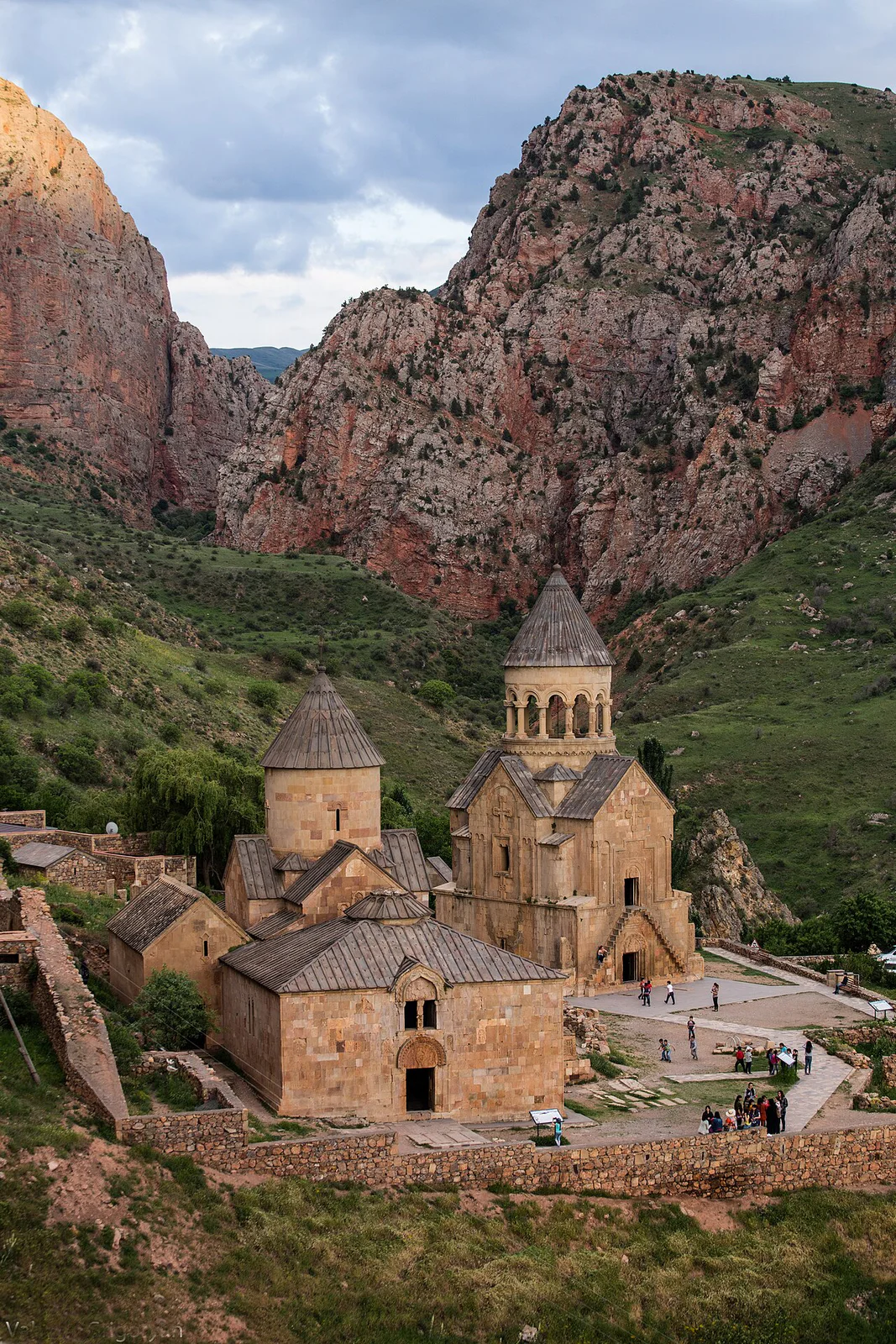
Areni · 6 km
Noravank
Content & sources
Vahagn Grigoryan · CC BY-SA 4.0
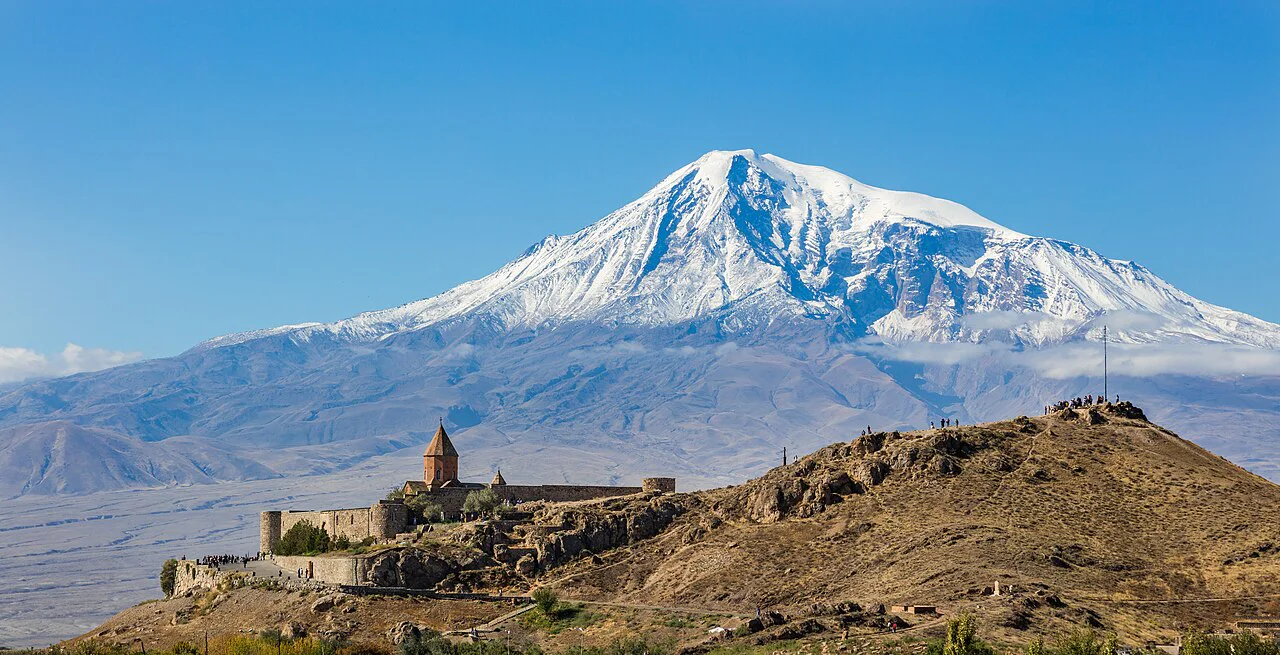
Lusarat · 56 km
Khor Virap
Content & sources
Diego Delso · CC BY-SA 4.0
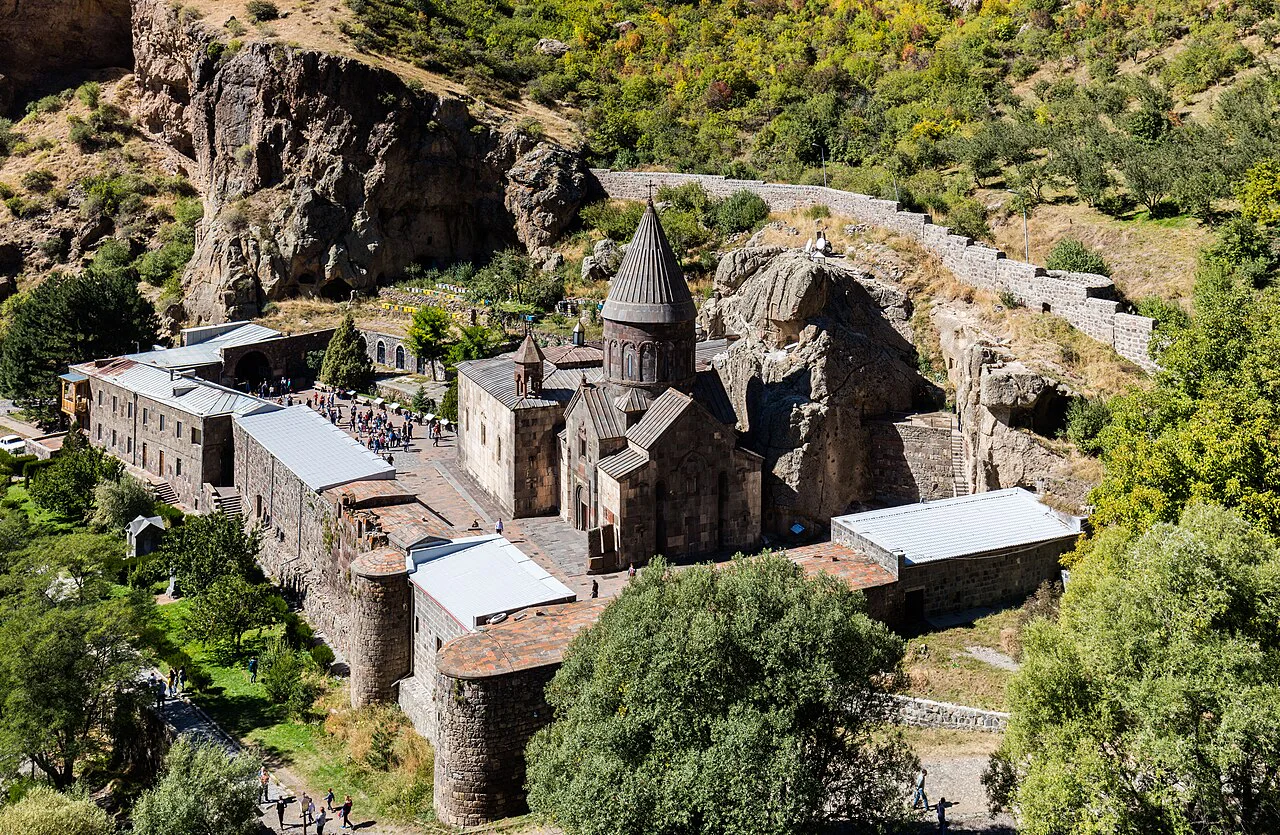
Goght · 56 km
Geghard
Content & sources
Diego Delso · CC BY-SA 4.0
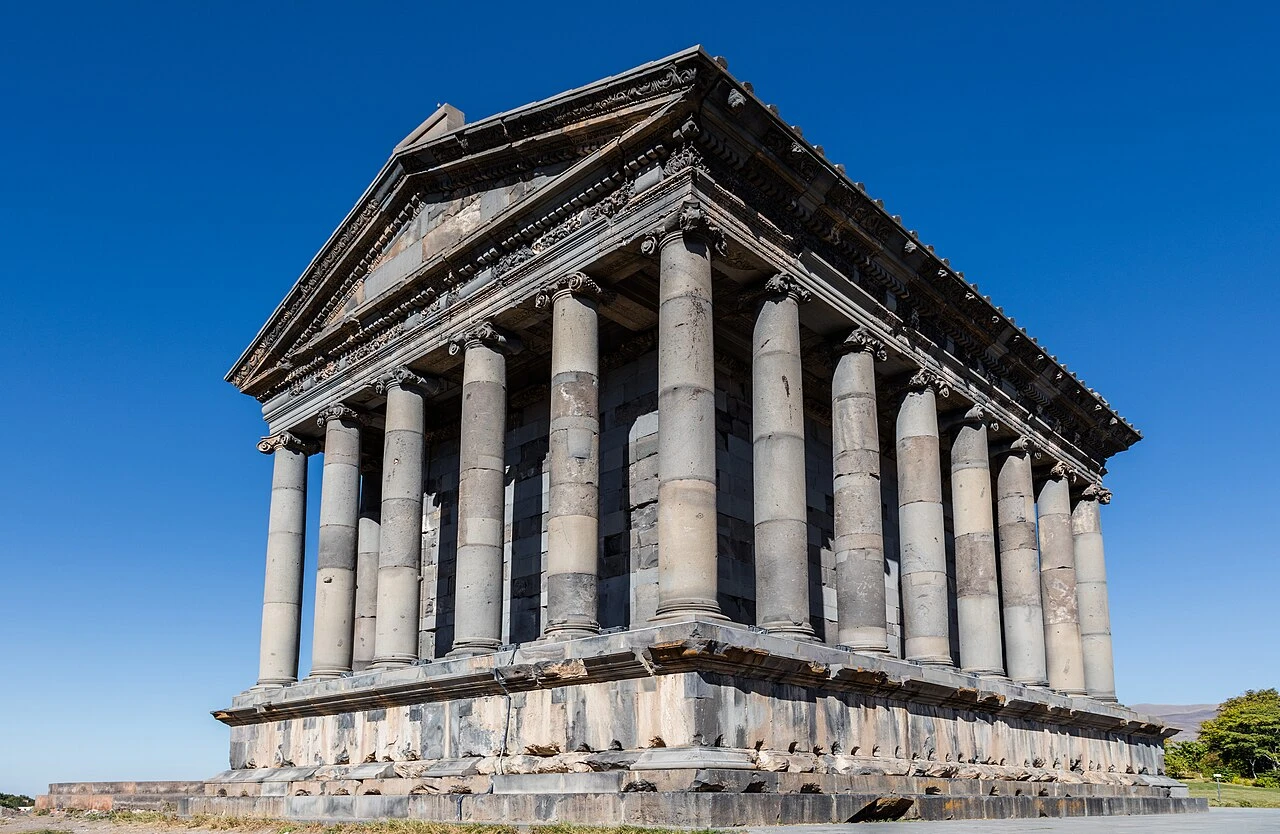
Garni · 59 km
Garni Temple
Content & sources
Diego Delso · CC BY-SA 4.0