Stanza · Audio guide
Ta Keo Audio Guide
A place to remember. A story to take with you.
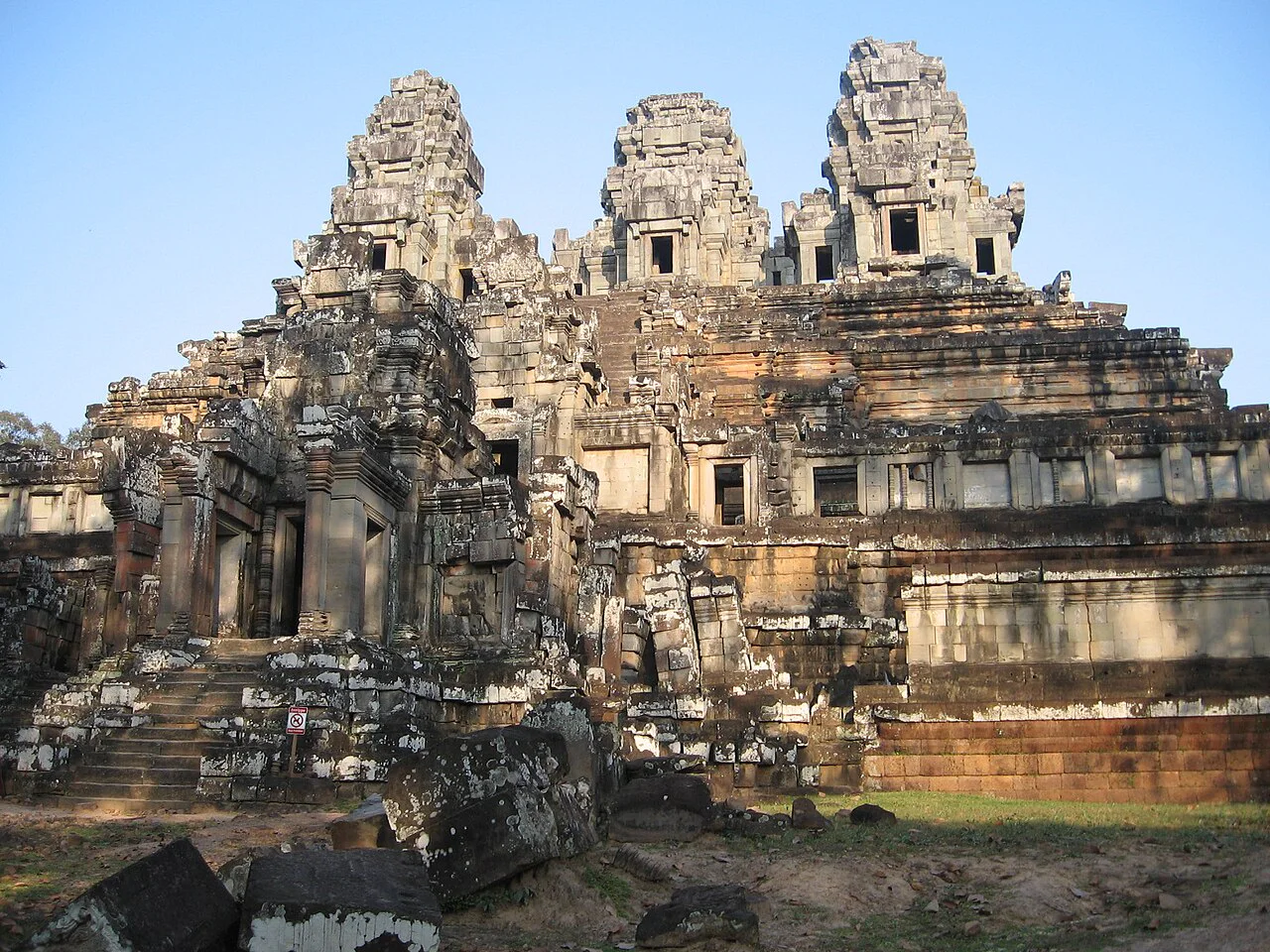
Ta Keo is a temple-mountain located in Angkor, Cambodia. It is possibly the first temple built entirely of sandstone by the Khmer Empire.
Download Stanza, then search for “Ta Keo”.
About the tour
One guide. Your kind of visit.
Ta Keo is a temple-mountain located in Angkor, Cambodia. It is possibly the first temple built entirely of sandstone by the Khmer Empire.
Ready when you are.
- 01Get the free Stanza app.
iOS & Android
- 02Find your guide.
“Ta Keo”
- 03Download before you go.
Works offline
Audio guide / 10 narrated stops
Inside the guide
Get to know a few of the stories before you go. Open a stop to read more.
01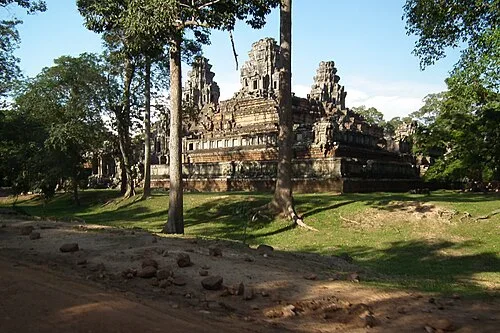 Eastern Causeway and Main Facade
Ta Keo from the East: A Mountain of Stone
Welcome to Ta Keo, a temple-mountain in the heart of Angkor, in Cambodia. What rises ahead is not a natural hill but a man-made one, stacked in tiered terraces of grey sandstone. It was built as a state temple, the sacred centre of a royal capital, and dedicated to the Hindu god Shiva. The Khmer kings saw their temples as mountains, and with good reason. In their belief, the gods lived on Mount Meru, the mythical peak at the centre of the world. So a temple-mountain copied that peak in stone, its terraces and towers standing in for the slopes and summits where the gods dwelled. Most temples of this kind are covered in carving, dense with gods and floral ornament. This one is not. Its blocks lie smooth and bare, because work stopped when the carving had barely begun. That unfinished quality is exactly what makes Ta Keo so striking. It shows the skeleton of a Khmer temple, the pure architecture, almost before the sculptors touched it.
Jakub Hałun · CC BY-SA 4.0
02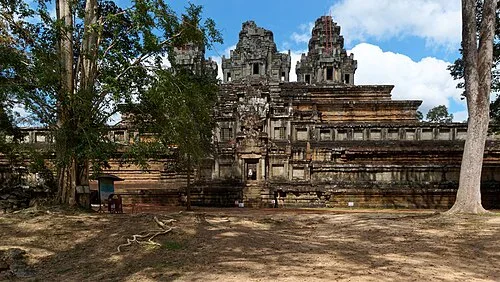 Eastern Causeway and Main Facade
The Child King and His Golden Mountain
The story of this temple begins with a child. His name was Jayavarman the Fifth, and he was ten years old when he succeeded his father, Rajendravarman, in the year 968. His father had built the temple of Pre Rup, and the son now needed a state temple of his own. The early years of the reign were turbulent, with court officials dominating royal politics. But when the young king turned seventeen, he began this temple, in 975. It rose at the heart of his capital, on a scale meant to outshine everything around it. In the inscriptions of his own time, it was not called Ta Keo at all. Its ancient name was Hemagiri, or Hemasringagiri, which means the mountain with golden summits. That name suggests the towers may once have gleamed, perhaps sheathed or crowned in gold. The temple was finally dedicated only around the year 1000, a quarter of a century after work began. That long delay hints that the story did not go as the young king planned.
Jakub Hałun · CC BY-SA 4.0
03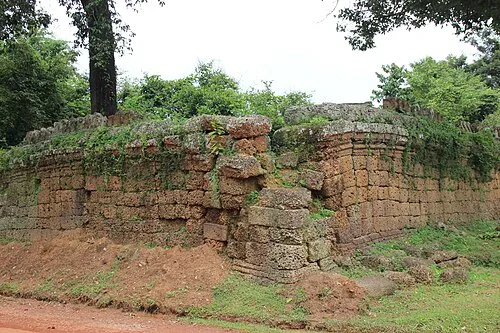 First Terrace and Raw Sandstone Blocks
Laterite Foundations, Sandstone Ambition
The rough wall here is sandstone raised on a laterite base, and it tells the engineering story of this temple. Laterite is an iron-rich soil that hardens into a porous stone. Khmer builders quarried it easily and used it for foundations and hidden structure, the parts no one would see. Earlier temples, like Pre Rup before this one, relied heavily on brick and laterite for their visible walls too. Ta Keo did something different. It is possibly the first temple-mountain of the Khmer Empire to be built entirely of sandstone. The fine grey sandstone carried all the ambition, from the enclosure walls to the highest tower. That was a technical leap, and a demanding one. Sandstone cannot be moulded like brick or stacked rough like laterite. Every block must be cut to fit precisely, and the carving has to be done in place, once the stone is set. Getting that right at the scale of a whole mountain of stone was an enormous undertaking. The builders here were, in effect, testing how far their masons could go.
Listen in the appGary Todd from Xinzheng, China · CC0
04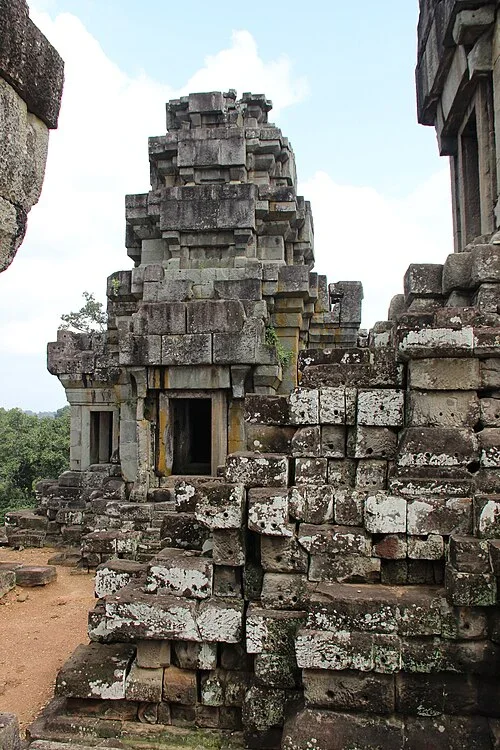 First Terrace and Raw Sandstone Blocks
The Unfinished Tower
This tower is the clearest evidence that Ta Keo stopped short. Look at its surfaces: massive blocks of sandstone, stacked in tiers, almost entirely smooth. Gods, guardian figures and flowering vines were meant to be worked into the masonry after the blocks were set. The blankness gives the whole building a heavy, massive presence, and the architects seem to have known it. They used deliberate perspective effects in the design, so the bare pyramid would still impress the eye. Scholars place Ta Keo in what they call the Khleang style, a phase of Khmer architecture named for nearby structures in Angkor. And a few traces of the intended decoration do survive. On the temple's east face, some damaged carvings of floral patterns are still visible. They show how the whole mountain of stone was meant to look.
Listen in the appGary Todd from Xinzheng, China · CC0
05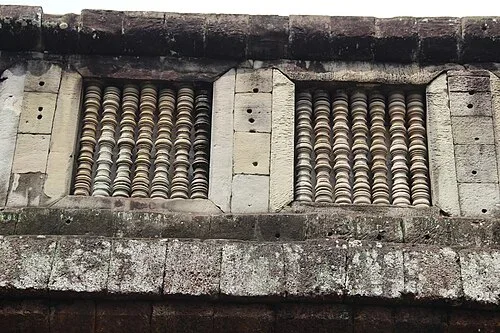 Second Terrace and Balustraded Galleries
Windows That Look Inward
These windows, with their bars of turned stone, mark a quiet revolution in Khmer design. They belong to the gallery of the second terrace, a covered corridor that runs unbroken around the enclosure. It is narrow, just under one and a half metres wide, and it encloses a space of about eighty metres by seventy-five. Before Ta Keo, long buildings followed the lines of enclosure walls, but with breaks and discontinuities. This gallery is continuous, one of the first true examples in Khmer architecture, together with the temple of Phimeanakas. Its windows open only towards the interior, facing the courtyard rather than the world outside. And it has no doors at all, so it seems to be purely decorative, a wall dressed as a building. There is also something missing overhead. The gallery has no stone vault, and its roof was possibly made of wood and tiles, which would have rotted away long ago. Like everything else here, the gallery is unfinished, its design still carrying the promise of a scheme never completed.
Listen in the appGary Todd from Xinzheng, China · CC0
06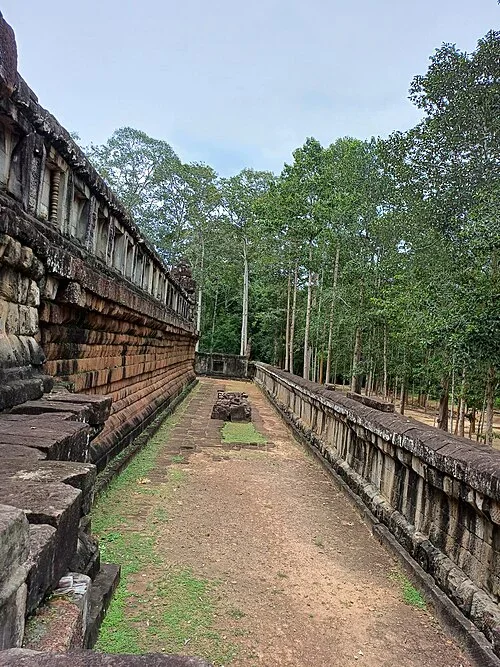 Second Terrace and Balustraded Galleries
The Priest Who Kept the Temple Alive
Royal building here stopped, but the temple did not die. Its afterlife belongs to a high priest named Yogisvarapandita. He rose high in the service of a later king, Suryavarman the First, and became one of his ministers. Many years after the workmen had gone, the priest formally received the temple from the king. That word, received, comes from the inscriptions of the time, and it marked a formal handover of the sacred place into his care. Yogisvarapandita then worshipped at the shrines on the temple's lower levels, among the terraces that had been finished. So the shrines that served the god stood low on the mountain, while the bare summit rose above them. What the inscriptions record is remarkable in another way. The temple functioned continuously as a cult centre into the thirteenth century, long after its builders were gone. An unfinished shell of a temple, dedicated only around the year 1000, remained a living sacred place for hundreds of years.
Listen in the appRadosław Botev · CC BY 3.0 pl
07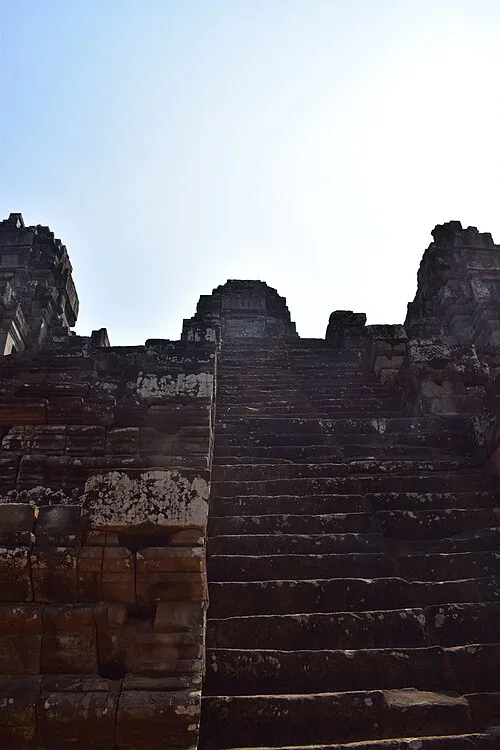 Steep Pyramid Staircase
The Stairway to Heaven and the Lightning Omen
The stairways of Ta Keo are not built for the faint-hearted. Four of them rise continuously to the summit platform, more than twenty-one metres above the ground, at an angle of nearly fifty degrees. The climb is deliberately hard. In the minds of the builders, mounting these slopes was an image of the effort of ascending to the realm of the gods. Every step upward was a small pilgrimage, the body straining towards the sky. But the carving of the temple never followed. The high priest Yogisvarapandita recorded what his tradition said happened. A lightning bolt struck the unfinished building, and it was read as a wrathful sign, an evil omen, so the work stopped. Modern historians offer a plainer explanation. The halt may simply reflect the death of Jayavarman the Fifth, and the struggle for succession that followed him. Both accounts agree on one thing: the chisels fell silent, and the stone stayed bare.
Listen in the appMig Gilbert from Brighton · CC BY-SA 2.0
08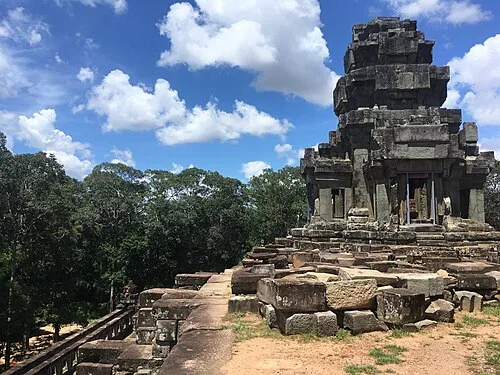 Summit Platform and Central Sanctuary
Five Peaks of the Sacred Mountain
The summit platform is what the whole temple was built for. Five sanctuary towers stand here, one at each corner and one at the centre, an arrangement known as a quincunx. Together they form the five peaks of Mount Meru, the mountain of the gods, completing the symbolism the entire pyramid was raised to express. Like Pre Rup, the temple of the previous king, Ta Keo set its five towers on the uppermost terrace of a five-tier pyramid. The corner towers each stand on basements about eighty centimetres high. They open to the four cardinal points, each with a protruding vestibule, a porch reaching out towards its direction. One of these towers stands out against the sky, with fallen blocks scattered across the platform around it. Even bare and uncarved, the arrangement reads clearly. Four peaks for the corners of the world, and one for the centre, where the god's own shrine would stand.
Listen in the appPhoto: Christophe95 · CC BY-SA 4.0
09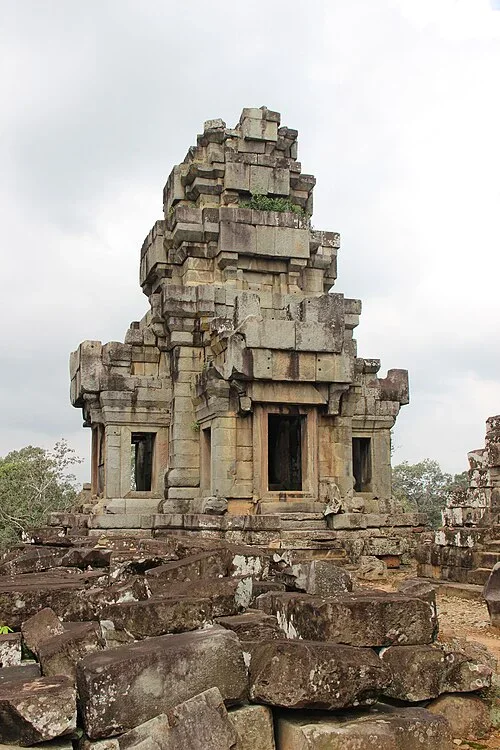 Summit Platform and Central Sanctuary
The Central Sanctuary
The central tower dominates the summit, raised on a basement four metres high, well above its four companions. Its vestibules are doubled, two porches at each face, unlike the single ones on the corner towers. This was the highest shrine of the whole temple, the innermost point of the sacred mountain. The tower reaches forty-five metres above the ground, the tallest point of the complex. Inside, the sanctuary chambers are about four metres wide, modest rooms for so tall a structure. And they held evidence of the worship this temple was built for. Fragments of lingas were found in the chambers and around the towers, together with several statues. The linga is the aniconic emblem of Shiva, the god to whom Ta Keo was dedicated. Those finds confirm that the ritual life of the temple did take place, even if the carving above never came. The god's mountain was climbed, and its highest shrine was left bare.
Listen in the appGary Todd from Xinzheng, China · CC0
10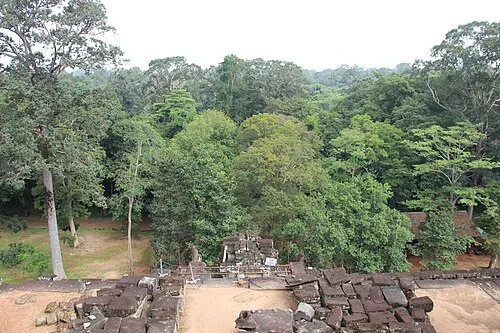 Summit Overlook and Forest Panorama
Looking East: Water, Forest, and an Unfinished Dream
From the top, the forest canopy stretches away on every side, and the temple's place in a larger design comes into view. Ta Keo was built in tight relationship with Angkor's water world. A causeway five hundred metres long once ran from the temple's eastern entrance to a landing stage on the East Baray, the great reservoir that fed the city. Temple and irrigation system belonged to one plan, the sacred mountain and the water landscape shaped together. The moats that once ringed the temple have vanished, but the causeway's course still traces that old connection eastward. The temple has also found modern caretakers. Since a Cambodian-Chinese conservation agreement signed in 2006, restoration work has been ongoing here. What that work protects is a rare thing: a royal temple caught mid-course, its stone still waiting for the sculptor. Ta Keo remains the only mountain of the gods at Angkor that shows how such wonders began.
Listen in the appGary Todd from Xinzheng, China · CC0
Ta Keo
Frequently asked questions
How much does the guide cost?
Free app download. Listed guide price: $0.99. Guide price shown in the app. Audio guide only. Venue admission is separate.
Can I listen without internet?
Yes. Download the guide’s audio, images, and maps in the app before your visit. Your downloaded content is then available offline.
Can I listen in my language?
This audio guide is available in 15 languages, including English.
Do I need to follow a schedule?
No. This is a self-guided experience. Choose your stops, pause whenever you like, and return to a story at your own pace.
At your own pace
Explore Ta Keo.
Download Stanza, then search for “Ta Keo”.
Free app download · Guide price shown in the app
Keep exploring
Nearby audio guides
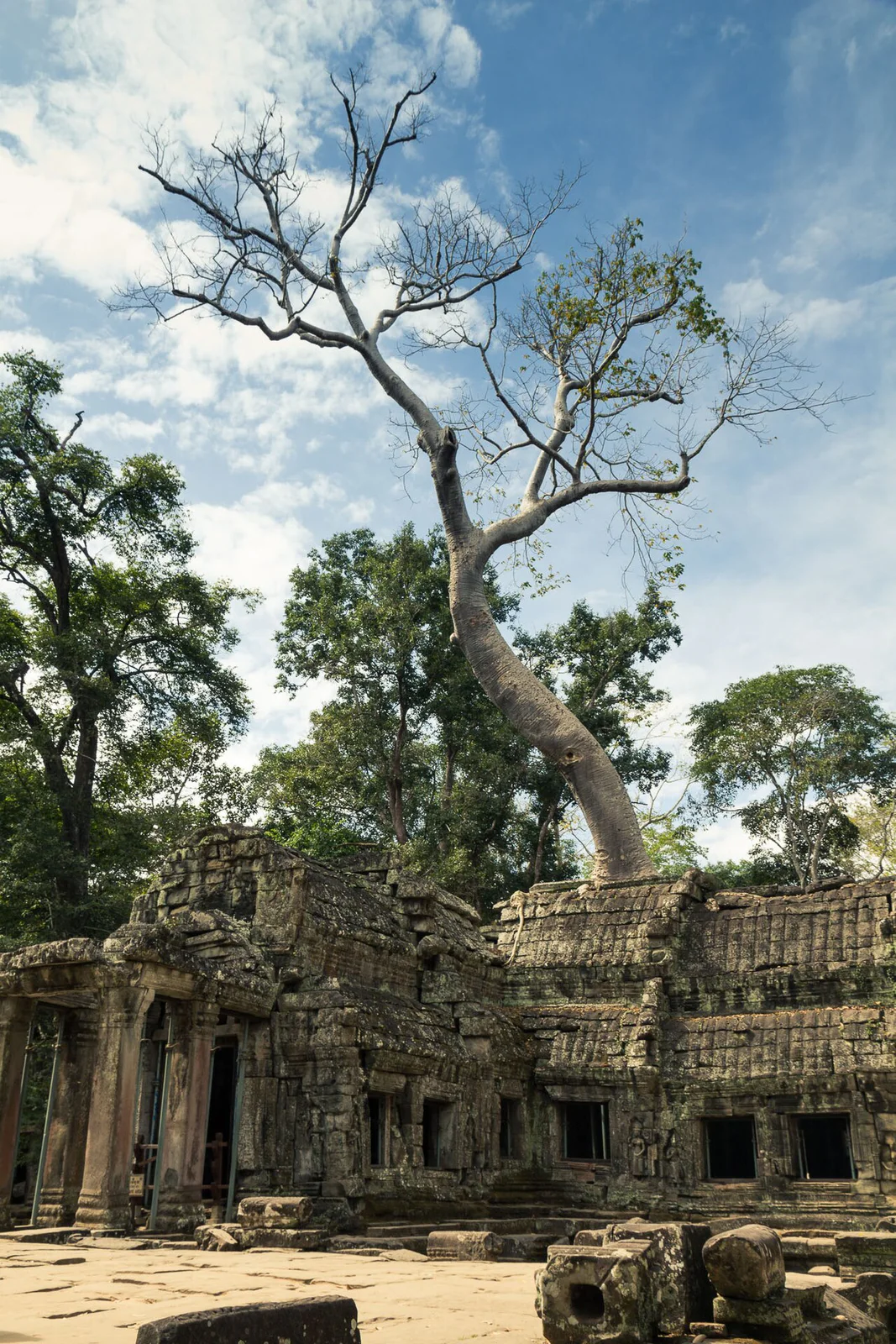
Siem Reap · 1 km
Ta Prohm
Content & sources
Dmitry A. Mottl · CC BY-SA 4.0
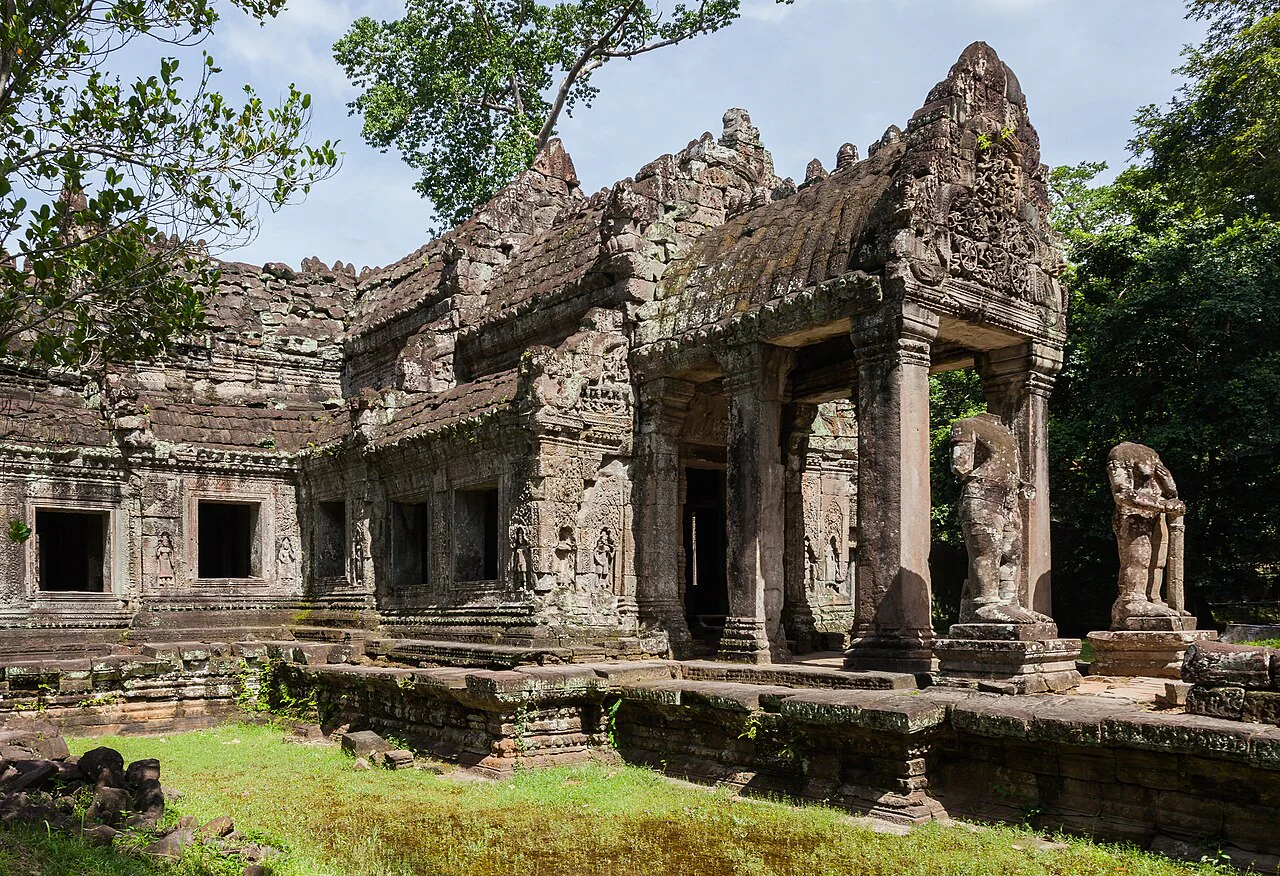
Siem Reap · 2 km
Preah Khan
Content & sources
Diego Delso · CC BY-SA 3.0
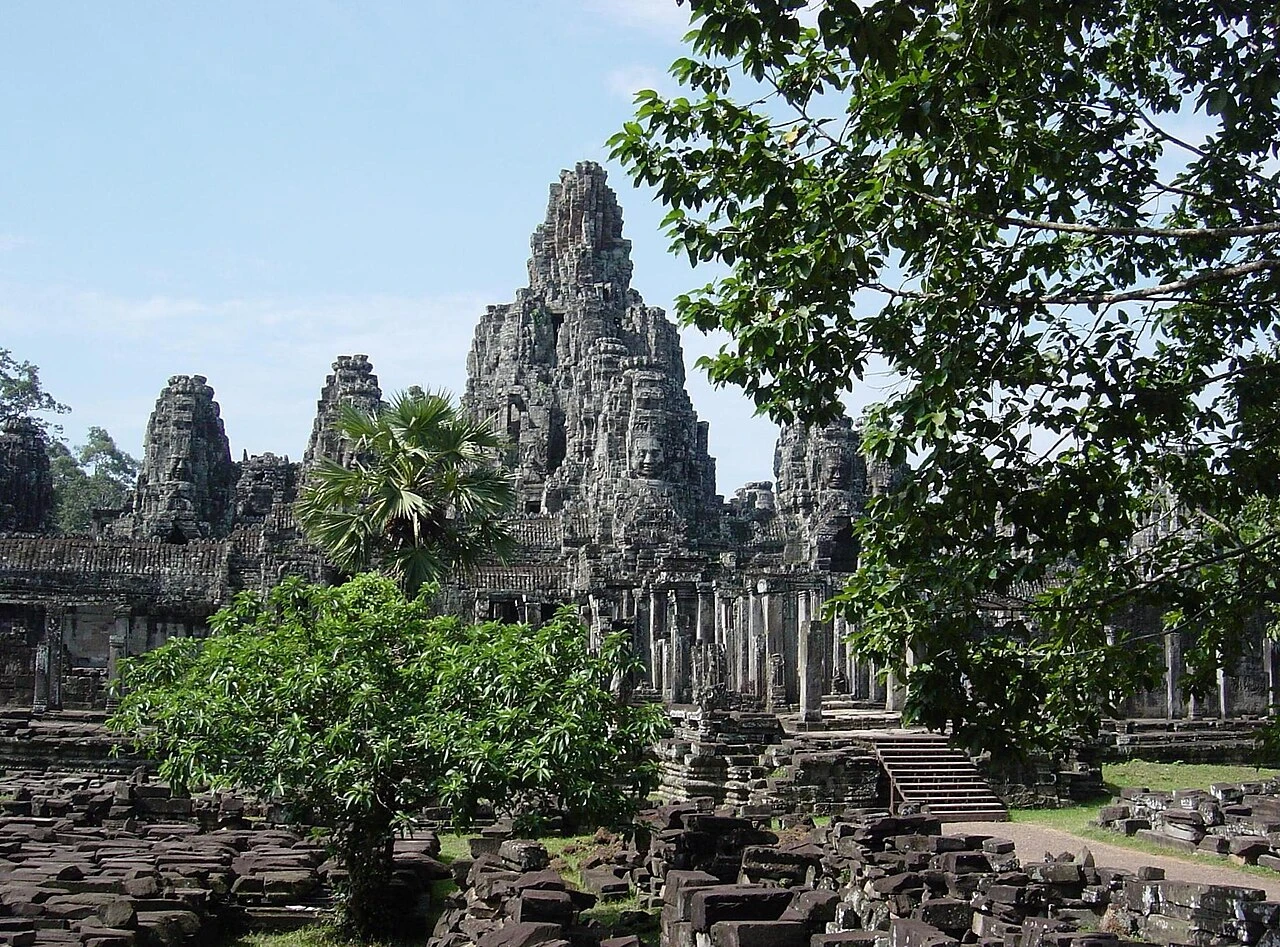
Siem Reap · 2 km
Angkor Thom
Content & sources
Charles J Sharp · CC BY 2.5
Siem Reap · 4 km
Angkor Wat
Content & sources
The original uploader was Fuzheado at English Wikipedia. · CC BY-SA 2.0