 Stanza / Audio guide
Content & sources
Stanza · Audio guide
Tombs of the KingsAudio guide
A place to remember. A story to take with you.
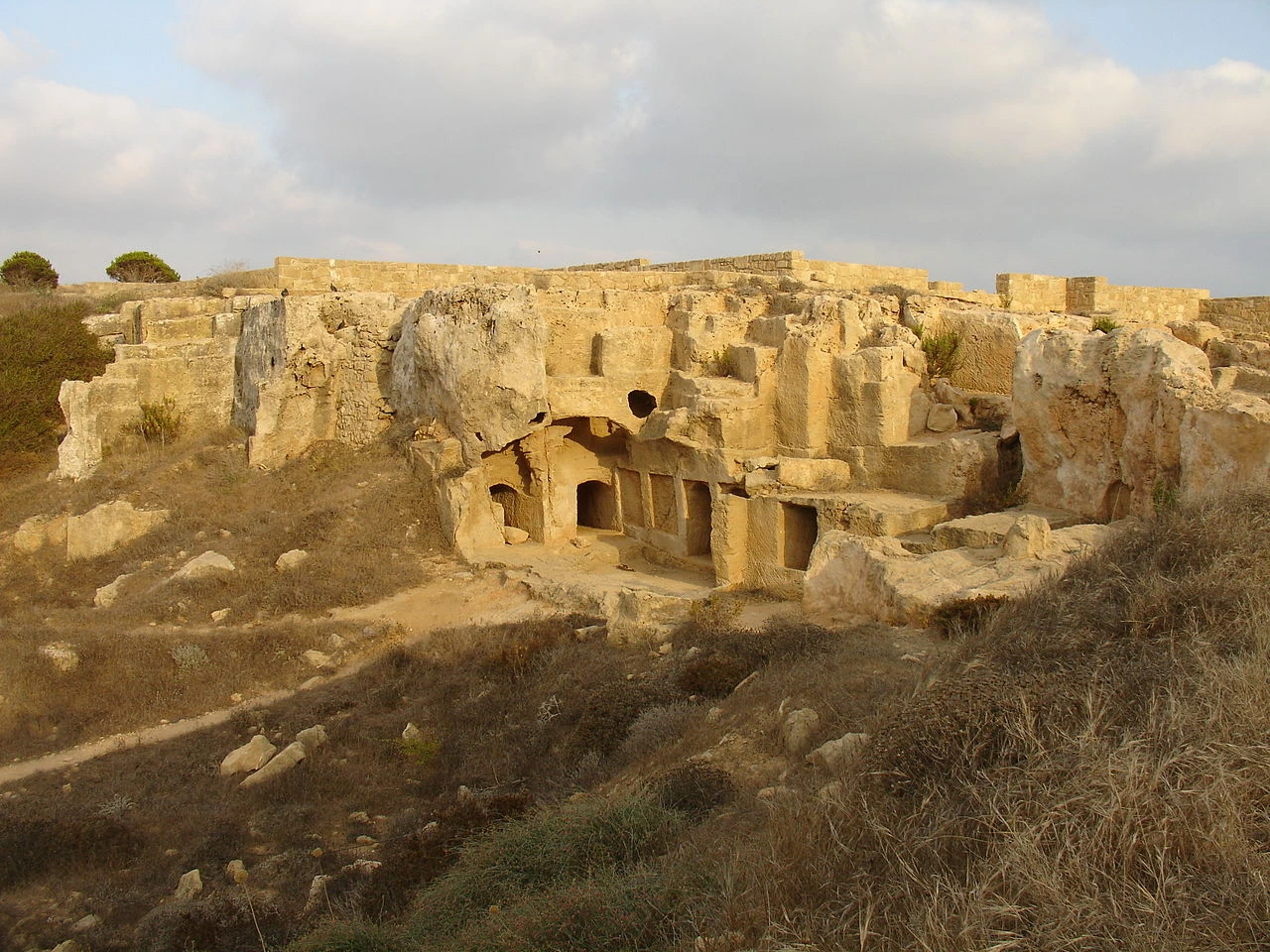
This large necropolis dates back to the 4th century BC and features well-preserved underground tombs carved directly into solid rock. It is a UNESCO World Heritage site known for its distinct Doric columns…
Download Stanza, then search for “Tombs of the Kings”.
About the tour
One guide. Your kind of visit.
This large necropolis dates back to the 4th century BC and features well-preserved underground tombs carved directly into solid rock. It is a UNESCO World Heritage site known for its distinct Doric columns and influence from Egyptian architecture.
Ready when you are.
- 01Get the free Stanza app.
iOS & Android
- 02Find your guide.
“Tombs of the Kings”
- 03Download before you go.
Works offline
Audio guide / 28 narrated stops
Inside the guide
Get to know a few of the stories before you go. Open a stop to read more.
01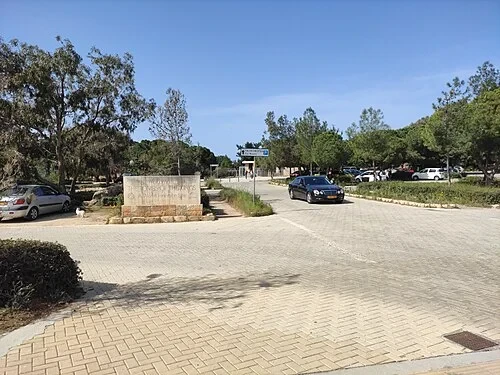 King Tombs EntranceKing tombs - entrance
Welcome to one of the most significant archaeological sites in Cyprus, a sprawling ancient cemetery that spreads across a dry, sun-baked landscape near the sea. Despite the grand name, "Tombs of the Kings," no royalty was ever buried here. Instead, this necropolis served as the final resting place for high-ranking administrative officials, Ptolemaic aristocrats, and their families during the Hellenistic and Roman periods, dating back as far as the fourth century BC. The ancient builders carved these tombs directly into the solid sandstone bedrock, creating underground structures that closely mirrored the grand houses of the living to provide the dead with a familiar environment in the afterlife. Because this archaeological park is highly exposed to the Mediterranean sun with very little natural shade, it is highly recommended to make sure you have plenty of water and wear comfortable walking shoes before you set off across the rugged, sandy terrain to explore the complexes.
Fry72, Karel Frydrýšek · CC BY-SA 4.0
02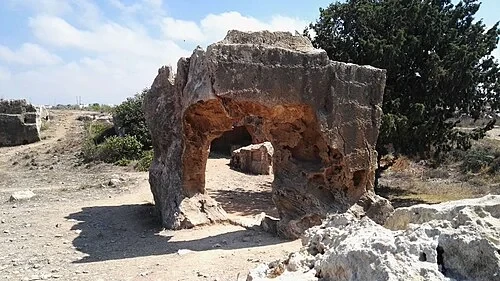 Tombs of the Kings Necropolis OverviewTombs of the Kings
Over the centuries, the soft calcarenite sandstone of this ancient cemetery has been constantly weathered by salty coastal winds and winter rains. This natural erosion has slowly rounded off the sharp, precise angles originally cut by ancient tools, transforming many of the structures into organic, cave-like formations. In several areas, you can see natural archways that were formed when the heavy stone roofs of underground chambers collapsed under their own weight long ago. But nature was not the only force at work here. After the burials ceased, local stonecutters and quarrymen utilized this site for centuries as a convenient source of building material. They cut away and carried off valuable blocks of pre-worked stone to build the expanding city of Paphos, leaving behind the hollowed-out, skeleton-like landscape visible today.
Photo: Bukvoed · CC BY 4.0
03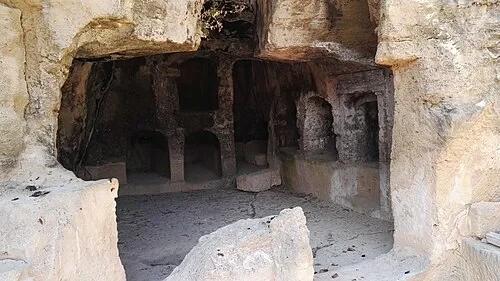 Tombs of the Kings Necropolis OverviewTombs of the Kings
Throughout these underground chambers, you will find numerous rectangular openings cut directly into the solid stone walls. Known as loculi, these niches served as the final resting places for individual bodies. According to ancient burial practices, once a wrapped body was carefully placed inside the opening, the niche was sealed shut with a stone slab. Builders then covered the slab with plaster, which was often painted with colorful decorative patterns or inscribed with the name of the deceased. Looking closely at these openings, you can see that they vary significantly in size, with some smaller niches specifically designed for children. Because these loculi were positioned along the walls and were relatively easy to access, grave robbers targeted them over the centuries, breaking the plaster seals and leaving the niches empty and exposed.
Listen in the appPhoto: Bukvoed · CC BY 4.0
04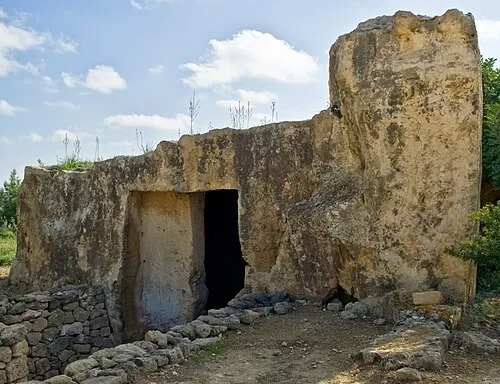 Royal Tomb 1Royal Tomb 1 at Paphos
The monumentality of this tomb entrance is the result of an incredible engineering feat, as the entire structure was carved from a single piece of solid sandstone bedrock to look like a free-standing building. To achieve this, ancient stonecutters excavated a massive, deep trench around a central block of stone, which they then painstakingly hollowed out from the inside. The finished entrance closely resembles the domestic architecture of the Hellenistic period, featuring a heavy lintel and straight, flat door frames that look like they belong to a grand residence. When early European travelers first stumbled upon these buried ruins during the eighteenth and nineteenth centuries, they were so struck by this house-like appearance that they frequently mistook them for prehistoric dwellings or secret hideouts rather than ancient burial chambers.
Listen in the appPhoto: Nikodem Nijaki · CC BY-SA 3.0
05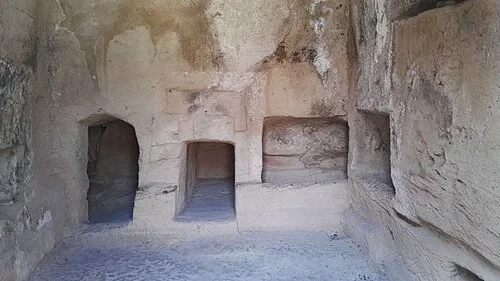 Royal Tomb 1Burial Chambers of Tomb 1
Step inside the interior of Tomb 1 to observe the layout of the rock-cut chambers, which represent a simpler, earlier stage of development in the necropolis before the massive colonnaded courtyards were built. Rather than a grand open atrium, this tomb features a straightforward plan where individual chambers branch off from a central passage. Burial slots are carved directly into both the vertical walls and the stone floors of these rooms. These complexes were used for family burials over multiple generations, allowing wealthy households to keep their ancestors together. When new family members passed away, older bones were sometimes respectfully moved aside within the chambers to make room for new interments.
Listen in the appPhoto: Bukvoed · CC BY 4.0
06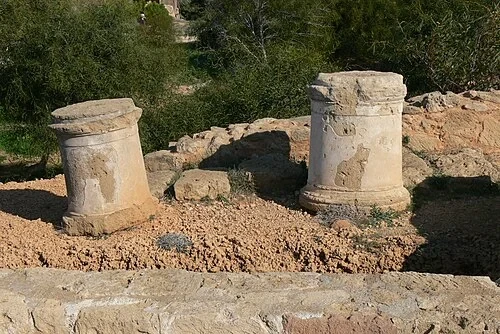 Royal Tomb 2Royal Tomb 2 at Paphos
Near the entrance of Tomb 2, these two cylindrical stone pillars standing on the gravelly ground served as ancient altars. Grieving families used them to perform funerary rituals, offer sacrifices, and pour libations like wine, honey, and oil to appease the gods of the underworld and honor the spirits of the dead. It was common practice for the living to gather at the tomb on specific anniversaries to share a ritual meal. During these gatherings, they would symbolically feed the deceased by pouring liquid offerings down through small pipes or holes that led directly into the burial chamber below.
Listen in the appWolfgang Sauber · CC BY-SA 3.0
07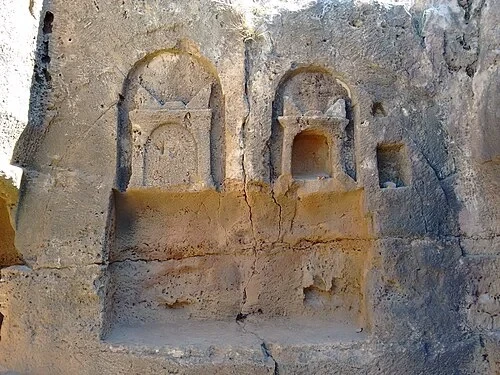 Royal Tomb 2Carved False Portals
These decorative arches carved directly into the rock face resemble miniature temple fronts or windows. Known as "false doors" or symbolic portals, this design element was borrowed from ancient Egyptian burial customs. Greeks and Romans believed these portals served as spiritual gateways, allowing the soul of the deceased to pass freely between the world of the living and the realm of the dead. Looking closely, you can see the detailed carvings in the stone, including small columns and triangular pediments that imitate real temple architecture on a miniature scale.
Listen in the appHéctor Ochoa 'Robot8A' · CC BY-SA 4.0
08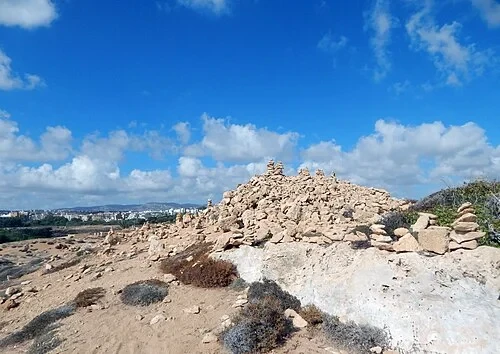 The False Cairnsfalse cairns at Tombs of the Kings in Paphos
On this high ridge overlooking the Mediterranean Sea, you will see a large pile of stones and smaller rock towers. While they resemble ancient grave markers or cairns, these structures are entirely modern additions built by visitors who pile the stones as a form of meditative practice or tourist tradition. Although they create a striking silhouette against the blue sky and sea, archaeologists strongly discourage building them. Moving the loose stones can disturb the delicate, unexcavated layers of the ancient site, potentially destroying historical evidence that still lies buried just beneath the surface.
Listen in the appPhoto: Voltmetro · CC BY-SA 4.0
09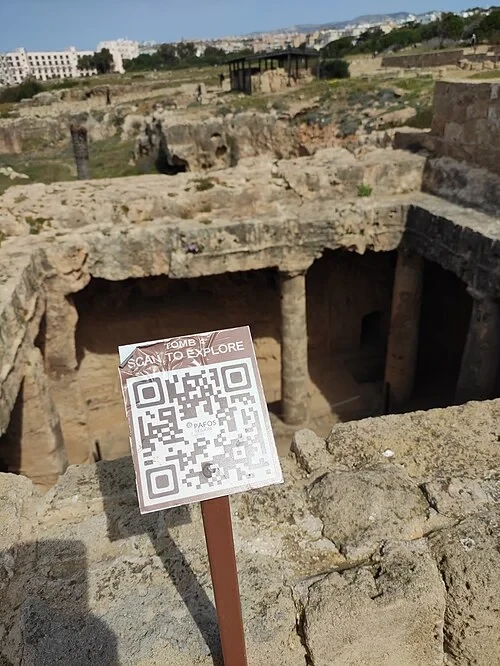 Royal Tomb 4Royal Tomb 4 at Paphos
This sign marks the entrance to Tomb 4, which is widely considered one of the most complete and grandest structures in the entire archaeological park. Below the surface lies a fully intact peristyle courtyard, featuring a central open-air atrium surrounded by colonnaded walkways. Before modern excavations began, many of these deep, rock-cut pits were completely filled with sand, debris, and wild vegetation, which effectively hid the massive columns from view for over a millennium. Archaeologists had to carefully clear away tons of accumulated earth to reveal the spectacular preservation of this underground space, which was carved directly out of the solid bedrock. Today, the sign helps guide you down into this subterranean monument, where you can see how closely the ancient tomb architecture mirrored the grandest homes of the period. This particular tomb offers a clear look at the architectural transitions that took place in Paphos over the centuries.
Listen in the appFry72, Karel Frydrýšek · CC BY-SA 4.0
10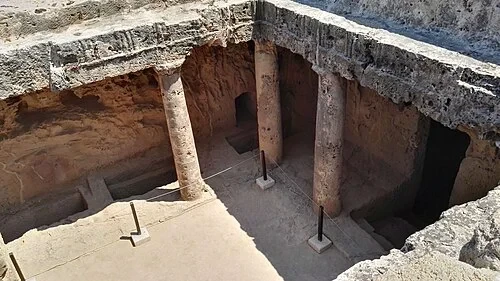 Royal Tomb 4Doric Colonnade of Tomb 4
Look down into the subterranean courtyard of Tomb 4 to appreciate the extraordinary engineering feat accomplished by ancient stonemasons. The entire structure—including the columns, the decorative architrave, and the floor—was carved out of a single massive block of sandstone bedrock. From this vantage point, you can see four intact columns supporting a heavy stone lintel decorated with a traditional Doric frieze of triglyphs and metopes. To build this, workers had to carve straight down into the earth, meticulously chiseling away tons of solid stone while leaving these perfectly round, fluted columns standing in place. This subtractive method of architecture required immense planning, as any mistake made during the carving process could not be easily repaired.
Listen in the appPhoto: Bukvoed · CC BY 4.0
Tombs of the Kings
Frequently asked questions
How much does the guide cost?
Free app download. Listed guide price: $3.99. Guide price shown in the app. Audio guide only. Venue admission is separate.
Can I listen without internet?
Yes. Download the guide’s audio, images, and maps in the app before your visit. Your downloaded content is then available offline.
Can I listen in my language?
Stanza supports 15 languages. Check the app for the languages available for this guide.
Do I need to follow a schedule?
No. This is a self-guided experience. Choose your stops, pause whenever you like, and return to a story at your own pace.
At your own pace
Explore Tombs of the Kings.
Download Stanza, then search for “Tombs of the Kings”.
Free app download · Guide price shown in the app
Keep exploring
Nearby audio guides
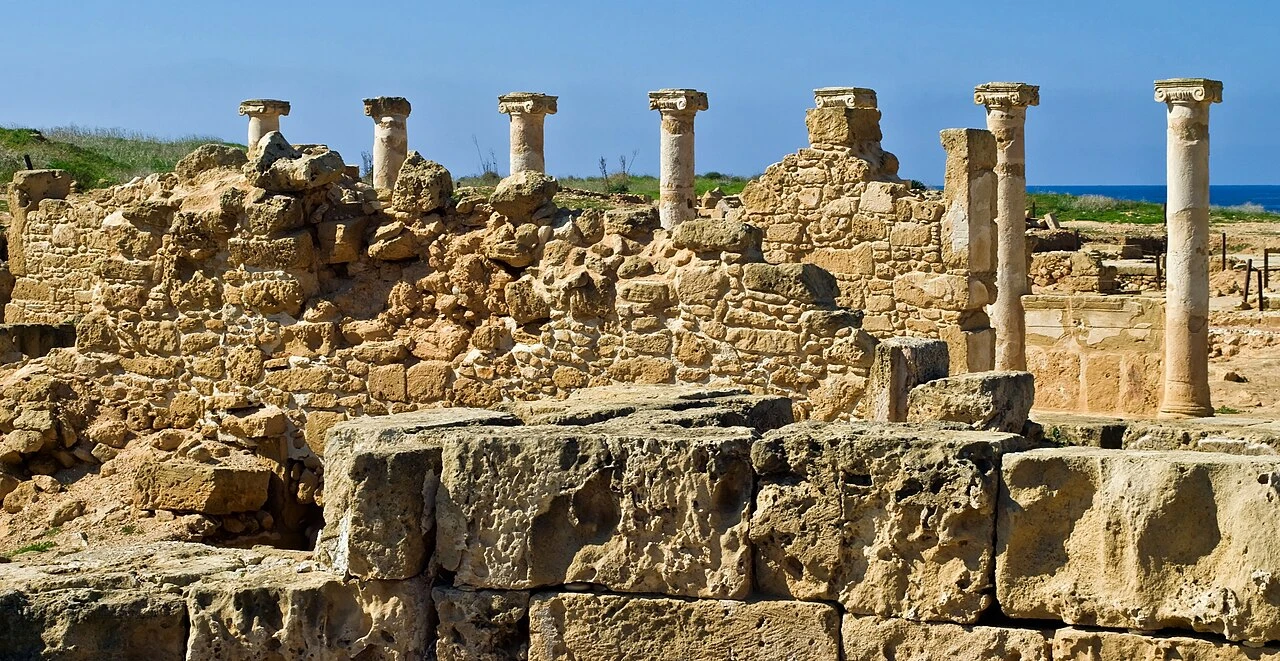
Paphos Municipality
Αρχαιολογικό Πάρκο Πάφου
Content & sources
Photo: Nikodem Nijaki · CC BY-SA 3.0