Stanza · Audio guide
Vyšehrad Audio Guide
A place to remember. A story to take with you.
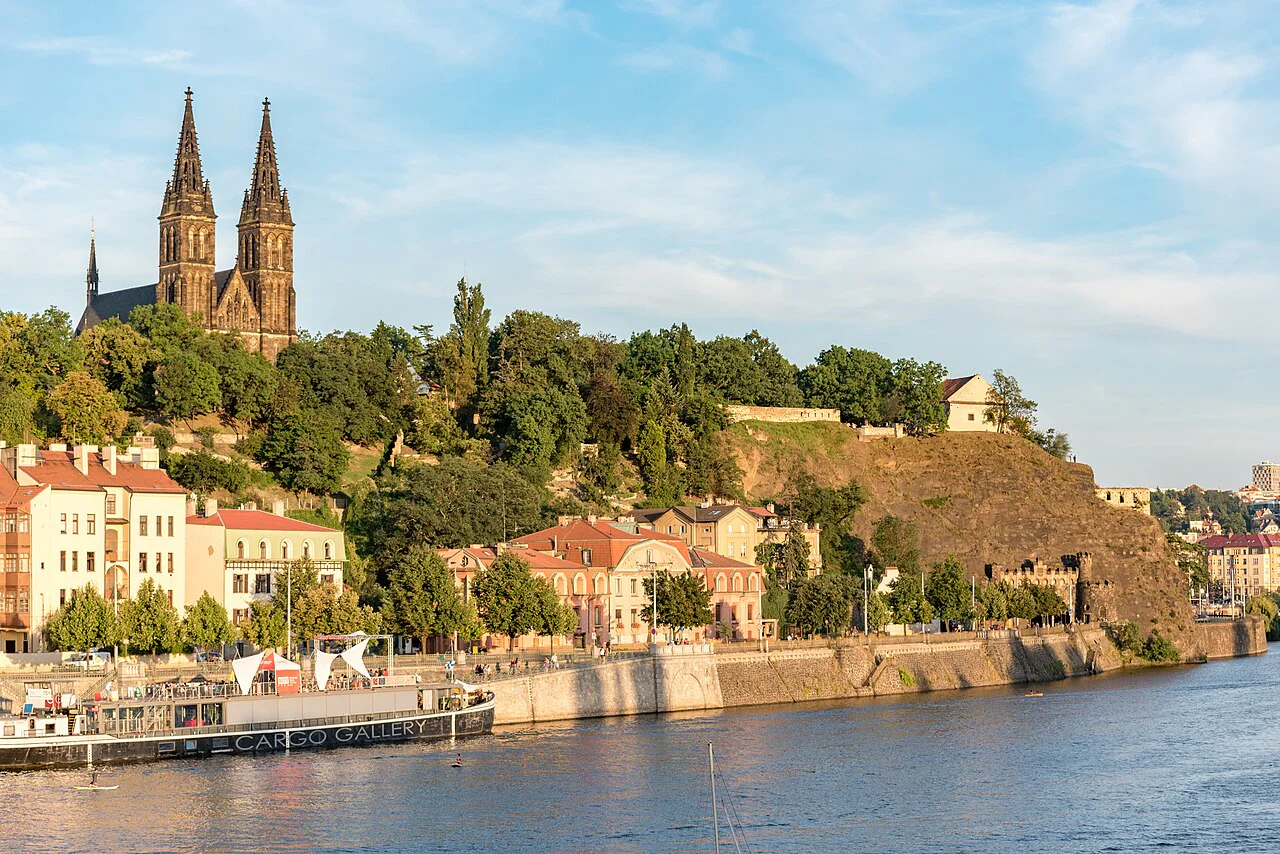
Vyšehrad is a historic fort located on the east bank of the Vltava River in Prague. It contains the Basilica of St. Peter and St. Paul and a cemetery where many famous Czech figures are buried.
Download Stanza, then search for “Vyšehrad”.
About the tour
One guide. Your kind of visit.
Vyšehrad is a historic fort located on the east bank of the Vltava River in Prague. It contains the Basilica of St. Peter and St. Paul and a cemetery where many famous Czech figures are buried.
Ready when you are.
- 01Get the free Stanza app.
iOS & Android
- 02Find your guide.
“Vyšehrad”
- 03Download before you go.
Works offline
Audio guide / 39 narrated stops
Inside the guide
Get to know a few of the stories before you go. Open a stop to read more.
01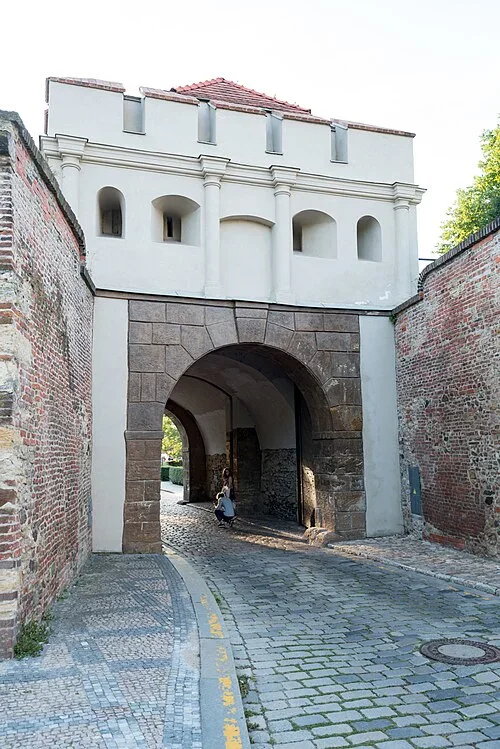 Tábor Gate
 (Táborská brána)
Vyšehrad is a steep rock above the Vltava, a little over three kilometres southeast of Prague Castle. People were settled here by the end of the tenth century. Legend says Duke Krok founded the place, ordering a forest cut down on the rock for a safer seat than his court at Budeč. The documented history has many chapters: royal seat, church chapter, Habsburg fortress, and finally a burial ground for famous Czechs. This gate guarded the outermost line of defence on the side facing Pankrác. An outer corner wall with the gateway was raised after 1639, in the middle of the Thirty Years' War, and rebuilt at the start of the 1650s. The gate itself probably dates from around 1640, though some accounts place it later. Its portal is built of large dressed stone blocks, with a semicircular arch above the opening. The plastered upper floor is ringed by four Tuscan columns, with two gun openings of different sizes on either side. A sunk panel in the middle was probably meant for a coat of arms that was never placed there. Along the top runs an attic with a hint of battlements, and older brick walls flank the whole front.
Photo: Tilman2007 · CC BY-SA 4.0
02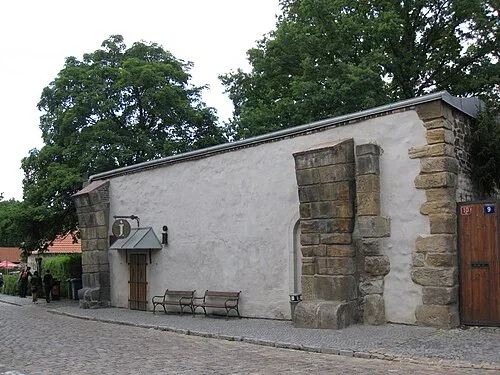 Remains of the Peak Gate (Špička)
Špička Gate Remains
In the years 1348 to 1350, Emperor Charles IV had Vyšehrad's defences rebuilt from the ground up. A Gothic wall with a walkway and battlements closed the ring, lined with square towers spaced at regular intervals. Two mighty gates gave entry: Špička on the Pankrác side, and the Jerusalem Gate toward the New Town. The Jerusalem Gate was lost during the Hussite Wars. Špička lasted far longer, yet only a small part of it can be seen today. What survives here is a fragment: a later plastered wall, stone-faced piers at the corners, a small wooden door, benches set against it. A reconstruction of the gate's presumed Gothic look had an afterlife of its own. It inspired the architect Quido Bělský's pavilion for the Club of Czech Tourists at the 1891 Jubilee Exhibition, and after being moved it now serves as the mirror maze on Petřín Hill.
Photo: Enfo · CC BY-SA 3.0
03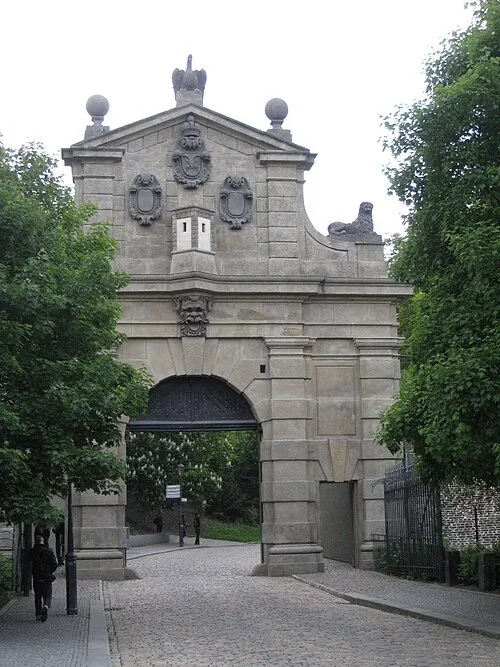 Leopold Gate
 (Leopoldova brána)
From the middle of the seventeenth century Vyšehrad was turned into a fortress ringed by massive bastion walls, and this gate became its ceremonial face. It was built at some point between 1653 and 1672; the exact start and finish are unknown. The design probably follows a drawing by the architect Carlo Lurago, and his sketch of the gate survives. Locals have also called it the French Gate. Despite its place in the fortification system designed by Innocenzo Conti, with later additions by Giuseppe Priami, it never served a military purpose. A central arched opening pierces the wall, the pediment above carries heraldic shields, and a lion lies carved on one corner. Trees line the cobbled roadway on the approach. The gate only came into everyday use from the mid-nineteenth century, when a road was built across Vyšehrad linking the New Town with Pankrác.
Listen in the appPhoto: Enfo · CC BY-SA 3.0
04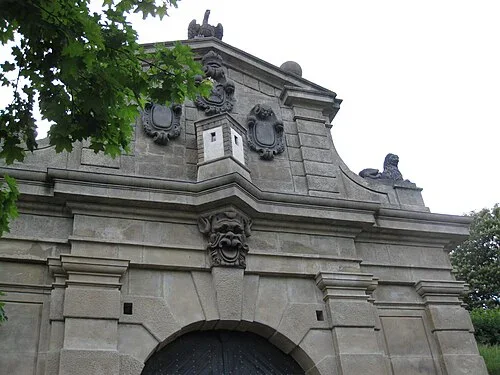 Leopold Gate
: Sculpted Pediment
The upper part of the gate carries a whole programme of carving. At the very top sits a bird-like figure, flanked by round finials. Below, two cartouches holding shields frame a central panel, and a grotesque mask frowns above the arch. The lion rests at the right-hand corner, completing the group. What the shields and the bird were meant to say is no longer settled. The arrangement itself, though, is the kind of display Baroque gateways often carried: heraldry and masks framing the arch, so that anyone passing beneath felt the weight of the place they were entering.
Listen in the appPhoto: Enfo · CC BY-SA 3.0
05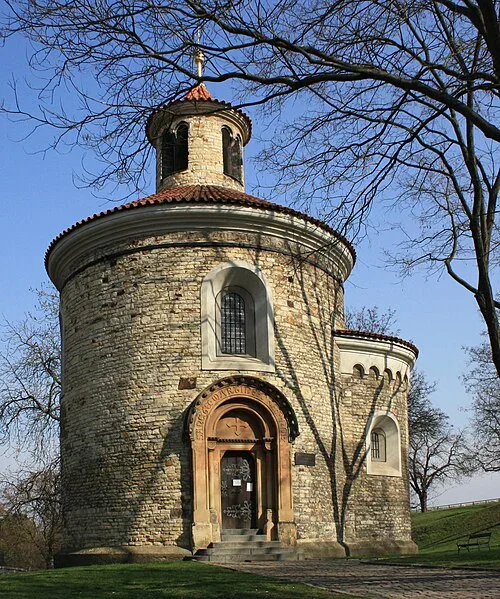 Rotunda of Saint Martin
This rotunda of Saint Martin goes back to the years when Vyšehrad became a ducal seat. Around 1070, Duke Vratislav the Second moved his court from Prague Castle to Vyšehrad. He had quarrelled seriously with his younger brother Jaromír, Bishop of Prague, and wanted distance from him. To balance the bishop's influence in church matters, he founded the church of Saints Peter and Paul here and gave it a college of priests, the chapter. The chapter was richly endowed with sixty-six villages, and it was exempt from the bishop's authority, answering directly to the pope. This exemption was the only one of its kind in the Czech lands, and Pope Lucius the Second confirmed it in 1144. The seat stayed at Vyšehrad until about 1140, when Prince Soběslav moved back to Prague Castle. The round building with rough stone walls is the rotunda of Saint Martin, from the second half of the eleventh century and the oldest rotunda in Prague. A dean of the chapter, a priest named Martin, probably founded it, and it likely served as the parish church of the bailey. The founding church of 1070, though, was the chapter's basilica, not this rotunda. It is dedicated to Martin of Tours, who, the story goes, gave half his cloak to a beggar, saw Christ, and left the army.
Listen in the appMichal Klajban · CC BY-SA 3.0
06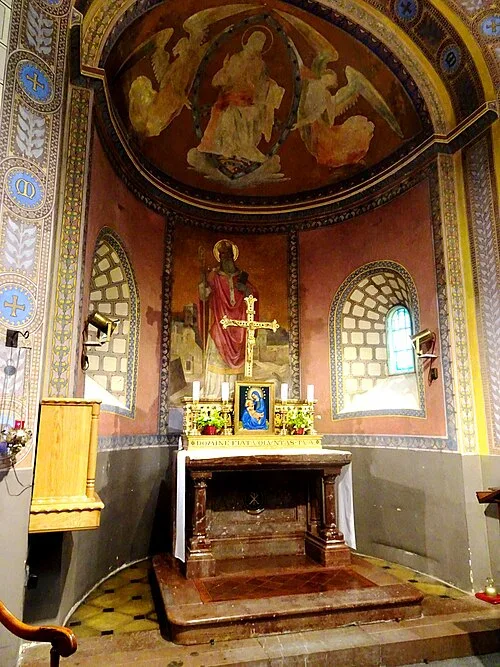 Rotunda of Saint Martin
Rotunda Interior: Apse and Altar
The apse is the quiet centre of the rotunda. A haloed figure painted on the wall above the altar holds a cross. The altar table itself is cut from Slivenec marble, with steps of the same stone. On it stand a framed panel, candles and flowers. The painted decoration of the apse was done in the nineteenth century by Jan Heřman, a pupil of the master Josef Hellich. Heřman drew his biblical scenes from the Vyšehrad Codex, the great illuminated book associated with this place.
Listen in the appPhoto: Palickap · CC BY 4.0
07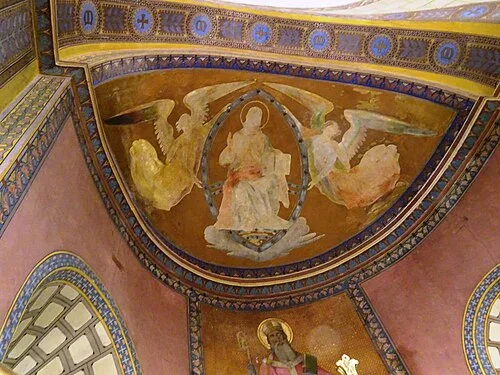 Rotunda of Saint Martin
Rotunda Interior: Painted Vault
Overhead, the vault curves into a painted oval. A seated central figure raises a hand in blessing, with winged angels on either side. The field around them is ochre, and a band of patterned medallions runs along the top. The vault was painted in the same nineteenth-century restoration, after centuries of damage and neglect.
Listen in the appPhoto: Palickap · CC BY 4.0
08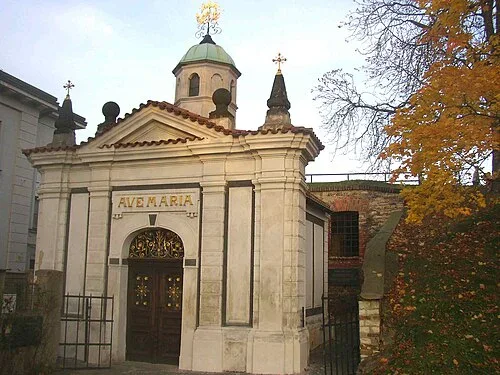 Chapel of Our Lady of the Ramparts
 (Kaple Panny Marie Šancovské)
A small chapel leans against the eastern rampart of the fortress, dedicated to the Virgin Mary. Gilded letters above the door spell AVE MARIA, and a green-domed lantern with gilt crosses rises over the roof. It grew out of an older ruin: the vanished church of the Beheading of Saint John the Baptist, which held a statue of the Madonna said to be miraculous, carved in 1725 by a journeyman mason named Michal Hoch. In the 1740s the ramparts here were being strengthened, and part of the ruined church was rebuilt as a Baroque chapel. It was consecrated in 1746 as the church of Our Lady of Loreto and the Beheading of Saint John, and enlarged in 1764. In 1787 the reforms of Joseph the Second abolished it, and the army used it as a warehouse, a stable, even housing for the poor. The Madonna statue was moved to the church of Saints Peter and Paul, where it remains. In 1882 the Vyšehrad chapter bought the chapel back and rebuilt it in the neo-Baroque style.
Listen in the appPhoto: Miaow Miaow · Public domain
09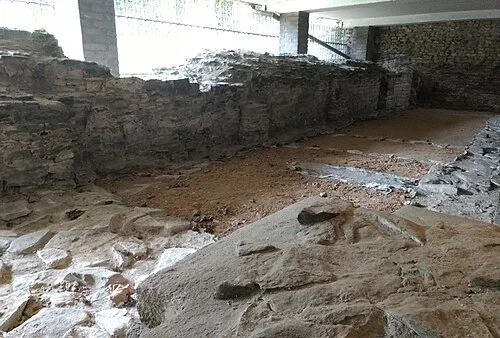 Remains of the Basilica of Saint Lawrence
Excavated Remains of the Basilica of Saint Lawrence
Here lie the remains of the Basilica of Saint Lawrence, a church that no longer stands above ground. It was a three-aisled Romanesque basilica of the late eleventh century, and it was destroyed by the time of the Hussite Wars. Excavation is how its plan came back to light. Walls that once rose high survive as low lines of stone in the soil, and their arrangement shows where the rooms and entrances were. Here the foundations run in long straight courses beside sandy and rubble floors, all sheltered under a modern concrete cover. Archaeologists read walls like these much as a plan drawn on paper, only the drawing was made by the builders themselves.
Listen in the appD. Danková · CC BY-SA 4.0
10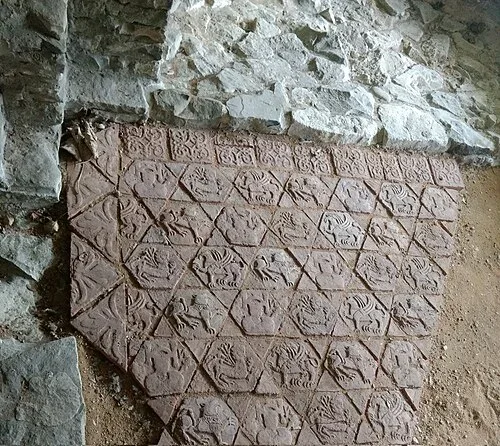 Remains of the Basilica of Saint Lawrence
Relief Tile Floor
Floors leave traces too. These tiles are set in diagonal rows, each carrying a raised design pressed into the clay, and they lie in excavated soil beside a rough stone wall. Decorated floors like this belonged to the interior of a building, part of the same world as its walls and altars. What the motifs on the tiles represent is not settled, but they were made before 1150. The craft is plain to see: one design, repeated across a whole floor.
Listen in the appD. Danková · CC BY-SA 4.0
- 11
Devil's Column
Broken stone shafts wrapped in a legend of a priest, a wager, and a furious devil.
- 12
Remains of the Romanesque Bridge
Courses of Romanesque stonework, one of the last surviving pieces of the medieval castle.
- 13
Old Burgrave's House (Staré purkrabství)
A survivor of Charles IV's palace precinct, the only building left standing after the Hussite plunder of 1420.
- 14
Vyšehrad Rock from the Vltava
The sheer slate cliff where Vyšehrad drops straight into the deepest stretch of the Vltava.
- 15
Vyšehrad Rock: City View
One of the finest natural lookouts in Prague, reaching from Braník to the Old Town.
- 16
Libuše's Bath (Libušina lázeň)
A ruined Gothic watchtower behind a romantic name, and the legend of Horymír's leap into the Vltava.
- 17
Cliff Stair and Tunnel Arch below Libuše's Bath
The stair, tunnel arch and old waterworks built into the cliff at river level.
- 18
Libuše and Přemysl Monument
Myslbek's monument to Libuše and Přemysl the Ploughman, the legendary founding of the Czech dynasty.
- 19
Ctirad and Šárka Monument
Myslbek's sculpture of the Maidens' War, when women built the castle of Děvín against Vyšehrad.
- 20
Basilica of Saints Peter and Paul: Exterior
The twin spires that make the basilica the landmark of Vyšehrad, rebuilt in neo-Gothic style.
- 21
Basilica of Saints Peter and Paul: Nave
The nave where Charles the Fourth began the coronation rites of the kings of Bohemia.
- 22
Basilica of Saints Peter and Paul: Painted Vault Decoration
The Secession painted vaults that turned a neo-Gothic church into a flowering forest.
- 23
Vyšehrad Cemetery Arcade
How a Habsburg fortress became a national burial ground, behind a colonnade of pale columns.
- 24
Cemetery Beside the Basilica
The graves pressed against the basilica wall, on ground where a Baroque armoury once stood.
- 25
Grave of Božena Němcová
The obelisk raised for Božena Němcová by the schoolgirls who loved her Grandmother.
- 26
Grave of Bedřich Smetana
A composer's plain grey obelisk, with the basilica spire rising behind the trees.
- 27
Slavín National Pantheon
The monumental shared tomb, built between 1889 and 1893, around which the whole national burial ground was organised.
- 28
Slavín: Winged Figure and Plinth Inscription
The winged figure above the sarcophagus, and the motto carved over the names: though dead, they still speak.
- 29
Grave of Karel Čapek
A modest family pillar marks the grave of the writer who gave the world the word robot.
- 30
Cenotaph of Milada Horáková
A memorial slab with a bronze portrait honours a politician who defended human rights, and all victims of totalitarian rule.
- 31
Grave of Antonín Dvořák: Bust and Relief
A bronze bust set into a carved memorial wall marks the grave of Antonín Dvořák.
- 32
Dvořák Tomb in the Arcade
How the carved relief wall and a neighbouring winged figure frame the composer's tomb inside its arcade bay.
- 33
Statue of Saint Wenceslas
The sandstone rider on the bastion: a Baroque Saint Wenceslas that once stood in the middle of Wenceslas Square.
- 34
Vyšehrad Ramparts
The brick-faced wall built after the Thirty Years' War, sloped on purpose to blunt the impact of cannonballs.
- 35
View from the South-west Bastion over Podolí
The view over the roofs below, from a hill sacked twice and then stripped of its medieval town.
- 36
Gorlice Hall
The vast vaulted store inside the ramparts, the largest room in the fortress's underground network.
- 37
Gorlice: Baroque Sculptural Group
A Baroque sculptural group stacked like a mountain of figures, from cherubs at the base to the Virgin at the top.
- 38
Gorlice: Standing Saint Statue
Saint Ludmila with the boy Wenceslas at her side, carved by Matyáš Bernard Braun around 1729.
- 39
Brick Gate (Cihelná brána)
The Empire-style northern entrance of 1841
Vyšehrad
Frequently asked questions
How much does the guide cost?
Free app download. Listed guide price: $2.99. Guide price shown in the app. Audio guide only. Venue admission is separate.
Can I listen without internet?
Yes. Download the guide’s audio, images, and maps in the app before your visit. Your downloaded content is then available offline.
Can I listen in my language?
This audio guide is available in 15 languages, including English.
Do I need to follow a schedule?
No. This is a self-guided experience. Choose your stops, pause whenever you like, and return to a story at your own pace.
At your own pace
Explore Vyšehrad.
Download Stanza, then search for “Vyšehrad”.
Free app download · Guide price shown in the app
Keep exploring
Nearby audio guides
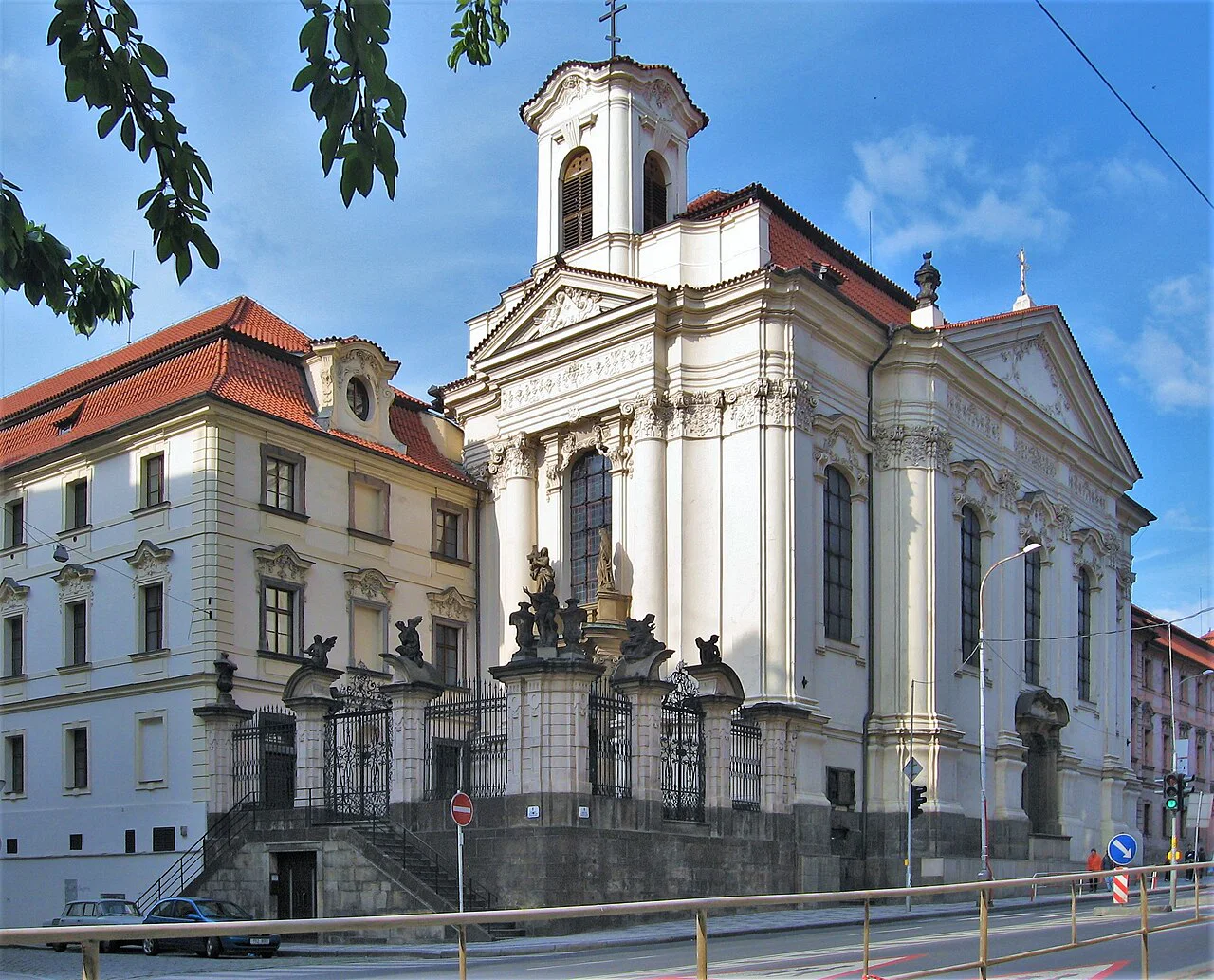
Prague · 1 km
Saints Cyril and Methodius Cathedral
Content & sources
Ludek · CC BY-SA 3.0
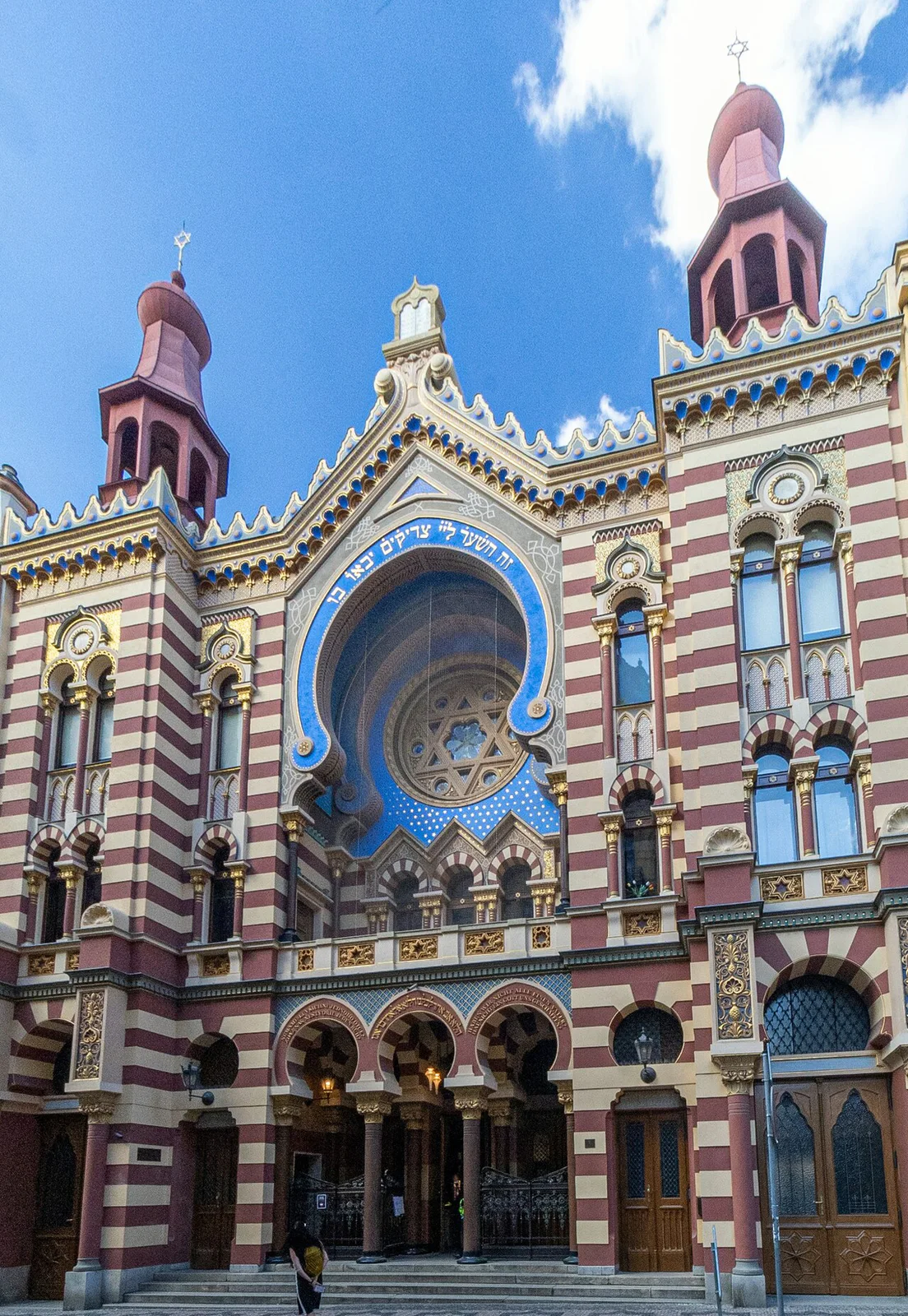
Prague · 2 km
Jubilee Synagogue
Content & sources
Vit · CC BY-SA 4.0
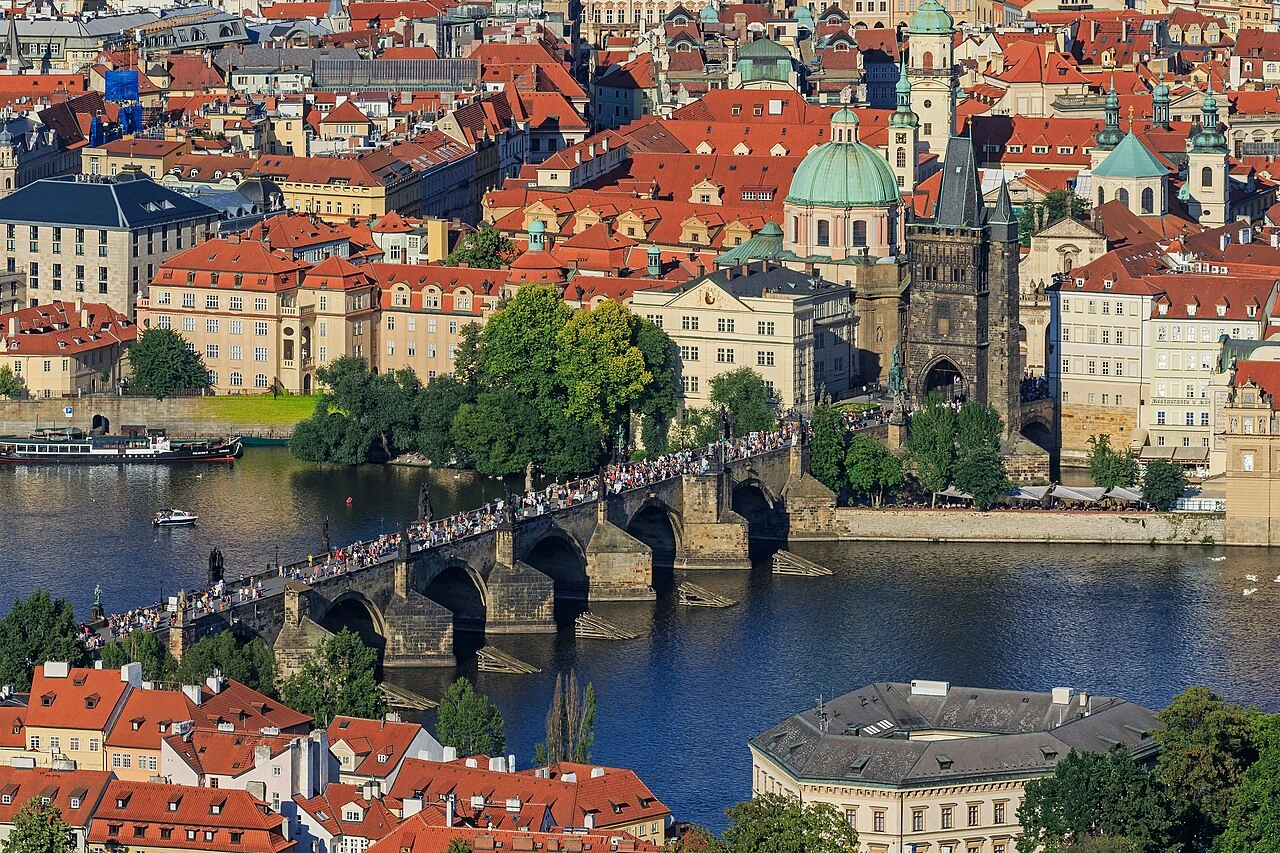
Prague · 2 km
Charles Bridge
Content & sources
Photo: A.Savin · FAL
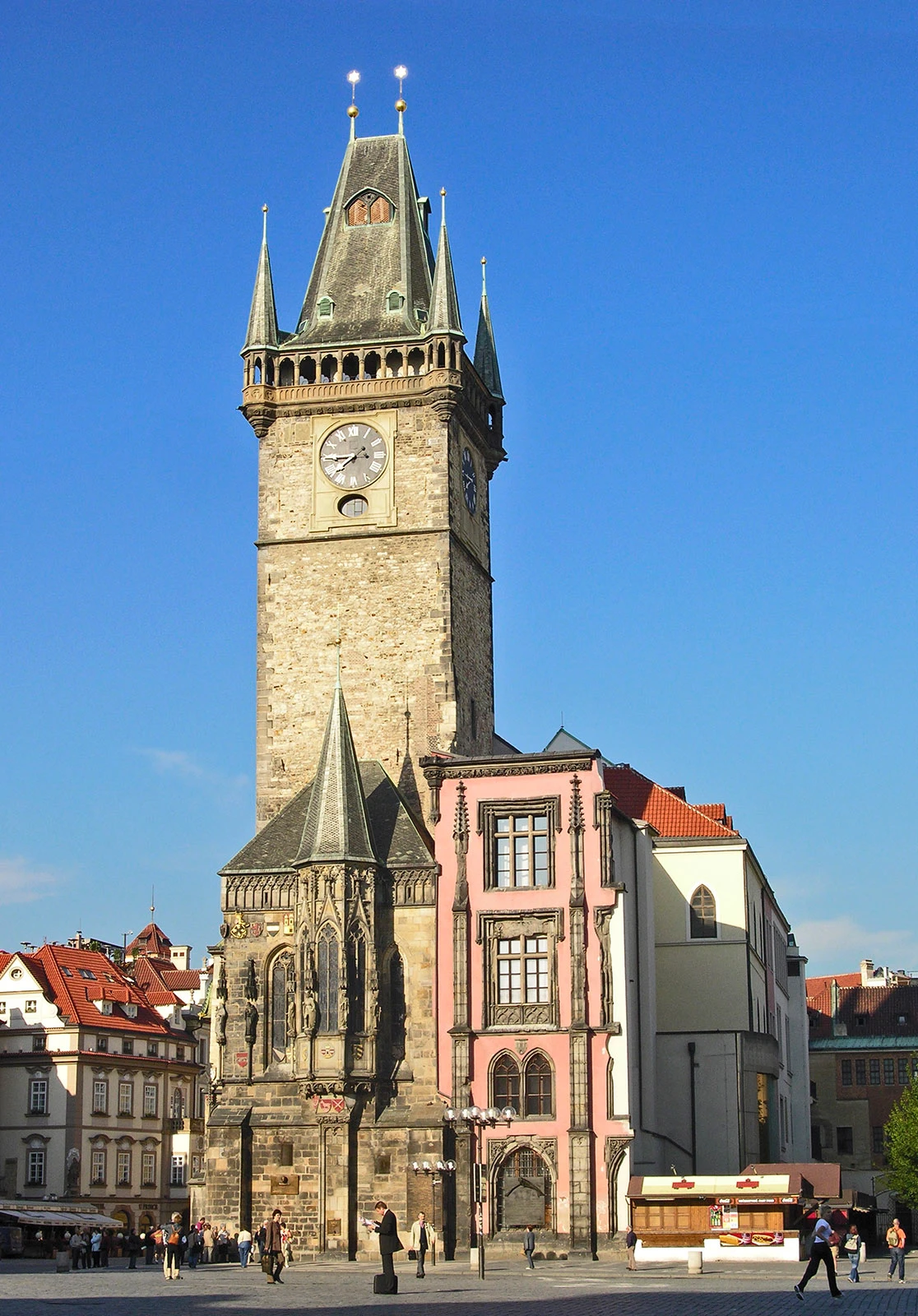
Prague · 3 km
Old Town Hall
Content & sources
Hans Peter Schaefer, http://www.reserv-a-rt.de · CC BY-SA 3.0