Stanza · Audio guide
Lindholm Høje Audio Guide
A place to remember. A story to take with you.
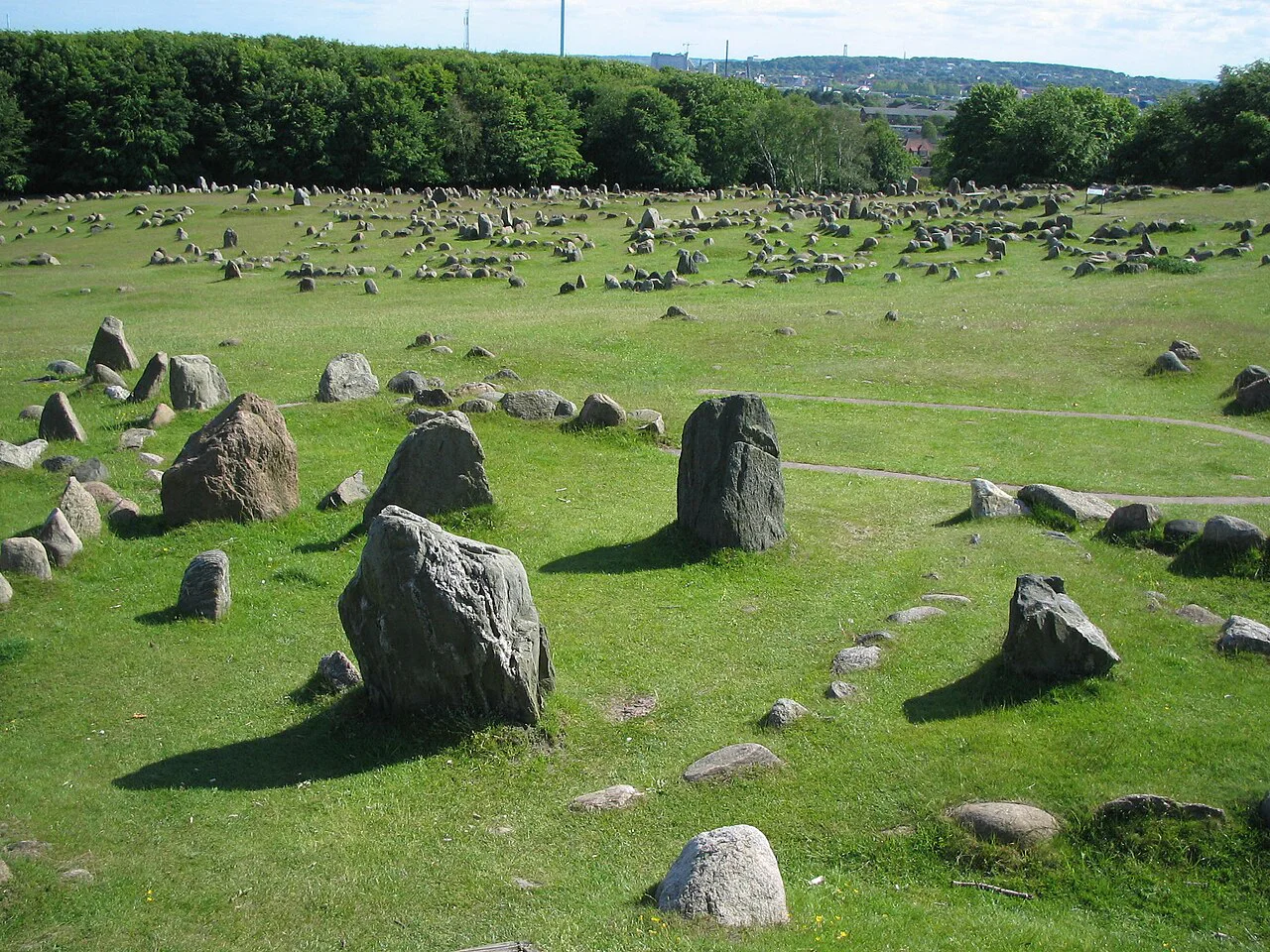
Lindholm Høje is a major Viking burial site and former settlement in Denmark. It is situated to the north of and overlooks the city of Aalborg.
Download Stanza, then search for “Lindholm Høje”.
About the tour
One guide. Your kind of visit.
Lindholm Høje is a major Viking burial site and former settlement in Denmark. It is situated to the north of and overlooks the city of Aalborg.
Ready when you are.
- 01Get the free Stanza app.
iOS & Android
- 02Find your guide.
“Lindholm Høje”
- 03Download before you go.
Works offline
Audio guide / 13 narrated stops
Inside the guide
Get to know a few of the stories before you go. Open a stop to read more.
01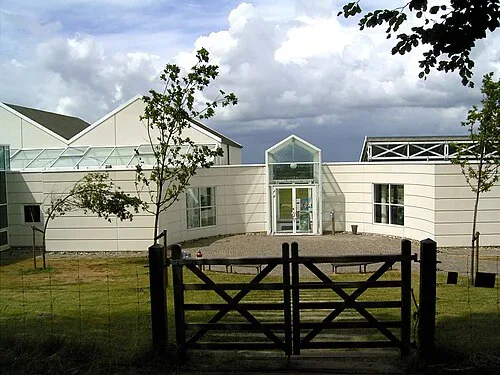 Arrival and Museum Gateway
Lindholm Høje Museum – The Gateway to the Burial Hill
Welcome to Lindholm Høje, a burial ground and village on a hill above the Limfjord in northern Denmark. People used this place for more than six hundred years, from around the year 500 to about 1100. That spans the late Iron Age and the whole Viking Age. The hill rises on the north side of the fjord, at its narrowest point, and looks down towards Aalborg. Today it counts among the major Viking sites in Scandinavia. The white building at its foot is the modern museum, and its galleries hold the finds that the hill has given up. The exhibition frames the story before the open field outside tells the rest. Two eras lie on that hill, an older cemetery above and a younger one below, and a village once stood beside them. The walk through it all starts here, inside.
Frank Vincentz · CC BY-SA 3.0
02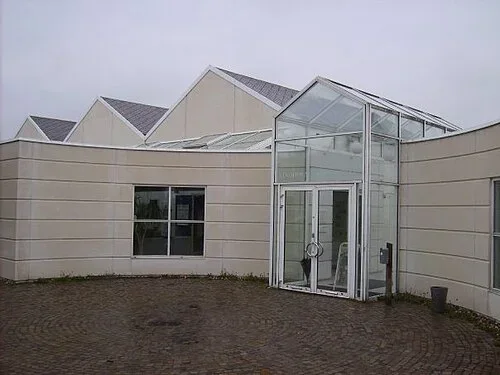 Arrival and Museum Gateway
The Museum Entrance – Rescue and Recognition
The hill owes its survival, in part, to a woman with a strong hunch. In the late eighteen hundreds, Augusta Zangenberg was an enthusiastic amateur archaeologist. She seems to have been the first to grasp just how important this ancient site was. In 1896 she agreed to buy the land for two hundred kroner. But as she led small digs on the hill, grave after grave came to light. The owner watched this happen, and raised the price to two thousand kroner. The deal collapsed. A few years later a planter named Lassen, newly home from Brazil, bought the area and set trees upon it. In 1901 he gave it to the town of Nørresundby. The museum itself opened in 1992, paid for by the cement company Aalborg Portland, and grew larger in 2008.
Photo: Västgöten · CC BY-SA 3.0
03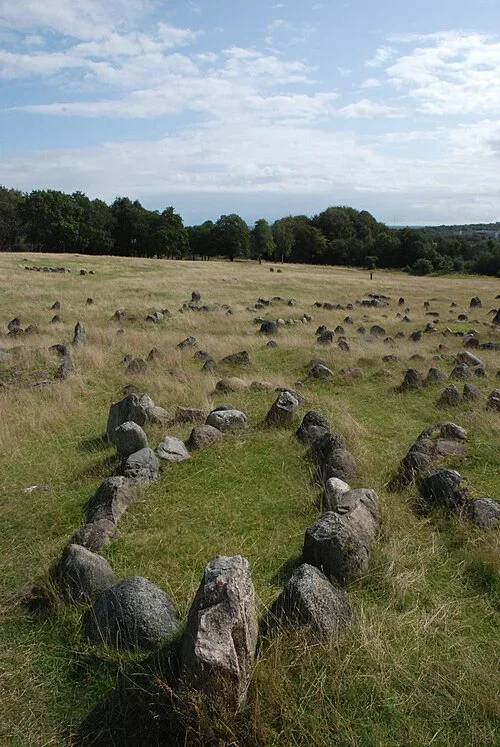 The Lower Slopes – Viking Stone Ship Settings
The Stone Ships – Graves Shaped as Boats
Out on this slope, the ground is set with stones in long, clear outlines. Several hundred of them are shaped as boats. Rocks were laid end to end, curved at both ends, the way a ship rests on grass instead of water. These are graves. In all, more than seven hundred burials have been found across the hill, most of them cremations. The ship shape was no accident. Water ran through everything the Vikings did, and they marked their dead with its most important vessel. What makes this field extraordinary is survival. Elsewhere such settings have been built over, ploughed up or pulled apart. Here lies the largest collection of well-preserved stone ships in existence, spread across the open hill.
Listen in the appAlex Hoekerd from Nunspeet, The Netherlands · CC0
04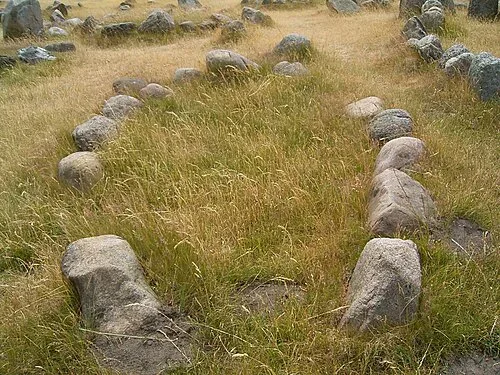 The Lower Slopes – Viking Stone Ship Settings
Reading a Grave – Circles, Ovals and Status
A single setting tells more than it first appears. Most of the people buried here were cremated, and their graves were marked with stones on the surface. The patterns vary. Some graves carry rocks in a triangle. Others take the form of a boat. Women's graves, it seems, were sometimes set apart by a circle or an oval of rocks. And the outline was a statement. The shape and size of a setting apparently signalled the standing of the person inside it. A large, elaborate frame meant a family with means. A modest ring of stones meant something humbler. In death, as in life, position was written into the ground for everyone on the hill to read.
Listen in the appFrank Vincentz · CC BY-SA 3.0
05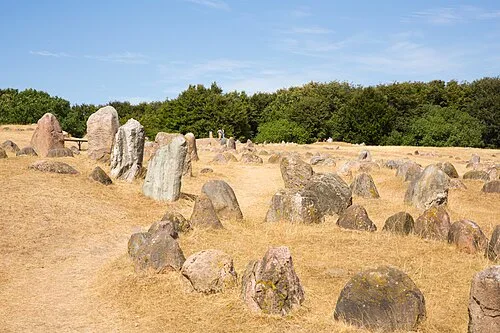 The Lower Slopes – Viking Stone Ship Settings
Stones Lost and Stones Saved
Some gaps in this field are not the work of time alone. Over the centuries an unknown number of stones have been carried off from the site. Many were broken up in the nineteenth century, during a period when Denmark was building roads and needed material. The damage fell unevenly. The Viking Age part of the burial ground, the lower southern slope, suffered more than the older sections further up. That makes what does survive here all the more remarkable. The hill kept its secrets partly by chance, and partly because the ground itself came to its defence.
Listen in the appPhoto: Liberaler Humanist · CC BY-SA 3.0
06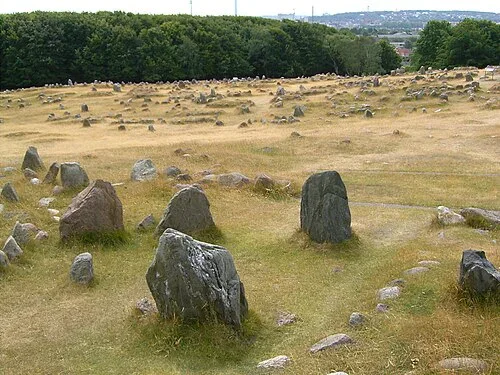 The Upper Hillside – Nordic Iron Age Cemetery
Two Cemeteries in One – Lower and Upper
The hill divides itself in two, and the border runs right across the slope. The southern, lower part dates to around the years 1000 to 1050, deep in the Viking Age. That is where the stone ships lie. The northern, higher part is far older, reaching back to the fifth century in the Nordic Iron Age. So the ground works like a timeline laid across a hillside. The graves nearest the museum are the youngest. Climb, and every step goes further back in time. The people who buried their dead here were separated by centuries, yet they chose the same rise of ground above the fjord.
Listen in the appFrank Vincentz · CC BY-SA 3.0
07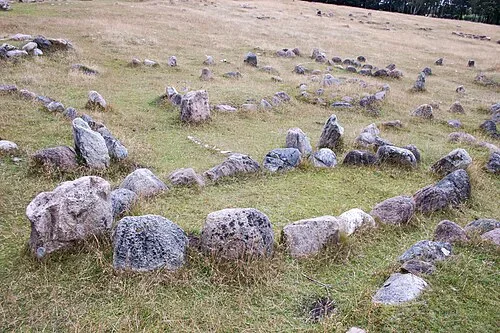 The Upper Hillside – Nordic Iron Age Cemetery
The Upper Hill – Burial Before the Vikings
The oldest graves on the hill follow a custom the Vikings would abandon. In the time before the Viking Age, the dead were buried whole, and mounds of earth were raised over them. Then the practice slowly turned. Over the generations, cremation took the place of inhumation, until by the Viking Age burning had become the usual rite. The change did not happen in a single year. It played out across the centuries that separate the upper hill from the lower one. Two ways of honouring the dead, one giving way to the other, both on the same ground.
Listen in the appPhoto: Szilas · CC0
08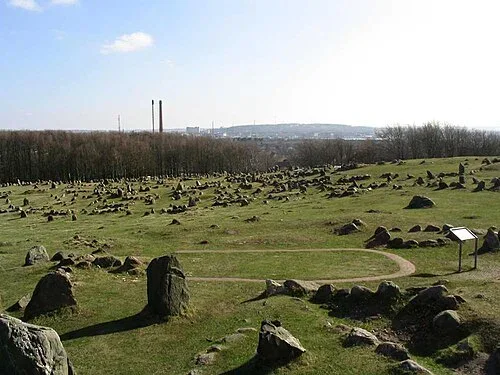 Hilltop Overlook and Buried Settlement
The Hilltop View – Crossing the Limfjord
From this height, forty-two metres above the water, the reason for everything on the hill comes into view. The Limfjord cuts across the neck of Jutland, and it is narrowest right here. During the Viking Age that mattered enormously. Swamps edged the fjord on either side, so a crossing was possible only at this spot, or far to the west at Aggersund. Anyone moving between Vendsyssel and the rest of Jutland came this way. A settlement grew on the hill beside the cemetery, and its position made it a significant centre for trade. Across the water, both Nørresundby and Aalborg stand today where the traffic once funnelled through.
Listen in the appPhoto: Rieke Hain · CC BY-SA 3.0
09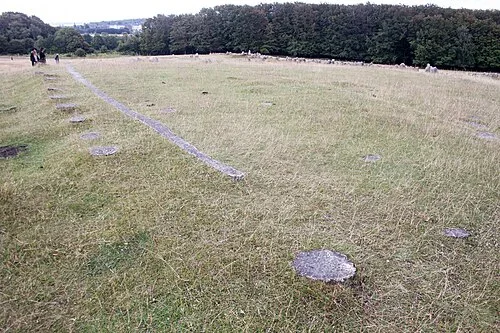 Hilltop Overlook and Buried Settlement
Buried by Sand – How the Hill Survived
Around the year 1200, the village on the hill was abandoned. The likely cause came from the western coast, where extensive deforestation had left sand bare and exposed. The rough westerly winds did the rest, blowing the sand inland in drifting sheets. In time, the whole area was covered. For the people of the settlement it was an ending. For the archaeologists of a later age it was a stroke of fortune. The sand that smothered the hill also sealed it, protecting the graves and the remains of the village through the centuries that followed. The catastrophe buried the place, and in doing so, preserved it.
Listen in the appPhoto: Szilas · CC0
10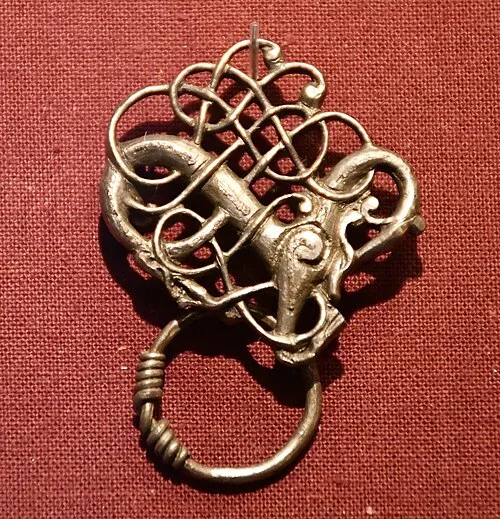 Museum Gallery – Viking Treasures and Craftsmanship
The Urnes Style Brooch
Small things travelled far in the Viking world, and this brooch proves it. A silver brooch in the Urnes style was found in one of the graves here, made in the eleventh century. Its design is a tangle of intertwined animals, a great beast caught in looping bands of thin metalwork, the fashion of the late Viking Age. The piece was so admired that it became a model. In the early twelfth century, a jeweller's workshop in Lund, in what is now Sweden, was casting bronze copies of it. A design born on a Danish hill was being reproduced a kingdom away, a generation later. That is craft moving along the same routes the traders used.
Listen in the appPhoto: Altsachse · CC BY-SA 4.0
- 11
From Stone Outline to Sailing Ship
A model ship that turns the stone outlines back into the vessels they honour.
- 12
Weapons from the Graves
Axe heads, a spearhead and shield fittings: the iron that cremation leaves behind.
- 13
Uncovering the Hill – The Great Excavation
The dig of 1952 to 1958 that uncovered the whole hill, grave by grave.
Lindholm Høje
Frequently asked questions
How much does the guide cost?
Free app download. Listed guide price: $0.99. Guide price shown in the app. Audio guide only. Venue admission is separate.
Can I listen without internet?
Yes. Download the guide’s audio, images, and maps in the app before your visit. Your downloaded content is then available offline.
Can I listen in my language?
This audio guide is available in 15 languages, including English.
Do I need to follow a schedule?
No. This is a self-guided experience. Choose your stops, pause whenever you like, and return to a story at your own pace.
At your own pace
Explore Lindholm Høje.
Download Stanza, then search for “Lindholm Høje”.
Free app download · Guide price shown in the app
Keep exploring
Audio guides — Denmark
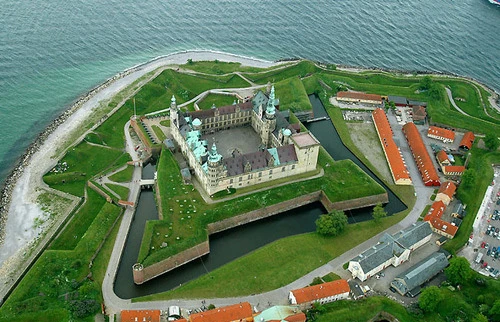
Elsinore
Kronborg Castle
Content & sources
H.C. Steensen · CC BY-SA 3.0
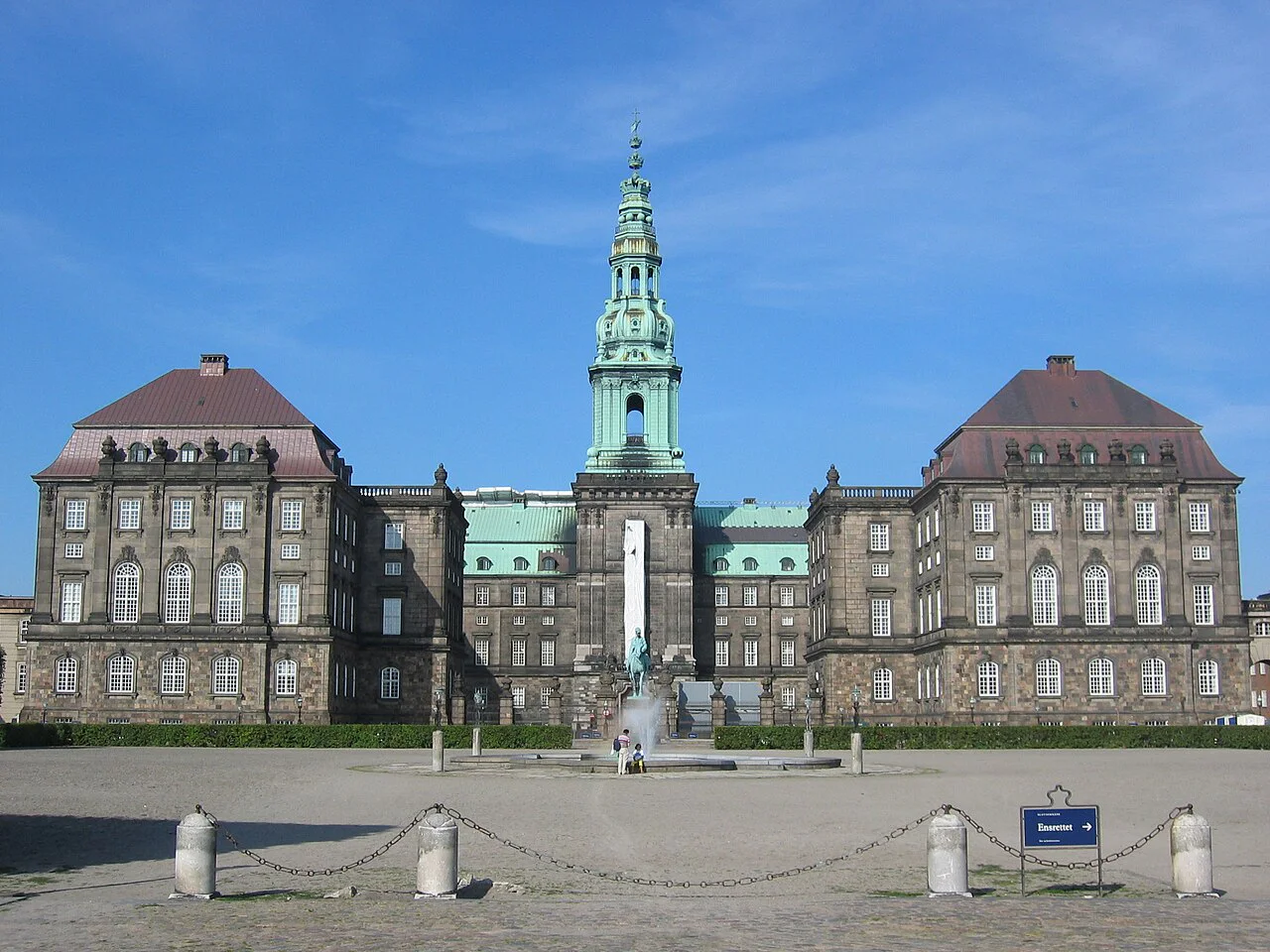
Copenhagen
Christiansborg Palace
Content & sources
eimoberg from Changwon, South Korea · CC BY 2.0
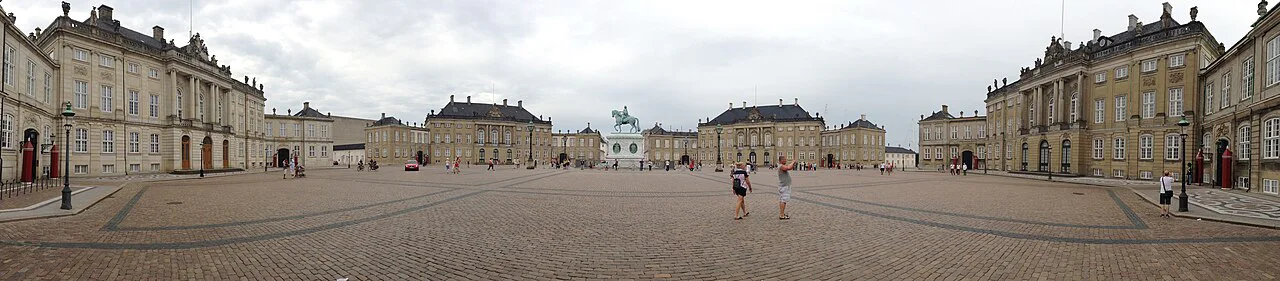
Copenhagen
Amalienborg
Content & sources
Photo: Janeway666 · CC BY-SA 3.0