Stanza · Audio guide
Amalienborg Audio Guide
A place to remember. A story to take with you.
Amalienborg is the official residence of the Danish monarch and the Danish royal family. It consists of four identical palaces laid around an octagonal courtyard in Copenhagen.
Download Stanza, then search for “Amalienborg”.
About the tour
One guide. Your kind of visit.
Amalienborg is the official residence of the Danish monarch and the Danish royal family. It consists of four identical palaces laid around an octagonal courtyard in Copenhagen.
Ready when you are.
- 01Get the free Stanza app.
iOS & Android
- 02Find your guide.
“Amalienborg”
- 03Download before you go.
Works offline
Audio guide / 9 narrated stops
Inside the guide
Get to know a few of the stories before you go. Open a stop to read more.
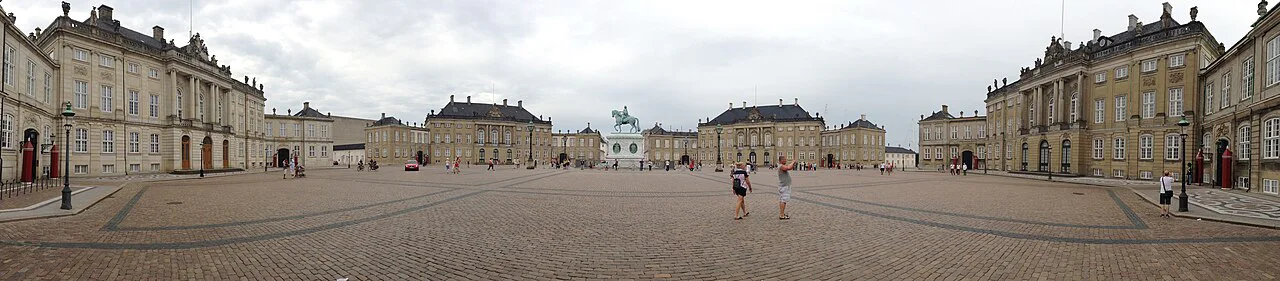
01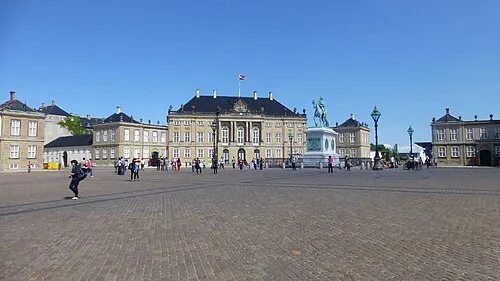 Frederiksstaden and Amalienborg Slotsplads
Amalienborg Slotsplads – The Octagonal Square
Welcome to Amalienborg, the official residence of the Danish monarch, in the heart of Copenhagen. Around this cobbled square stand four palaces so alike that they can look like a single building. They were never meant for kings. The district around the square, Frederiksstaden, was laid out to mark three hundred years of the Oldenburg dynasty on the Danish throne. King Frederik V offered four noble families building sites here free of charge, and freed them from taxes and duties. The conditions were strict. Each mansion had to follow the architectural specifications of the court architect, Nicolai Eigtved, exactly, and be finished within a set time. The octagonal shape of the square itself came not from Eigtved but from a German artist working in Copenhagen, Marcus Tuscher. Work began in 1750. The last palace was completed in 1760. The facades match perfectly, but inside, each family arranged its rooms to its own taste, and much of that Rococo decoration has gone with changing fashions over the years. Four different families, building to one master plan, produced a single unbroken frame. At the centre of the square stands a bronze king on horseback: Frederik V himself, the founder of the district.
Martin Manscher · CC BY-SA 3.0
02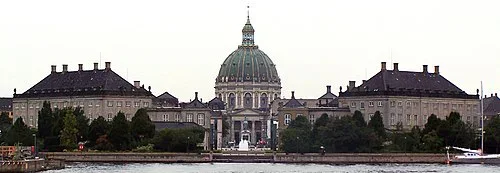 Frederiksstaden and Amalienborg Slotsplads
Amalienborg and the Frederiksstaden Axis from the Harbour
Behind the palace roofs, the dome of Frederik's Church rises on the same line as the square. The short street joining the two is Frederiksgade, and the whole of Frederiksstaden was arranged around this axis. The planners meant the alignment as a picture of how their world was ordered. The absolute king held his power from God, and passed it down through the nobility to the people. The equestrian statue in the square turns its face toward the church dome, completing the line. The waterfront had no such glory in the 1750s. Timber yards lined the harbour, which made the water side the unattractive side to live on. The two palaces farthest from the church, Brockdorff's and Schack's, were therefore the least sought after. Building the Copenhagen Opera House on this same axis in the early 2000s stirred a debate in the city that has never quite settled.
Martin Manscher · CC BY-SA 3.0
03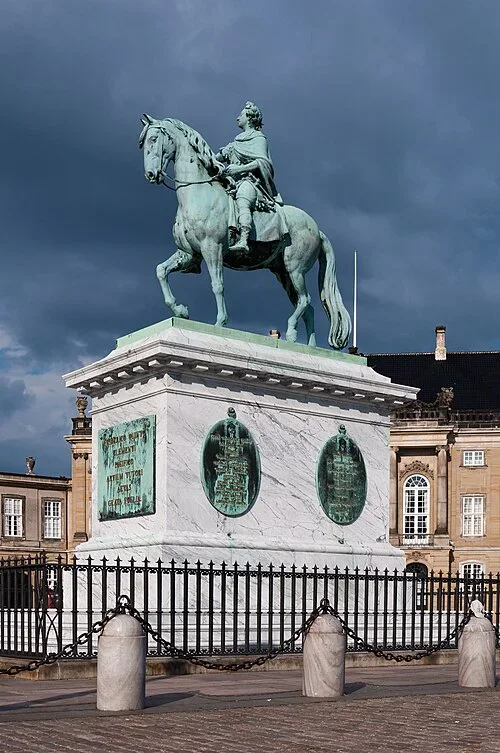 Equestrian Statue of Frederik V
The bronze rider at the centre of the square is King Frederik V. Count Adam Gottlob Moltke commissioned the monument, and the work went to the French sculptor Jacques Saly. Saly began in 1753. The foundation stone was laid in the square in 1760, at the jubilee of Danish absolutism. Then the delays set in. The unveiling did not come until 1771. By then Frederik V had been dead for five years, so the king never saw his own monument. The Danish Asiatic Company, with Moltke as its director, paid part of the cost of the pedestal and other work, and it proved a costly business for the company. From commission to unveiling, the monument took close to two decades.
Listen in the appJulian Herzog (Website) · CC BY 4.0
04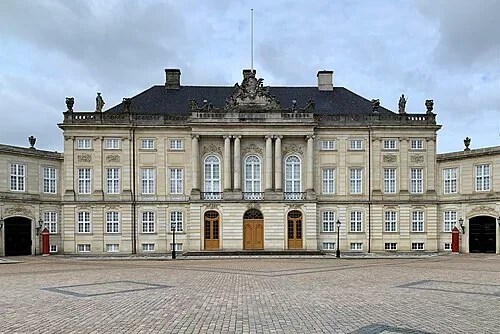 Christian VII's Palace
 (Moltke's Palace)
The grandest of the four is Christian VII's Palace, first known as Moltke's Palace after its builder. Adam Gottlob Moltke, the lord high steward who drove the whole Frederiksstaden project, raised it for himself with the best craftsmen and artists of the day. It was finished in 1754, the most expensive of the four mansions. Its Great Hall, the Riddersalen, is widely called perhaps the finest Rococo interior in Denmark. Louis August le Clerc carved the woodwork and paintings by François Boucher hang there, with stucco by masters of their own. When the royal castle of Christiansborg burned in February 1794, the royal family was left homeless. The noble owners of these mansions were short of money and open to royal favour, and sold within days. By December of that year, King Christian VII's household had moved in. Since the castle's interiors were lost in the fire, this palace is one of the few places where the vanished royal rooms can still be imagined. More than two centuries of weather later, the sandstone decoration on the facade was so damaged that parts of the square had to be closed. Restoration began in 1982. It finished in 1996, as Copenhagen prepared for its year as a European capital of culture. In 1999 the preservation body Europa Nostra gave the work a medal.
Listen in the appPhoto: Neoclassicism Enthusiast · CC BY-SA 4.0
05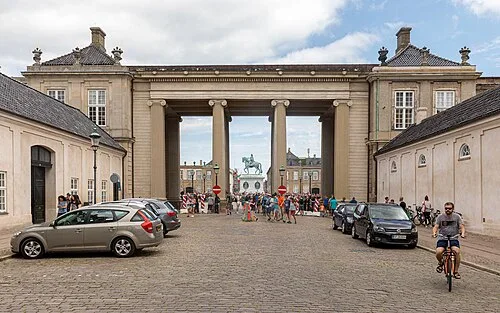 The Colonnade of Amalienborg
The Colonnade (Kolonnaden)
After the fire of 1794, the King lived in Moltke's Palace and the Crown Prince in Schack's, next door but separated by the street of Amaliegade. The royal architect Caspar Frederik Harsdorff was set to join them. His answer still spans the street: eight Ionic columns carrying a covered passage at first-floor height, high enough for the traffic of Amaliegade to pass underneath. The surprise is the material. This refined structure was built of plastered timber, intended as a temporary fix. Harsdorff did more than bridge the street. He raised the connecting wings of the palaces by a full storey, and removed the entrance vestibules in every one of the mansions to make room for the court. Cars and bicycles still pass under the arches, exactly as he planned.
Listen in the appPhoto: Martin Kraft · CC BY-SA 4.0
06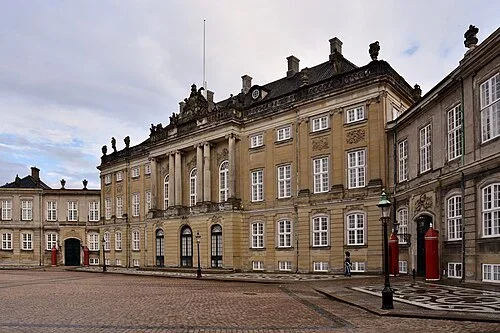 Christian IX's Palace
Christian IX's Palace is where the monarch lives, and it began as the most troubled of the four building projects. Baron Severin Løvenskiold started it, but the costs of building to Eigtved's strict specifications ruined him. In 1754 he sold the unfinished house to Countess Anna Sophie Schack, a widow who took it on for her step-grandson, Hans Schack. A fire soon after the change of ownership held up the work further. For more than a century afterwards, the royal family treated Amalienborg as one residence among several. Only after the Easter Crisis of 1920 did it become the monarchy's permanent home. This is the palace the King takes up residence in. When he is here, the flag flies over the roof and the guard mounts its fullest form, the King's Watch, so all Copenhagen can tell when the monarch is at home.
Listen in the appPhoto: Bahnfrend · CC BY-SA 4.0
07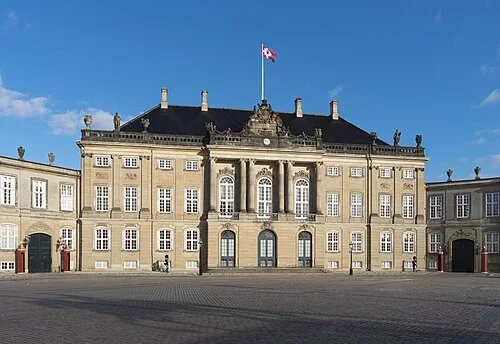 Frederik VIII's Palace
 and the Royal Life Guards
The small red sentry boxes at the palace entrances belong to the Royal Life Guards, who watch Amalienborg day and night. Their full dress is a scarlet tunic, blue trousers and a tall navy bearskin cap, much like the foot guards of London. Every day they march from Rosenborg Castle at half past eleven, through the streets of Copenhagen. At noon they carry out the changing of the guard in front of the palaces. The sentries on post are relieved every two hours. When the King is in residence, a band marches with them playing traditional military marches. The building behind them was once Brockdorff's Palace, and after the royal move-in it housed first army and then naval cadets, until the academy moved out in 1827. It is now Frederik VIII's Palace, and the home of King Frederik X. The guards have fought here too. On 9 April 1940, the day of the German invasion, the Life Guards held their posts against German infantry. The firefight lasted about an hour, and ended only when King Christian X called a ceasefire to spare Denmark from destruction.
Listen in the appPhoto: Jebulon · CC0
08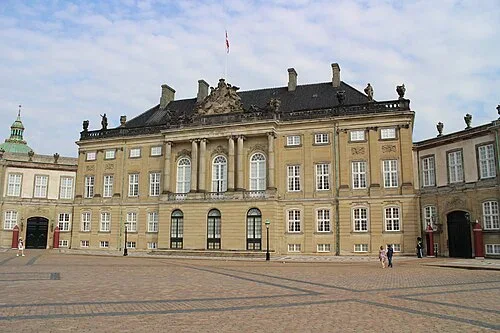 Christian VIII's Palace
The Wartime Defense of Amalienborg
German troops seized the palaces and disarmed the Life Guard watch on 29 August 1943. From then on, Danish police took over the duty of protecting the King. On 19 September 1944, German forces moved to arrest the Danish police across the country and deport them to Germany. At Amalienborg the police guard resisted so fiercely that twenty German soldiers were killed and twice as many wounded. The Germans called off the action and later described it as a misunderstanding. On the Danish side, two police officers and the steward of the Yellow Palace were hurt. Through the whole occupation, this square remained the only place where no armed German was allowed to set foot. Traces of the German cannon fire are said to be visible at the palace still, where a memorial plaque was put up in 1952.
Listen in the appPhoto: Suicasmo · CC BY-SA 4.0
09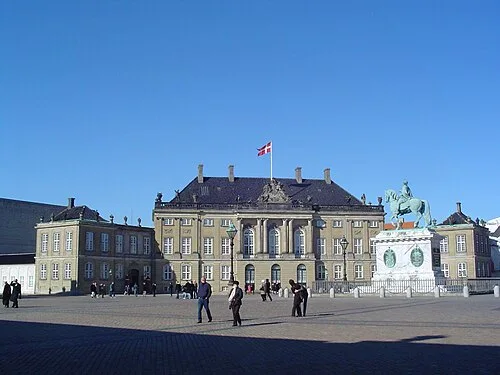 Amalienborg Palace Museum
Christian VIII's Palace and the Amalienborg Museum
Christian VIII's Palace began life as the mansion of Count Christian Frederik Levetzau, one of the four noble builders of the square. After the royal family bought it in 1794, the painter and architect Nicolai Abildgaard modernised its rooms in the new French Empire style. Later it became the home of Crown Prince Christian and Princess Alexandrine. In the 1980s the palace was restored as a residence for the Crown Prince, with storage for the Queen's library and a museum. That museum keeps the private apartments of the royal house of Glücksborg, with their original fittings and furnishings, covering the years from 1863 well into the twentieth century. Queen Margrethe's grandson, Count Felix, has an apartment in the palace today. Four mansions built as noble town houses became a royal home, and this one now opens its rooms to visitors.
Listen in the appPhoto: Thue · Public domain
Amalienborg
Frequently asked questions
How much does the guide cost?
Free app download. Listed guide price: $0.99. Guide price shown in the app. Audio guide only. Venue admission is separate.
Can I listen without internet?
Yes. Download the guide’s audio, images, and maps in the app before your visit. Your downloaded content is then available offline.
Can I listen in my language?
This audio guide is available in 15 languages, including English.
Do I need to follow a schedule?
No. This is a self-guided experience. Choose your stops, pause whenever you like, and return to a story at your own pace.
At your own pace
Explore Amalienborg.
Download Stanza, then search for “Amalienborg”.
Free app download · Guide price shown in the app
Keep exploring
Nearby audio guides
Copenhagen · 1 km
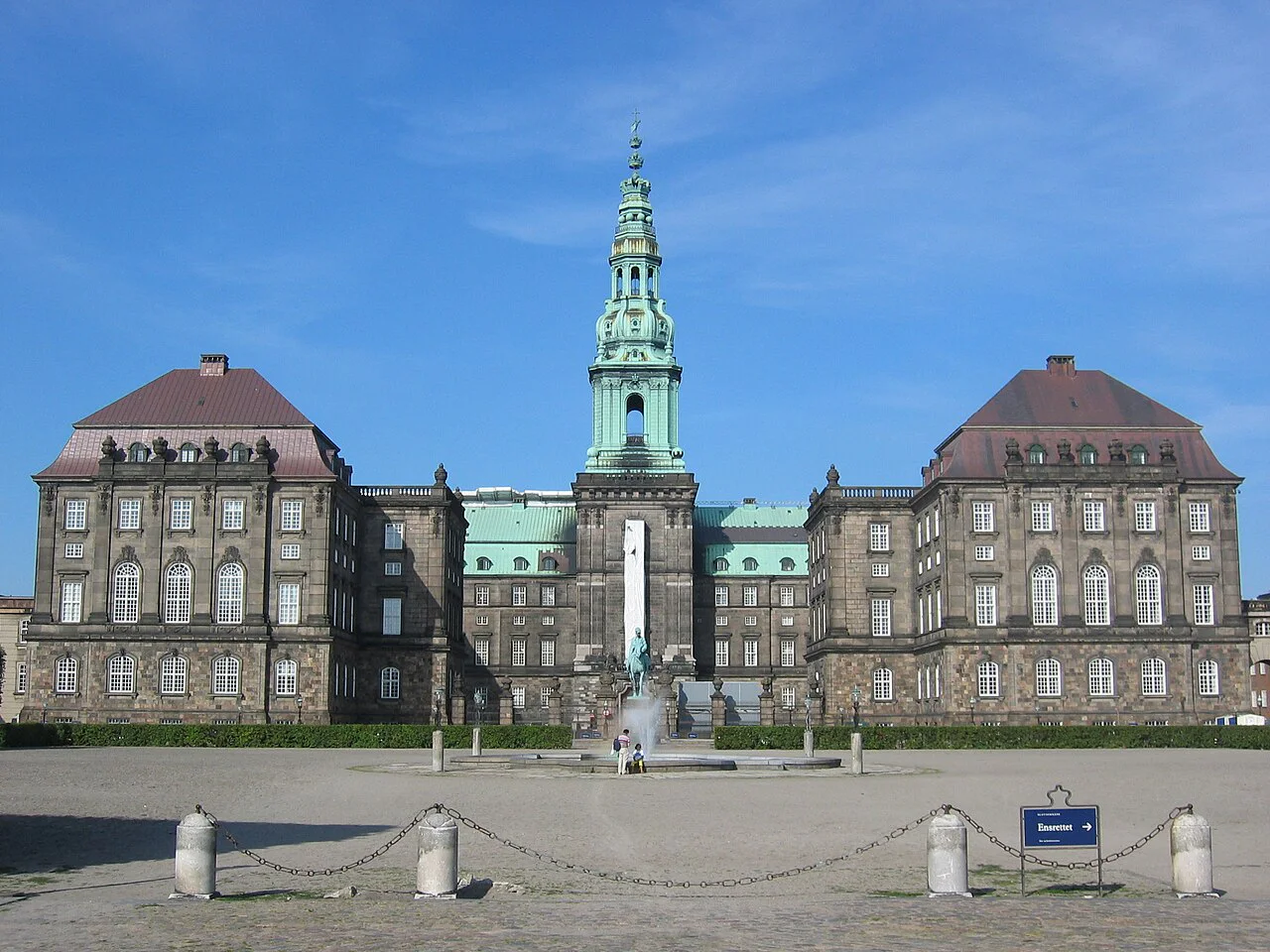
Christiansborg Palace
Content & sources
eimoberg from Changwon, South Korea · CC BY 2.0
Elsinore · 39 km
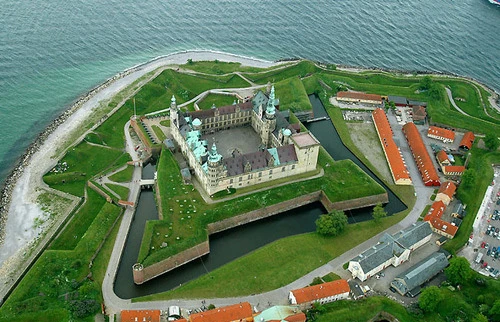
Kronborg Castle
Content & sources
H.C. Steensen · CC BY-SA 3.0

Ystad Municipality · 98 km
Ale's Stones
Content & sources
Photo: Fred J · CC BY-SA 3.0
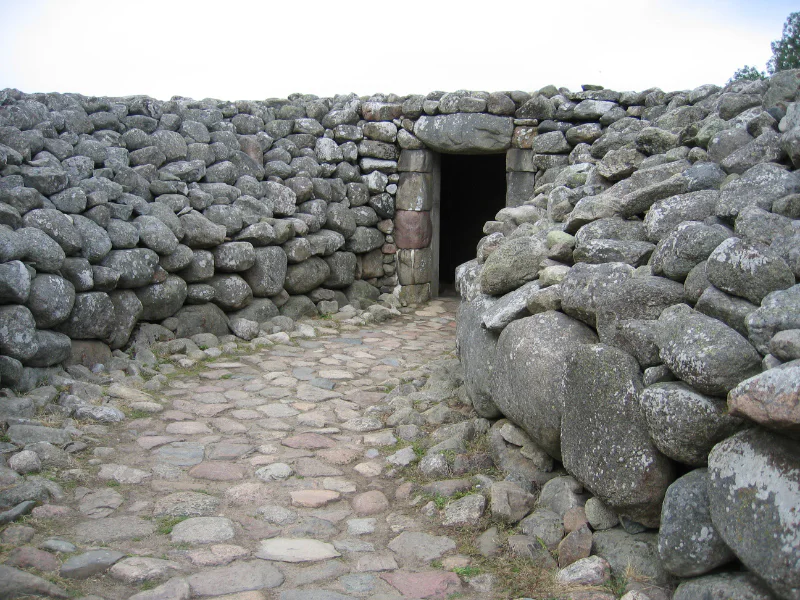
Kivik · 103 km
The King's Grave
Content & sources
Abelson at English Wikipedia · CC BY 2.5