Stanza · Audio guide
The King's Grave Audio Guide
A place to remember. A story to take with you.
The King's Grave is an archaeological site situated near Kivik in southeastern Sweden. It represents the remains of an unusually grand Nordic Bronze Age double burial dating from circa the 15th century BC.
Download Stanza, then search for “The King's Grave”.
About the tour
One guide. Your kind of visit.
The King's Grave is an archaeological site situated near Kivik in southeastern Sweden. It represents the remains of an unusually grand Nordic Bronze Age double burial dating from circa the 15th century BC.
Ready when you are.
- 01Get the free Stanza app.
iOS & Android
- 02Find your guide.
“The King's Grave”
- 03Download before you go.
Works offline
Audio guide / 8 narrated stops
Inside the guide
Get to know a few of the stories before you go. Open a stop to read more.
01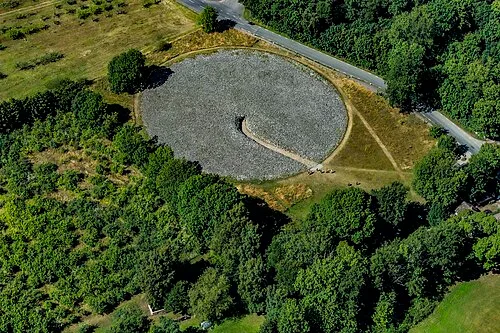 The Monumental Cairn (Bredarör)
The King's Grave from the Air
Welcome to Kivik, on the southeastern coast of Sweden, and to the great ring of stone known as the King's Grave. In Swedish it is called Bredarör, and it ranks among the largest burial monuments known in northern Europe. Work on it began around 1500 BC, in the early Nordic Bronze Age. It was raised as a grave, and a grand one: a mound of gathered stone built over a burial chamber. Seen from above, the shape reads clearly — a pale circle of grey stone set among green fields, orchards and trees. In its restored form the cairn measures about 75 metres across. Inside that ring lies a stone chamber whose walls carry some of the most famous art of the Scandinavian Bronze Age. Those carved slabs are what made this mound famous far beyond Kivik.
Photo: L.G.foto · CC BY-SA 4.0
02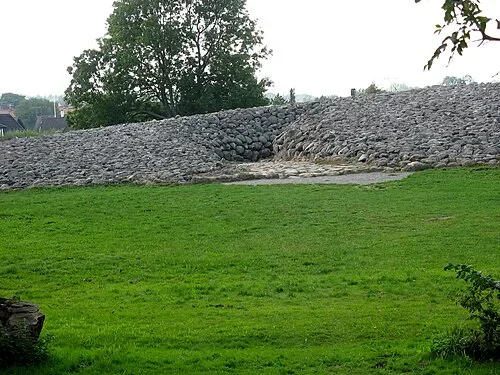 The Monumental Cairn (Bredarör)
A Mountain of Stone
A cairn like this is not dug out of the ground; it is built up, stone by stone. Every rock here was gathered and carried, hauled into a mound meant to declare the standing of the people buried inside. What stands today is only a remnant. The restored mound rises about three and a half metres. Twentieth-century estimates put the original height somewhere between roughly seven and fifteen metres. Nobody knows the true figure, because so much of the cairn has been quarried away. For generations the mound served the surrounding countryside as a convenient source of building stone. Walls, houses and roads around Kivik were made partly from this place. The grassy, rounded heap in front of the trees is what centuries of that carting left behind.
Nynke Fokma · CC BY-SA 2.0
03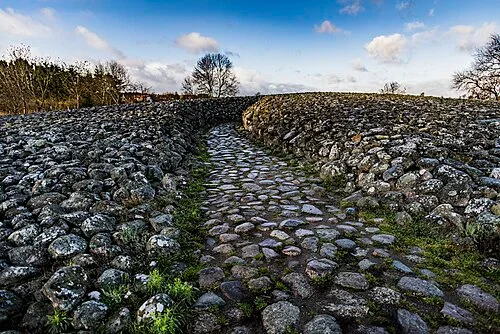 The Mycenaean-Style Entrance
The Rebuilt Cairn and the Passage In
The stone-paved path cutting through the mound is itself part of the monument's story. By the twentieth century the grave had been reduced and patched many times; the burial chamber had already been restored three times and sat under a concrete casing with a metal roof. In 1931 the Swedish archaeologist Gustaf Hallström excavated the site, in a dig that lasted six weeks. His report became the blueprint for a major reconstruction in 1932 and 1933. Displaced stone slabs were carried back to the cairn, along with roughly three thousand truckloads of stone, some of it originally taken from the monument itself. The rebuilt grave was inaugurated on 20 June 1933. The passage was cut through the cairn at that time, so that people could reach the decorated chamber inside. Every stone lining this corridor was laid by those restorers.
Listen in the appPhoto: L.G.foto · CC BY-SA 4.0
04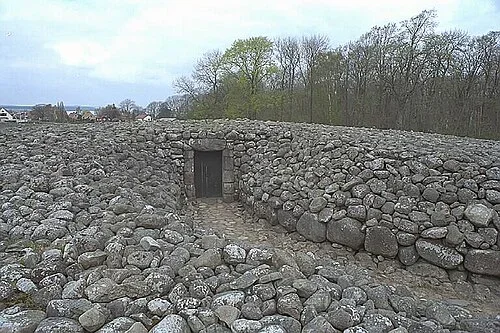 The Mycenaean-Style Entrance
The Mycenaean-Inspired Entrance
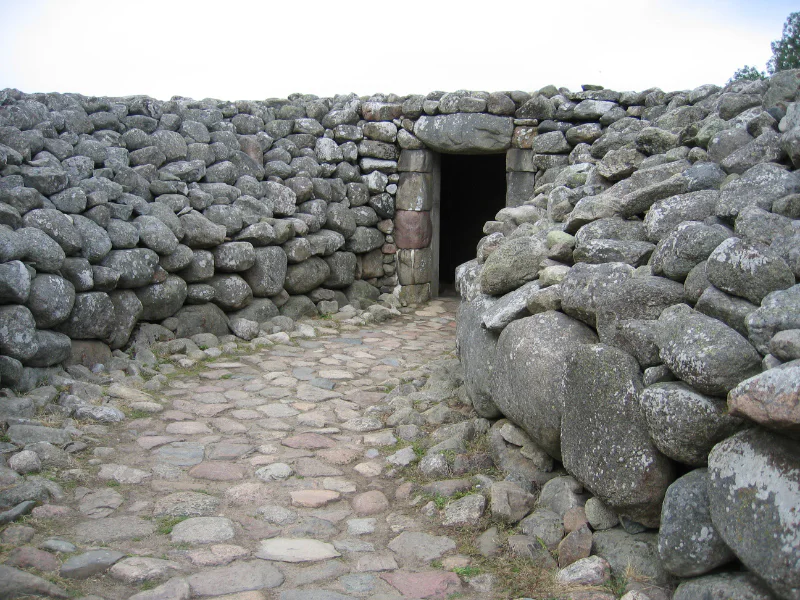
The dark doorway set into the side of the cairn is modern; the tomb behind it is from the Bronze Age. The stone-built entrance was designed with a solid door of copper, and its shape was meant to evoke the Lion Gate at Mycenae in Greece. That was a deliberate choice by the restoration's designers. They wanted the portal to say that this Swedish mound belongs to a wider story: the long-distance contacts that linked Bronze Age Scandinavia with the Mediterranean world. So a prehistoric burial chamber received a twentieth-century doorway modelled on a Greek one. It is the threshold into the decorated chamber, and visitors can pass through it to see the carved stones inside.
Listen in the appBengt A. Lundberg · CC BY 2.5
05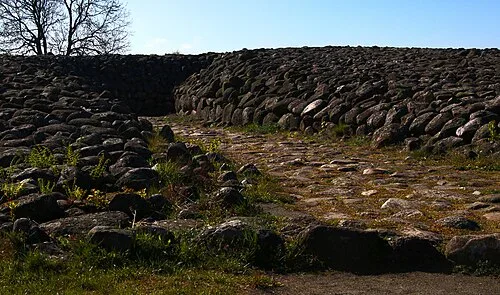 The Burial Corridor and Central Chamber
Quarrying into the Tomb: The Story of 1748
Two local farmers, Lasse Pärsson and Anders Sahlberg, opened the burial chamber on 14 June 1748. They were quarrying stone from the mound for field walls, not hunting for treasure. But word spread that they had found valuables and hidden them. The men were arrested, accused of withholding treasure considered the property of the Swedish state. Part of the court proceedings was held at the cairn itself. On 8 June 1749 they were released, for lack of evidence. What they left behind was a sentence of testimony: they reported seeing artefacts inside the chamber. None of those objects were preserved, so the farmers' account is among the earliest records of what the grave once held.
Listen in the appGuillaume Baviere from Uppsala, Sweden · CC BY-SA 2.0
06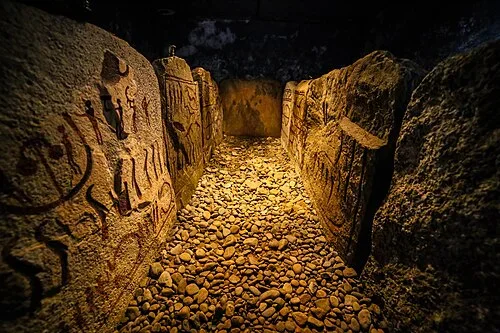 The Burial Corridor and Central Chamber
Inside the Cist: Five Burials, Six Hundred Years
The burial chamber is built from ten upright stone slabs, and eight of them are carved on the faces looking inward. It had been looted long before any scientific excavation, so little survived inside. Gustaf Hallström recovered only teeth and fragments of bone during his digging. A later reanalysis by the Swedish archaeologist Joakim Goldhahn changed the picture entirely. The remains came from at least five people. Four were adolescents. The fifth was an adult. Radiocarbon dating placed the burials in at least three separate periods between about 1400 and 800 BCE. That means the chamber stayed open and received burials for roughly six hundred years. The adult was laid to rest in the ninth century BCE, centuries after the decorated cist and its bronze objects were made. The old idea of one king buried here in splendour was challenged by that finding.
Listen in the appPhoto: Cirre1 · CC BY-SA 3.0
07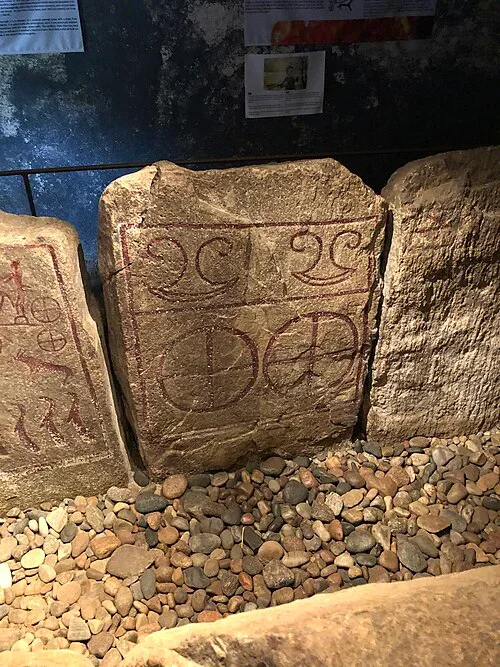 The Sacred Petroglyphs
Sun Wheels and Ship Symbols
On this slab, paired wheel-crosses sit above a row of ship figures. Across the chamber the carvings show ships, circular symbols, axes, birds, fish, horses and people. In Nordic Bronze Age belief, as scholars generally read such imagery, the ship and the sun belong together: ships are commonly linked with the sun's journey across the sky, and with the voyage of the dead. What is striking is how long these carvings went unnoticed. They were never mentioned during the proceedings against Pärsson and Sahlberg. Carl Linnaeus passed the cairn in late May 1749 and recorded nothing of them. Only in 1756 were the carvings recognised, when the amateur archaeologist Nils Wessman examined the cist. Some of the most famous art of the Nordic Bronze Age had been staring out from the chamber walls all along.
Listen in the appPhoto: Adville · CC BY-SA 4.0
08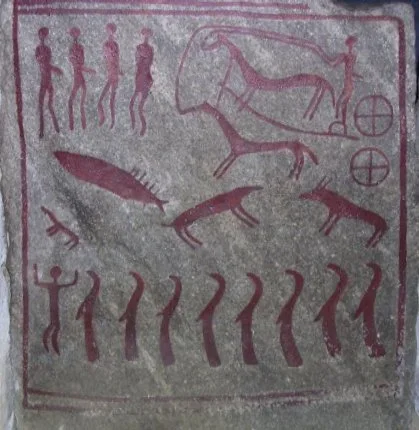 The Sacred Petroglyphs
The Chariot and the Lur Players
A chariot drawn by two horses, fitted with four-spoked wheels, dominates this slab. Around it move rows of human figures, eight of them in long robes, and figures playing lurs, the long bronze horns of the age. Researchers such as Kristian Kristiansen see Mycenaean traits in these scenes: chariot imagery, bull combat, lur players, processions. He reads the grave as a gateway through which cultural impulses reached the North, with the person buried here likely holding a role in those long-distance contacts. Another slab, carved with double axes and lances, is thought to draw on Hittite royal symbolism. The interpretations have swung widely. In the nineteenth century the Swedish scholar Sven Nilsson argued the carvings proved a Phoenician colony in Scandinavia, and John Lubbock agreed that the figures may fairly be said to have a Phoenician, or Egyptian appearance. That theory was later rejected, in favour of local Bronze Age craftsmanship. Whoever lay here, the stones speak of a world reaching far beyond Kivik. When the grave goods vanished, the carvings survived — and they proved to be the monument's true treasure.
Listen in the appL. Zuberbühler, A. Kölbener · CC BY-SA 3.0
The King's Grave
Frequently asked questions
How much does the guide cost?
Free app download. Listed guide price: $0.99. Guide price shown in the app. Audio guide only. Venue admission is separate.
Can I listen without internet?
Yes. Download the guide’s audio, images, and maps in the app before your visit. Your downloaded content is then available offline.
Can I listen in my language?
This audio guide is available in 15 languages, including English.
Do I need to follow a schedule?
No. This is a self-guided experience. Choose your stops, pause whenever you like, and return to a story at your own pace.
At your own pace
Explore The King's Grave.
Download Stanza, then search for “The King's Grave”.
Free app download · Guide price shown in the app
Keep exploring
Nearby audio guides
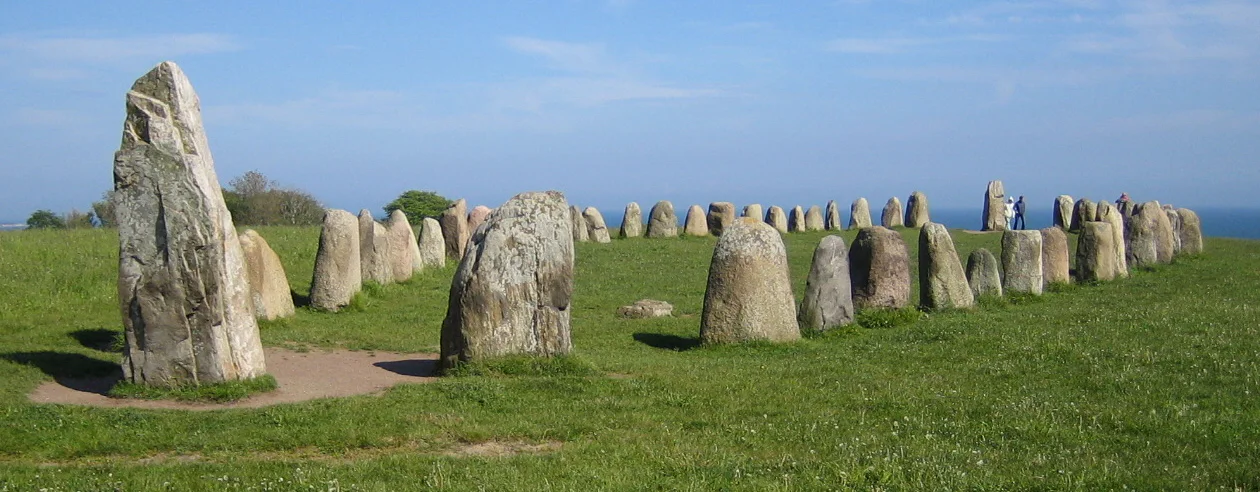
Ystad Municipality · 35 km
Ale's Stones
Content & sources
Photo: Fred J · CC BY-SA 3.0
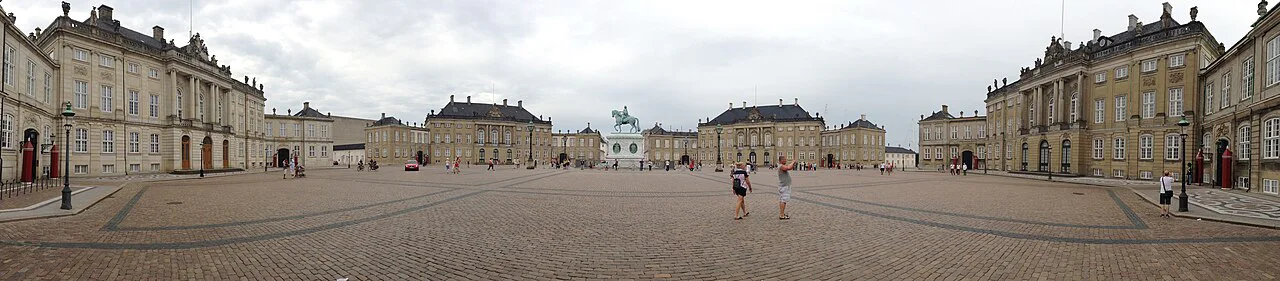
Copenhagen · 103 km
Amalienborg
Content & sources
Photo: Janeway666 · CC BY-SA 3.0
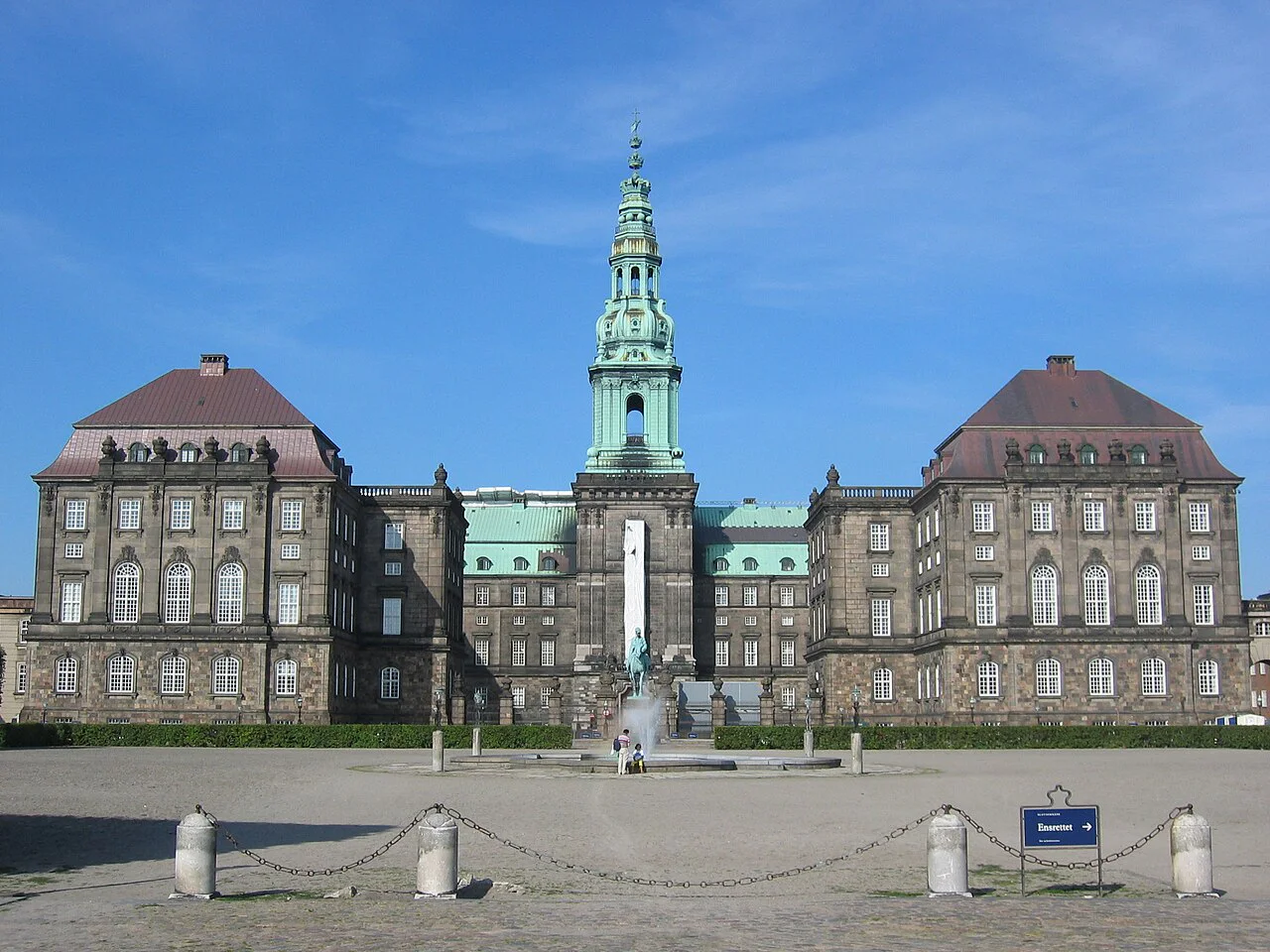
Copenhagen · 104 km
Christiansborg Palace
Content & sources
eimoberg from Changwon, South Korea · CC BY 2.0
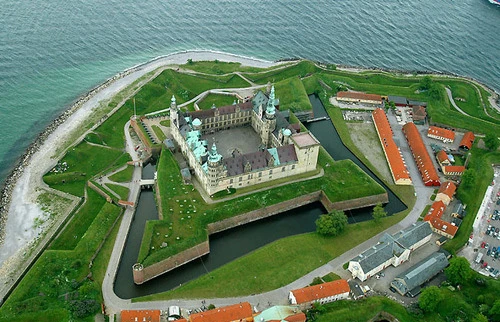
Elsinore · 108 km
Kronborg Castle
Content & sources
H.C. Steensen · CC BY-SA 3.0