Stanza · Audio guide
Kronborg SlotAudio guide
A place to remember. A story to take with you.
Kronborg Castle is a magnificent Renaissance castle and UNESCO World Heritage site located in Helsingør, Denmark. It is famously known as Elsinore in Shakespeare's play 'Hamlet'.
Download Stanza, then search for “Kronborg Slot”.
About the tour
One guide. Your kind of visit.
Kronborg Castle is a magnificent Renaissance castle and UNESCO World Heritage site located in Helsingør, Denmark. It is famously known as Elsinore in Shakespeare's play 'Hamlet'.
Ready when you are.
- 01Get the free Stanza app.
iOS & Android
- 02Find your guide.
“Kronborg Slot”
- 03Download before you go.
Works offline
Audio guide / 23 narrated stops
Inside the guide
Get to know a few of the stories before you go. Open a stop to read more.
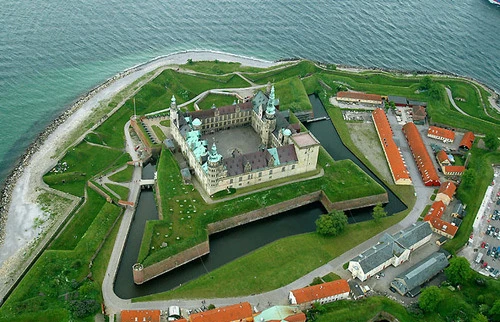
01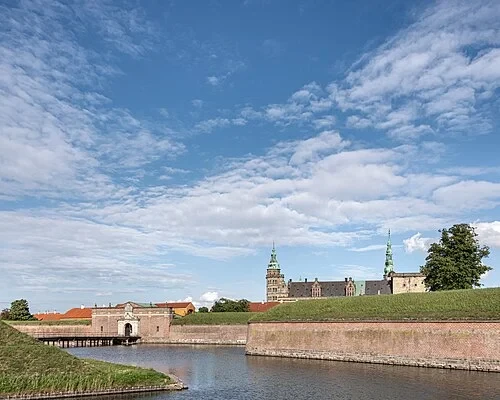 The Fortress of ElsinoreThe Real Elsinore
Welcome to Kronborg Slot, one of the most significant Renaissance castles in Northern Europe. As you stand here, you are visiting the real-life inspiration for Elsinore, the atmospheric setting of William Shakespeare’s famous tragedy, Hamlet. While the play is a work of fiction, the castle’s imposing presence and strategic position are very much a part of Danish reality. Kronborg is situated on a narrow, sandy point known as Øresund, perched approximately 12 meters above sea level. From this vantage point, the fortress has guarded the narrowest part of the sound between Denmark and Sweden for centuries. Its immense historical and architectural value was officially recognized in the year 2000, when it was inscribed as a UNESCO World Heritage site. Throughout your tour, you will discover that Kronborg possesses a dual identity: it is both a literary landmark immortalized by the English Bard and a formidable military stronghold that once dictated the flow of trade and power in the Baltic region. The architecture you see today reflects the wealth and ambition of the Danish monarchy, designed to project strength to any traveler or potential invader approaching by sea.
Photo: Bulver · Public domain
02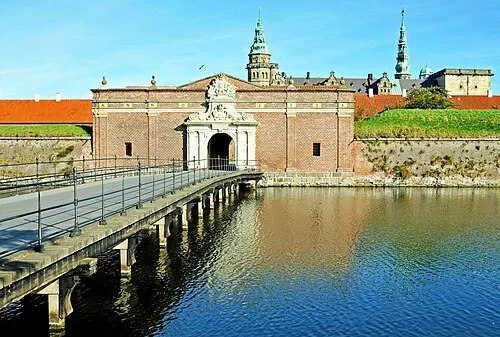 The Fortress of ElsinoreGate to the Sound
The primary purpose of Kronborg Castle was far more practical than royal leisure; it was the ultimate tool for enforcing the 'Sound Dues.' For more than 400 years, the Danish crown levied a mandatory tax on every single ship entering or leaving the Baltic Sea. This site was chosen with surgical precision. At this exact point, the water separating Denmark from the Swedish coast is only four kilometers wide. This narrow passage forced vessels to sail within range of the castle’s formidable power, ensuring they stopped to pay their toll. Imagine the horizon filled with hundreds of ships from various nations, all waiting their turn to settle their dues. The revenue generated here was astronomical, providing the Danish kings with the wealth needed to fund wars, build grand palaces, and maintain a lavish court. This enforcement wasn't just about money; it was about control. Any vessel that attempted to bypass the toll would face the wrath of the castle’s coastal batteries. For centuries, the sound of cannon fire served as a constant reminder of the Danish king's mastery over these waters, making Kronborg one of the most influential economic hubs in the maritime world.
Dennis G. Jarvis · CC BY-SA 2.0
03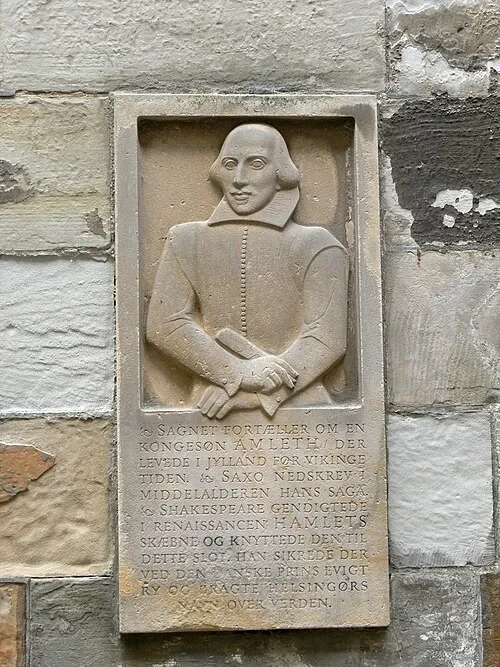 The Fortress of ElsinoreThe Shakespeare Relief
This commemorative relief marks the enduring connection between the English playwright William Shakespeare and this Danish fortress. While historical evidence suggests that Shakespeare likely never visited Kronborg in person, the reputation of the Danish royal court was well-known throughout Europe. During the 16th century, the castle was famous for its grand festivities, sophisticated lifestyle, and international visitors. Tales of these opulent gatherings traveled back to England, reaching the ears of performers and writers like Shakespeare, who used these accounts to craft the atmospheric backdrop of Hamlet. As you look at this figure, consider the shift from the tangible military history of the castle to its literary legend. In Shakespeare's hands, Kronborg became Elsinore, a place of ghosts, treachery, and existential dread. The real-life Prince Amleth, a figure from ancient Danish sagas recorded by Saxo Grammaticus, was transformed into the brooding Renaissance prince we know today. This relief honors that transformation, acknowledging how a fictional play has, in many ways, defined the global perception of this site just as much as its real stone walls and military victories. It represents the point where history meets the imagination, forever linking the name of a fictional prince to these actual fortifications.
Listen in the appWolfgang Sauber · CC BY-SA 3.0
04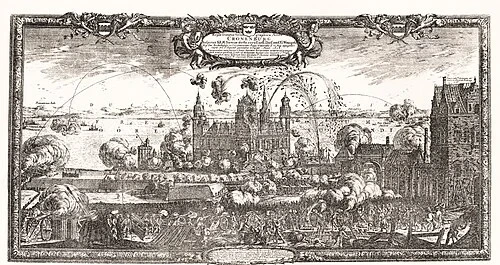 The Fortress of ElsinoreSiege of Kronborg
In the mid-17th century, Kronborg faced its greatest existential threat during the Dano-Swedish War. This diagram illustrates the intense siege of 1658, when Swedish forces managed to capture the castle after a three-week bombardment. For the Danish monarchy, the fall of Kronborg was a devastating blow, not only strategically but culturally. During the subsequent two-year occupation, the Swedish army systematically looted many of the castle's most precious treasures. Among the lost items were a magnificent fountain and a lavish royal canopy, which were carted away as war trophies. This event significantly and permanently changed the castle's interior landscape. If you were to visit certain museums in Sweden today, you would find many of the original Renaissance furnishings and artworks that once belonged in these halls. The diagram serves as a somber record of the castle's vulnerability. It reminds us that while the 'Sound Dues' provided the wealth to build Kronborg, the shifting tides of Northern European politics could just as easily strip it of its splendor. The occupation forced a reevaluation of the castle’s defenses and led to further fortifications, some of which you can still see surrounding the main structure today.
Listen in the appPhoto: Bulver · Public domain
05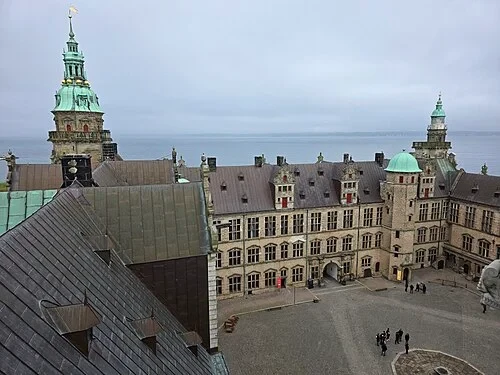 The Renaissance CourtyardThe Renaissance Courtyard
Standing in this expansive courtyard, you can see the full architectural ambition of King Frederick II. Before the late 16th century, this site was occupied by a much smaller, medieval fortress known as Krogen. Between 1574 and 1585, the King undertook a massive transformation, turning the old functional stronghold into this opulent Renaissance masterpiece. The scale was unprecedented for the region, designed to impress every foreign ambassador who stepped inside these walls. We owe this intricate stonework and grand design to the expertise of Flemish architects, most notably Hans Hendrik van Paesschen and Anthonis van Obbergen. They brought the sophisticated styles of the Low Countries to Denmark, characterized by the elaborate gables, decorative carvings, and vertical towers that surround you. This courtyard was the stage for the most public moments of court life—processions, greetings, and the arrival of high-ranking guests. Notice the rhythm of the windows and the varied heights of the towers, which create a sense of movement and grandeur. This transition from a fortress of war to a palace of culture marked the golden age of the Danish Renaissance, reflecting a kingdom that was both militarily secure and culturally sophisticated.
Listen in the appPhoto: Ato 01 · CC BY-SA 4.0
06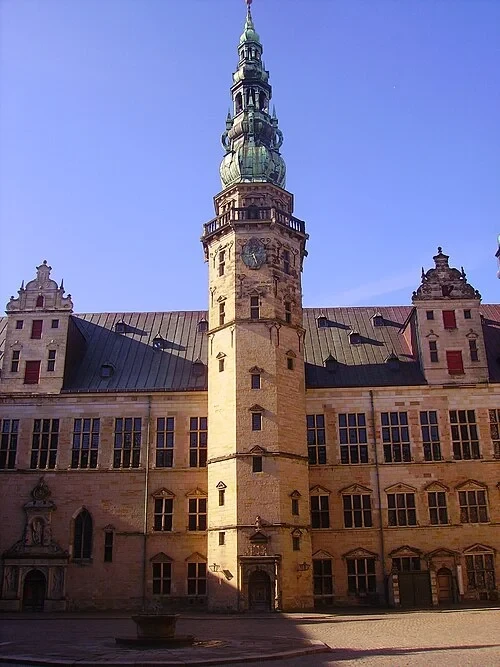 The Renaissance CourtyardThe Clock Tower
The striking verticality of the Flemish Renaissance style is nowhere more apparent than in the castle's towers, yet much of what you see is a result of a tragic accident. In 1629, a 'Great Fire' broke out, reportedly caused by the carelessness of two workmen. The blaze was uncontrollable, gutting almost the entire interior of the castle. Only the chapel, protected by its heavy stone vaulting, managed to survive. The disaster left Kronborg a hollowed-out shell, threatening to end its era of royal dominance. However, King Christian IV, known as the 'Builder King,' refused to let the fortress perish. He immediately launched a massive rebuilding effort to restore the castle to its former glory. The clock tower and the exterior facades were meticulously reconstructed under his direction, largely following the original 16th-century designs but adding his own 17th-century refinements. As you look up, notice how the towers seem to reach for the sky, a classic feature of the Northern Renaissance meant to inspire awe. The clock itself served as a practical necessity for the structured life of the garrison and the court, while the ornate spire above acted as a beacon of the king's power, visible to ships miles away in the sound. This tower stands as a testament to the castle’s survival through fire and the determination of the Danish monarchs to maintain their seat of power.
Listen in the appPhoto: Zairon · CC BY-SA 3.0
07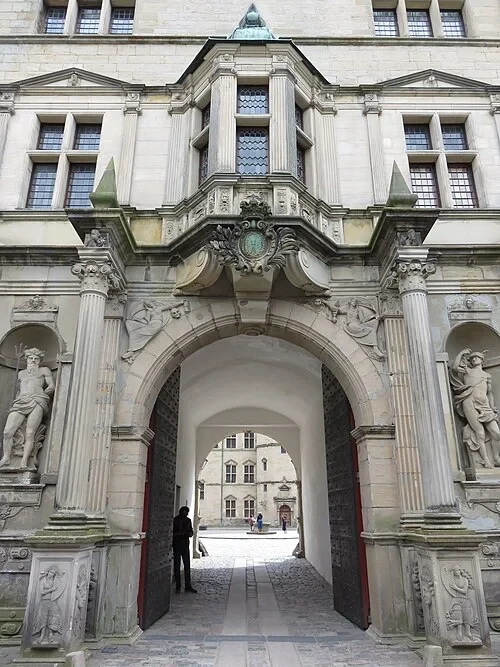 The Renaissance CourtyardDarkness to Light
Entering Kronborg is a sensory journey designed to remind visitors exactly where they are: in a place that is simultaneously a deadly fortress and a luxurious palace. As you pass through the dark, arched fortifications and cross the moats, the atmosphere is heavy and enclosed, characteristic of a military stronghold built to withstand cannon fire. The thick walls and low ceilings speak to the grit of the soldiers who once guarded these gates. However, once you emerge from the tunnel into the bright, expansive central courtyard, the mood shifts entirely to one of Renaissance elegance and openness. Take a moment to look back at the gatehouse. You’ll see elaborate sculptures of Neptune, the Roman god of the sea, and Mercury, the god of trade and messengers. These figures are not mere decorations; they are symbols of the castle's mission. Neptune represents Denmark’s mastery over the surrounding waters, while Mercury signals the wealth flowing into the kingdom through maritime commerce. This portal was the physical threshold between the common world and the absolute power of the monarch. The contrast between the rugged exterior defenses and the refined interior courtyard served a psychological purpose, impressing upon every visitor that while the King was a man of culture and wealth, he was also the master of a formidable and unyielding military machine.
Listen in the appPhoto: Antony-22 · CC BY-SA 4.0
08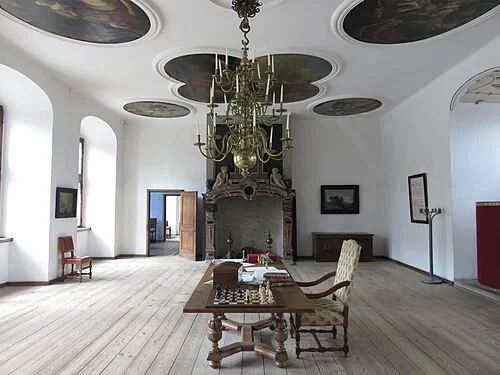 The Royal ApartmentsThe King's Apartments
The North Wing of the castle housed the King’s Apartments, the most private and prestigious rooms in the entire palace. Following the devastating fire of 1629, these spaces were reconstructed to reflect the height of 17th-century royal taste. As you explore these rooms, notice the large fireplaces. In the centuries before modern heating, these were essential for survival during the harsh Danish winters, but they also served as grand architectural features decorated with ornate carvings. The layout of these apartments was carefully planned to balance the King's need for privacy with the necessity of displaying absolute royal power. The series of rooms would become increasingly exclusive; only the most trusted advisors and high-ranking guests would ever reach the inner chambers. Here, the King would conduct the business of the state, sign decrees, and receive private audiences. The decoration was intended to be a constant visual reminder of the monarch's wealth and divine authority. Despite the luxury, life here was highly regulated by court protocol. From the way the King dressed to the way he dined, every action was a performance of royalty. These rooms offer a glimpse into the daily life of a ruler who controlled the gates of the Baltic, surrounded by the finest craftsmanship and the constant weight of political responsibility.
Listen in the appPhoto: Antony-22 · CC BY-SA 4.0
09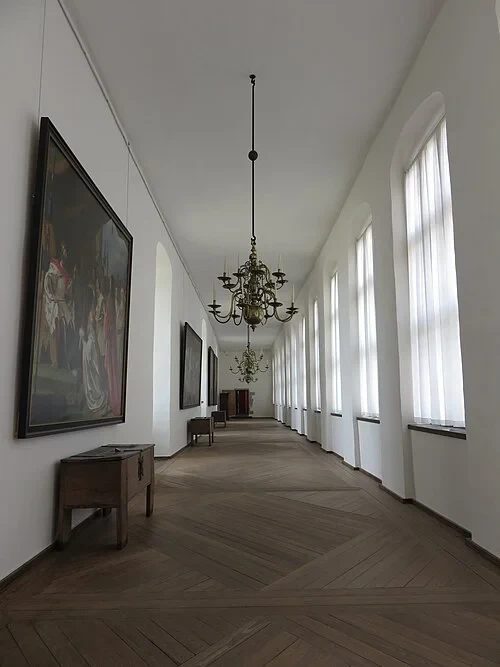 The Royal ApartmentsThe Queen's Imprisonment
Not all of Kronborg’s history is defined by splendor and banquets; some of its rooms tell a story of isolation and disgrace. In 1772, these apartments became a gilded prison for Queen Caroline Mathilde. The young Queen was caught in a scandalous affair with Johann Friedrich Struensee, the King's physician and de facto ruler of Denmark during the mental illness of Christian VII. When the affair and Struensee’s radical reforms led to a palace coup, the Queen was arrested and brought here to Kronborg. She spent several months in isolation within these walls, separated from her young children and uncertain of her fate. The scandal rocked European courts, as Caroline Mathilde was the sister of King George III of England. Ultimately, her marriage was dissolved, and she was forced into exile in Germany, never to see her children or Denmark again. As you walk through these spaces, imagine the shift in their purpose—from rooms of royal comfort to a place of confinement and despair. The quietness of these chambers today stands in stark contrast to the political firestorm they once contained. Her story remains one of the most poignant chapters in the castle’s history, a reminder of the personal lives often crushed by the rigid expectations and power struggles of the royal court.
Listen in the appPhoto: Antony-22 · CC BY-SA 4.0
10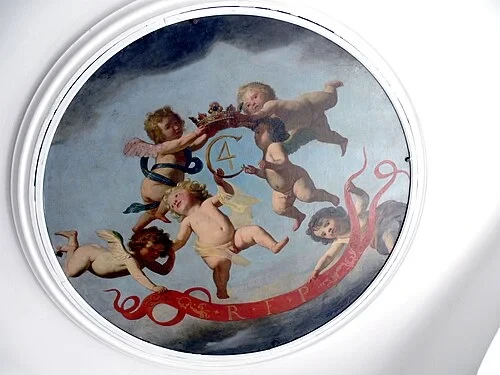 The Royal ApartmentsMonogram of a Builder King
High above you on the ceiling is a vibrant symbol of royal restoration: the monogram of King Christian IV. This 'Builder King' was obsessed with architecture and left his mark on numerous landmarks across Denmark, but his work here at Kronborg was particularly significant. After the fire of 1629 destroyed much of the interior, Christian IV took it upon himself to oversee the reconstruction, ensuring the castle would be even more magnificent than before. This painting, featuring his distinct monogram, is a permanent signature of his dedication to the site. The surrounding imagery of cherubs and the royal crown is far more than decorative. In the political climate of the 17th century, these were powerful symbols of the 'Divine Right of Kings.' This was the belief that a monarch's authority was granted directly by God, making them answerable to no earthly power. The cherubs, often associated with the heavens, and the crown, representing sovereign power, reinforce this message. By placing these symbols on the ceiling, the King ensured that anyone looking up would be reminded of the celestial backing of his rule. The ceiling painting serves as a bridge between the physical act of rebuilding the castle and the philosophical foundations of absolute monarchy. It is a colorful assertion of power, meant to be seen and understood by every courtier and guest who passed through these halls.
Listen in the appWolfgang Sauber · CC BY-SA 3.0
Kronborg Slot
Frequently asked questions
How much does the guide cost?
Free app download. Listed guide price: $1.99. Guide price shown in the app. Audio guide only. Venue admission is separate.
Can I listen without internet?
Yes. Download the guide’s audio, images, and maps in the app before your visit. Your downloaded content is then available offline.
Can I listen in my language?
Stanza supports 15 languages. Check the app for the languages available for this guide.
Do I need to follow a schedule?
No. This is a self-guided experience. Choose your stops, pause whenever you like, and return to a story at your own pace.
At your own pace
Explore Kronborg Slot.
Download Stanza, then search for “Kronborg Slot”.
Free app download · Guide price shown in the app