Stanza · Audio guide
Al-Hussein Mosque Audio Guide
A place to remember. A story to take with you.
The al-Hussein Mosque is a mosque and mausoleum located near the Khan el-Khalili bazaar in Cairo. It is considered one of the holiest Islamic sites in Egypt and contains the tomb of Husayn ibn Ali.
Download Stanza, then search for “Al-Hussein Mosque”.
About the tour
One guide. Your kind of visit.
The al-Hussein Mosque is a mosque and mausoleum located near the Khan el-Khalili bazaar in Cairo. It is considered one of the holiest Islamic sites in Egypt and contains the tomb of Husayn ibn Ali.
Ready when you are.
- 01Get the free Stanza app.
iOS & Android
- 02Find your guide.
“Al-Hussein Mosque”
- 03Download before you go.
Works offline
Audio guide / 8 narrated stops
Inside the guide
Get to know a few of the stories before you go. Open a stop to read more.
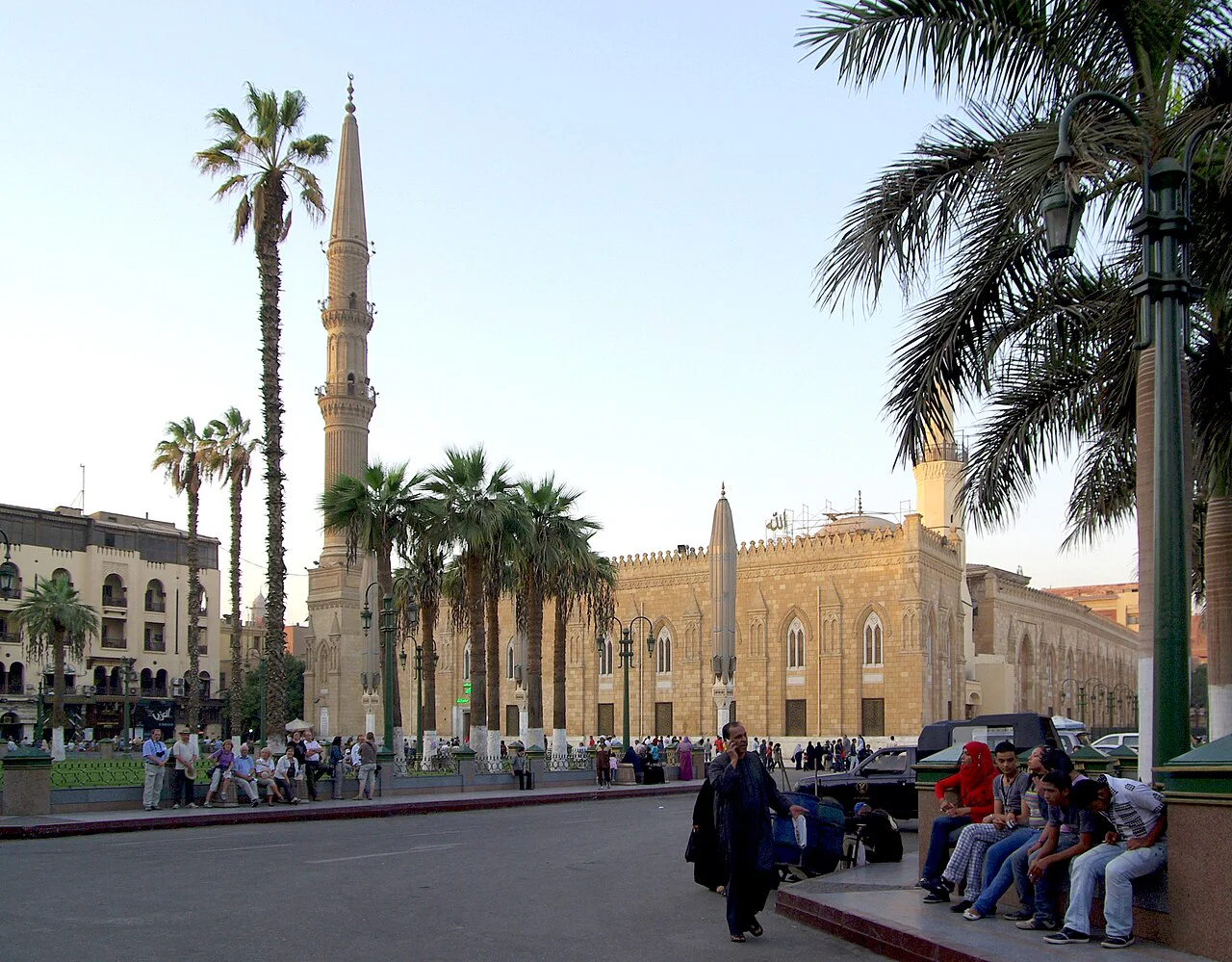
01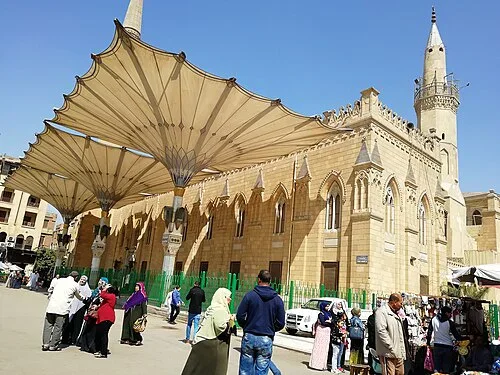 Hussein Square and the Courtyard Canopies
Hussein Square and the Mosque Facade
Al-Hussein Mosque stands in an area of Cairo known as Al-Hussain, beside the Al-Azhar Mosque. Market stalls line its square, and the Khan el-Khalili bazaar is close by. The mosque is also a mausoleum, and many people come here to pray and to visit the tomb. It is considered one of the holiest Islamic sites in Egypt. The story begins with a relic. According to tradition, the head of Husayn ibn Ali was carried to Cairo from Ashkelon, in Palestine, in 1153. The Crusaders were advancing at the time, and the Fatimid authorities arranged the move. Some historians question the details of that account. A shrine was built on the site. Some Shia Muslims believe the head is buried on these grounds. Non-Muslims are not admitted inside the building, so visitors see the mosque from outside.
Photo: Ashashyou · CC BY-SA 4.0
02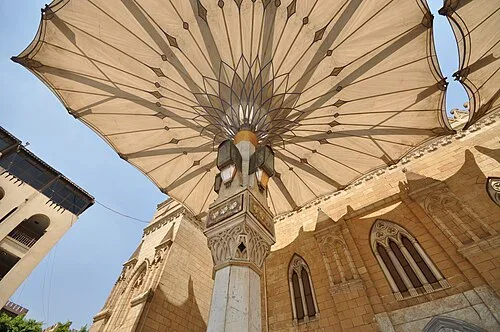 Hussein Square and the Courtyard Canopies
Courtyard Canopy Umbrellas
The latest addition to the mosque is a set of three large canopy umbrellas. They were added to protect people praying outdoors, shading them from the summer sun and sheltering them from winter rain. The canopies are mechanically operated. Their design follows that of many mosques in Saudi Arabia, and they are said to be made of steel and Teflon. Seen from underneath, one canopy shows ribs fanning out from a central hub, like the spokes of a wheel. Its post rises from a carved stone base. Behind it, the mosque wall rises with tall arched windows.
Jorge Láscar from Melbourne, Australia · CC BY 2.0
03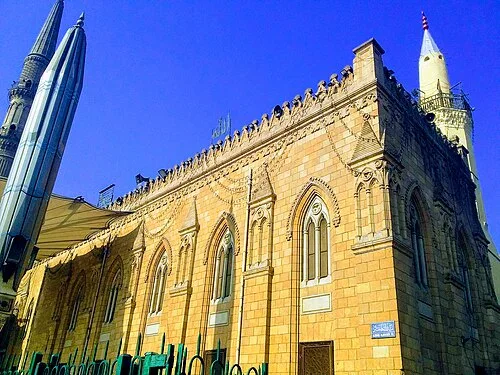 Khedival Neo-Gothic Facades
Khedival Neo-Gothic Facade (1874 Reconstruction)
Khedive Isma'il reconstructed this mosque in 1874. He wanted to modernize Cairo, and he drew on Gothic Revival architecture, a style that came from Europe. The long walls are pierced by pointed windows, a clear sign of that influence. The reconstruction also gave the mosque Ottoman-style minarets, so two traditions meet in one building. The name for this mixing of styles is Islamic eclecticism.
Listen in the appPhoto: Ahmeed Tiger · CC BY-SA 4.0
04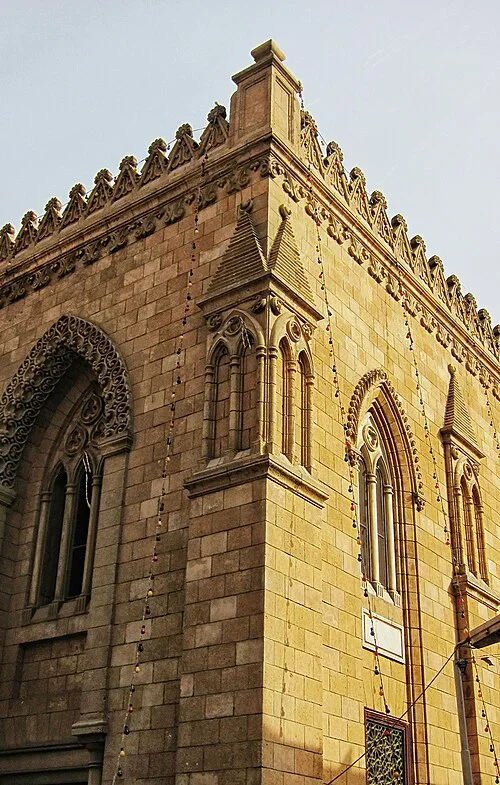 Khedival Neo-Gothic Facades
Gothic Windows and Pinnacles at a Facade Corner
Small pointed turrets, called pinnacles, rise from the corner of this stretch of the facade. Each one tapers to a sharp point. Between them, tall windows end in pointed arches, the shape that marks Gothic-style design. Along the top edge runs a crest of carved points. One arch head is filled with pierced stonework, carved through the stone in an open pattern. That kind of openwork is called tracery, and here it is cut so finely that it looks like lace.
Listen in the appPhoto: Ahmedalbadawy · CC BY-SA 4.0
05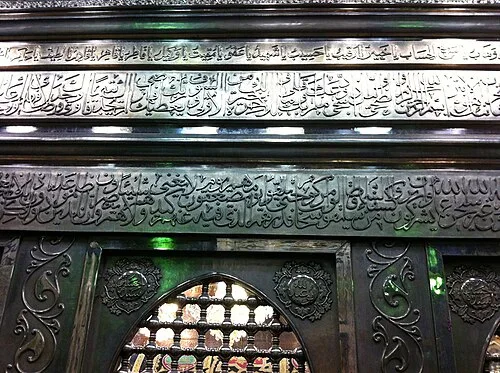 The Mausoleum of Husayn's Head
Shrine Enclosure (Zarih) at Ra's al-Husayn
A zarih is an ornamental enclosure built around a tomb. The zarih at Ra's al-Husayn surrounds the burial site of the head of Husayn. Devotees tell a story about how this enclosure reached Cairo. Bands of silver-toned lettering run across its upper part. Dark carved panels below show rosettes and scrolling leaves. Behind the arched grille there are rows of small rounded objects. The tomb itself lies inside, and non-Muslims cannot go in. Taher Saifuddin had a zarih made in Mumbai, and it was meant for the Al-Abbas Mosque in Karbala, in Iraq. The spot in Karbala had been measured precisely, but the enclosure simply would not fit there. Devotees say Taher Saifuddin received divine guidance through intuition. Al-Abbas ibn Ali, who died with his half-brother Husayn at Karbala, would not let Husayn's head go without an enclosure. So the zarih was flown to Cairo and installed at Ra's al-Husayn in 1965, shortly before Taher Saifuddin died. His son, Mohammed Burhanuddin, later inaugurated it.
Listen in the appPhoto: AkRaM · CC BY-SA 3.0
06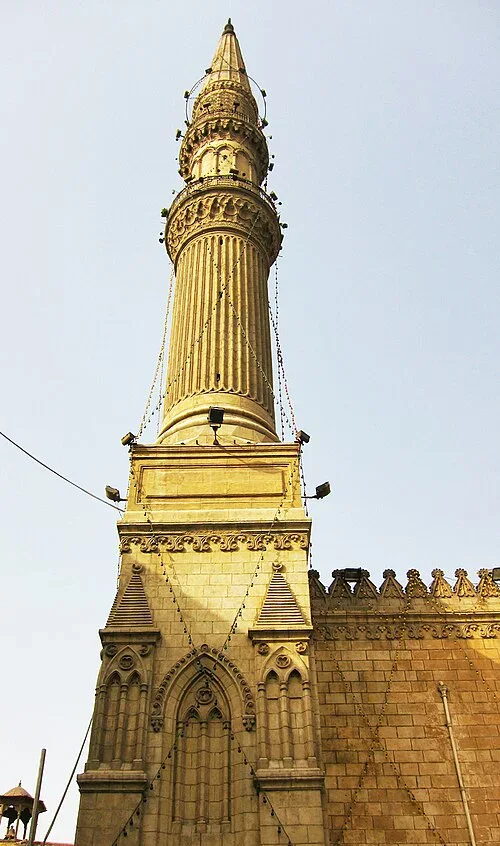 The Historic Minaret and Southern Environs
Minaret Base and Fluted Shaft
Bab al-Akhdar, the Green Gate, stands on the south side of the mosque. Of the Fatimid structure completed in 1154, only the lower part of this gate remains original. In 1237 the Ayyubids rebuilt the mosque and added a minaret to the gateway. The minaret's carved panels show overlapping lines, a pattern called arabesque. Fire destroyed that building eleven years later. Only the minaret above the gate survives from the Ayyubid mosque.
Listen in the appPhoto: Ahmedalbadawy · CC BY-SA 4.0
07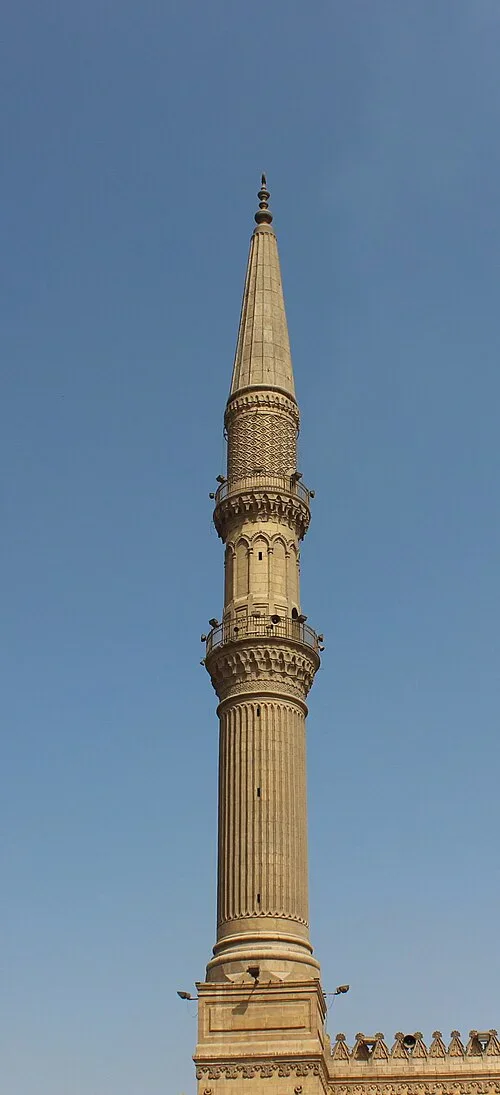 The Historic Minaret and Southern Environs
Ottoman-Style Minaret with Two Balconies
One way to read the minarets of this mosque is as a record of the powers that ruled Cairo. Each power seems to have layered its own work onto the site, and the towers show different styles. The tower here is Ottoman in style, and it belongs to the same campaign that reconstructed the facade. Two railed balconies project from its shaft at different heights. Geometric carving decorates a band near the top. Above it, a slender cone narrows to a point, topped with a small finial.
Listen in the appلا روسا · CC BY-SA 4.0
08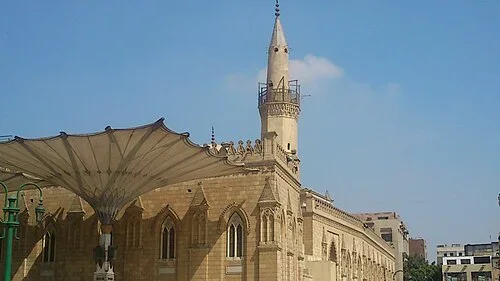 Plaza Departure and Urban Panorama
Closing View: Canopy, Facade and Minaret Across the Plaza
The modern canopy, the reconstructed facade and the minaret stand together here, and they were built at different times. Worshippers have shaped the open courtyard to suit the sun and the rain. Modern city buildings rise in the background. The complex remains an active place of worship today.
Listen in the appPhoto: Eslam Mekki · CC BY-SA 3.0
Al-Hussein Mosque
Frequently asked questions
How much does the guide cost?
Free app download. Listed guide price: $0.99. Guide price shown in the app. Audio guide only. Venue admission is separate.
Can I listen without internet?
Yes. Download the guide’s audio, images, and maps in the app before your visit. Your downloaded content is then available offline.
Can I listen in my language?
This audio guide is available in 15 languages, including English.
Do I need to follow a schedule?
No. This is a self-guided experience. Choose your stops, pause whenever you like, and return to a story at your own pace.
At your own pace
Explore Al-Hussein Mosque.
Download Stanza, then search for “Al-Hussein Mosque”.
Free app download · Guide price shown in the app
Keep exploring
Nearby audio guides
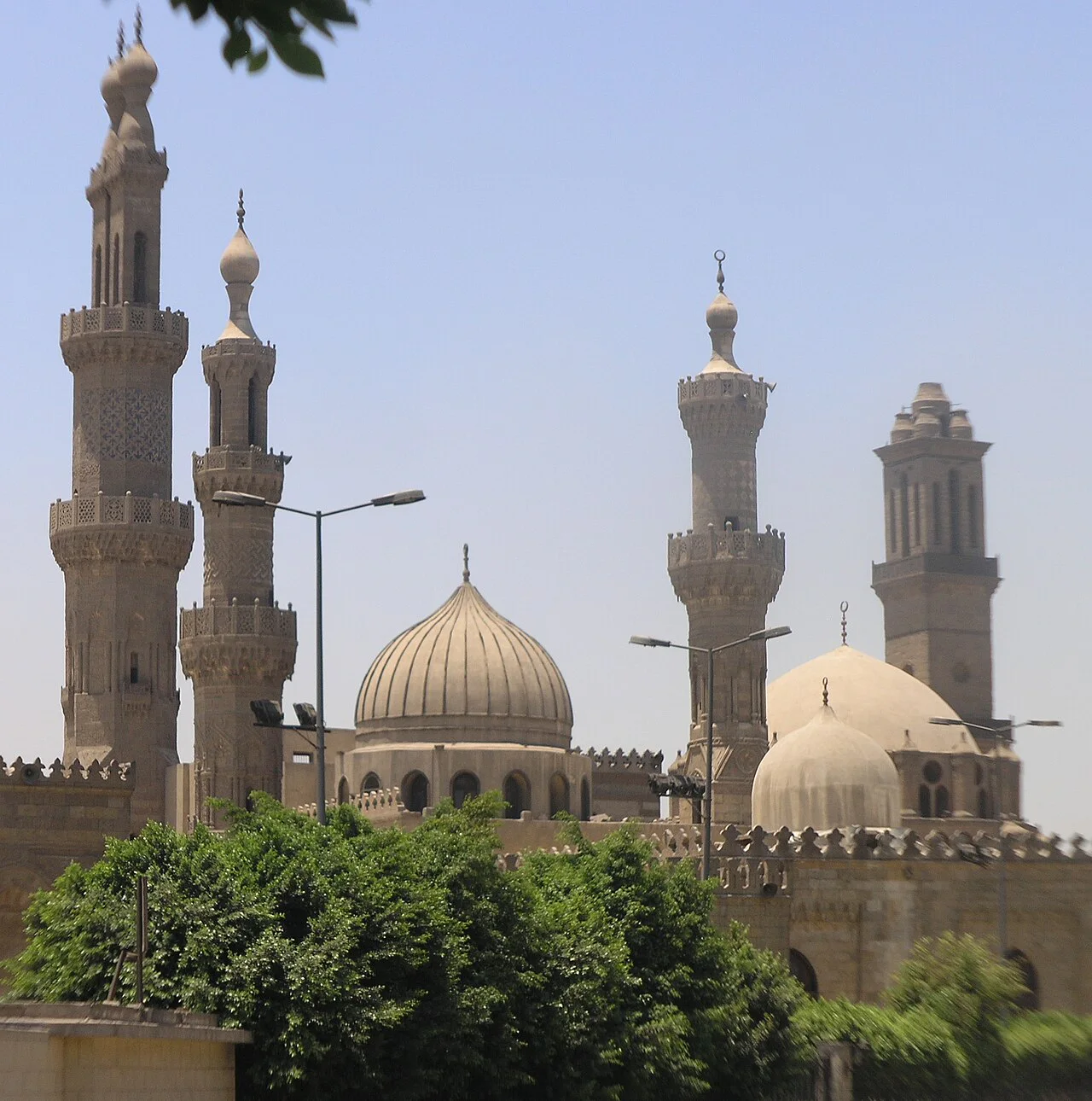
Cairo · 1 km
Al-Azhar Mosque
Content & sources
Daniel Mayer · CC BY-SA 4.0
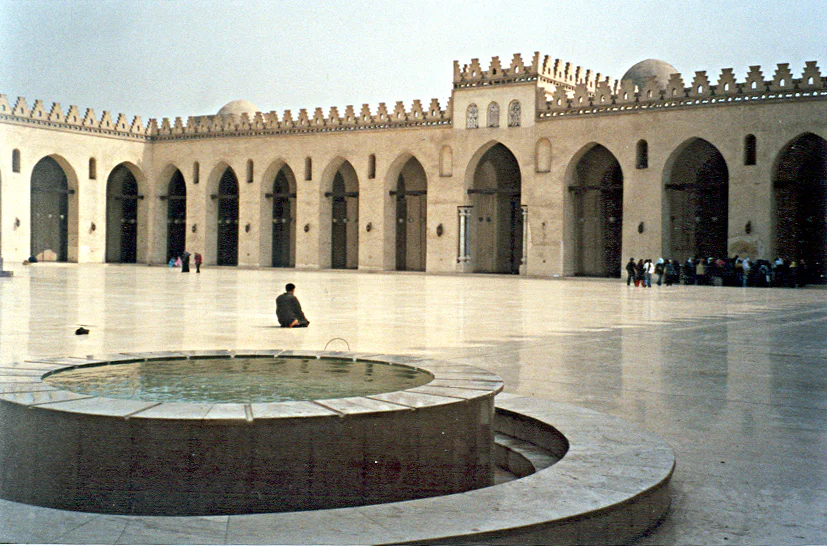
Cairo · 1 km
Al-Hakim Mosque
Content & sources
Michel Benoist Mbenoist at fr.wikipedia · CC BY 2.5
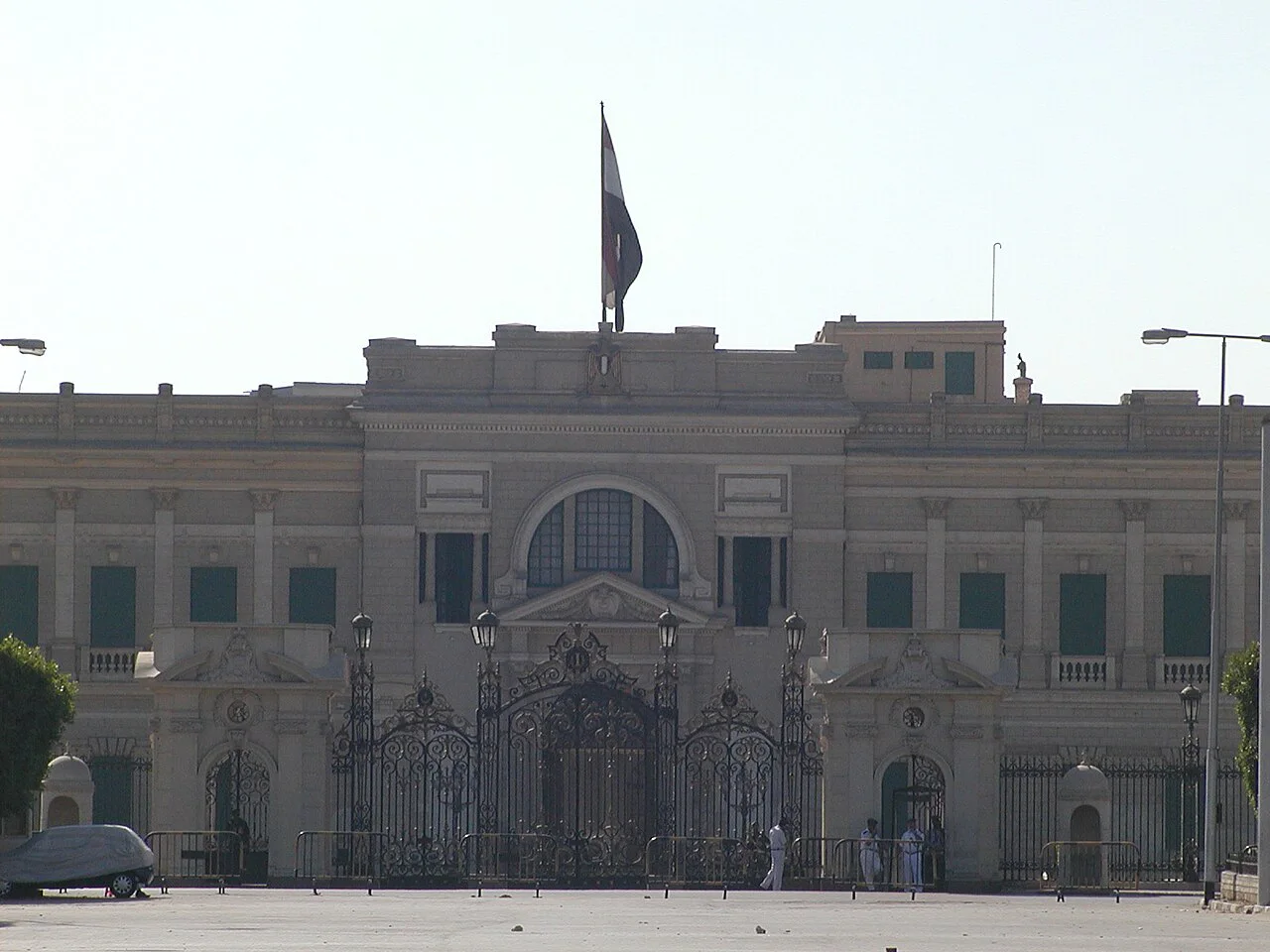
Cairo · 2 km
Abdeen Palace
Content & sources
Gérard Ducher (user:Néfermaât) · CC BY-SA 2.5
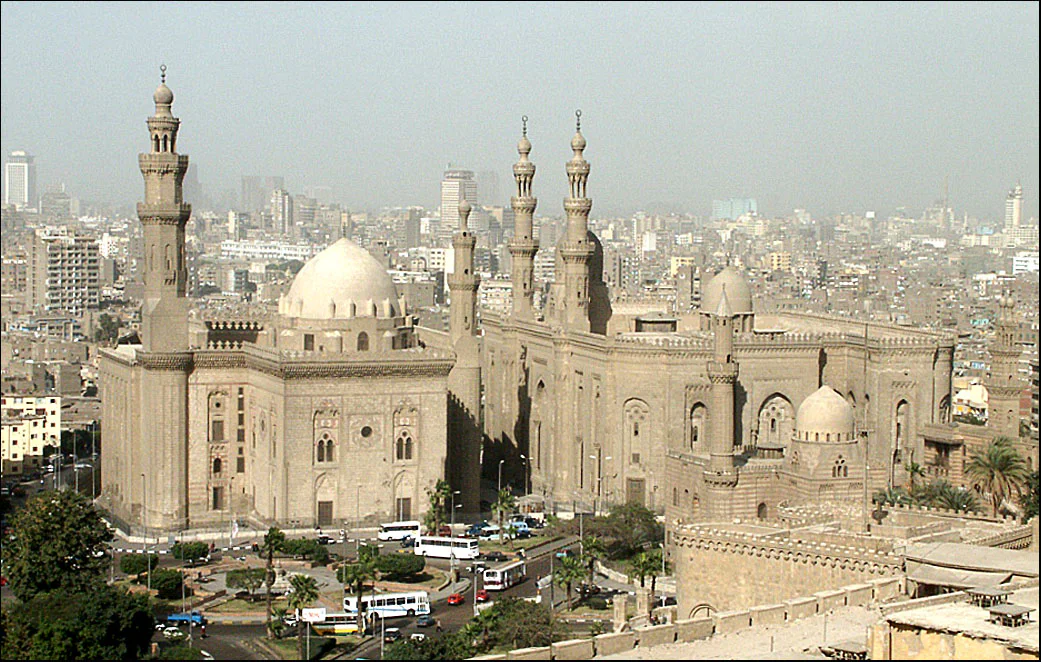
Cairo · 2 km
Al-Rifa'i Mosque
Content & sources
Original uploader was Chris Karman at nl.wikipedia · CC BY-SA 3.0
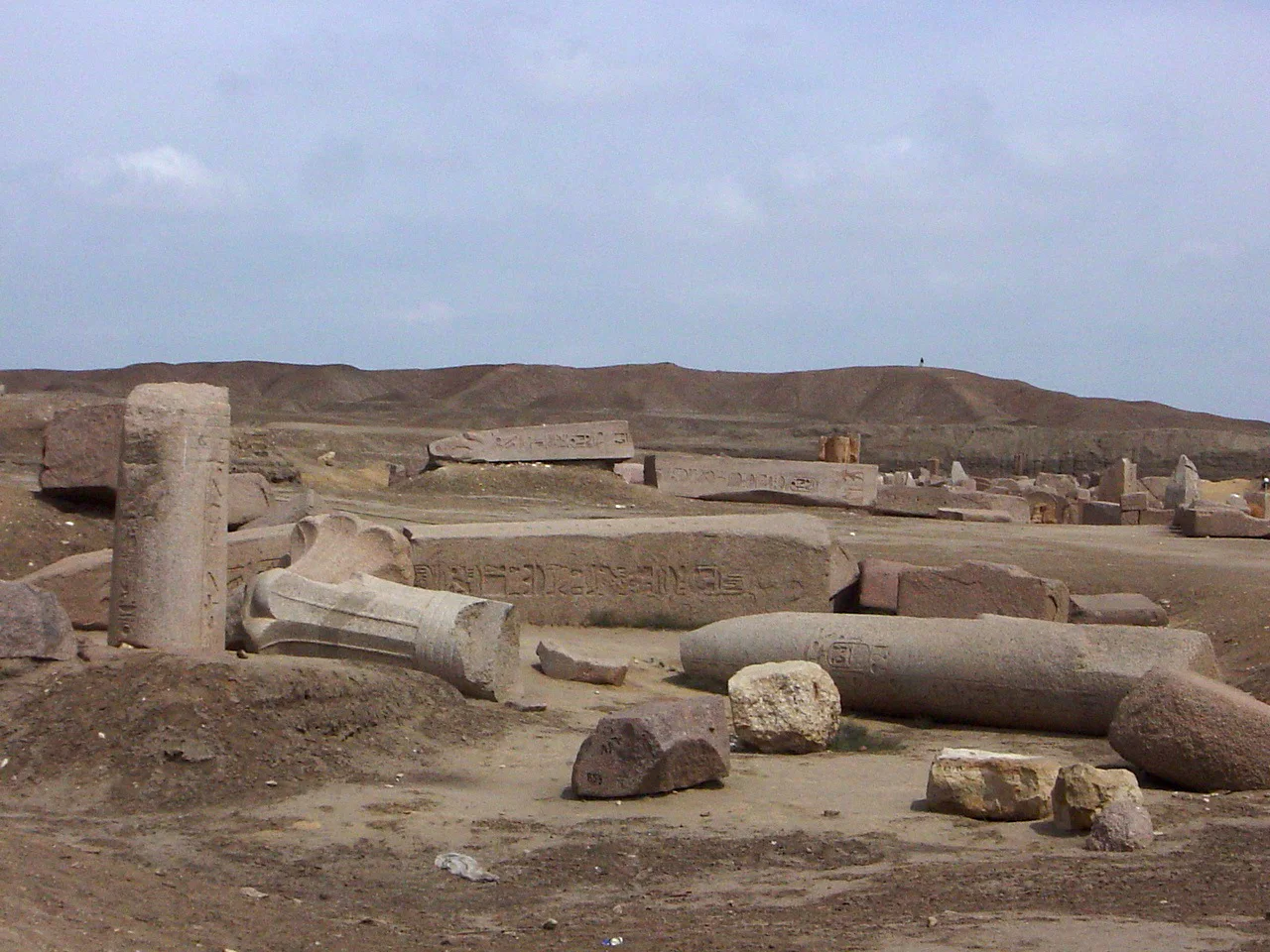
Husseiniya · 119 km
Tanis
Content & sources
Original uploader was Markh at en.wikipedia · Public domain