 Stanza / Audio guide
Content & sources
Stanza · Audio guide
Al-Rifa'i Mosque Audio Guide
A place to remember. A story to take with you.
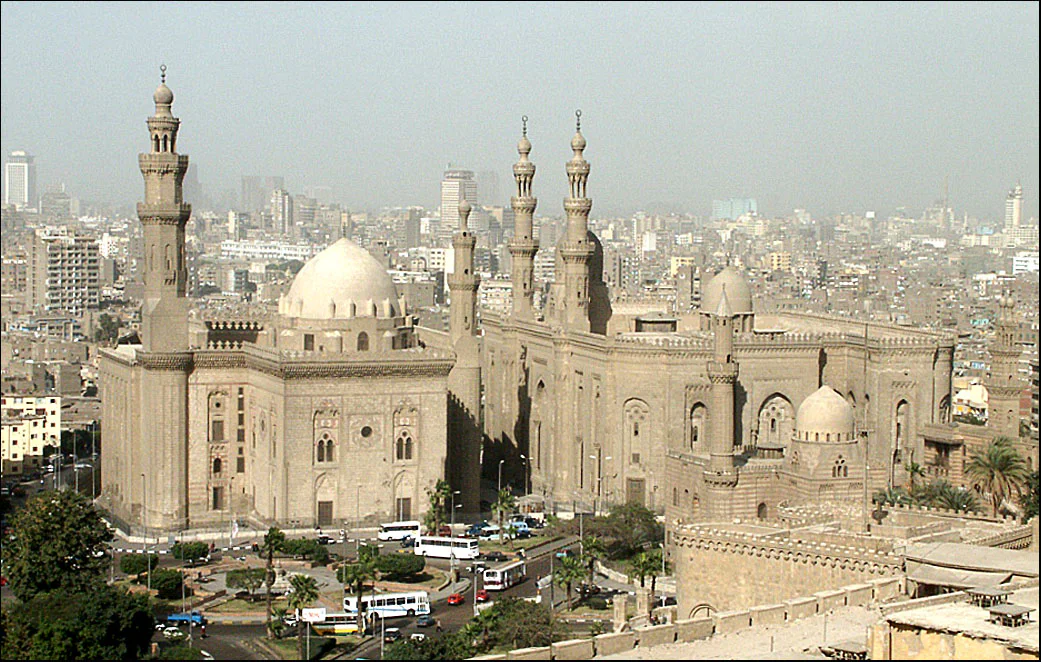
The Al-Rifa'i Mosque is a mosque located in Citadel Square in Islamic Cairo, Egypt. It serves as the royal mausoleum of Muhammad Ali's family and was architecturally conceived as a complement to the nearby…
Download Stanza, then search for “Al-Rifa'i Mosque”.
About the tour
One guide. Your kind of visit.
The Al-Rifa'i Mosque is a mosque located in Citadel Square in Islamic Cairo, Egypt. It serves as the royal mausoleum of Muhammad Ali's family and was architecturally conceived as a complement to the nearby Mosque-Madrasa of Sultan Hassan.
Ready when you are.
- 01Get the free Stanza app.
iOS & Android
- 02Find your guide.
“Al-Rifa'i Mosque”
- 03Download before you go.
Works offline
Audio guide / 11 narrated stops
Inside the guide
Get to know a few of the stories before you go. Open a stop to read more.
01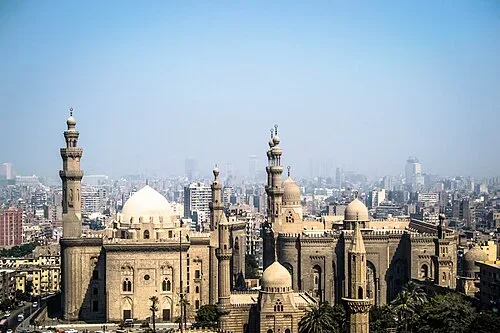 Citadel Square Approach and Urban Setting
Al-Rifa'i Mosque and Sultan Hassan Across Citadel Square
In Cairo, two great mosques face each other across Citadel Square. The older is the Mosque-Madrasa of Sultan Hassan, which dates from around 1361. The newer is Al-Rifa'i Mosque, begun in 1869 as a deliberate answer to it. Egypt's rulers of the day wanted their building to match the medieval monument in grandeur and height, and to bind their own reign to the glory of earlier Islamic Cairo. The commission came from Hoshiyar Qadin, mother of the Khedive Ismail. She meant it to replace an old Sufi lodge on the spot and to hold the burial places of her family, the dynasty founded by Muhammad Ali. The style is Neo-Mamluk, a revival of the sultans' architecture that was fashionable in Cairo at the time. The building is no museum piece. Under one roof it holds a working prayer hall, the shrine of a Sufi saint, and the tombs of Egypt's last royal family. The tour takes in all three.
Photo: Mahmoudmousa · CC BY-SA 3.0
02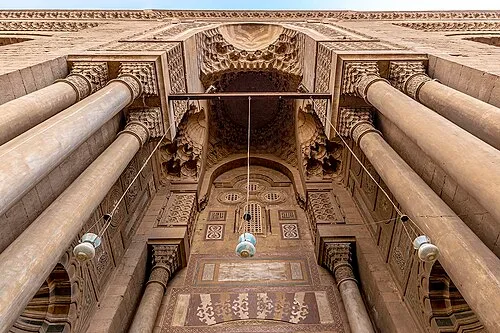 The Grand Portal Entrance
The Grand Portal
The entrance to Al-Rifa'i was built to overawe, and it still manages. Stone and marble columns rise on either side of the doorway, topped with Arabic capitals. Their lintels are dressed in marble, and the arches above are polished and gilded. Overhead, the vault fans out in carved tiers, with lamps hanging down the height of the portal. This doorway took more than forty years to finish. The first architect was Hussein Fahmi Pasha, a distant cousin of the ruling house, and he died during the first building phase. Work had already stopped after the abdication of Khedive Ismail around 1880. The mosque's founder died a few years later, and the unfinished shell stood for roughly twenty-five years. In 1905 a later khedive ordered the work completed. Supervision passed to Max Herz, a Hungarian architect who headed the Committee for the Conservation of the Monuments of Cairo. Under him the mosque opened for prayer in 1912. Every carved tier and gilded arch of this portal is the mark of that second campaign.
Photo: Yasseralghol · CC BY-SA 4.0
03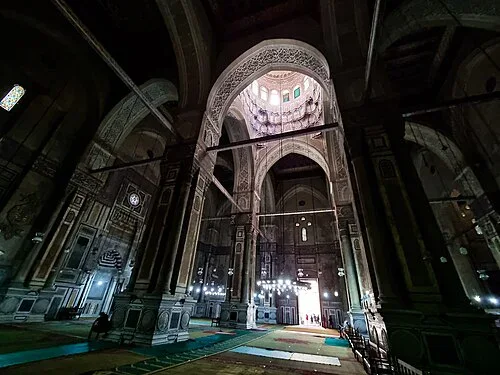 The Main Prayer Hall
Inside, the mosque opens into a sanctuary of tall columns and high vaults. The whole interior covers about six and a half thousand square metres. The part set aside for prayer alone takes up nearly eighteen hundred of them. At full gatherings the hall can hold about ten thousand worshippers. The rest of the space was set aside, on purpose, for the saint's shrine and the royal mausoleum. The tour goes on to visit both. Two minarets rise from the building on circular bases, modelled like the minarets of Sultan Hassan next door. Light falls from the vaults onto polished marble piers and rows of hanging lamps.
Listen in the appRichard Mortel from Riyadh, Saudi Arabia · CC BY 2.0
04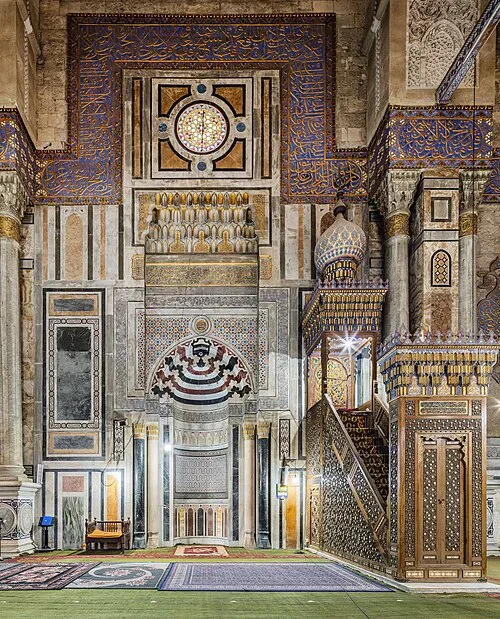 Mihrab and Minbar Sanctuary
Mihrab and Minbar
Every prayer in this mosque faces the same wall. The niche set into it is the mihrab, which marks the qibla, the direction of Mecca that worshippers turn toward. Beside it stands the minbar, the stepped pulpit from which the sermon is delivered at the Friday prayer. Both are finished in the richest Neo-Mamluk manner. The niche is dressed in marble inlaid in many colours, with gilded detailing above, and the pulpit is a tall structure of carved wood, panel after panel. That finish is the work of the completion overseen by Max Herz, who brought the interior to this state after the long pause in building. It is the working furniture of a living mosque, not ornament for its own sake.
Listen in the appPhoto: Rafaelanetto · CC BY-SA 4.0
05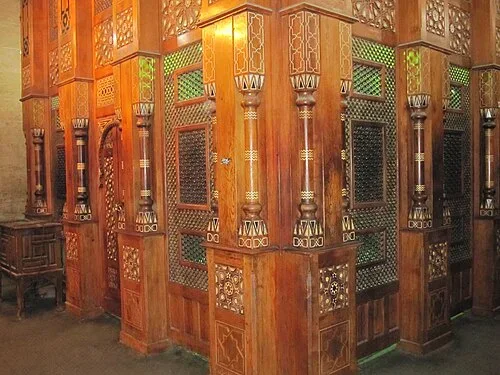 Shrine of Sheikh Ali Abu Shubbak
 al-Rifa'i
Al-Rifa'i takes its name from a saint who was buried here long before the mosque existed. In the twelfth century a small Fatimid-era mosque called Al-Dakhirah stood on this spot. Into it was buried Ali Abu Shubbak al-Rifa'i, a holy man of the family of Ahmad al-Rifa'i, the founder of the Rifa'i Sufi order. The place then became the Al-Bayda Zawiya, a lodge of the Rifa'i order, and it held a second tomb as well, that of the mystic Yahya al-Ansari. When Hoshiyar Qadin's project went ahead, the old structure was demolished, but both saints' graves were preserved under domes. The carved wooden enclosure around the saint's grave, worked like lace in wood, is the zarih. Ali Abu Shubbak is honoured as a saint of the Rifa'i order and counted among the Ahl al-Bayt, the family of the Prophet, which makes this a place of pilgrimage. The whole royal mosque grew, in effect, around his tomb.
Listen in the appPhoto: Ahmad Badr · CC BY-SA 3.0
06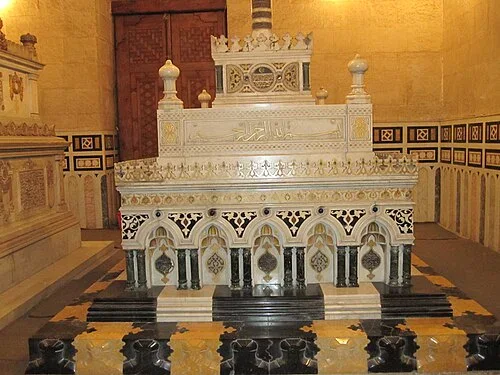 Royal Mausoleum: Chamber of Khedive Ismail and Hoshiyar Qadin
Tomb of Khedive Ismail
Khedive Ismail rests beneath a monument of layered white and coloured marble. The cenotaph rises in tiers, its seat of black and yellow marble, with small green columns carrying arches inlaid with coloured marble and verses from the Quran. From the very start, the new mosque was meant to hold the burial place of the Khedive family, and Ismail lies here beside his mother. There is an irony in the placement. His abdication was what stopped the building for a generation, as heard at the entrance, yet he was laid to rest in the finished heart of it. The chamber's entrance, on the mosque's western side, is flanked by stone columns with ornate marble bases. Around the tombs, the walls carry framed marble panels in the same Mamluk-revival spirit.
Listen in the appPhoto: Ahmad Badr · CC BY-SA 3.0
07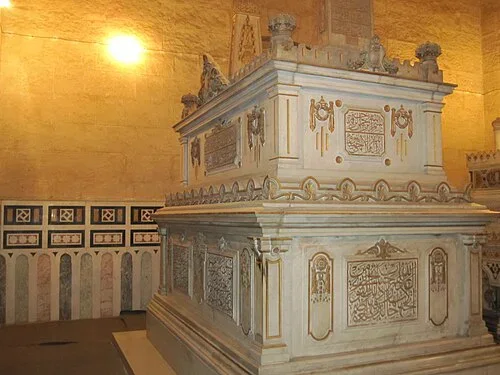 Royal Mausoleum: Chamber of Khedive Ismail and Hoshiyar Qadin
Tomb of Hoshiyar Qadin, Walida Pasha
The woman who set all of this in motion lies here too. Hoshiyar Qadin held the title of Walida Pasha, mother of the khedive, and it was her order that began the mosque. She died in 1885, while the building stood unfinished, and never saw the completed work. Her own monument is a tomb of white marble, carved with panels and inscriptions, set in the chamber she began. The project outlived its founder by decades and was finished under other patrons, but the foundation and the first ambition were hers.
Listen in the appPhoto: Ahmad Badr · CC BY-SA 3.0
08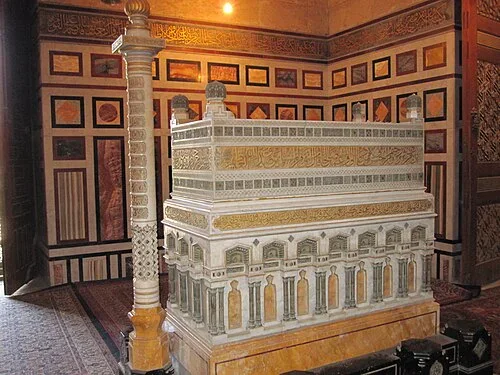 Royal Mausoleum: Tombs of King Fuad I and King Farouk
Tomb of King Fuad I
King Fuad's tomb fills the western front corner of the mosque, to the right of the mausoleum entrance. It is covered in coloured marble, and the chamber around it is lined with framed panels of the same work. Gold inscription bands run across the marble. Beside it lies his mother, Ferial Qadin. Fuad ruled Egypt first as Sultan and then as King, titles that trace the monarchy's change within his own lifetime. He was not the only ruler of that generation buried here. Sultan Hussein Kamel, who reigned before him, rests in the mausoleum as well.
Listen in the appPhoto: Ahmad Badr · CC BY-SA 3.0
09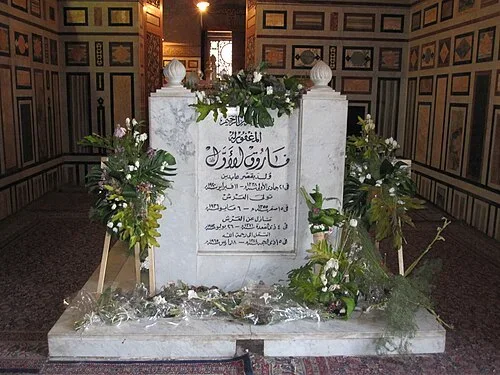 Royal Mausoleum: Tombs of King Fuad I and King Farouk
Tomb of King Farouk
King Farouk's grave is the plainest of the royal tombs here, a marble slab with an Arabic inscription and flowers laid against it. The inscription records a short, eventful life. Born in 1920, he gave up the throne in 1952. He died in exile in Rome in March 1965. He had wished to be buried here, beside his ancestors. President Nasser refused at first. It was President Sadat who later allowed the body to be brought from Cairo's Southern Cemetery into the royal mausoleum. One modern episode belongs to this place as well. In January 2017, thieves struck during a film shoot at the mosque. They took six enamelled mosque lamps, old pieces bearing the name of Khedive Abbas II. Antiquities police recovered the lamps and made arrests within weeks.
Listen in the appPhoto: Ahmad Badr · CC BY-SA 3.0
10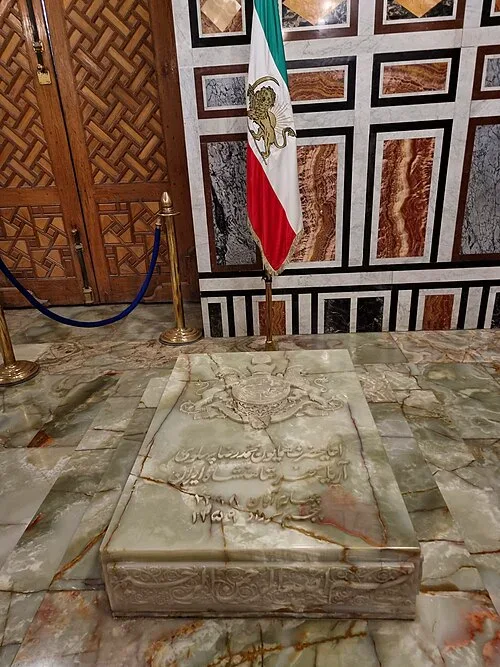 Chamber of Mohammad Reza Pahlavi
Tomb of Mohammad Reza Pahlavi, Last Shah of Iran
One tomb here belongs to no Egyptian dynasty. It holds Mohammad Reza Pahlavi, the last Shah of Iran. After the revolution of 1979 brought down his rule, President Sadat welcomed him when few others would, and he took refuge in Egypt. He died in Cairo in July 1980, and Sadat ordered his burial in this mosque. The marble slab is inscribed in Persian, and beside it stands the old Iranian flag with the Lion and Sun. The Shah had an Egyptian tie of his own, a marriage to King Farouk's sister that ended in divorce. The chamber had held a Shah before. His father, Reza Shah, founder of the Pahlavi dynasty, was deposed during the Second World War and died in exile in South Africa in 1944. His body was buried here, then returned to Iran after the war. A generation later, his son repeated his father's fate and came to rest in the very same grave.
Listen in the appRichard Mortel from Riyadh, Saudi Arabia · CC BY 2.0
- 11
Between Two Monuments
The stone canyon between Sultan Hassan and Al-Rifa'i, where modern Egypt answered the Middle Ages.
Al-Rifa'i Mosque
Frequently asked questions
How much does the guide cost?
Free app download. Listed guide price: $0.99. Guide price shown in the app. Audio guide only. Venue admission is separate.
Can I listen without internet?
Yes. Download the guide’s audio, images, and maps in the app before your visit. Your downloaded content is then available offline.
Can I listen in my language?
This audio guide is available in 15 languages, including English.
Do I need to follow a schedule?
No. This is a self-guided experience. Choose your stops, pause whenever you like, and return to a story at your own pace.
Al-Rifa'i Mosque
The Stanza Journal
At your own pace
Explore Al-Rifa'i Mosque.
Download Stanza, then search for “Al-Rifa'i Mosque”.
Free app download · Guide price shown in the app
Keep exploring
Nearby audio guides
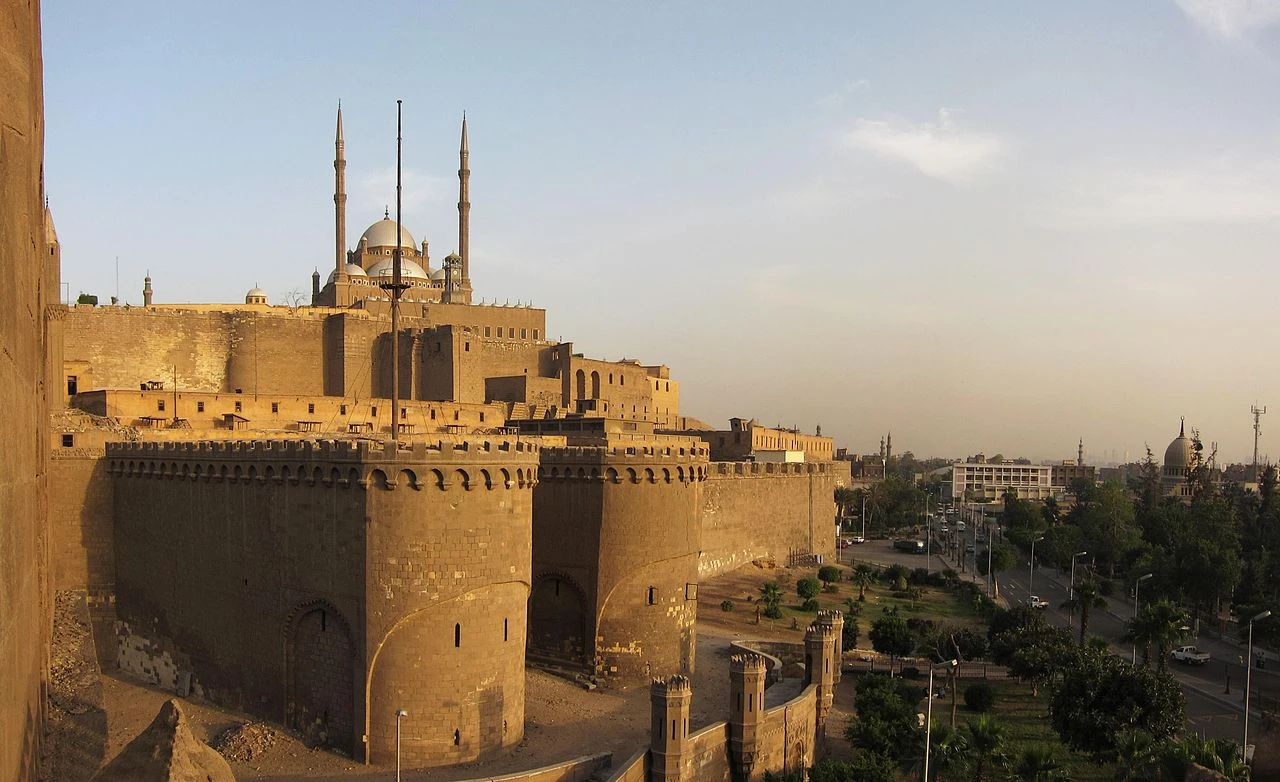
Cairo · 1 km
Cairo Citadel
Content & sources
Ahmed Al.Badawy from Cairo, Egypt · CC BY-SA 2.0
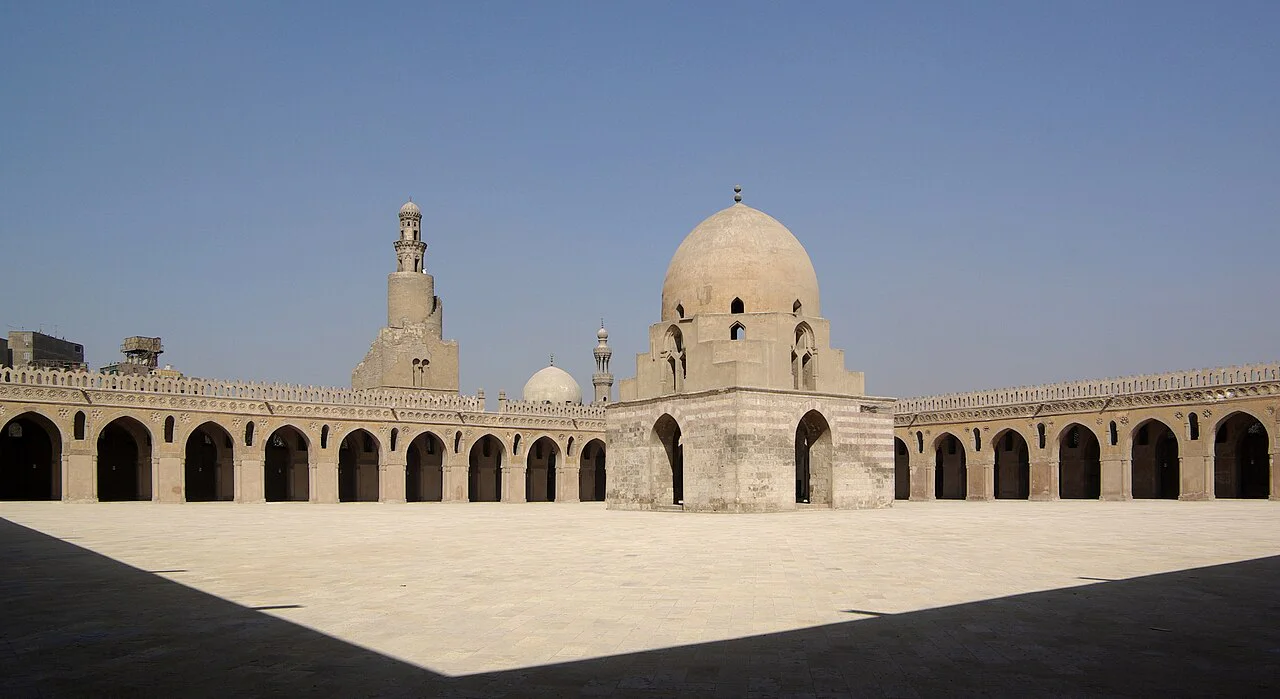
Cairo · 1 km
Mosque of Ibn Tulun
Content & sources
User:Berthold Werner · CC BY 3.0
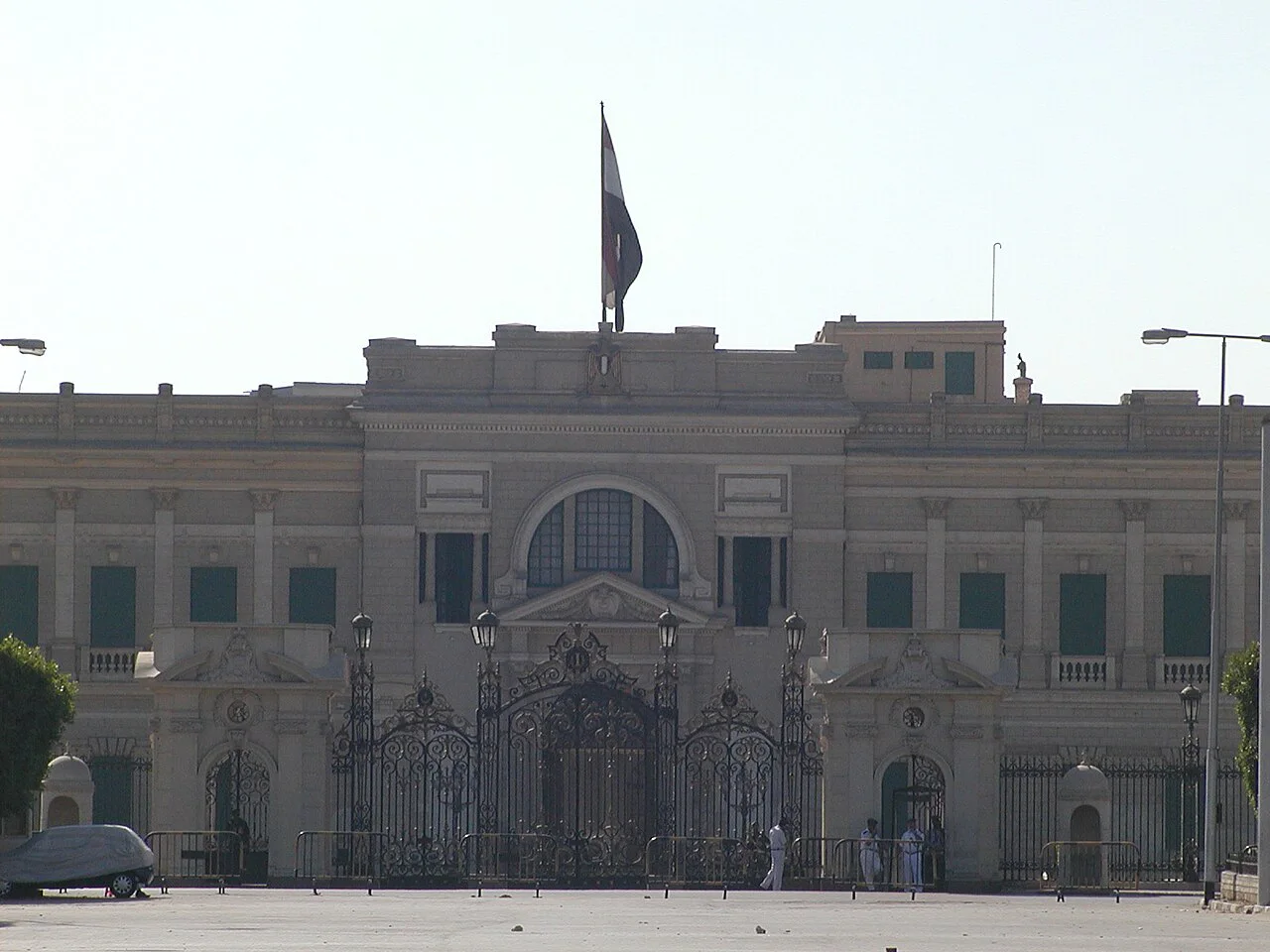
Cairo · 1 km
Abdeen Palace
Content & sources
Gérard Ducher (user:Néfermaât) · CC BY-SA 2.5
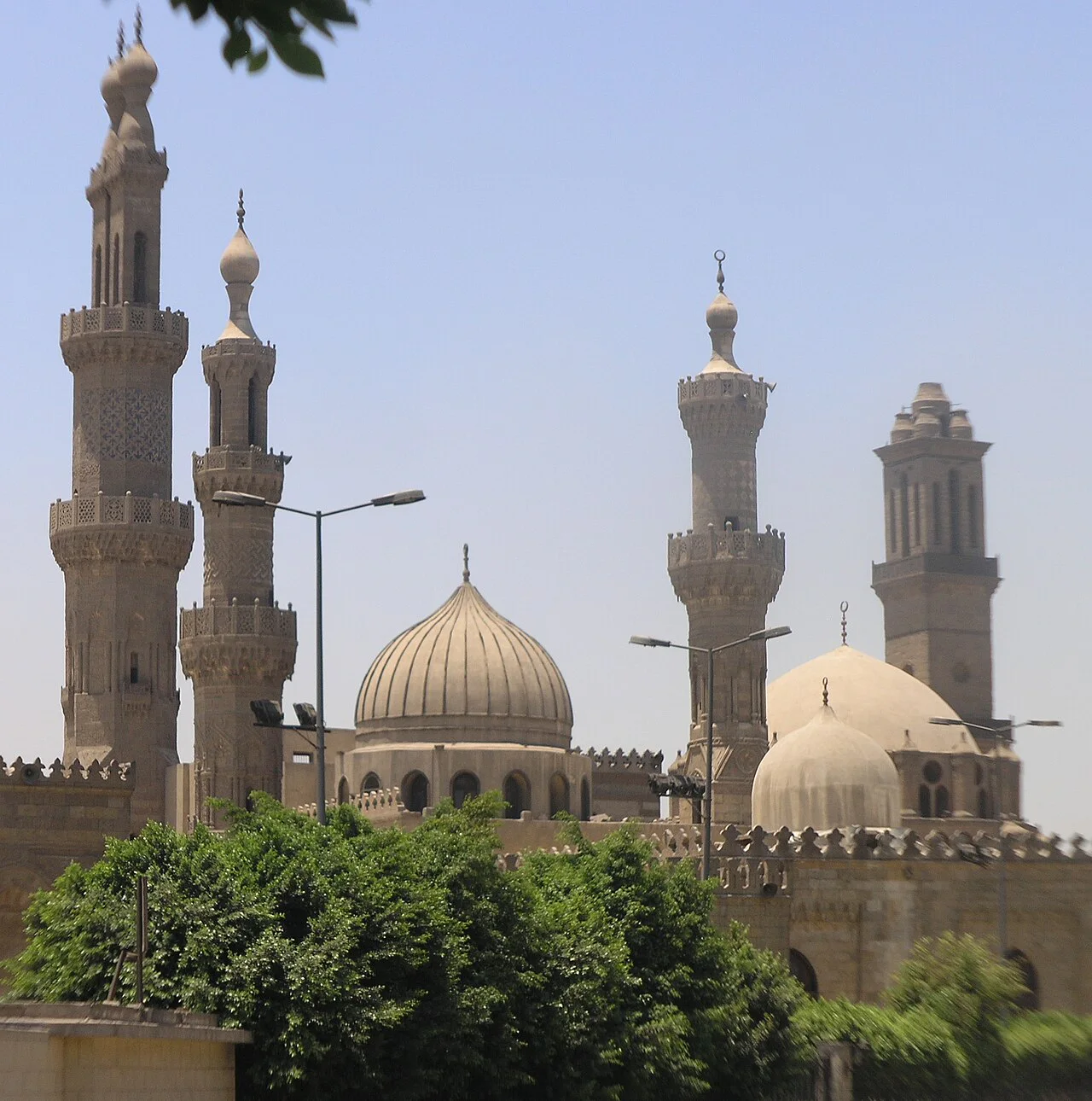
Cairo · 2 km
Al-Azhar Mosque
Content & sources
Daniel Mayer · CC BY-SA 4.0