 Stanza / Audio guide
Content & sources
Stanza · Audio guide
Tanis Audio Guide
A place to remember. A story to take with you.
Tanis is an archaeological site located in the northeastern Nile Delta of Egypt. It served as the capital of the Egyptian Kingdom during the 21st and 22nd Dynasties.
Download Stanza, then search for “Tanis”.
About the tour
One guide. Your kind of visit.
Tanis is an archaeological site located in the northeastern Nile Delta of Egypt. It served as the capital of the Egyptian Kingdom during the 21st and 22nd Dynasties.
Ready when you are.
- 01Get the free Stanza app.
iOS & Android
- 02Find your guide.
“Tanis”
- 03Download before you go.
Works offline
Audio guide / 13 narrated stops
Inside the guide
Get to know a few of the stories before you go. Open a stop to read more.
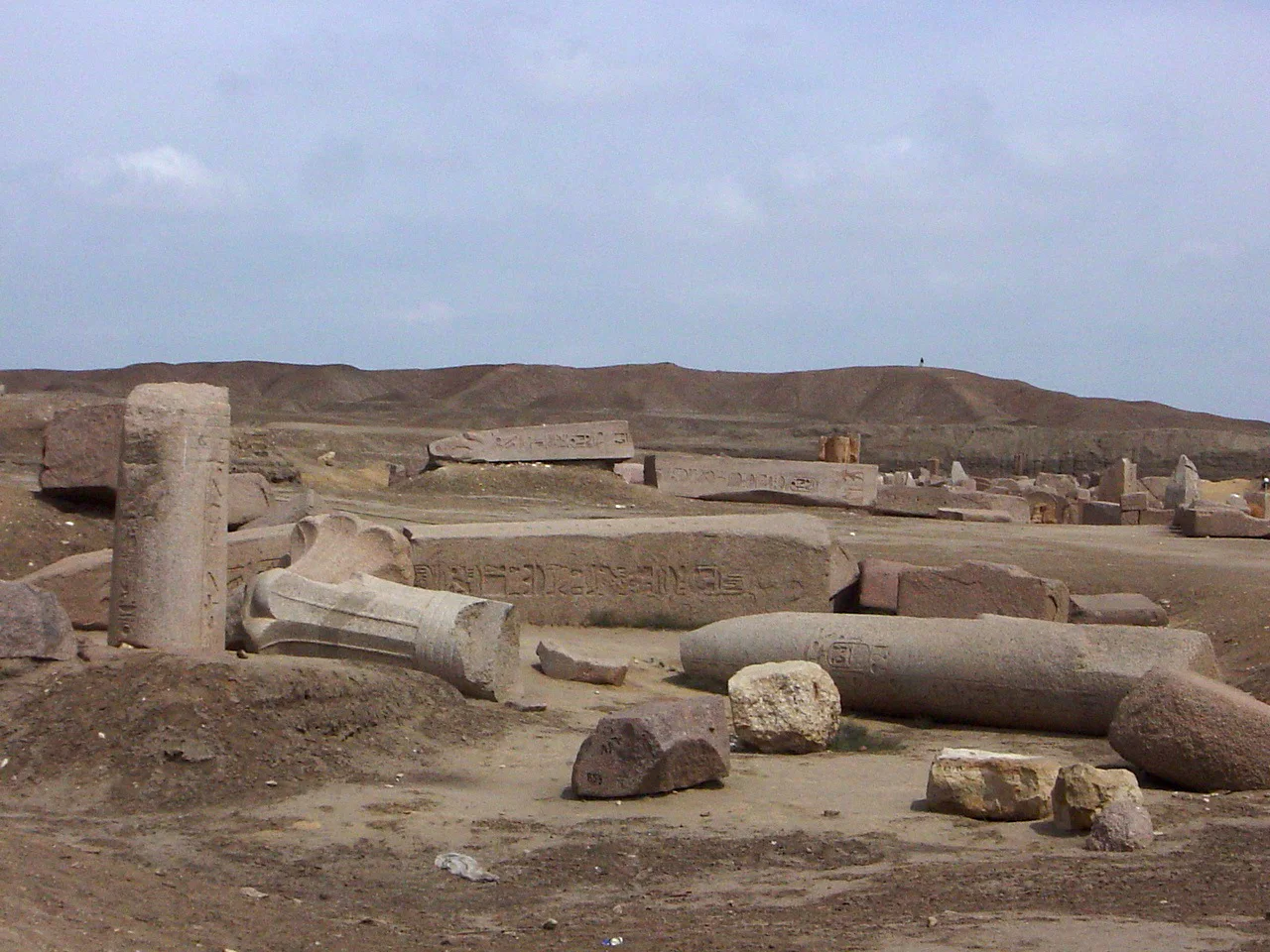
01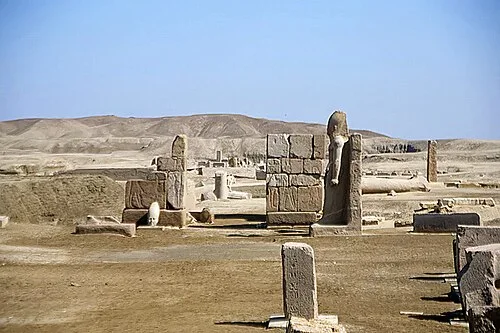 Site Entrance and Mud-Brick Enclosure Walls
The Ruins of Tanis (San al-Hagar)
Welcome to Tanis, known in Arabic as San al-Hagar. The Greeks gave it the name Tanis; the Egyptians called it Djanet, and the Hebrew Bible knew it as Zoan. This sandy sprawl of tumbled stone was once the capital of Egypt, the seat of the pharaohs of the Twenty-First and Twenty-Second Dynasties. The city stood on the Tanitic branch of the Nile, a river channel that has long since silted up and slipped away. Two things make this place worth the journey. There was a great temple here dedicated to Amun-Ra, its gates marked by colossal obelisks that now lie flat on the ground. And there is the royal necropolis of the Third Intermediate Period, where three pharaohs were found in tombs untouched by robbers.
Roland Unger · CC BY-SA 3.0
02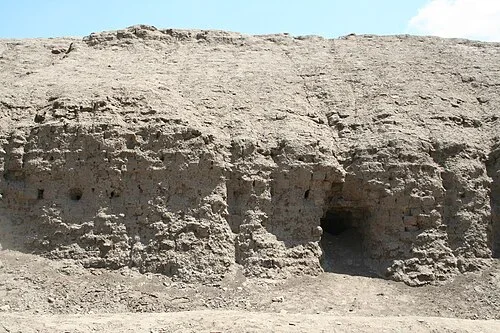 Site Entrance and Mud-Brick Enclosure Walls
The Mud-Brick Enclosure Walls
The great temples of Egypt were wrapped in walls of mud brick, huge rampart-like enclosures that set the sacred precinct apart from the ordinary city. This eroded hill of earth is what remains of such a wall at Tanis. Brick by brick, it once defined the boundary of the temple domain, and everything inside belonged to the gods. The bricks were cheap and common, but raised in such bulk they made a boundary as imposing as any stone. What you see now is the wall worn down by centuries of wind into something that looks more like a natural mound than architecture. The sacred city it protected lies just beyond.
Photo: Einsamer Schütze · CC BY-SA 3.0
03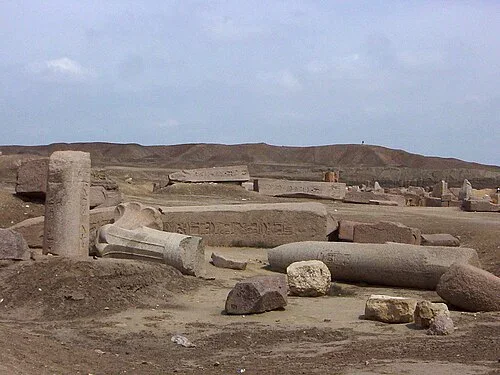 The Great Temple of Amun-Ra
Across this open field of tumbled granite and limestone once stood the Great Temple of Amun-Ra, the religious heart of the northern capital. The pharaohs of the Twenty-First and Twenty-Second Dynasties built it here, and their successors kept expanding it, kings such as Psusennes I and Osorkon II among them. Amun-Ra had replaced Seth as the chief deity of the eastern Delta, so the new capital gave him a home worthy of that rank. He was worshipped here alongside his consort Mut and their child Khonsu. That trio of gods was copied straight from Thebes, the old religious capital in the south, which is why scholars often call Tanis the northern Thebes. The scattered blocks around the temple grounds are the vocabulary of that building, columns and doorways and shrine walls waiting to be read.
Listen in the appلا روسا · CC BY-SA 4.0
04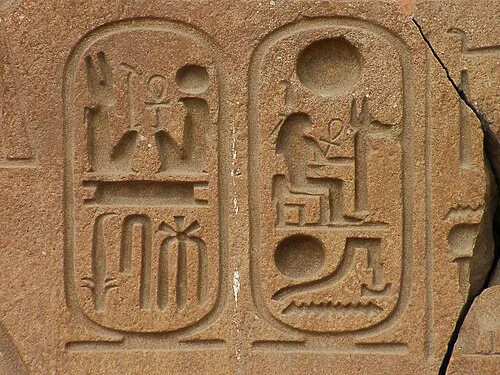 The Great Temple of Amun-Ra
Cartouches of Ramesses II
Cut into this reused block are the cartouches of Ramesses II, the oval rings that hold a pharaoh's name. For a long time, those names caused a genuine confusion. So many monuments here bear the cartouches of Ramesses II or his son Merenptah that early archaeologists concluded Tanis and Pi-Ramesses were the same city. Pi-Ramesses had been the great royal residence of Ramesses II, built further along the Delta. But its harbour became unusable when the Pelusiac branch of the Nile silted up, and the residence was abandoned. The builders of Tanis then dismantled the old capital and carried its monuments here for reuse. The real Pi-Ramesses turned up later at a neighbouring site called Qantir, which settled the argument. Most of the Ramesside stones at Tanis had been brought here from somewhere else.
Listen in the appPhoto: HoremWeb · CC BY-SA 3.0
05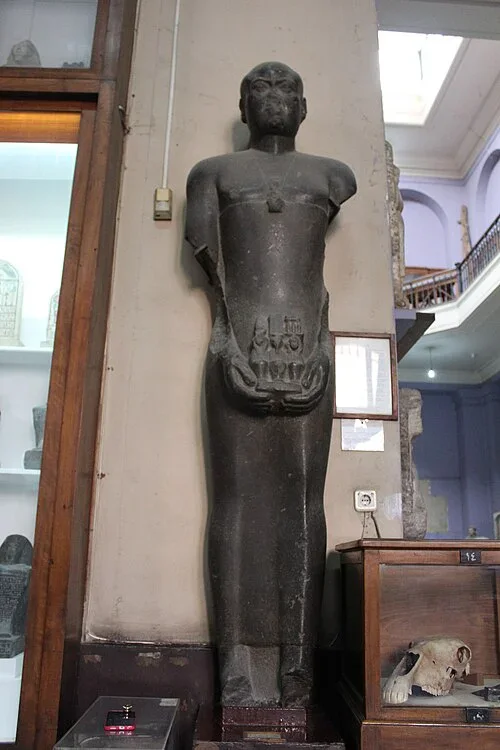 The Great Temple of Amun-Ra
Statue of a Priest with the Theban Triad
One man's arms hold the whole ideology of this city. The statue shows a priest carrying a naos, a small shrine, and inside it stand the three gods Amun, Mut and Khonsu, the exact triad of Thebes. The statue itself is not on the site; it stands in the Egyptian Museum in Cairo. The kings of Tanis did everything they could to sound like Theban rulers. They gave these gods their original Theban epithets, and in their own inscriptions Thebes was mentioned more often than Tanis itself. The imitation went further than words. Thebes had the Valley of the Kings, the great necropolis where New Kingdom pharaohs were buried. Tanis now built a royal necropolis of its own, deliberately replacing that southern burial ground. A capital in the Delta, worshipping southern gods and burying its kings like southern pharaohs, this statue makes the purpose visible.
Listen in the appلا روسا · CC BY-SA 4.0
06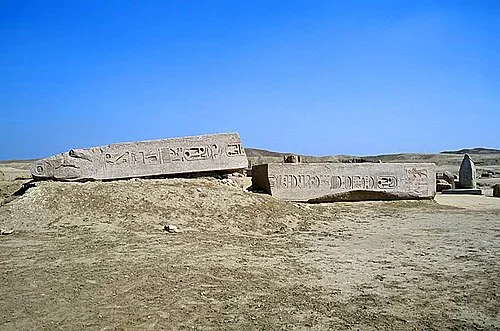 The Field of Fallen Obelisks
The Fallen Obelisks
More than twenty colossal obelisks lie flat on the ground across the temple grounds at Tanis, and every one of them fell in the same direction. In their day they stood upright, marking the various pylons, the great gateways of the temple of Amun-Ra, just as obelisks did at other Egyptian temples. They may have been knocked down by a violent earthquake during the Byzantine era, when the eastern Roman Empire ruled Egypt. If so, the whole processional landscape of gateways and monoliths came down together in one moment of shaking. Archaeologists have counted more than twenty of the fallen giants. It is one of the most striking sights on the whole site, a field of stone needles laid out like felled trees.
Listen in the appRoland Unger · CC BY-SA 3.0
07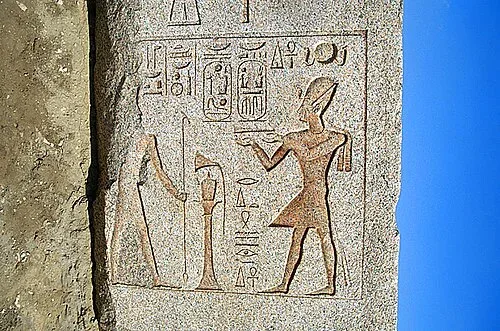 The Field of Fallen Obelisks
Obelisk Relief: A King Before the God
The carved face of an obelisk tells you what these monoliths were actually for. This relief shows the usual programme: a king in ritual dress, presenting offerings before a god, with royal cartouches carved in the register above. An obelisk was a single shaft of granite turned into a permanent offering scene, set up at a pylon so the king's devotion to the god was on display at the temple gate. Every fallen shaft in the field nearby carries work like this. Read one surface, and the whole landscape of toppled stone becomes legible again.
Listen in the appRoland Unger · CC BY-SA 3.0
08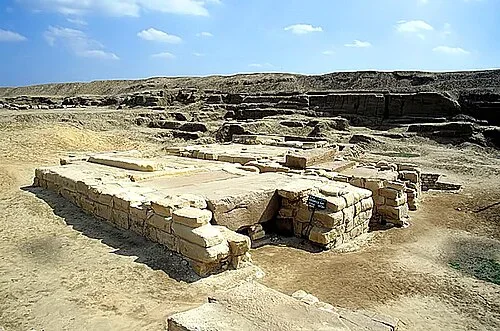 The Royal Tombs Necropolis
Sunk into the sand here are stone-lined burial structures, the royal necropolis of the Third Intermediate Period. Egypt's royal tombs were robbed in antiquity almost without exception, which is what makes this ground extraordinary. The burials of three pharaohs survived intact: Psusennes I, Amenemope and Shoshenq II, kings of the Twenty-First and Twenty-Second Dynasties. No other intact royal pharaonic burial is known; even the tomb of Tutankhamun had been entered in antiquity. Pierre Montet, excavating at Tanis from 1929, found the sealed tombs in 1939 and 1940. When he opened them, all three kings lay with their original funerary offerings untouched. The mummies themselves had decayed to skeletal remains, but the gold around them had not.
Listen in the appRoland Unger · CC BY-SA 3.0
09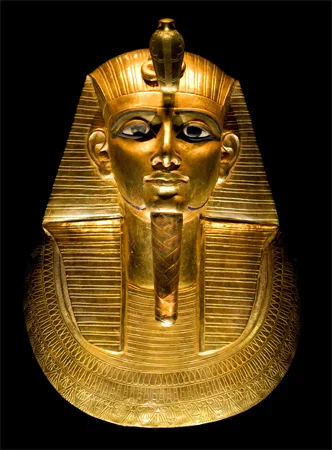 The Royal Tombs Necropolis
The Golden Mask of Psusennes I
This gold funerary mask belonged to Psusennes I, the Twenty-First Dynasty pharaoh whose sealed tomb Montet opened at Tanis. His face is worked in gold, with the royal headdress and collar covering the shoulders and chest. Today the mask is displayed in the Egyptian Museum in Cairo. The intact tombs yielded a large catalogue of treasure: gold, jewelry, lapis lazuli and other precious stones. All three of the buried kings, Psusennes I, Amenemope and Shoshenq II, wore golden or gilded funerary masks, a rarity among royal burials of the period. The timing of the discovery was cruel. The find came in 1939 and 1940, just as the Second World War broke out, and the world's attention was elsewhere. Tutankhamun had received headlines and crowds. Psusennes received almost none.
Listen in the appThe original uploader was Nrbelex at English Wikipedia. · CC BY-SA 2.5
10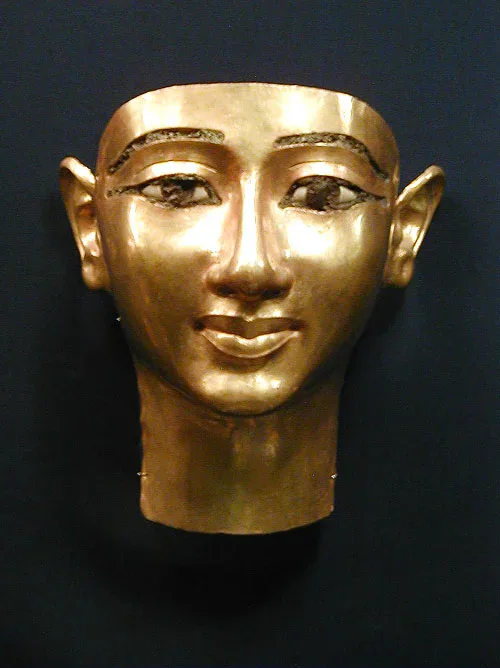 The Royal Tombs Necropolis
The Funerary Mask of Wendjebauendjed
Not everyone buried in the royal necropolis was a king. This golden mask belonged to Wendjebauendjed, a general of the army who was also High Priest of Khonsu at Tanis, and he was buried near the pharaohs themselves. His mask, too, is now in Cairo. Montet found his tomb filled with bowls and cups made of gold. One of the golden bowls carries a rosette of polychrome glass at its centre, shaped like a flower. That rosette is thought to represent the Unification of the Two Lands, combining the emblems of the papyrus and the lotus, the two symbols of Upper and Lower Egypt. A courtier honoured with a gold mask and royal-style burial shows how rank worked in this northern capital. Service to the king and to the god Khonsu could raise a man to the company of pharaohs.
Listen in the appJon Bodsworth · Copyrighted free use
- 11
The Temple Waterworks
The hidden waterworks of the temple, including a sacred lake found intact twelve metres below the ground.
- 12
Royal Cartouche Stela
More than two centuries of explorers, and a decree in two languages that confirmed how to read hieroglyphs.
- 13
The Egyptian–Hittite Peace Treaty
A clay tablet from the age of Ramesses II, and the meaning of a capital built from borrowed stone.
Tanis
Frequently asked questions
How much does the guide cost?
Free app download. Listed guide price: $1.99. Guide price shown in the app. Audio guide only. Venue admission is separate.
Can I listen without internet?
Yes. Download the guide’s audio, images, and maps in the app before your visit. Your downloaded content is then available offline.
Can I listen in my language?
This audio guide is available in 15 languages, including English.
Do I need to follow a schedule?
No. This is a self-guided experience. Choose your stops, pause whenever you like, and return to a story at your own pace.
At your own pace
Explore Tanis.
Download Stanza, then search for “Tanis”.
Free app download · Guide price shown in the app
Keep exploring
Nearby audio guides
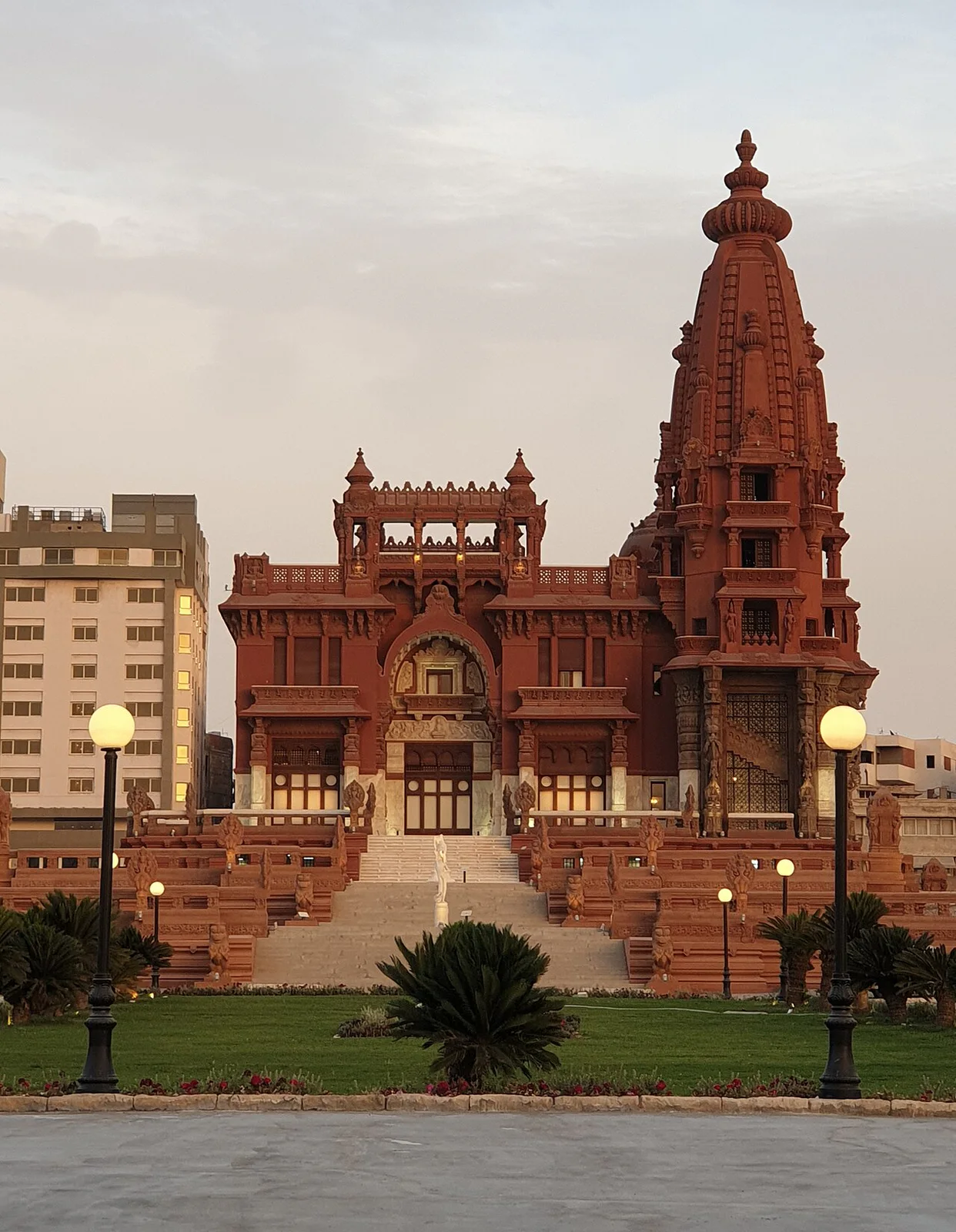
Cairo · 112 km
Baron Empain Palace
Content & sources
Photo: Bishoy Samuel · CC BY-SA 4.0
Cairo · 118 km
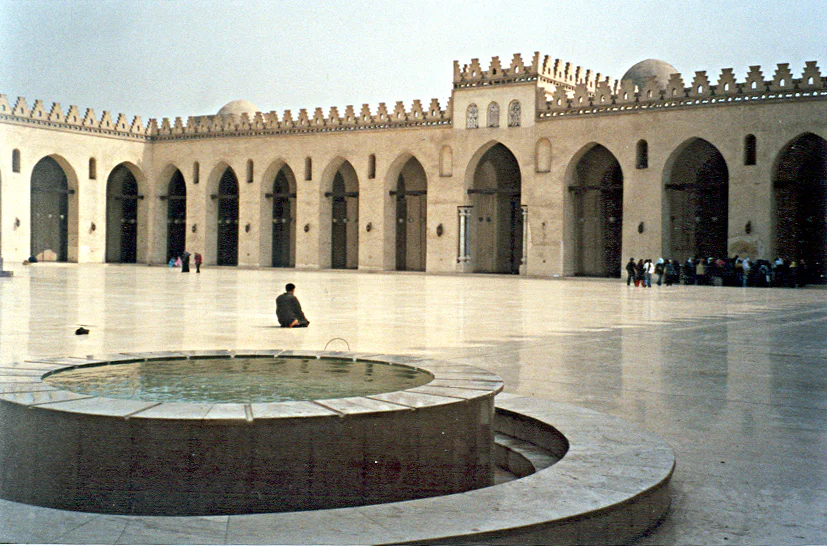
Al-Hakim Mosque
Content & sources
Michel Benoist Mbenoist at fr.wikipedia · CC BY 2.5
Cairo · 119 km
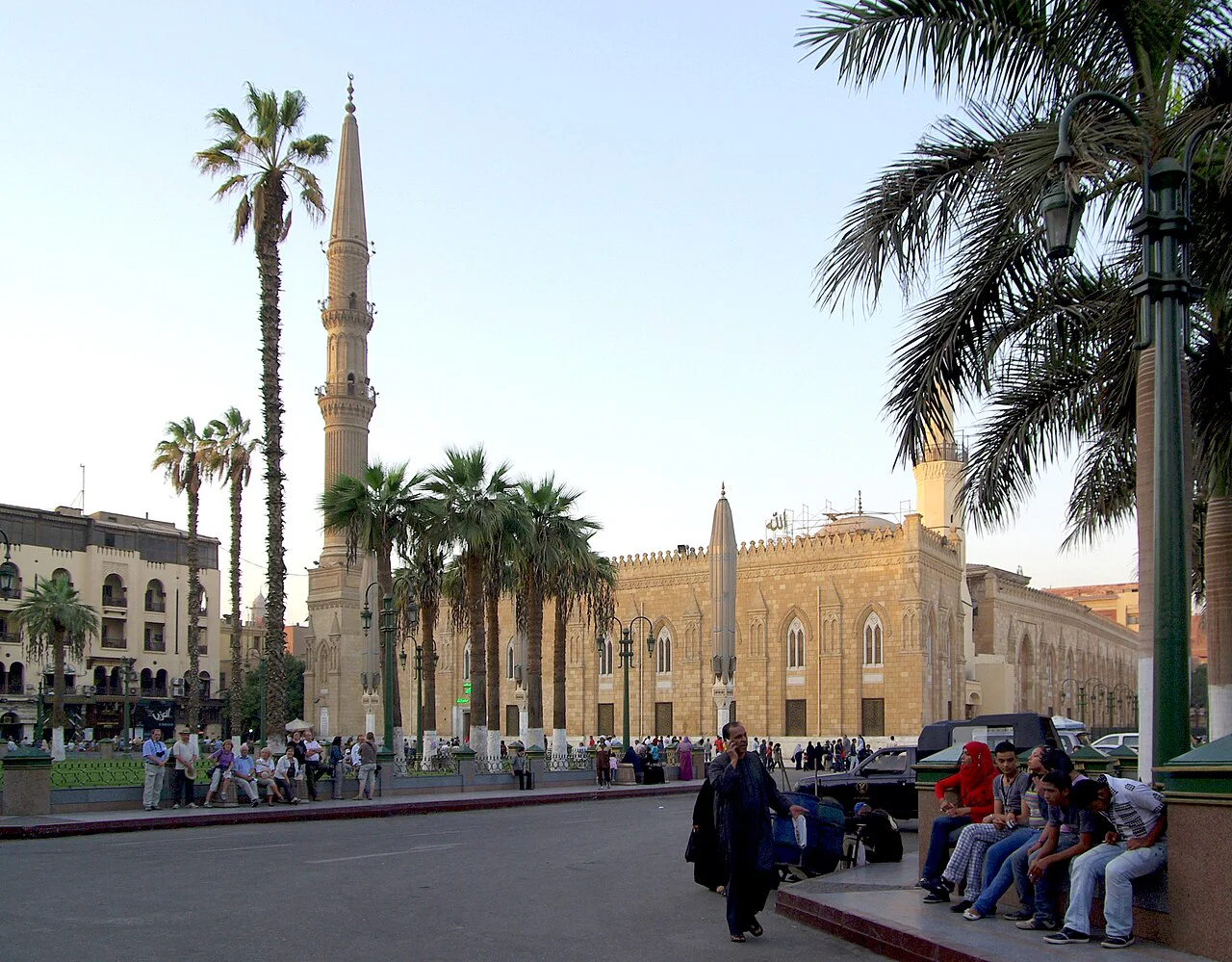
Al-Hussein Mosque
Content & sources
Photo: Berthold Werner · CC BY 3.0
Cairo · 119 km
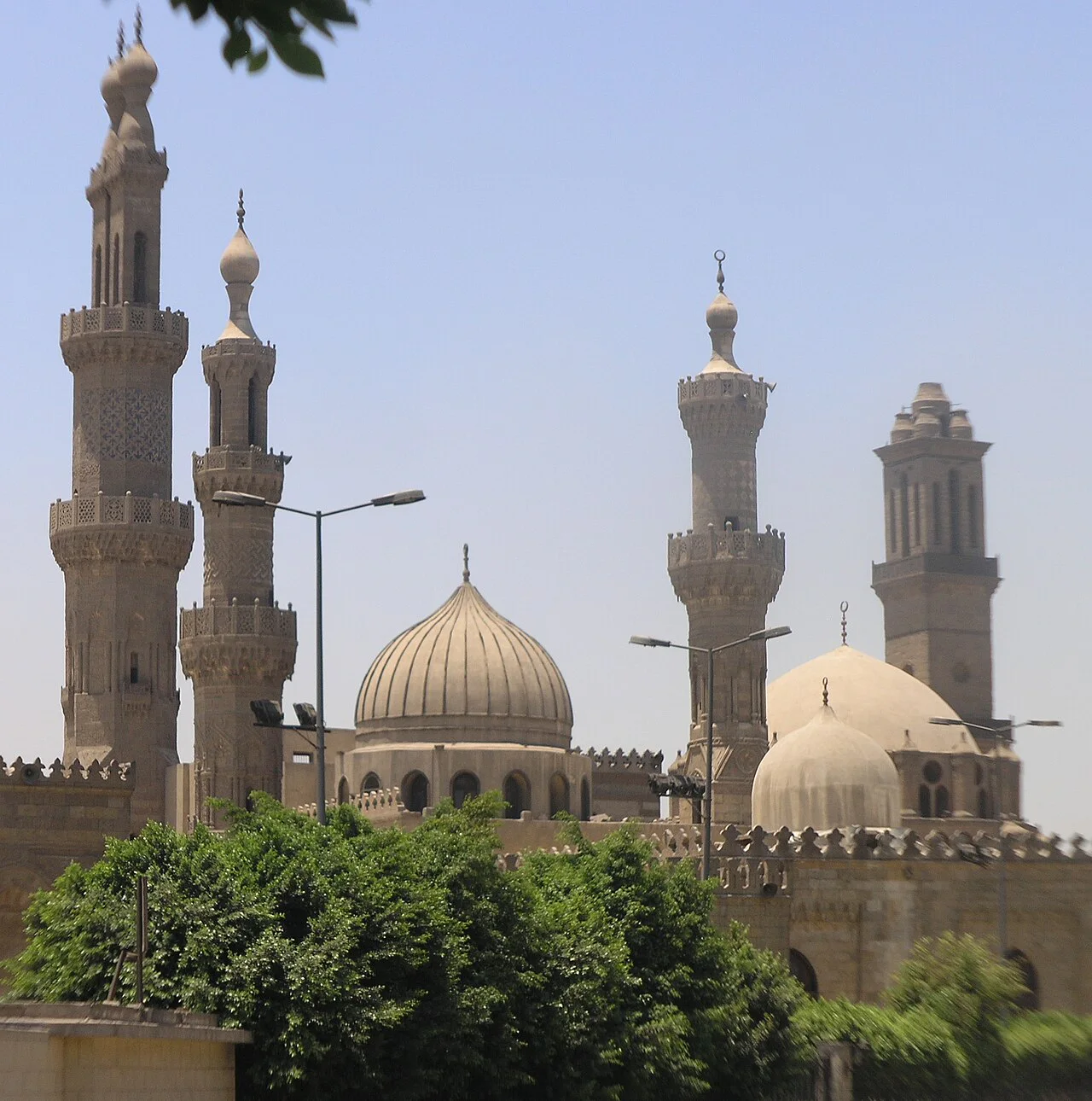
Al-Azhar Mosque
Content & sources
Daniel Mayer · CC BY-SA 4.0