Stanza · Audio guide
Baron Empain Palace Audio Guide
A place to remember. A story to take with you.
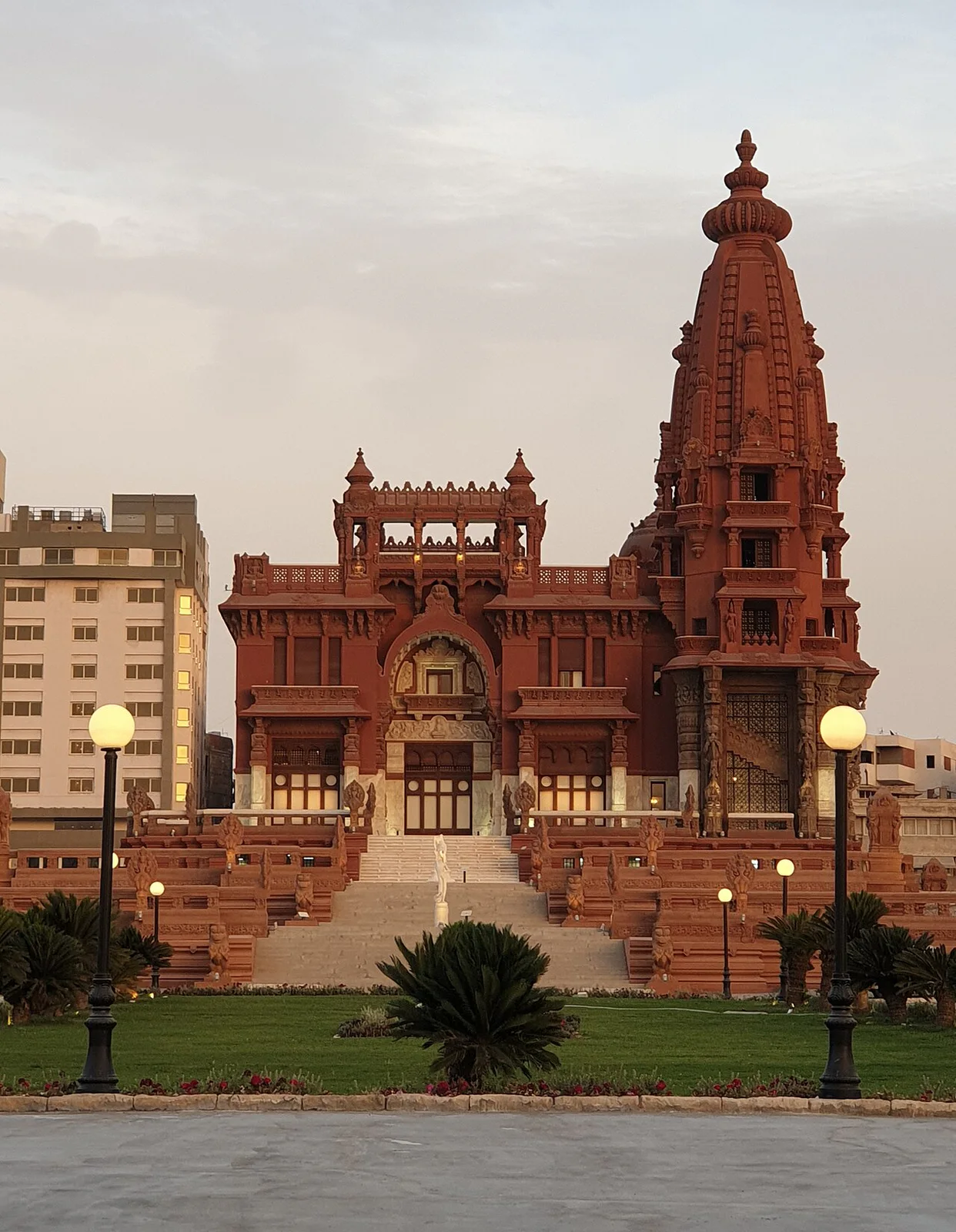
The Baron Empain Palace is a historic mansion located in the Heliopolis suburb of Cairo. Built in 1905 for the Belgian industrialist Édouard Empain, the building was inspired architecturally by Hindu temples.
Download Stanza, then search for “Baron Empain Palace”.
About the tour
One guide. Your kind of visit.
The Baron Empain Palace is a historic mansion located in the Heliopolis suburb of Cairo. Built in 1905 for the Belgian industrialist Édouard Empain, the building was inspired architecturally by Hindu temples.
Ready when you are.
- 01Get the free Stanza app.
iOS & Android
- 02Find your guide.
“Baron Empain Palace”
- 03Download before you go.
Works offline
Audio guide / 10 narrated stops
Inside the guide
Get to know a few of the stories before you go. Open a stop to read more.
01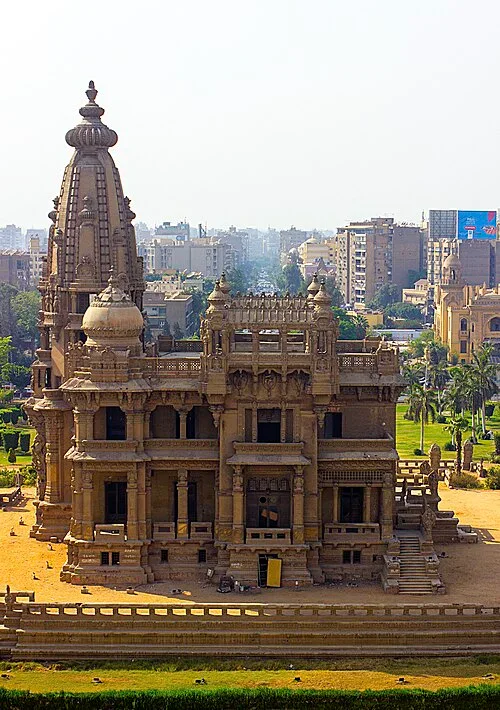 The Grand Facade & Hindu Temple Inspiration
The Hindu Palace Above Heliopolis
Welcome to the Baron Empain Palace, the house Cairo knows as Le Palais Hindou, the Hindu Palace. It was the private home of Édouard Empain, a Belgian baron who made his fortune building tramways. From up here the whole silhouette reads like a temple, with a crowning tower rising over gardens tucked into the dense modern city. Empain chose the French architect Alexandre Marcel, who shaped the house after Angkor Wat in Cambodia and the Hindu temples of Orissa in eastern India. Work ran from 1907 to 1911, and the whole structure was cast in reinforced concrete, a material that then counted as a mark of luxury. Nothing else in Cairo looks like it. The tour runs from the carved deities on the outside to the European rooms within, and finally up to the rooftop and the tower.
Photo: Ahmedsamirhamadah · CC BY-SA 4.0
02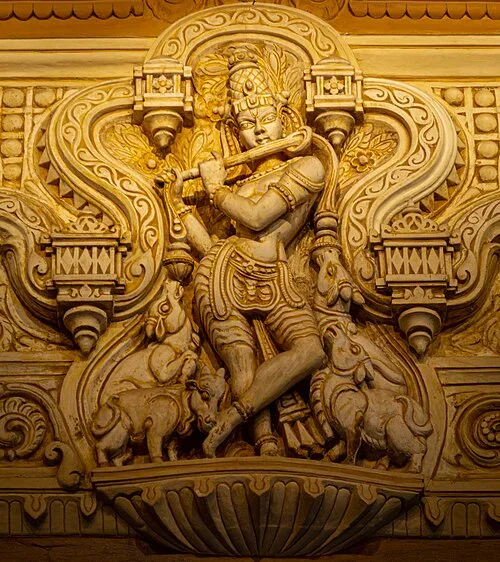 The Grand Facade & Hindu Temple Inspiration
The Fluting Deity Relief
A deity stands at the centre of this carving, flute raised to his lips, most likely Krishna, the god of the flute. Around him swirl vines and small animal figures, all cut with a crispness that comes easily in cast concrete. The same programme runs across the whole building: elephants, lions, snakes and monkeys, along with statues of Buddha, Shiva, Krishna and other Hindu deities. What makes the work unusual is the pairing: a European architect's reading of South and Southeast Asian temple carving, executed in an industrial material of the newest kind. Up close, the lines of the figure stay sharp, as sharp as the day the moulds were poured.
Photo: Ahmedsamirhamadah · CC BY-SA 4.0
03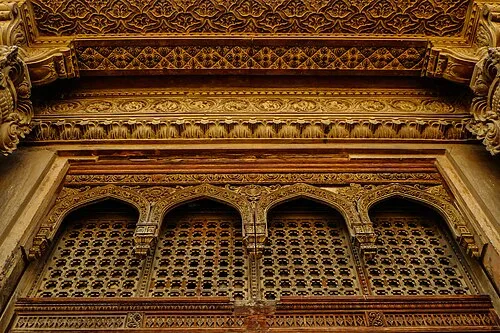 Ground Floor Reception & Salons
The Carved Window Screen
Deep arches and a pierced screen like this one hold the key to the whole suburb around the palace. Around 1904, Baron Empain came to Egypt to build railway lines, and he proposed something bolder: a new suburb on the eastern desert, which he named Heliopolis. The land was cheap precisely because it offered nothing, no services, no water, no roads. He hired the architect Ernest Jaspar to give the place a distinctive look, a blend that came to be called the Heliopolis style, mixing Persian and Oriental motifs with neoclassical European elements. A tram line tied the new suburb to Cairo, built with Belgian engineers who drew on their experience of the Paris metro. This screen shows the blend in miniature: European construction framing Eastern arches and openwork carving. The Baron's own palace was among the suburb's first buildings.
Listen in the appPhoto: Ahmed Yousry Mahfouz · CC BY-SA 4.0
04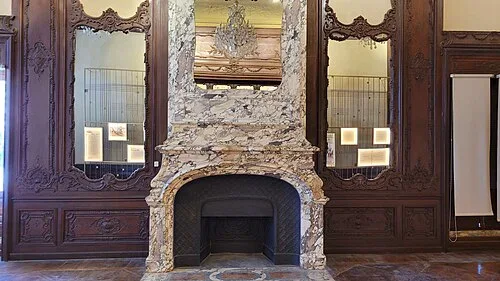 Ground Floor Reception & Salons
The European Salon Fireplace
Inside, the temple gives way to a rich European mansion. This salon is all marbled fireplace, mirrored panels and dark carved woodwork, the work of the French artist Georges-Louis Claude, who built and decorated the palace's interiors. The contrast with the outside is deliberate: a Hindu temple on the facade, a conventional grand house of the Belle Époque within. The room also carries the palace's one great domestic occasion. When the building was finished in 1911, the Baron inaugurated it in the presence of Prince Hussein Kamel, later Sultan of Egypt, and he held an exclusive celebration to mark its completion. Cairo's new suburb had a palace, and the palace had a proper opening.
Listen in the appPhoto: Nabbegat · CC BY 4.0
05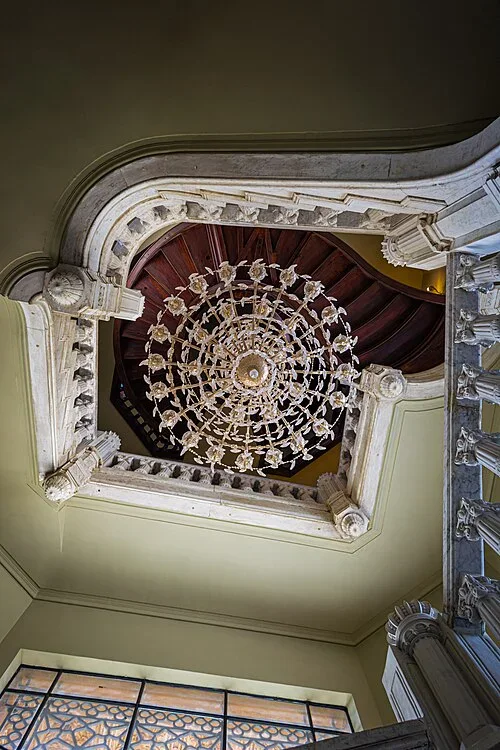 The Grand Staircase & Central Core
The Marble Stairwell
The house stacks its life in layers. Two main living floors hold seven primary reception and bedroom suites, with a rooftop panorama above and an expansive basement below. The public entertaining floor sits at the bottom, and the family's private quarters lie above it, reached by this winding marble staircase. It is the route the house was designed around, from company to privacy in one climb. Above the stairwell hangs a chandelier, and past it a dark wooden spiral stair winds further up toward the tower. That spiral stair carries the palace's strangest stories, and it gets a telling of its own shortly.
Listen in the appPhoto: Ahmedsamirhamadah · CC BY-SA 4.0
06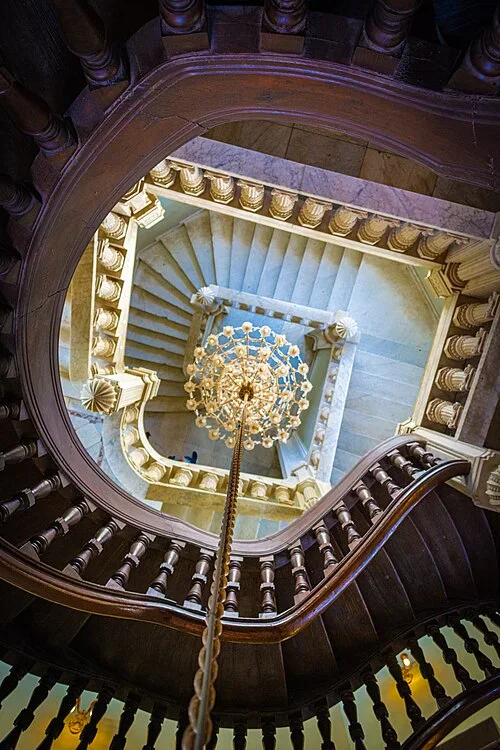 The Grand Staircase & Central Core
The Dark Spiral Stair
Dark wood coils upward here, the spiral staircase that leads toward the tower, and it is exactly the sort of place that collects stories. During the palace's long empty years, local lore told of the Baron's daughter, said to have suffered from some condition that kept her hidden from the world, and of a suicide, by her or by the Baron's wife, inside the tower or its passages. The tales gave the Hindu Palace a reputation for being haunted, and that reputation drew ghost tourists for years. The record tells a plainer story: the family tragedy legends are just that — rumours and legends, spread during the decades of neglect. What did happen, in the 1990s, was real enough. Young people trespassed into the abandoned building, threw parties and used drugs, and a conservative backlash accused them of Satanism, fed by the old rumours. The sensational claims ended in an actual criminal case.
Listen in the appPhoto: Ahmedsamirhamadah · CC BY-SA 4.0
07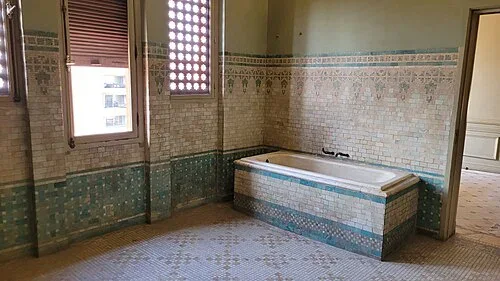 Second-Floor Suites & Elephant Balcony
The Mosaic Bathroom
Coloured mosaic tiles cover this bathroom from floor to window, blue, orange and red patterns laid band by band across the walls. This was the family's private territory, the second floor, where the bedrooms and bathrooms sat away from the entertaining rooms below. The finish speaks for the whole residence: the modern comfort a tycoon of the Belle Époque expected, carried right into the most private rooms of the house. Light comes through the perforated shutters in dots and tilts across the tiles as the day moves. A suite on this floor, with a bath like this, was a long way from the desert Heliopolis was built on.
Listen in the appPhoto: Nabbegat · CC BY 4.0
08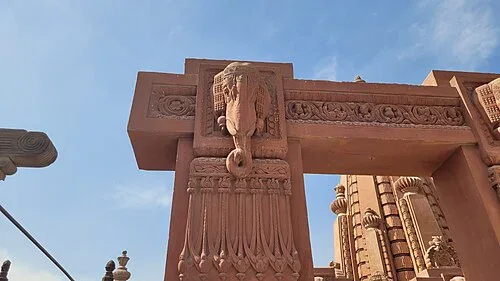 Second-Floor Suites & Elephant Balcony
The Elephant Balcony Relief
An elephant bows under the weight of a balcony beam, trunk curled, ears spread, carved as if bearing the architecture on its back. Elephants do this work all over the upper floors, supporting the balconies in place of ordinary columns and brackets. The colour is a story of its own. A French document from the time of the finished building, dated 1911, records that the palace was painted burnt sienna, that deep reddish brick tone. The choice echoed the red-brick temples of twelfth-century northern India, and it set the Baron's house apart from the desert-tan buildings that filled the rest of Heliopolis. The colour was a statement, made in a document as well as in paint: this house was meant to be read as a temple.
Listen in the appPhoto: Nabbegat · CC BY 4.0
09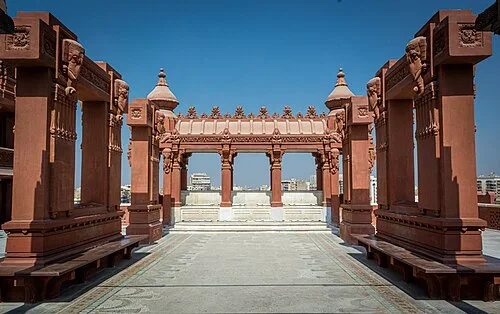 The Rooftop Panorama & The Rotating Tower
The Rooftop Panorama Terrace
This open terrace, ringed with the same temple carving, was the Baron's private outdoor salon, high above the avenue at the very top of his own house. The view also tells what came after. The Baron died in 1929, and after the coup of 1952 the palace was left abandoned. In 1954 the family sold it at public auction, contents included, for a hundred and sixty thousand pounds, a small sum for a palace. It passed between owners and fell into decades of neglect, the empty years in which the ghost stories you heard on the spiral stair took root. Rescue came late. The Egyptian state bought the palace in 2005, restored it, and reopened it to the public in 2020. From up here, today's Heliopolis stretches out dense and living, a whole suburb grown from the desert the Baron bought cheap.
Listen in the appPhoto: Ahmedsamirhamadah · CC BY-SA 4.0
10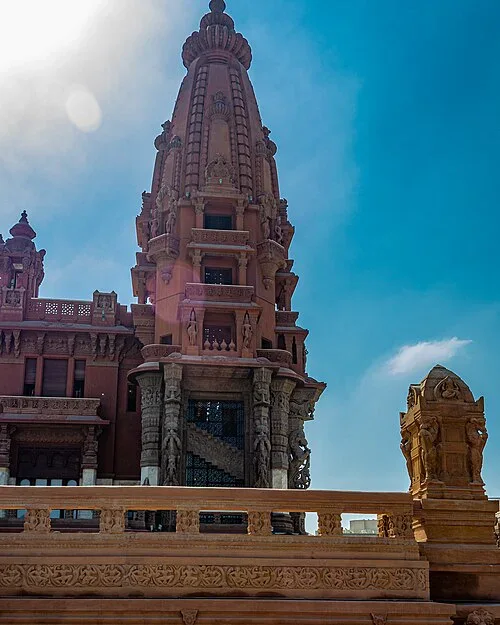 The Rooftop Panorama & The Rotating Tower
The Rotunda Tower
The tower is the palace's focal point, four storeys rising over a mansion of two, crowned like the spire of the temples that inspired the house. Popular accounts add a famous claim: that the upper rooms sat on a rotating base and turned through a full circle, so the rooms followed the sun and the view through the day. The story goes around Cairo to this day, though it goes beyond what the papers of the house can firmly support. Either way, the tower does what it was built to do, drawing the eye from every corner of Heliopolis. A tramway baron's dream house, cast in concrete and carved like a temple, has its crown back in the sunlight.
Listen in the appPhoto: Ahmedsamirhamadah · CC BY-SA 4.0
Baron Empain Palace
Frequently asked questions
How much does the guide cost?
Free app download. Listed guide price: $0.99. Guide price shown in the app. Audio guide only. Venue admission is separate.
Can I listen without internet?
Yes. Download the guide’s audio, images, and maps in the app before your visit. Your downloaded content is then available offline.
Can I listen in my language?
This audio guide is available in 15 languages, including English.
Do I need to follow a schedule?
No. This is a self-guided experience. Choose your stops, pause whenever you like, and return to a story at your own pace.
At your own pace
Explore Baron Empain Palace.
Download Stanza, then search for “Baron Empain Palace”.
Free app download · Guide price shown in the app
Keep exploring
Nearby audio guides
Cairo · 7 km
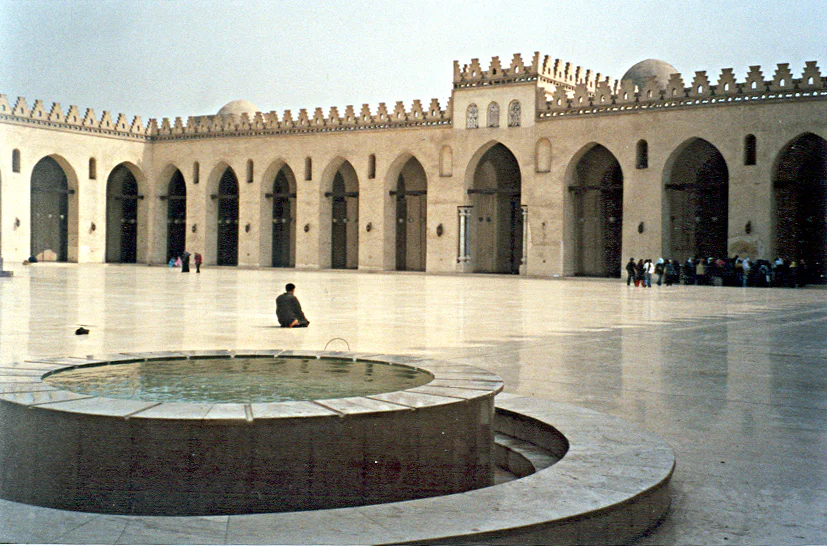
Al-Hakim Mosque
Content & sources
Michel Benoist Mbenoist at fr.wikipedia · CC BY 2.5
Cairo · 8 km
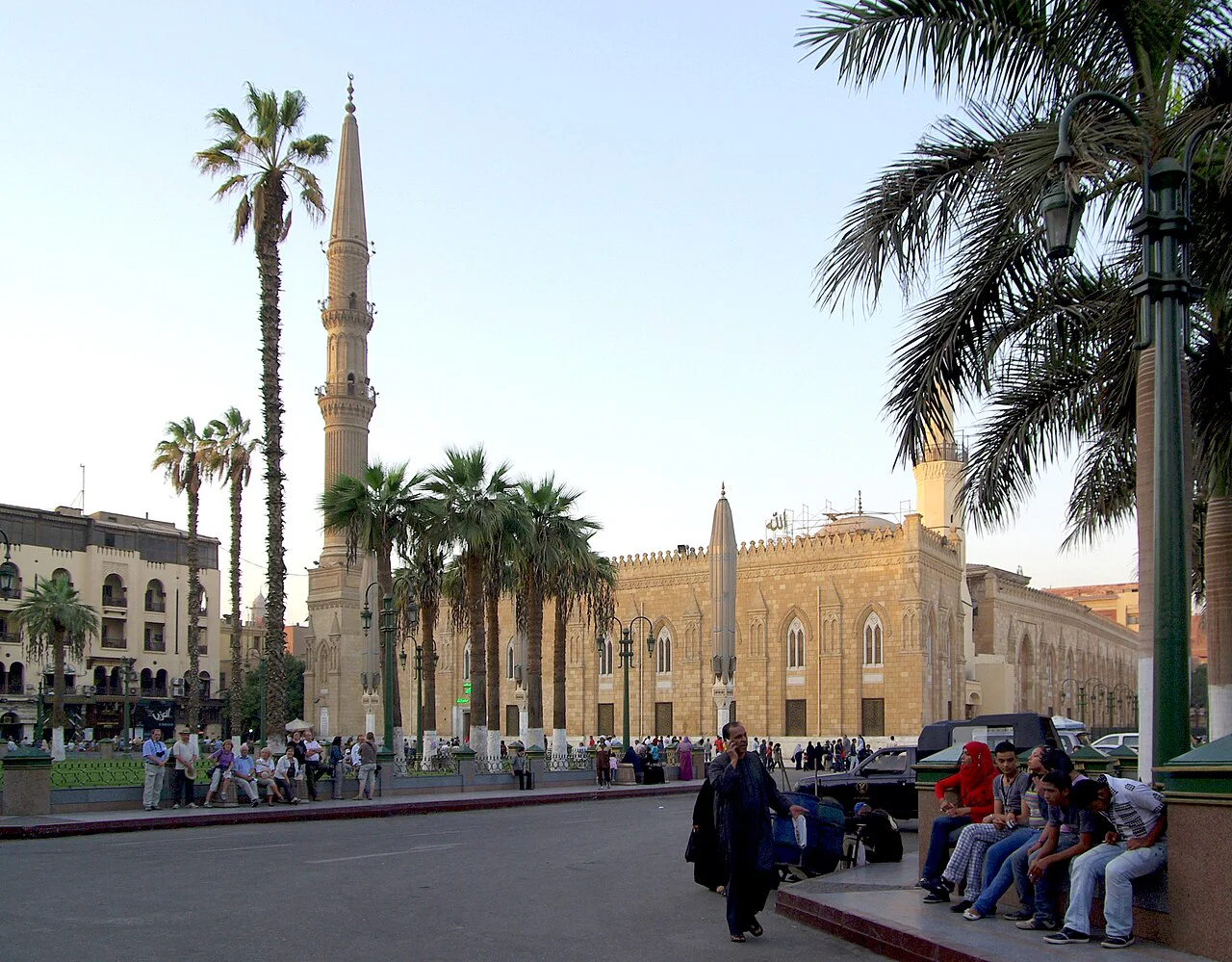
Al-Hussein Mosque
Content & sources
Photo: Berthold Werner · CC BY 3.0
Cairo · 8 km
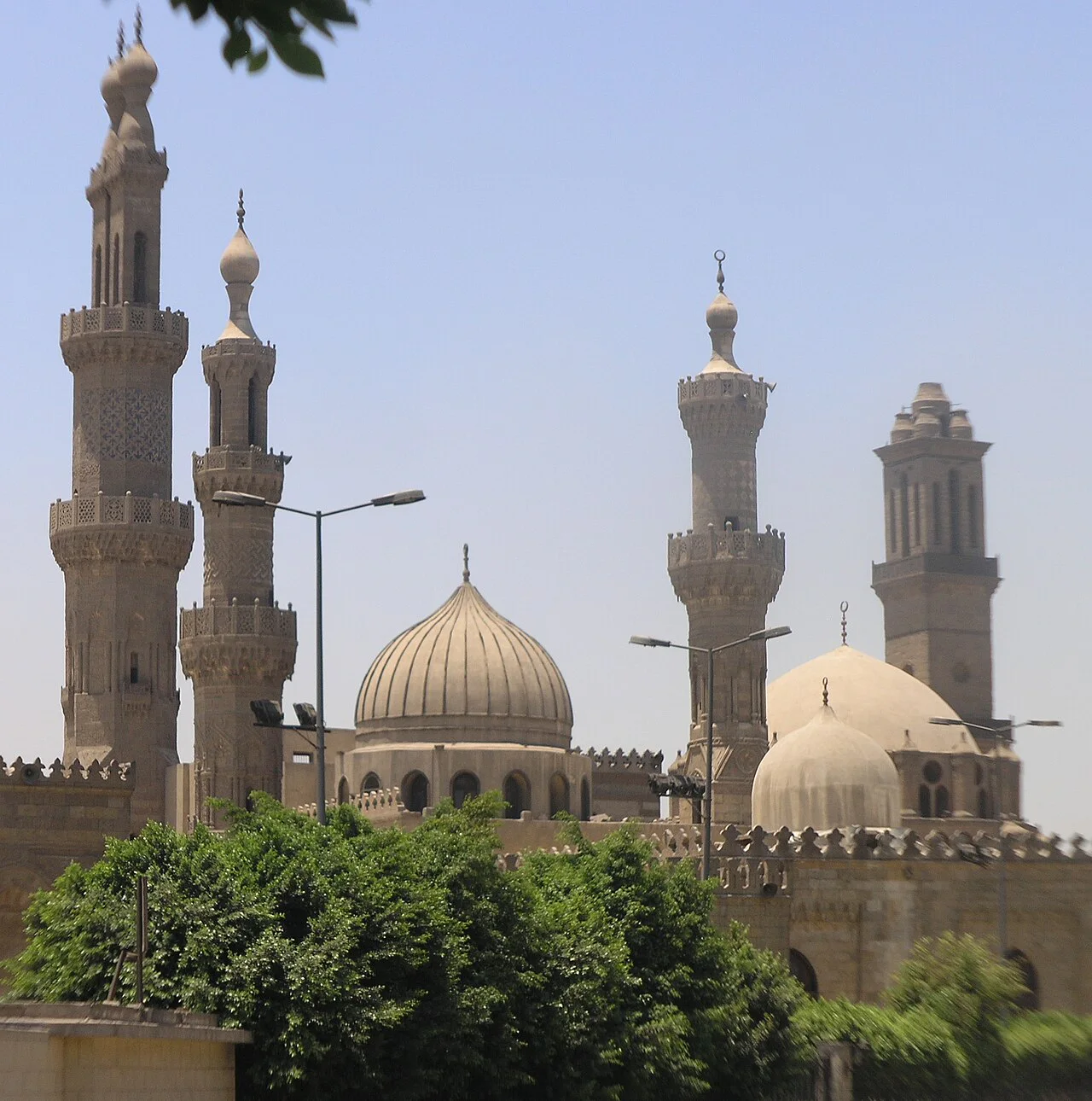
Al-Azhar Mosque
Content & sources
Daniel Mayer · CC BY-SA 4.0
Cairo · 9 km
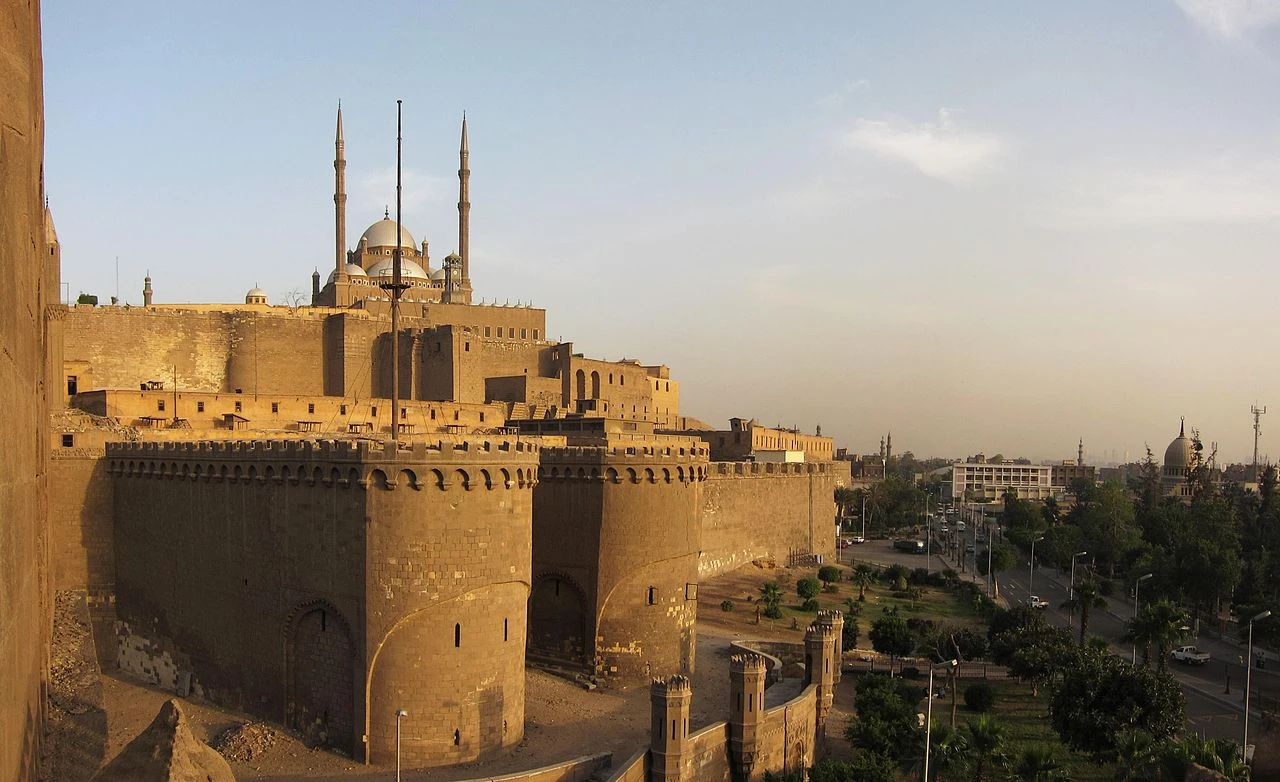
Cairo Citadel
Content & sources
Ahmed Al.Badawy from Cairo, Egypt · CC BY-SA 2.0
Husseiniya · 112 km
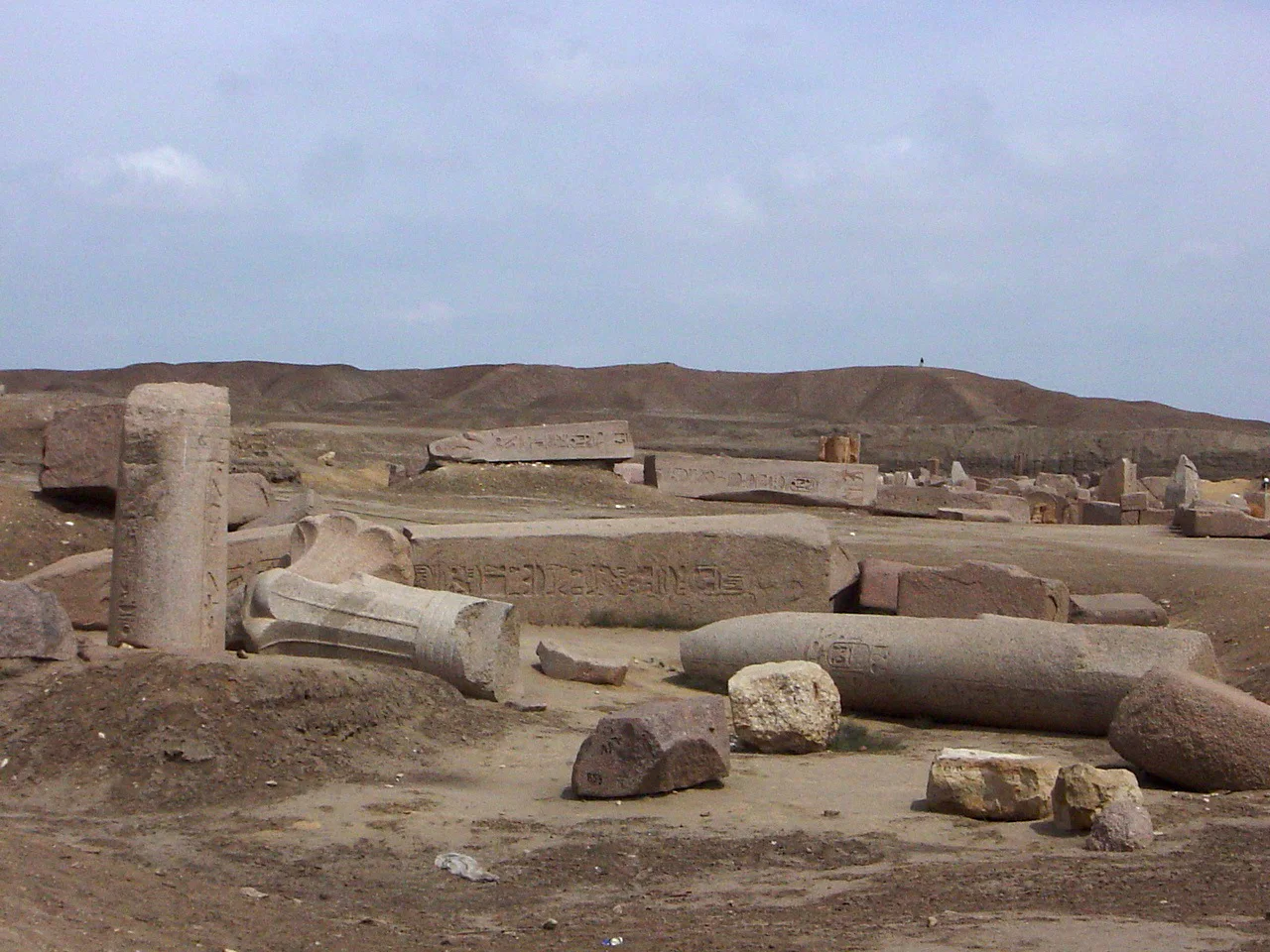
Tanis
Content & sources
Original uploader was Markh at en.wikipedia · Public domain