Stanza · Audio guide
Amarna Audio Guide
A place to remember. A story to take with you.
Amarna is an extensive ancient Egyptian archaeological site containing the ruins of Akhetaten. It served as the capital city during the late Eighteenth Dynasty.
Download Stanza, then search for “Amarna”.
About the tour
One guide. Your kind of visit.
Amarna is an extensive ancient Egyptian archaeological site containing the ruins of Akhetaten. It served as the capital city during the late Eighteenth Dynasty.
Ready when you are.
- 01Get the free Stanza app.
iOS & Android
- 02Find your guide.
“Amarna”
- 03Download before you go.
Works offline
Audio guide / 13 narrated stops
Inside the guide
Get to know a few of the stories before you go. Open a stop to read more.
01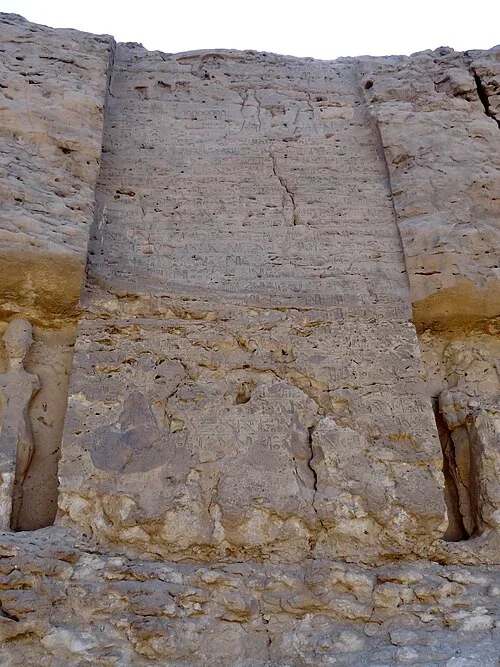 The Boundary Stelae: Sacred Threshold of Akhetaten
Boundary Stele U: The Sacred Threshold of Akhetaten
Welcome to Amarna, a royal capital that lasted barely a generation. Around 1346 BC the pharaoh Akhenaten left Thebes behind and founded a new city on untouched desert ground, dedicated to a single god, the sun disc Aten. It was the fifth year of his reign. He named the place Akhetaten, the horizon of the Aten. To fix the limits of his chosen territory he had fourteen great stelae cut into the cliffs on both sides of the Nile, each recording his conditions for founding the city. This carved panel is one of them, its figures and lines of hieroglyphs worn by centuries of wind, the scene above only partly legible. One passage tells how the king drove to his new capital in a chariot of electrum, 'like the Aten when he rises on the horizon and fills the land with his love'. The ruins stretch about thirteen kilometers along the east bank of the Nile, royal palaces in the north, residential suburbs in the south, with long stretches of desert between. Because the city was emptied so soon after its founder's death, its plan survives in more detail than that of any other ancient Egyptian city.
Olaf Tausch · CC BY 3.0
02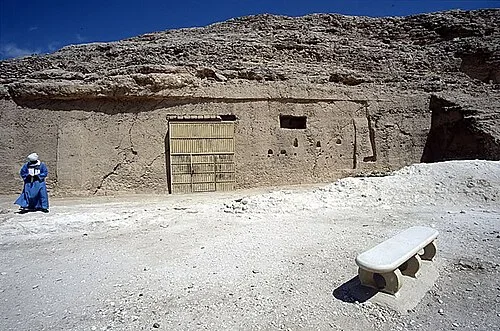 Northern Tombs of the Nobles
Tomb of Meryre: The Northern Cliff Tombs
High in the cliffs north of the city, tombs were cut for the men who ran Akhenaten's capital. Amarna holds twenty-five of these rock-cut tombs of high-ranking courtiers, numbered and divided between a northern and a southern group. This one belongs to Meryre, high priest of the Aten at the new court. The facade sits up in the cliff face. What reads as a plain door frame is the entrance to a hall cut straight out of the cliff. Reaching these courts takes a steep climb in open sun, which is part of the price of visiting them. The men buried here were the ministers, priests and commanders who had moved to the desert with their king.
Roland Unger · CC BY-SA 3.0
03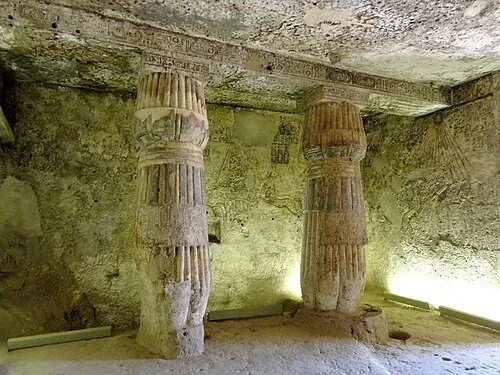 Northern Tombs of the Nobles
Tomb of Panehesy: Art of the Amarna Revolution
Inside, the tomb opens into a hall held up by columns carved as bundles of papyrus, and traces of pigment still cling to them. The walls record a revolution in Egyptian art. For centuries artists had worked in strict, ideal forms; at Amarna they broke loose. Figures move more naturally, and the scenes turn informal and intimate, showing the royal family at ease, even playing with their children. The most famous images in these tombs show the royal family riding in gold chariots along the Royal Road, the great highway that ran the length of the city. Other scenes show the king rewarding loyal officials with gold, and the nobles chose to be remembered by them. The tomb's owner, Panehesy, was one of the city's elite, the chief servitor of the Aten in its great temple.
Listen in the appOlaf Tausch · CC BY 3.0
04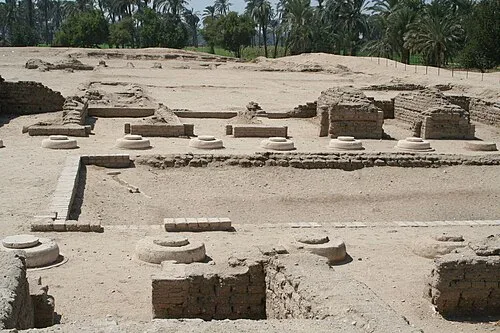 The North Palace: Royal Domestic Sanctuary
The North Palace: Residence by the River
The royal family lived at the northern end of the city, close to the river. The Northern Palace here was one of their residences, and the North Riverside Palace, probably their main home, stood further north, running right up to the waterfront. What remains are low mudbrick courts and round column bases set into the ground. They trace the plan of a whitewashed complex of open courtyards, built fast and near the riverfront. Around the palace, the North City held administrative buildings between the river and the cliffs, and a suburb of large houses ran south toward the center, the houses growing poorer the further they stood from the main road.
Listen in the appPhoto: Einsamer Schütze · CC BY-SA 3.0
05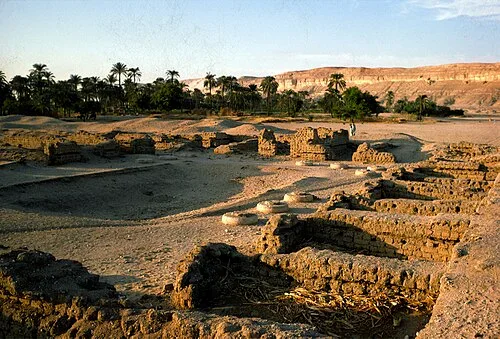 The Great and Small Temples of the Aten
The Great Temple of the Aten: An Unroofed Sanctuary
At the center of the city stood its principal sanctuary, the Great Temple of the Aten. It was designed unlike any Egyptian temple before it: the offering courts had no roof, so the sun's rays fell directly on the tables laid out for the disc. The temple's design provided for hundreds of these offering tables, standing open to the sky. Construction began around 1346 BC and was probably finished by 1341 BC. To build that fast, nearly everything was raised in standardized mudbrick and whitewashed; only the most important buildings were faced with local stone. Flinders Petrie dug in this Central City area in 1891 and 1892, the first systematic excavation here.
Listen in the appOrell Witthuhn · CC BY-SA 4.0
06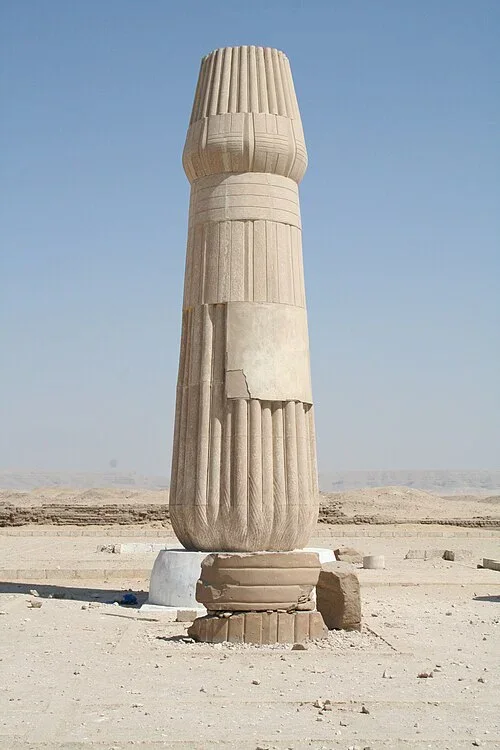 The Great and Small Temples of the Aten
The Small Aten Temple: Afterlife of a Heretic City
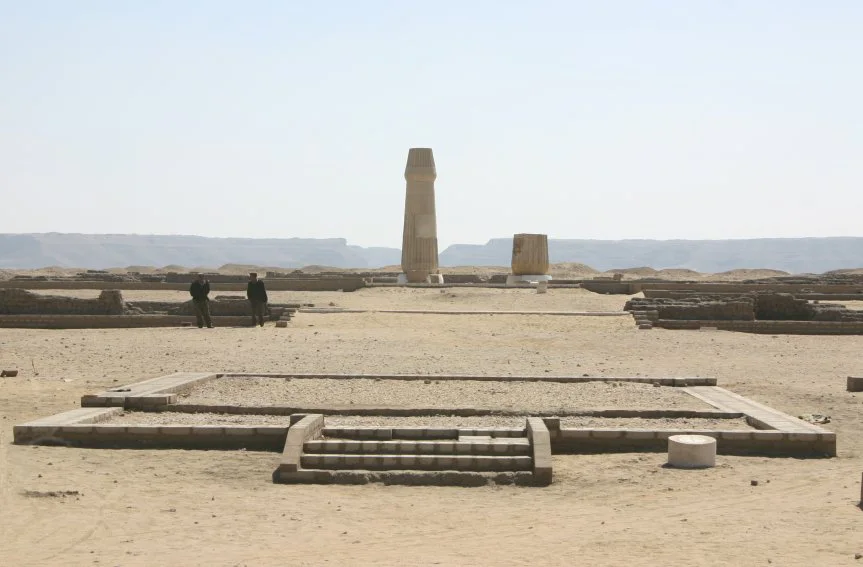
This tall column, rebuilt from stacked blocks, carries two stories: what this second sanctuary was, and what became of the city. The Small Aten Temple was the second sanctuary of the sun disc in the central city. When Akhenaten died in 1332 BC, the court under Tutankhamun quit Amarna for Thebes and turned back to Egypt's traditional gods. The city stayed active only about another decade. A shrine to the later pharaoh Horemheb shows that some people still lived here early in his reign, partly quarrying the place for building material. After that it lay uninhabited until Roman settlement began along the edge of the Nile. Later pharaohs treated it as the heretic's city and dismantled its masonry.
Listen in the appPhoto: Einsamer Schütze · CC BY-SA 3.0
07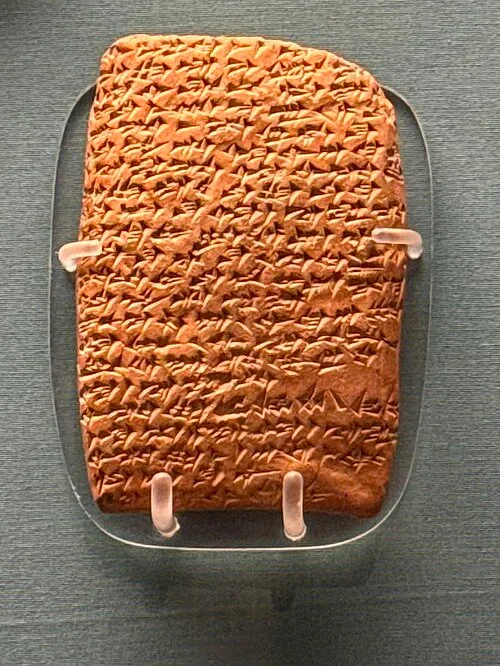 The Bureau of Correspondence and Royal Highway
The Amarna Letters: Mail from the Great Powers
Behind the Royal Residence in the central city lay the Bureau of Correspondence of Pharaoh, where the king's mail was kept. In 1887 a local woman digging for sebakh, the organic matter farmers used as fertilizer, struck a cache of clay tablets, more than three hundred of them. They are the Amarna Letters, the diplomatic correspondence of the pharaoh with rulers across the Near East. Most were written in Akkadian, the common language of diplomacy in the Late Bronze Age, pressed in wedge-shaped cuneiform. The tablet here, now in the British Museum in London, is a letter from Biridiya, king of Megiddo, a vassal ruler in Canaan writing to the Egyptian court. The find made the site's importance plain and set off a wave of exploration. Flinders Petrie later sifted the palace rubbish heaps nearby and turned up further tablets.
Listen in the appPhoto: SpeakingArch · CC BY-SA 4.0
08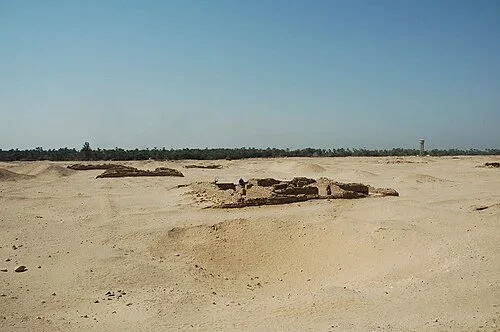 The Studio of Sculptor Thutmose
In the Southern Suburb, among the estates of the city's most powerful nobles, stood the house and studio of the sculptor Thutmose. The neighborhood held grand residences; Nakhtpaaten the Chief Minister lived here, and so did Ramose the Master of Horses. Thutmose's compound combined a home with workshops where the portraits of the royal family were produced. From 1907 the German Oriental Society expedition under Ludwig Borchardt worked through these suburbs, surveying first and digging from 1911. The ruins today are low, a scatter of walls in open desert. This unassuming compound was the workshop of the city's royal image-makers.
Listen in the appPhoto: Didia · CC BY-SA 3.0
09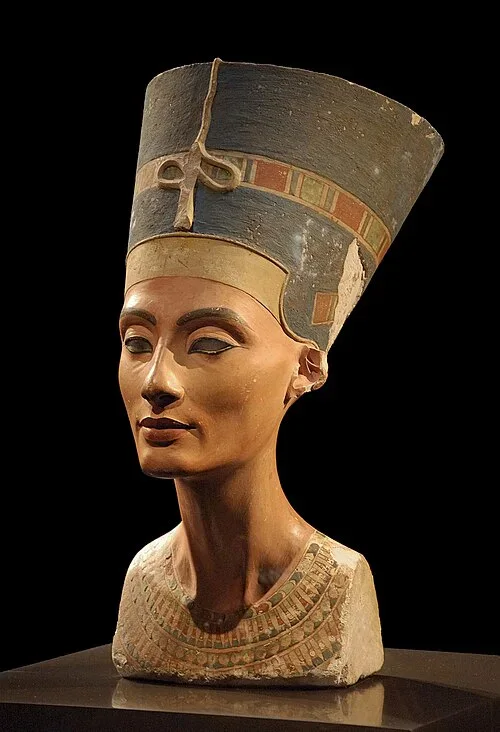 The Studio of Sculptor Thutmose
The Bust of Nefertiti
On December 6, 1912, Borchardt's workers, excavating the residential studio of Thutmose, unearthed a painted limestone bust of Queen Nefertiti. It was astonishingly preserved, the modeling crisp and the color still fresh. Borchardt wrote in his excavation diary that describing it in words was useless; one could only stand and gaze at it. The tall blue crown with its ribbon, the long neck, the sharply drawn brows: this is the lifelike portraiture of the Amarna style at its height. The bust itself is now in Berlin's Neues Museum. What stayed at Amarna is the story of its making.
Listen in the appPhilip Pikart · CC BY-SA 3.0
10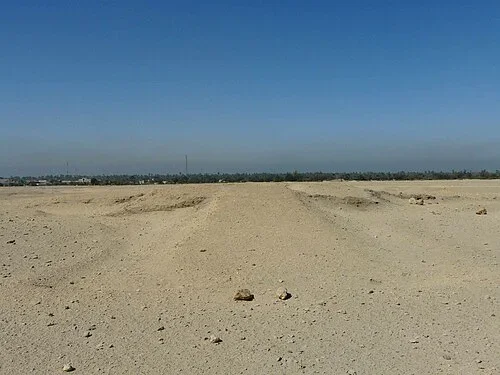 The Royal Wadi: Sepulchre of Akhenaten
The Royal Wadi: Road to the Royal Tomb
East of the plain a narrow desert gorge winds back into the cliffs: the Royal Wadi. Here, in the eastern hills, Akhenaten commanded tombs to be cut for the royal family, for himself, for his chief wife Nefertiti, and for his eldest daughter Meritaten. On his boundary stelae he recorded the instruction plainly: when he was dead, he was to be brought back to Amarna for burial. The king who built a city for the Aten meant to return to it at his death, to rest at the horizon of his god. The landscape carries the rest of the story, a bare wadi mouth, empty rock, far from the river and the living city.
Listen in the appPhoto: Kurohito · CC BY-SA 3.0
- 11
The Burial Chamber of Akhenaten
The pillared burial chamber of Akhenaten, emptied by robbers long before excavators reached it.
- 12
Southern Tomb 25: The Tomb of Ay, Plan and Purpose
Reading a noble tomb from its plan: forecourt, forest of columns, and a deep axis into the cliff.
- 13
The Great Hymn to the Aten: Closing the Circle
The Great Hymn to the Aten, carved in full on the walls of a noble's tomb.
Amarna
Frequently asked questions
How much does the guide cost?
Free app download. Listed guide price: $1.99. Guide price shown in the app. Audio guide only. Venue admission is separate.
Can I listen without internet?
Yes. Download the guide’s audio, images, and maps in the app before your visit. Your downloaded content is then available offline.
Can I listen in my language?
This audio guide is available in 15 languages, including English.
Do I need to follow a schedule?
No. This is a self-guided experience. Choose your stops, pause whenever you like, and return to a story at your own pace.
At your own pace
Explore Amarna.
Download Stanza, then search for “Amarna”.
Free app download · Guide price shown in the app
Keep exploring
Audio guides — Egypt
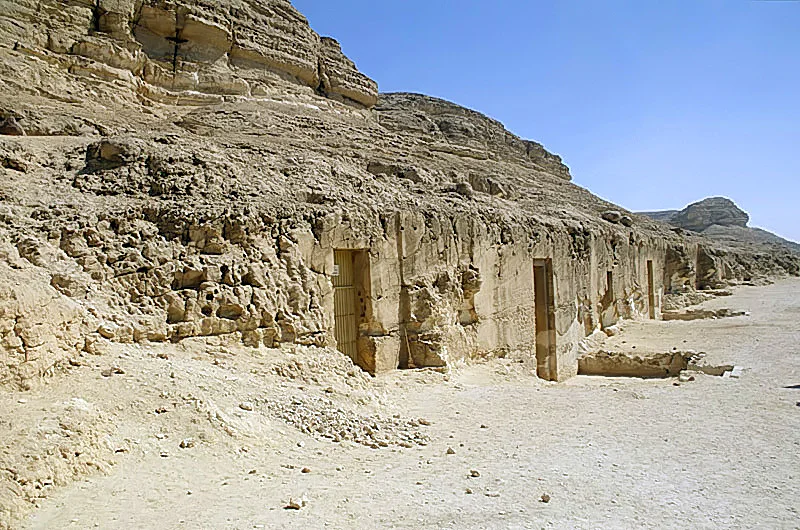
Al Fekreya City · 30 km
Beni Hasan
Content & sources
Roland Unger · CC BY-SA 3.0
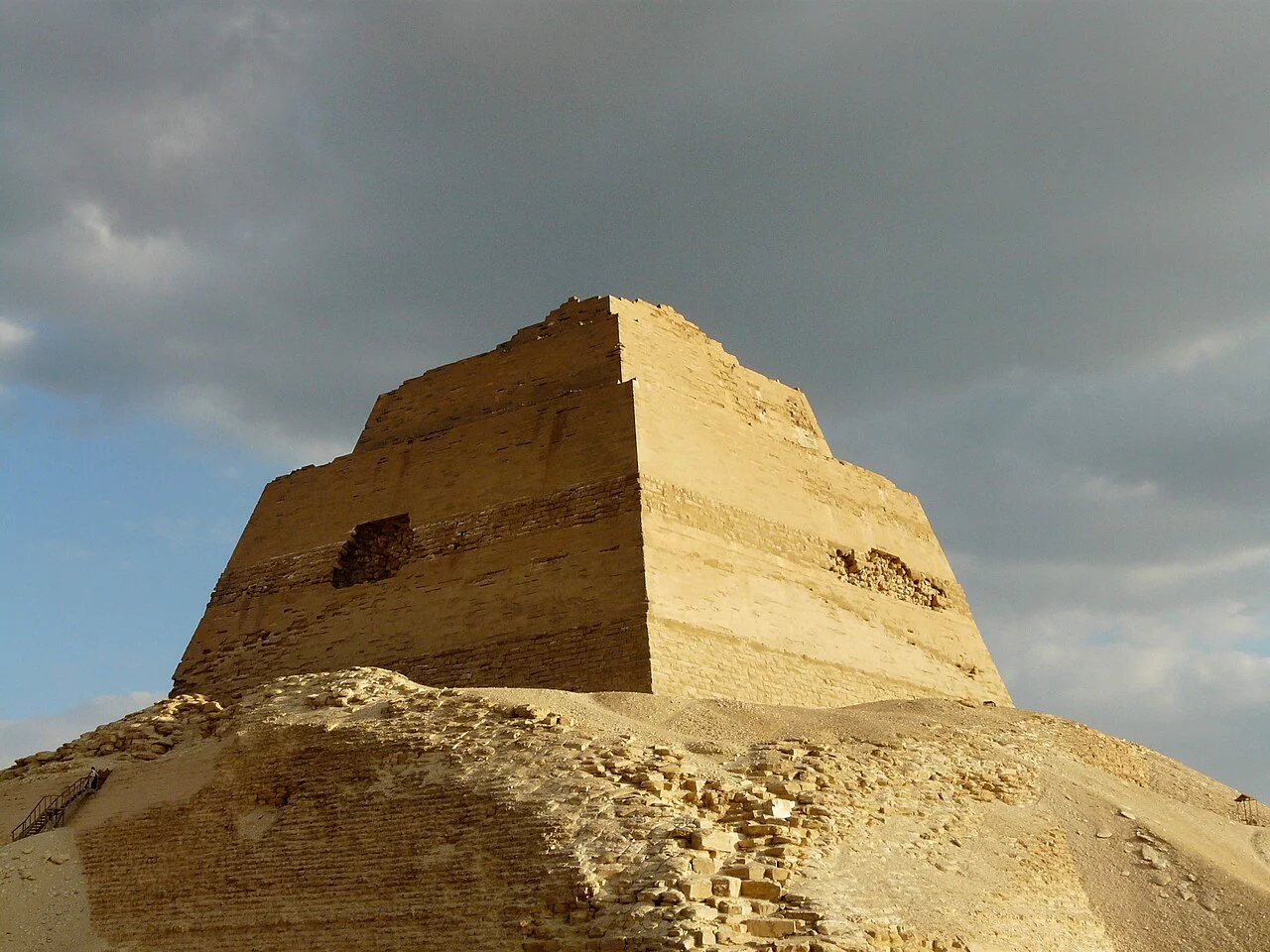
Meidoum
Meidum
Content & sources
Photo: Kurohito · CC BY-SA 3.0
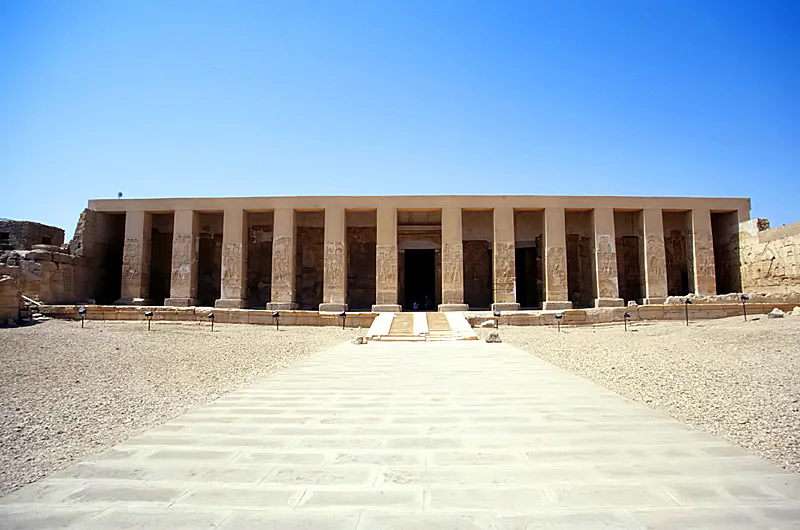
Bani Mansour
Abydos, Egypt
Content & sources
Roland Unger · CC BY-SA 3.0
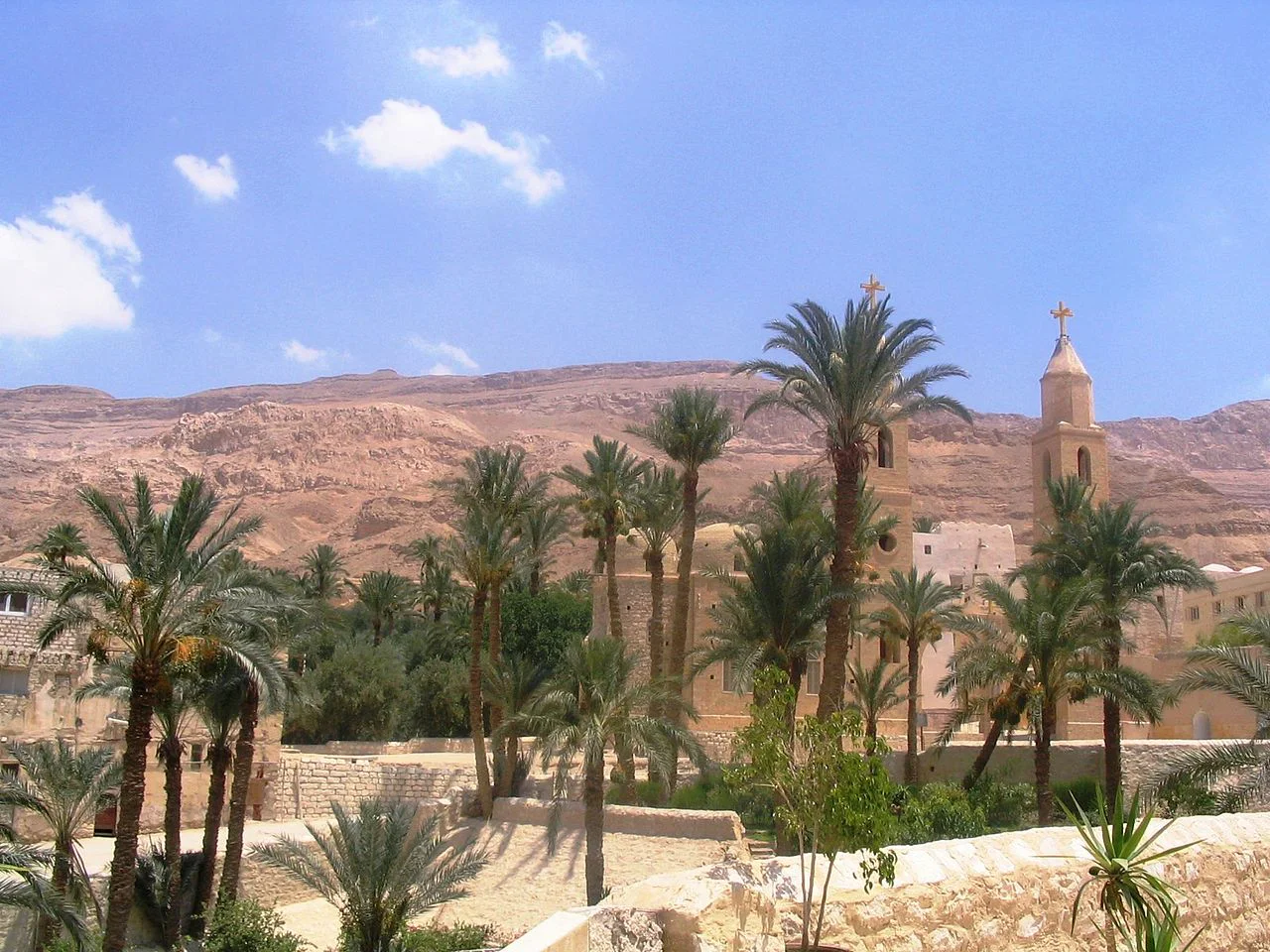
Monastery of Saint Anthony
Monastery of Saint Anthony
Content & sources
Tentoila (talk) · Public domain