Stanza · Audio guide
Saint Catherine's Monastery Audio Guide
A place to remember. A story to take with you.
Saint Catherine's Monastery is a Christian monastery located in the Sinai Peninsula of Egypt. It was built between 548 and 565 and is the world's oldest continuously inhabited Christian monastery.
Download Stanza, then search for “Saint Catherine's Monastery”.
About the tour
One guide. Your kind of visit.
Saint Catherine's Monastery is a Christian monastery located in the Sinai Peninsula of Egypt. It was built between 548 and 565 and is the world's oldest continuously inhabited Christian monastery.
Ready when you are.
- 01Get the free Stanza app.
iOS & Android
- 02Find your guide.
“Saint Catherine's Monastery”
- 03Download before you go.
Works offline
Audio guide / 13 narrated stops
Inside the guide
Get to know a few of the stories before you go. Open a stop to read more.
01 Outer Fortress Walls and Ancient Gateway
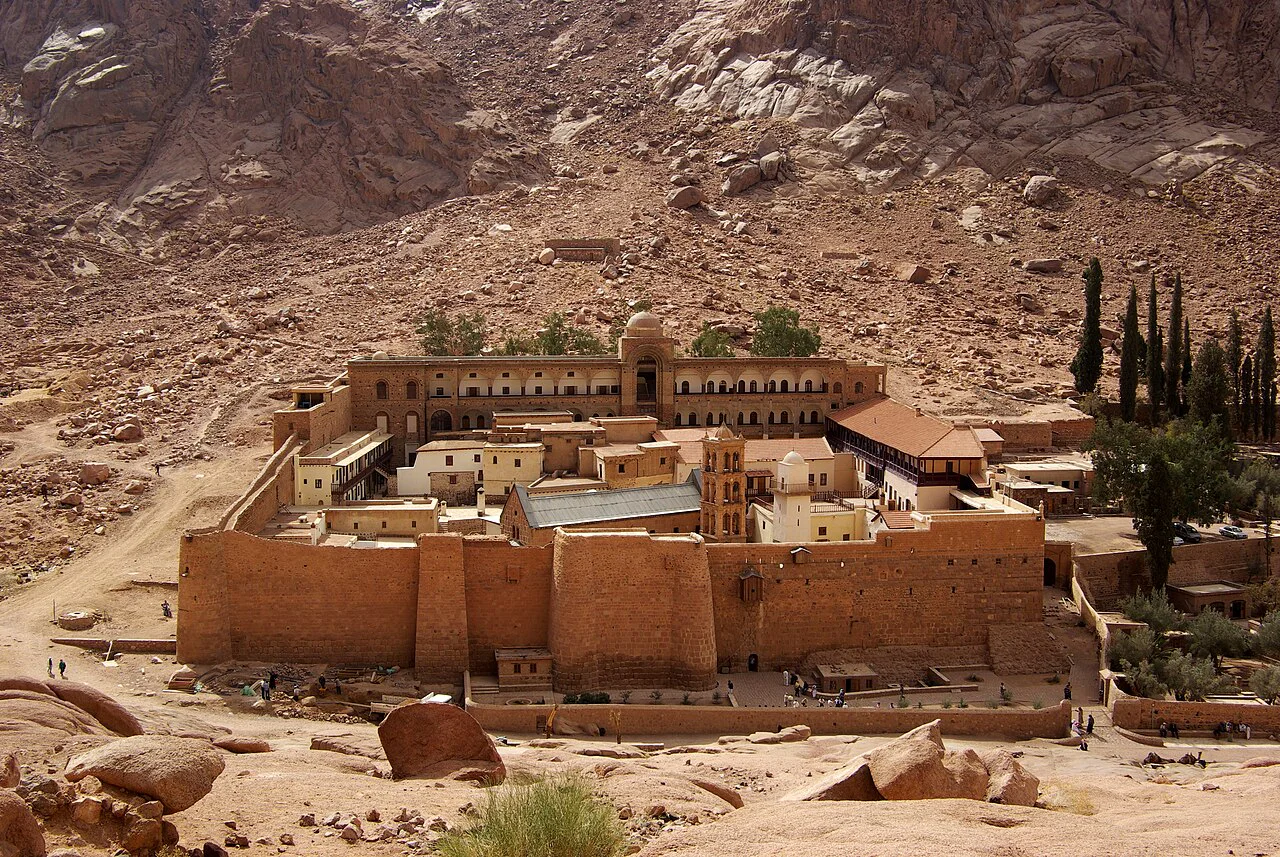
Fortress of Justinian at the Foot of Mount Sinai
Welcome to Saint Catherine's Monastery, in the high desert of the Sinai Peninsula. The granite walls of this fortress were raised by order of the Byzantine emperor Justinian, built between 548 and 565. Justinian meant them to enclose and protect the spot where Moses is said to have seen the burning bush. Around the enclosure rise three mountains: Jebel Musa, honoured as the biblical Mount Sinai, with Ras Sufsafeh and Jebel Arrenziyeb close by. The monastery holds a rare distinction. It is the oldest continuously inhabited Christian monastery in the world. In the earliest centuries, holy men lived alone as hermits across this desert. This fortress gathered them under one roof, and their community has lived here ever since.
Berthold Werner · CC BY-SA 3.0
02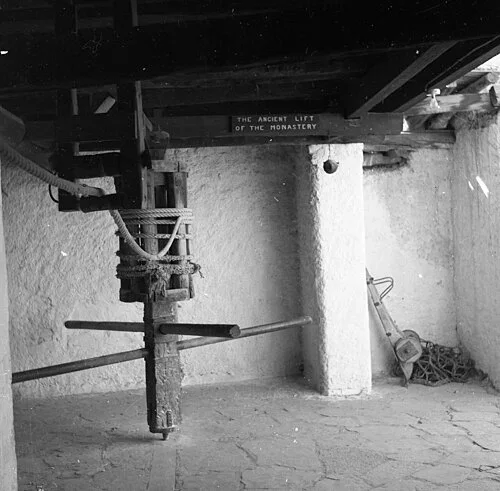 Outer Fortress Walls and Ancient Gateway
The Ancient Lift of the Monastery
For most of its history, this fortress kept the world at arm's length. Until the twentieth century, the only way in was through a door set high in the outer wall. There was no gate at ground level for strangers to force. Visitors and supplies alike went up and over the wall by rope. A great wooden winch stands under this roof, painted with the words 'The Ancient Lift of the Monastery.' Machines like it hauled a guest up to the high doorway, or drew up sacks of grain from below. It was a practical system, part security and part self-sufficiency. A monastery that could seal itself off could also provision itself, whatever was happening in the world outside.
Benno Rothenberg · CC BY 4.0
03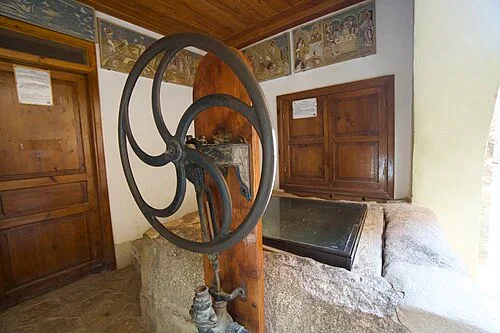 Central Courtyard and the Well of Moses
The Well of Moses
Water is the rarest thing in this desert, and inside the walls there is a well. Tradition gives it a name and a story: the Well of Moses. Here, the story goes, Moses met Zipporah, the woman he would marry. The well is no memorial, though. It still counts among the monastery's main sources of water. A hand pump now stands beside it, and painted panels hang on the wall above. The site is still tended and decorated for the pilgrims who come to it, just as it has been for centuries.
Listen in the appPhoto: CosMapi · CC BY-SA 4.0
04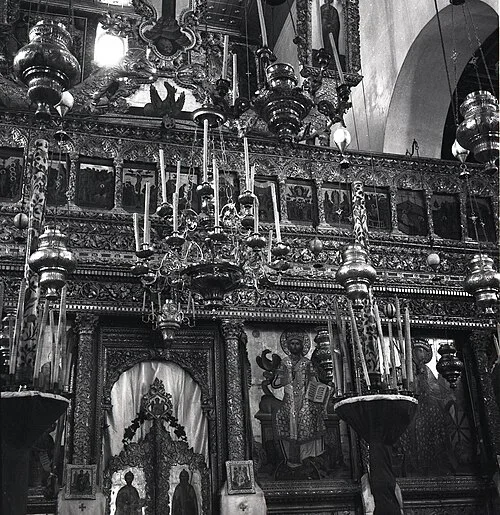 Church of the Transfiguration
Inside the Church of the Transfiguration
Every monastery has a heart, and here it is the basilica of the Transfiguration. Justinian built this church as the centre of his fortress, around the chapel of the Burning Bush. Its patronal feast gives the whole community its great day of the year: the Transfiguration. Inside, the space is arranged for Orthodox worship as it has been for centuries. Rows of icons line the carved screen, the iconostasis, that separates the sanctuary from the nave. Great silver chandeliers hang overhead, holding candles for the services. The monks still sing the hours here every day. Above the altar, in the curve of the apse, glitters the church's finest treasure.
Listen in the appBoris Carmi · CC BY 4.0
05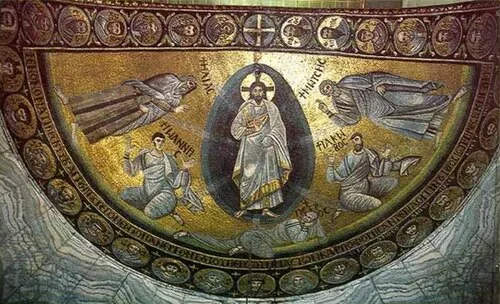 Church of the Transfiguration
The Apse Mosaic of the Transfiguration
The apse glitters with gold, and at its centre stands Christ, transfigured. He is wrapped in a great oval of light, the mandorla, shining brighter than the gold around it. On either side stand Moses and Elijah, the two figures the Gospel places beside him on the mountain. Below, the apostles recoil and shield their eyes, caught in the very moment. The scene is the Transfiguration, when Christ's divine light showed through his human body. It is the event this church is named for, the one its great feast celebrates each year. The mosaic dates to the early Byzantine centuries and survives as one of the monastery's irreplaceable works of art.
Listen in the appPhoto: Kalki · Public domain
06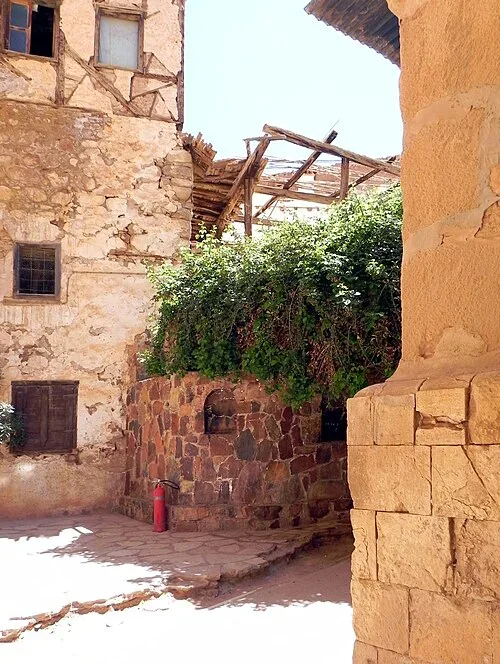 Chapel and Courtyard of the Burning Bush
The Burning Bush
Here is the reason the monastery exists at all. Against the wall grows a bramble, and the monks venerate it as the burning bush of the Bible, the bush Moses saw burning without being consumed. It is a living plant, tended as a living relic rather than a museum piece. Whether today's shrub is the very bush or its descendant, no one can say. The ground was sacred long before the fortress rose. In the fourth century the Empress Helena, mother of the emperor Constantine, ordered a chapel built here. It came to be known as Saint Helen's Chapel.
Listen in the appPhoto: Florz · CC0
07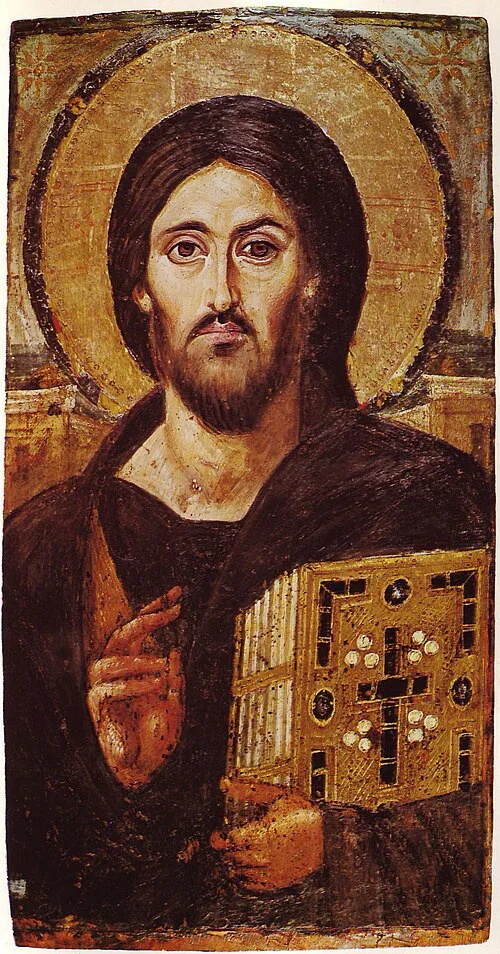 Monastery Museum: Early Byzantine Icons
Christ Pantocrator
A panel painted in hot wax, and the oldest known icon of Christ Pantocrator. Pantocrator means ruler of all, and it shows Christ as both judge and saviour. The painter worked in encaustic, pigment mixed into wax, the technique the earliest icon painters favoured. The face is famously uneven: one side stern, the other gentle. Some see that as deliberate, two natures of Christ in one face; others think it is the result of damage and repair. Either way, the panel comes from the first age of icon painting. In the eighth and ninth centuries, Byzantine emperors ordered the destruction of holy images, and most were burned. This monastery lay outside imperial control, so its icons escaped that iconoclasm, and a few from the fifth and sixth centuries survive here as unique examples.
Listen in the appUnknown author · Public domain
08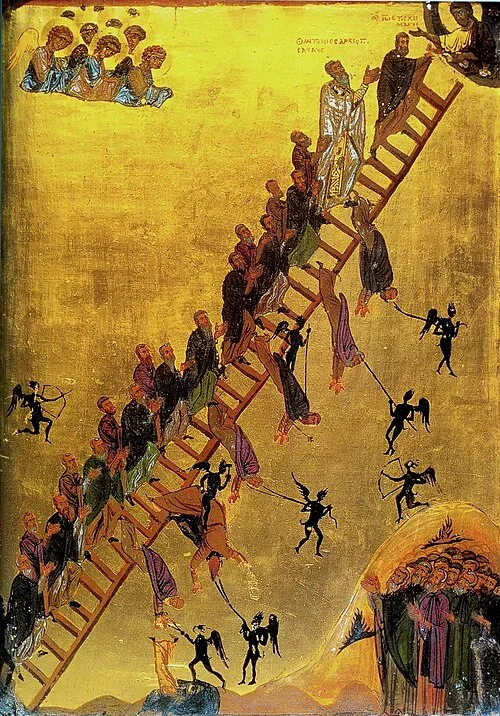 Monastery Museum: Early Byzantine Icons
The Ladder of Divine Ascent
Centuries after the Pantocrator, icon painting here took a new turn. During the era of the Crusades, Sinai became a meeting point of Eastern and Western artists. The monastery keeps more than a hundred and twenty icons in the hybrid Crusader style, by far the largest collection anywhere. Many were painted by Latins, probably monks, working in or around the monastery in the thirteenth century. This panel, from the twelfth or thirteenth, shows the Ladder of Divine Ascent, an image of monastic life itself. Monks climb a ladder from earth to heaven while demons pull at their robes and drag some down. At the top, a few reach the welcoming arms of Christ. The picture makes the monastic ideal plain: the climb is possible, and so is the fall. Patronage matched the mixing of styles. Even as their churches quarrelled, both the Byzantine emperors and the rulers of the Kingdom of Jerusalem supported the monastery.
Listen in the appPvasiliadis · Public domain
09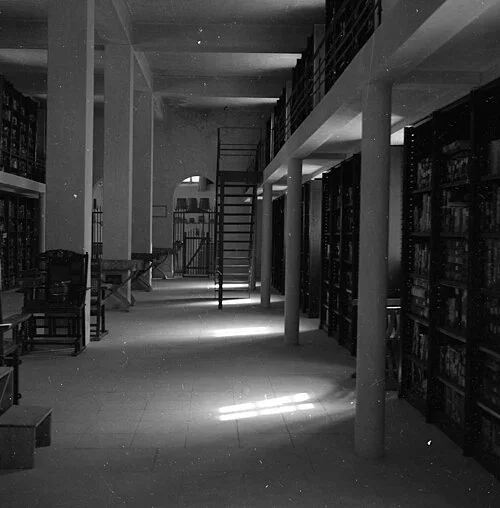 The Sacred Library and the Ashtiname
The Oldest Library
Behind these shelves lies what Guinness World Records calls the oldest continuously operating library in the world. It was founded with the monastery itself, sometime between 548 and 565, and it has never closed its doors. Its collection of early codices and manuscripts is the second largest in existence, after the Vatican's. It holds more than two thousand parchment manuscripts, in Greek, Syriac, Arabic, Georgian, Armenian and other languages. The library's most famous visitor came in the nineteenth century. Constantin von Tischendorf, a German scholar, visited first in 1844 and returned in 1859. He found the Codex Sinaiticus, a fourth-century Bible manuscript then the oldest almost complete one known. The codex went to Imperial Russia, in circumstances long disputed. In 1933 Stalin's government sold it to the British Museum, and it is now displayed in the British Library in London.
Listen in the appBenno Rothenberg · CC BY 4.0
10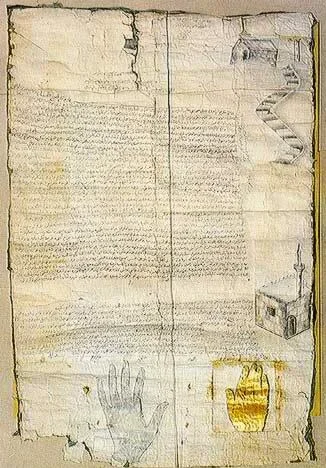 The Sacred Library and the Ashtiname
The Ashtiname of Muhammad
Among the library's treasures is a document of a different kind: the Ashtiname of Muhammad. According to monastic tradition, the Prophet Muhammad himself granted the monks this charter. It secured their property, freed them from taxes, and promised them freedom of worship. The name means something like a letter of safe conduct. The parchment kept here is a copy, marked with painted devices, including the imprint of a hand. Whether the original ever existed, and how close this copy stands to it, has long been debated. But the charter's promise matches the monastery's history. It endured under Muslim rule for centuries, through such instruments and the goodwill of its neighbours. Like the icons that escaped the iconoclasts, it is another chapter in the story of a community that survived by standing just outside the storms around it.
Listen in the appMohammed (?) · Public domain
- 11
The Minaret and the Bell Tower
A church bell tower and a mosque minaret side by side, and World Heritage recognition for three faiths.
- 12
The Charnel House
The monastery's ossuary, where the bones of generations of Sinai monks rest in wall niches.
- 13
The Monastery Garden
The monks' shaded garden, where the work of planting, watering and welcoming pilgrims continues as it always has.
Saint Catherine's Monastery
Frequently asked questions
How much does the guide cost?
Free app download. Listed guide price: $0.99. Guide price shown in the app. Audio guide only. Venue admission is separate.
Can I listen without internet?
Yes. Download the guide’s audio, images, and maps in the app before your visit. Your downloaded content is then available offline.
Can I listen in my language?
This audio guide is available in 15 languages, including English.
Do I need to follow a schedule?
No. This is a self-guided experience. Choose your stops, pause whenever you like, and return to a story at your own pace.
At your own pace
Explore Saint Catherine's Monastery.
Download Stanza, then search for “Saint Catherine's Monastery”.
Free app download · Guide price shown in the app
Keep exploring
Audio guides — Egypt
South Sinai Governorate · 73 km
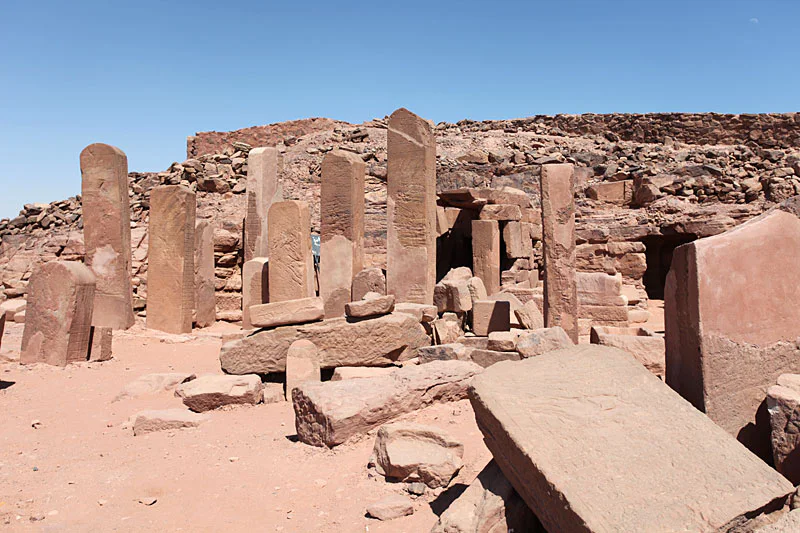
Serabit el-Khadim
Content & sources
Roland Unger · CC BY-SA 3.0
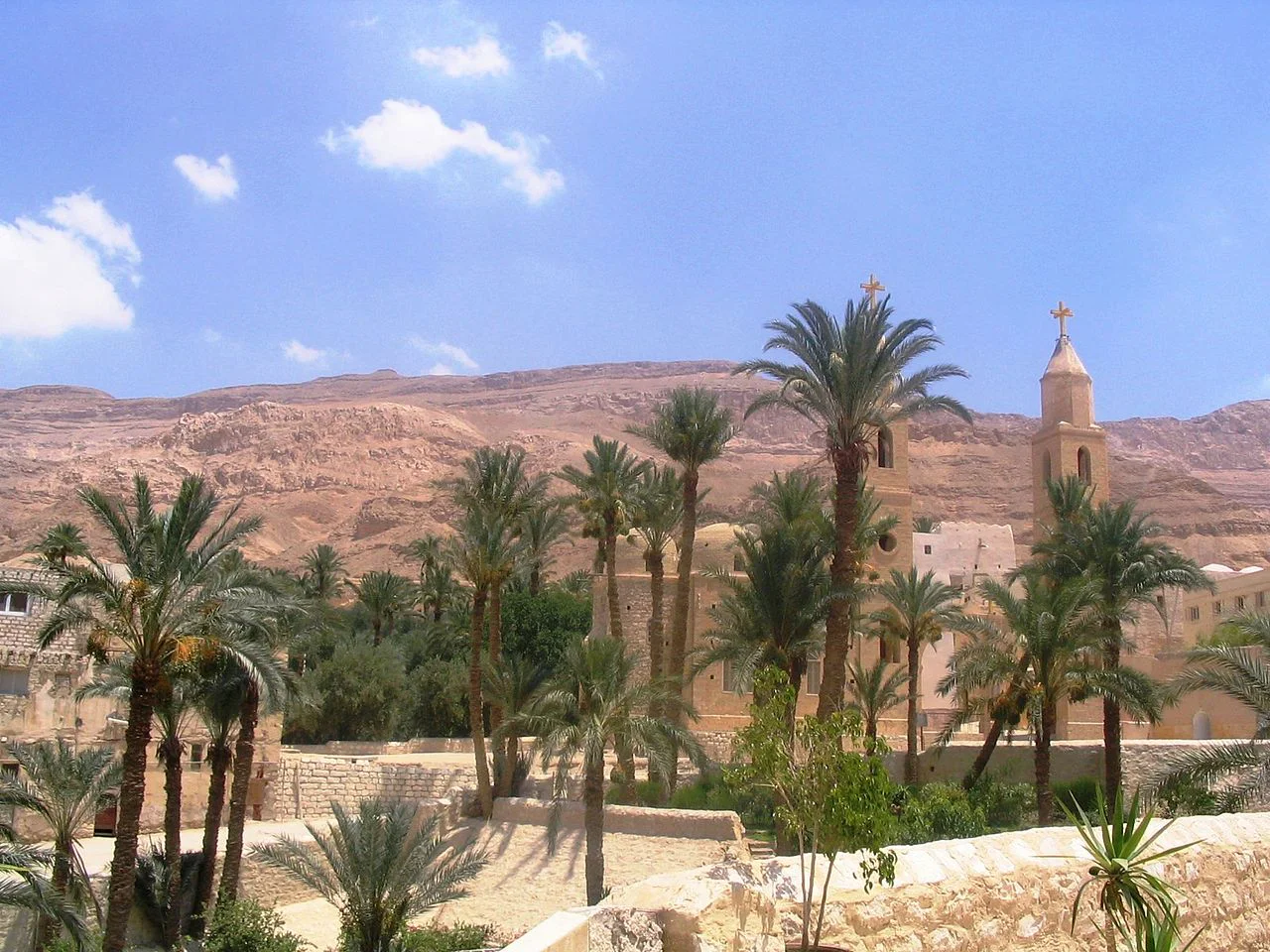
Monastery of Saint Anthony
Monastery of Saint Anthony
Content & sources
Tentoila (talk) · Public domain
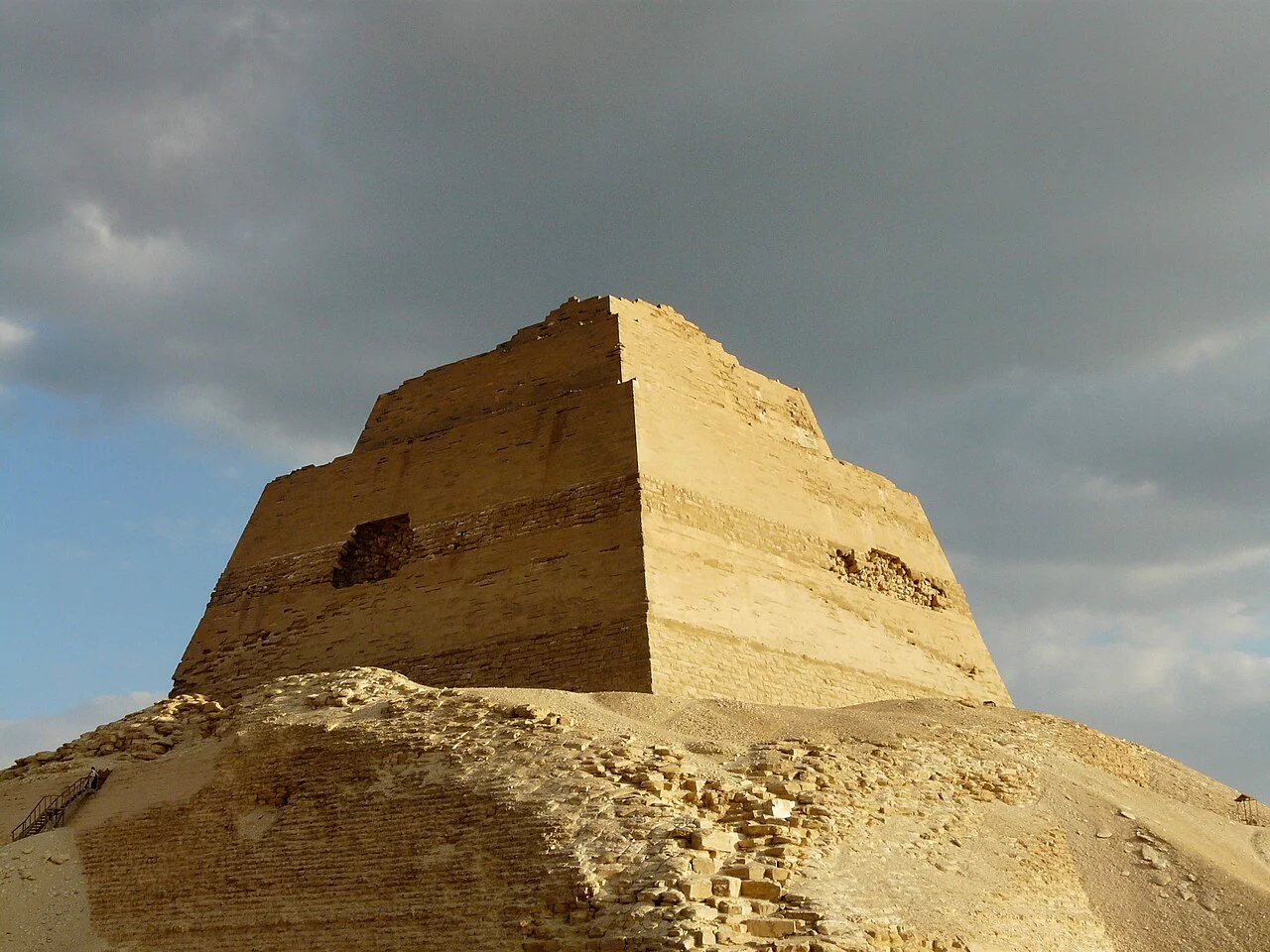
Meidoum
Meidum
Content & sources
Photo: Kurohito · CC BY-SA 3.0
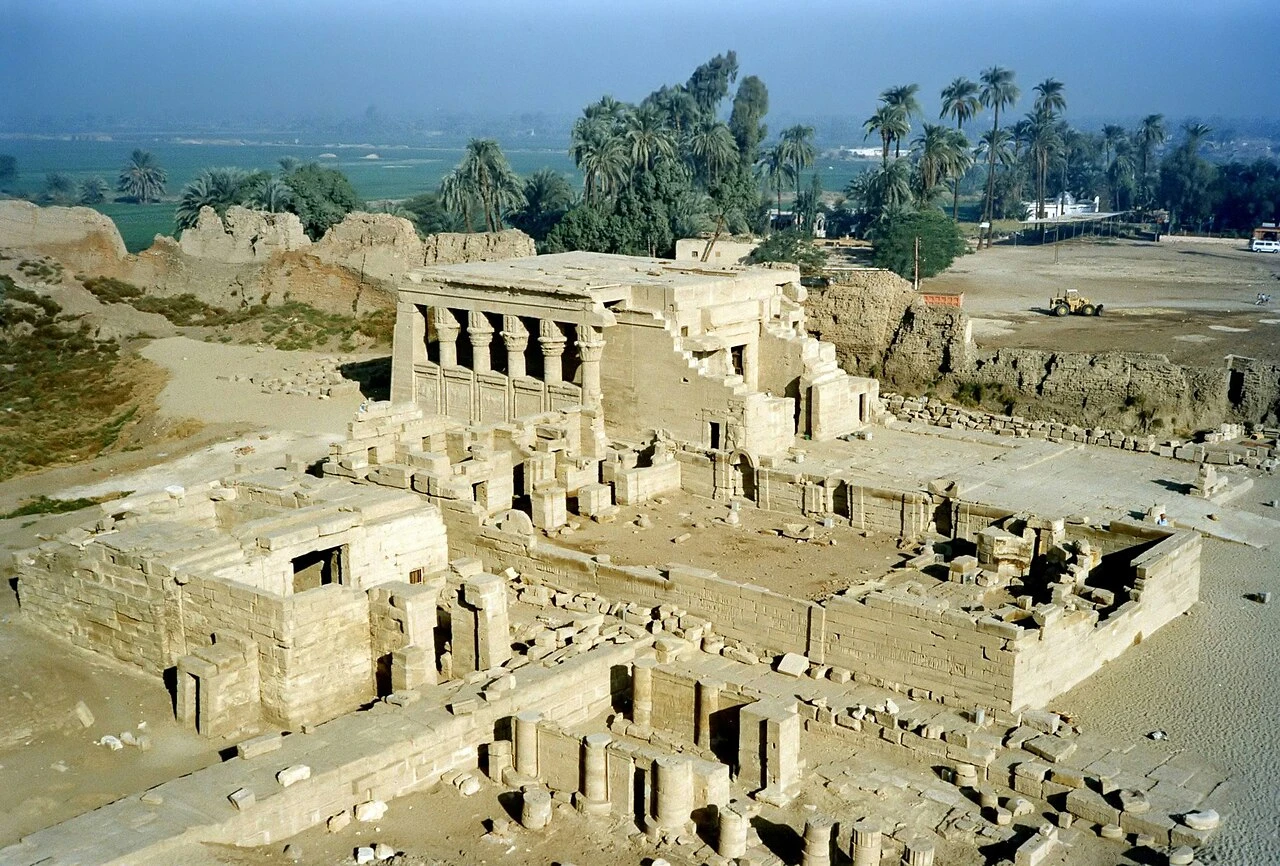
Dendera
Dendera Temple complex
Content & sources
Bernard Gagnon · CC BY-SA 3.0