Stanza · Audio guide
St. Nicholas Church, Tallinn Audio Guide
A place to remember. A story to take with you.
St. Nicholas Church is a medieval church building in Tallinn, Estonia. It was dedicated to Saint Nicholas, the patron of fishermen and sailors.
Download Stanza, then search for “St. Nicholas Church, Tallinn”.
About the tour
One guide. Your kind of visit.
St. Nicholas Church is a medieval church building in Tallinn, Estonia. It was dedicated to Saint Nicholas, the patron of fishermen and sailors.
Ready when you are.
- 01Get the free Stanza app.
iOS & Android
- 02Find your guide.
“St. Nicholas Church, Tallinn”
- 03Download before you go.
Works offline
Audio guide / 13 narrated stops
Inside the guide
Get to know a few of the stories before you go. Open a stop to read more.
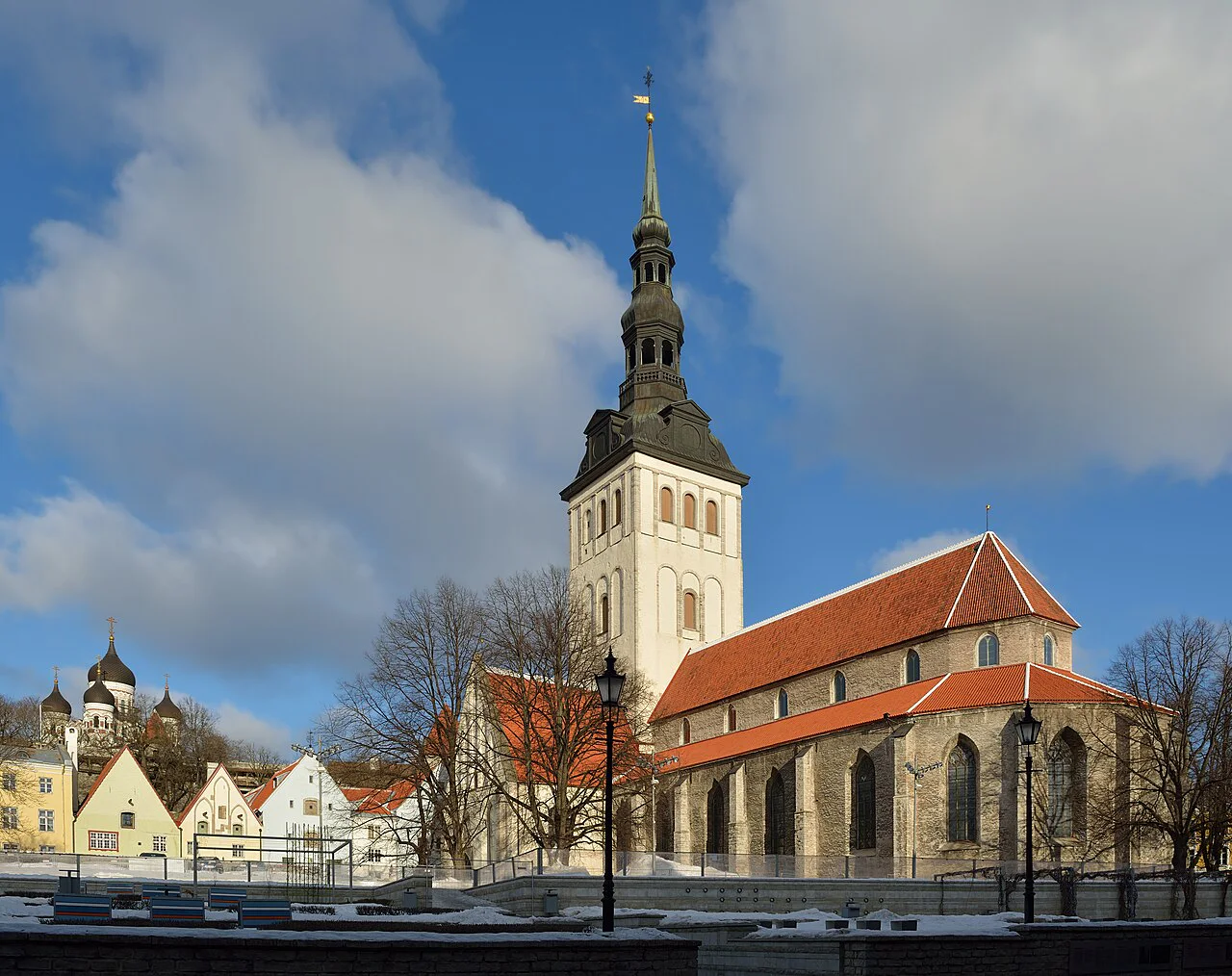
01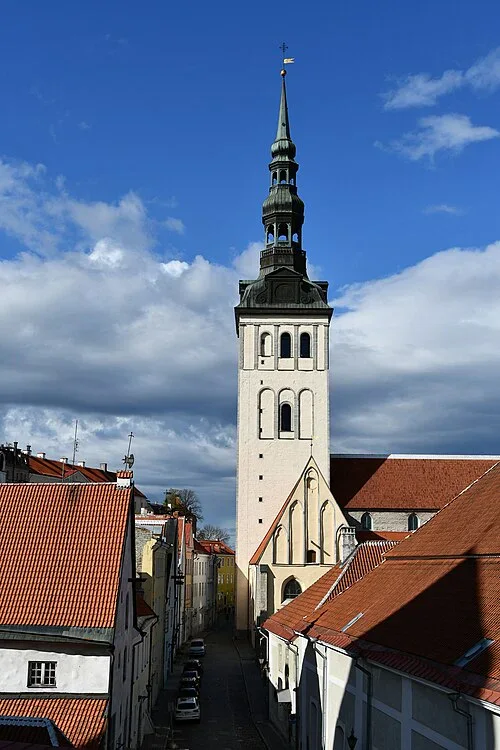 The Gothic Exterior and Fortified Portal
Tower of St. Nicholas Church
Welcome to St. Nicholas Church, known in Estonian as Niguliste kirik. Westphalian merchants founded it in the thirteenth century, having come to Tallinn from Gotland. They dedicated their church to Saint Nicholas, and the building grew along with the city around it. In 1515 the tower was raised and topped with a late-Gothic spire. That spire was later replaced with a Baroque one, and the tower rose higher stage by stage over the centuries. The tower now reaches 105 metres, and it still anchors the skyline of the old town. Today the church is deconsecrated and houses the Niguliste Museum, a branch of the Art Museum of Estonia.
Ivo Kruusamägi · CC BY-SA 4.0
02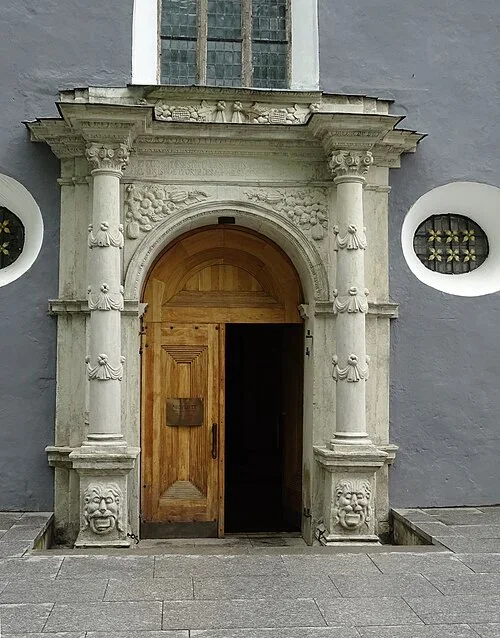 The Gothic Exterior and Fortified Portal
Entrance Portal
The carved columns and grim little masks of this portal guard one of the best stories in Tallinn. In 1523 the Reformation reached the city, and icon-breaking crowds went from church to church. When the mob came here, the doors would not open. The head of the congregation had poured molten lead into the church's locks. The unruly crowd could not force its way in. One telling dates the riots to 1524 rather than 1523, but the trick is the same in every version. St. Nicholas was the only church in the lower town whose interior came through the image-breaking untouched. One man's quick thinking saved its fittings where so many others were lost.
Photo: Ad Meskens · CC BY-SA 4.0
03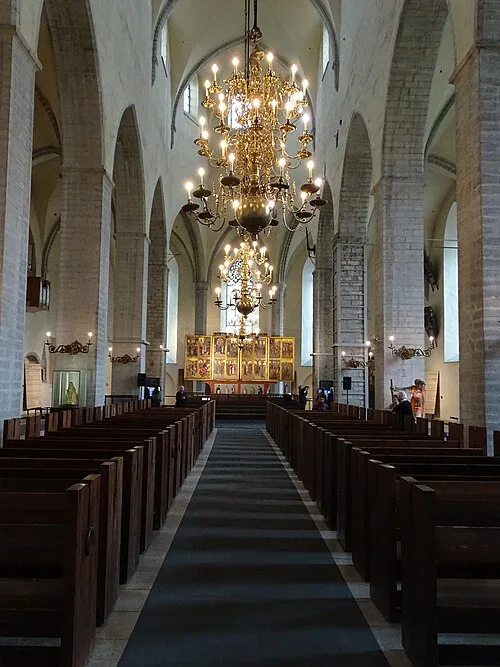 The Nave and Basilical Architecture
Nave and Basilica Architecture
The nave records how this church changed jobs over its first two centuries. In its earliest years the city had no wall yet, so the church itself had to be strong. Its entrances carried heavy bars, and it had loopholes and hiding places for refugees. When the town wall enclosed the church in 1310, that defensive role fell away, and it became a typical medieval parish church. Between 1405 and 1420 the central aisle took on its present form. A row of high windows, called a clerestory, was raised above the side aisles, turning the church into a basilica. The tall arcades lift the eye towards those high windows, and the altar waits at the far end.
Listen in the appPhoto: Ad Meskens · CC BY-SA 4.0
04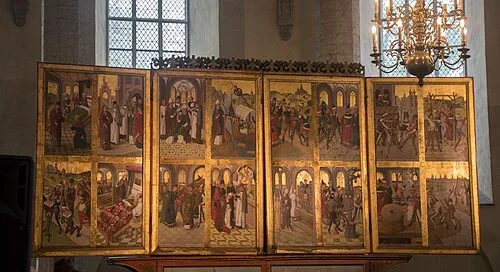 The Sanctuary Choir and Hermen Rode High Altar
Hermen Rode High Altar
The high altar is the showpiece of the church. Work began in 1478 in the workshop of Hermen Rode, a master painter of Lübeck, and the finished altar reached Tallinn in 1481. Opened, it stretches just over six metres wide. That makes it one of the largest northern German altarpieces of the fifteenth-century Hanseatic world. Tallinn's Great Guild and the Brotherhood of Blackheads commissioned it, and their coats of arms appear both on the outer wings and on the ship that Saint Nicholas rescues. Closed, the wings show sixteen scenes from the lives of Saints Nicholas and Victor. Opened, more than thirty carved and gilded figures form a gallery of saints. Over forty saints and biblical figures appear across the painted panels. An altar of this size, shipped in from Lübeck, shows how far the wealth of Tallinn's merchants reached.
Listen in the appPhoto: WanderingTrad · CC BY-SA 4.0
05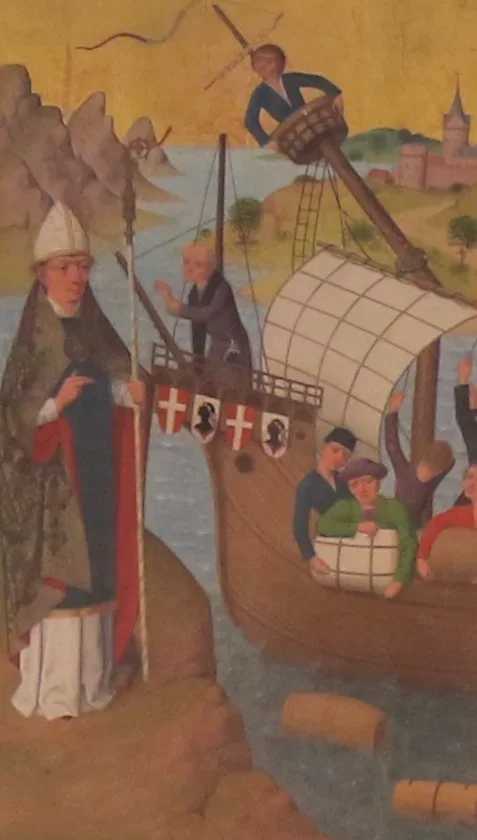 The Sanctuary Choir and Hermen Rode High Altar
Saint Nicholas and the Ship (Altar Detail)
On the painted altar, a bishop stands on a rocky shore beside a ship. He wears a mitre and rich vestments and holds his crozier, while sailors work the deck and a figure watches from high on the mast. The shields along the ship's side carry crosses and black silhouetted heads. The bishop is Saint Nicholas himself, patron of fishermen and sailors. That patronage lies behind the church's dedication. Merchants whose livelihoods crossed the Baltic placed their church under the protection of the saint who guarded men at sea.
Listen in the appAndrewrabbott · CC BY-SA 4.0
06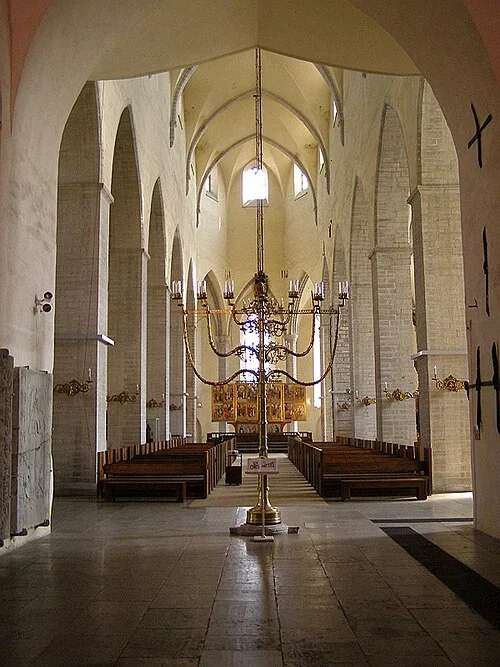 Hans Bouwer's Seven-Branched Candelabrum
Seven-Branched Brass Candelabrum
Rising from the floor of the central aisle stands a brass candelabrum with seven branches. It reaches about four metres high, which places it among the largest in Europe. The wealthy Tallinn merchant Hans Bouwer gave it to the church in 1519. At the top of the middle branch stands a double-sided figure of the Virgin Mary with the Child, seated on a throne. A single merchant's gift, four metres of brass, given to stand before the altar of his parish.
Listen in the appPhoto: Raul6 · CC BY 3.0
07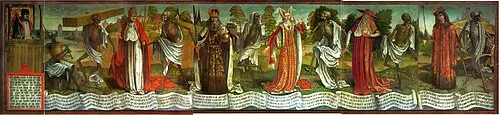 St. Anthony's Chapel and Bernt Notke's Danse Macabre
Bernt Notke's Danse Macabre
Bernt Notke, a master from Lübeck, painted the Dance of Death at the end of the fifteenth century. It is among the most internationally famous late medieval artworks in Estonia. The picture shows a procession in which skeletal figures of Death lead people of every rank along together, the mighty and the feeble side by side. It opens with a preacher in his pulpit, a text in Low German hanging beside him, and a skeleton at his side playing the bagpipe. From there Death leads on a pope, an emperor, an empress, a cardinal and a king. The human figures stand stiff and upright in costly robes of their station, their faces vivid and alive. The skeletons move, in far livelier poses than the people they seize. Behind them stretches an autumn landscape of yellowing trees, with small peasants and dogs at work in the distance. Notke painted this as a repeat of a Dance of Death he had made for St. Mary's Church in Lübeck, decades earlier.
Listen in the appBernt Notke · Public domain
08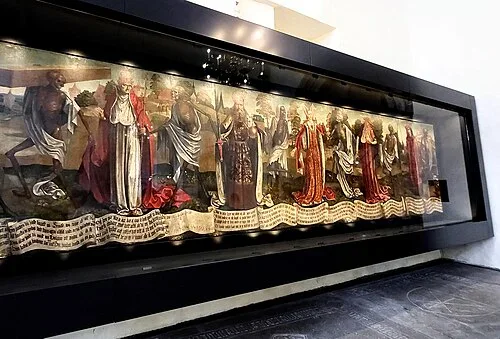 St. Anthony's Chapel and Bernt Notke's Danse Macabre
Surviving Fragment of the Danse Macabre
Only the beginning of the great painting survives. The original was about thirty metres wide, and the fragment keeps just its opening stretch, with thirteen figures. It is displayed in St. Anthony's Chapel, behind glass in a long black case. What is missing matters as much as what remains. The procession once ran on far beyond these figures, and no one knows how many people Death originally led, how long the painting stood, or who paid for it. The church's account books from the time do not mention it, so it was probably the gift of a wealthy private person, a guild or a brotherhood. One curious footnote from a later age: when central heating was installed in 1926, thirty barrelfuls of bones were carried out of the church.
Listen in the appPhoto: Hei1972 · CC BY-SA 4.0
09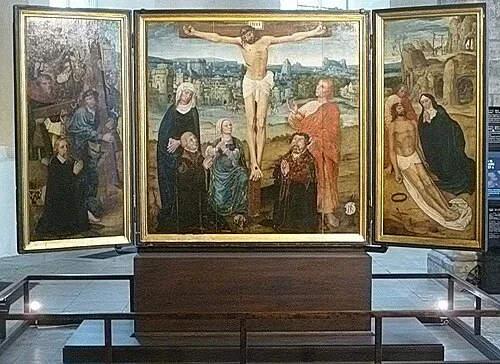 Netherlandish Masterpieces: The Passion Altarpiece
The Passion Altarpiece (circle of Adriaen Isenbrant)
A triptych opens on a Crucifixion, with Mary and John beneath the cross and painted wings on either side. It is attributed to the circle of Adriaen Isenbrant, a master of Bruges, and was made in the early fifteen-tens. The church also holds an altarpiece of Christ's Passion from the workshop of that same Bruges master, made at the order of the powerful Brotherhood of Blackheads. Whether this triptych is that very altar remains an open question. What is certain is the connection it represents. Paintings made in Bruges, ordered by Tallinn's brotherhoods, travelled the same sea routes as the cloth and salt, and this panel is a piece of that trade made visible.
Listen in the appPhoto: JoJan · Public domain
10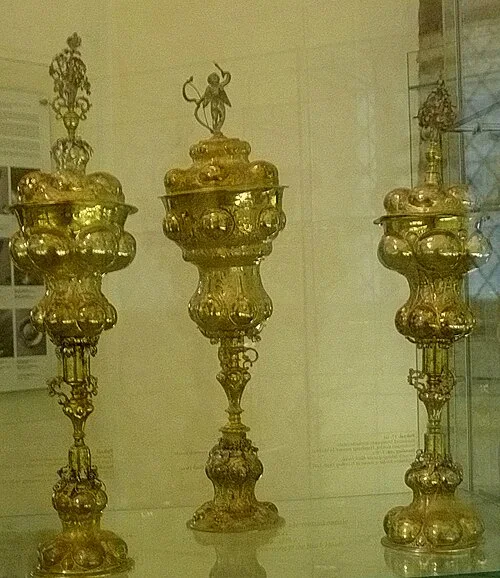 The Silver Chamber Treasury
Covered Cups in the Silver Chamber
The Silver Chamber gathers the silver of Tallinn's collective bodies: guilds, craft corporations and the Brotherhood of Blackheads. These treasures belonged to institutions rather than to single households, and each body kept its silver as common wealth, held for the whole company. Tall covered cups like these, each crowned with a small figure, were the kind of vessel a guild might set out at its ceremonial table. Together they show the brotherhoods from another side: the same merchants who paid for altars also drank, feasted and marked occasions from their own common silver.
Listen in the appPhoto: JoJan · Public domain
- 11
Tomb Slab of Johannes Ballivi
A carved skeleton of 1520 on a tomb slab, death remembered on one man's own grave.
- 12
Epitaph of Alexander von Essen
A heraldic epitaph in full colour, and the duke whose unburied body lay on show for nearly two centuries.
- 13
Nave and Organ Gallery
The 1944 bombing, the long restoration, and the church's life today as a concert hall and museum.
St. Nicholas Church, Tallinn
Frequently asked questions
How much does the guide cost?
Free app download. Listed guide price: $0.99. Guide price shown in the app. Audio guide only. Venue admission is separate.
Can I listen without internet?
Yes. Download the guide’s audio, images, and maps in the app before your visit. Your downloaded content is then available offline.
Can I listen in my language?
This audio guide is available in 15 languages, including English.
Do I need to follow a schedule?
No. This is a self-guided experience. Choose your stops, pause whenever you like, and return to a story at your own pace.
At your own pace
Explore St. Nicholas Church, Tallinn.
Download Stanza, then search for “St. Nicholas Church, Tallinn”.
Free app download · Guide price shown in the app
Keep exploring
Nearby audio guides
Tallinn · 1 km
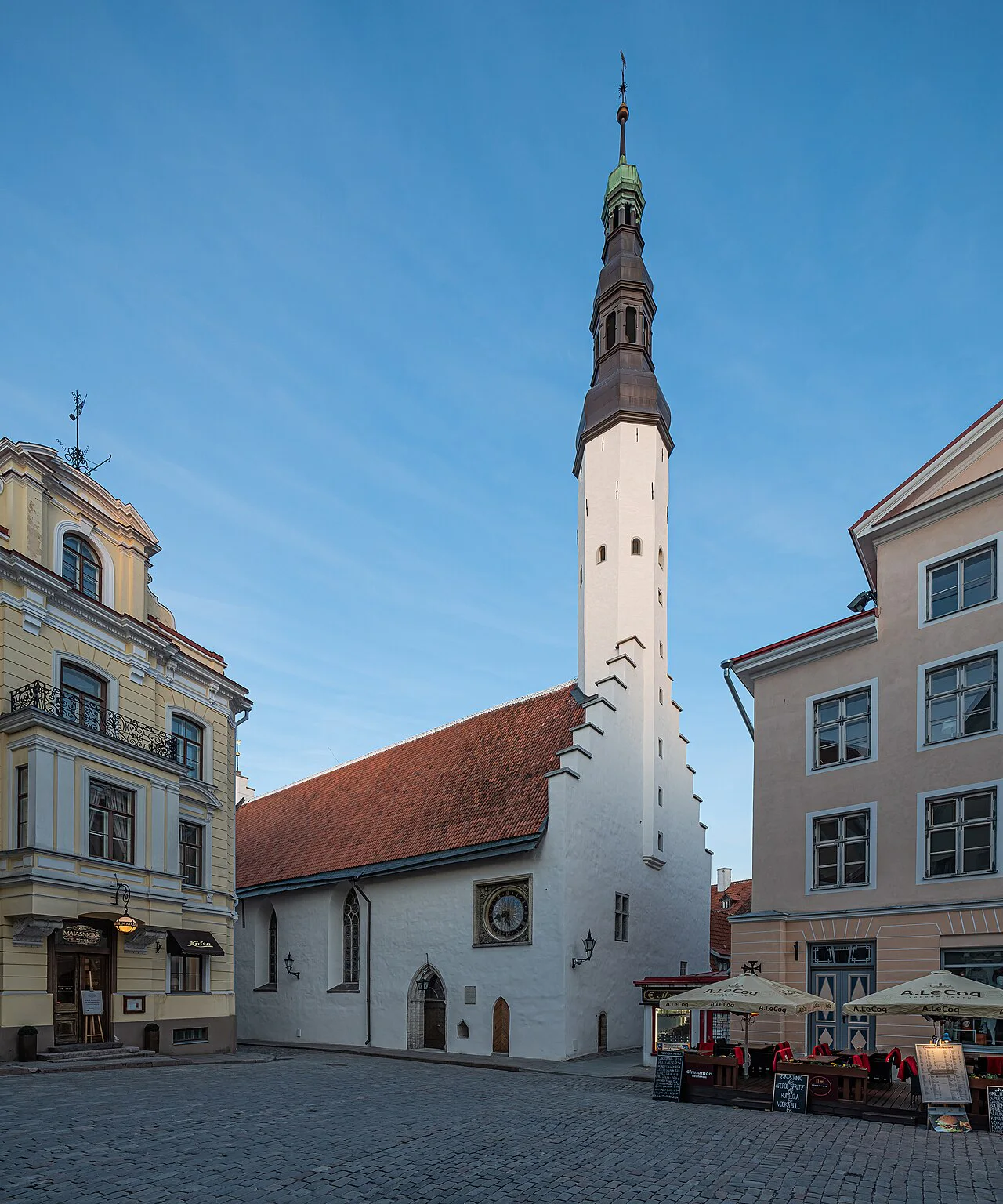
Church of the Holy Spirit, Tallinn
Content & sources
Photo: A.Savin · FAL
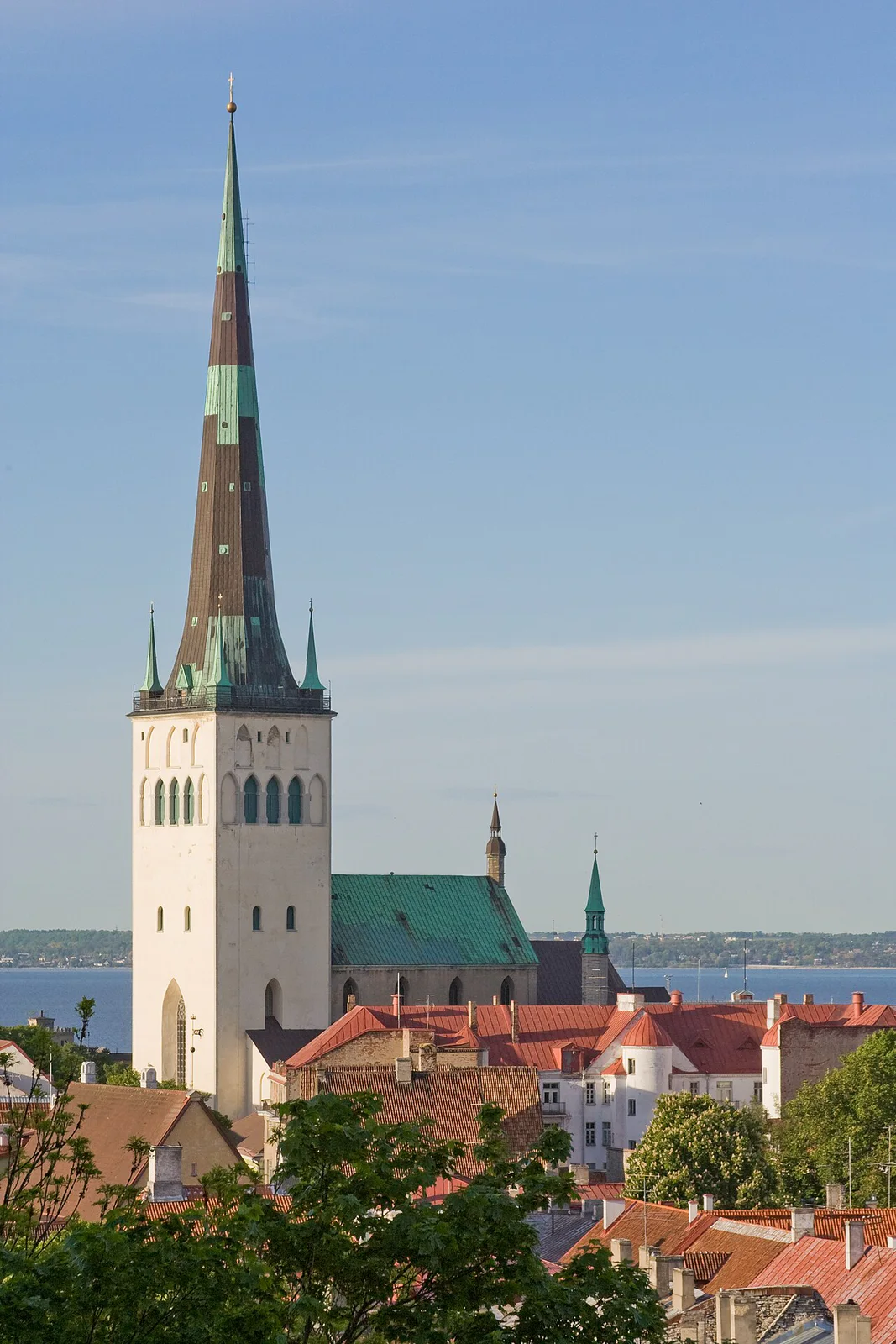
Tallinn · 1 km
St. Olaf's Church, Tallinn
Content & sources
Olga Itenberg · CC BY 2.0
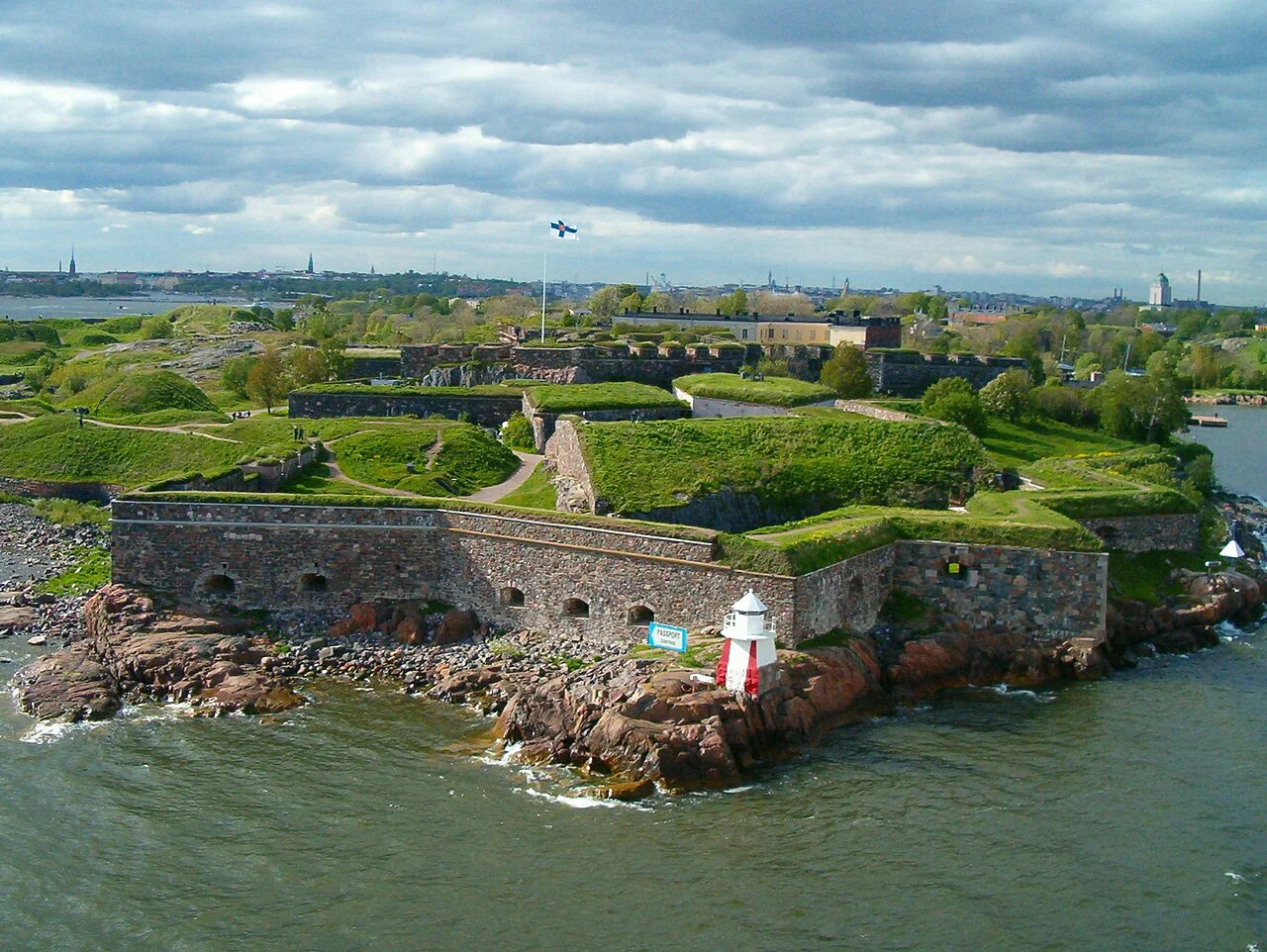
Helsinki · 80 km
Suomenlinna
Content & sources
Michal Pise, Michal.Pise · CC BY 2.0
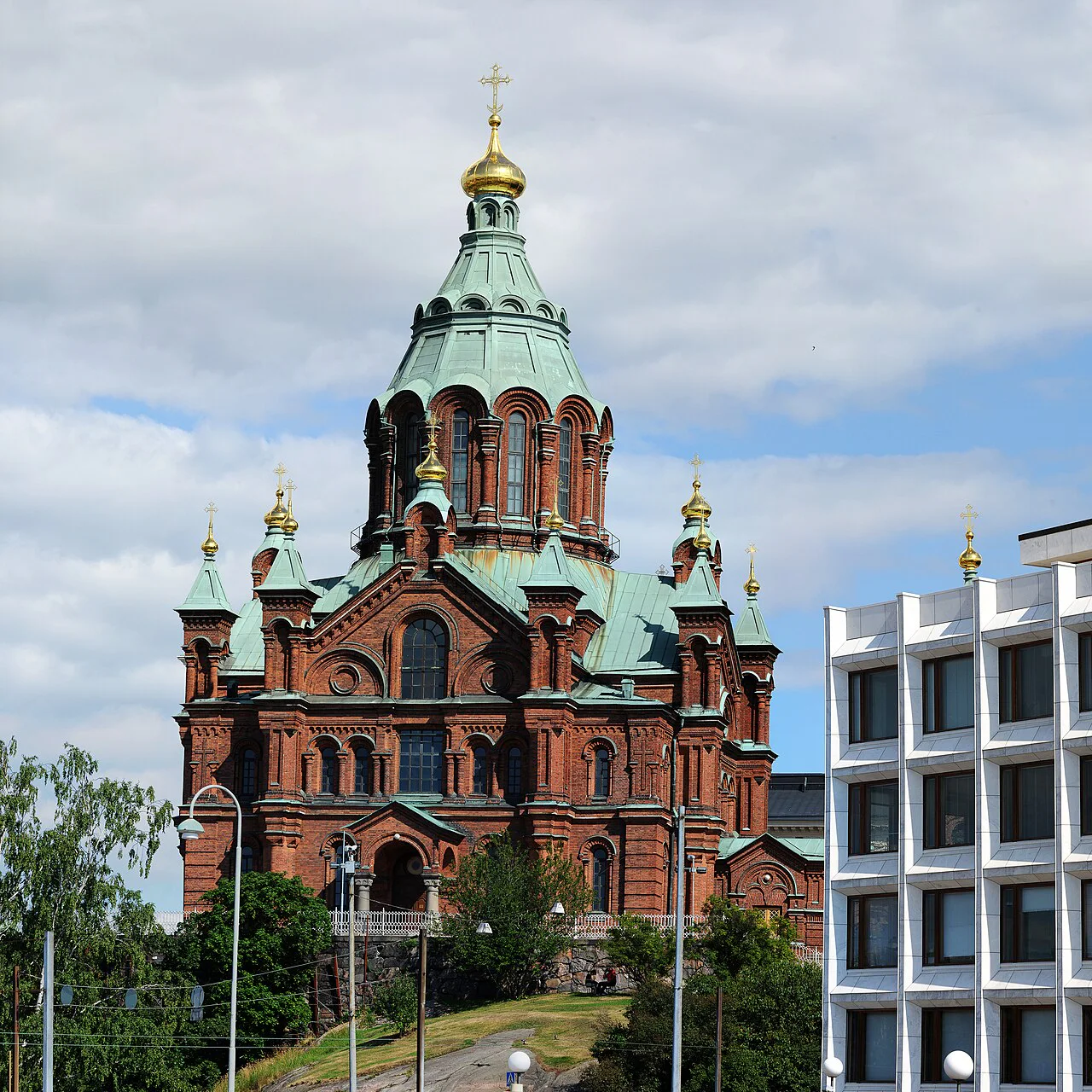
Helsinki · 82 km
Uspenski Cathedral
Content & sources
Ralf Roletschek (talk) - Fahrradtechnik auf fahrradmonteur.de · FAL