 Stanza / Audio guide
Content & sources
Stanza · Audio guide
Uspenski Cathedral Audio Guide
A place to remember. A story to take with you.
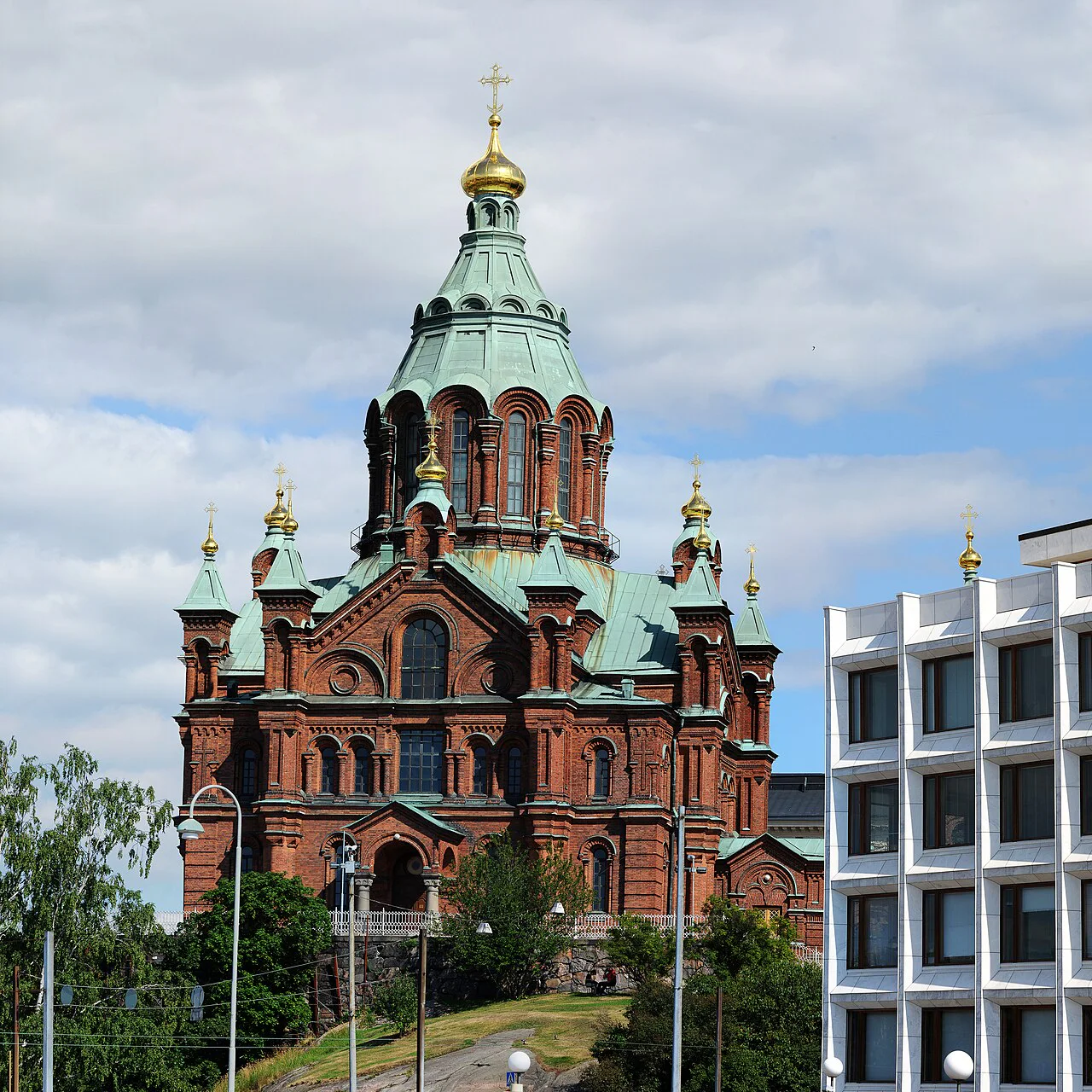
Uspenski Cathedral is an Eastern Orthodox cathedral located in Helsinki, Finland. It is the largest Orthodox church in Northern Europe and serves as the main cathedral of the Orthodox Church of Finland.
Download Stanza, then search for “Uspenski Cathedral”.
About the tour
One guide. Your kind of visit.
Uspenski Cathedral is an Eastern Orthodox cathedral located in Helsinki, Finland. It is the largest Orthodox church in Northern Europe and serves as the main cathedral of the Orthodox Church of Finland.
Ready when you are.
- 01Get the free Stanza app.
iOS & Android
- 02Find your guide.
“Uspenski Cathedral”
- 03Download before you go.
Works offline
Audio guide / 7 narrated stops
Inside the guide
Get to know a few of the stories before you go. Open a stop to read more.
01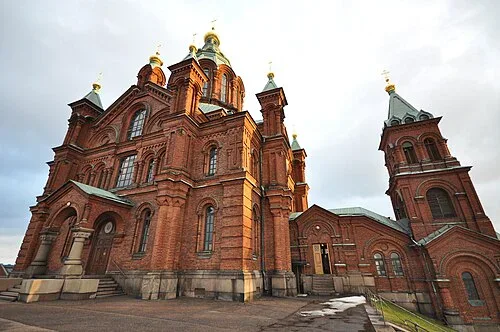 Katajanokka Hilltop & Red-Brick Facade
Uspenski Cathedral from the Hilltop
Welcome to Uspenski Cathedral, the main church of the Finnish Orthodox Church, on its hill of rock above Helsinki. When Helsinki became the capital of Finland in 1812, the Orthodox parish here began to grow fast, and it soon needed a church far bigger than the one it had. The design came from the Russian architect Aleksey Gornostayev, though he died before a single wall rose. Building went on from 1862 to 1868 under the architect Ivan Varnek, and the cathedral was consecrated on the twenty-fifth of October 1868. The money came largely from the parishioners themselves, joined by Crown Prince Alexander III and merchants from Moscow. The church is dedicated to the Dormition of the Mother of God, at the wish of Emperor Alexander II; the name Uspenski comes from that dedication. It is often called the largest Orthodox church in Northern Europe. The red bricks in these walls, the golden domes above and the vast interior each have a story of their own, and they come next.
Jorge Láscar from Australia · CC BY 2.0
02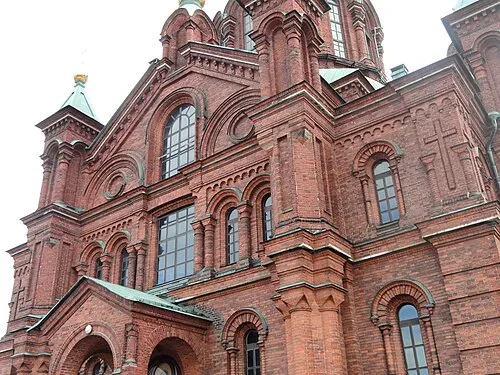 Katajanokka Hilltop & Red-Brick Facade
The Red-Brick Facade and Bomarsund Bricks
The deep red of this facade has a strange origin: a fortress that no longer exists. In 1854, during the Crimean War, Anglo-French forces destroyed the Bomarsund Fortress on the Aland islands. From its ruins, workers salvaged around seven hundred thousand bricks and loaded them onto barges. The barges carried their cargo across the water to Helsinki, and the bricks went straight into these walls. So a fortress built to defend the Tsar's realm ended its life as the skin of a church. The forms of the building are Russian Revival, and the style owes much to a sixteenth-century stone church at Kolomenskoye near Moscow. Its tiered shapes and tent-like masses echo through this facade, translated into Finnish brick.
Photo: Daderot · CC0
03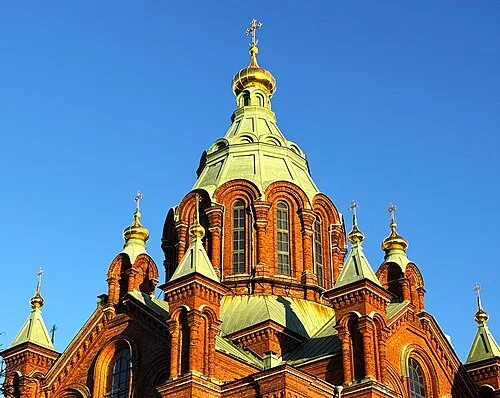 The Thirteen Golden Domes
Against the sky, the roofline rises in gilded onion domes. There are thirteen of them on the church itself: one large dome and twelve smaller ones, standing for Christ and the twelve apostles. A fourteenth dome crowns the bell tower apart from the rest. The domes were not gilded when the church was new. During a restoration in the nineteen-sixties, workers covered them with gold, and the work was finished in time for the cathedral's hundredth anniversary in 1968. Since then, the shining cupolas have become the most recognisable thing about this church, visible from far across the harbour.
Listen in the appSinikka Halme · CC BY-SA 4.0
04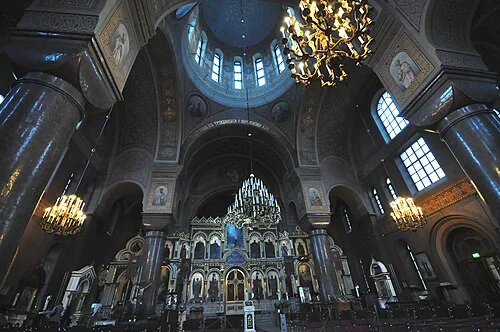 Grand Central Nave & Monolithic Columns
Into the Open Nave
Inside, the character changes. The exterior follows the old Slavic tradition, but the interior reveals the cathedral's Byzantine heritage. The floor is a single open space of nine hundred and sixty-seven square metres, and there are no pews. Orthodox worshippers stand through the services, as the custom has long been. Only a few seats line the edges of the hall, set there for the elderly. With nothing blocking the floor, sightlines run clear across the room to the sanctuary at the far end. Overhead, the ceiling is held up by four great pillars, and the wall ahead is the iconostasis. Each of those has its own story, told in the next stops.
Listen in the appJorge Láscar from Australia · CC BY 2.0
05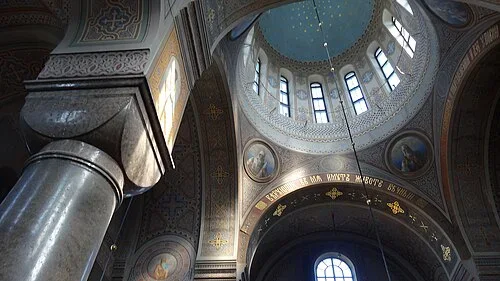 Grand Central Nave & Monolithic Columns
The Monolithic Granite Columns
Each of the four great pillars here was carved from a single block of Finnish granite. Together the four carry the vaulted ceiling, and because they are slim at the crossing points, they leave the central floor unobstructed. That is what makes the open nave possible: the whole weight of the roof gathers into these four stones. The vault surfaces above are painted with ornament and figures, their colours catching the light that falls from the dome.
Listen in the appPhoto: GualdimG · CC BY-SA 4.0
06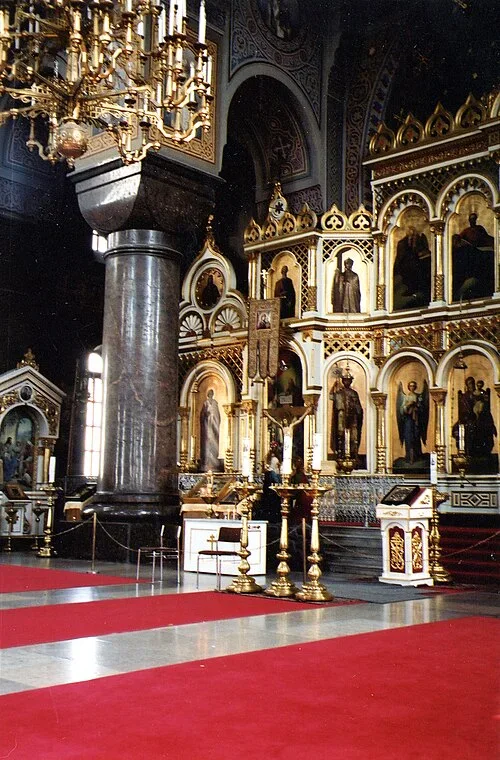 The Multi-Tiered Iconostasis
At the front of the church stands the iconostasis, a multi-tiered screen of gold-framed icons painted by the Russian artist Pavel S. Shiltsov. In an Orthodox church, the iconostasis is more than decoration. It separates the nave, where the congregation stands, from the altar behind it, the holiest part of the building. Rank upon rank of painted saints rise up the screen, and the altar stands hidden beyond it. The cathedral also holds treasured icons away from this screen, and one of them vanished in daylight. On the sixteenth of August 2007, the nineteenth-century icon of St Nicholas the Wonderworker was lifted from its lectern between midday and one, while hundreds of visitors filled the church. It had come to Helsinki from the cathedral of Vyborg during the Second World War. Despite searches in Finland and abroad, it has never been recovered. And it was not the last icon to disappear from here.
Listen in the appWayneRay · CC BY-SA 4.0
07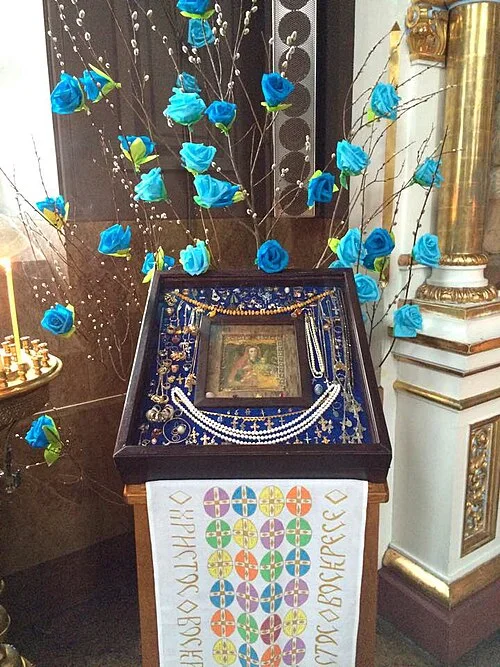 The Miracle-Working Kozeltshan Icon
The Kozeltshan Icon of the Mother of God
This small icon, the Kozeltshan Icon of the Mother of God, is honoured as miracle-working, and it came to this church from Sorvali in Vyborg. It is decorated with pearls, and under its protective glass hang crosses and jewels given by parishioners in gratitude. In the early hours of the ninth of June 2010, thieves broke in through a window and took it. The two thieves were caught that August, breaking in a second time, but they denied taking the icon. Then, in February 2011, one of them, by then in prison, had a change of heart and told where the icon lay. It had spent eight months buried in the ground near Turku, and it emerged nearly undamaged. From there it went to New Valamo Monastery for repair. The jewels around it keep accumulating, because this is still a working mother church of Finnish Orthodoxy, where people come to pray.
Listen in the appPhoto: Testus · CC BY-SA 4.0
Uspenski Cathedral
Frequently asked questions
How much does the guide cost?
Free app download. Listed guide price: $0.99. Guide price shown in the app. Audio guide only. Venue admission is separate.
Can I listen without internet?
Yes. Download the guide’s audio, images, and maps in the app before your visit. Your downloaded content is then available offline.
Can I listen in my language?
This audio guide is available in 15 languages, including English.
Do I need to follow a schedule?
No. This is a self-guided experience. Choose your stops, pause whenever you like, and return to a story at your own pace.
At your own pace
Explore Uspenski Cathedral.
Download Stanza, then search for “Uspenski Cathedral”.
Free app download · Guide price shown in the app
Keep exploring
Audio guides — Finland
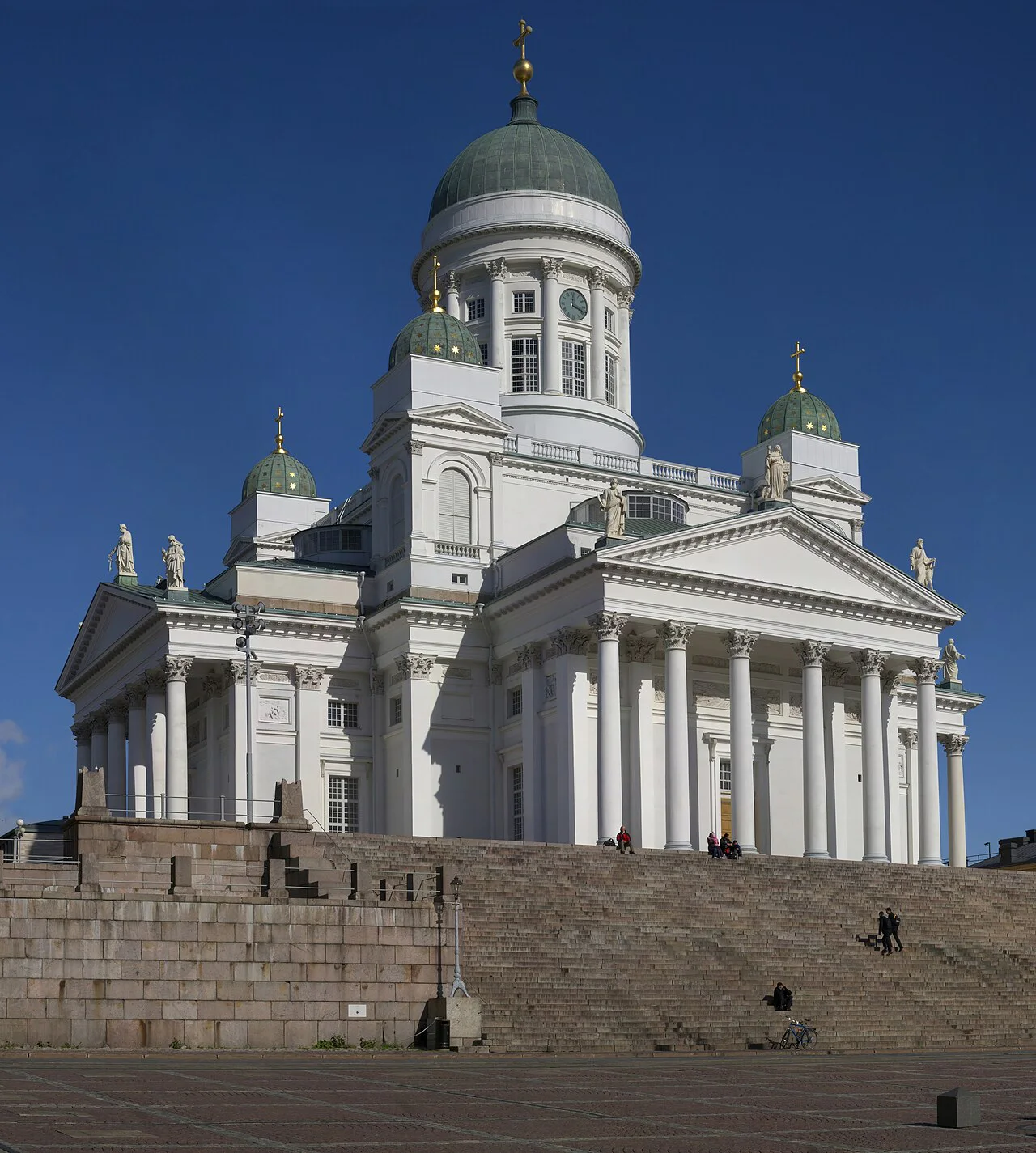
Helsinki · 1 km
Helsinki Cathedral
Content & sources
Hans Hillewaert · CC BY-SA 3.0
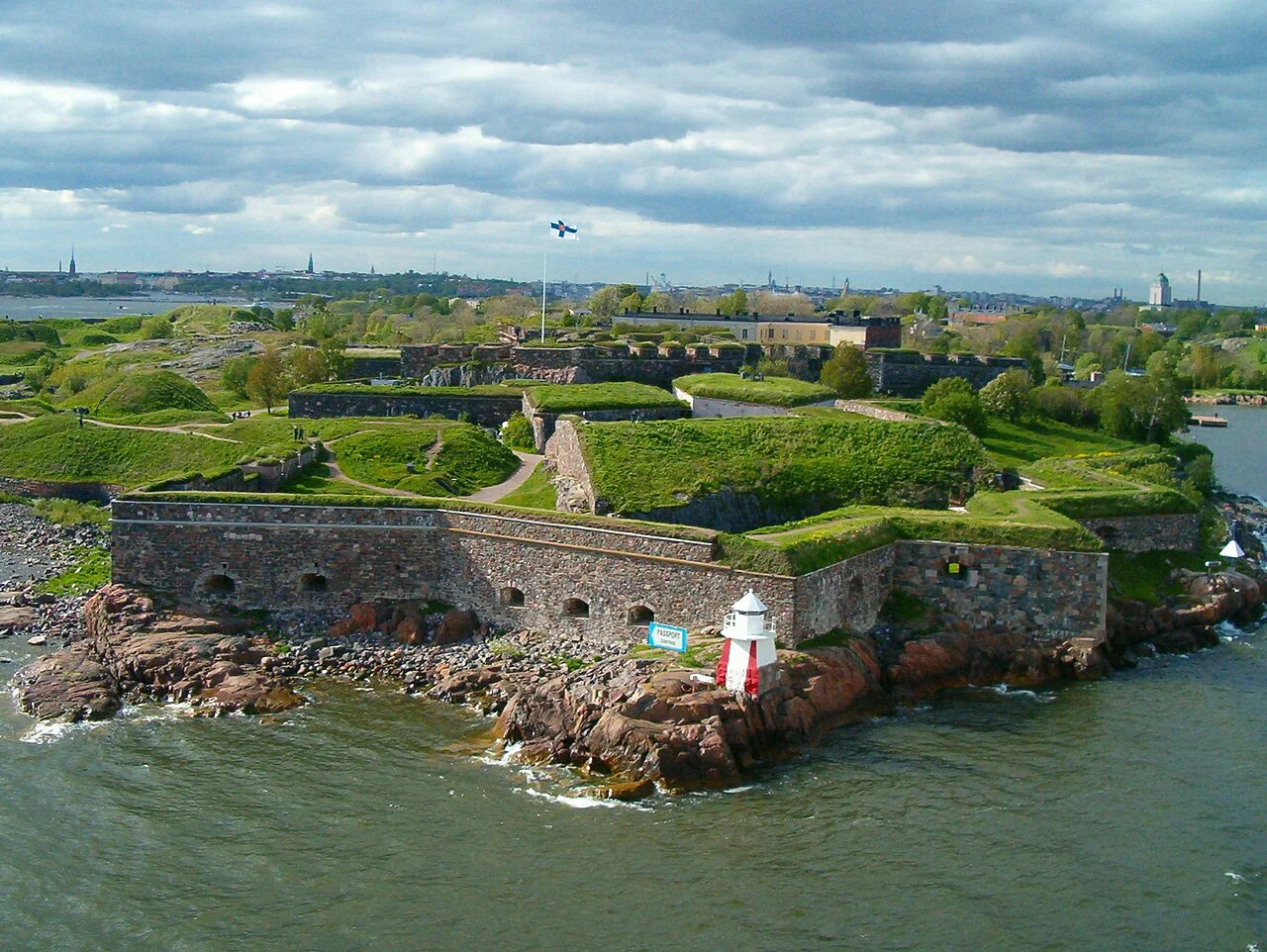
Helsinki · 3 km
Suomenlinna
Content & sources
Michal Pise, Michal.Pise · CC BY 2.0
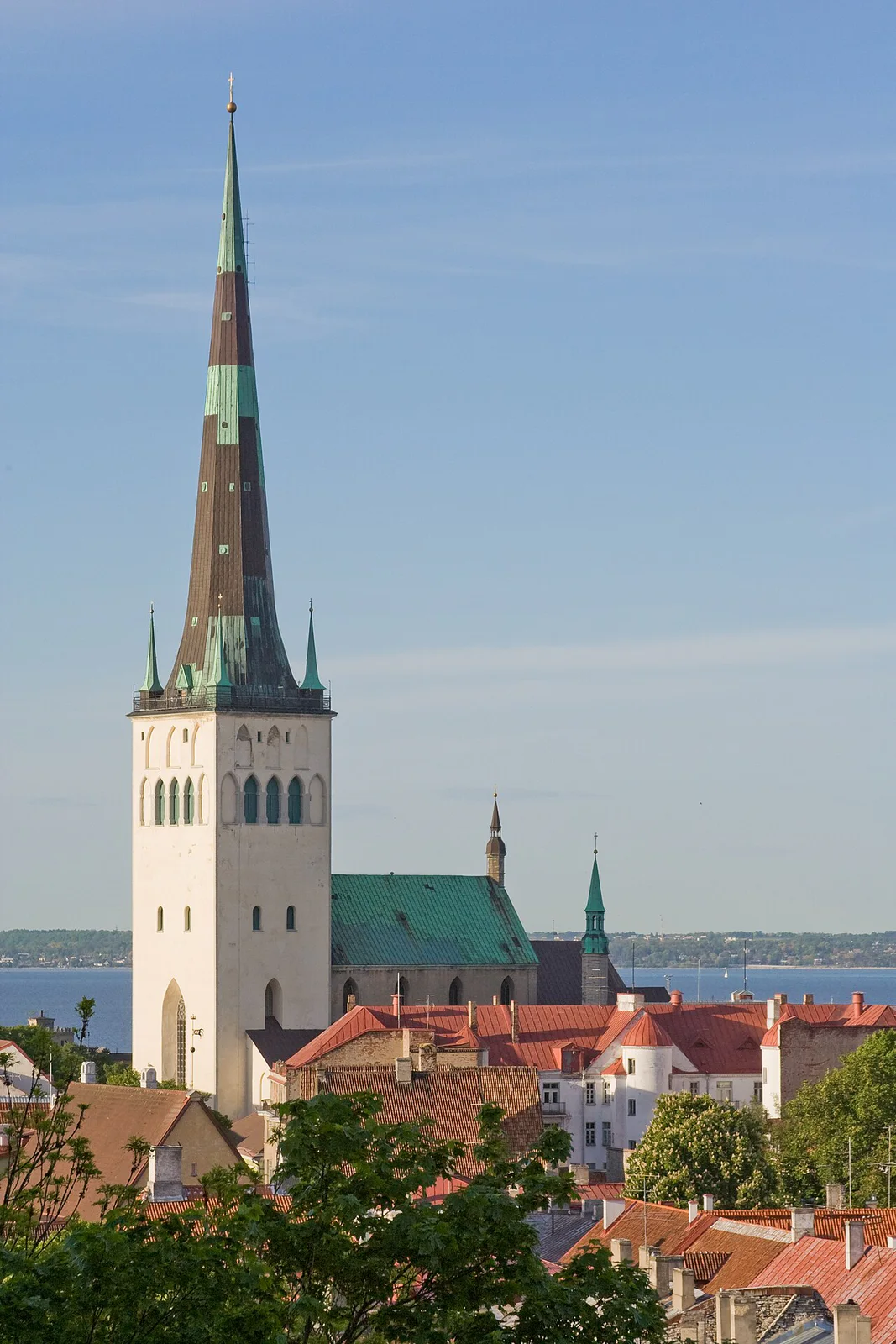
Tallinn · 82 km
St. Olaf's Church, Tallinn
Content & sources
Olga Itenberg · CC BY 2.0
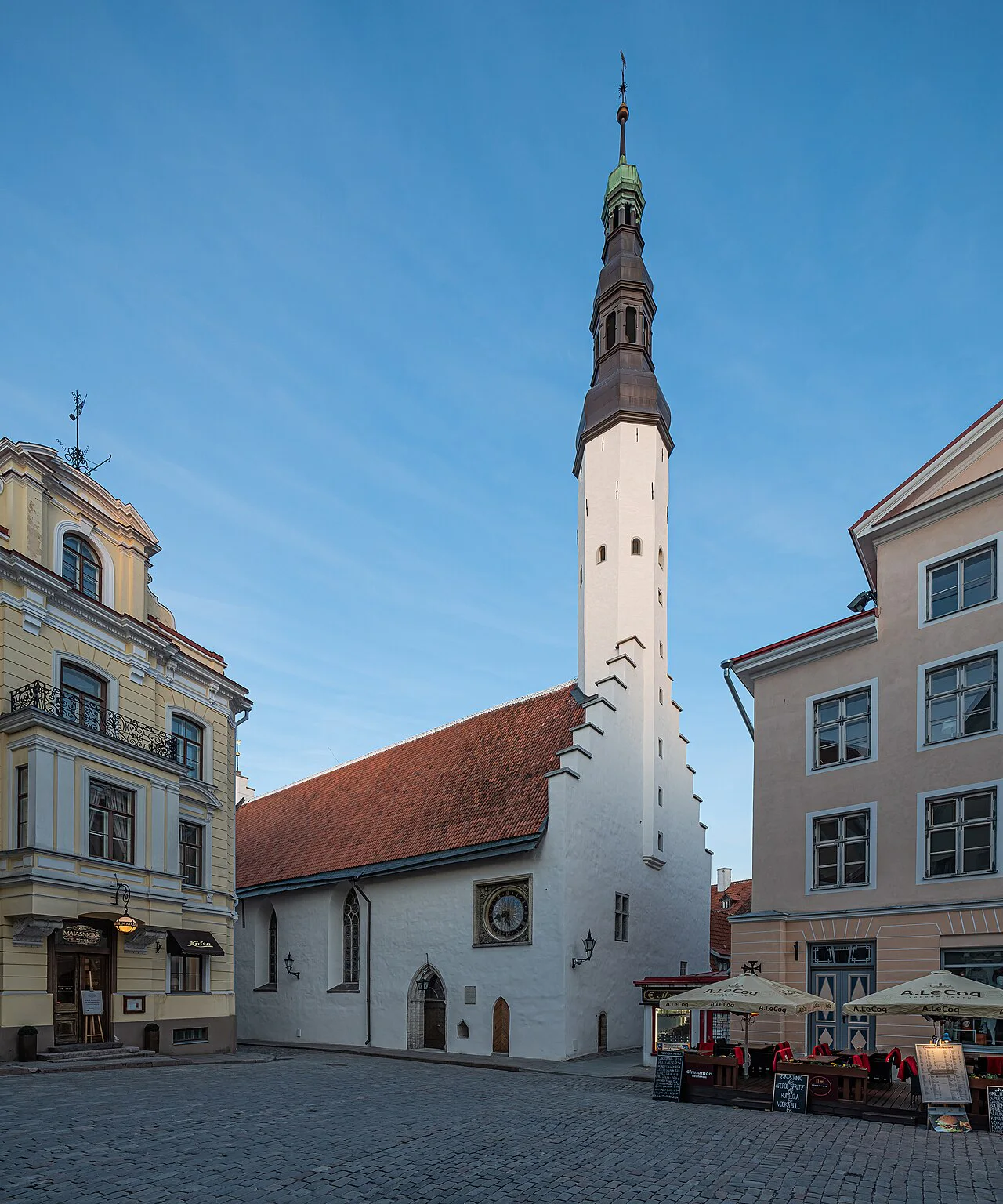
Tallinn · 82 km
Church of the Holy Spirit, Tallinn
Content & sources
Photo: A.Savin · FAL
Savonlinna
Olavinlinna Castle
Content & sources
User:Mikko Paananen · CC BY-SA 3.0