Stanza · Audio guide
Helsinki Cathedral Audio Guide
A place to remember. A story to take with you.
Helsinki Cathedral is a cathedral located in Helsinki. It is a church of the Church of Finland.
Download Stanza, then search for “Helsinki Cathedral”.
About the tour
One guide. Your kind of visit.
Helsinki Cathedral is a cathedral located in Helsinki. It is a church of the Church of Finland.
Ready when you are.
- 01Get the free Stanza app.
iOS & Android
- 02Find your guide.
“Helsinki Cathedral”
- 03Download before you go.
Works offline
Audio guide / 11 narrated stops
Inside the guide
Get to know a few of the stories before you go. Open a stop to read more.
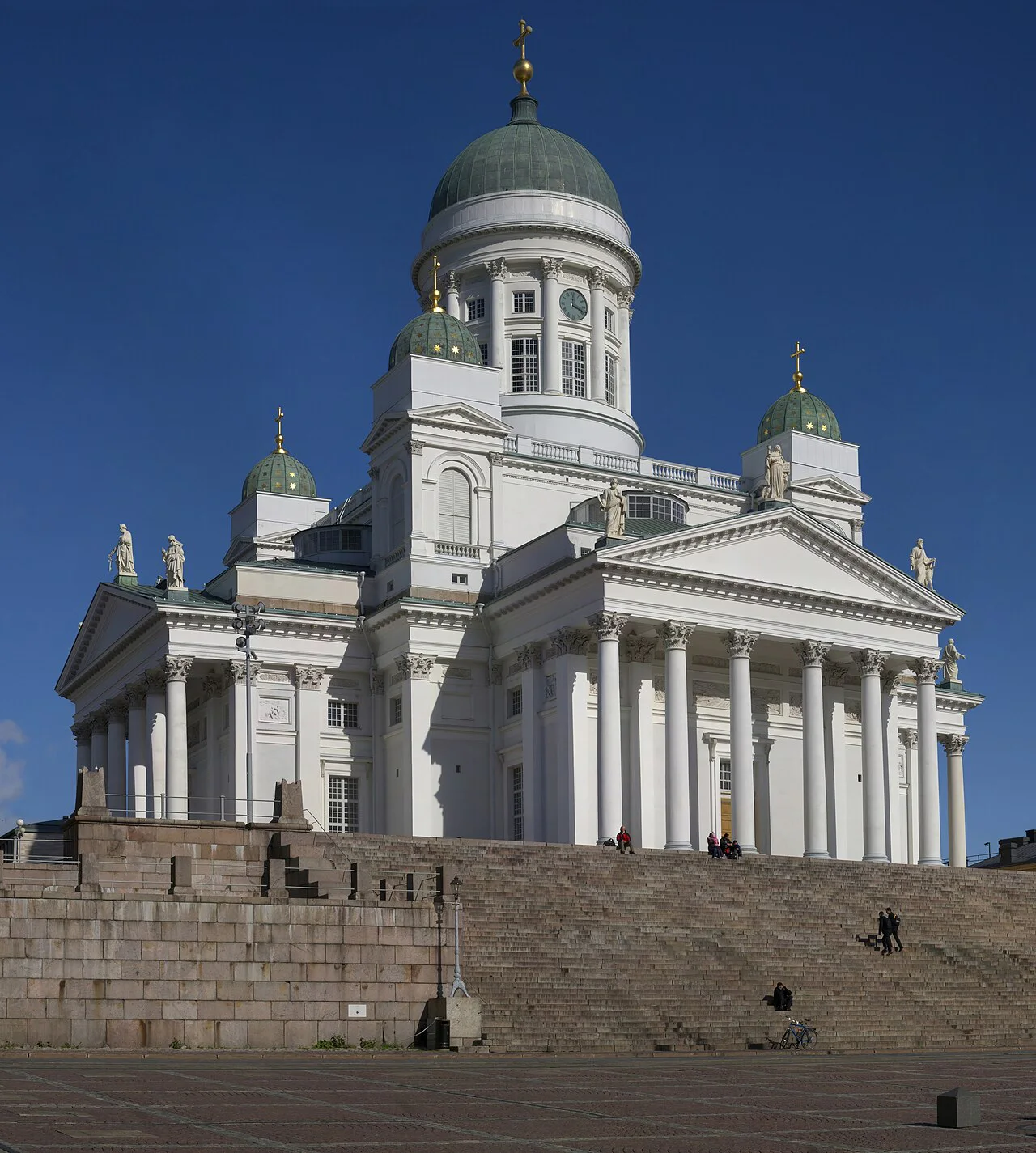
01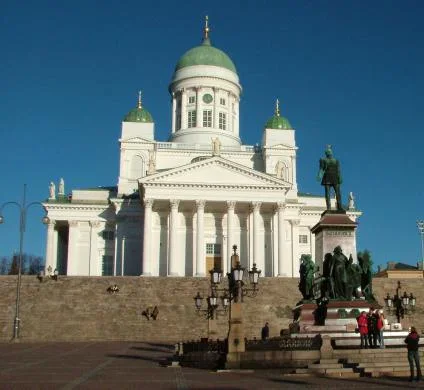 Senate Square and the Monumental Steps
Helsinki Cathedral from Senate Square
Welcome to Helsinki Cathedral, the pale dome that closes off Senate Square. Helsinki became the capital of Finland in 1812, when the country was a grand duchy of the Russian Empire. Two years later, Tsar Alexander I decreed that a share of the salt import tax would fund two new churches, one Lutheran and one Orthodox. This is the Lutheran one. The town plan around it came from Johan Albrecht Ehrenström, who reserved this rocky rise for the main Lutheran church. The architect Carl Ludvig Engel drew his first plans in 1818 and kept refining them for a decade. Building began in 1830, and the church was inaugurated in 1852. It was named St Nicholas's Church, a tribute to Nicholas I, Emperor of Russia and Grand Duke of Finland. Everyone calls it the White Cathedral. In fact the exterior is painted in three very similar shades of light grey.
Ziko van Dijk · CC BY-SA 3.0
02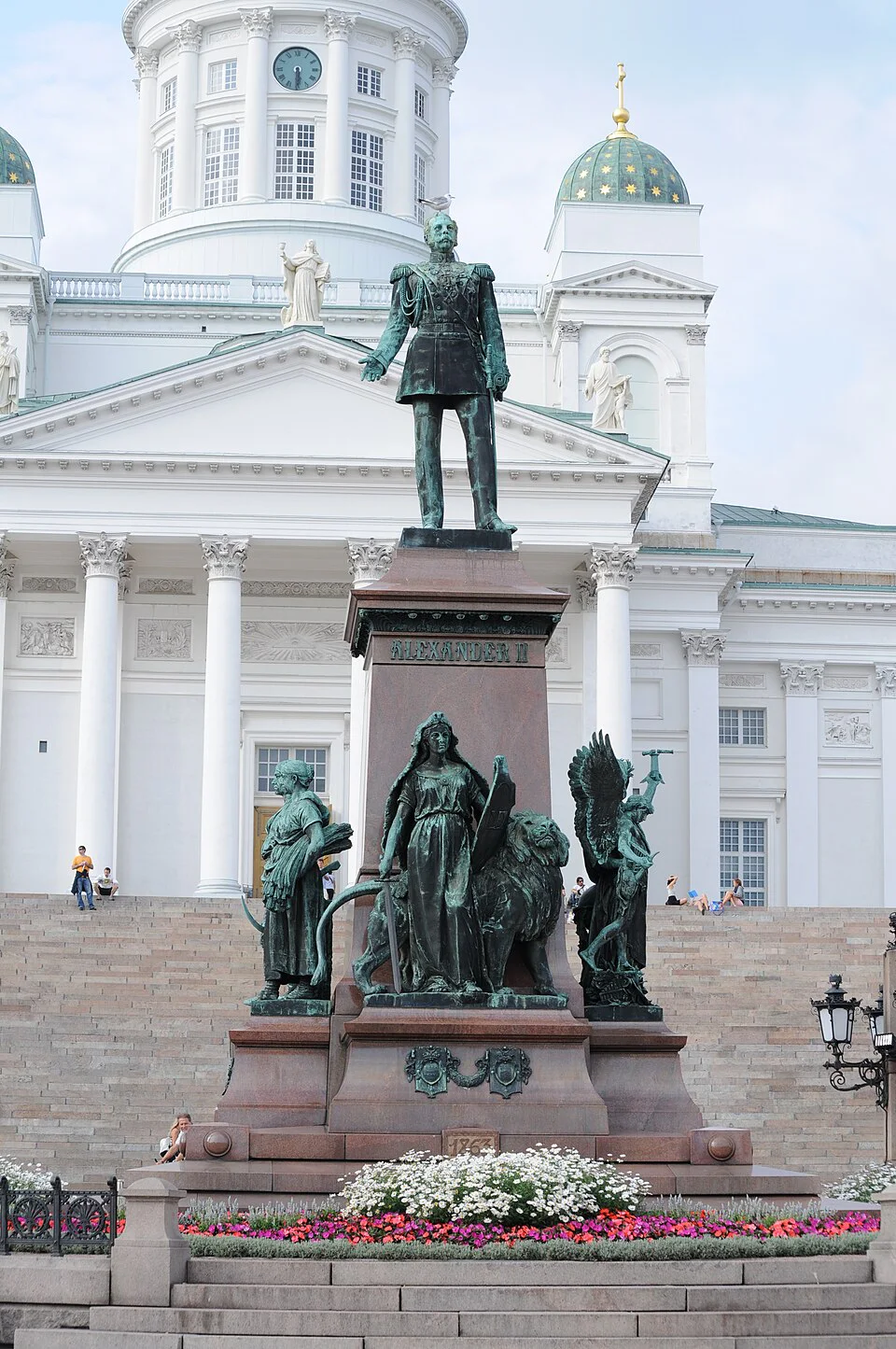 Senate Square and the Monumental Steps
The Imperial Statue by the Steps
The bronze monument in the square, a statue of Emperor Alexander the Second, belongs to the imperial era, when Finland was a grand duchy under the Russian tsars. It is a reminder of the politics that shaped this whole ensemble. And in 1917 those politics reached inside the church itself. On the seventeenth of June that year, followers of the anarchist Jean Boldt occupied the building, then still called St Nicholas's Church, after the Sunday service had ended. They held it for roughly eighteen hours, through the evening and the night. In the end a militia cleared the building and arrested Boldt. His arrest set off violent disturbances right here in Senate Square.
Ralf Roletschek (talk) - Fahrradtechnik auf fahrradmonteur.de · FAL
03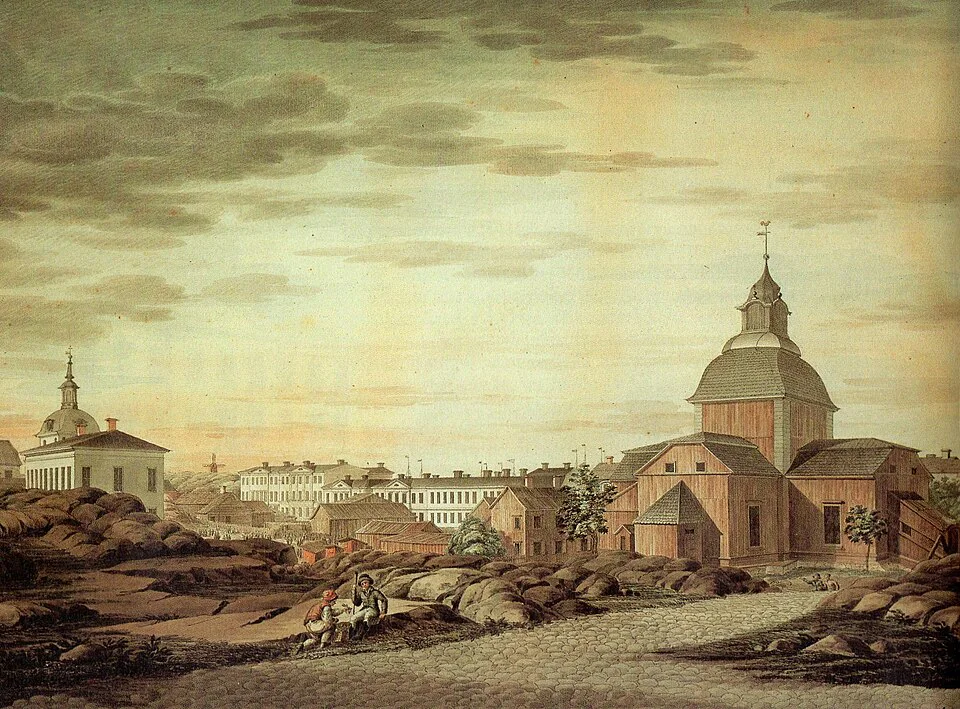 Senate Square and the Monumental Steps
The Church That Stood Here Before
Before the cathedral, a smaller church stood on this same rock. It was built between 1724 and 1727, when Finland belonged to Sweden, and dedicated to Queen Ulrika Eleonora, its patroness. When the new cathedral was planned, the old church had to go. While it was being demolished, the parish needed somewhere to worship. So the Old Church was raised in nearby Kamppi between 1824 and 1826, and it served the congregation until the cathedral was finally consecrated. The old church has not been entirely forgotten. In 1997, and again in 2000, a full-size version of it was built out of snow on this square.
Listen in the appCarl Ludvig Engel · Public domain
04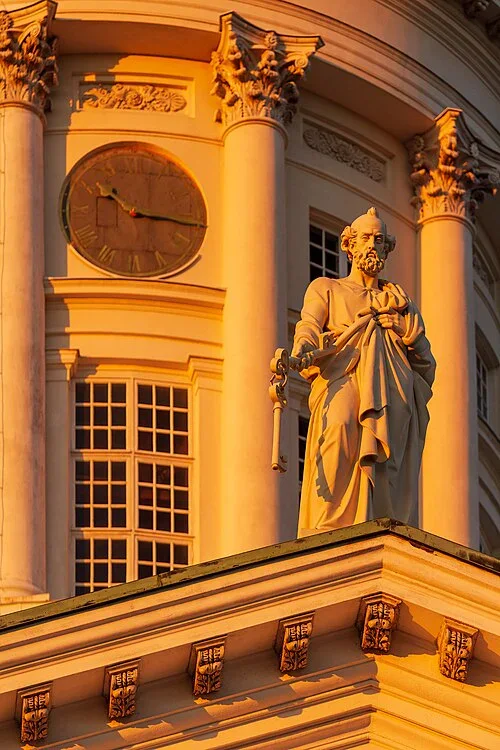 The Roofline and Flanking Pavilions
The Zinc Apostle on the Roofline
Along the roofline, twelve apostles keep watch over the square. They are larger than life, and they are made of zinc. The figures were sculpted by August Wredov and Hermann Schievelbein, then cast at S. P. Devaranne's zinc foundry in Berlin between 1845 and 1847. They were lifted onto the roof in 1849, placed over the gables and at the corners. Taken together they form one of the largest unified collections of zinc sculptures in the world. The figure holding keys is read as Saint Peter by the traditional signs, and his statue stands above the main door on the west side. Each side of the church has its own three: Peter, Thomas and Simon the Canaanite to the west, Bartholomew, John and Matthew facing the square. The statues were restored in the late 1990s, and they remain part of the changes made after Engel's day.
Listen in the appXimonic (Simo Räsänen) · CC BY-SA 4.0
05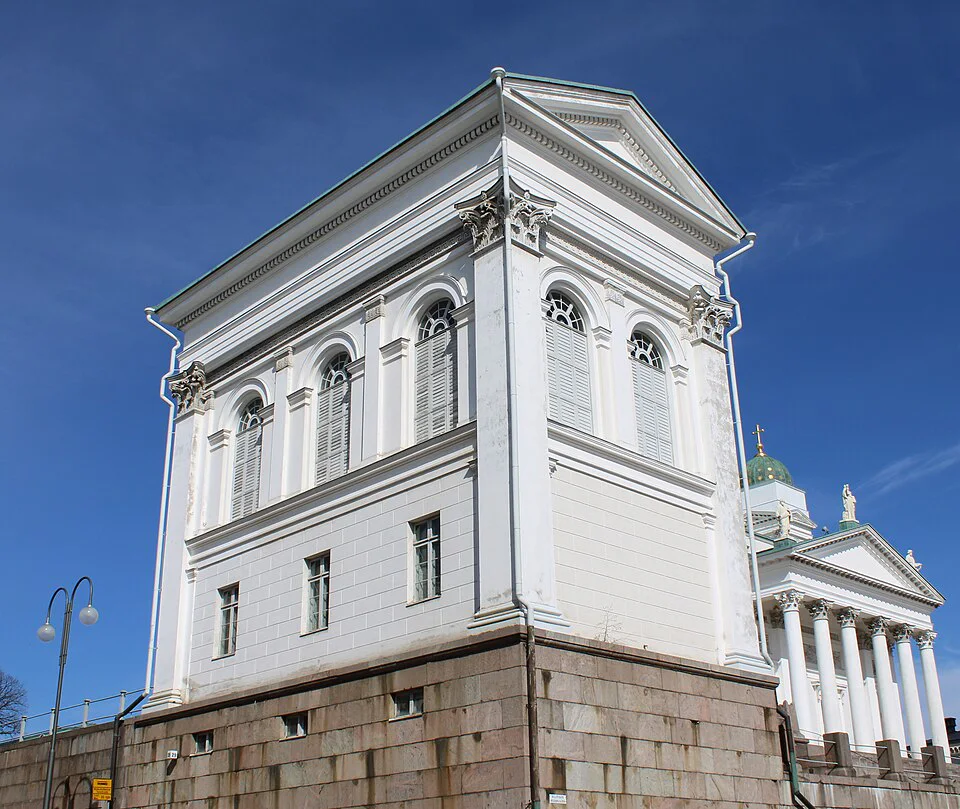 The Roofline and Flanking Pavilions
The Bell Tower Pavilion
Carl Ludvig Engel died in 1840, with his church still unfinished. The work passed to his successor, Ernst Lohrmann, who left his own mark on the design. His four small domes around the central one echo the cathedral's models in Saint Petersburg, Saint Isaac's and Kazan Cathedral. He also added the two buildings flanking the great steps. Seen from the square, the one on the left is a bell tower and the one on the right is a chapel. The bell tower holds a piece of the earlier church. The bells that ring here were carried over from the demolished Ulrika Eleonora Church, so its voice outlived its walls.
Listen in the appJosefiina Alanen · CC BY 4.0
06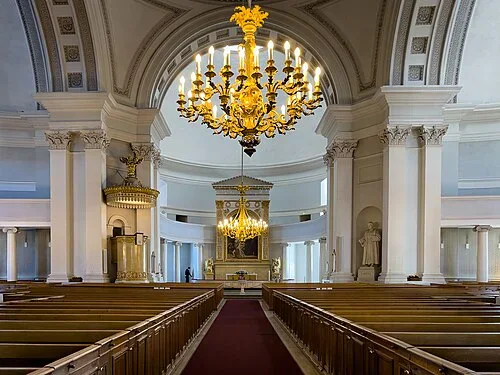 The Symmetrical Sanctuary
The Greek Cross Sanctuary
Inside, the plan is a Greek cross: a square centre with four equal arms. Every facade carries the same colonnade and pediment, so the building looks the same from all four directions. Kazan Cathedral in Saint Petersburg served as the model. One reason given for the shape is the site itself: a church on this hill would be seen from every side of the city. Engel, it is said, was not especially fond of central-plan churches. The interior is deliberately plain, in the Lutheran manner, with seating for about thirteen hundred people. In one corner stands Engel's wooden pulpit, completed in 1849, covered in imitation marble and crowned with a canopy. From it the sermon was meant to be heard, and seen, by the whole room.
Listen in the appMarty B · CC BY-SA 2.0
07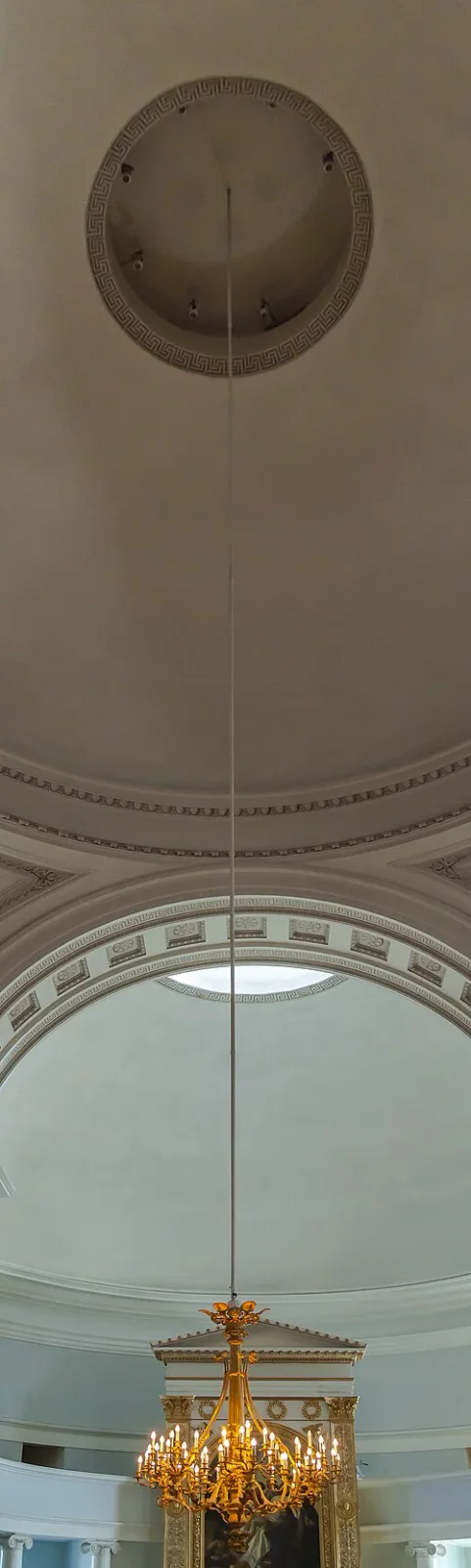 The Symmetrical Sanctuary
Under the Central Dome
Straight overhead, the dome closes the exact centre of the four equal arms. A band of Greek-key patterning runs around its inner ring, and light gathers at the middle of the room. From the dome's crown a great chandelier hangs on a long cable, suspended far above the crossing. The whole vertical drop is part of the design: the central plan pulls every line, and every eye, to this one point.
Listen in the appDiego Delso · CC BY-SA 3.0
08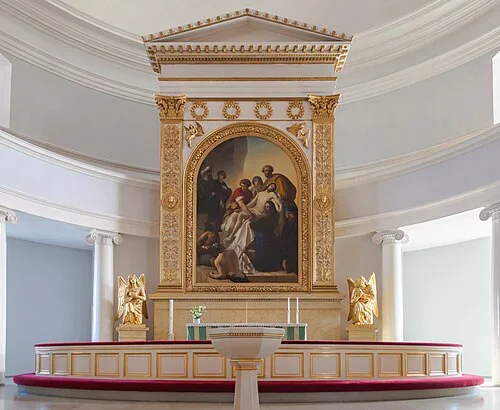 The High Altar and Reformers
The Altar and the Imperial Altarpiece
At the head of the church, the altar is dominated by a large painting. It shows the burial of Jesus before his resurrection, a scene known as The Descent of Jesus from the Cross. The painter was Carl Timoleon von Neff, an artist of Baltic German origin. The donor was the Emperor Nicholas I himself, who gave the painting to the church personally. It is the most direct link between this altar and the imperial patron the church once honoured. On either side of the painting stand gilded statues of angels, holding the scene in gold.
Listen in the appDiego Delso · CC BY-SA 3.0
09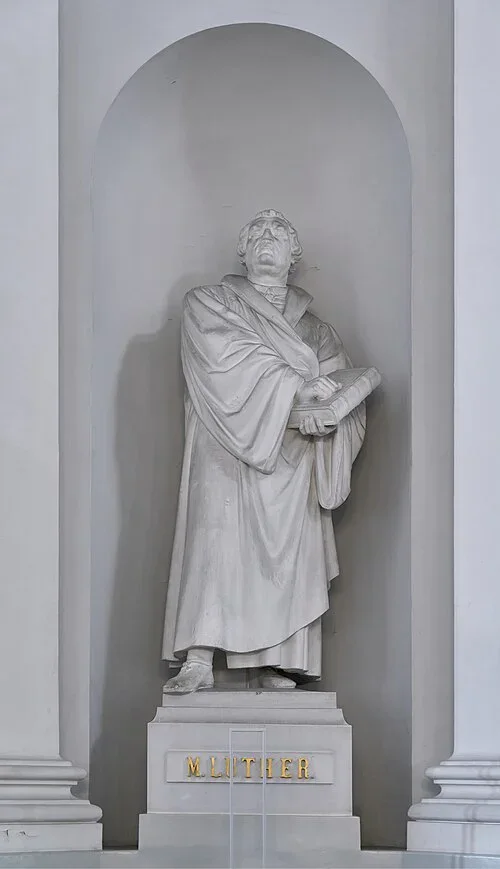 The High Altar and Reformers
Martin Luther in the Choir Corner
In the choir stands Martin Luther, holding his book. The statue is an enlarged plaster copy of the Luther monument at Worms, made by the German sculptor Ernst Rietschel and finished in 1868. The enlargements were carried out in Paris, and the figures were brought to Helsinki in 1886. Philipp Melanchthon stands beside him as a copy of the same monument, and Karl Magnus von Wright designed their pedestals. The third figure is Mikael Agricola, regarded as the Finnish Reformer, made by the Finnish sculptor Ville Vallgren. Apart from the altar's angels, these are the only human figures inside the church. Together they state plainly what kind of church this is, and Agricola makes that statement a Finnish one.
Listen in the appPhoto: Virtual-Pano · CC BY-SA 4.0
10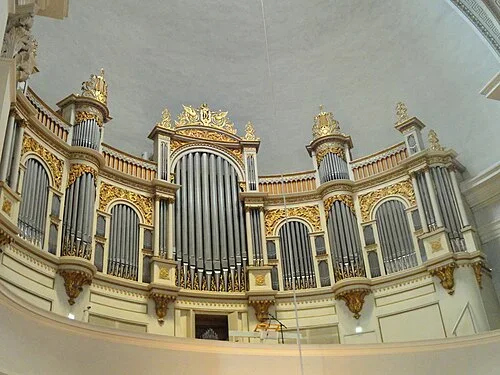 The Organ Gallery and Crypt
The Great Organ
The gallery at the western end faces back across the whole room towards the altar, the reverse of the view from the altar steps. Its great organ case holds the church's musical heart. The first organ here was designed by the German builder E. F. Walcker and completed in 1850. The main organ today was built by the Danish firm Marcussen & Søn in 1967, with fifty-seven stops. Since 2006 it has been complemented by a smaller choir organ from the Swedish firm Åkerman & Lund. From this gallery the music still leads the congregation, and worship remains the building's daily work.
Listen in the appPhoto: Daderot · CC0
- 11
The Cathedral Crypt
The brick-vaulted crypt with its café and exhibitions, and the three names this church has carried.
Helsinki Cathedral
Frequently asked questions
How much does the guide cost?
Free app download. Listed guide price: $0.99. Guide price shown in the app. Audio guide only. Venue admission is separate.
Can I listen without internet?
Yes. Download the guide’s audio, images, and maps in the app before your visit. Your downloaded content is then available offline.
Can I listen in my language?
This audio guide is available in 15 languages, including English.
Do I need to follow a schedule?
No. This is a self-guided experience. Choose your stops, pause whenever you like, and return to a story at your own pace.
At your own pace
Explore Helsinki Cathedral.
Download Stanza, then search for “Helsinki Cathedral”.
Free app download · Guide price shown in the app
Keep exploring
Audio guides — Finland
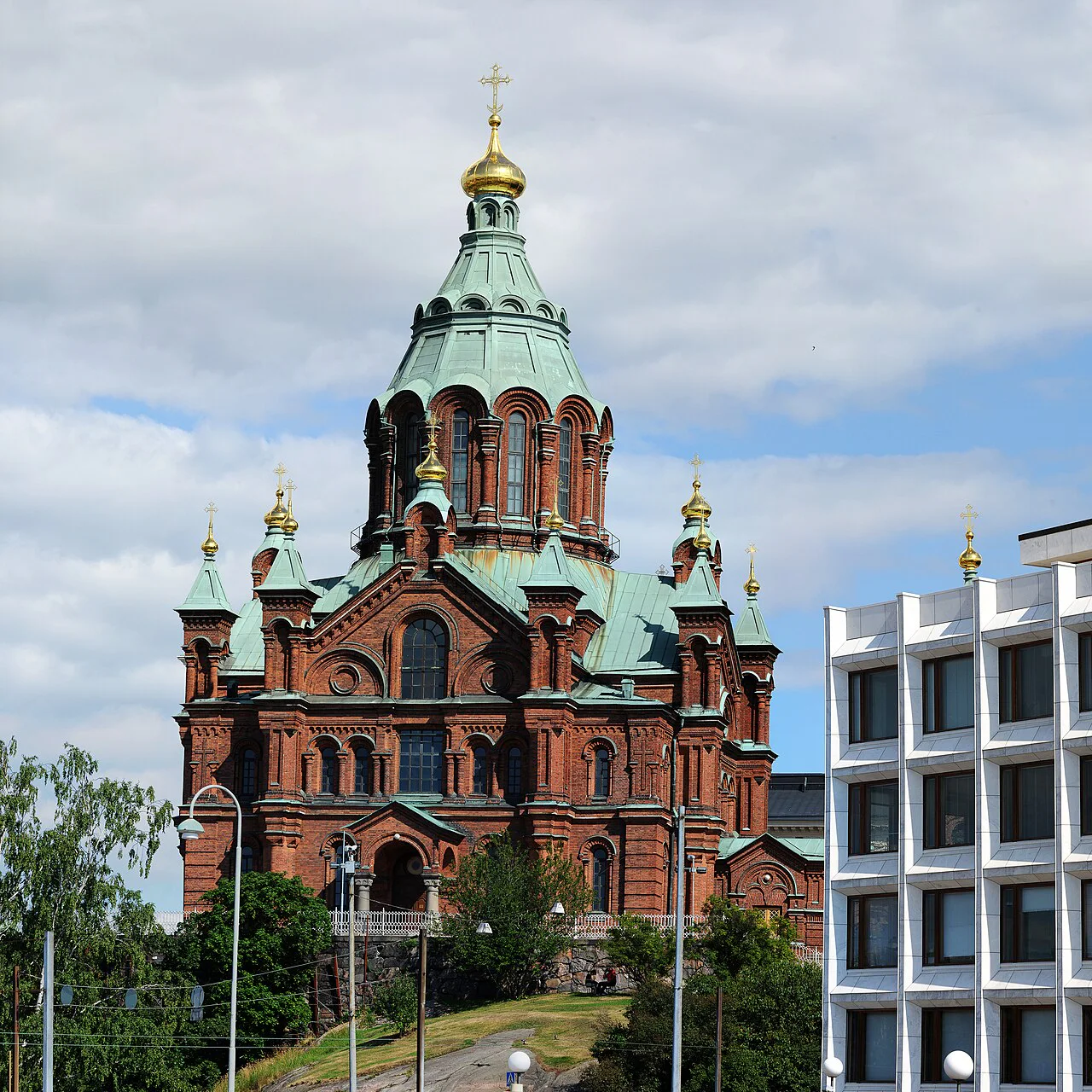
Helsinki · 1 km
Uspenski Cathedral
Content & sources
Ralf Roletschek (talk) - Fahrradtechnik auf fahrradmonteur.de · FAL
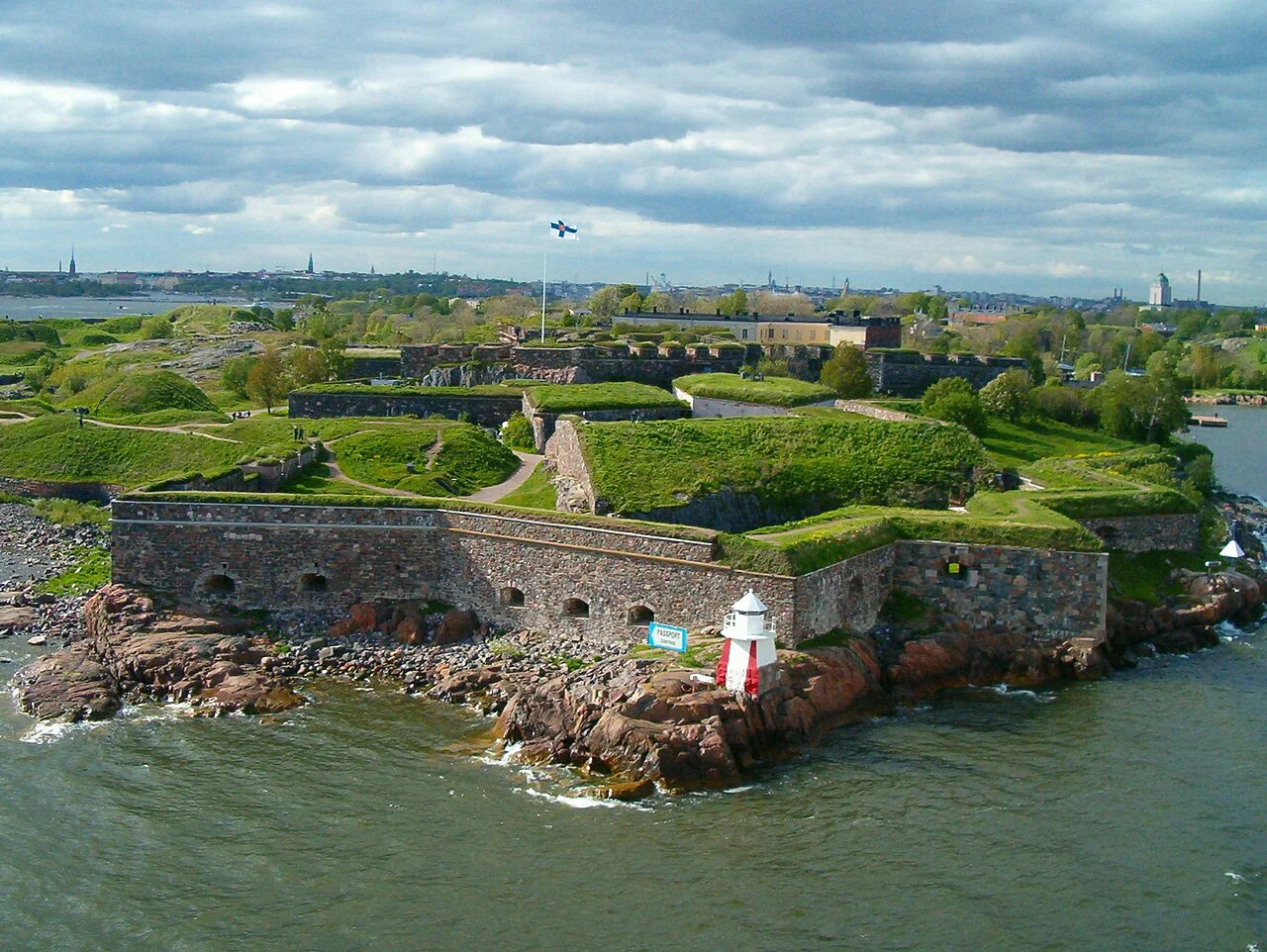
Helsinki · 3 km
Suomenlinna
Content & sources
Michal Pise, Michal.Pise · CC BY 2.0
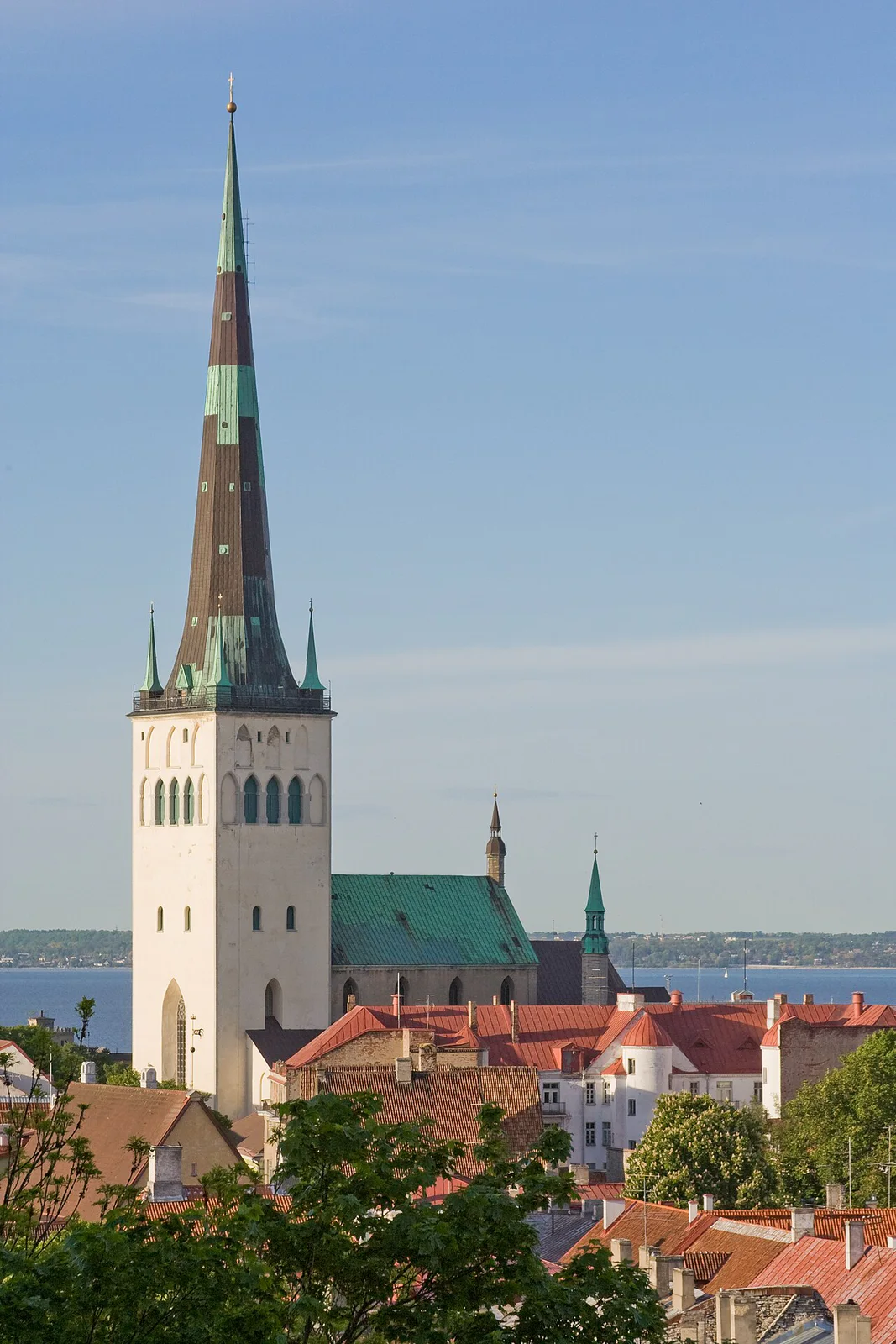
Tallinn · 82 km
St. Olaf's Church, Tallinn
Content & sources
Olga Itenberg · CC BY 2.0
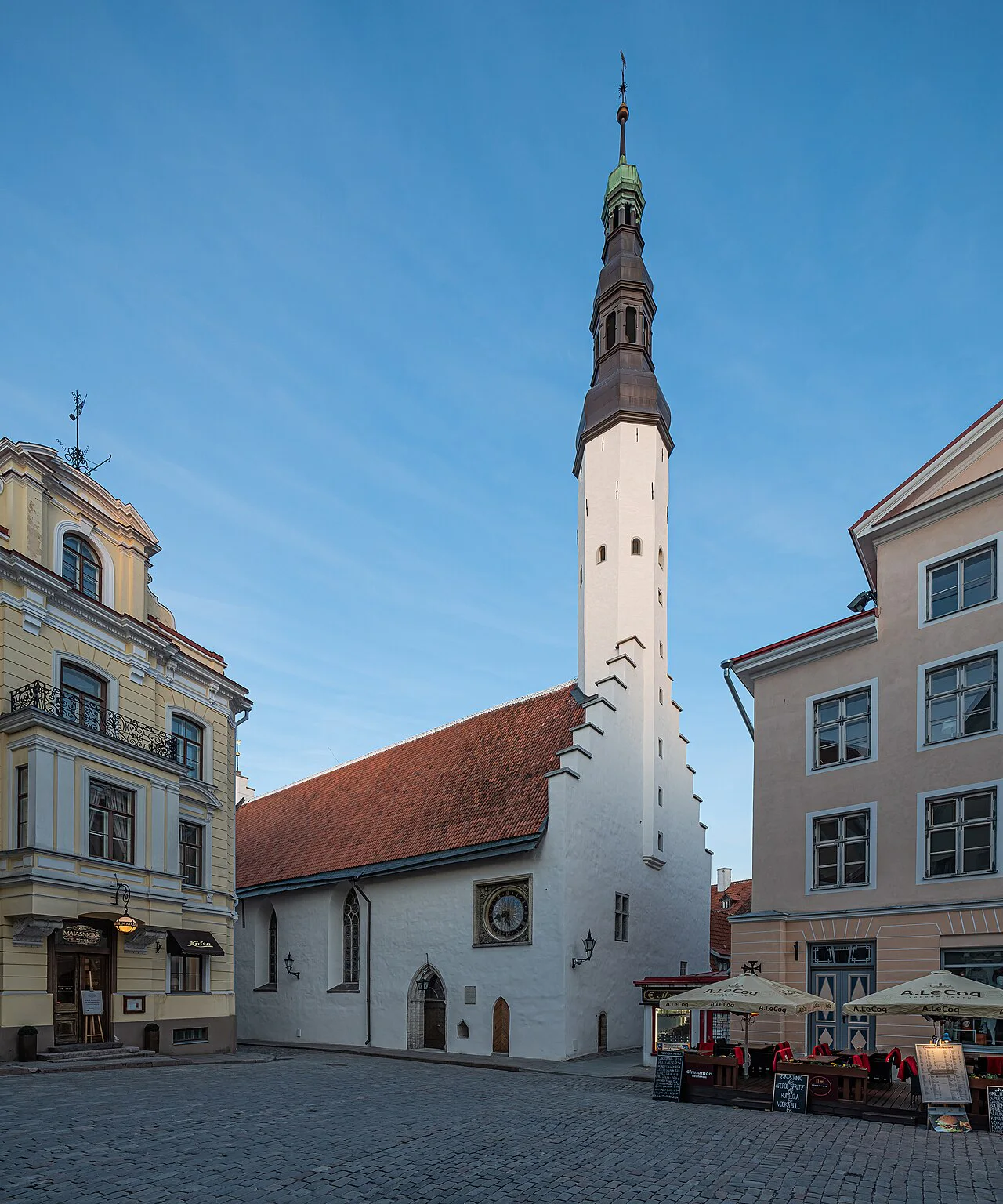
Tallinn · 82 km
Church of the Holy Spirit, Tallinn
Content & sources
Photo: A.Savin · FAL
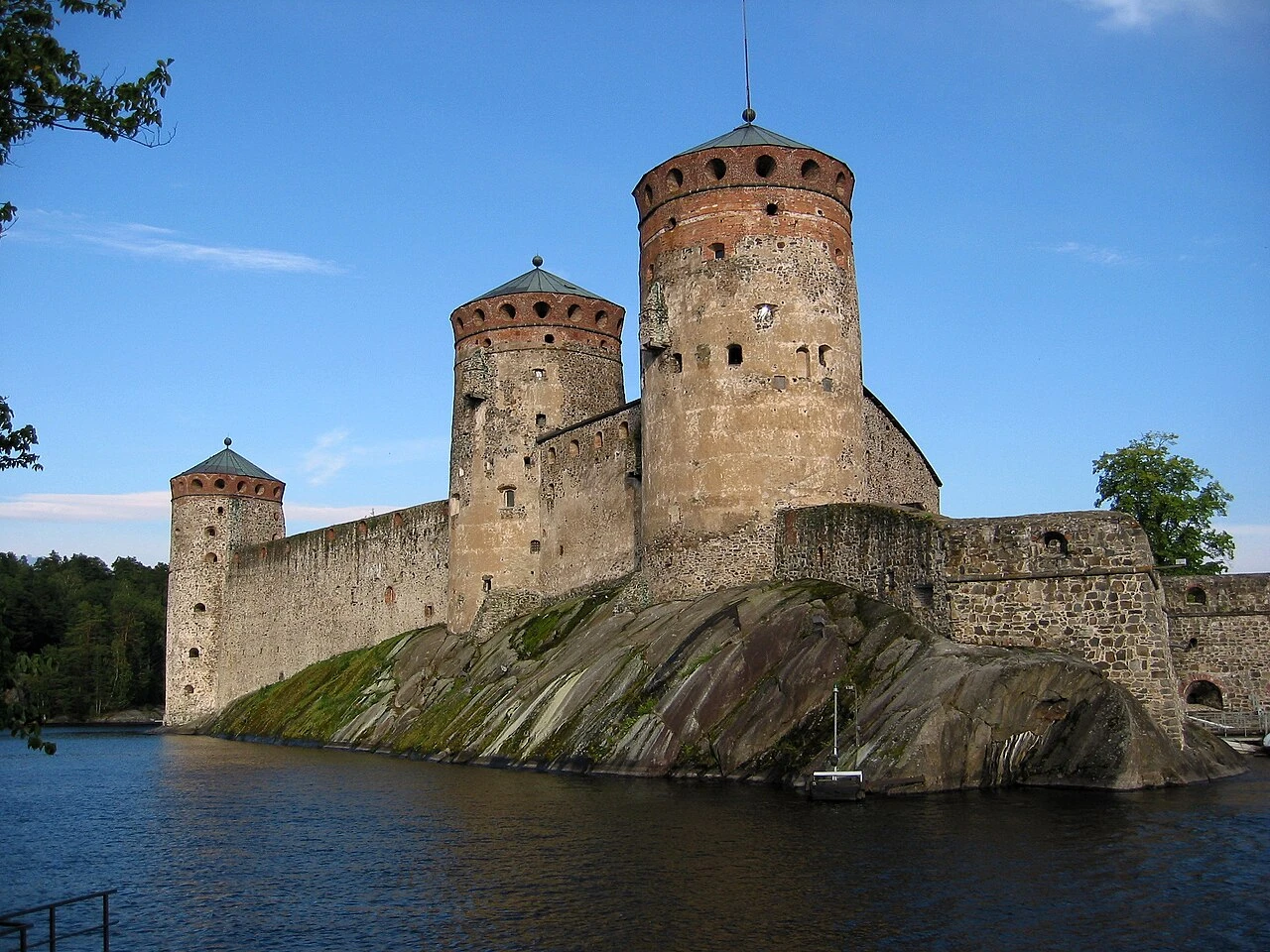
Savonlinna
Olavinlinna Castle
Content & sources
User:Mikko Paananen · CC BY-SA 3.0