Stanza · Audio guide
Site archéologique d'Alésia Audio Guide
A place to remember. A story to take with you.
Alesia was the capital of the Mandubii tribe and was conquered by Julius Caesar during the Gallic Wars. It later became a Gallo-Roman town located on Mont-Auxois.
Download Stanza, then search for “Site archéologique d'Alésia”.
About the tour
One guide. Your kind of visit.
Alesia was the capital of the Mandubii tribe and was conquered by Julius Caesar during the Gallic Wars. It later became a Gallo-Roman town located on Mont-Auxois.
Ready when you are.
- 01Get the free Stanza app.
iOS & Android
- 02Find your guide.
“Site archéologique d'Alésia”
- 03Download before you go.
Works offline
Audio guide / 13 narrated stops
Inside the guide
Get to know a few of the stories before you go. Open a stop to read more.
01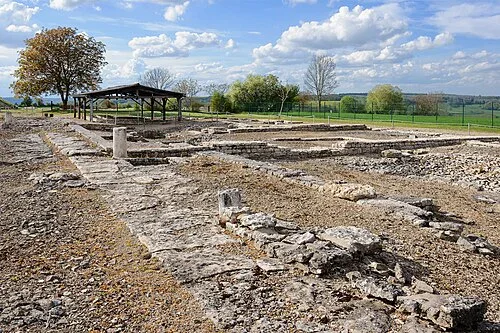 Mont Auxois Plateau and the Siege of Alesia
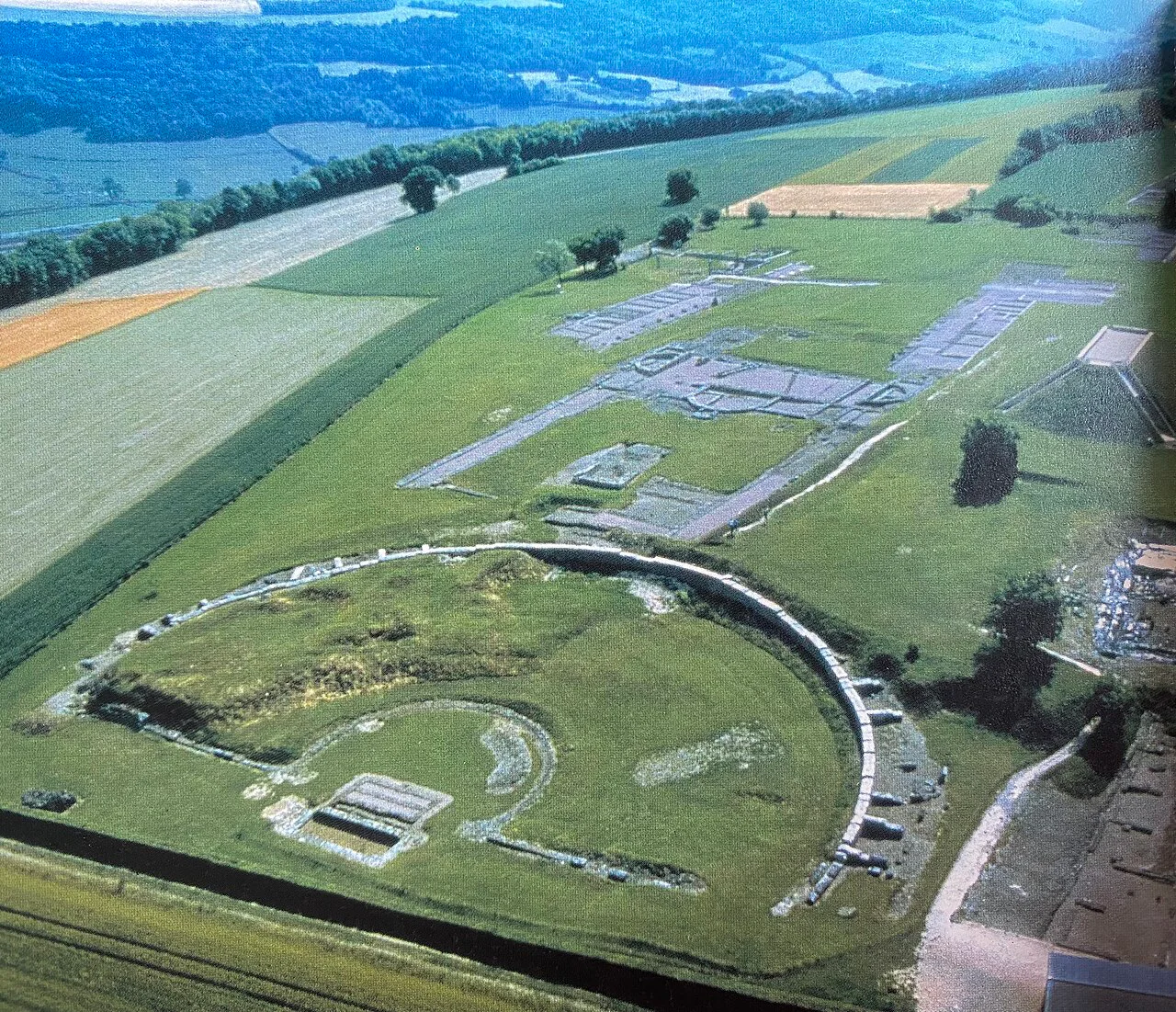
Mont Auxois Plateau - Arrival at Alesia
Welcome to Alésia, on the plateau of Mont Auxois in Burgundy. This exposed hilltop, about four hundred metres high, carries three stories in one place. First it was a fortified Celtic settlement, an oppidum of the Mandubii, a tribe allied to the Aedui. Then, in 52 BC, it became the stage of a siege that decided the fate of Gaul. And after the conquest it grew into a prosperous Gallo-Roman town, with a forum, temples and a theatre of its own. Most of the ruins scattered across the plateau belong to that Roman town. Little of the Gallic oppidum shows above ground today, apart from stretches of its old rampart. The tour follows that arc in order: the battle, the nineteenth-century hunt that proved which hill this really was, and the Roman city.
Photo: Myrabella · CC BY-SA 4.0
02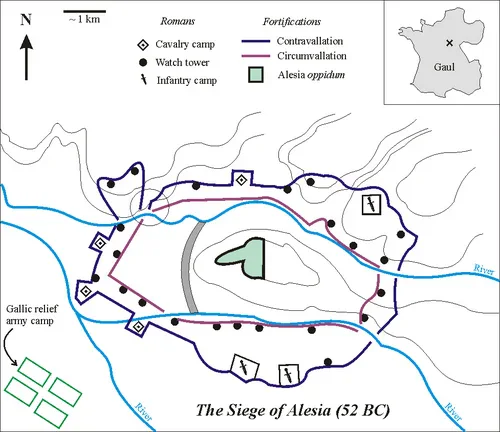 Mont Auxois Plateau and the Siege of Alesia
The Siege of Alesia, 52 BC
In 52 BC, this hilltop became the setting of the battle that decided the fate of Gaul. Vercingétorix, commanding the united Gallic armies, was shut up in the oppidum with about eighty thousand foot soldiers. Julius Caesar held the ground outside with roughly sixty thousand legionaries, besides auxiliary troops. Then came the extraordinary part. In about six weeks, Caesar's men built two complete rings of fortifications around the town. One line ran fifteen kilometres, facing inward against the defenders. The other, facing outward, ran twenty-one. Its purpose was to hold off a Gallic relief army said to number more than two hundred thousand. On the plan, the oppidum sits in the middle, the two lines wrap around it, and the relief army's camp lies outside them to the south-west. Caesar refused a bloody assault and chose to starve out the defenders, who were forced to send away the civilians and the cavalry. The relief army never broke through. When the siege ended, the Gauls had lost, and with them the independence of their peoples. Caesar told the whole story himself, in the seventh book of his account of the Gallic Wars.
Muriel Gottrop at English Wikipedia · CC BY-SA 1.0
03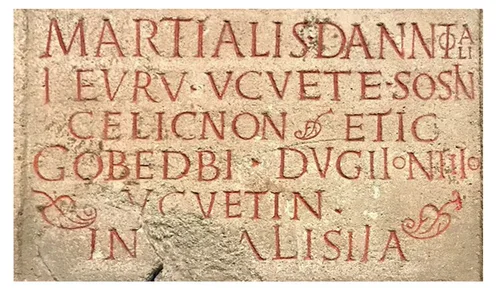 Mont Auxois Plateau and the Siege of Alesia
The Stone of Martialis - How Alesia Was Found
For centuries, nobody could agree where Alesia actually was. Around forty places claimed the honour, and in the nineteenth century the argument split France: Alise-Sainte-Reine in Burgundy, or Alaise in Franche-Comté. Then, in 1838, a stone came to light near Alise-Sainte-Reine with an inscription ending in two words: IN ALISIIA. In Alisia. A place name, carved in Roman times, naming this very spot. The stone, a dedication made by a man named Martialis, is now kept in the MuséoParc Alésia. The find convinced the scholars, and it convinced the emperor. Napoleon III ordered excavations around Mont Auxois, led by the officer Eugène Stoffel, working there from 1861 to 1865. With hundreds of trenches, the diggers struck Caesar's siege lines almost at once. Out came weapons, coins, and the structures of a vast military operation from the 50s BC. The news caused a sensation, and the emperor came to see the site for himself. Excavations by a French-German team in the 1990s confirmed the identification for good.
Listen in the appPhoto: C.Salviani · CC BY-SA 4.0
04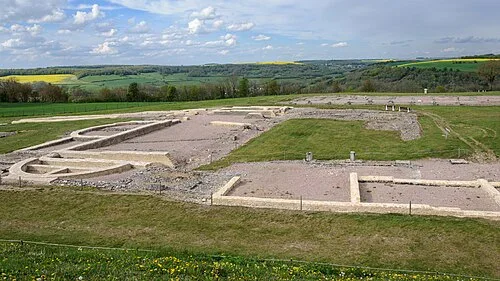 The Civil Basilica and Gallo-Roman Forum
The Forum and Civil Basilica
After the conquest, the defeated town rebuilt itself as a Roman one. Alesia gained a monumental centre, with temples, public buildings and a forum at its heart. The forum was the town's public square, and closing it stood the civil basilica, the hall where justice was done and the town's business administered. Meetings, lawsuits, decrees: the ordinary machinery of Roman civic life ran here. At its height, the town held about four thousand inhabitants. They lived crowded onto six hectares of the plateau, a fraction of the old oppidum's extent. The excavated ground plan gives the scale of it, foundations of public buildings laid out around open space, with the Burgundy farmland stretching away beyond. A modest town by Roman standards, but a fully Roman one.
Listen in the appPhoto: Myrabella · CC BY-SA 4.0
05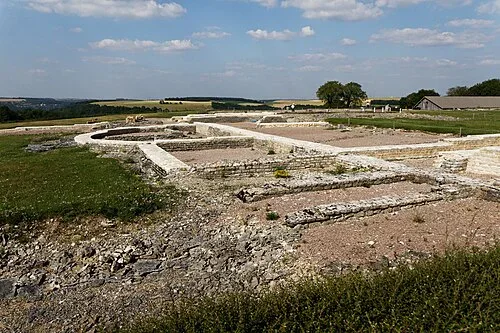 The Civil Basilica and Gallo-Roman Forum
The Civil Basilica - Reading the Ruins
These low lines of masonry are the skeleton of the civil basilica. Roman builders raised public halls like this on solid stone footings, and the footings are what survives. The thicker blocks mark load-bearing walls, and the shallow rectangles trace the shapes of individual rooms. A basilica was the grand hall attached to the forum, and here the foundations run far enough to show how much ground it covered. Everything above knee height was brick, timber and roof, and that is gone. The plan on the ground is what remains to read.
Listen in the appPhoto: Thesupermat · CC BY-SA 3.0
06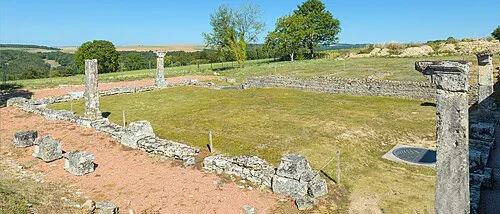 Sanctuary of Ucuetis and the Craftsmen's District
Monument of Ucuetis - Headquarters of the Smiths
Alesia's wealth came from its workshops. The town was renowned for its bronzesmiths and blacksmiths, craftsmen whose reputation reached far beyond the plateau. They were organised as a corporation, under the protection of a Gaulish god named Ucuetis. The courtyard monument here was their seat: part place of worship, part guild headquarters, where the smiths honoured the god who watched over their trade. It is a rare case of a Roman-period building tied so directly to the working men behind a town's prosperity. Excavations in this sector resumed in 2020, with the support of the department of Côte-d'Or, in the northern part of the monument. The digging here is far from finished.
Listen in the appPhoto: Pierre André Leclercq · CC BY-SA 4.0
07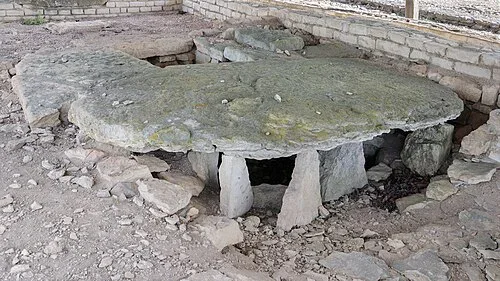 Sanctuary of Ucuetis and the Craftsmen's District
Furnace of the Bronzesmiths
Metalworking takes heat, plenty of it, and this is where it happened. The structure is a bronzesmiths' furnace, built for producing objects in bronze. Stone slabs held the working surface above the fire, and the surrounding debris of stone marks a workshop that ran hot and often. The craftsmen's quarter clustered in this part of town, close by the guild's own monument, so workplace and god stayed near each other. From furnaces like this came the bronze work that carried Alesia's name.
Listen in the appPhoto: Myrabella · CC BY-SA 4.0
08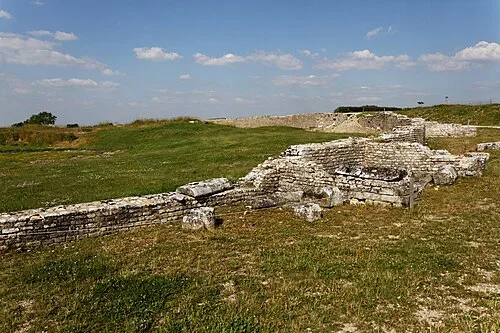 The Gallo-Roman Theatre
The theatre went up in the town's Roman heyday, a generation or so on from the battle below. It is semi-circular in the Gallo-Roman manner, and it seated about five thousand spectators. That is more than the town's entire population at its peak, so shows here plainly drew crowds from the surrounding country too. The low, grass-covered curves of masonry trace the tiers where those audiences sat. A theatre was a Roman institution through and through, and building one this size was the town declaring its new public life. The seating itself has vanished, but the curve that held it is still readable on the ground.
Listen in the appPhoto: Thesupermat · CC BY-SA 3.0
09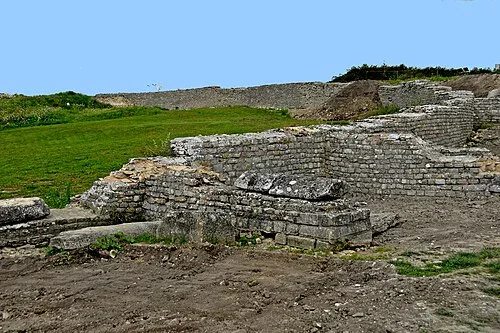 The Gallo-Roman Theatre
Theatre Outer Wall and Buttresses
A big seating structure needs serious support, and this wall shows how the theatre got it. The outer retaining wall survives in stretches, strengthened at intervals by buttresses, thick blocks of masonry set against it to resist the thrust of the tiers behind. It is built of small, regular courses of stone, laid with care. The whole arrangement carried the weight of the seating above on the slope. Without engineering like this, the theatre's sweeping arc could never have stood on the hillside at all.
Listen in the appJochen Jahnke at German Wikipedia · Public domain
10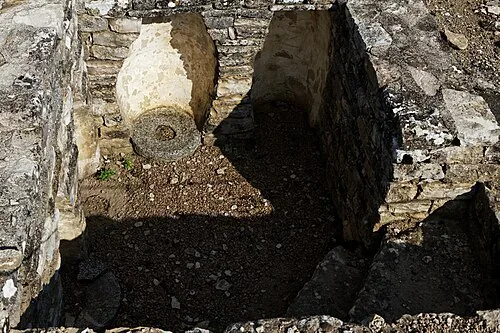 Residential Quarters, Cellars, and Hypocaust
The Amphorae Cellar
Every prosperous Roman house needed somewhere cool and dark, and this cellar was it. It is known as the cave of the amphorae, after the great ceramic jars associated with such spaces. Amphorae were the standard containers of the Roman world, used to ship wine, oil and other goods across the Mediterranean. Set into an underground room, they kept their contents at a steady, cool temperature, well away from the summer heat above. This is the domestic side of Roman Alesia: storage, supplies, and households with enough goods to need a cellar of their own.
Listen in the appPhoto: Thesupermat · CC BY-SA 3.0
- 11
A House with Underfloor Heating
The stone pillars of a hypocaust, the Roman system that warmed a room through its floor.
- 12
The Vercingétorix Monument
The large copper Vercingétorix that an emperor commissioned and a sculptor named Millet created in 1865.
- 13
Vercingétorix - Closing Image
Millet's warrior up close, and the surrender tradition that ended the siege of 52 BC.
Site archéologique d'Alésia
Frequently asked questions
How much does the guide cost?
Free app download. Listed guide price: $0.99. Guide price shown in the app. Audio guide only. Venue admission is separate.
Can I listen without internet?
Yes. Download the guide’s audio, images, and maps in the app before your visit. Your downloaded content is then available offline.
Can I listen in my language?
This audio guide is available in 15 languages, including English.
Do I need to follow a schedule?
No. This is a self-guided experience. Choose your stops, pause whenever you like, and return to a story at your own pace.
At your own pace
Explore Site archéologique d'Alésia.
Download Stanza, then search for “Site archéologique d'Alésia”.
Free app download · Guide price shown in the app
Keep exploring
Nearby audio guides
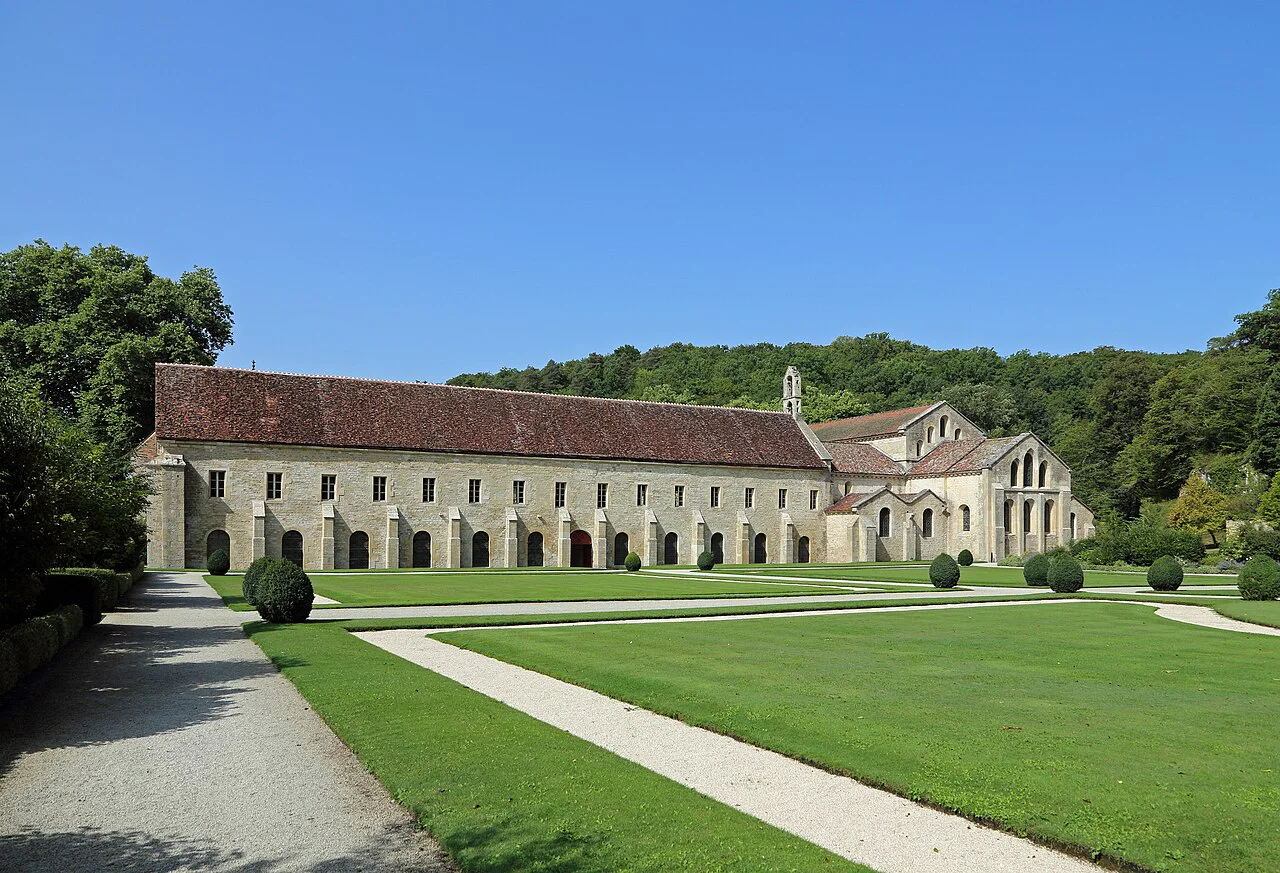
Marmagne · 14 km
Abbaye de Fontenay
Content & sources
Marc Ryckaert · CC BY-SA 4.0
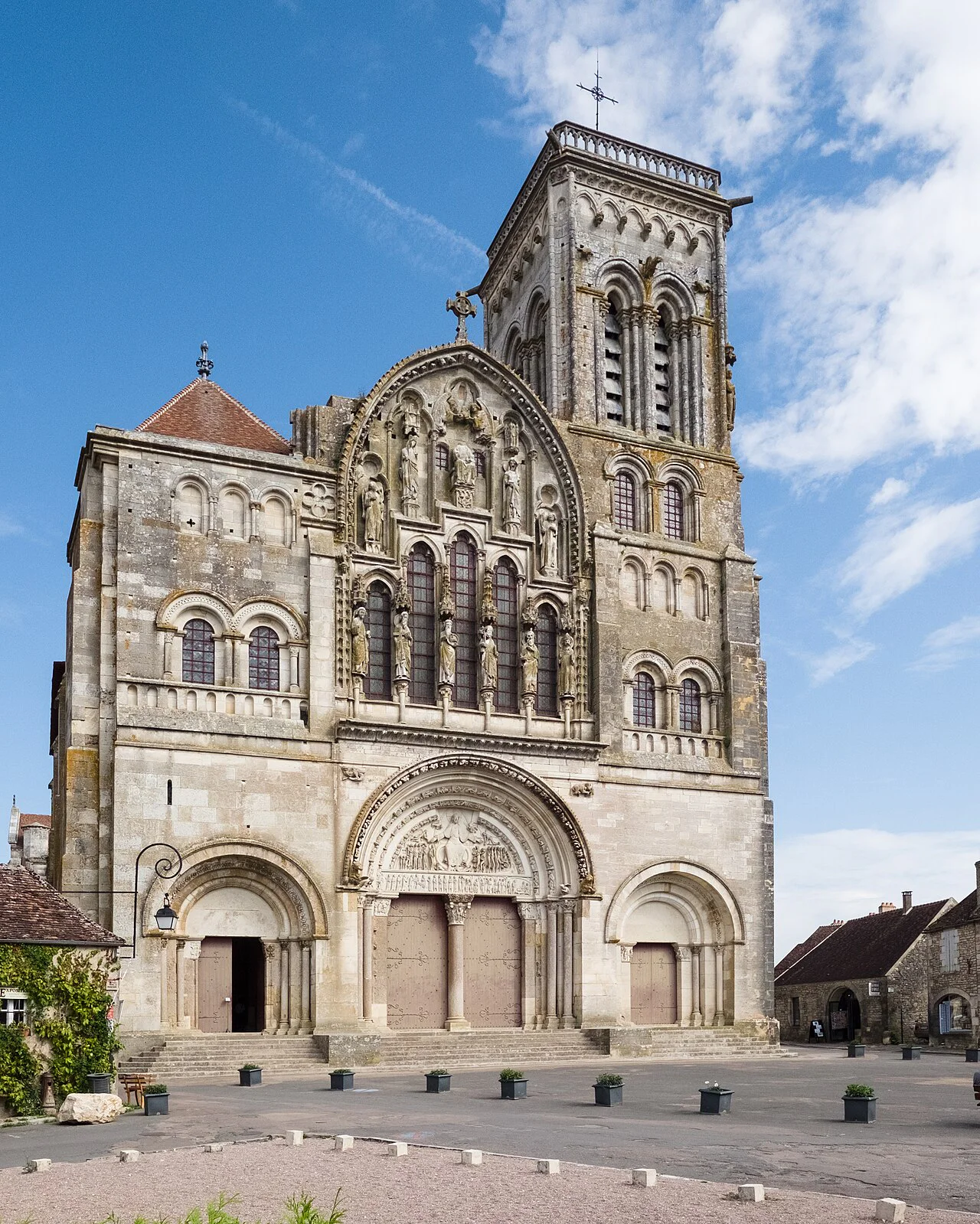
Vézelay · 57 km
Basilique Sainte-Marie-Madeleine de Vézelay
Content & sources
Photo: DKrieger · CC BY-SA 3.0
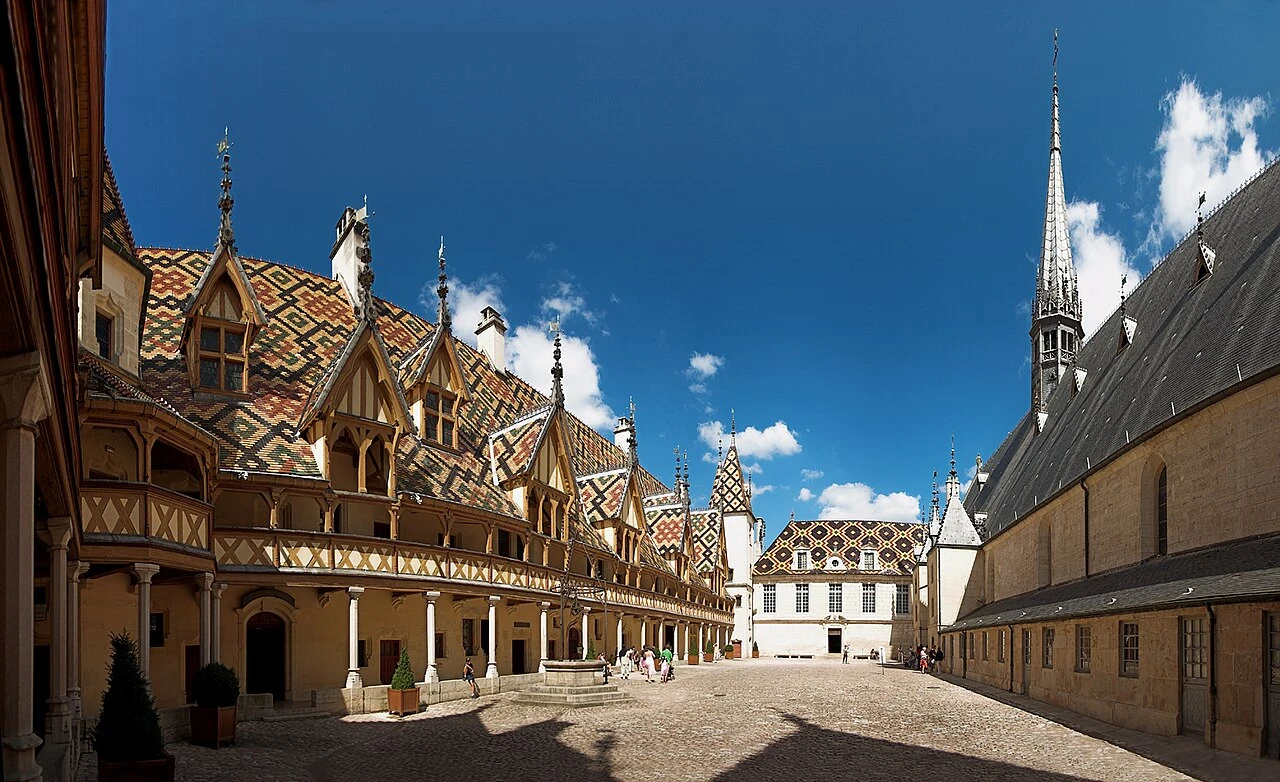
Beaune · 63 km
Hospices de Beaune
Content & sources
Stefan Bauer, http://www.ferras.at · CC BY-SA 2.5
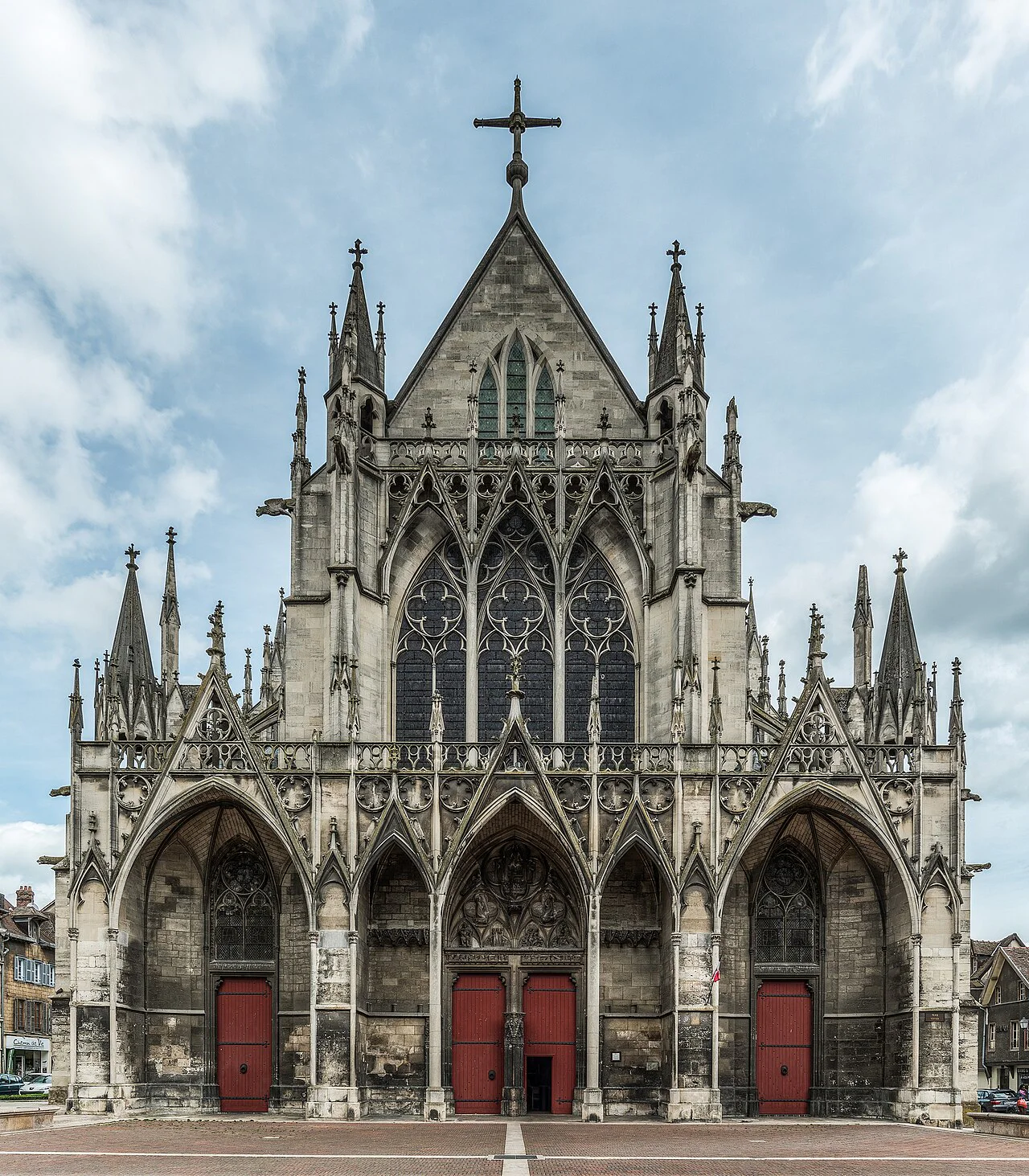
Troyes · 90 km
Basilique Saint-Urbain de Troyes
Content & sources
Photo: DXR · CC BY-SA 3.0