Stanza · Audio guide
Abbaye de Fontenay Audio Guide
A place to remember. A story to take with you.
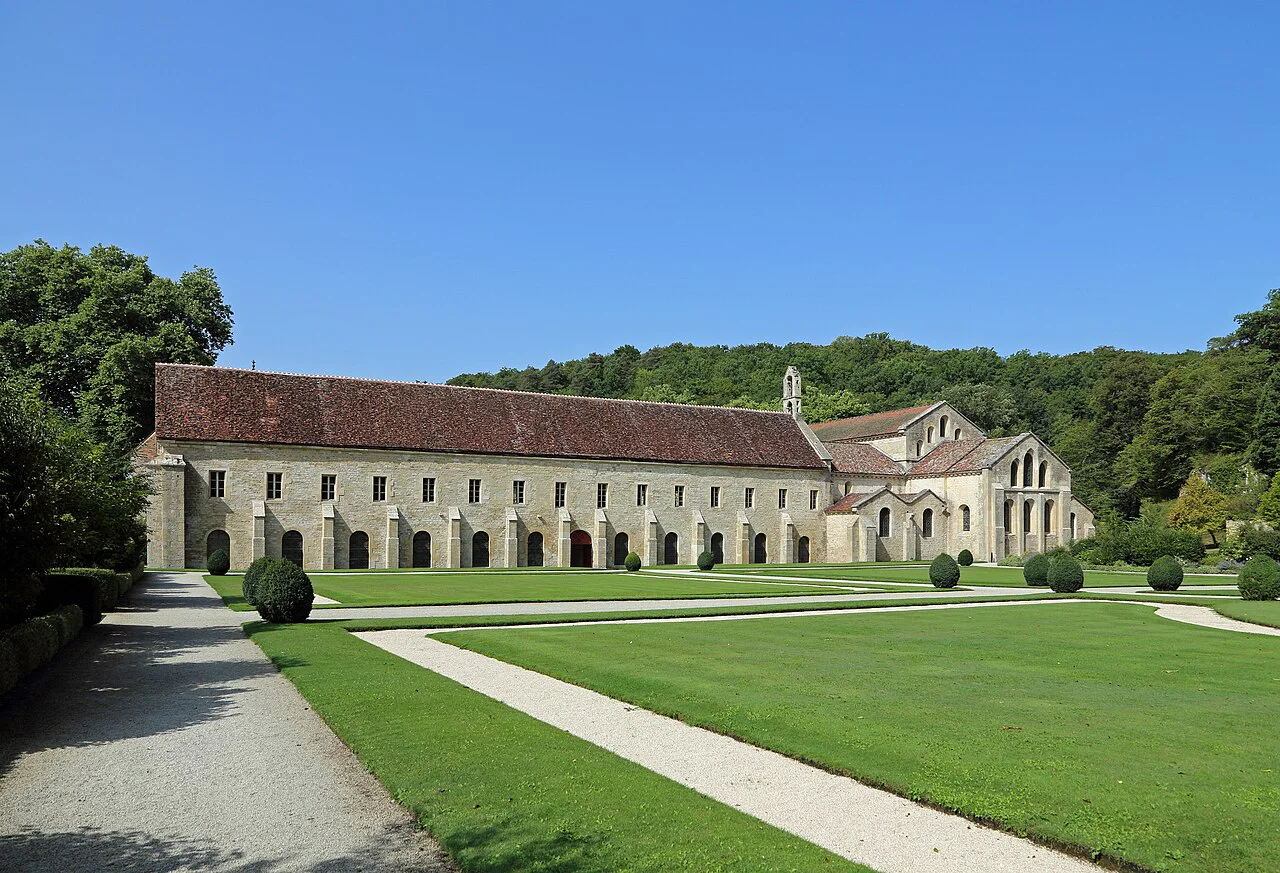
The Abbey of Fontenay is a former Cistercian abbey located in the commune of Marmagne. It is one of the oldest and most complete Cistercian abbeys in Europe and became a UNESCO World Heritage Site in 1981.
Download Stanza, then search for “Abbaye de Fontenay”.
About the tour
One guide. Your kind of visit.
The Abbey of Fontenay is a former Cistercian abbey located in the commune of Marmagne. It is one of the oldest and most complete Cistercian abbeys in Europe and became a UNESCO World Heritage Site in 1981.
Ready when you are.
- 01Get the free Stanza app.
iOS & Android
- 02Find your guide.
“Abbaye de Fontenay”
- 03Download before you go.
Works offline
Audio guide / 14 narrated stops
Inside the guide
Get to know a few of the stories before you go. Open a stop to read more.
01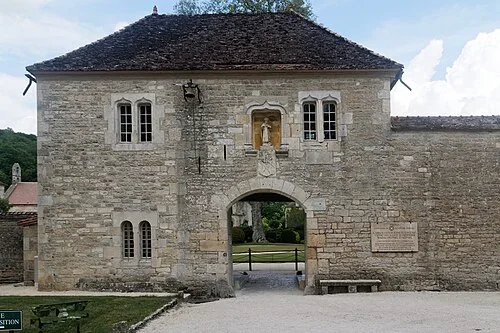 The Porterie Gatehouse
Welcome to Fontenay, one of the most complete Cistercian abbeys in Europe. The stone building with the arched passage is the porterie, the gatehouse that once stood between the outside world and a monastic valley. Everything beyond it was meant to sustain itself, with no servants and no dependence on the town outside. Saint Bernard of Clairvaux founded the abbey here in 1118, and monks lived and prayed in this valley for the better part of seven centuries. Then the French Revolution emptied the place. The last monks left, and in 1791 the whole abbey was sold. It became a paper mill, run for decades by the Montgolfier family, the same name as the famous balloon. For more than a century, this gatehouse opened onto a factory floor instead of a church.
Daniel VILLAFRUELA. · CC BY-SA 4.0
02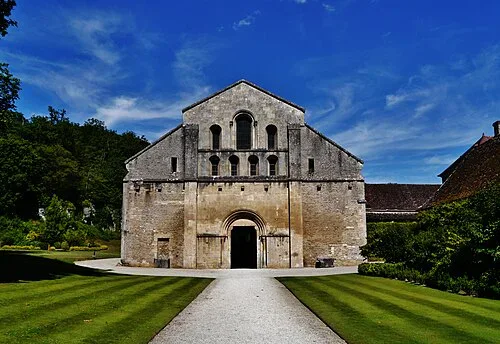 The Abbey Church Facade
Bernard of Clairvaux wanted churches far plainer than Cluny's. In the late eleventh century, the abbey of Cluny in Burgundy was raising one of the grandest and most richly decorated churches in Europe. A monk named Robert of Molesme led a reaction against all that, arguing that Cluny had drifted from the Rule of Saint Benedict. He broke away and founded Cîteaux, the mother house of the Cistercians. Bernard, one of the movement's great preachers, pushed that austerity further still. So he chose this isolated valley, watered by so many springs that the place took its name, Fontenay, and built a monastery under strict austerity. That is why the west facade rises in bare stone, with no figures, no flowers, no carving anywhere. Bernard even refused a bell tower. Small bells hung in the wall beside the church door, enough to call the lay brothers together.
Photo: Zairon · CC BY-SA 4.0
03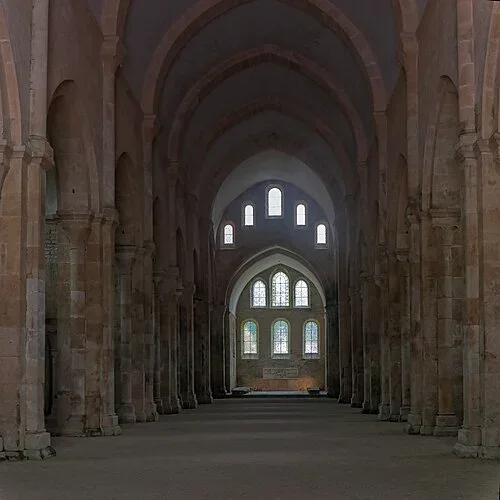 The Church Interior and Sanctuary
The Church Interior: Nave and Sanctuary
The nave runs sixty-six metres through this building, straight as an arrow. The church took shape between 1127 and 1150, built of stone quarried nearby, on a Latin cross plan with a transept nineteen metres across. Where older churches curved into a semicircular east end, this one ends flat, with square chapels off the transept. The great pointed barrel vaults rise from massive piers, and the pointed arch carries the weight down onto them at a steep angle, which is why the building still stands. The only ornament allowed inside was light. For a long time people believed the designers worked from music, spacing the windows of the west wall to musical ratios, though that tradition is hard to confirm. What is certain is the day the church was finished in the eyes of the Church. On the twenty-first of September, 1147, Pope Eugene the Third himself consecrated it, a pope who had been a Cistercian monk, before cardinals, bishops and abbots of the young order.
Listen in the appDaniel VILLAFRUELA. · CC BY-SA 4.0
04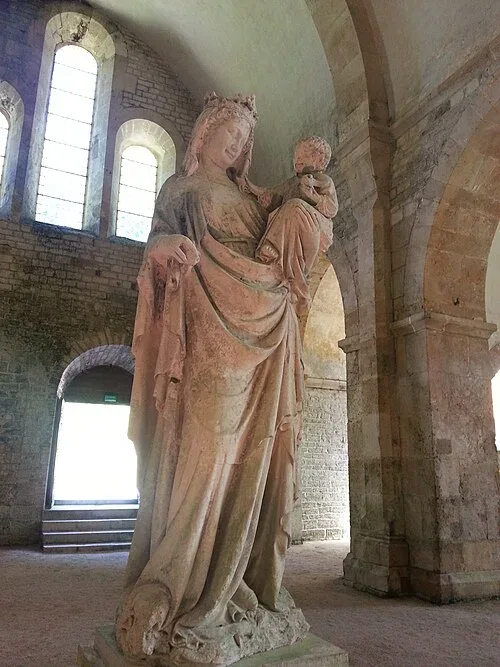 The Church Interior and Sanctuary
The Virgin of Fontenay
In a church with no carving and no painting, a carved figure stands nearly life size. She is the Virgin, crowned, with the Christ child on her left arm, and in his hand he holds a dove with its wings spread. The statue dates from the thirteenth century, and for a long time it stood outdoors, exposed to the weather in the cemetery of a neighbouring village, before finding shelter here. Its presence inside an austere Cistercian church is less a contradiction than it seems. Bernard never rejected art or beauty as such. What he feared were, in his own words, those manifestations of beauty which lead the eyes of the mind away from the image of God to the images of the world. A statue of the Virgin passed his test. And judged on its own terms, this abbey stripped of decoration is still called an outstanding work of art.
Listen in the appPhoto: Tettnanger1960 · CC BY-SA 3.0
05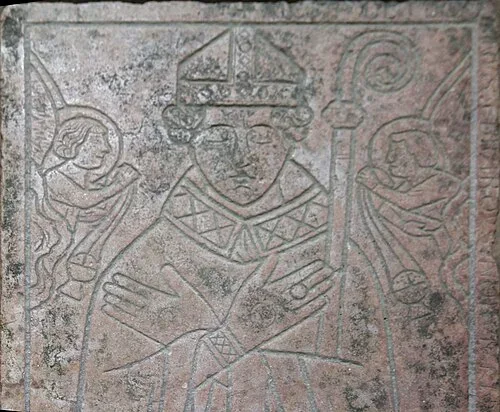 The Church Interior and Sanctuary
The Tomb Slab of Ebrard of Norwich
This incised slab remembers the man whose money may have built the church around it. Ebrard of Calne was Bishop of Norwich in England, and before that he had been chaplain to King Henry the First. Then he fled. Persecution drove him from his see, and he took refuge at Fontenay, in the years around 1140, though some accounts place his arrival a few years later. He came, it is thought, to expiate the way he had let the property of his bishopric slip away. Whatever his reasons, his wealth arrived with him, and it helped finance the permanent stone church. The reward was a burial in the sanctuary itself. The slab shows him in episcopal dress, staff in hand, flanked by angels, one on each side of his head.
Listen in the appDaniel VILLAFRUELA. · CC BY-SA 4.0
06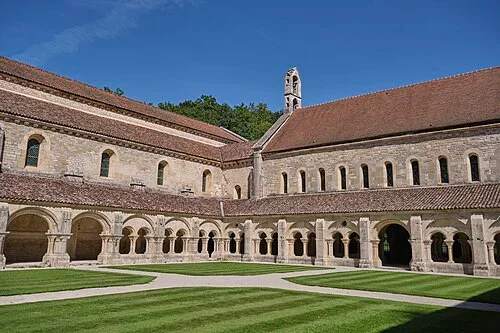 The Cloister Walkways
The Cloister Quadrangle
Four covered walkways enclose a patch of grass here, thirty-six metres one way and thirty-eight the other. This cloister was the heart of the abbey, where monks spent their free hours reading, working and praying in silence. Processions moved through these galleries, and the ritual washing of feet took place here too. The layout looks almost square, but the builders refused to close it. Church and cloister were set parallel and perpendicular to each other, with open ends, so that if the monastery grew, new buildings could be added without touching the old ones. The east gallery worked as the monastery's spine. It led the monks to their offices and to the chapter house, and at its far end a day stair climbed to the dormitory.
Listen in the appPhoto: Johan Allard · CC BY-SA 4.0
07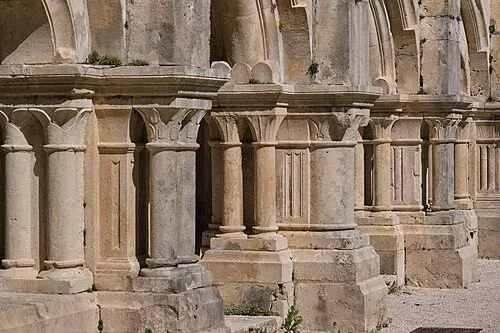 The Cloister Walkways
The Cloister Columns
Each gallery of the cloister rests on pairs of slender columns, their capitals cut into simple pointed leaf shapes and nothing more. No flowers, no figures, no birds, at a scale where a medieval mason could have carved anything he liked. Above them the vaults run as double arches, one behind the other, down the length of the walk. The east gallery kept one secret for more than seven centuries. During restoration work in 1911, workers found the armarium, a cupboard cut straight into the wall, where the abbey stored its liturgical books for daily use. Alongside them sat the volumes the monks carried off to read in these very galleries, in the slow, meditative reading they called Lectio divina.
Listen in the appPhoto: Johan Allard · CC BY-SA 4.0
08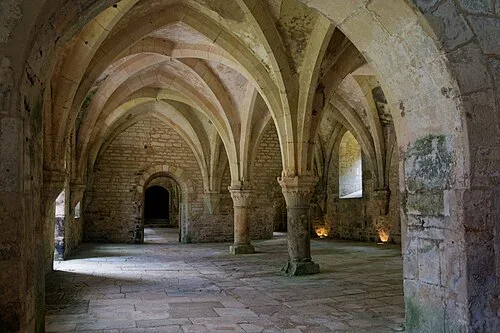 The Chapter House
Heavy ribbed vaults spring from stout central columns in this room, which opens directly onto the cloister. It is the chapter house, and every day the community gathered here. A chapter of the Rule of Saint Benedict was read aloud, and the Father Abbot commented on it, which is how the room got its name. Then came the business of the community. Every decision that concerned the abbey, large or small, was taken here, with the whole chapter present. The Rule the monks heard each day was the same text that had driven the Cistercian reform in the first place, the call to poverty, simplicity and work that Bernard of Clairvaux had carried to this valley.
Listen in the appDaniel VILLAFRUELA. · CC BY-SA 4.0
09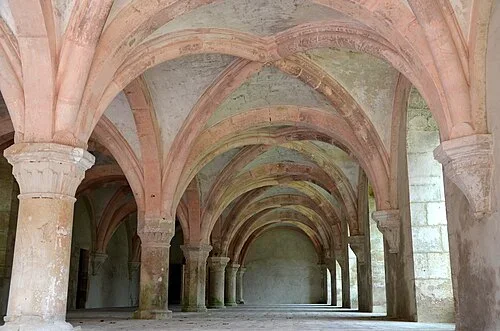 The Scriptorium
 (Monks' Workroom)
Beyond the chapter house stretches the monks' workroom, a hall thirty metres long. Twelve ogival vaults cover it, arranged in six bays, a canopy of stone ribs overhead. The room was put to many tasks, and one of them was almost certainly the making of books. In one part of the hall, the copyist monks bent over their desks, copying manuscripts line by line and illuminating them with painted ornament. It is a telling arrangement. Prayer had its place in the cloister next door, but here, under one roof, the order's ideal of labour, both manual and intellectual, had a room of its own.
Listen in the appPhoto: Pline · CC BY-SA 3.0
10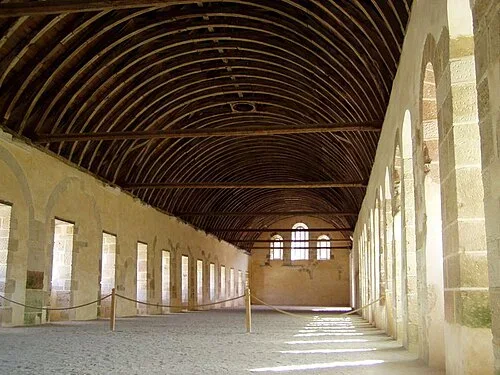 The Monks' Dormitory
One room held the whole community at night. The monks slept together here, in the common life the Rule of Saint Benedict prescribed, rather than in private cells. The stair they climbed from the cloister's east gallery brought them straight into this vast space. Its most striking feature is overhead. In the fifteenth century the dormitory was re-roofed in chestnut timber, an arched braced structure whose curved ribs sweep overhead like the upturned hull of a ship. The wood has done its work for well over five hundred years, spanning the length of the hall in a single unbroken curve.
Listen in the appThe original uploader was Accrochoc at French Wikipedia. · CC BY-SA 3.0
- 11
The Medieval Forge - Exterior
A vast industrial building whose true purpose nobody can prove.
- 12
Inside the Forge
'To work is to pray', and the monks who spread technology across medieval Europe.
- 13
The Water Wheel
The water wheel that did the monks' heavy work, and outlived them.
- 14
The Dovecote and Abbey Grounds
The round dovecote, the Aynard rescue, and an abbey that survived almost whole.
Abbaye de Fontenay
Frequently asked questions
How much does the guide cost?
Free app download. Listed guide price: $0.99. Guide price shown in the app. Audio guide only. Venue admission is separate.
Can I listen without internet?
Yes. Download the guide’s audio, images, and maps in the app before your visit. Your downloaded content is then available offline.
Can I listen in my language?
This audio guide is available in 15 languages, including English.
Do I need to follow a schedule?
No. This is a self-guided experience. Choose your stops, pause whenever you like, and return to a story at your own pace.
At your own pace
Explore Abbaye de Fontenay.
Download Stanza, then search for “Abbaye de Fontenay”.
Free app download · Guide price shown in the app
Keep exploring
Nearby audio guides
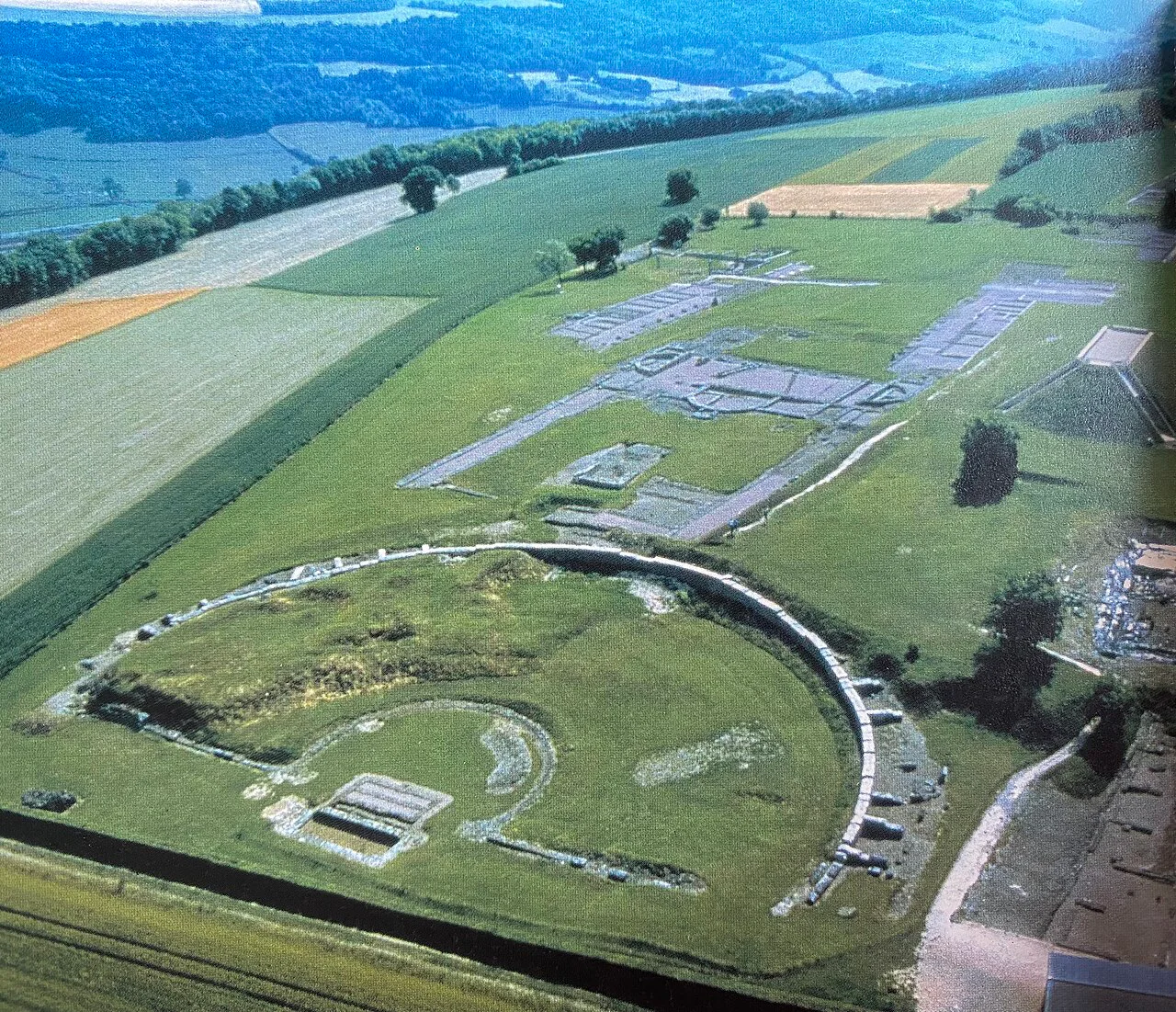
Alise-Sainte-Reine · 14 km
Site archéologique d'Alésia
Content & sources
Photo: Epona21 · CC BY-SA 4.0
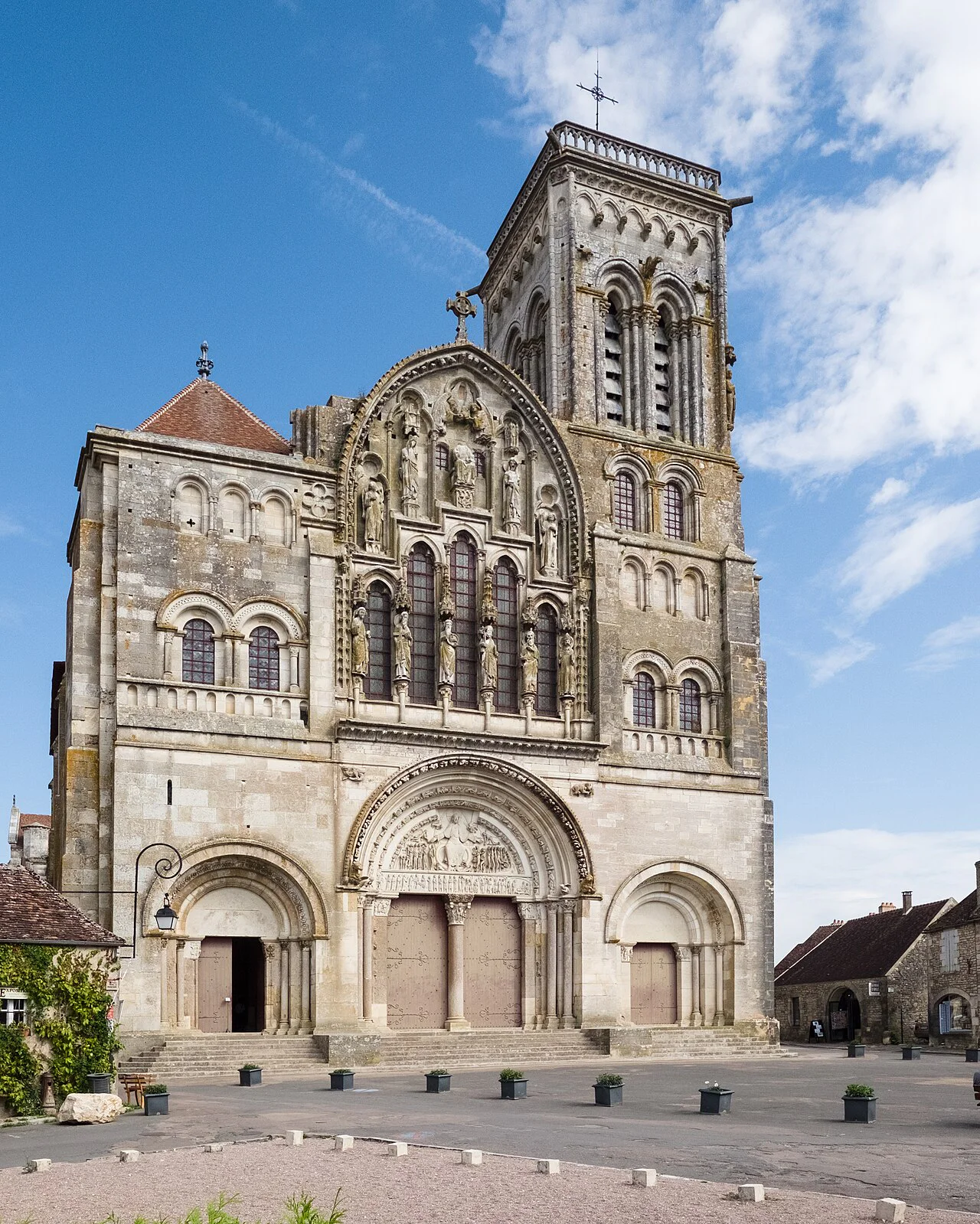
Vézelay · 52 km
Basilique Sainte-Marie-Madeleine de Vézelay
Content & sources
Photo: DKrieger · CC BY-SA 3.0
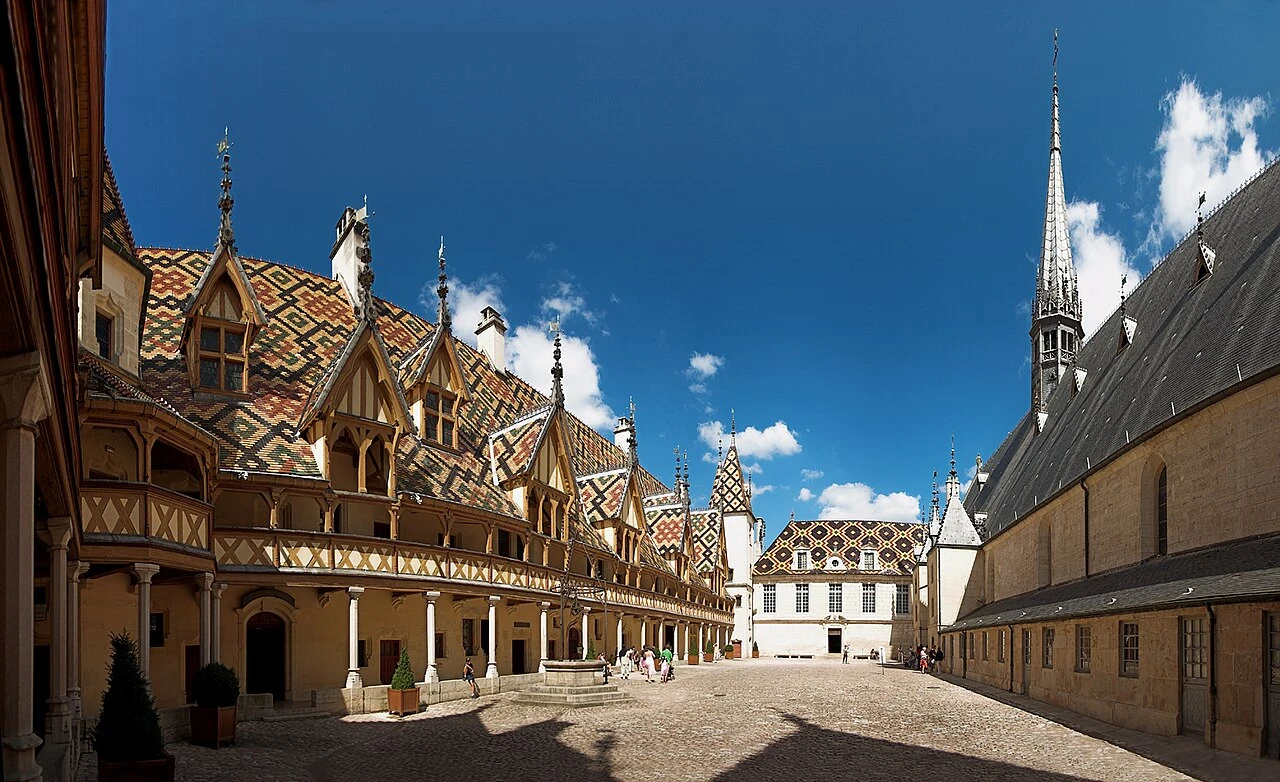
Beaune · 77 km
Hospices de Beaune
Content & sources
Stefan Bauer, http://www.ferras.at · CC BY-SA 2.5
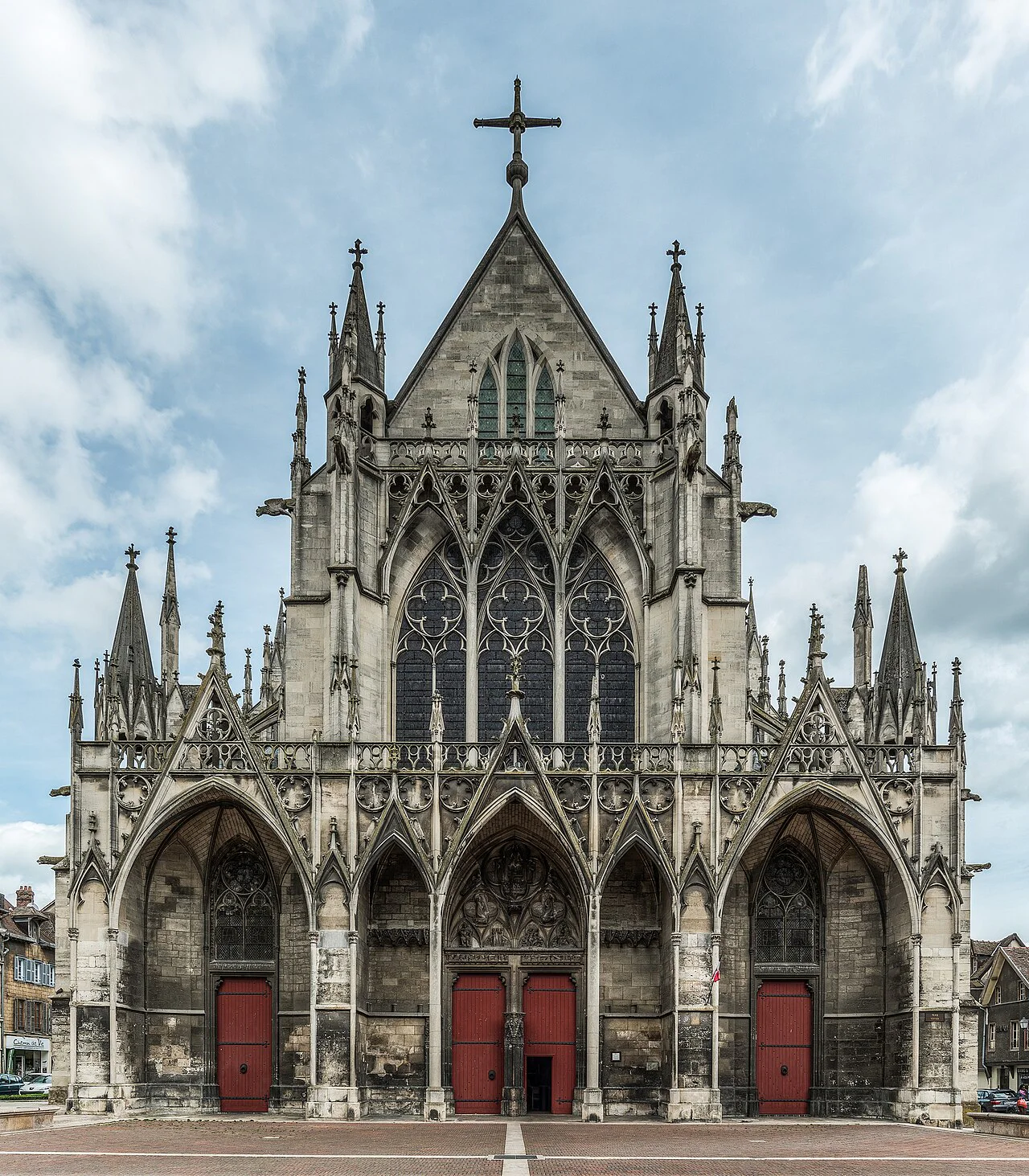
Troyes · 77 km
Basilique Saint-Urbain de Troyes
Content & sources
Photo: DXR · CC BY-SA 3.0