Stanza · Audio guide
Basilique Sainte-Marie-Madeleine de Vézelay Audio Guide
A place to remember. A story to take with you.
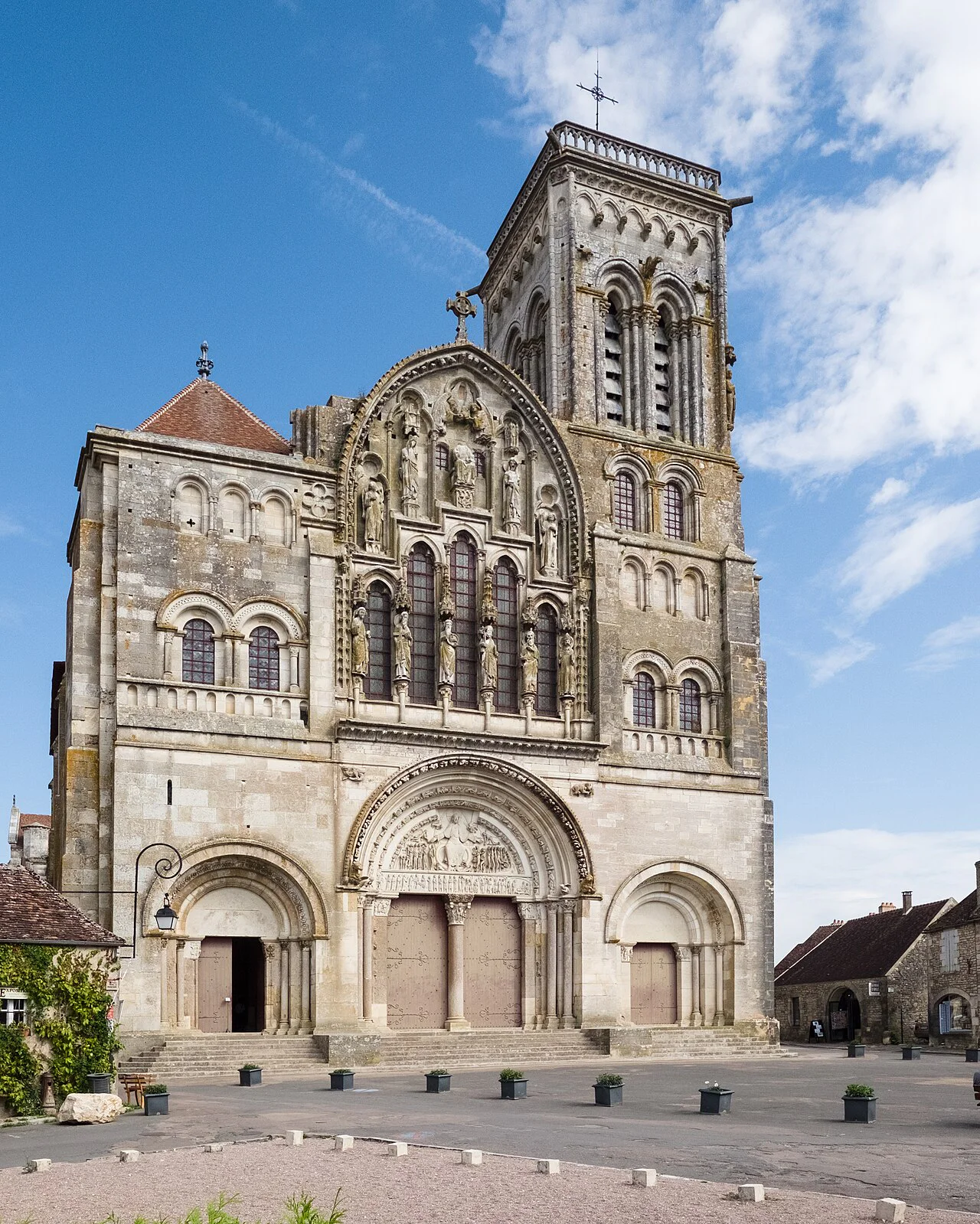
Vézelay Abbey is a Benedictine and Cluniac monastery located in the French department of Yonne. The abbey church is considered one of the great masterpieces of Burgundian Romanesque art and architecture.
Download Stanza, then search for “Basilique Sainte-Marie-Madeleine de Vézelay”.
About the tour
One guide. Your kind of visit.
Vézelay Abbey is a Benedictine and Cluniac monastery located in the French department of Yonne. The abbey church is considered one of the great masterpieces of Burgundian Romanesque art and architecture.
Ready when you are.
- 01Get the free Stanza app.
iOS & Android
- 02Find your guide.
“Basilique Sainte-Marie-Madeleine de Vézelay”
- 03Download before you go.
Works offline
Audio guide / 14 narrated stops
Inside the guide
Get to know a few of the stories before you go. Open a stop to read more.
01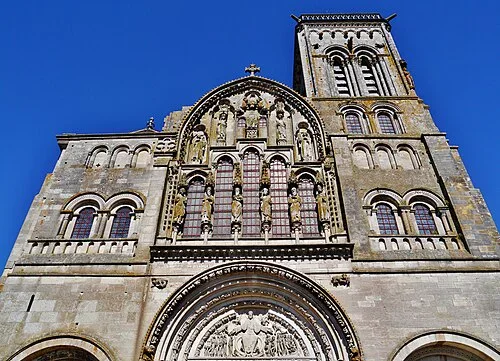 The Western Facade and Saint-Michel Tower
The Western Facade
Welcome to the basilica of Saint Mary Magdalene, the abbey church crowning the hill of Vézelay. Benedictine monks made this one of the great pilgrim destinations of medieval Europe, and their hill marked the start of one of the four great French routes to Santiago de Compostela. In 1979 the church and the hill together joined the UNESCO World Heritage list for their importance in medieval Christianity. The western front carries a story of loss and repair. The tympanum over the central door shows the Last Judgment, carved in 1856 by the sculptor Michel-Pascal under the direction of Eugène Viollet-le-Duc. Critics attacked the neo-Romanesque work at first, though it has since come to be seen as a success. The medieval carving that once filled that space did not survive the Revolution. Hammered almost smooth, the battered slab now leans against the south wall of the nave, in its eighth bay.
Photo: Zairon · CC BY-SA 4.0
02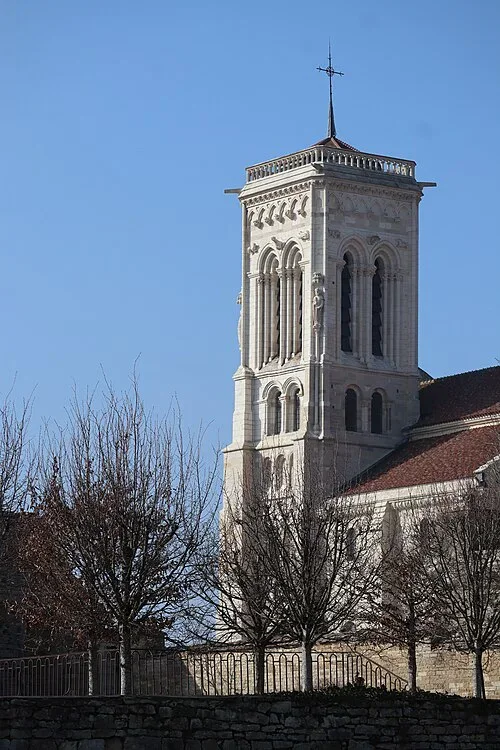 The Western Facade and Saint-Michel Tower
The Saint-Michel Tower
The tower beside the facade is Saint-Michel, and it rises thirty-eight metres above the hill. Its stones record how often this church has been torn down and built again. The tower's tall Gothic upper stages belong to one of the later rebuildings, of which this church has seen many.
Photo: GO69 · CC BY-SA 4.0
03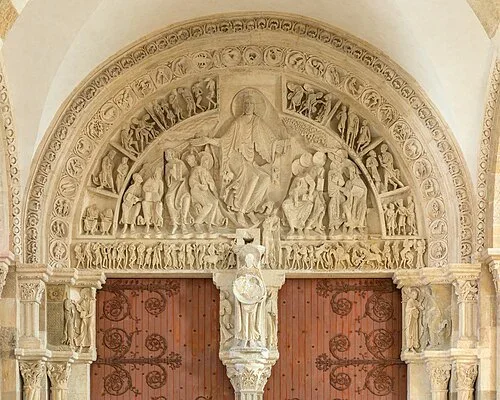 The Narthex and the Great Tympanum
The Narthex
The fame of this abbey came at a brutal price. A new abbey church was dedicated in 1104 to hold the growing crowds of pilgrims. Building it pushed taxes on the abbey's lands so high that the peasants rose up and killed the abbot. Even that did not stop the tide of visitors. The crush was so great that this enclosed porch, the narthex, was added in front of the church, and Pope Innocent the Second inaugurated it in 1132. From here the pilgrim processions could gather, form up and move into the church beyond. The dim shadow of the narthex was the threshold, and the bright church waited past its doors.
Listen in the appBenjamin Smith · CC BY-SA 4.0
04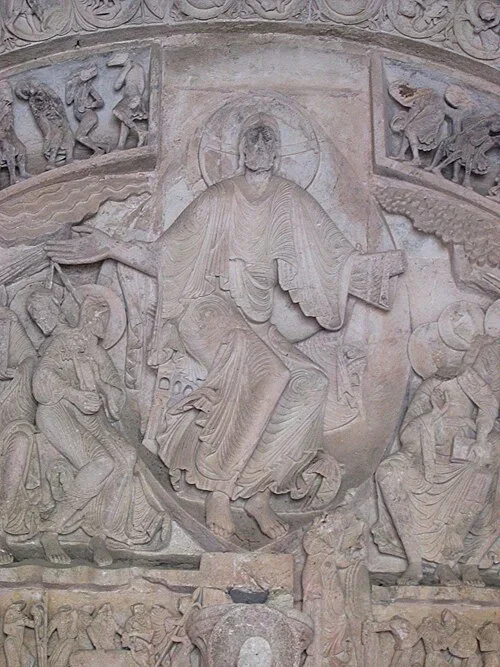 The Narthex and the Great Tympanum
The Great Tympanum: Christ in Majesty
Most Romanesque portals show the Last Judgment, full of demons and threat. Vézelay chose something else entirely. Here Christ sits in a mandorla with his arms spread wide, streaming the gifts of the Spirit from his hands toward the Apostles. The scene is the Pentecost, the moment he sent them out to convert the whole world. The carving was completed in 1130. The art historian Adolf Katzenellenbogen read it, in 1944, as a statement about the First Crusade, a mission sent to the peoples beyond the church. Another scholar, Peter Low, hears a wider message, a universal church welcoming, in his words, 'the full, even monstrous range of the globe's inhabitants.' The compartments around the scene show who that world contains.
Listen in the appUrban · Public domain
05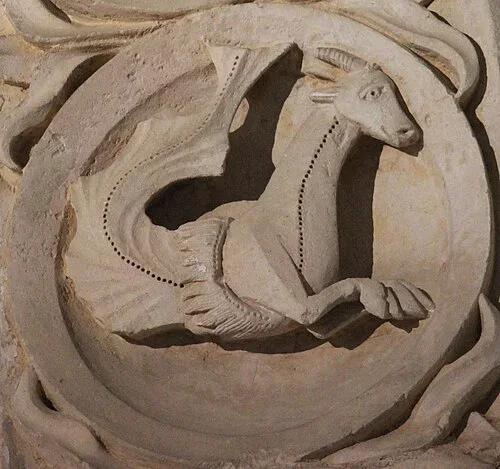 The Narthex and the Great Tympanum
The Medallion: the Peoples of the World
Around the great figure of Christ, the tympanum is crowded with the peoples the Apostles were sent to reach. In the compartments beside him and along the lintel below, the carvers set real nations next to fabulous ones: dog-headed men said to live in India, Phrygians, Byzantines and Armenians in high boots, and the fishermen, archers and farmers of Europe. Medieval travellers' tales and learned commentary on Scripture filled the world's edges with such beings. Framing them all, the first ring of the arch is a chain of carved medallions, where the signs of the zodiac alternate with the labours of the months. The medallion here is one link in that chain, the turning year wrapped around the whole world. Mapping the mission onto all of it, monsters included, is what makes this portal so different.
Listen in the appPhoto: Office de tourisme de Vézelay · CC BY-SA 4.0
06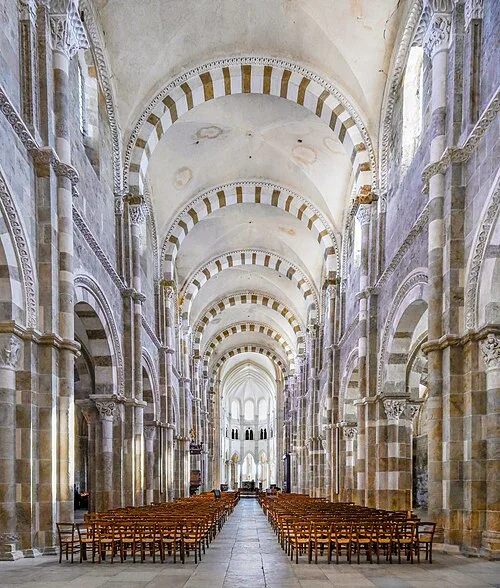 The Romanesque Nave and the Solstice Light
The Romanesque Nave
On the eve of Saint Mary Magdalene's feast day, 21 July 1120, fire took the old church. Its wooden roof collapsed onto the pilgrims gathered beneath it. One thousand one hundred and twenty-seven of them died inside. The monks answered with stone. The great Romanesque nave, vaulted in stone, was finished by 1140, fireproof where its predecessor had not been. Overhead, the transverse arches alternate pale and dark stones, the two-tone rhythm that gives this nave its look. Each bay's vault weighs about forty-five tonnes. The walls slowly buckled under so much weight, and the builders first tied them with iron rods, then braced them from outside with buttresses.
Listen in the appPhoto: NateBergin · CC BY 4.0
07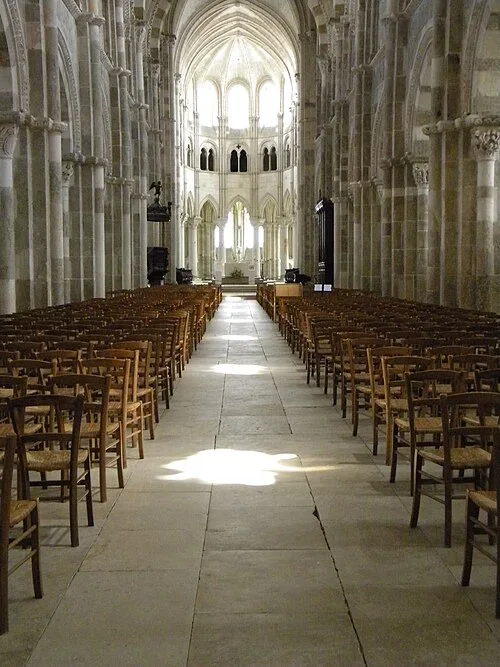 The Romanesque Nave and the Solstice Light
The Solstice Light on the Nave Floor
Every June, the nave floor turns into a calendar. At noon on the summer solstice, sunlight through the high southern windows lays a line of bright patches straight down the middle of the nave. The spots fall with such precision that they track the church's length like a path. Hugues Delautre, one of the Franciscan fathers caring for the sanctuary, noticed it in 1976. The church had already stood for more than eight centuries. He read the alignment as the builders folding the relationship of Earth and Sun into the structure itself, a sign of Christ as the Light of the World. The solstice falls near the feast of Saint John the Baptist, when the sun stands at its highest.
Listen in the appPhoto: Office de tourisme de Vézelay · CC BY-SA 4.0
08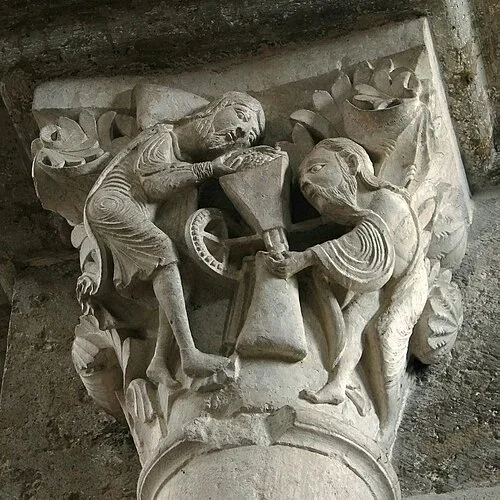 Masterpieces of the Nave Capitals
The Mystic Mill Capital
The pillars of the nave carry one of the great sculptural programmes of Burgundy. The basilica holds one hundred and eighteen carved capitals in all. Ninety-four of them crown the nave pillars. Twenty-four more serve the narthex. A workshop of probably five master sculptors made the ensemble, the largest in Burgundy alongside the cathedral of Saint-Lazare at Autun. This capital, on a south pillar of the nave, is the Mystic Mill. Moses pours the grain of the Old Law into the top of the mill. The millstone is the Cross, which grinds it into the pure flour of the New Testament. The Apostle Paul receives the flour as it falls. For monks and pilgrims who could not read such theology in books, the stone told it instead. The carving belongs to the years when the new nave was rising.
Listen in the appPhoto: Vassil · Public domain
09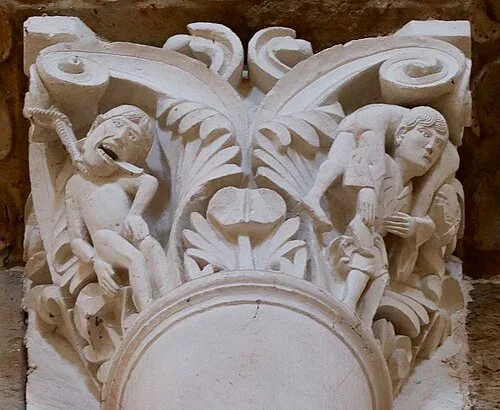 Masterpieces of the Nave Capitals
Judas and the Good Shepherd
Romanesque capitals loved moral contrasts, and this one sets two scenes side by side. On one face, Judas hangs dead on his rope. On the other, the Good Shepherd carries a lost sheep home on his shoulders. Sin and salvation, carved within arm's reach of each other above the nave. The nave holds another story too. Only eight of the basilica's capitals were refashioned, in the nineteenth century, and their whiter stone gives them away. Fragments of the originals are kept in the lapidaire museum.
Listen in the appPhoto: Archibald Tuttle · CC BY-SA 4.0
10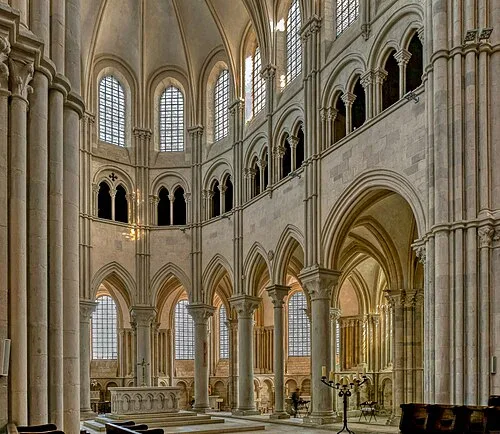 The Early Gothic Choir
The Gothic Choir
At the east end, the church changes character. From 1185, under Abbot Girard d'Arcy, a new choir and transept rose in the early Gothic style, after the original Romanesque choir collapsed. The work was probably completed under Abbot Gautier, who had the transept built. The walls climb in three levels, great arcades below, a blind triforium above them, and tall lancet windows at the top. Pure white stone floods the space with light. Slender clustered piers carry the vaults where the nave needed thick walls. The choir vaults rise twenty-two metres. The nave's own vaults reach just over eighteen and a half metres.
Listen in the appPhoto: Rolf Kranz · CC BY-SA 4.0
- 11
The Choir Stalls and Living Worship
Carved choir stalls, daily worship by the Jerusalem brothers and sisters, and Becket's thunderous sermon of 1166.
- 12
The Reliquary of Saint Mary Magdalene
The Magdalene's relics: the claim that made Vézelay famous, the rival tomb that broke it, and the fire that destroyed the originals.
- 13
The Carolingian Crypt
The oldest room in the church, where freed captives' chains were reforged into railings for the altar.
- 14
The Chevet: Crusades, Collapse and Rescue
Crusades preached and launched from this hill, then collapse, then the restoration that saved the basilica.
Basilique Sainte-Marie-Madeleine de Vézelay
Frequently asked questions
How much does the guide cost?
Free app download. Listed guide price: $0.99. Guide price shown in the app. Audio guide only. Venue admission is separate.
Can I listen without internet?
Yes. Download the guide’s audio, images, and maps in the app before your visit. Your downloaded content is then available offline.
Can I listen in my language?
This audio guide is available in 15 languages, including English.
Do I need to follow a schedule?
No. This is a self-guided experience. Choose your stops, pause whenever you like, and return to a story at your own pace.
At your own pace
Explore Basilique Sainte-Marie-Madeleine de Vézelay.
Download Stanza, then search for “Basilique Sainte-Marie-Madeleine de Vézelay”.
Free app download · Guide price shown in the app
Keep exploring
Nearby audio guides
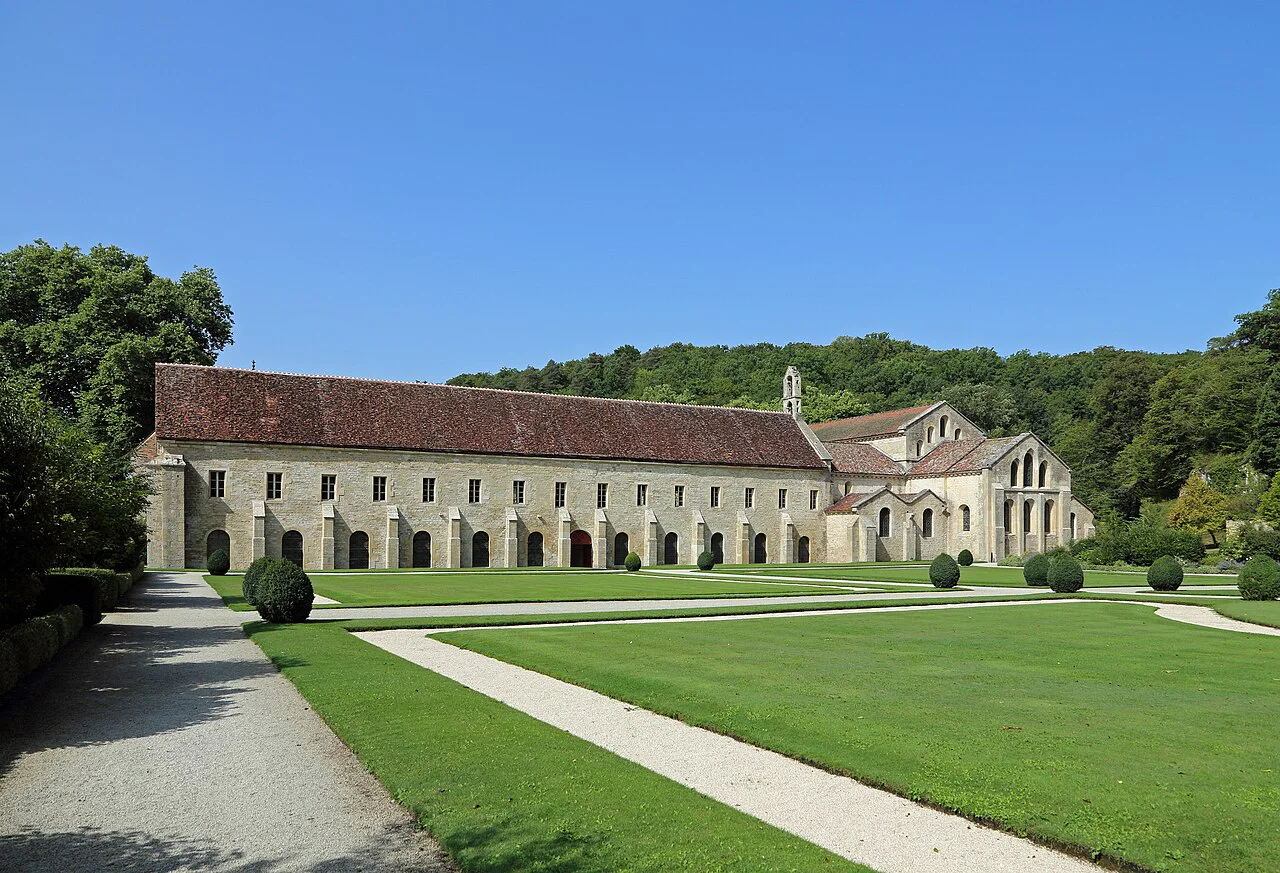
Marmagne · 52 km
Abbaye de Fontenay
Content & sources
Marc Ryckaert · CC BY-SA 4.0
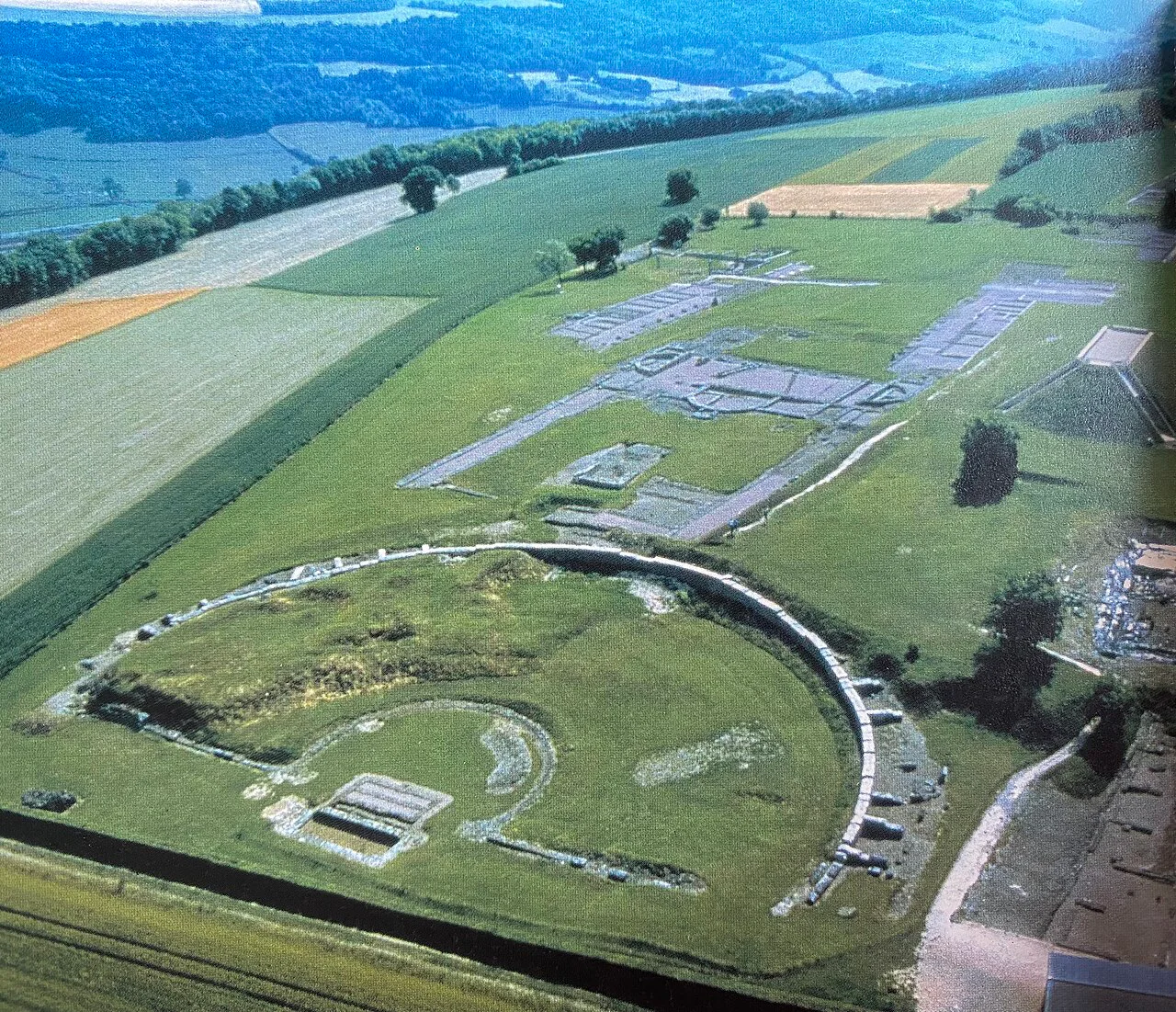
Alise-Sainte-Reine · 57 km
Site archéologique d'Alésia
Content & sources
Photo: Epona21 · CC BY-SA 4.0
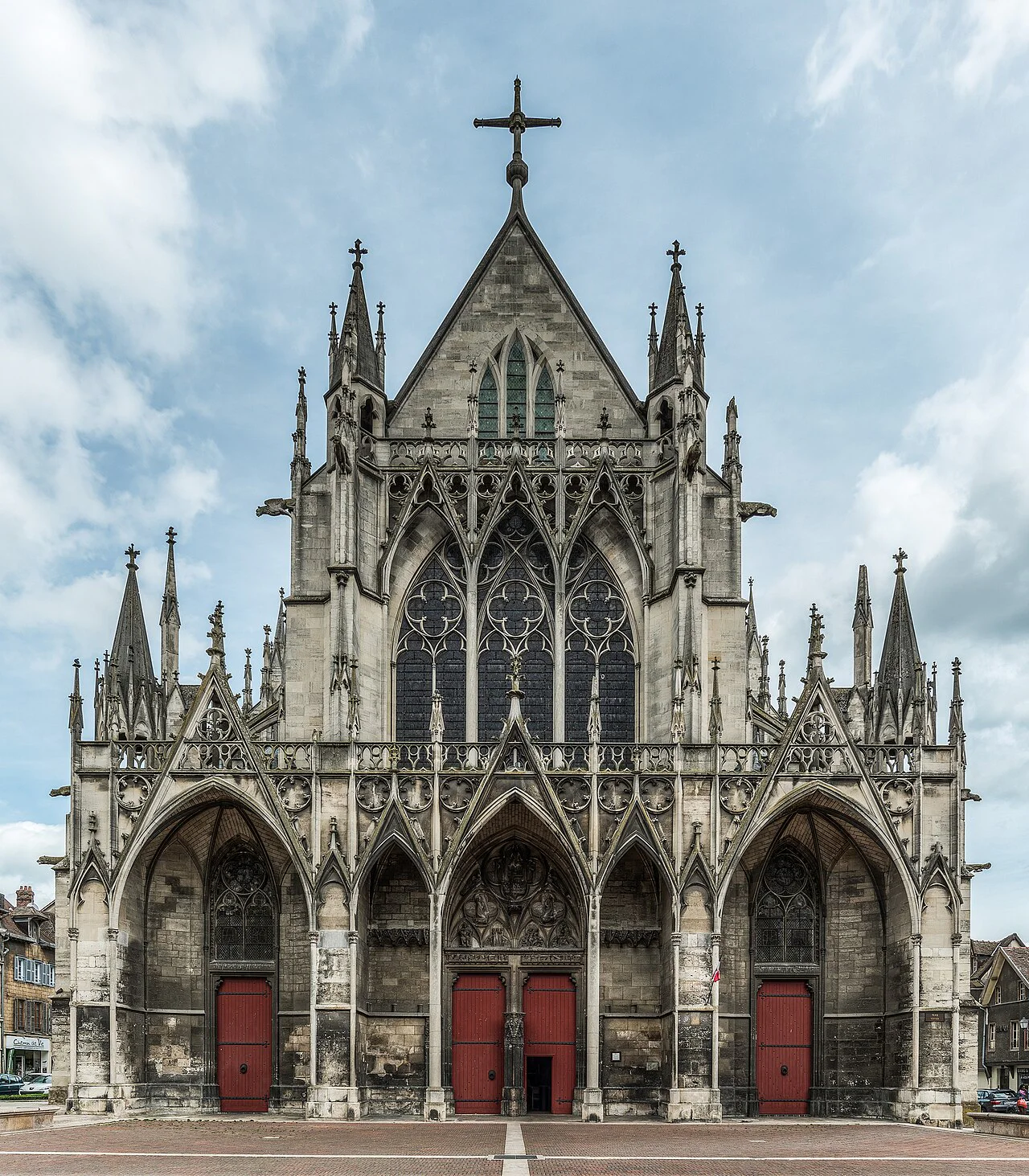
Troyes · 96 km
Basilique Saint-Urbain de Troyes
Content & sources
Photo: DXR · CC BY-SA 3.0
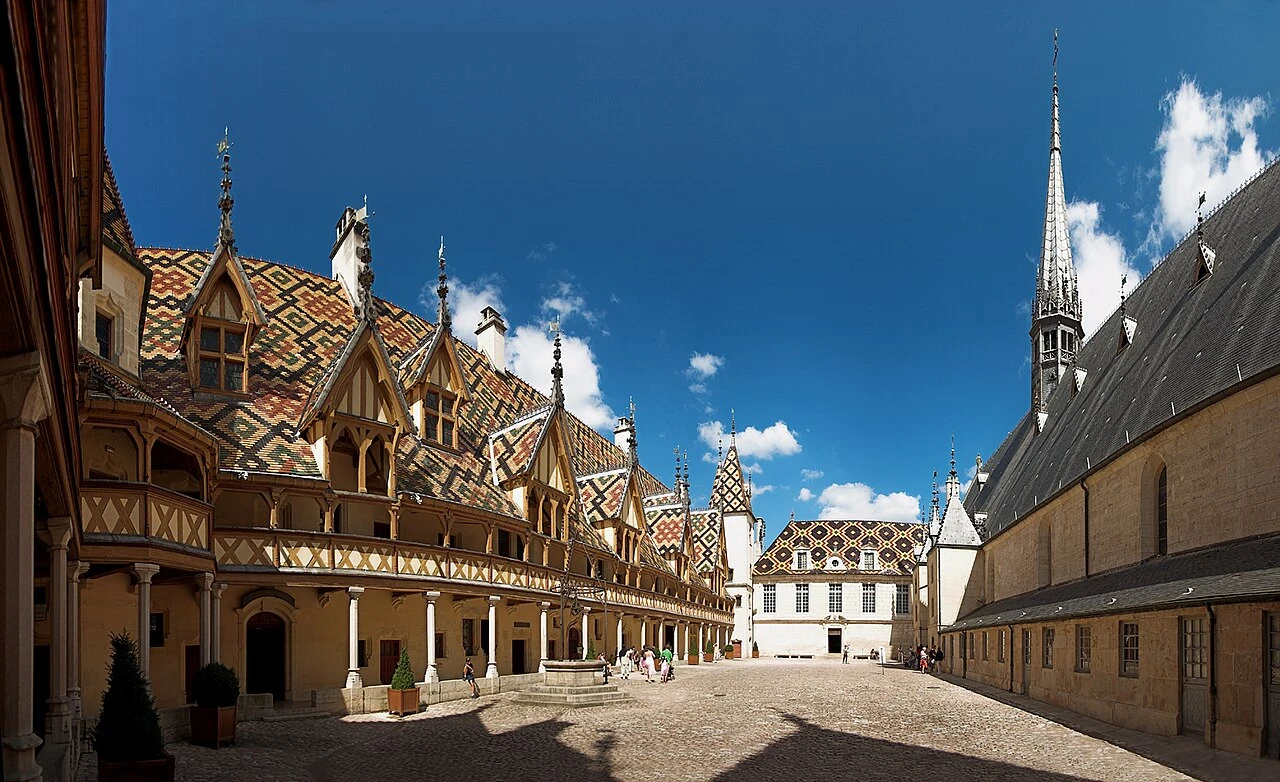
Beaune · 96 km
Hospices de Beaune
Content & sources
Stefan Bauer, http://www.ferras.at · CC BY-SA 2.5