Stanza · Audio guide
Arènes d'Arles Audio Guide
A place to remember. A story to take with you.
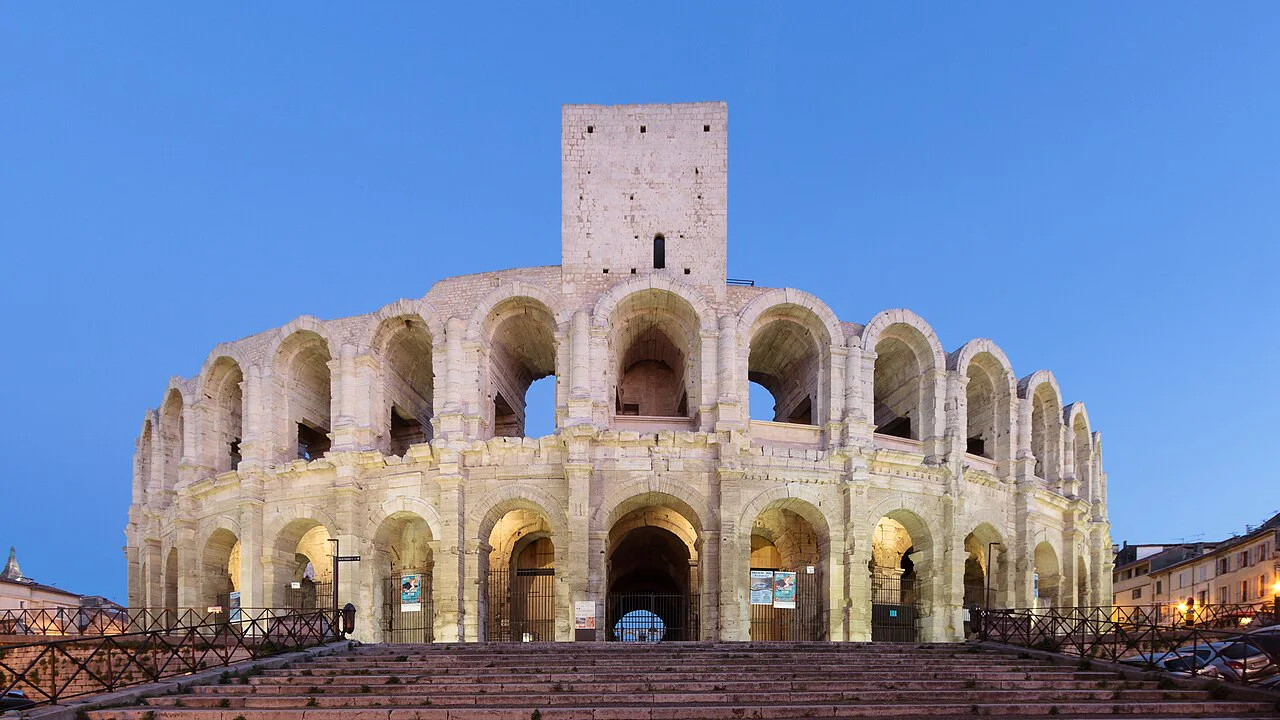
The Arles Amphitheatre is a Roman amphitheatre located in Arles, southern France. It is a two-tiered structure and is likely the most prominent tourist attraction in the city.
Download Stanza, then search for “Arènes d'Arles”.
About the tour
One guide. Your kind of visit.
The Arles Amphitheatre is a Roman amphitheatre located in Arles, southern France. It is a two-tiered structure and is likely the most prominent tourist attraction in the city.
Ready when you are.
- 01Get the free Stanza app.
iOS & Android
- 02Find your guide.
“Arènes d'Arles”
- 03Download before you go.
Works offline
Audio guide / 12 narrated stops
Inside the guide
Get to know a few of the stories before you go. Open a stop to read more.
01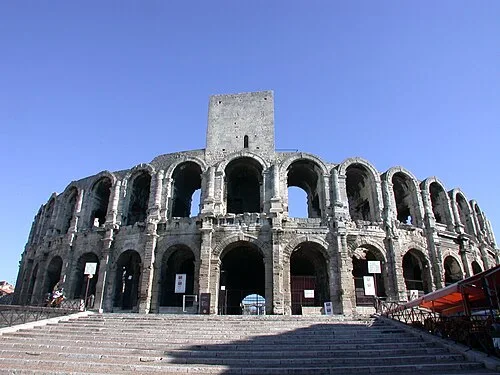 The Outer Plaza and Flavian Facade
Exterior Facade from the Front Steps
The Arènes d'Arles is a Roman amphitheatre, a building made for large public shows. It was built around 90 AD on the orders of the emperor Domitian, in the Roman city of Arelate. Its design was shaped entirely around its purpose: spectacles watched by a large crowd. The building is about one hundred and thirty-six metres long. In 1981 it was listed as a UNESCO World Heritage Site, together with other Roman and medieval monuments of Arles. The tower that rises above the arches is a medieval addition, not part of the original Roman building.
Original uploader (WT-fr) OT Arles at French Wikivoyage · Public domain
02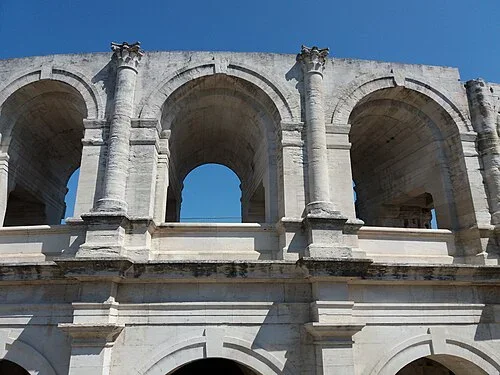 The Outer Plaza and Flavian Facade
Arches of the Outer Facade
The outer wall of the arena is built in two tiers of arches, one hundred and twenty arches in all. Today the building stands about twenty-one metres high. In the upper tier, columns with carved capitals rise between the arches, and the same pattern repeats along the whole curve. The top level that once crowned these two tiers has disappeared.
Photo: Romainbehar · CC0
03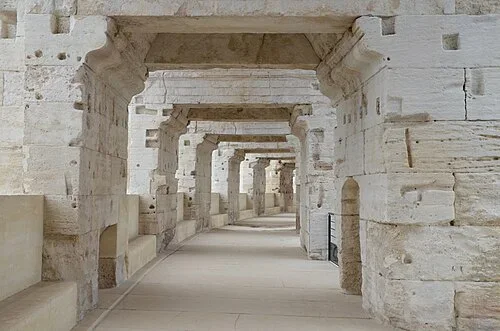 Ground Level Annular Gallery
The Ground-Level Annular Gallery
The architect of the arena took Rome's Colosseum as a model, a building that had only just been finished. The site was the Hauture hill, where an older city wall stood. The builders had to pull that wall down first. It had been put up about a century earlier, in the Augustan period. The Colosseum had two sets of galleries on its outside. Here the architect used a single ring-shaped gallery instead, a long curved corridor under stone vaulting. The sloping ground of the Hauture hill is the reason for that difference.
Listen in the appCarole Raddato from FRANKFURT, Germany · CC BY-SA 2.0
04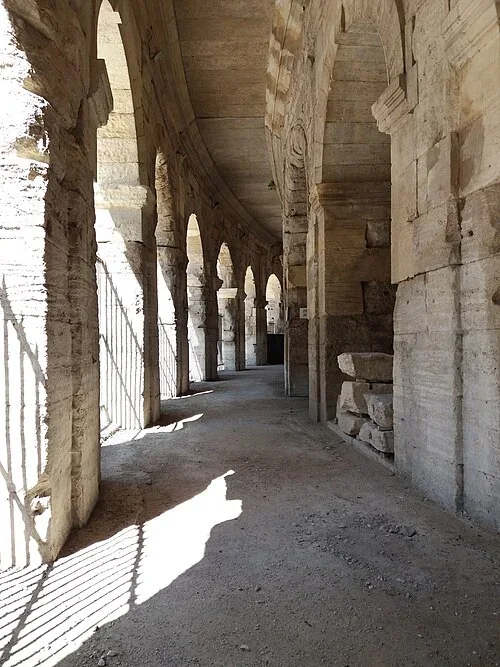 Ground Level Annular Gallery
Outer Access Corridor
The arena had many access corridors, built to get a large crowd out of the building. A drainage system was built into many of them as well. Sunlight falls through the openings of this long vaulted walkway, throwing bars of shadow across the floor. Some of the openings now have metal railings across them.
Listen in the appPhoto: Romainbehar · CC0
05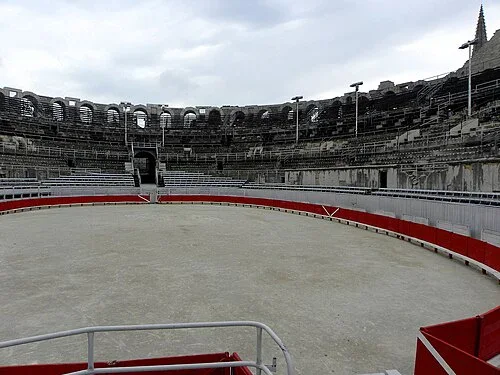 The Central Arena Floor
The Arena Floor from the Edge
For more than four centuries, this floor hosted gladiators and hunts. A red barrier now runs around its edge. In 255 the emperor Gallus staged games to celebrate victories his armies had won in Gaul. Early in the fourth century, the emperor Constantine held great hunts and combats to mark the birth of his eldest son. In 539, King Childebert of Paris came to the south of Gaul. According to one account, he asked for the ancient games to be performed again in his presence.
Listen in the appPhoto: GO69 · CC BY-SA 3.0
06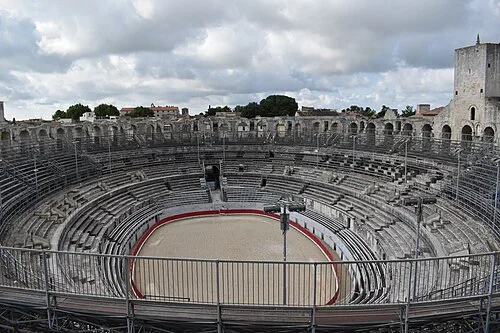 The Central Arena Floor
Aerial View of the Seating Bowl
The seats rose in tiers around the oval, on terraces that climbed toward the outer wall. The rows curve around the floor, following its shape. Circular galleries gave access to the seats. Stairs and vertical passages alternated on the way up to the tiers.
Listen in the appPhoto: Tylwyth Eldar · CC BY-SA 4.0
07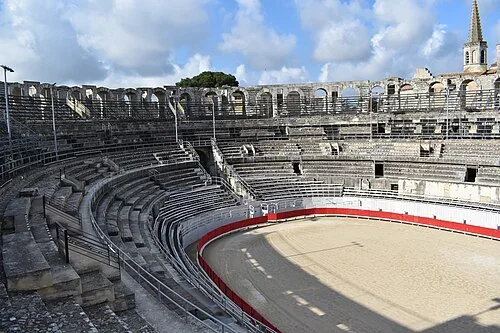 The Cavea and Radial Vomitoria
The Ring and Seating Today
Bullfights still take place in the arena during the Feria d'Arles. Camargue games are held here too, including the contest for the golden cocarde. In summer, plays and concerts fill the arena, and a team of professionals revives Roman customs with gladiator combats for the public. Vincent van Gogh painted the arena in 1888. Pablo Picasso came to Arles and found the bull games his native Spain could no longer offer him.
Listen in the appPhoto: Tylwyth Eldar · CC BY-SA 4.0
08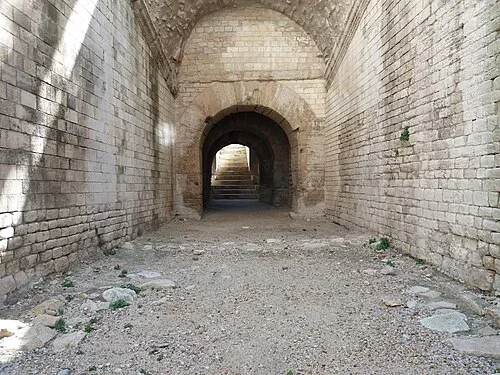 The Cavea and Radial Vomitoria
Access Passage and Stair
This vaulted passage leads straight toward a stair at its far end, with light showing at the top. Such passages in Roman buildings are called vomitoria, a Latin name for exits that let crowds pour out.
Listen in the appPhoto: Romainbehar · CC0
09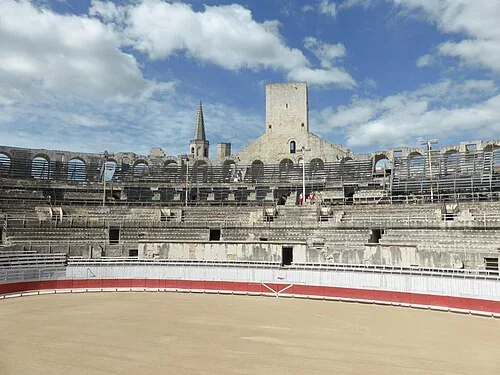 The Medieval Citadel and Watchtower
Arena Looking to the Medieval Tower
For centuries after Rome, the arena was home to a whole town. More than two hundred houses were built inside its walls, around a public square at the centre of the arena. Two chapels stood among them, one at the heart of the building and one at the foot of the west tower. Accounts differ on when this began. Some place it at the fall of the Western Empire in the fifth century, and others at the end of the sixth. People lived here until the late eighteenth century. In 1516 King Francis the First visited Arles. He was astonished, and he regretted finding such a building in such a sorry state.
Listen in the appJacques Le Letty · CC BY-SA 4.0
10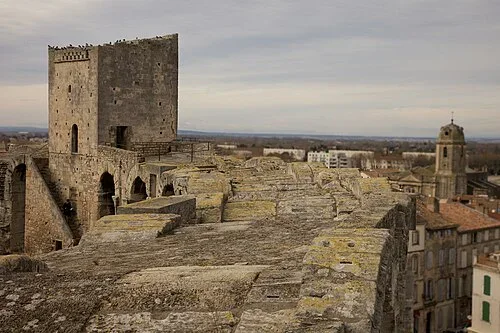 The Medieval Citadel and Watchtower
Rim Walkway and Medieval Tower
Towers rise above the top of the arena, and they date from the Middle Ages, not from Rome. When the arena became a fortress, it was given four defensive towers. From the stone walkway along the rim, the roofs of the town spread out all around.
Listen in the appDidier Devèze · CC BY-SA 3.0
- 11
Édouard Baldus Photograph of the Arena
How the houses were cleared from the arena and how a bull race in 1830 brought the games back.
- 12
Elevated View over the Arena and Tower
The layers of the arena, from Roman tiers to modern uses, all standing together in one monument.
Arènes d'Arles
Frequently asked questions
How much does the guide cost?
Free app download. Listed guide price: $0.99. Guide price shown in the app. Audio guide only. Venue admission is separate.
Can I listen without internet?
Yes. Download the guide’s audio, images, and maps in the app before your visit. Your downloaded content is then available offline.
Can I listen in my language?
This audio guide is available in 15 languages, including English.
Do I need to follow a schedule?
No. This is a self-guided experience. Choose your stops, pause whenever you like, and return to a story at your own pace.
At your own pace
Explore Arènes d'Arles.
Download Stanza, then search for “Arènes d'Arles”.
Free app download · Guide price shown in the app
Keep exploring
Nearby audio guides
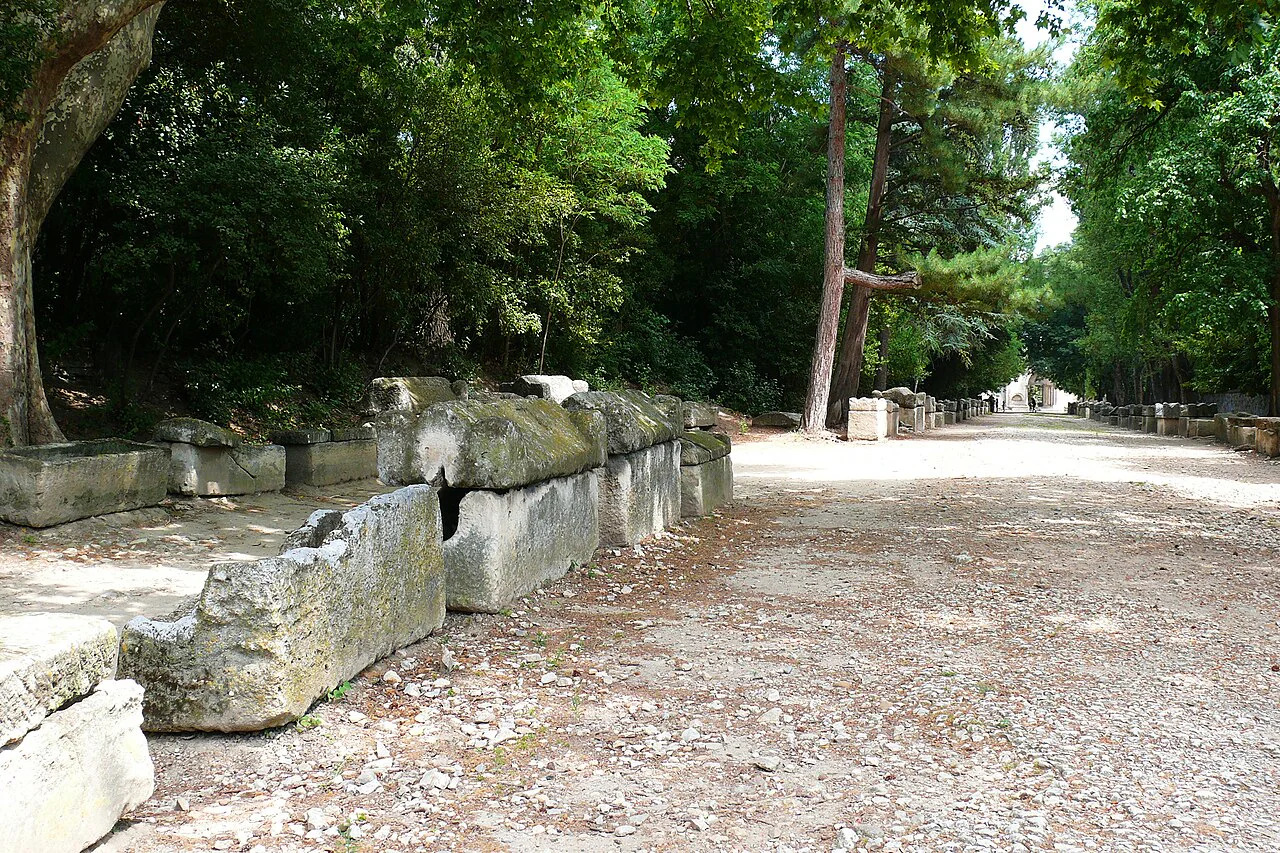
Arles · 1 km
Alyscamps
Content & sources
Hawobo at German Wikipedia · CC BY-SA 2.0 de
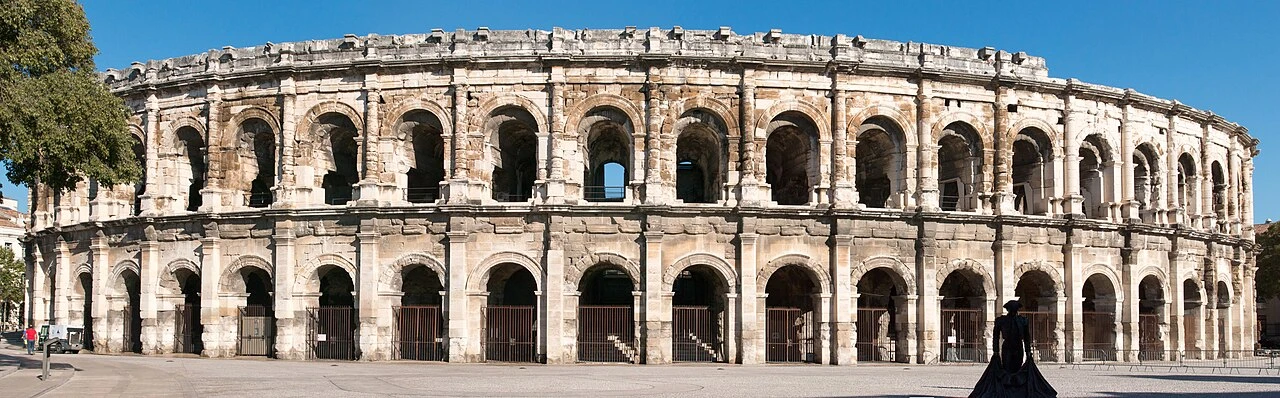
Nîmes · 28 km
Amphitheater of Nîmes
Content & sources
Daniel VILLAFRUELA. · CC BY-SA 3.0
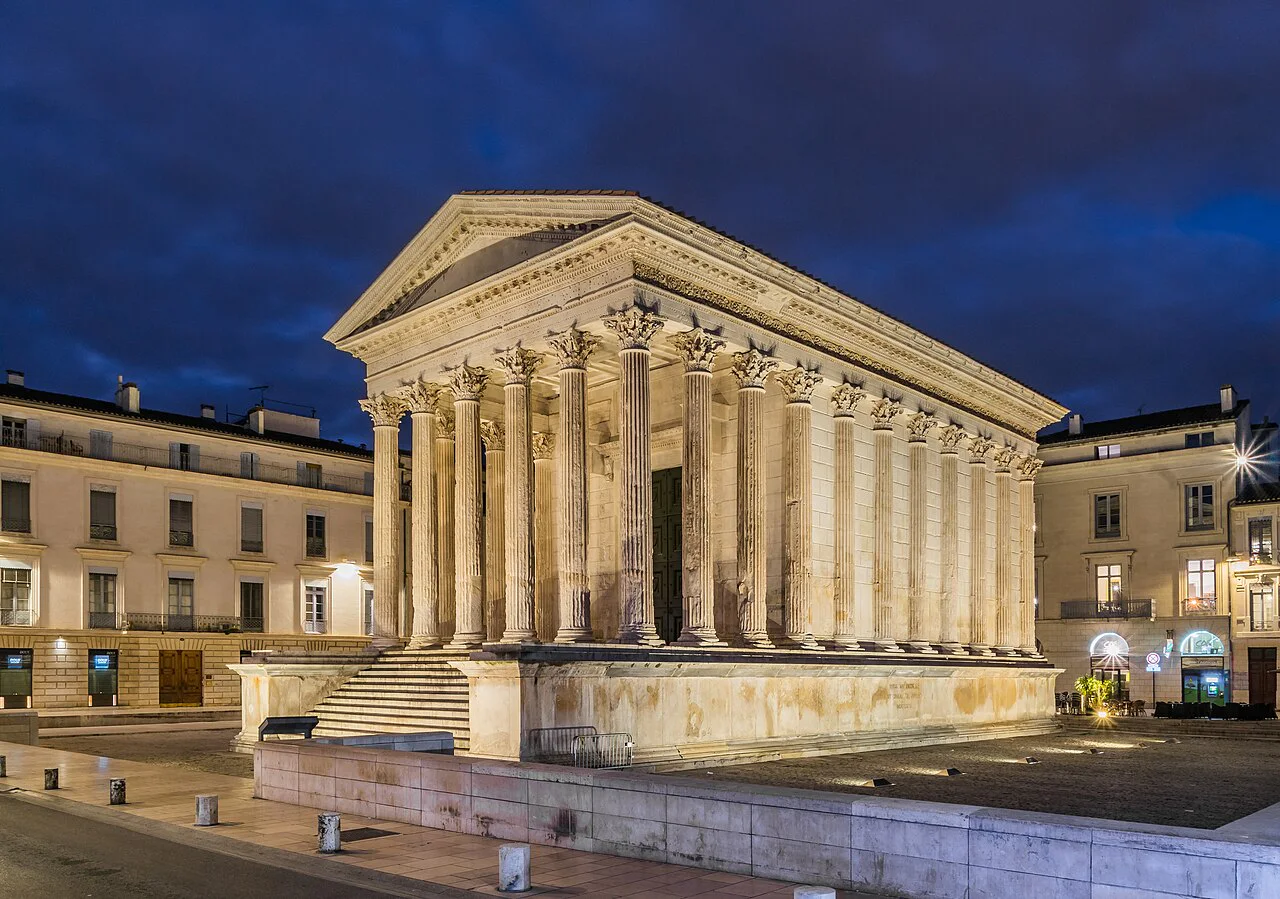
Nîmes · 28 km
Maison carrée
Content & sources
Krzysztof Golik · CC BY-SA 4.0
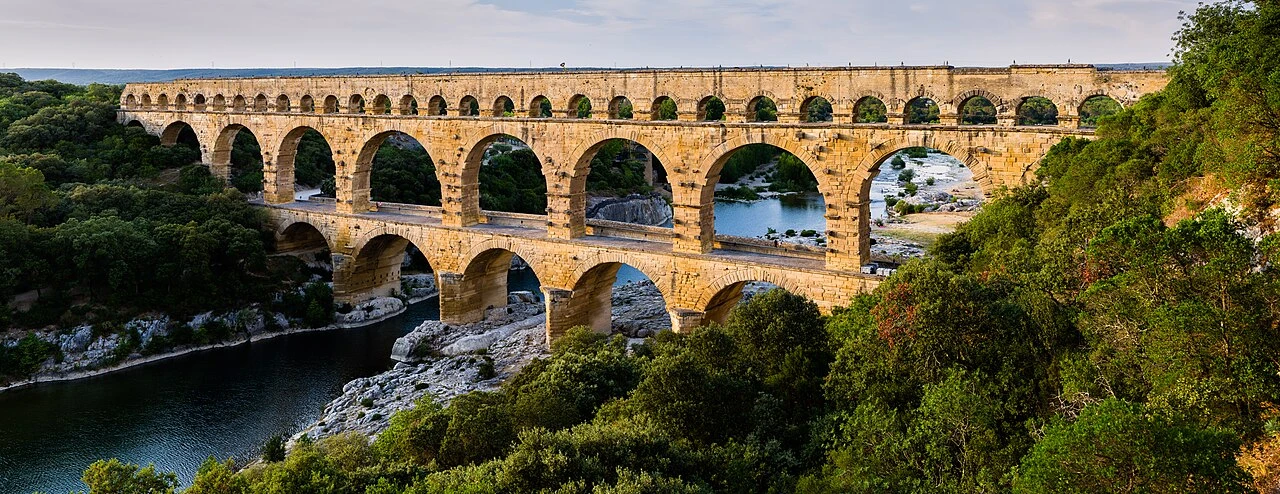
Vers-Pont-du-Gard · 31 km
Pont du Gard
Content & sources
Benh LIEU SONG (Flickr) · CC BY-SA 3.0