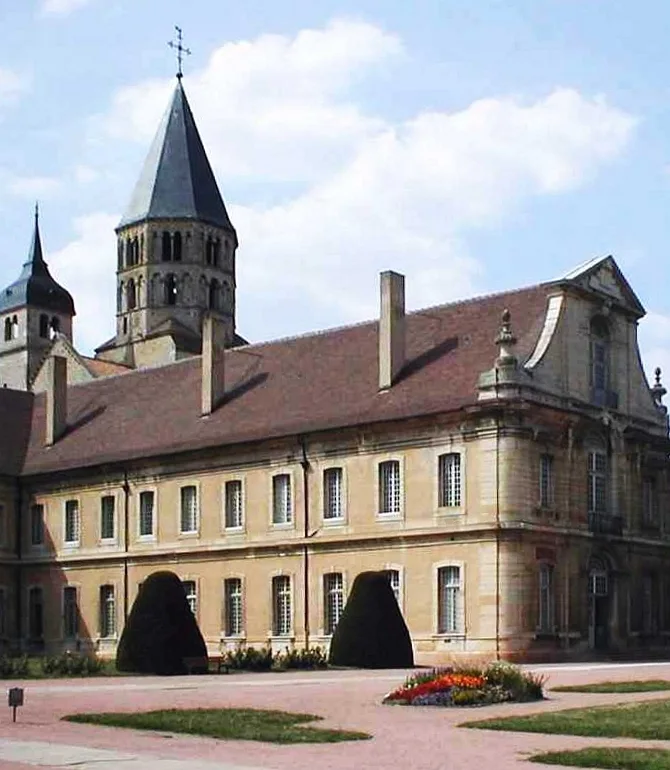
Stanza · Audio guide
Abbaye de Cluny Audio Guide
A place to remember. A story to take with you.
Cluny Abbey is a former Benedictine monastery located in Cluny, France. It was the originating point of the Cluniac Reforms and controlled a large network of monasteries throughout Western Europe.
Download Stanza, then search for “Abbaye de Cluny”.
About the tour
One guide. Your kind of visit.
Cluny Abbey is a former Benedictine monastery located in Cluny, France. It was the originating point of the Cluniac Reforms and controlled a large network of monasteries throughout Western Europe.
Ready when you are.
- 01Get the free Stanza app.
iOS & Android
- 02Find your guide.
“Abbaye de Cluny”
- 03Download before you go.
Works offline
Audio guide / 14 narrated stops
Inside the guide
Get to know a few of the stories before you go. Open a stop to read more.
01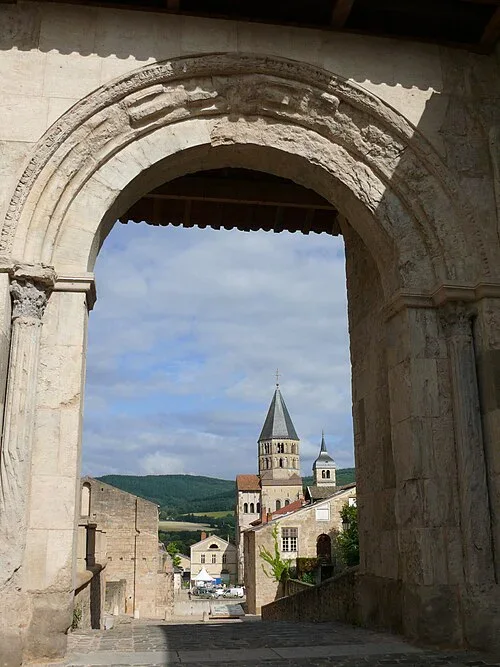 Porte d'Honneur and the Narthex Entrance
The Porte d'Honneur
A stone archway frames the abbey's great tower and the rooftops of the town beyond. Welcome to Cluny. Over the next stops, the tour follows the footprint of the lost church, the surviving transept, and the monks' later buildings. The story begins in 910, when William the Pious, Duke of Aquitaine, founded a Benedictine abbey here. He chose Berno, an abbot from the Jura, as the first head of the house. The deed of gift was generous: vineyards, fields, meadows, woods, mills, serfs, and lands both cultivated and wild. Hospitality was owed to the poor, to strangers and to pilgrims. The charter's real novelty lay in its terms of freedom. The monastery was freed from every local authority, lay and church alike, and placed under the protection of Saints Peter and Paul. It answered to the Pope alone, and even he could not seize its property or appoint an abbot without the monks' consent. William added a curse on anyone who violated the charter. With the Pope far away across the Alps, the monastery was in practice independent. That independence set Cluny on the road to leading Western monasticism.
Photo: MOSSOT · CC BY 3.0
02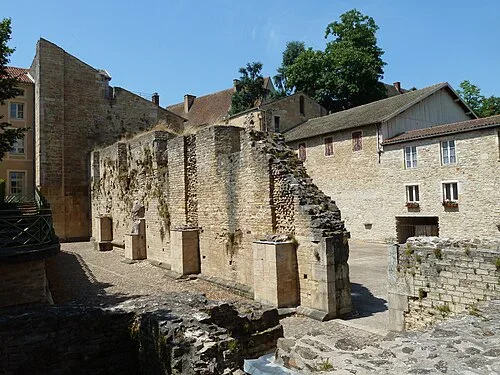 Porte d'Honneur and the Narthex Entrance
Barabans Tower and Narthex South Wall
The long weathered wall and the broken stump of a tower belong to the entrance block of Cluny III, the last and greatest of the abbey's churches. Its builders began with a vestibule so vast that the narthex was described as a church in its own right. Pilgrims and monks crossed through it on their way into the greatest church of the medieval West. Two towers called the Barabans flanked the great portal. Only their lower parts still stand, and little rises above them.
Photo: LeZibou · CC BY-SA 3.0
03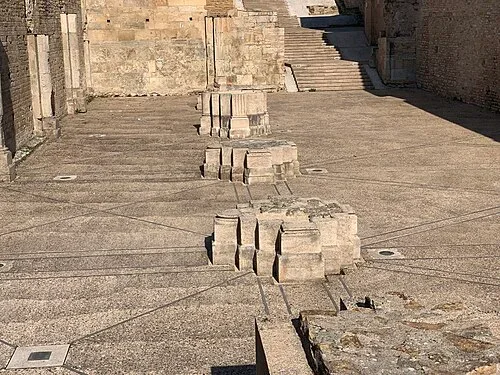 The Great Nave Site and Archaeological Park
Footprint of the Lost Nave
Low stone bases rise from the ground in long rows, marking the columns of the largest church the medieval West ever built. The third church of Cluny was begun in 1088 under Abbot Hugh of Semur, with a canon of Liège named Hézelon called in as architect. The church ran 187 metres from end to end. Its vault rose 33 metres above the floor. Four side aisles flanked the nave, and double transepts crossed the plan under five towers. The nave was roofed and consecrated in 1130, though the building was far from finished. It remained the largest church in Europe until St Peter's in Rome was rebuilt in 1506. The plan visible today was recovered by digging. The American archaeologist Kenneth J. Conant excavated here from 1928. In 2009 the site was digitised, and a 3D reconstruction of the whole church followed.
Listen in the appPhoto: Chabe01 · CC BY-SA 4.0
04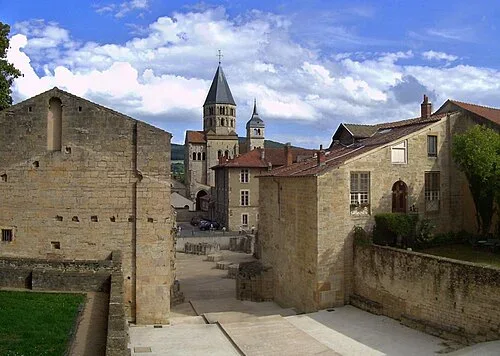 The Great Nave Site and Archaeological Park
The Panorama of Loss
In 1790 the Revolution suppressed the order, and the abbey was emptied. The bells came down in 1793; mausoleums and statues were vandalised; archives and paintings went to the flames. In 1798 the church was sold to a syndicate of speculators from Mâcon, the Bande Noire, who bought confiscated monuments to resell them as building materials. The price was 2.14 million francs in assignats. Demolition began that July. Until 1823 the immense walls were quarried for stone to rebuild the town. Balzac later denounced the Bande Noire in several of his novels. Less than a tenth of Cluny III's floor space survives today. The ground kept one last secret. During a dig in September 2017, excavators found more than 2,200 silver deniers and obols in a single closed deposit. With them lay 21 gold dinars of the Almoravids. No such treasure had ever been found together in one closed set before.
Listen in the appNtametrine · CC BY-SA 3.0
05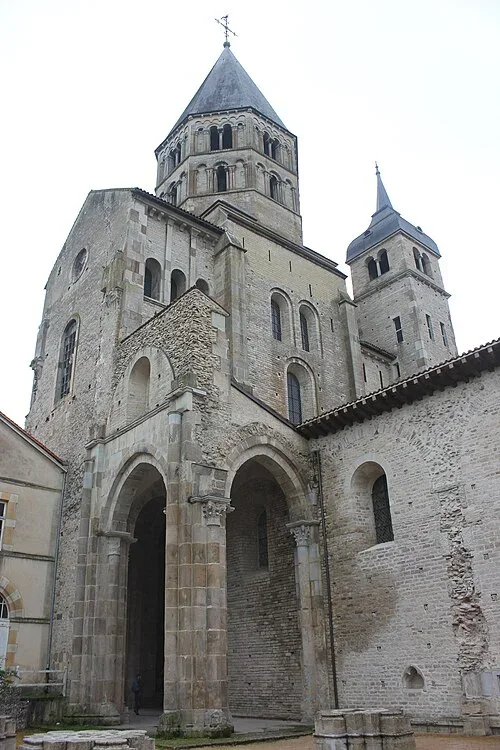 The South Transept and Eau-Bénite Tower
The South Transept and Eau-Benite Tower
The transept arm and its octagonal tower are the principal surviving fragments of the great church above ground. The tower is the Eau-Benite, the Holy Water tower, and it caps the south crossarm of the great transept. It was one of the towers that once carried the abbey's bells. For decades after the Revolution the ruins were simply neglected. In the 1830s sentiment changed, and the work of preserving them began. Great anniversary celebrations turned the ruins into a site of national and Catholic memory, beginning in 1898. The tower's octagonal drum still carries its spire above the transept roof.
Listen in the appAndrzej Otrębski · CC BY-SA 4.0
06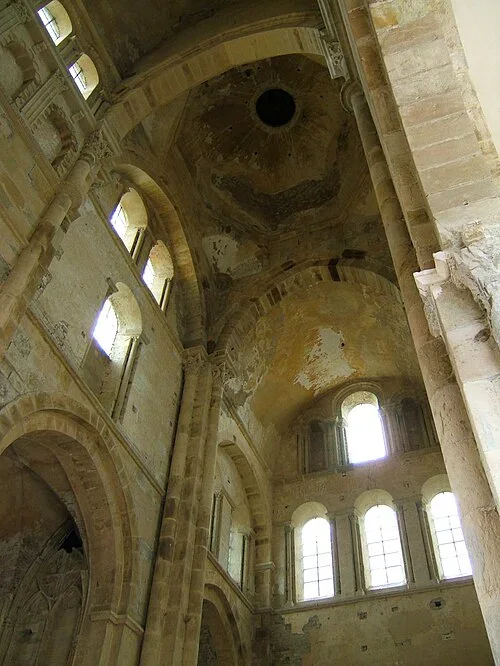 The South Transept and Eau-Bénite Tower
Inside the Transept: Perpetual Praise
The high vaults of this transept arm were built for one purpose above all: the liturgy. The monks of Cluny committed themselves to laus perennis, perpetual praise. Prayer was so constant and so elaborate that it became a profession in itself. Hired managers and workers took over the traditional manual labour, for Cluny was perhaps the wealthiest monastic house of the Western world. By the 1100s each monk recited 138 psalms a day. In Lent the count rose to 215. Lay rulers competed to be remembered in Cluny's endless prayers. The endowments they gave in land and benefices paid for surroundings like these. All of it belongs to a broader eleventh-century wave of personally felt piety.
Listen in the appRTPeat / Richard Peat · CC BY-SA 2.0
07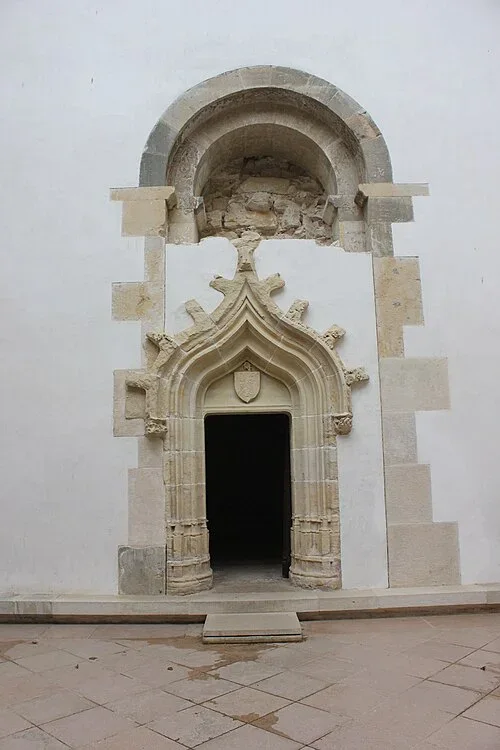 The Jean de Bourbon Chapel
Portal of the Jean de Bourbon Chapel
A pointed, flame-like doorway breaks the plain wall of the transept. It is the entrance to the chapel built for Abbot Jean de Bourbon in the fifteenth century, in the Flamboyant Gothic style of his day. Above it, an older round Romanesque arch sits recessed in the masonry, two eras of building side by side. A carved shield crowns the door. Jean de Bourbon tried from 1458 to restore monastic discipline across the whole order, with mixed success. Cluny itself revived, but other houses resisted, and some seceded entirely. His chapel shows that the abbey did not stop growing after the twelfth century. Late abbots kept adding, in whatever style fashion allowed.
Listen in the appAndrzej Otrębski · CC BY-SA 4.0
08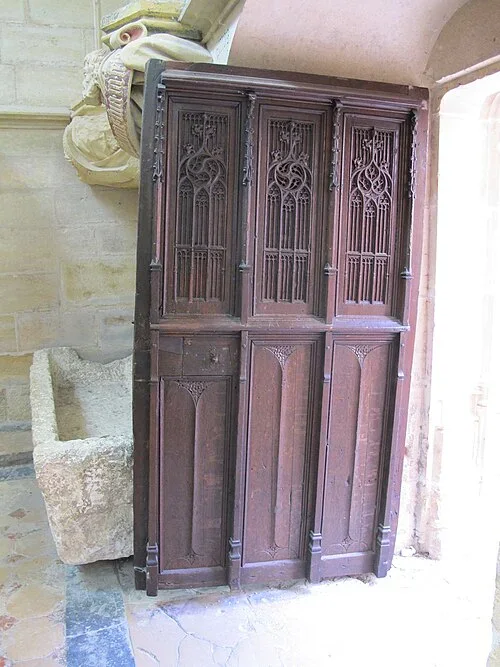 The Jean de Bourbon Chapel
Carved Gothic Door Leaf
A single leaf of a wooden door leans against the wall, carved with openwork tracery of pointed panels. Beside it lies a stone sarcophagus. Joinery of this quality once filled the abbey's late-medieval buildings in quantity. Most of it vanished in the revolutionary clearances, when wooden statues and paintings were burned or broken. This leaf survived, and its upper panels show how refined the abbey's fittings had become. Each one ends in a flame-shaped arch, the signature of the late Gothic style.
Listen in the appPhoto: Hadonos · CC BY-SA 4.0
09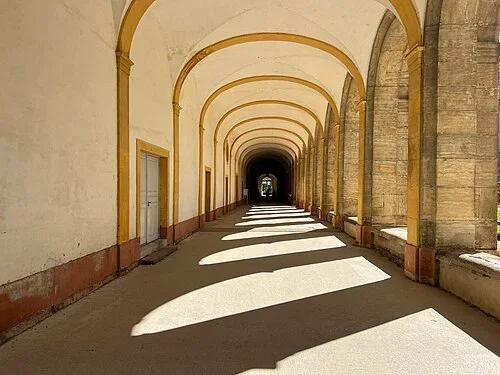 The Classical Grand Cloister
The Grand Cloister
Ochre arcades throw long shadows across the floor of the Grand Cloister. This vaulted gallery belongs to the last great rebuilding of the abbey, carried out in the seventeenth and eighteenth centuries. The classical monastic ranges from that campaign are what visitors mostly walk through today, since the medieval cloister is gone. In effect, the surviving monastery is an eighteenth-century envelope around a medieval heart. In Benedictine practice the cloister was the monks' domestic heart, the passage between prayer and the common life. The gallery runs straight for its whole length, one of the best-preserved buildings of the complex.
Listen in the appPhoto: Chabe01 · CC BY-SA 4.0
10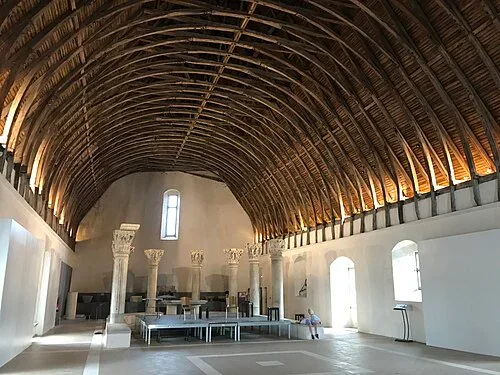 The Farinier and Sculpted Choir Capitals
The Farinier: Flour Storehouse
Under a great curved roof of timber beams, this hall once served the abbey's practical needs. The name Farinier points to flour, and the building worked as part of the abbey's stores. An institution of this size needed granaries, stores and management. The curved timber vault shows the engineering that even a working building could command. Since their excavation, carved capitals from the lost church have been kept up here. The next stop looks closely at one of them.
Listen in the appPhoto: GFreihalter · CC BY-SA 4.0
- 11
Romanesque Choir Capital with Musician
A Romanesque capital from the lost choir, with a musician caught mid-song in stone.
- 12
Palace of Abbot Jean de Bourbon
The abbot's palace, seat of an order that once ran 314 monasteries from this one house.
- 13
Museum of Fragments and the Lost Library
Inside the palace museum, the story of one of Europe's richest libraries and the manuscript that vanished.
- 14
The Tour des Fromages
A climb up the medieval watchtower for the one view that holds the whole story together.
Abbaye de Cluny
Frequently asked questions
How much does the guide cost?
Free app download. Listed guide price: $0.99. Guide price shown in the app. Audio guide only. Venue admission is separate.
Can I listen without internet?
Yes. Download the guide’s audio, images, and maps in the app before your visit. Your downloaded content is then available offline.
Can I listen in my language?
This audio guide is available in 15 languages, including English.
Do I need to follow a schedule?
No. This is a self-guided experience. Choose your stops, pause whenever you like, and return to a story at your own pace.
At your own pace
Explore Abbaye de Cluny.
Download Stanza, then search for “Abbaye de Cluny”.
Free app download · Guide price shown in the app
Keep exploring
Nearby audio guides
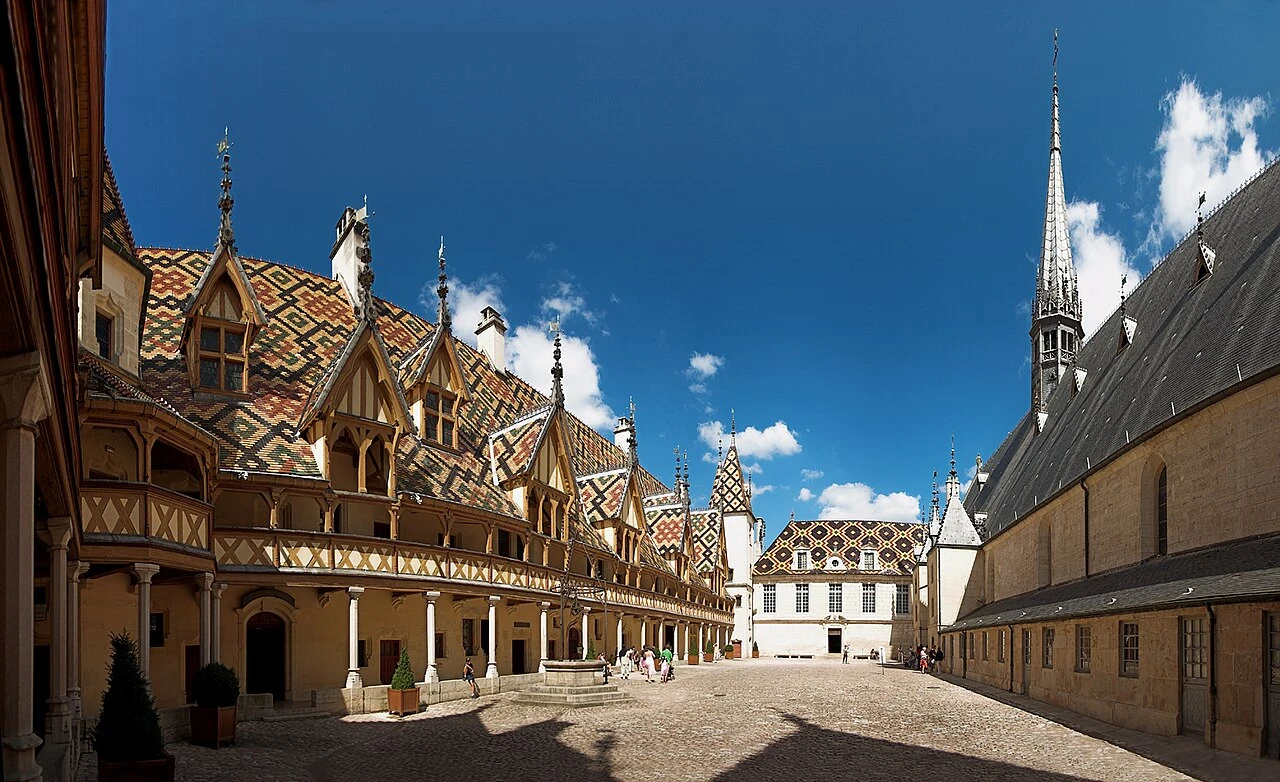
Beaune · 67 km
Hospices de Beaune
Content & sources
Stefan Bauer, http://www.ferras.at · CC BY-SA 2.5
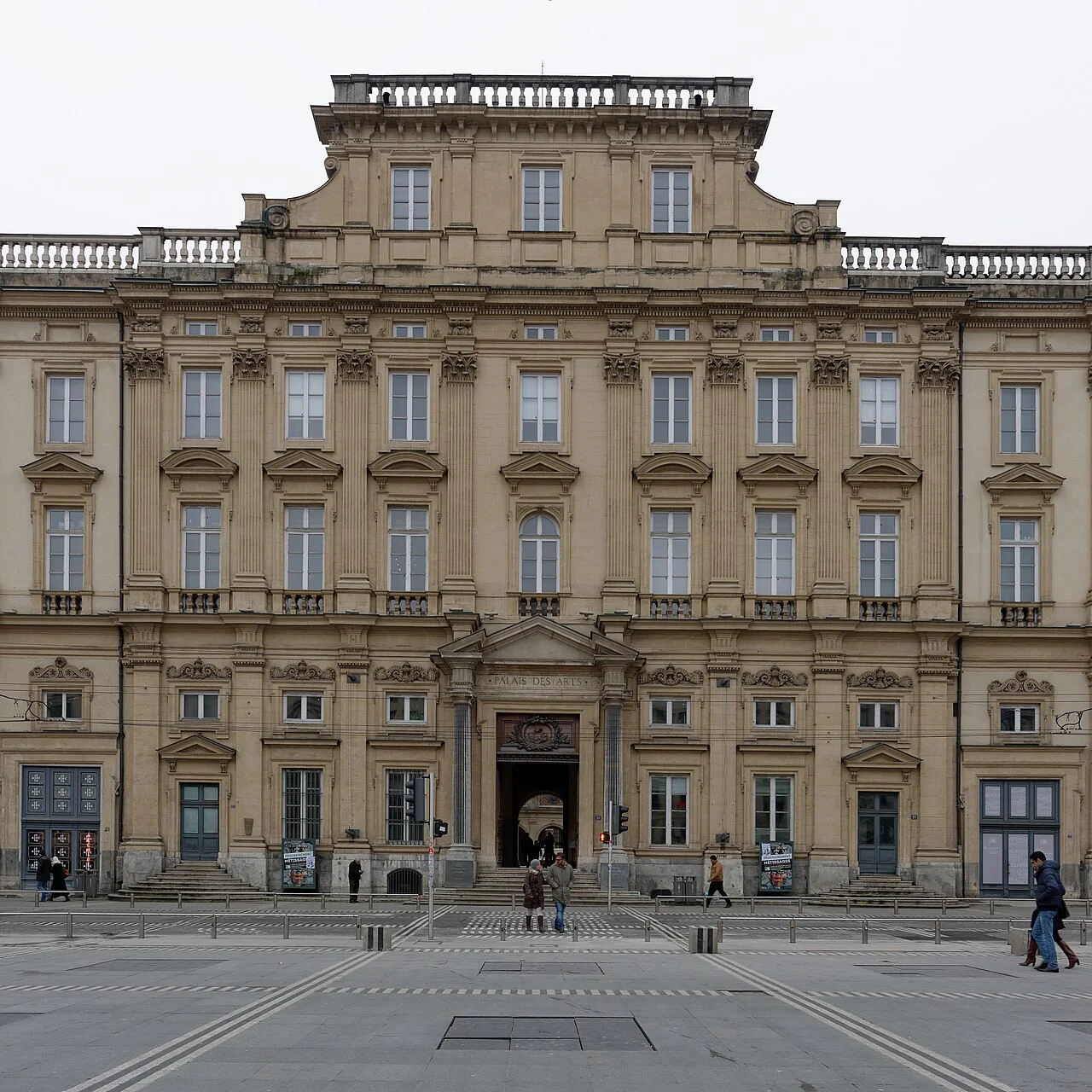
Lyon · 75 km
Museum of Fine Arts of Lyon
Content & sources
Photo: Jastrow · CC BY 2.5
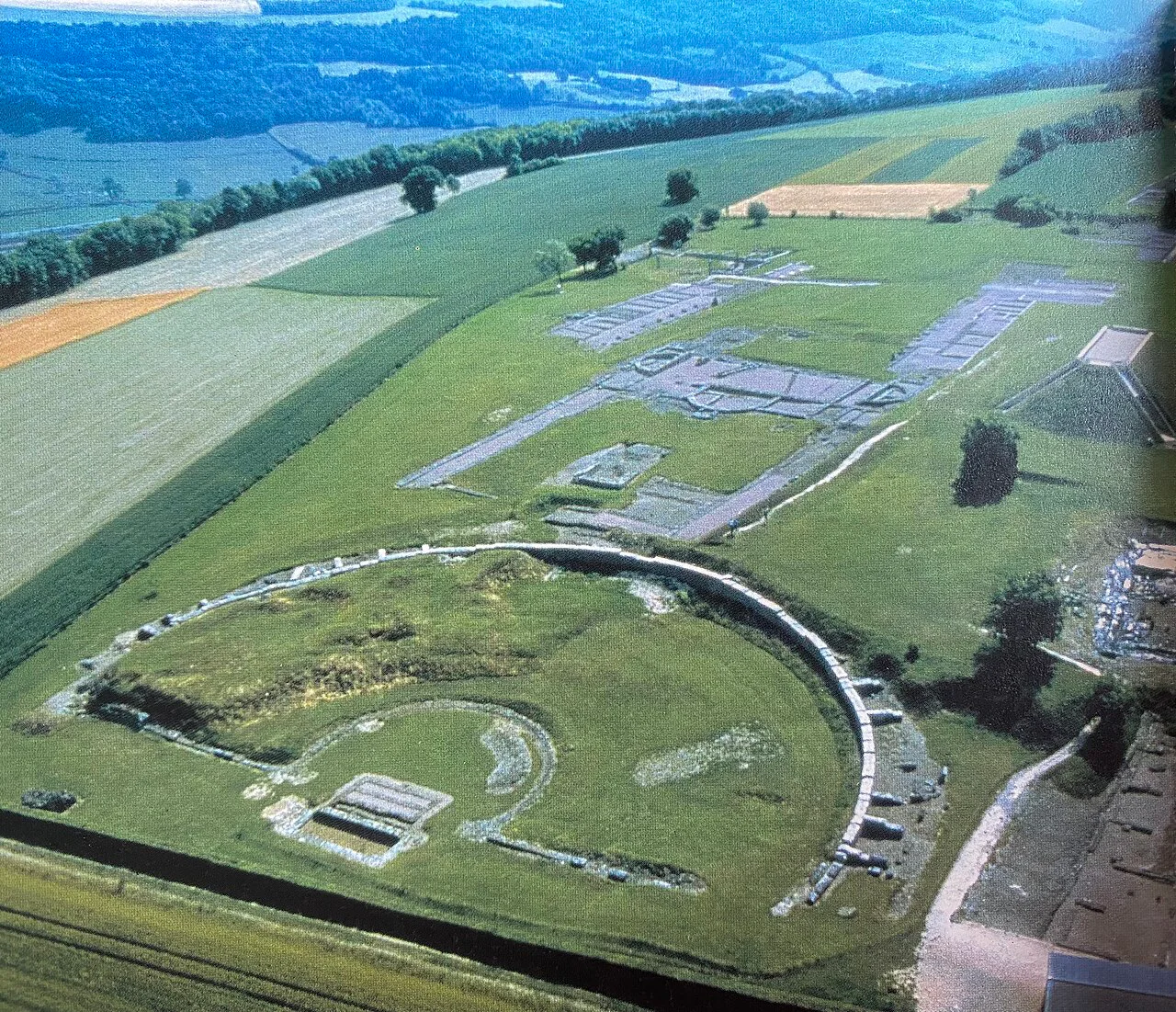
Alise-Sainte-Reine · 123 km
Site archéologique d'Alésia
Content & sources
Photo: Epona21 · CC BY-SA 4.0
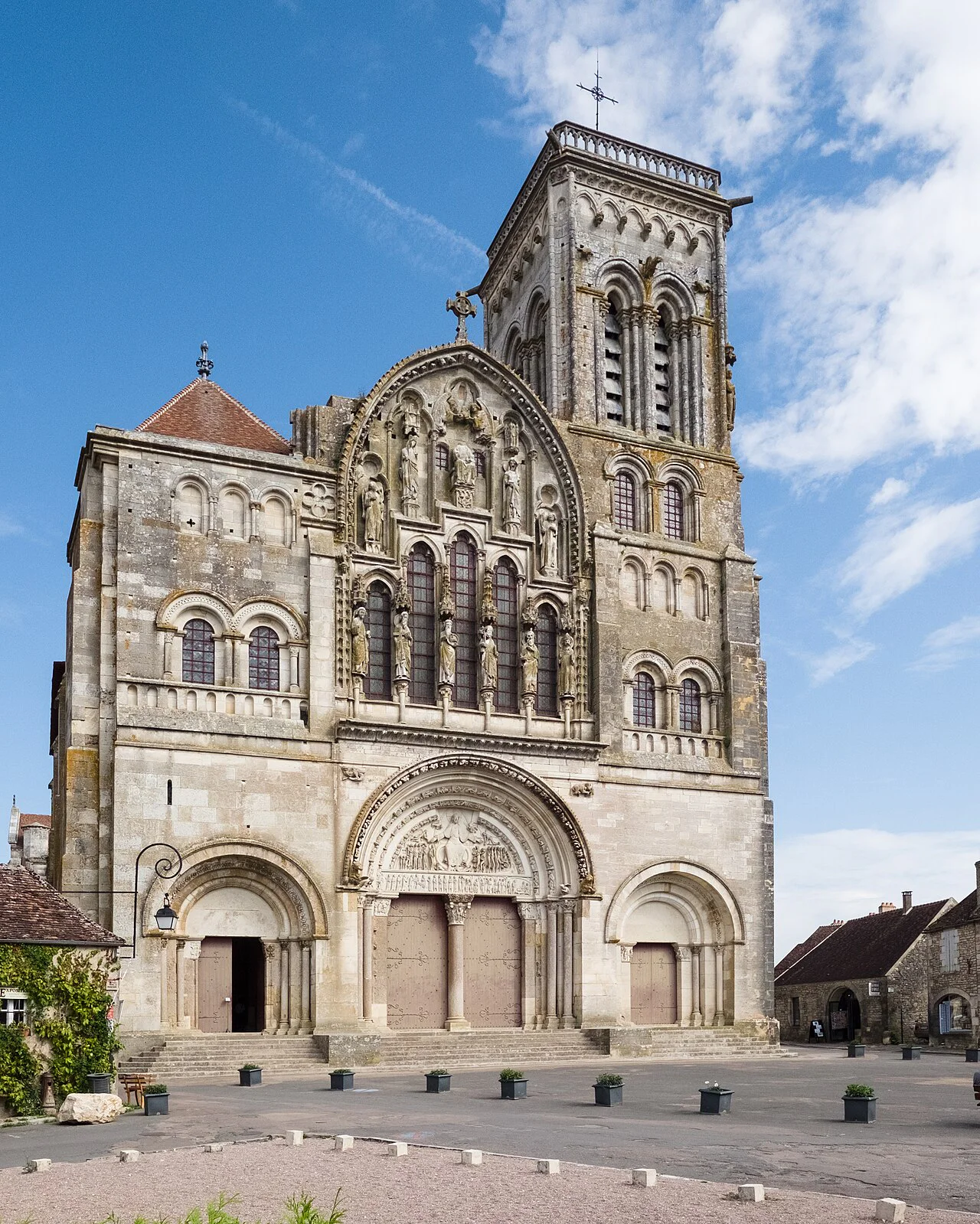
Vézelay · 134 km
Basilique Sainte-Marie-Madeleine de Vézelay
Content & sources
Photo: DKrieger · CC BY-SA 3.0