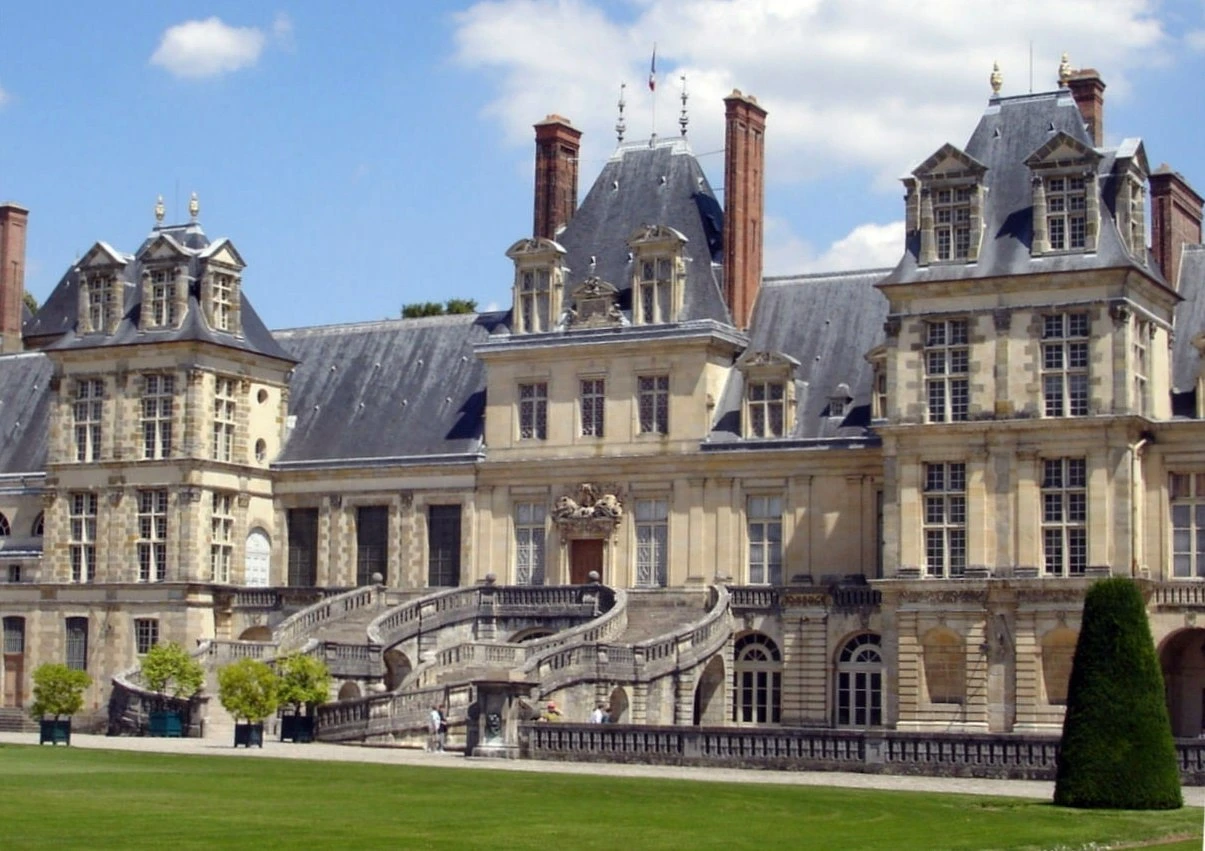
Stanza · Audio guide
Château de Fontainebleau Audio Guide
A place to remember. A story to take with you.
A historic royal palace in France, the Palace of Fontainebleau served as a primary residence for French monarchs for centuries. It is renowned for its diverse architectural styles, lavish interiors, and…
Download Stanza, then search for “Château de Fontainebleau”.
About the tour
One guide. Your kind of visit.
A historic royal palace in France, the Palace of Fontainebleau served as a primary residence for French monarchs for centuries. It is renowned for its diverse architectural styles, lavish interiors, and significant art collections.
Ready when you are.
- 01Get the free Stanza app.
iOS & Android
- 02Find your guide.
“Château de Fontainebleau”
- 03Download before you go.
Works offline
Audio guide / 25 narrated stops
Inside the guide
Get to know a few of the stories before you go. Open a stop to read more.
01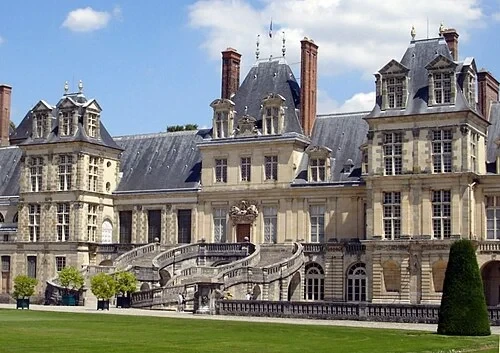 The Courtyard of Honor and Horseshoe Staircase
National Museum of the Château de Fontainebleau
Welcome to one of the most significant royal residences in France. Napoleon Bonaparte called this palace the "House of Centuries" because it served as a home to every French monarch for eight hundred years. This grand courtyard where you are standing, the Cour d'Honneur, marks the beginning of a journey through layers of French history. As you look at the facade, you can see the distinctive building materials that define the palace's appearance: a combination of local sandstone and brick. This pairing creates a polychromatic effect that is characteristic of the early construction phases. This courtyard has witnessed some of the most dramatic moments in the nation's history, evolving from a medieval fortress into the sprawling Renaissance and classical masterpiece seen today. Every wing you see represents a different era, a different ruler, and a different architectural fashion, yet they all come together to form this unified monument to the power of the French crown. It was here that the transition from the Middle Ages to the modern era of the French state was physically built into the stone.
Photo: Thomas1313 · CC BY-SA 4.0
02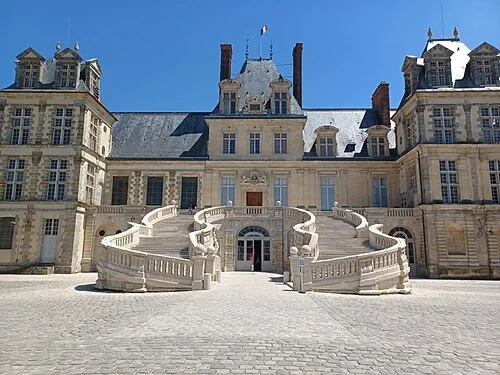 The Courtyard of Honor and Horseshoe Staircase
The Horseshoe Staircase
Standing prominently in the center of the courtyard is the palace's architectural signature: the Horseshoe Staircase. Constructed in the 1630s by architect Jean Androuet du Cerceau, it replaced an earlier staircase to provide a more grand approach to the royal apartments. The design is unique, featuring a double-flight curved arrangement with exactly forty-six steps in each flight. Beyond its aesthetic brilliance, this site is steeped in historical weight. In April 1814, following his first abdication, Napoleon Bonaparte stood here to deliver an emotional farewell to his elite Old Guard before departing for exile on the island of Elba. This event was so profound that it led to the renaming of the Cour d'Honneur as the "Courtyard of Farewells." The staircase is more than just a functional entry point; it is a stage for the theater of power and loss. As you look at the elegant symmetry of the stonework, consider how it served as a backdrop for both the height of royal ceremony and the somber end of an empire. Its curving lines have become synonymous with Fontainebleau, representing the pinnacle of French classical design.
Photo: Thomas1313 · CC BY-SA 4.0
03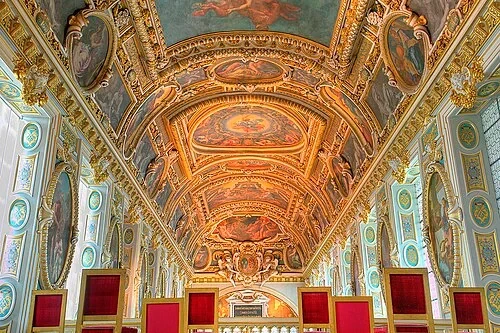 The Trinity Chapel
The Trinity Chapel has been the setting for the most significant personal milestones of the French monarchy for centuries. It was here that royal weddings were celebrated and where Napoleon the Third was baptized. The interior is a feast of light and color, starting from the ground up with an intricate multicolored marble floor that leads the eye toward the magnificent altar. While the architecture provides a solemn framework, the artistic details elevate the space to a realm of divine grandeur. At the rear of the chapel sits a piece of musical history: the historic organ. Built by the renowned craftsman François-Henry Clicquot in 1774, it remains a surviving instance of eighteenth-century French organ building. This space was designed to reflect the King’s role as the protector of the faith, blending the intimacy of a private chapel with the scale required for national religious events. The transition from the public courtyards into this hushed, sacred interior reflects the multifaceted life of the court, where political power and religious devotion were inextricably linked in the daily routine of the sovereign.
Listen in the appEric Pouhier · CC BY-SA 2.5
04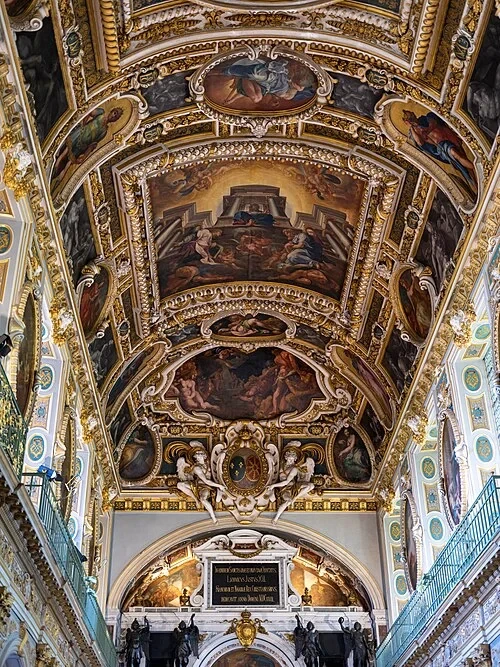 The Trinity Chapel
The Painted Vaults
Look up to see the painted vaults that span the ceiling of the chapel. These frescoes were created in the early seventeenth century, during a period when the late Mannerist style dominated the French court. Mannerism is characterized by its departure from the balanced proportions of the High Renaissance in favor of drama and artifice. You can see this in the elongated limbs and the complex, twisting poses of the figures depicted above. The vaulted ceiling is a dense tapestry of biblical scenes, designed to inspire those looking up from below. The artists used a vibrant palette and dramatic lighting effects to bring these religious stories to life, creating a sense of movement that seems to defy the stillness of the stone architecture. Each section of the vault tells a specific part of a larger theological narrative, meant to be read as a visual sermon. The complexity of the compositions and the sheer scale of the work demonstrate the immense resources the French crown dedicated to the decoration of its private sacred spaces, ensuring that even the highest reaches of the room were filled with artistic meaning.
Listen in the appPhoto: Matthieu.lett.ube · CC BY 4.0
05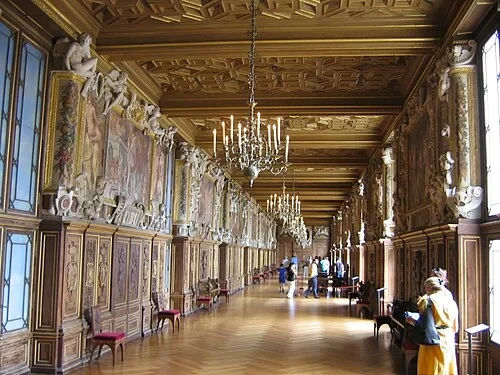 The Gallery of Francis I
Gallery of Francis the First
You are now in the Gallery of Francis the First, widely considered the birthplace of the "School of Fontainebleau" and a defining masterpiece of the French Renaissance. This room revolutionized interior design by introducing a sophisticated mix of high-relief stucco figures, intricate wood carvings, and vibrant frescoes. The transition from the medieval to the Renaissance aesthetic is nowhere more apparent than in this long, narrow space. King Francis the First was so protective of this gallery that he famously kept the only key, allowing only his most important guests and diplomats to enter. He used the room as a private museum and a tool for political impression, showcasing his role as a patron of the arts. The decoration was overseen by Italian masters like Rosso Fiorentino, who brought the latest Mediterranean trends to France and adapted them into something uniquely Gallic. The walls are divided into complex panels where three-dimensional sculpture and two-dimensional painting interact in ways that were entirely new at the time. This gallery set the standard for royal luxury across Europe for the next two centuries.
Listen in the appNo machine-readable author provided. Urban~commonswiki assumed (based on copyright claims). · Public domain
06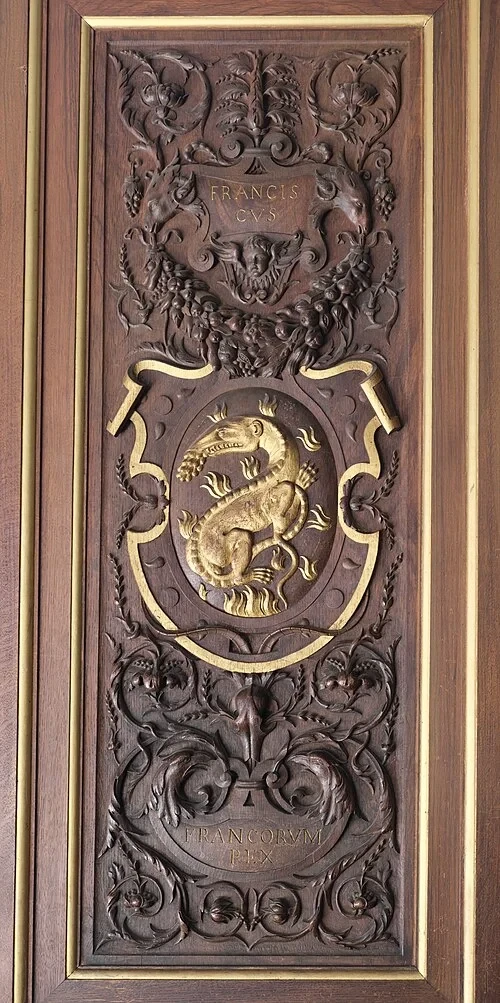 The Gallery of Francis I
The Golden Salamander
Look closely at the wood paneling to find the golden salamander, the personal emblem of King Francis the First. This mythical creature appears throughout the palace, but here the quality of the walnut carving is particularly exceptional. In Renaissance lore, the salamander was believed to have the extraordinary power to both live in and extinguish fire. This attribute was adopted by the King to illustrate his own sovereign power. His Latin motto, "Nutrisco et extinguo"—which translates to "I nourish the good and extinguish the bad"—frequently accompanies the image. The choice of the salamander was a calculated piece of political branding, suggesting a ruler who was impervious to the fires of conflict and capable of maintaining order within his realm. The detail in the carving, from the scales of the creature to the surrounding floral motifs, highlights the skill of the sixteenth-century woodworkers who transformed the gallery's lower walls into a rich symbolic landscape. These emblems served as constant reminders of the King's presence and his divine right to rule, embedded into the very fabric of the architecture.
Listen in the appPhoto: GFreihalter · CC BY-SA 4.0
07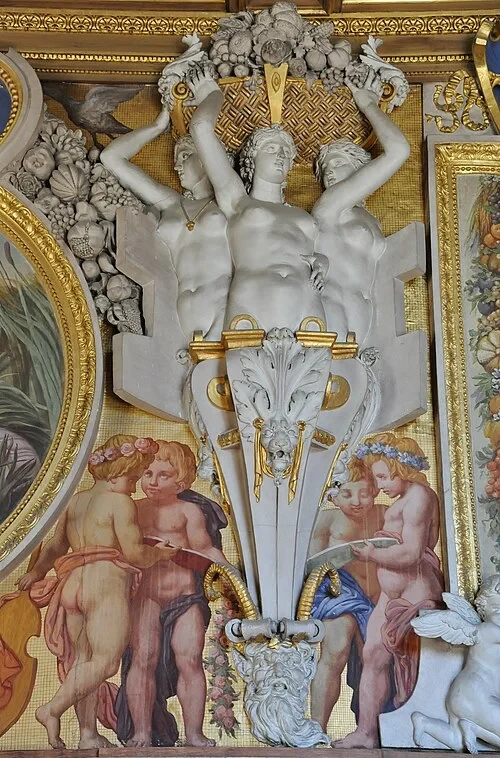 The Gallery of Francis I
The Renaissance Stucco
The walls of the gallery are adorned with elaborate stucco figures that exemplify the Mannerist artistic style. Notice the elongated limbs, small heads, and highly defined muscular forms of these figures. These features are hallmarks of the Italian influence that swept through France during the sixteenth century. Unlike the static frames of earlier periods, these three-dimensional sculptures were designed to interact dynamically with the flat fresco paintings they surround. They often appear to be holding up the paintings or reacting to the scenes depicted within them, blurring the line between the world of the viewer and the world of the artwork. This innovative approach to interior decoration was a key component of the School of Fontainebleau. The stucco work creates a sense of depth and movement that changes as you walk through the room, with shadows shifting across the sculpted surfaces. This interplay between sculpture and painting was intended to showcase the sophistication of the French court and its mastery of the latest artistic theories from across the Alps. The variety of figures ensures that every inch of the wall offers something new to observe.
Listen in the appPhoto: Frédéric Neupont · CC BY-SA 4.0
08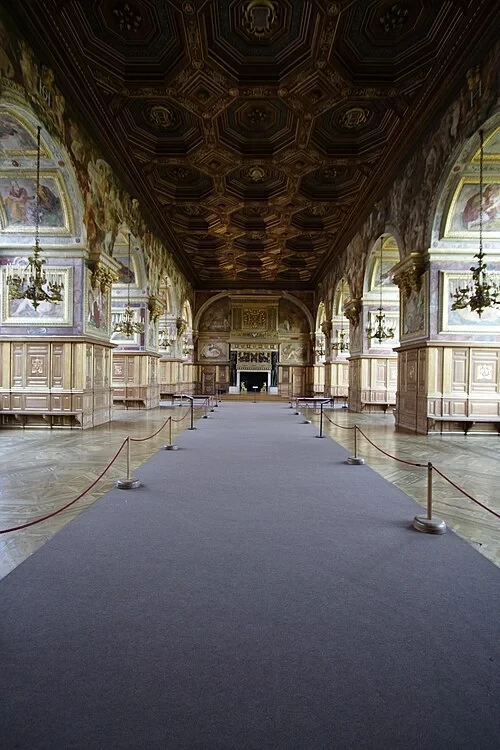 The Ballroom
The Grand Ballroom
This massive hall, known as the Grand Ballroom, was the center of social life during the reigns of Henry the Second and Catherine de' Medici. It provides a sense of the immense scale of Valois court life, where hundreds of courtiers would gather for banquets and balls. One of the most striking features of this room is the mathematical symmetry between the ground and the ceiling. The intricate patterns of the parquet floor are designed to mirror the geometry of the magnificent coffered ceiling above. This alignment creates a sense of order and harmony that was highly valued in Renaissance architecture. The walls are covered in large-scale frescoes and elaborate carvings, all intended to impress guests with the wealth and culture of the French monarchy. During celebrations, the room would be filled with music from the gallery above, while the light from the massive windows reflected off the polished wood and gilded surfaces. It was in spaces like this that the complex rituals of the French court were performed, turning every meal and dance into a political statement of power and prestige.
Listen in the appPhoto: Ignis · CC BY-SA 3.0
09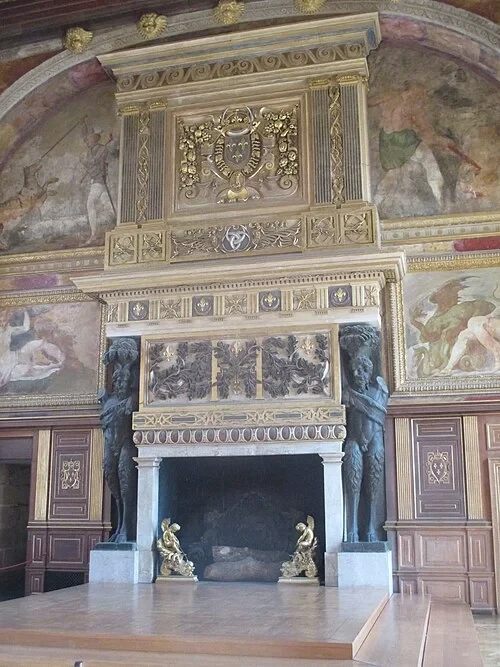 The Ballroom
The Satyr Fireplace
Dominating one end of the hall is a monumental fireplace, a reminder of the practical needs and symbolic themes of the royal court. It is flanked by two large figures of satyrs, which add a touch of mythological energy to the room's formal decor. Above the mantel, frescoes depict scenes from ancient myths centered on the hunt. This is a direct nod to the palace's original purpose; long before it was a sprawling Renaissance complex, Fontainebleau was a favorite hunting lodge for the kings of France, chosen for its proximity to the vast surrounding forest. The scale of this fireplace is truly impressive. The combination of fine bronze work, painting, and massive stonework makes the fireplace more than just a source of heat—it is a piece of commemorative architecture. It celebrates the King's mastery over nature and the ancient traditions of the hunt, which remained a core part of royal identity for centuries.
Listen in the appPhoto: Thomon · CC BY-SA 4.0
10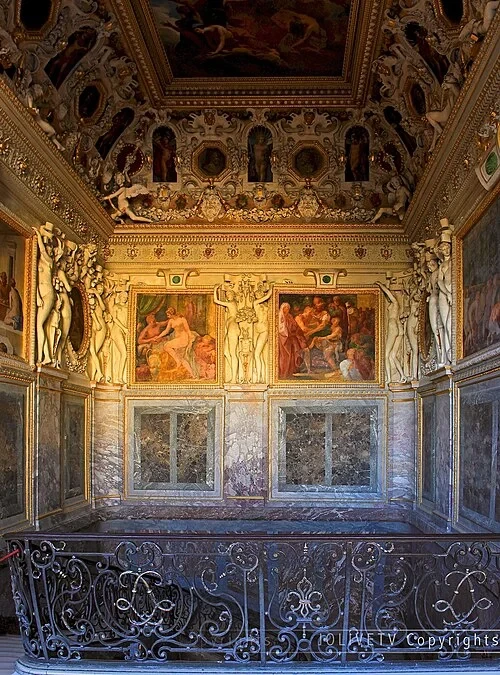 The King's Staircase
This area, known as the King's Staircase, underwent a dramatic architectural transformation over the years. It was originally the private bedroom of the Duchess of Étampes, the influential mistress of King Francis the First. When the palace was later remodeled, the bedroom was converted into a grand staircase to provide a more ceremonial route through the royal apartments. Despite the change in function, much of the original sixteenth-century decoration remains. The walls feature a series of frescoes by the Italian master Primaticcio, depicting various episodes from the life of Alexander the Great. These paintings are framed by elaborate, three-dimensional female stucco figures that seem to guard the staircase. This choice of subject matter was common for the era, as monarchs often compared themselves to the great conquerors of antiquity. The transition from an intimate, private chamber to a public, architectural thoroughfare highlights how the palace was constantly evolving to meet the changing needs and fashions of the court. The delicate balance between the painted narratives and the sculpted frames continues the aesthetic established in the earlier galleries.
Listen in the appPhoto: JOLIVETV · CC BY-SA 3.0
- 11
The Queen's Bedchamber
Known as the "Room of the Six Maries," this opulent bedchamber was used by every French queen from Marie de' Medici to Marie-Antoinette.
- 12
The Royal State Bed
This state bed was originally commissioned for Marie-Antoinette, though the French Revolution prevented her from ever using this masterpiece of silk and gold.
- 13
The Imperial Throne Room
Napoleon converted this former royal bedroom into the only throne room in France that still contains its original imperial furniture and grand velvet canopy.
- 14
The Throne of Napoleon
Napoleon's throne features deliberate symbolic choices, like the golden bees and carved eagles, designed to link his reign to ancient French traditions.
- 15
The Abdication Cabinet
In this small, private cabinet lined with red and gold fabric, Napoleon was forced by his marshals to sign the document that ended his first empire.
- 16
The Abdication Table
This modest round table was the site of a world-altering signature on April 6, 1814, marking the end of Napoleon Bonaparte’s first imperial reign.
- 17
Napoleon the First's First Abdication
This dramatic painting captures the heavy atmosphere of Napoleon's final moments in power, depicting the tense confrontation between the Emperor and his high-ranking officers.
- 18
Chinese Museum
Created in 1863 for Empress Eugénie, this striking room reflects the nineteenth-century obsession with Asian aesthetics, housing a vast collection of East Asian treasures.
- 19
The Thai Palanquin
This elaborate gilded palanquin was a diplomatic gift from the King of Siam, representing a rare moment of nineteenth-century international exchange between East and West.
- 20
The Carp Pond
This expansive pond has served as a peaceful sanctuary for generations of French monarchs, featuring legendary giant carp said to date back centuries.
- 21
The Pond Pavilion
Reached only by boat, this octagonal pavilion sitting in the center of the Carp Pond served as a secluded royal refuge for both Sun Kings and Emperors.
- 22
The Garden of Diana
This intimate garden pays tribute to Diana, the Roman goddess of the hunt, celebrating the origins of Fontainebleau as a royal hunting lodge.
- 23
The Statue of Diana
This figure of the goddess Diana, accompanied by a leaping stag, is a powerful nineteenth-century bronze that honors a lost Renaissance masterpiece favored by King Henry IV.
- 24
The Grotto of the Pines
This sixteenth-century grotto is one of the earliest examples of Mannerist garden design in France, featuring rustic arches that mimic the appearance of a natural cave.
- 25
The Frozen Giants
These four colossal figures, known as atlantes, appear to be breaking free from the rough stone of the Grotto of the Pines, blurring the line between architecture and nature.
Château de Fontainebleau
Frequently asked questions
How much does the guide cost?
Free app download. Listed guide price: $1.99. Guide price shown in the app. Audio guide only. Venue admission is separate.
Can I listen without internet?
Yes. Download the guide’s audio, images, and maps in the app before your visit. Your downloaded content is then available offline.
Can I listen in my language?
This audio guide is available in 15 languages, including English.
Do I need to follow a schedule?
No. This is a self-guided experience. Choose your stops, pause whenever you like, and return to a story at your own pace.
At your own pace
Explore Château de Fontainebleau.
Download Stanza, then search for “Château de Fontainebleau”.
Free app download · Guide price shown in the app
Keep exploring
Nearby audio guides
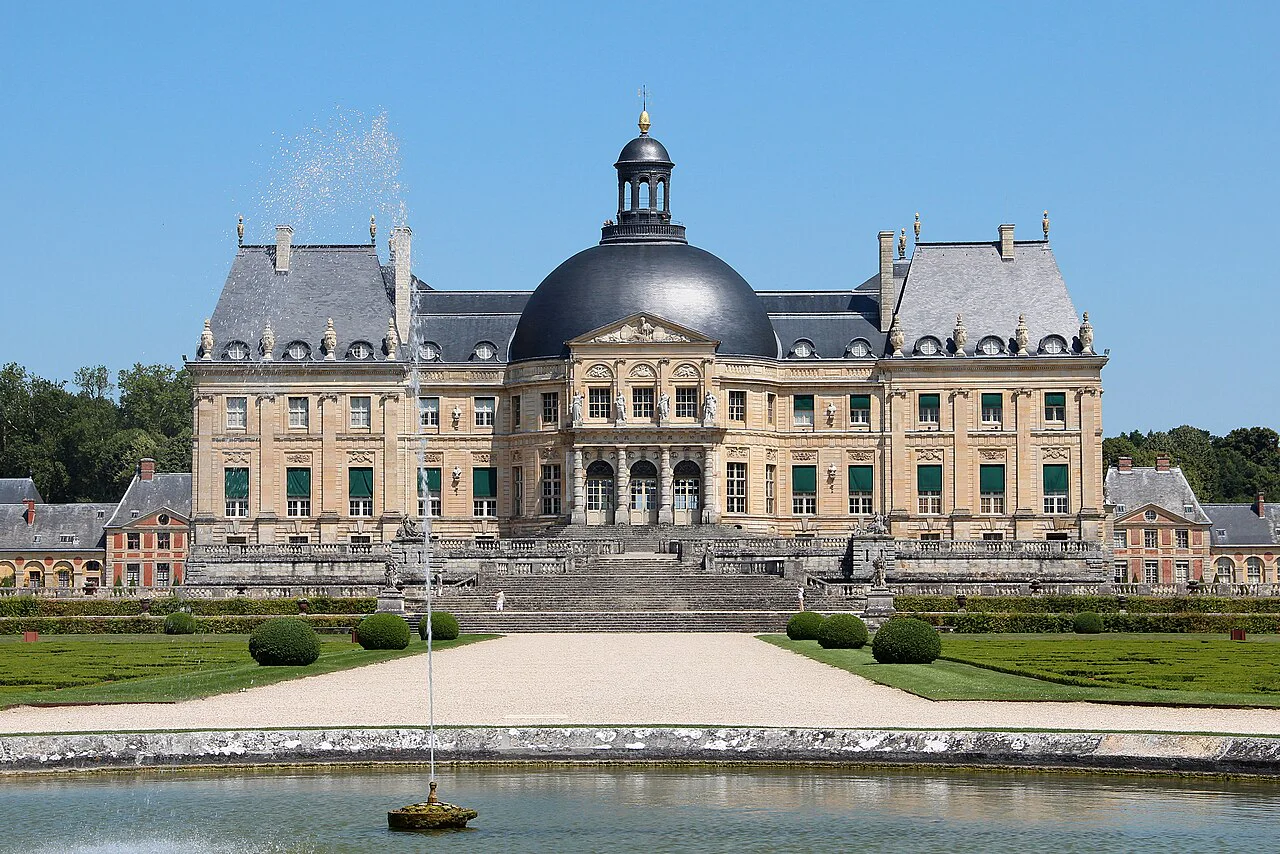
Maincy · 18 km
Château de Vaux-le-Vicomte
Content & sources
Photo: Jean-Pol GRANDMONT · CC BY-SA 3.0
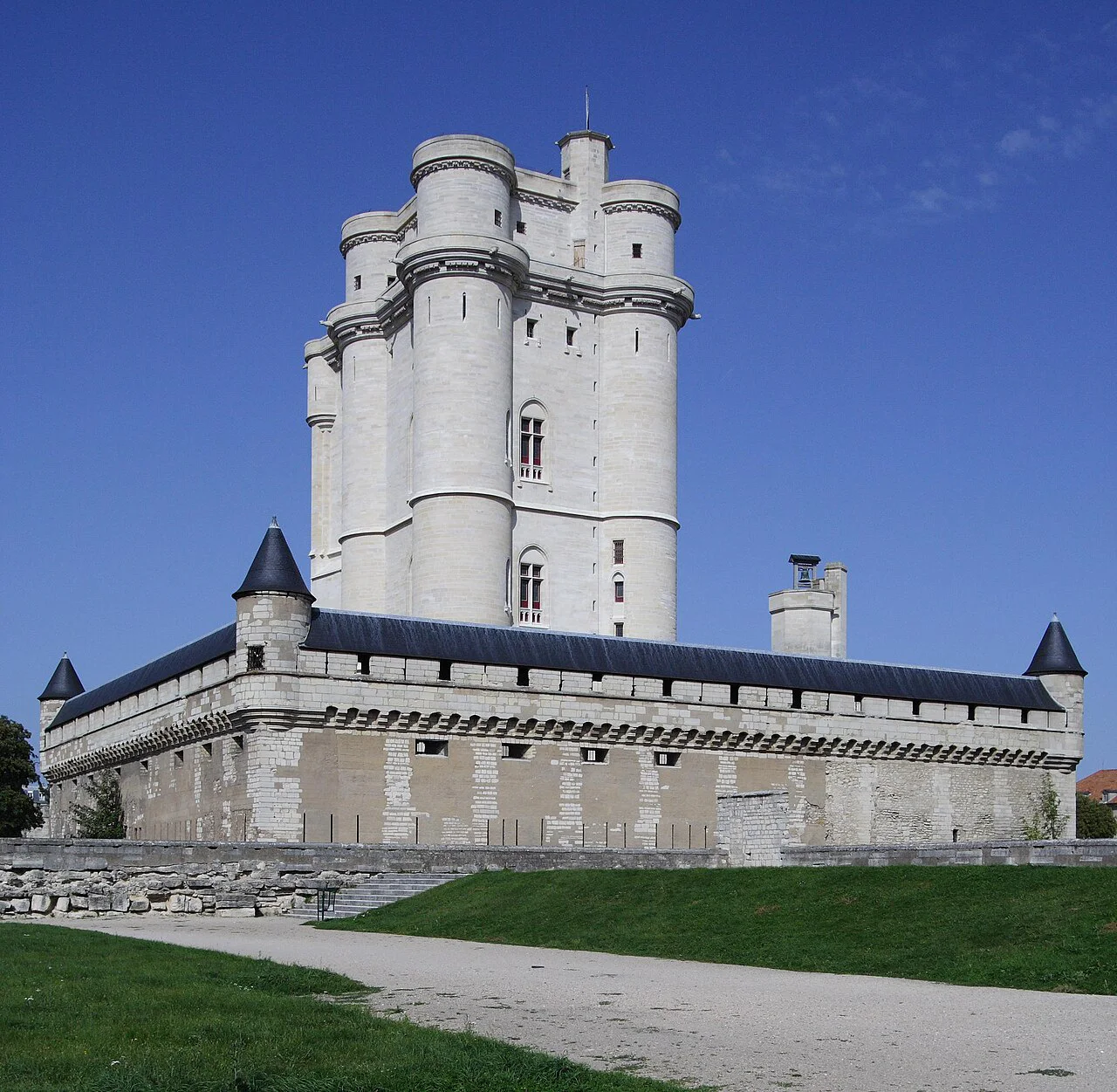
Vincennes · 53 km
Château de Vincennes
Content & sources
Photo: Ignis · CC BY-SA 3.0
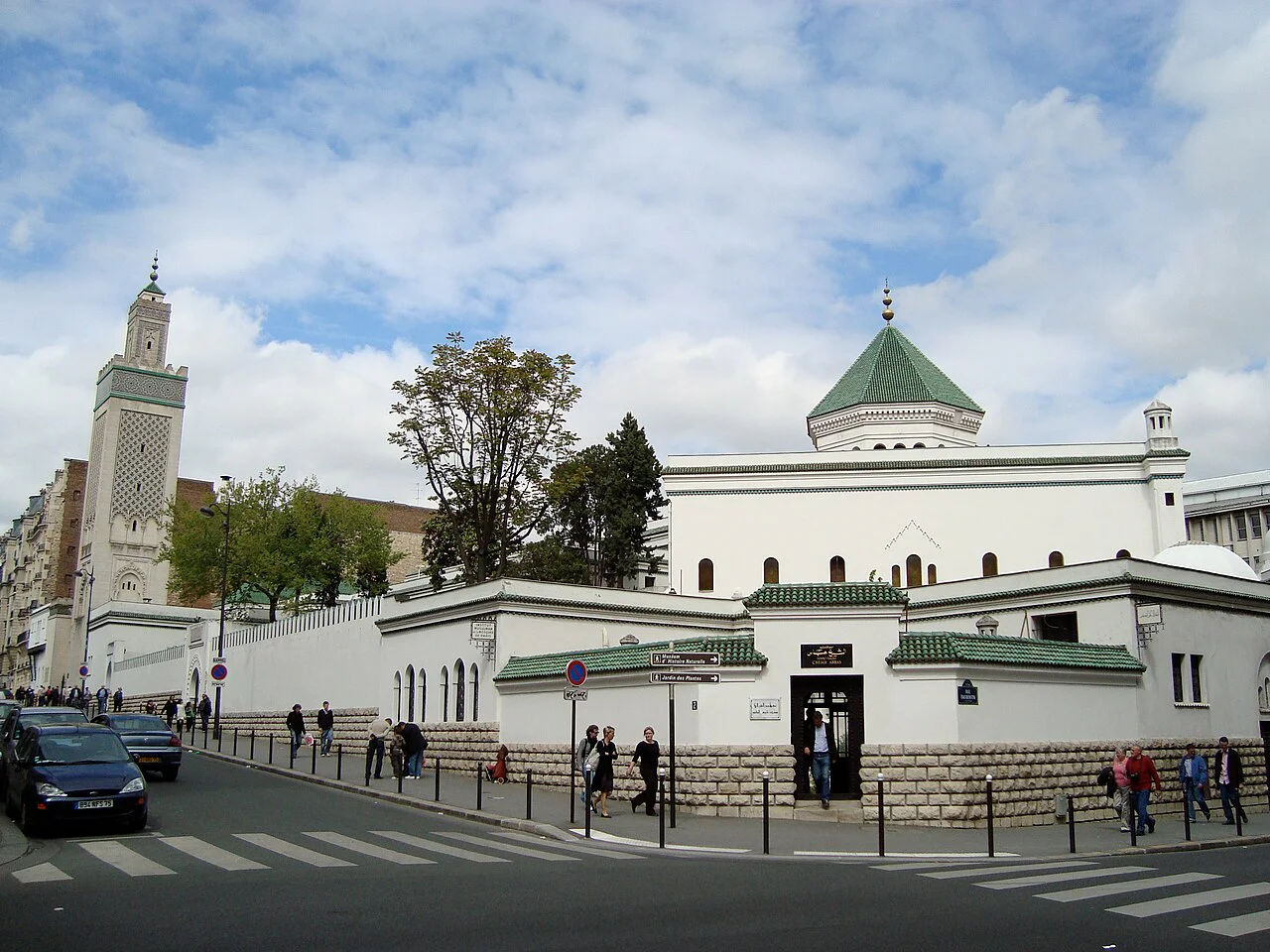
Paris · 55 km
Grande mosquée de Paris
Content & sources
Photo: LPLT · CC BY-SA 4.0
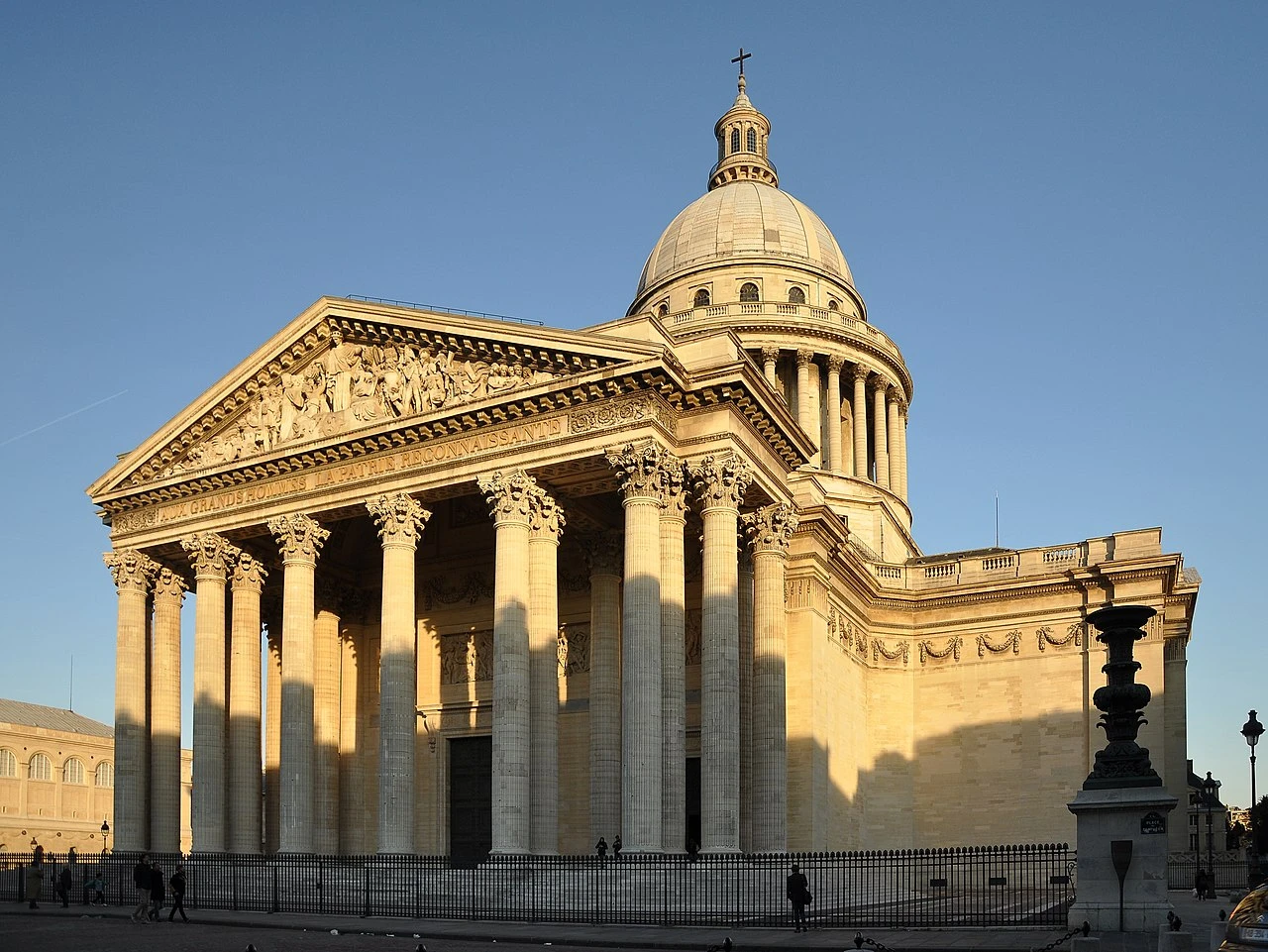
Paris · 56 km
Panthéon
Content & sources
Photo: Moonik · CC BY-SA 3.0